
Physics 014 AC Oscillations LC Oscillations LC Oscillations
- Slides: 34
Physics 014 AC Oscillations
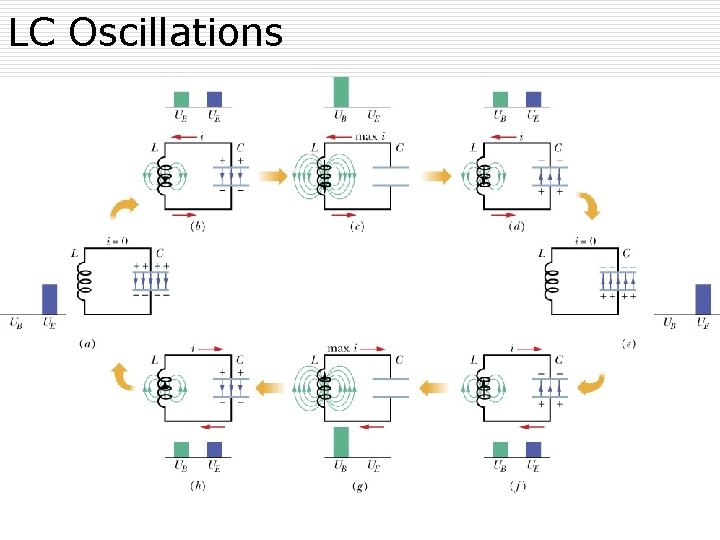
LC Oscillations
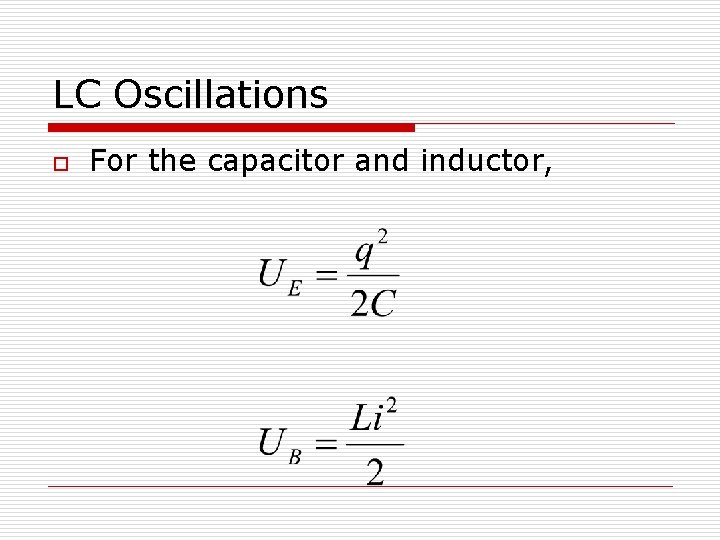
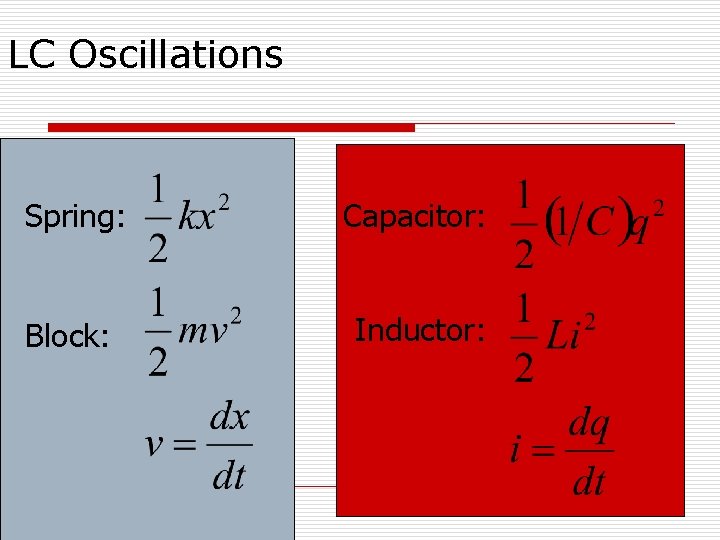
LC Oscillations o For the capacitor and inductor,
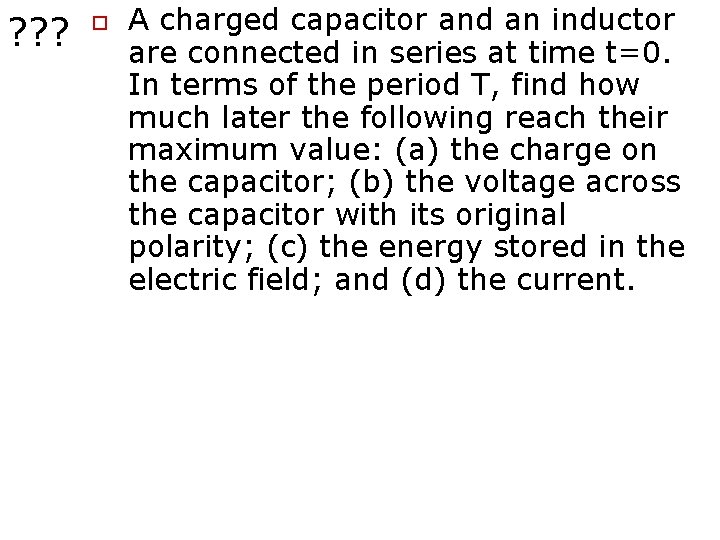
? ? ? o A charged capacitor and an inductor are connected in series at time t=0. In terms of the period T, find how much later the following reach their maximum value: (a) the charge on the capacitor; (b) the voltage across the capacitor with its original polarity; (c) the energy stored in the electric field; and (d) the current.
LC Oscillations Spring: Capacitor: Block: Inductor:
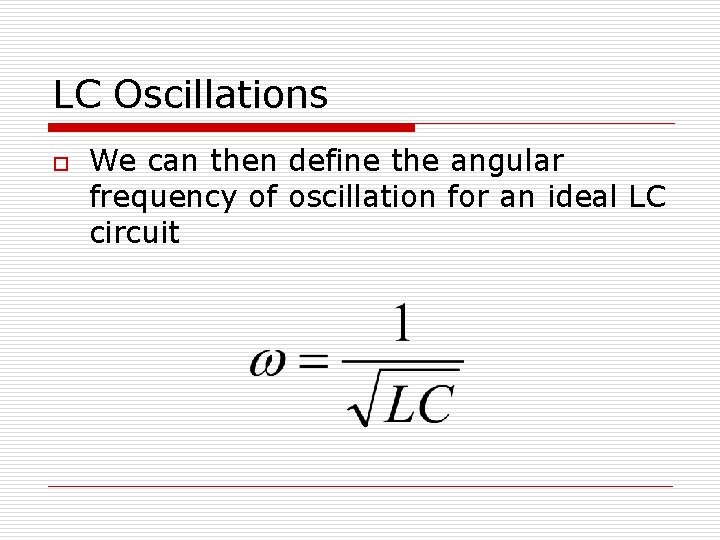
LC Oscillations o We can then define the angular frequency of oscillation for an ideal LC circuit
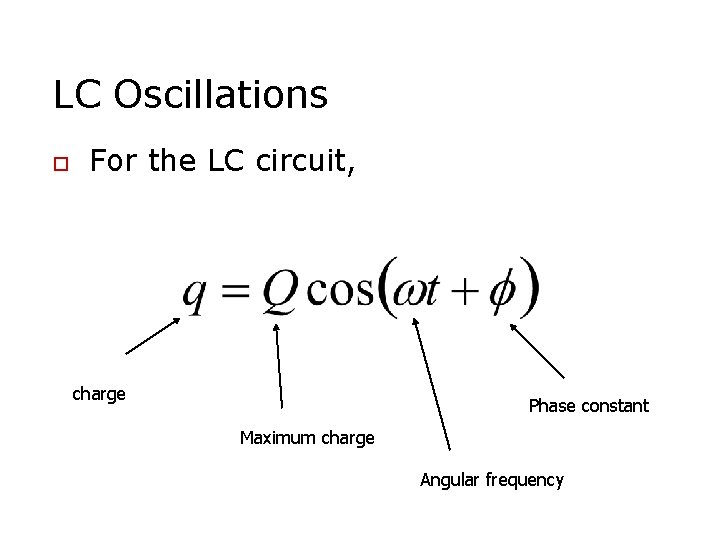
LC Oscillations o For the LC circuit, charge Phase constant Maximum charge Angular frequency
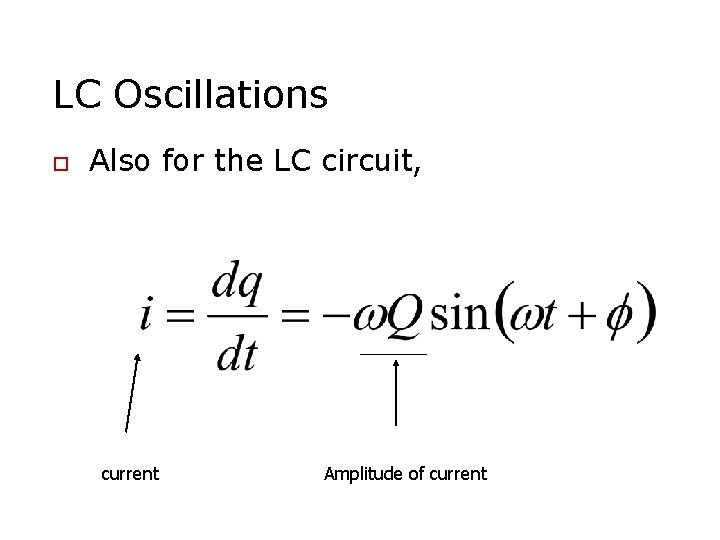
LC Oscillations o Also for the LC circuit, current Amplitude of current
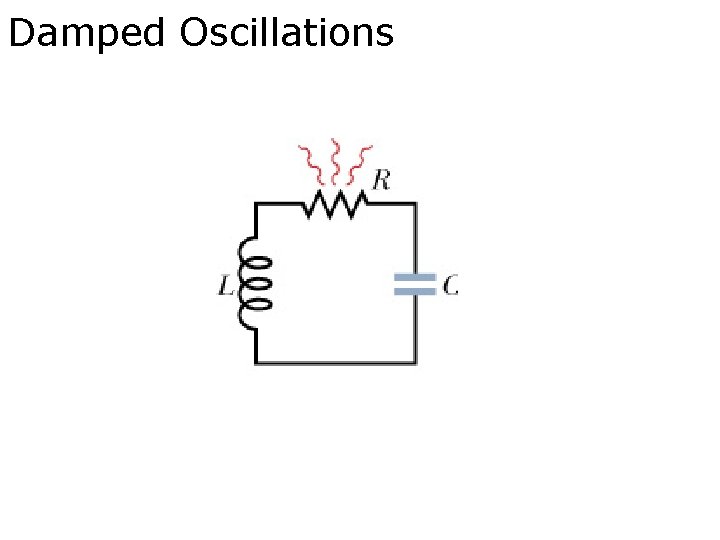
Damped Oscillations o o Suppose we include a resistor in our LC circuit What behavior should we expect?
Damped Oscillations
Damped Oscillations o o o The inclusion of the resistor gradually reduces the energy of the circuit Originally large oscillation amplitudes become small The oscillations are damped
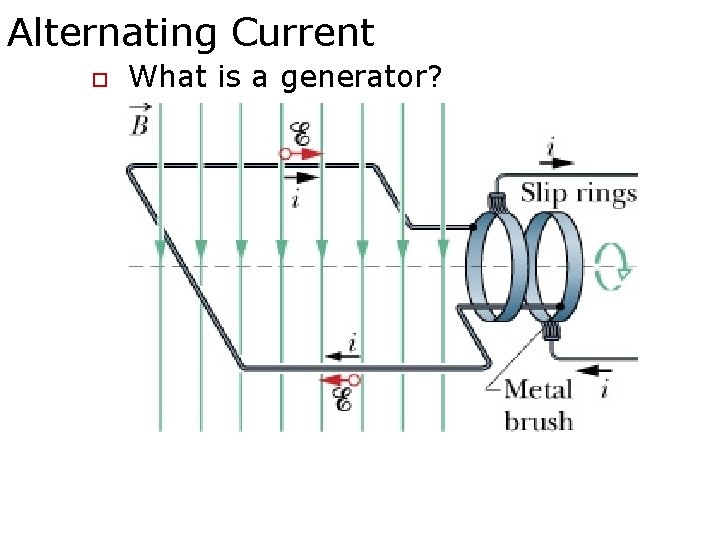
Alternating Current o What is a generator?
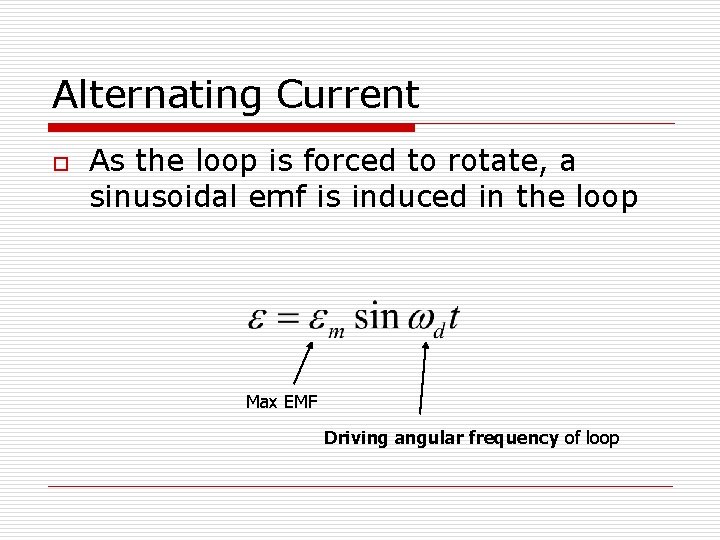
Alternating Current o As the loop is forced to rotate, a sinusoidal emf is induced in the loop Max EMF Driving angular frequency of loop
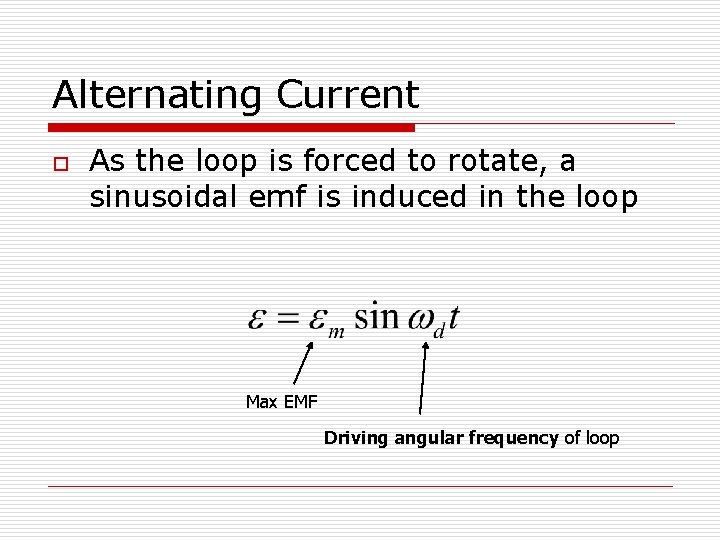
Alternating Current o As the loop is forced to rotate, a sinusoidal emf is induced in the loop Max EMF Driving angular frequency of loop
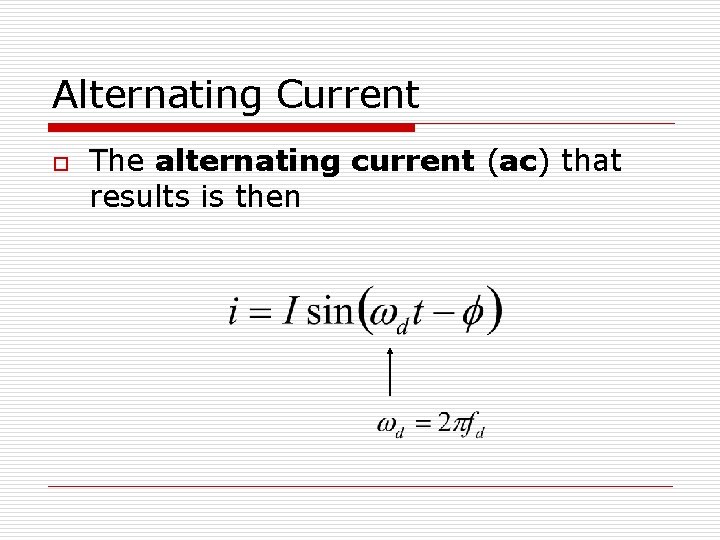
Alternating Current o The alternating current (ac) that results is then
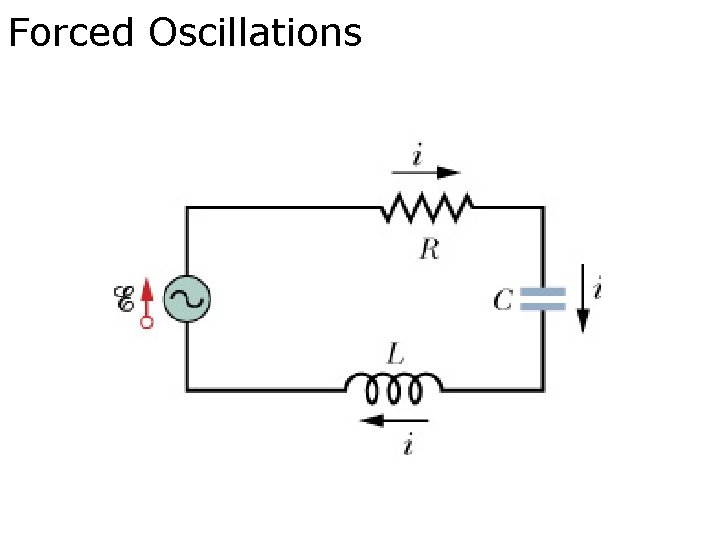
Forced Oscillations
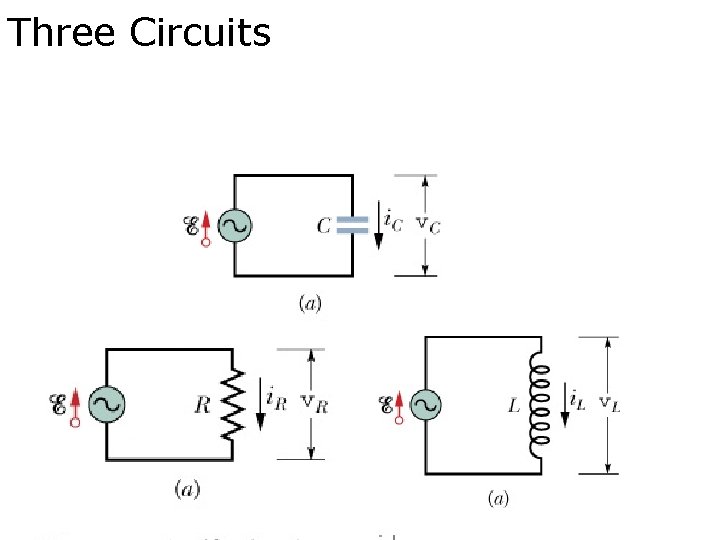
Three Circuits
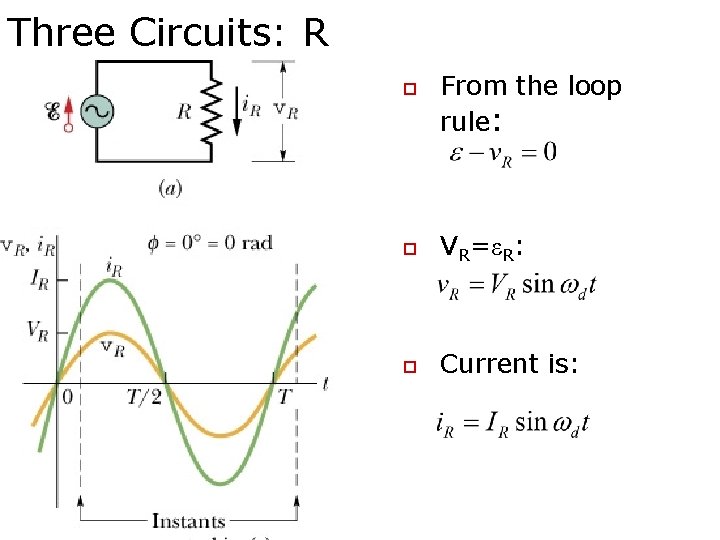
Three Circuits: R o From the loop rule: o VR=εR: o Current is:
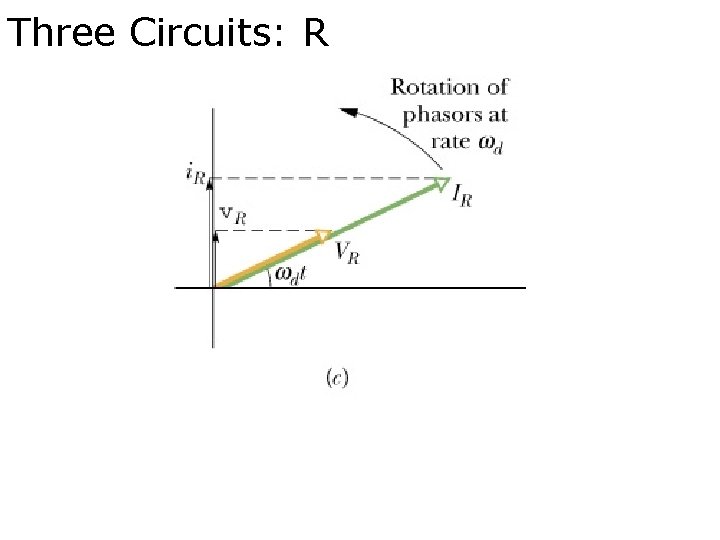
Three Circuits: R
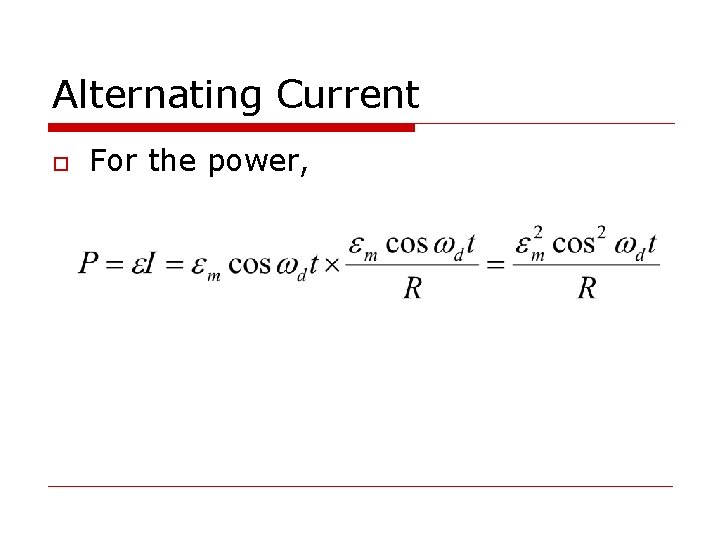
Alternating Current o For the power,
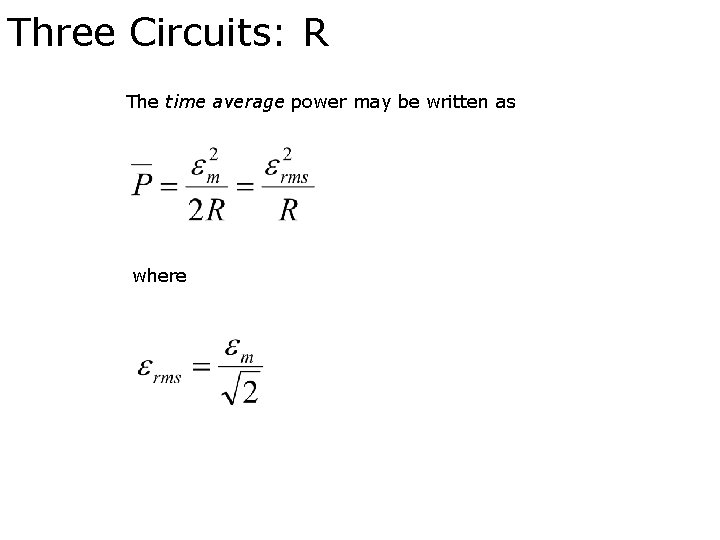
Three Circuits: R The time average power may be written as where
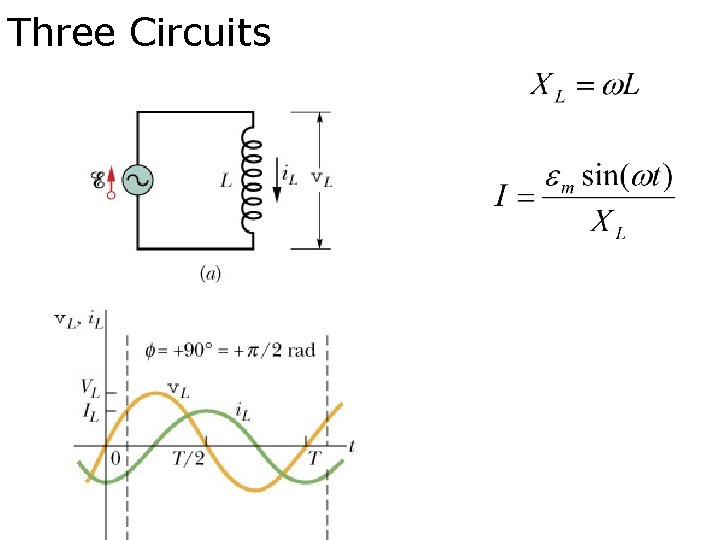
Three Circuits
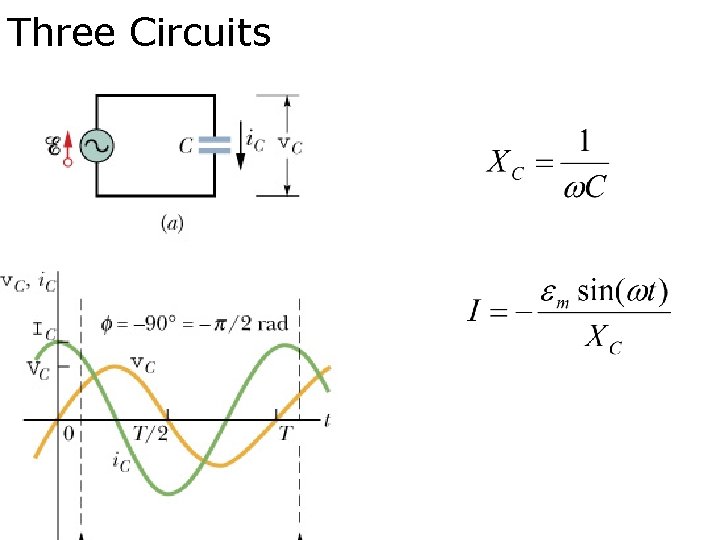
Three Circuits
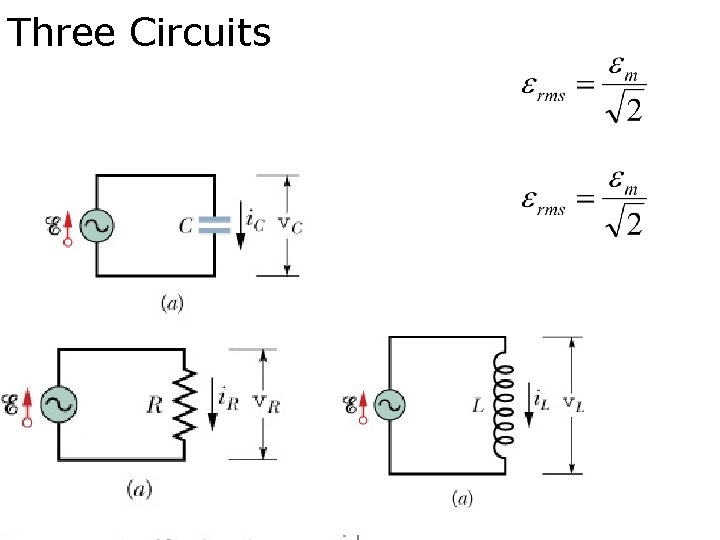
Three Circuits
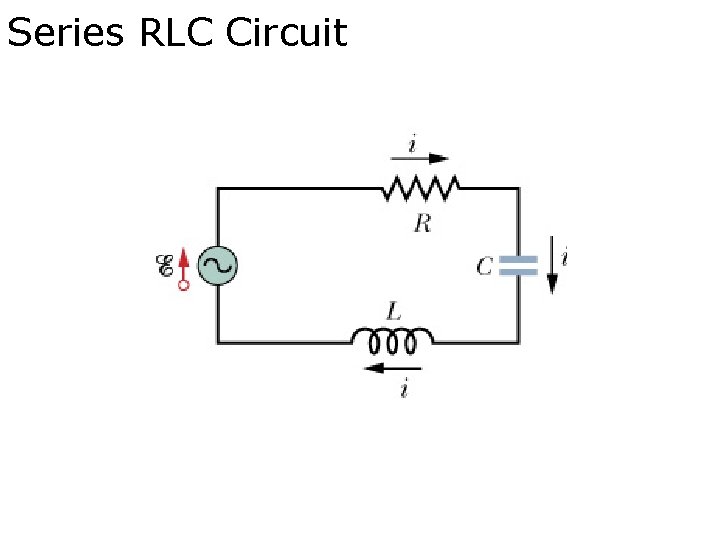
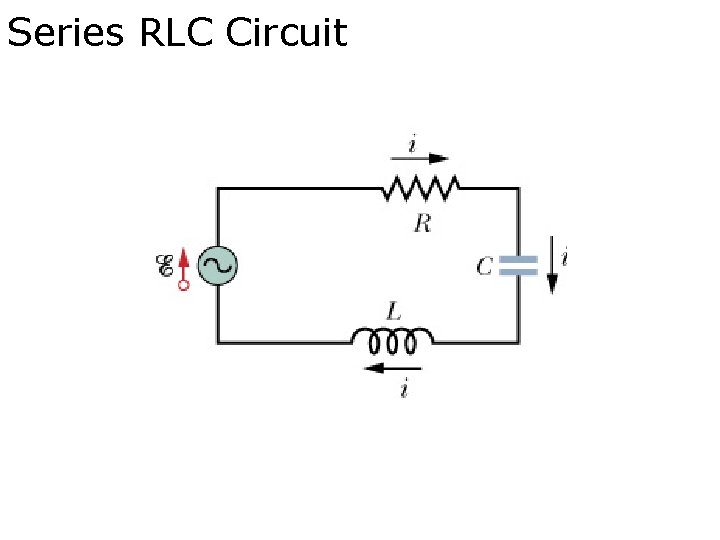
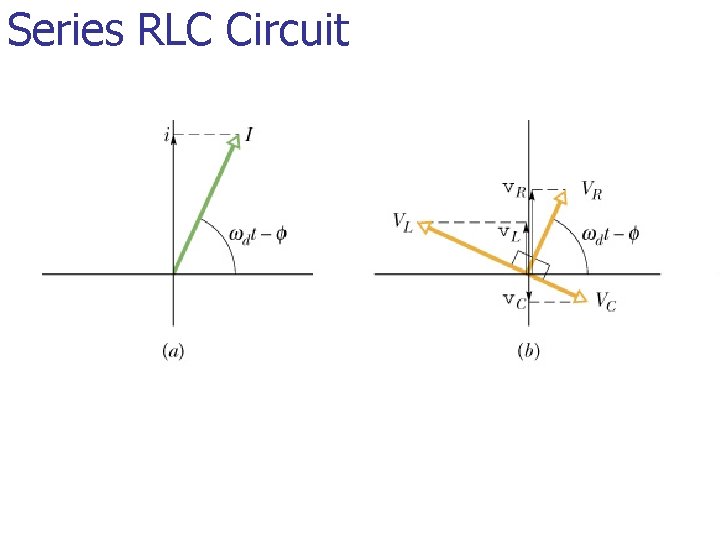
Series RLC Circuit
Series RLC Circuit
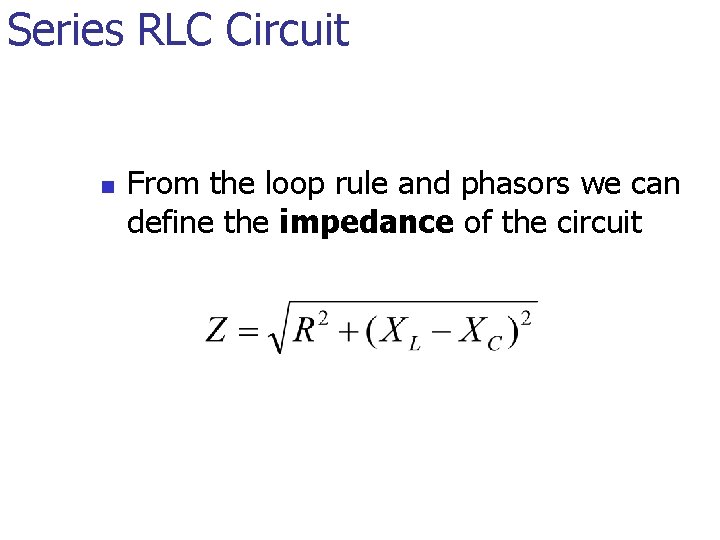
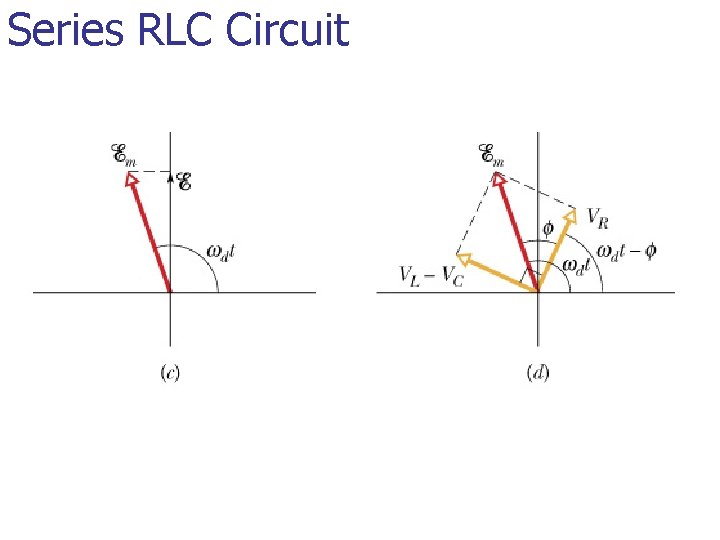
Series RLC Circuit n From the loop rule and phasors we can define the impedance of the circuit
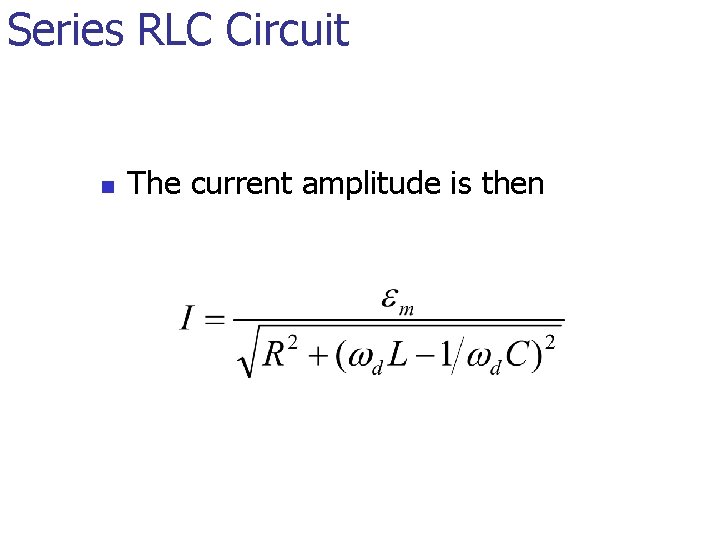
Series RLC Circuit n The current amplitude is then
Series RLC Circuit
Series RLC Circuit
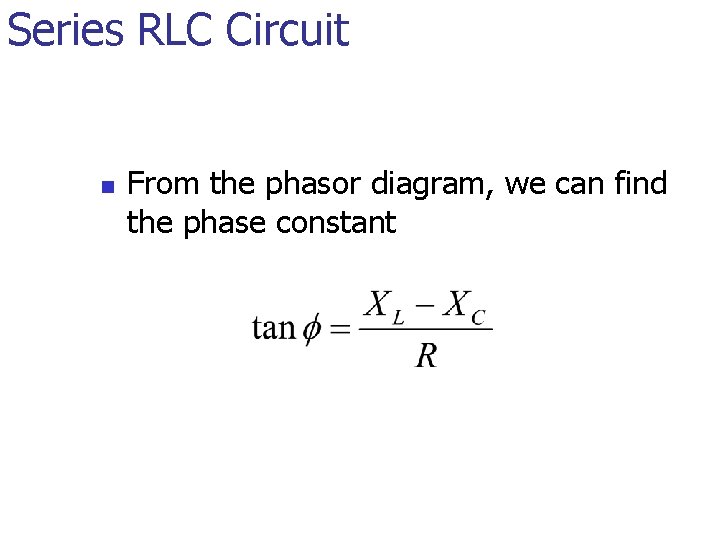
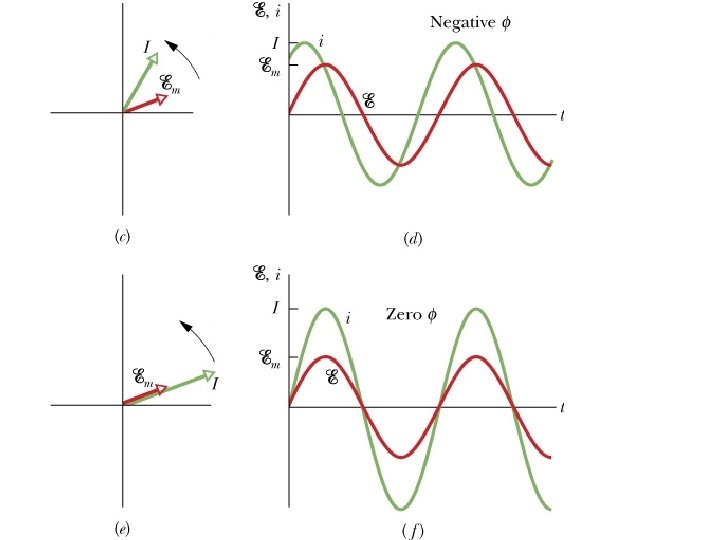
Series RLC Circuit n From the phasor diagram, we can find the phase constant
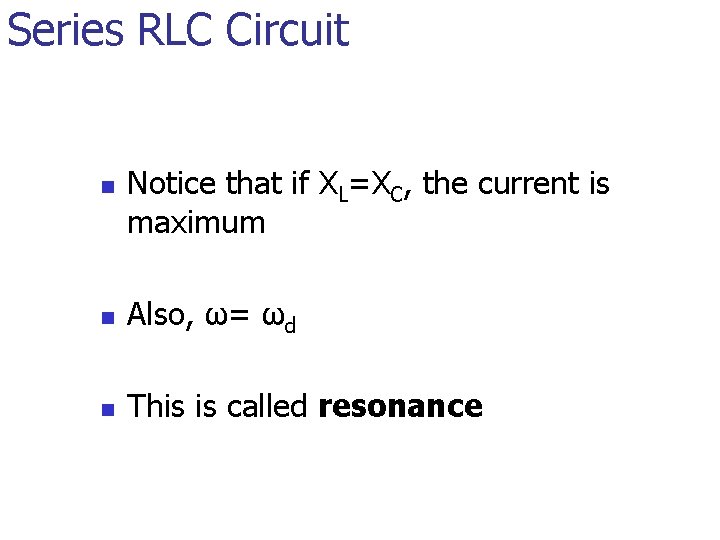
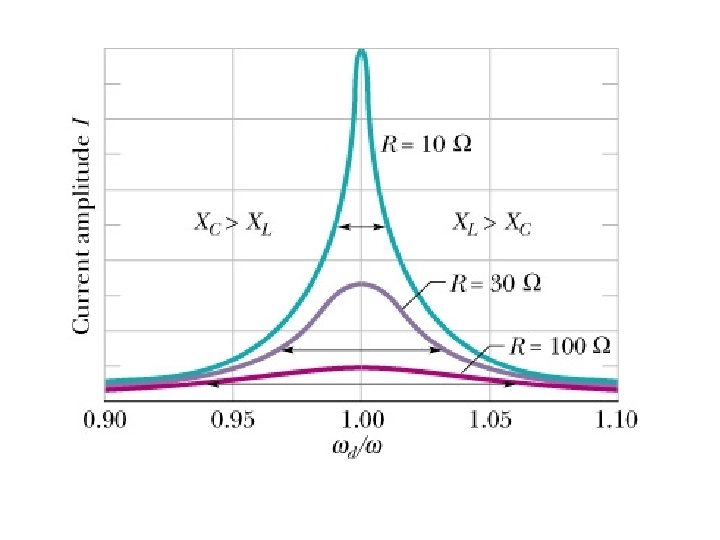
Series RLC Circuit n Notice that if XL=XC, the current is maximum n Also, ω= ωd n This is called resonance