
PHYSICAL SCIENCE What is Science WHAT IS SCIENCE

- Slides: 21
PHYSICAL SCIENCE What is Science?
WHAT IS SCIENCE Science is an ongoing process to learn more about the world around us. Science is both the activity of “doing science” and the body of ideas and theories we learn about.
WHAT IS SCIENCE The goal of science is to: investigate and understand the natural world, explain events in the natural world, and use those explanations to make useful predictions.
PHYSICAL SCIENCE Physical science is a branch of science that focuses on the nonliving parts of the world around you. It deals with matter and energy
NATURE OF SCIENCE Characteristics of Science: Science is… �Empirical: based on data and observations �Tentative: changes over time or with new evidence �Creative: use imagination to form explanations �Subjective: each person uses their background knowledge and previous experiences
THINKING LIKE A SCIENTIST Observation: the process of gathering information about events or processes in a careful, orderly way �Usually involves the senses �Information collected is called data
THINKING LIKE A SCIENTIST Qualitative data: descriptive, involve characteristics (or qualities) that can not usually be counted �Example: hair color Quantitative data: can be expressed by numbers, “quantity” �Example: height
THINKING LIKE A SCIENTIST Data gained through observations is used to make inferences �Inference: a logical interpretation based on prior knowledge or experience
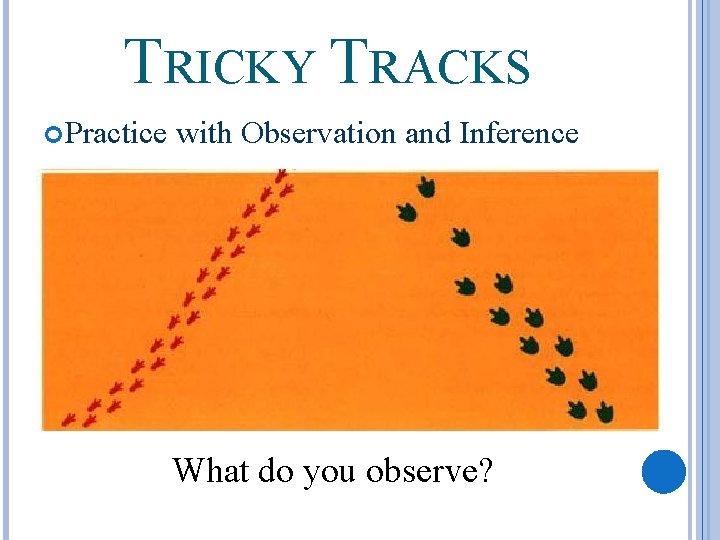
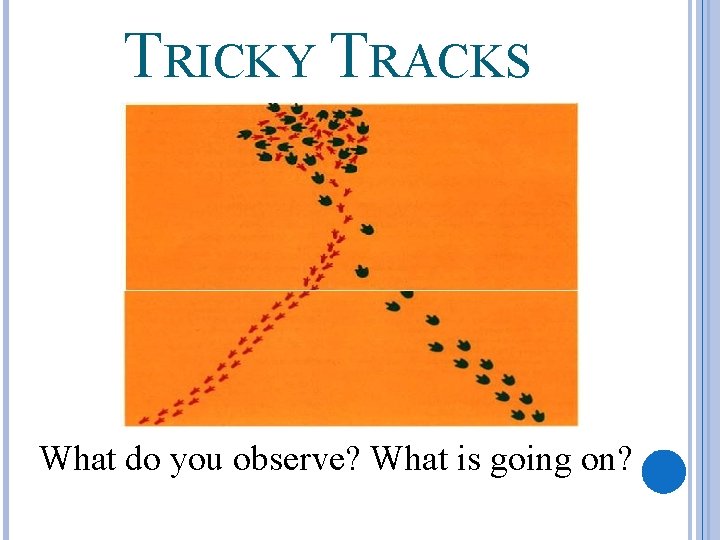
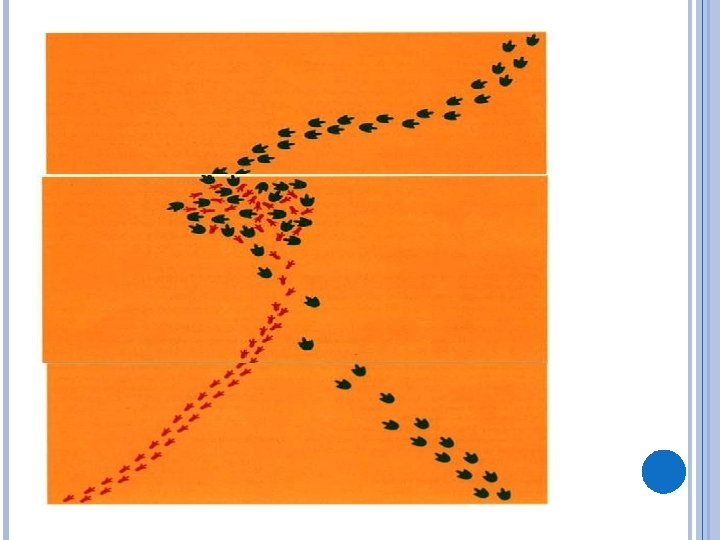
TRICKY TRACKS Practice with Observation and Inference What do you observe?
TRICKY TRACKS What do you observe? What is going on?
TRICKY TRACKS Inference: a logical interpretation based on prior knowledge or experience Did you make an inference about what is going on in these pictures? How is an inference different from an observation?
SCIENCE AS A WAY OF KNOWING Science changes it is an ongoing process that involves asking questions, observing, making inferences, and testing ideas Advances in technology influence the advancement of science
THE SCIENTIFIC METHOD It is a general procedure scientists use to conduct an investigation It is a organized way to investigate answers to scientific questions Scientific method cannot be used for every study/experiment. �Sometimes we are limited to making observations Example-field studies
THE SCIENTIFIC METHOD 1. Ask a Question. All scientific investigations start with one or more questions. -why? -how?
THE SCIENTIFIC METHOD 2. Gather more information. Learn as much as you can about the subject. You can use… -experts, -internet (be careful!), -books, etc. to conduct research.
THE SCIENTIFIC METHOD 3. Form a hypothesis. A hypothesis is a statement that you can test. � Relates the manipulated variable and the responding variable. � Can use a “If _______, then _____” form
THE SCIENTIFIC METHOD 4. Plan and conduct an experiment. Change (test) only one variable at a time. All other variables are held constant. Use a control group for a standard to compare experimental group(s) to.
THE SCIENTIFIC METHOD 5. Collect and analyze data. Determine what types of data you need to collect. �What sort of measurements do you need to make? �What things do you need to observe? Organize your data into tables or charts!
THE SCIENTIFIC METHOD 6. Draw conclusions. Was the hypothesis supported or rejected? �Note: You cannot “prove” a hypothesis, you can only “disprove” a hypothesis. Discuss possible sources of error, experimental results.
VARIABLES What are variables? �The different factors in an experiment. Manipulated variables: The thing you purposely change during an experiment. �AKA independent variable Responding variables: The thing that changes as an effect of the manipulated variable. �AKA dependent variable Controlled variables: The factors you keep constant (the same)