
Physical Science Waves What is a Wave Movement



- Slides: 41
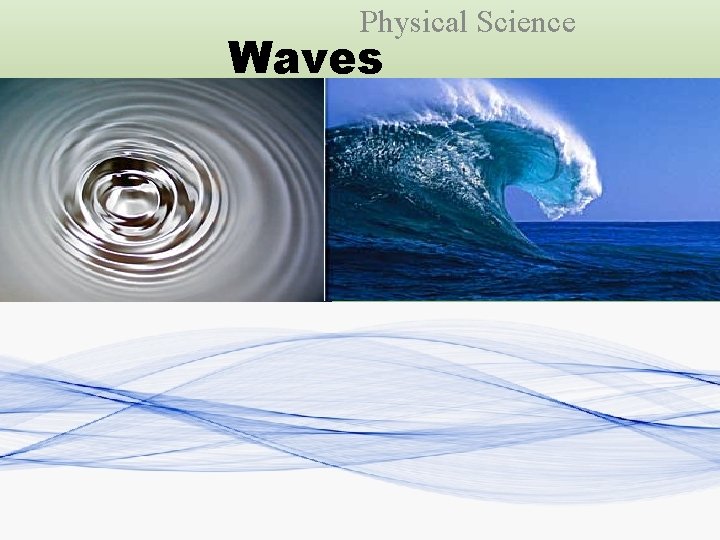
Physical Science Waves
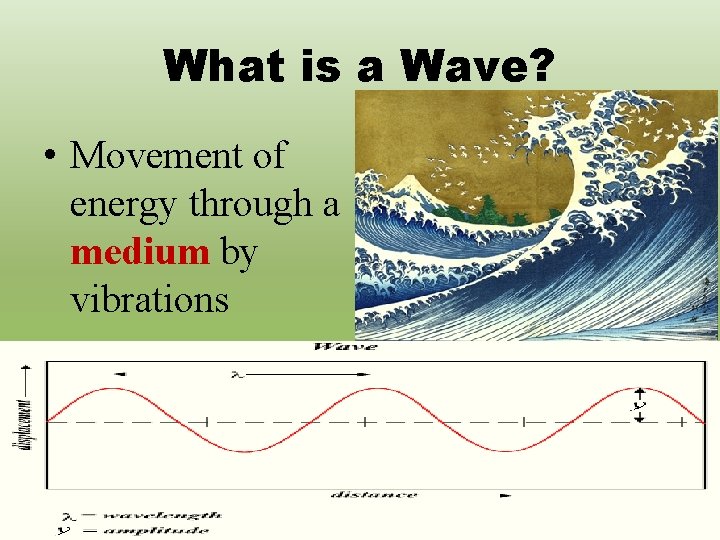
What is a Wave? • Movement of energy through a medium by vibrations
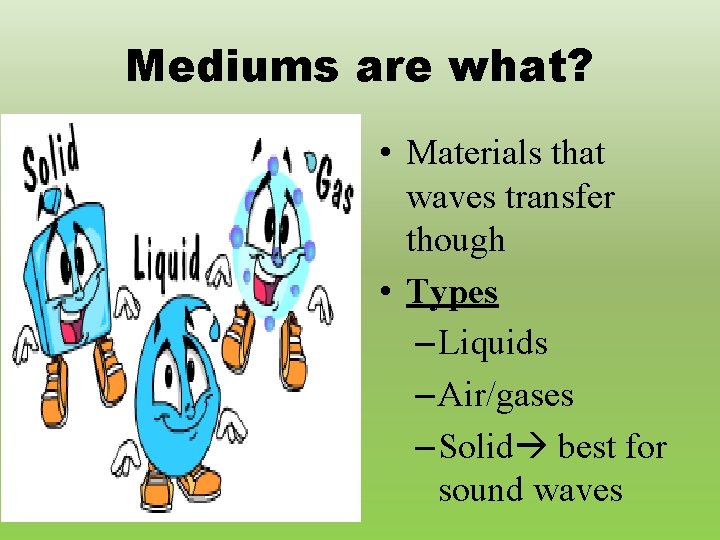
Mediums are what? • Materials that waves transfer though • Types – Liquids – Air/gases – Solid best for sound waves
What moves in a Wave? • Energy – A wave will move as along as it has energy to carry
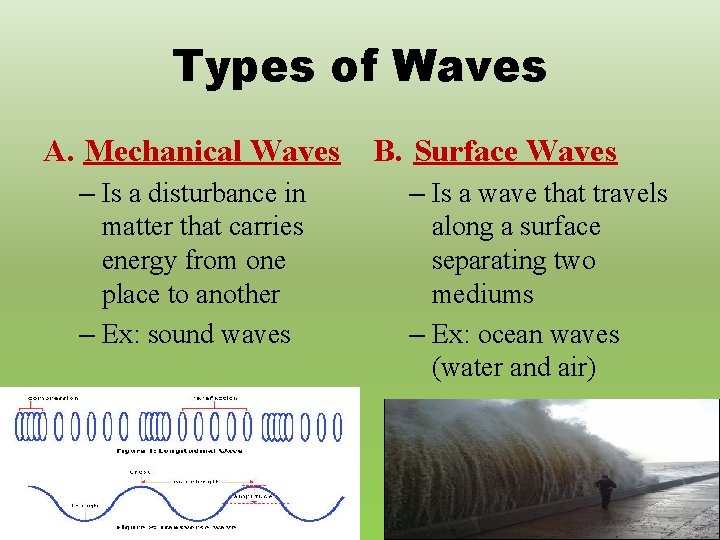
Types of Waves A. Mechanical Waves – Is a disturbance in matter that carries energy from one place to another – Ex: sound waves B. Surface Waves – Is a wave that travels along a surface separating two mediums – Ex: ocean waves (water and air)
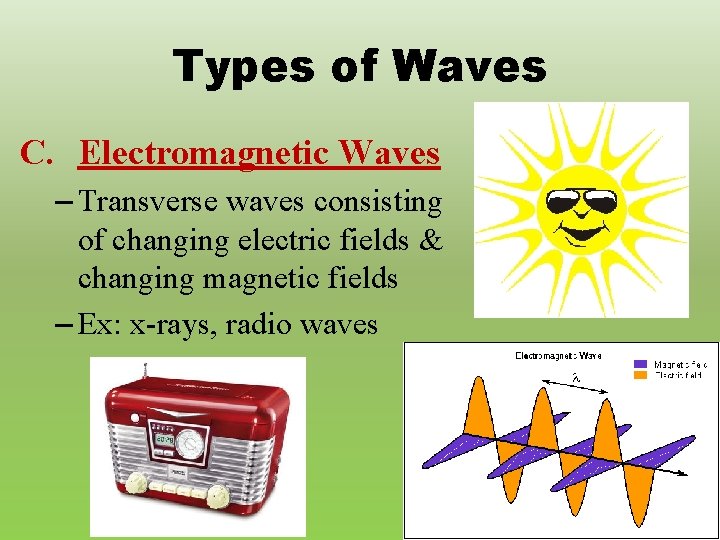
Types of Waves C. Electromagnetic Waves – Transverse waves consisting of changing electric fields & changing magnetic fields – Ex: x-rays, radio waves
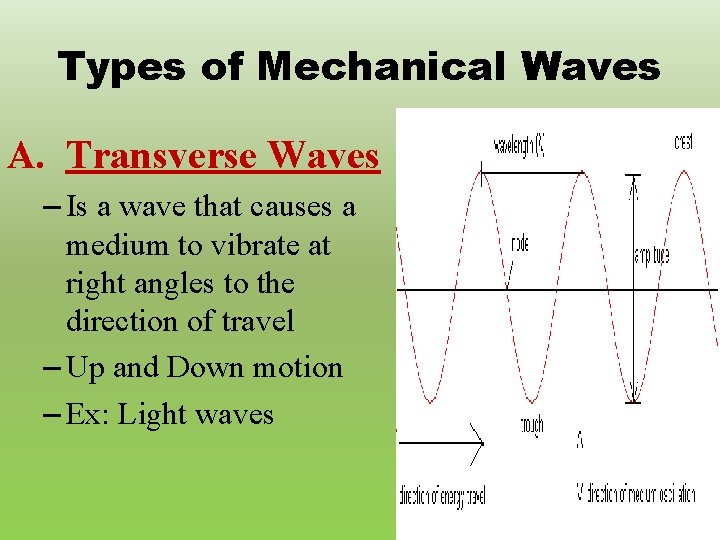
Types of Mechanical Waves A. Transverse Waves – Is a wave that causes a medium to vibrate at right angles to the direction of travel – Up and Down motion – Ex: Light waves
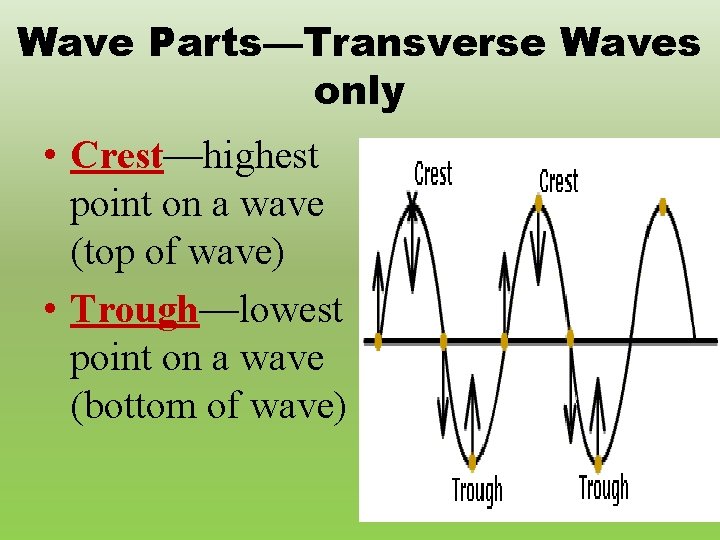
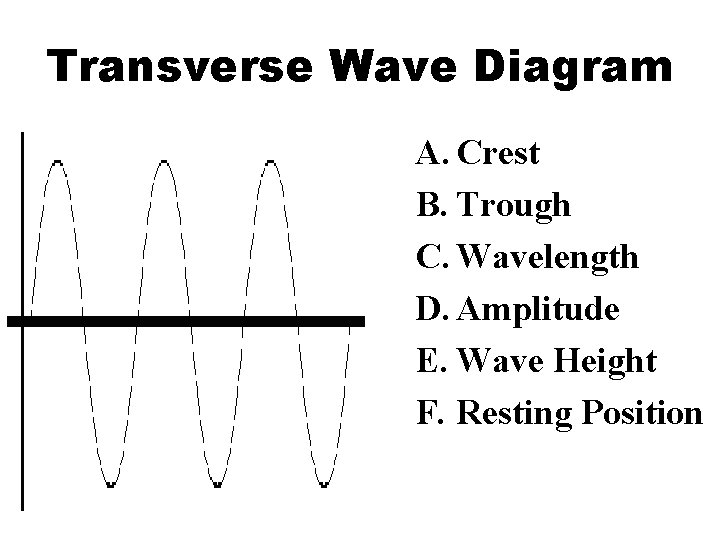
Wave Parts—Transverse Waves only • Crest—highest point on a wave (top of wave) • Trough—lowest point on a wave (bottom of wave)
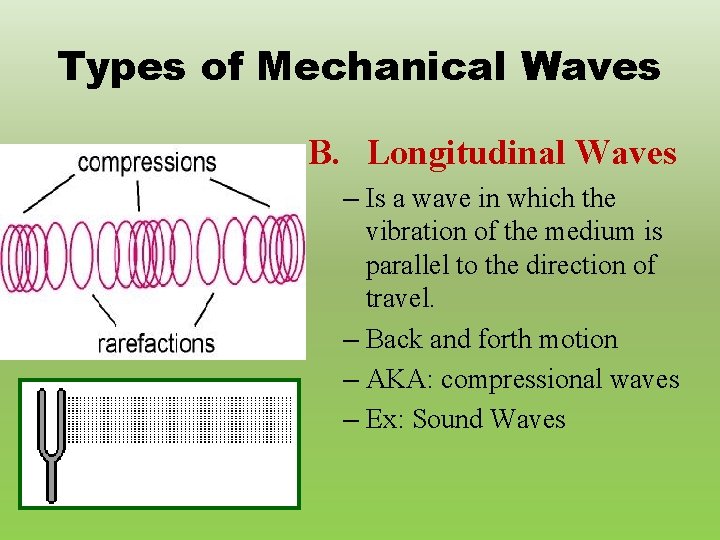
Types of Mechanical Waves B. Longitudinal Waves – Is a wave in which the vibration of the medium is parallel to the direction of travel. – Back and forth motion – AKA: compressional waves – Ex: Sound Waves
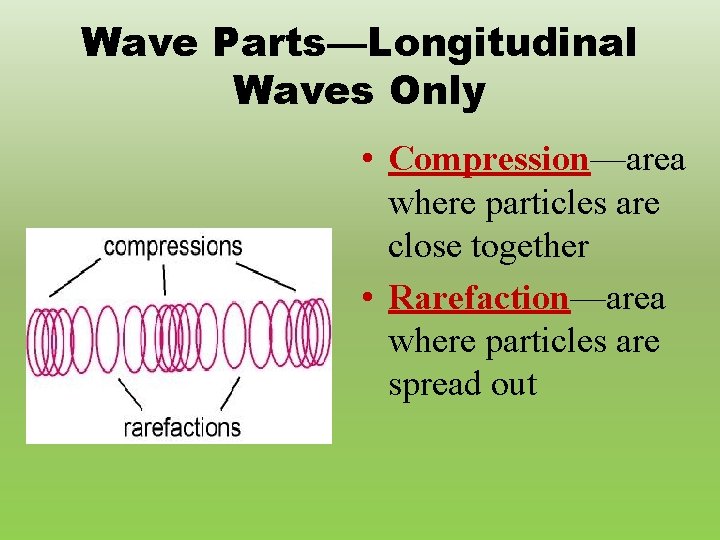
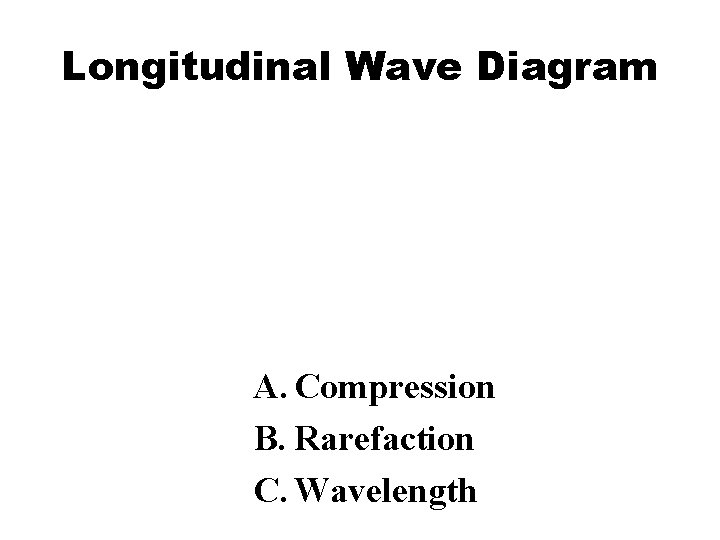
Wave Parts—Longitudinal Waves Only • Compression—area where particles are close together • Rarefaction—area where particles are spread out
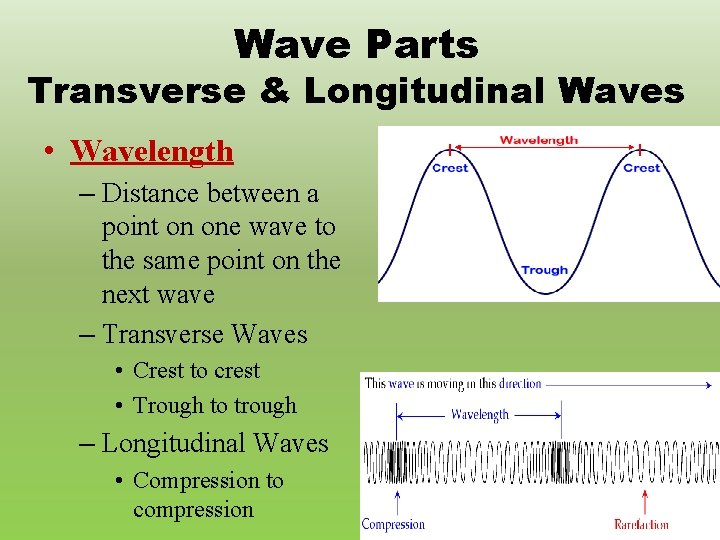
Wave Parts Transverse & Longitudinal Waves • Wavelength – Distance between a point on one wave to the same point on the next wave – Transverse Waves • Crest to crest • Trough to trough – Longitudinal Waves • Compression to compression
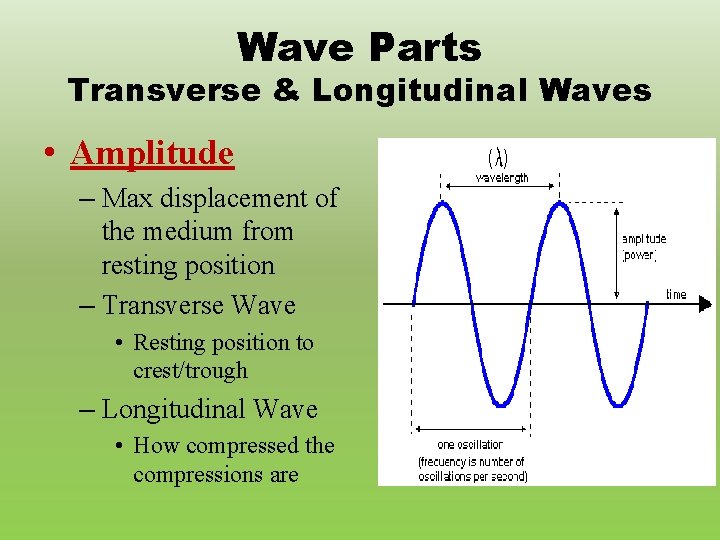
Wave Parts Transverse & Longitudinal Waves • Amplitude – Max displacement of the medium from resting position – Transverse Wave • Resting position to crest/trough – Longitudinal Wave • How compressed the compressions are
Transverse Wave Diagram A. Crest B. Trough C. Wavelength D. Amplitude E. Wave Height F. Resting Position
Longitudinal Wave Diagram A. Compression B. Rarefaction C. Wavelength
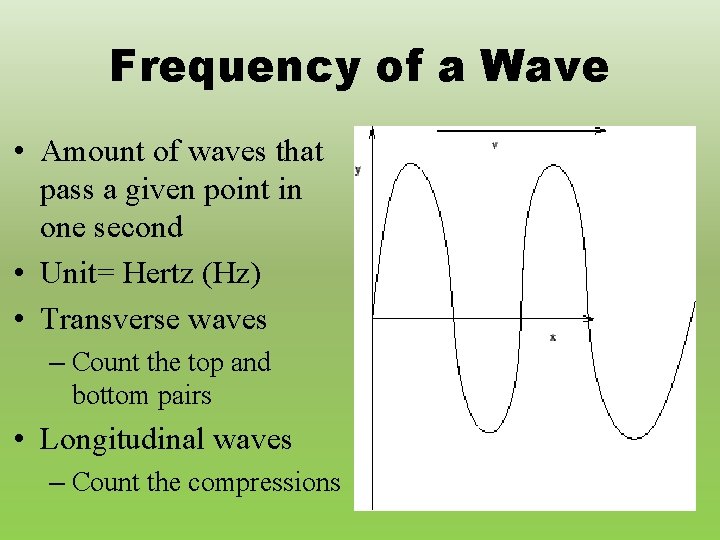
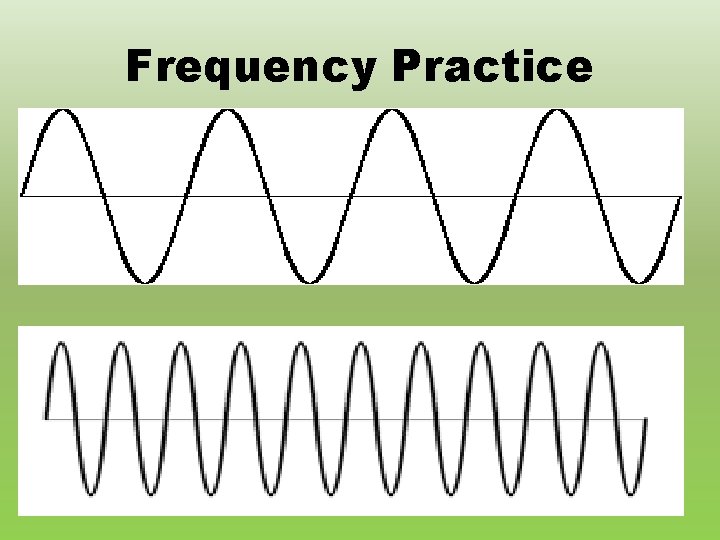
Frequency of a Wave • Amount of waves that pass a given point in one second • Unit= Hertz (Hz) • Transverse waves – Count the top and bottom pairs • Longitudinal waves – Count the compressions
Frequency Practice
Frequency & Energy Relationship • As frequency increases, the energy in a wave increases • They do the same
Frequency & Wavelength Relationship • Increase frequency decrease the wavelength of a wave • They do the opposite
Wavelength & Energy Relationship • Increase the wavelength will decrease the energy • They do the opposite
Amplitude & Energy Relationship • As the energy of a wave increases, the amplitude increase
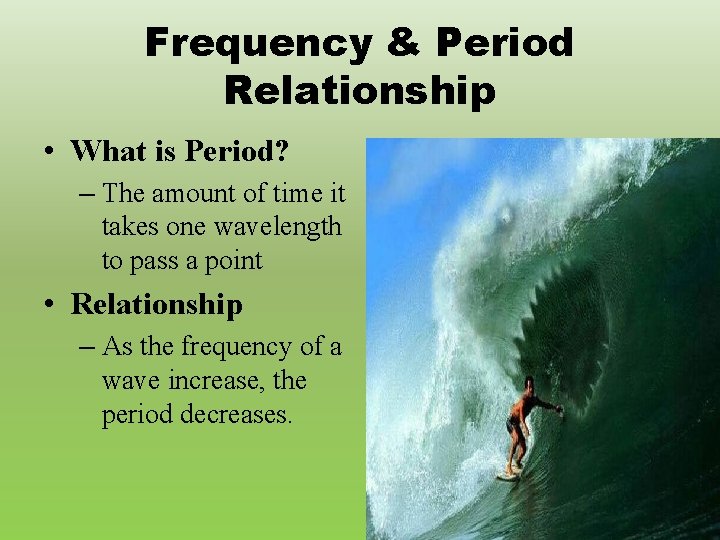
Frequency & Period Relationship • What is Period? – The amount of time it takes one wavelength to pass a point • Relationship – As the frequency of a wave increase, the period decreases.
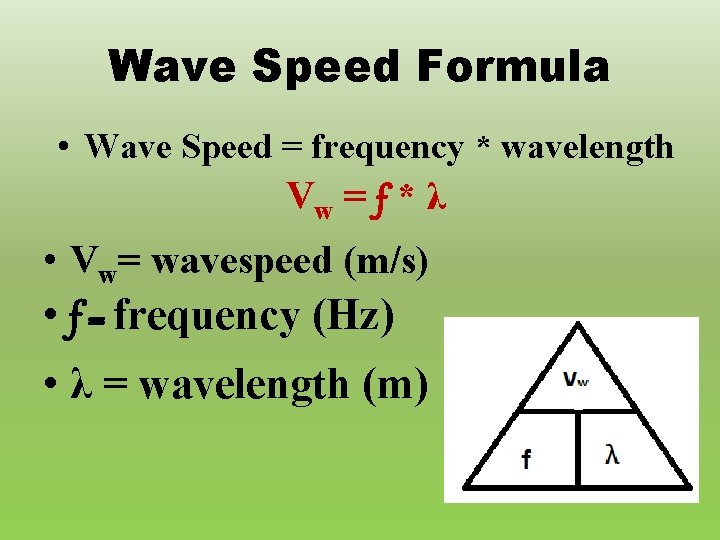
Wave Speed Formula • Wave Speed = frequency * wavelength Vw = f * λ • Vw= wavespeed (m/s) • f = frequency (Hz) • λ = wavelength (m)
Wave Speed Example Problems 1. A wave has a wavelength of 4 meters and a frequency of 20 Hz. What is the speed of the wave? 2. A wave has a speed of 10 m/s and a length between the crests of 0. 5 meters. What is the frequency of the wave?
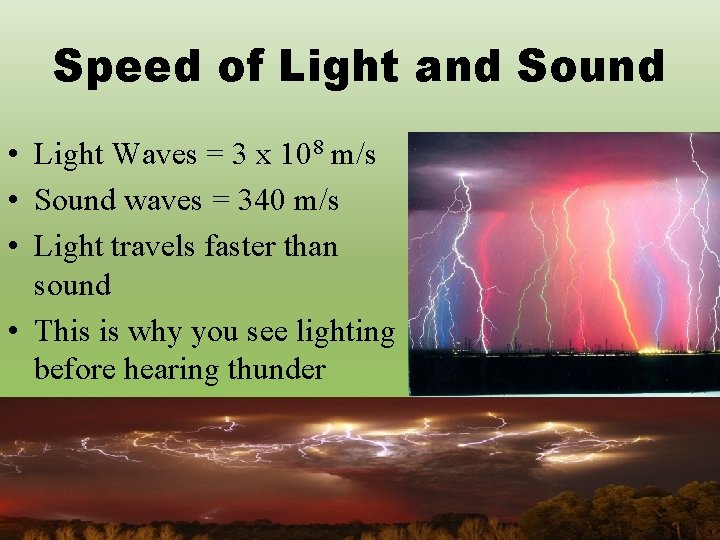
Speed of Light and Sound • Light Waves = 3 x 10⁸ m/s • Sound waves = 340 m/s • Light travels faster than sound • This is why you see lighting before hearing thunder
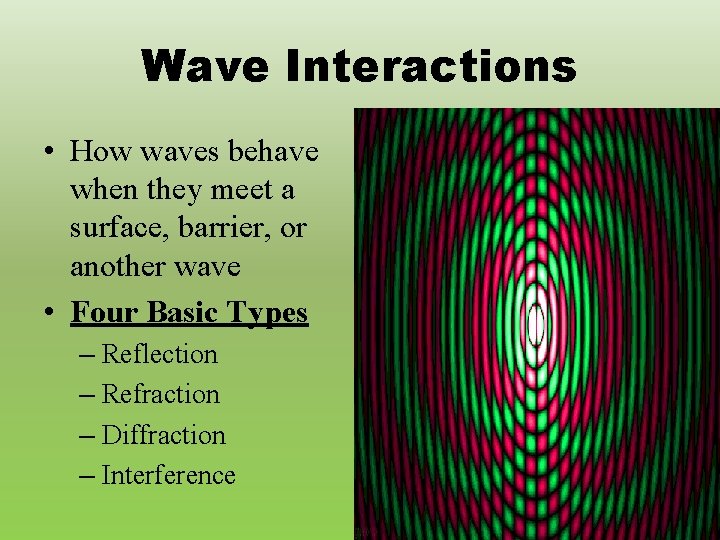
Wave Interactions • How waves behave when they meet a surface, barrier, or another wave • Four Basic Types – Reflection – Refraction – Diffraction – Interference
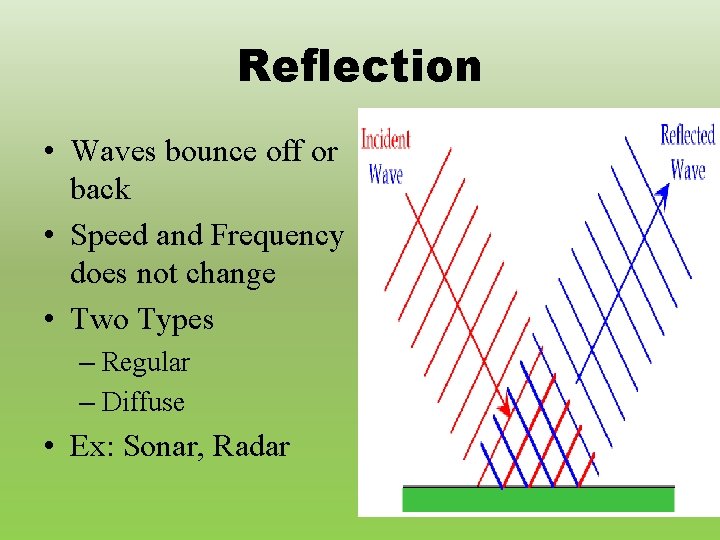
Reflection • Waves bounce off or back • Speed and Frequency does not change • Two Types – Regular – Diffuse • Ex: Sonar, Radar
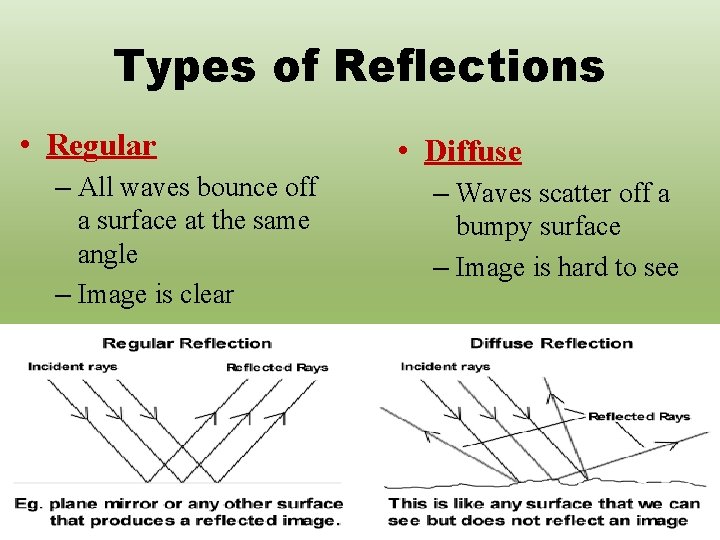
Types of Reflections • Regular – All waves bounce off a surface at the same angle – Image is clear • Diffuse – Waves scatter off a bumpy surface – Image is hard to see
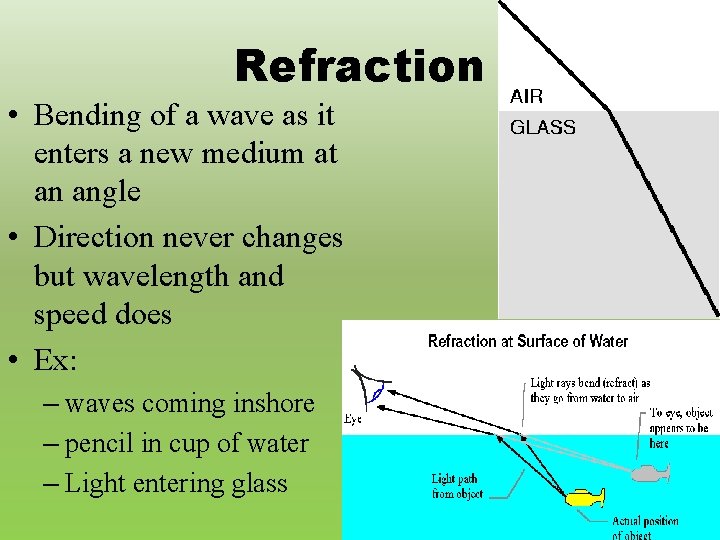
Refraction • Bending of a wave as it enters a new medium at an angle • Direction never changes but wavelength and speed does • Ex: – waves coming inshore – pencil in cup of water – Light entering glass
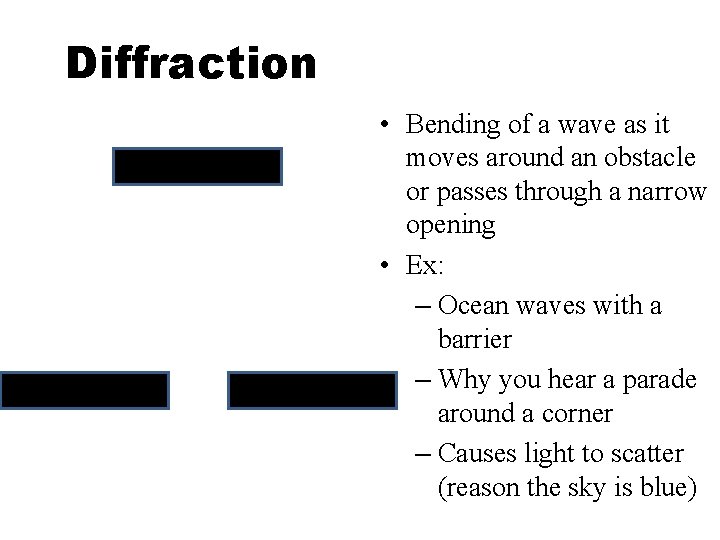
Diffraction • Bending of a wave as it moves around an obstacle or passes through a narrow opening • Ex: – Ocean waves with a barrier – Why you hear a parade around a corner – Causes light to scatter (reason the sky is blue)
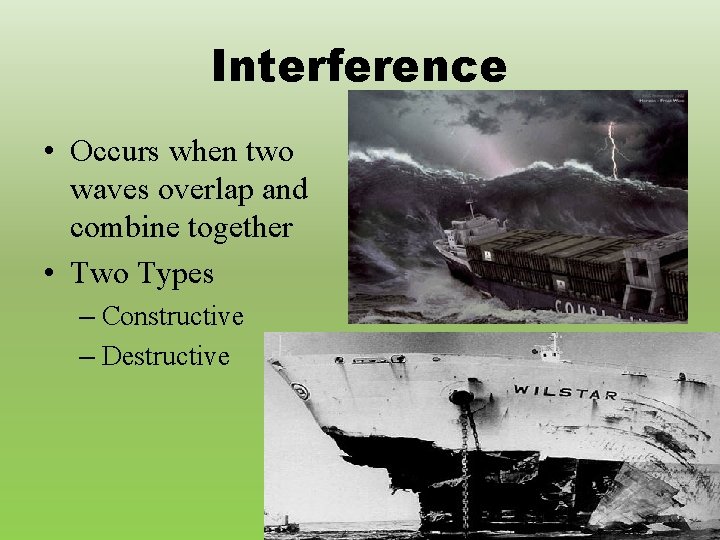
Interference • Occurs when two waves overlap and combine together • Two Types – Constructive – Destructive
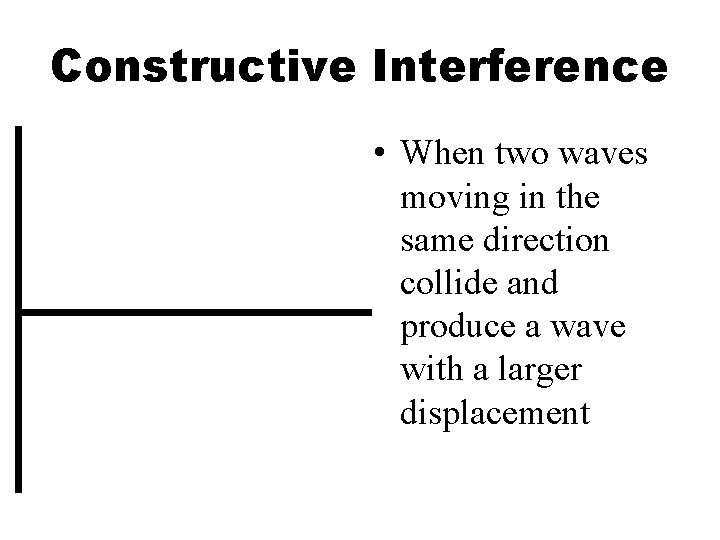
Constructive Interference • When two waves moving in the same direction collide and produce a wave with a larger displacement
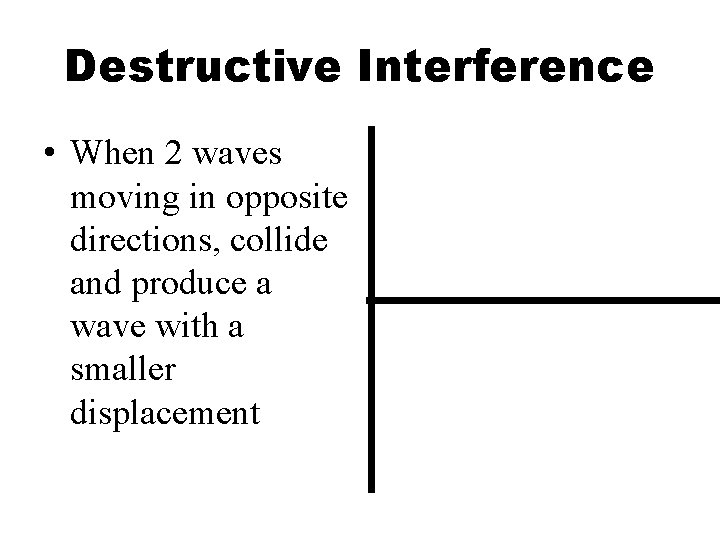
Destructive Interference • When 2 waves moving in opposite directions, collide and produce a wave with a smaller displacement
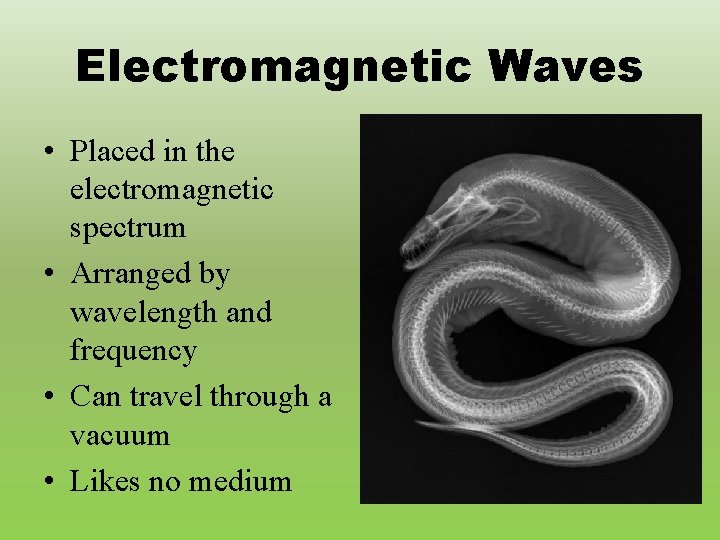
Electromagnetic Waves • Placed in the electromagnetic spectrum • Arranged by wavelength and frequency • Can travel through a vacuum • Likes no medium
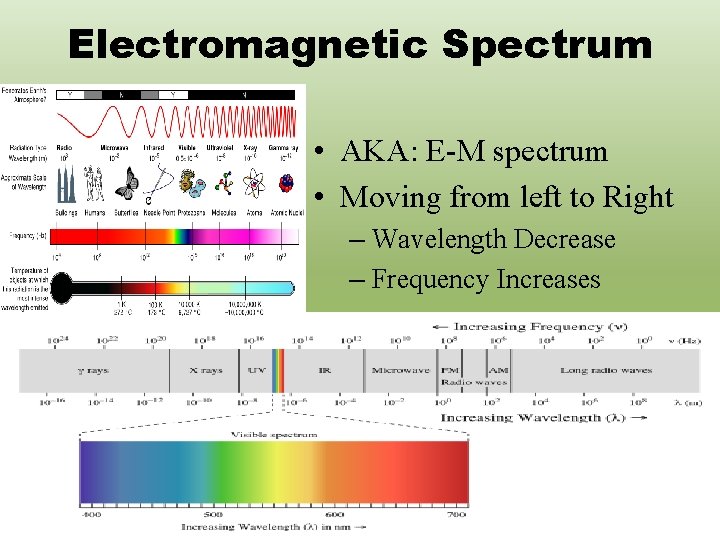
Electromagnetic Spectrum • AKA: E-M spectrum • Moving from left to Right – Wavelength Decrease – Frequency Increases
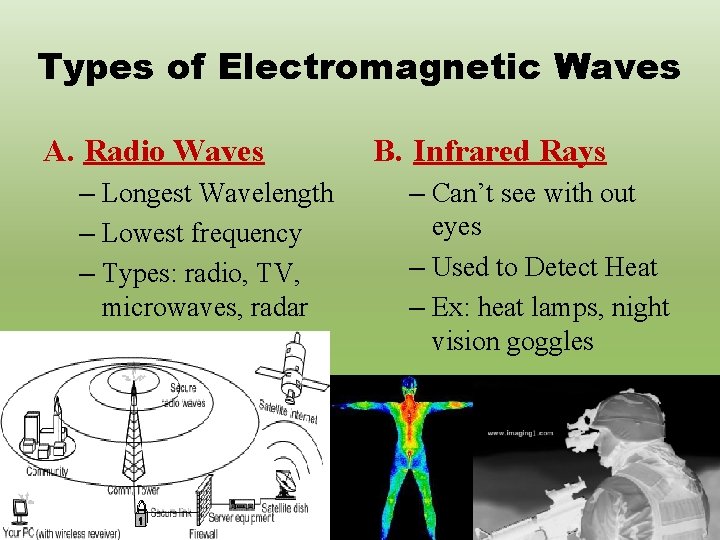
Types of Electromagnetic Waves A. Radio Waves – Longest Wavelength – Lowest frequency – Types: radio, TV, microwaves, radar B. Infrared Rays – Can’t see with out eyes – Used to Detect Heat – Ex: heat lamps, night vision goggles
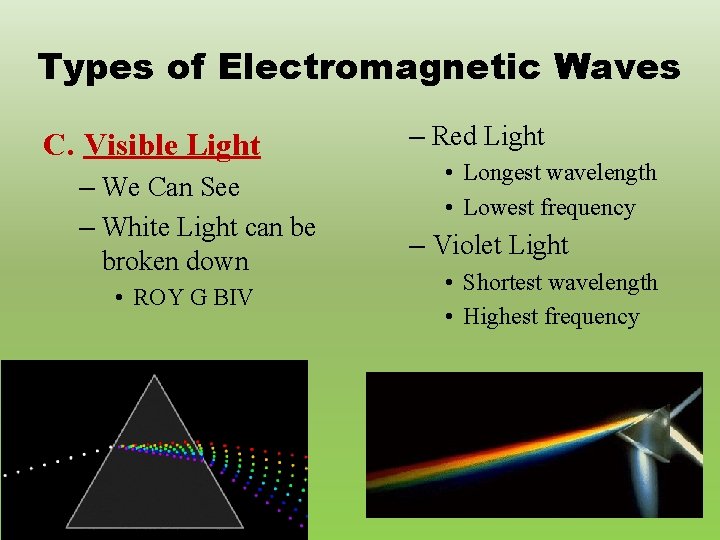
Types of Electromagnetic Waves C. Visible Light – We Can See – White Light can be broken down • ROY G BIV – Red Light • Longest wavelength • Lowest frequency – Violet Light • Shortest wavelength • Highest frequency
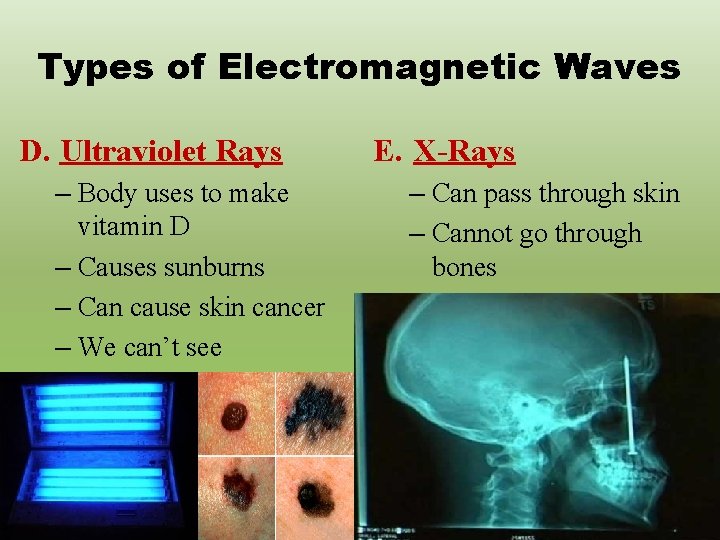
Types of Electromagnetic Waves D. Ultraviolet Rays – Body uses to make vitamin D – Causes sunburns – Can cause skin cancer – We can’t see E. X-Rays – Can pass through skin – Cannot go through bones
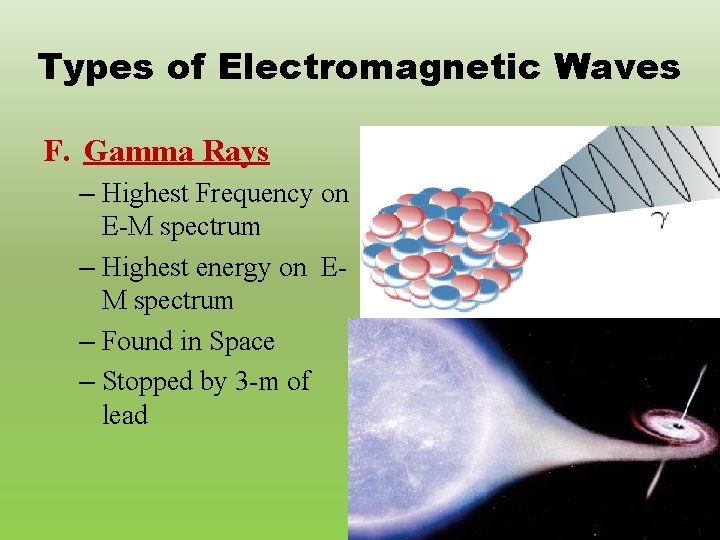
Types of Electromagnetic Waves F. Gamma Rays – Highest Frequency on E-M spectrum – Highest energy on EM spectrum – Found in Space – Stopped by 3 -m of lead