
Physical Science Chemical Reactions Changes in Matter n

- Slides: 20
Physical Science Chemical Reactions
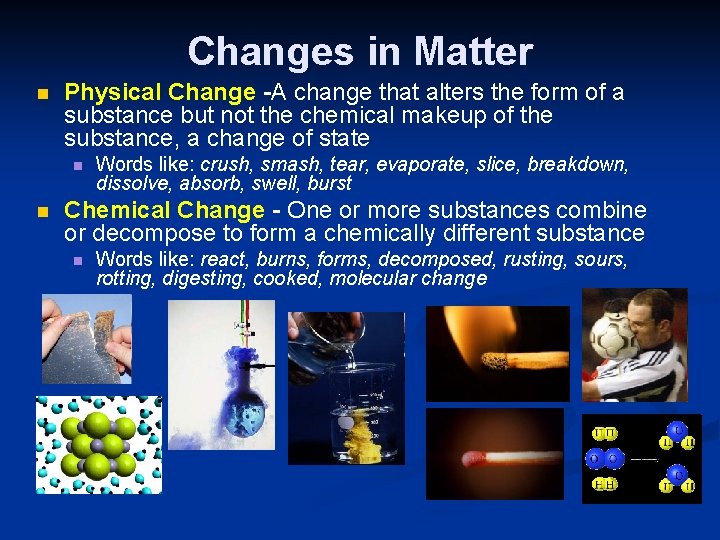
Changes in Matter n Physical Change -A change that alters the form of a substance but not the chemical makeup of the substance, a change of state n n Words like: crush, smash, tear, evaporate, slice, breakdown, dissolve, absorb, swell, burst Chemical Change - One or more substances combine or decompose to form a chemically different substance n Words like: react, burns, forms, decomposed, rusting, sours, rotting, digesting, cooked, molecular change
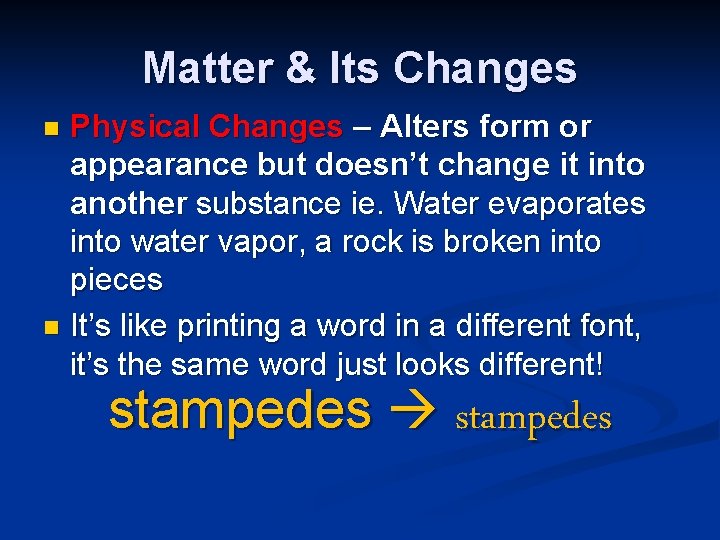
Matter & Its Changes Physical Changes – Alters form or appearance but doesn’t change it into another substance ie. Water evaporates into water vapor, a rock is broken into pieces n It’s like printing a word in a different font, it’s the same word just looks different! n stampedes
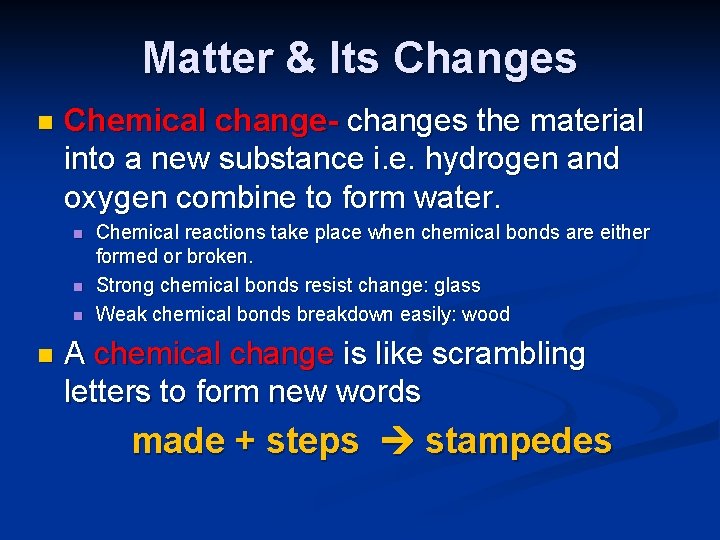
Matter & Its Changes n Chemical change- changes the material into a new substance i. e. hydrogen and oxygen combine to form water. n n Chemical reactions take place when chemical bonds are either formed or broken. Strong chemical bonds resist change: glass Weak chemical bonds breakdown easily: wood A chemical change is like scrambling letters to form new words made + steps stampedes
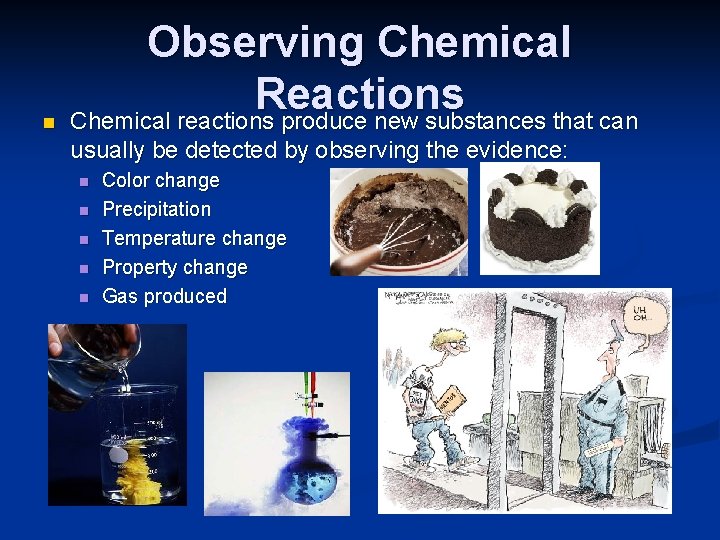
n Observing Chemical Reactions Chemical reactions produce new substances that can usually be detected by observing the evidence: n n n Color change Precipitation Temperature change Property change Gas produced
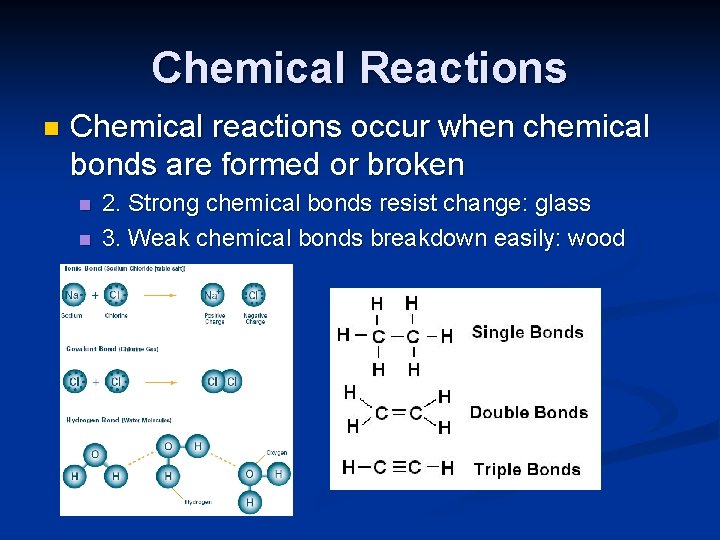
Chemical Reactions n Chemical reactions occur when chemical bonds are formed or broken n n 2. Strong chemical bonds resist change: glass 3. Weak chemical bonds breakdown easily: wood
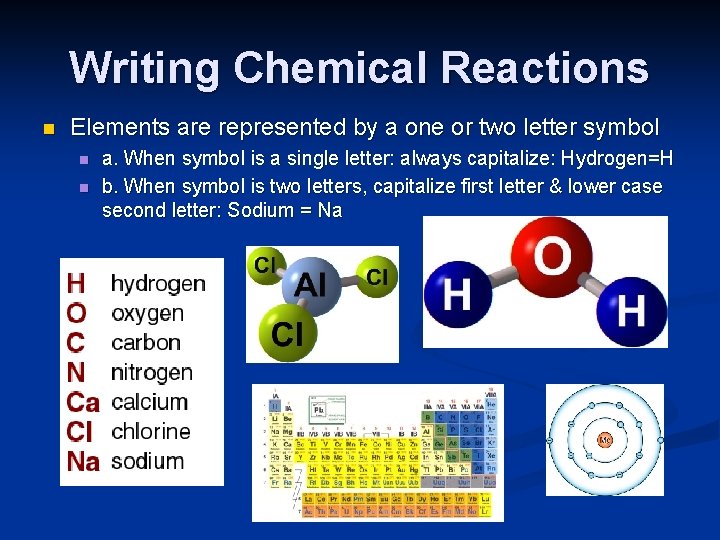
Writing Chemical Reactions n Elements are represented by a one or two letter symbol n n a. When symbol is a single letter: always capitalize: Hydrogen=H b. When symbol is two letters, capitalize first letter & lower case second letter: Sodium = Na
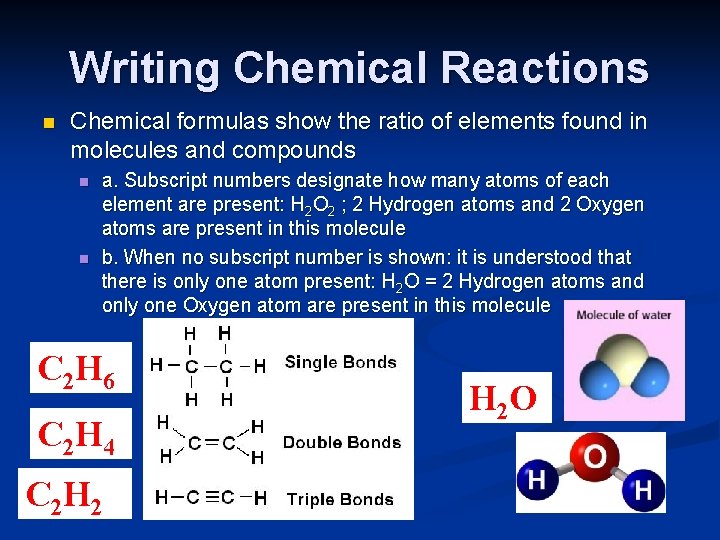
Writing Chemical Reactions n Chemical formulas show the ratio of elements found in molecules and compounds n n a. Subscript numbers designate how many atoms of each element are present: H 2 O 2 ; 2 Hydrogen atoms and 2 Oxygen atoms are present in this molecule b. When no subscript number is shown: it is understood that there is only one atom present: H 2 O = 2 Hydrogen atoms and only one Oxygen atom are present in this molecule C 2 H 6 C 2 H 4 C 2 H 2 H 2 O
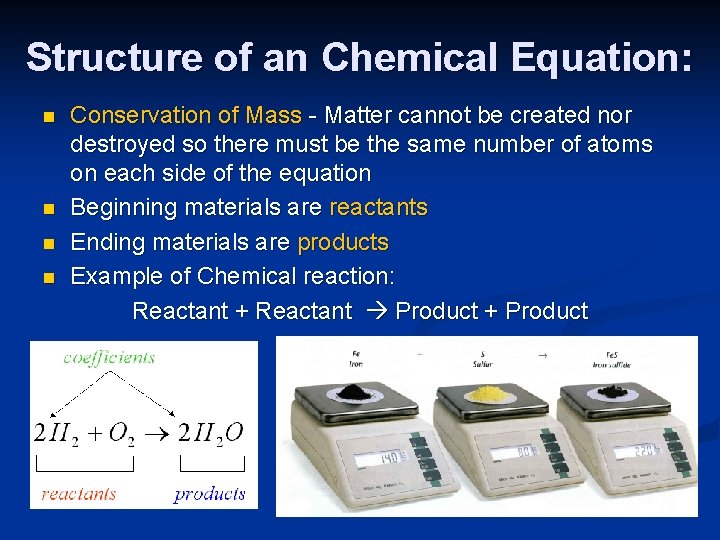
Structure of an Chemical Equation: n n Conservation of Mass - Matter cannot be created nor destroyed so there must be the same number of atoms on each side of the equation Beginning materials are reactants Ending materials are products Example of Chemical reaction: Reactant + Reactant Product + Product
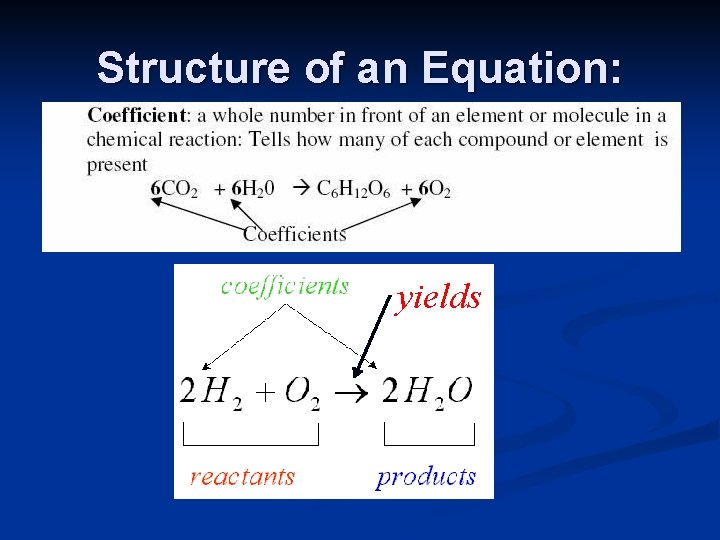
Structure of an Equation: yields
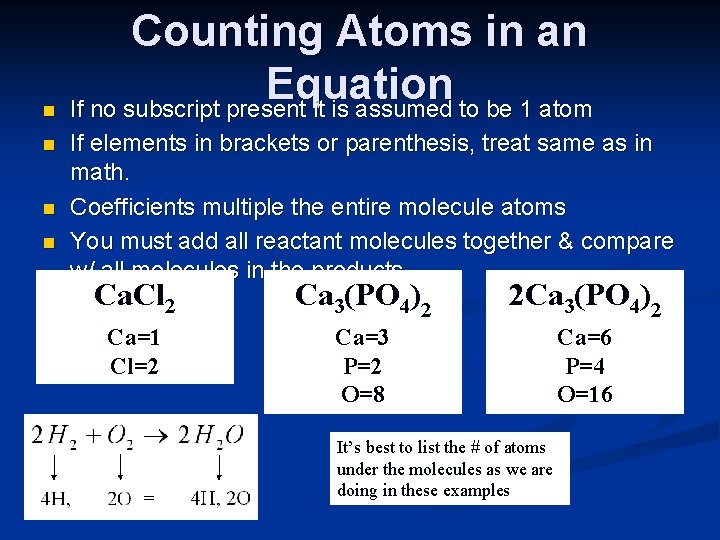
n n Counting Atoms in an Equation If no subscript present it is assumed to be 1 atom If elements in brackets or parenthesis, treat same as in math. Coefficients multiple the entire molecule atoms You must add all reactant molecules together & compare w/ all molecules in the products Ca. Cl 2 Ca 3(PO 4)2 2 Ca 3(PO 4)2 Ca=1 Cl=2 Ca=3 P=2 O=8 Ca=6 P=4 O=16 It’s best to list the # of atoms under the molecules as we are doing in these examples
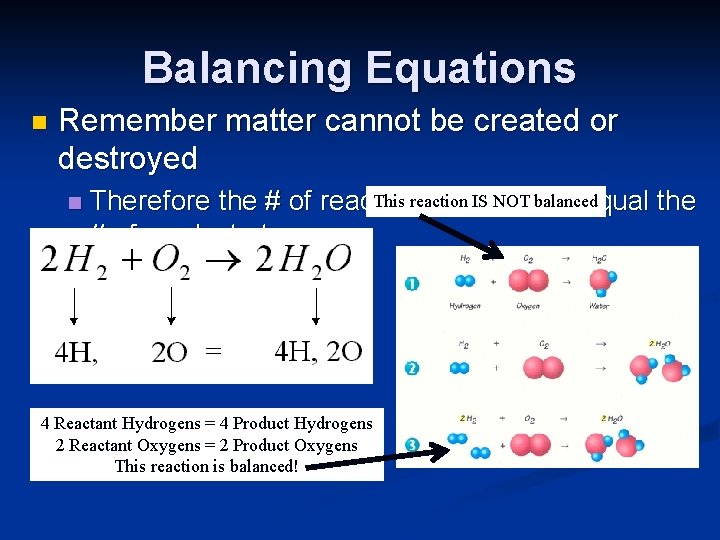
Balancing Equations n Remember matter cannot be created or destroyed n This reaction IS NOT balanced Therefore the # of reactant atoms must equal the # of product atoms 4 Reactant Hydrogens = 4 Product Hydrogens 2 Reactant Oxygens = 2 Product Oxygens This reaction is balanced!
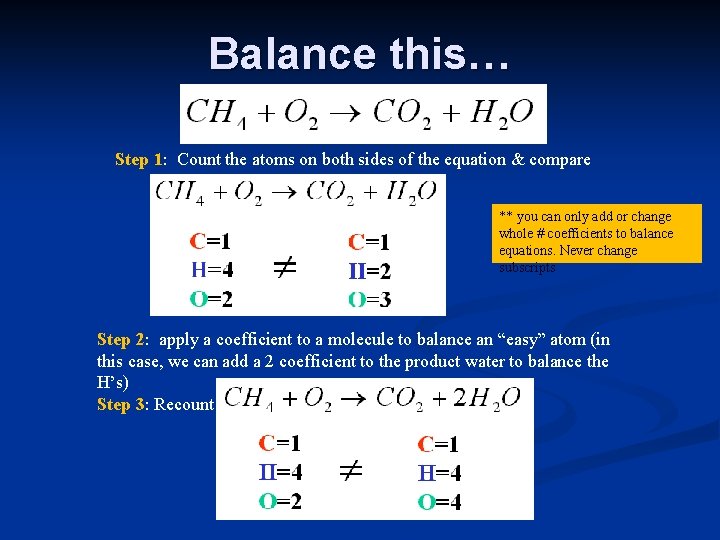
Balance this… Step 1: Count the atoms on both sides of the equation & compare ** you can only add or change whole # coefficients to balance equations. Never change subscripts Step 2: apply a coefficient to a molecule to balance an “easy” atom (in this case, we can add a 2 coefficient to the product water to balance the H’s) Step 3: Recount
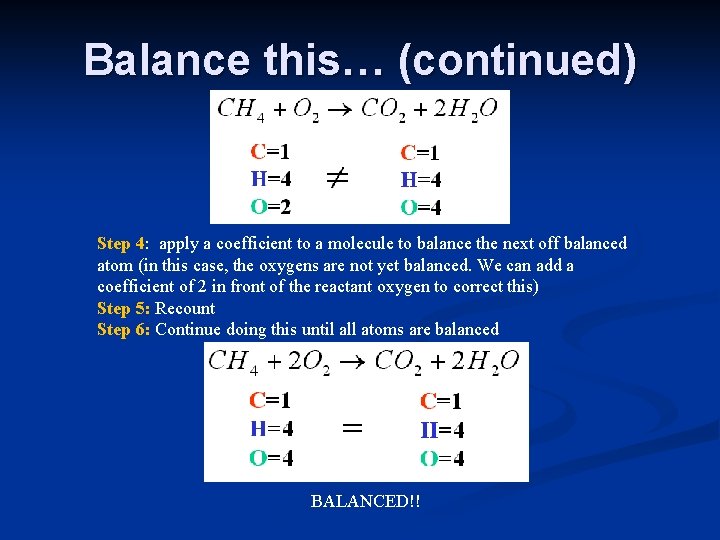
Balance this… (continued) Step 4: apply a coefficient to a molecule to balance the next off balanced atom (in this case, the oxygens are not yet balanced. We can add a coefficient of 2 in front of the reactant oxygen to correct this) Step 5: Recount Step 6: Continue doing this until all atoms are balanced BALANCED!!
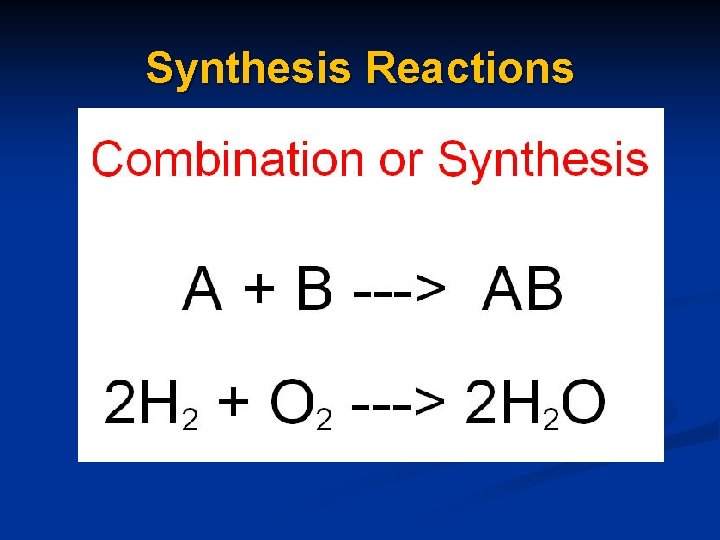
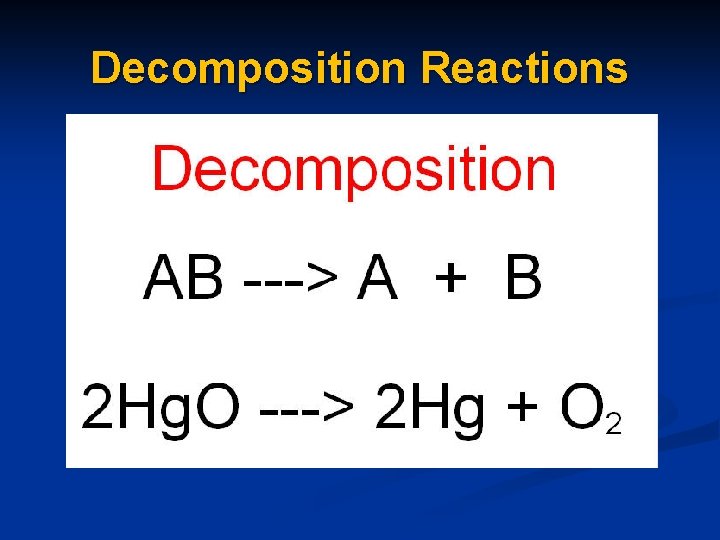
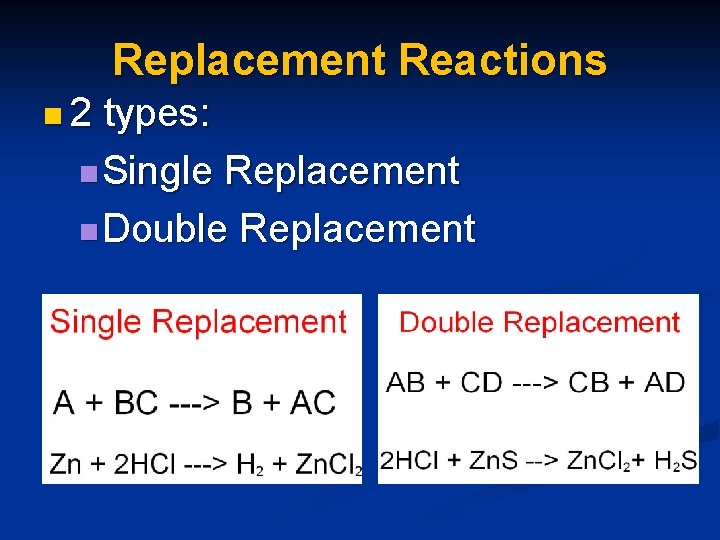
Classifying Chemical Reactions n Synthesis: When two or more substances combine to form a more complex substance 2 H 2 + O 2 2 H 2 O n Decomposition: When a complex substance is broken into two or more simpler substances: 2 H 2 O 2 H 2 + O 2 Replacement: When one element replaces another or when two elements in different compounds change places: 2 Cu. O + C 2 Cu + CO 2 n
Synthesis Reactions
Decomposition Reactions
Replacement Reactions n 2 types: n Single Replacement n Double Replacement
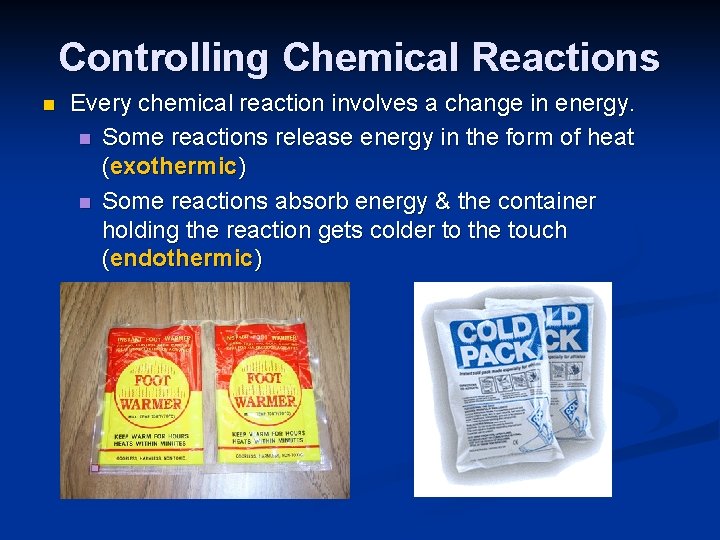
Controlling Chemical Reactions n Every chemical reaction involves a change in energy. n Some reactions release energy in the form of heat (exothermic) n Some reactions absorb energy & the container holding the reaction gets colder to the touch (endothermic)
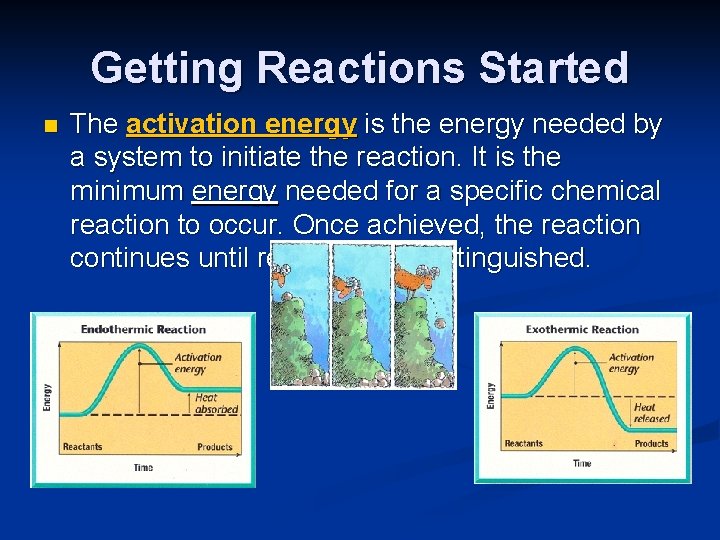
Getting Reactions Started n The activation energy is the energy needed by a system to initiate the reaction. It is the minimum energy needed for a specific chemical reaction to occur. Once achieved, the reaction continues until reactants are extinguished.