
Physical Science Characteristics of Waves What are waves
- Slides: 30
Physical Science Characteristics of Waves
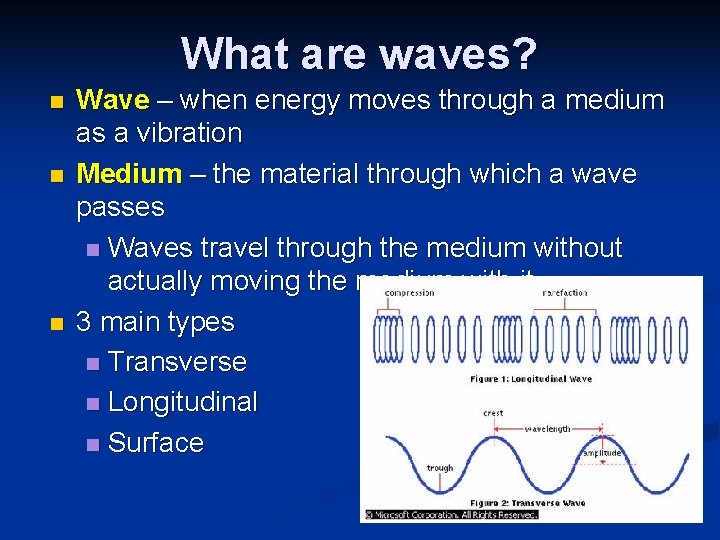
What are waves? n n n Wave – when energy moves through a medium as a vibration Medium – the material through which a wave passes n Waves travel through the medium without actually moving the medium with it. 3 main types n Transverse n Longitudinal n Surface
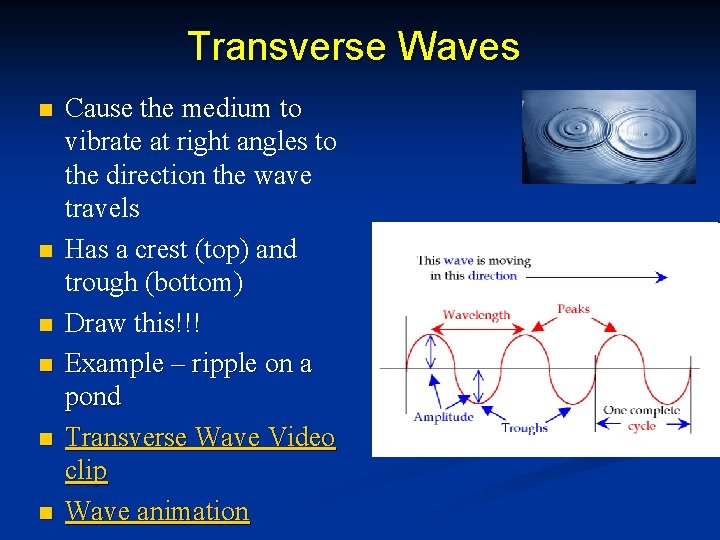
Transverse Waves n n n Cause the medium to vibrate at right angles to the direction the wave travels Has a crest (top) and trough (bottom) Draw this!!! Example – ripple on a pond Transverse Wave Video clip Wave animation
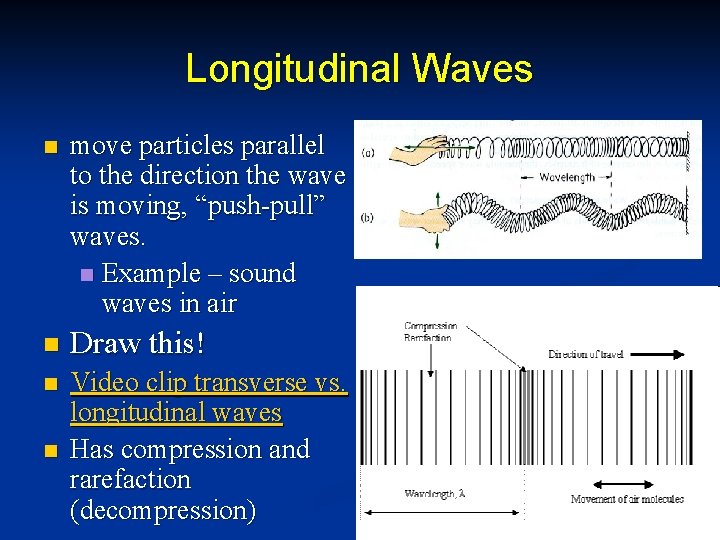
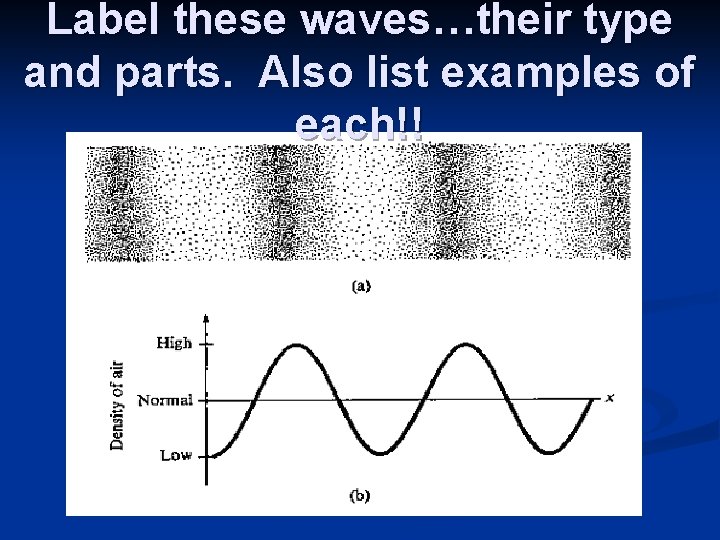
Longitudinal Waves n move particles parallel to the direction the wave is moving, “push-pull” waves. n Example – sound waves in air n Draw this! n Video clip transverse vs. longitudinal waves Has compression and rarefaction (decompression) n
n Grandpa John – Wave Motion n List examples of each type of wave as you watch the video. n So, Examples of Transverse? n n Radio and light Examples of Longitudinal? n Sound and earthquakes
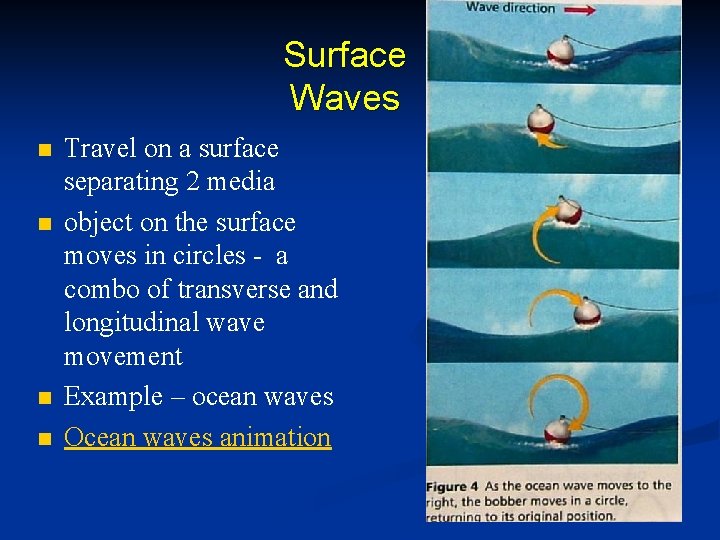
Surface Waves n n Travel on a surface separating 2 media object on the surface moves in circles - a combo of transverse and longitudinal wave movement Example – ocean waves Ocean waves animation
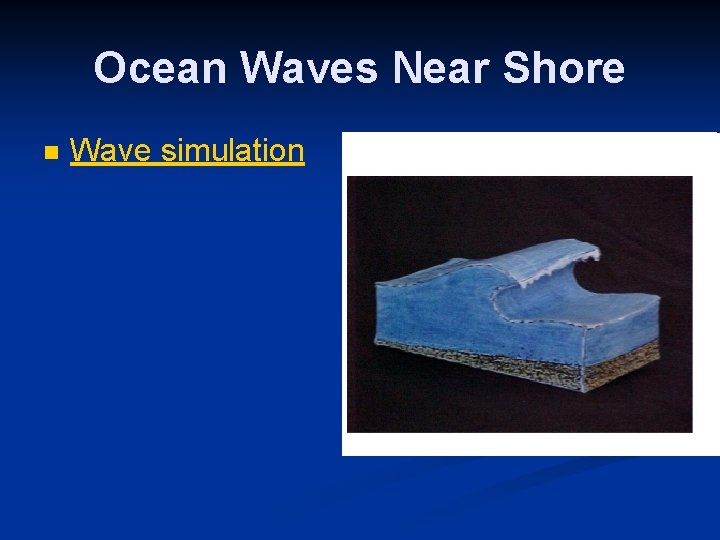
Ocean Waves Near Shore n Wave simulation
Properties of Waves n Period (T) n Frequency (ƒ) n Wavelength (λ) n Speed (v) n Amplitude n Properties of waves video clip
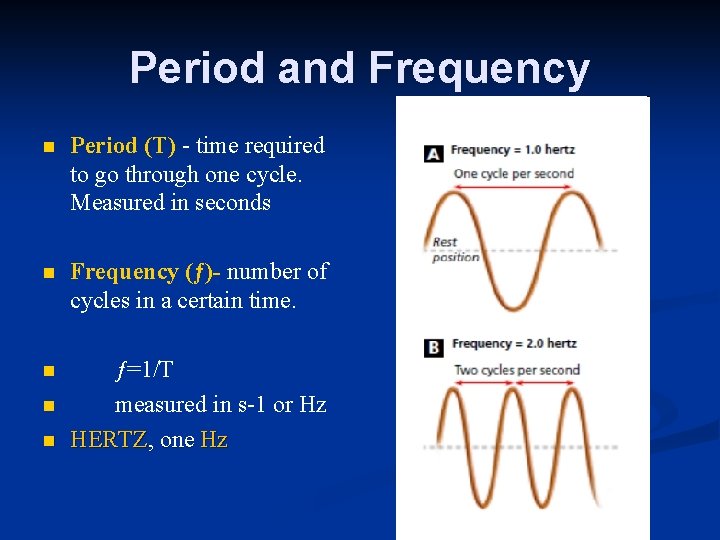
Period and Frequency n Period (T) - time required to go through one cycle. Measured in seconds n Frequency (ƒ)- number of cycles in a certain time. n ƒ=1/T measured in s-1 or Hz HERTZ, one Hz n n
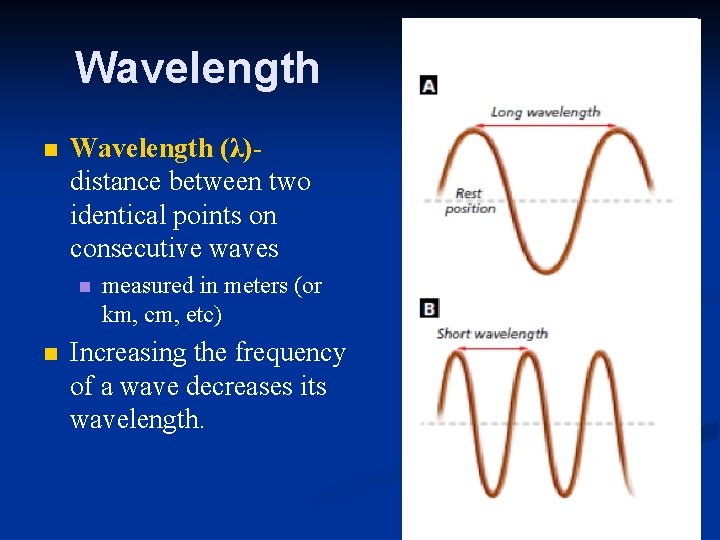
Wavelength n Wavelength (λ)distance between two identical points on consecutive waves n n measured in meters (or km, cm, etc) Increasing the frequency of a wave decreases its wavelength.
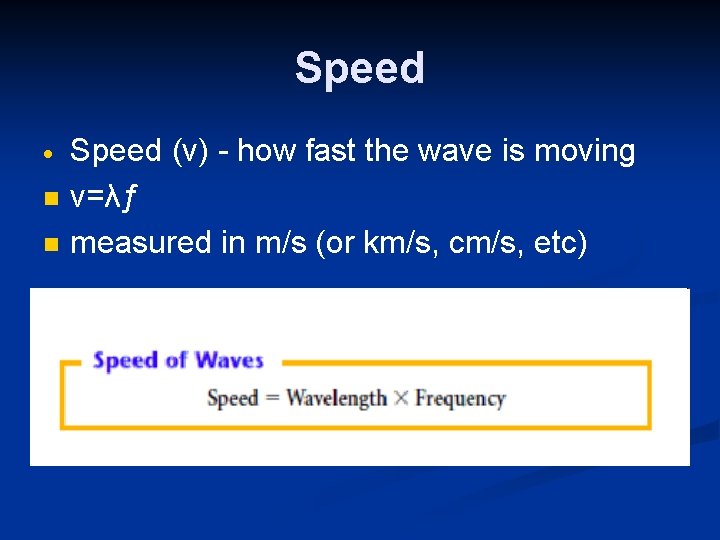
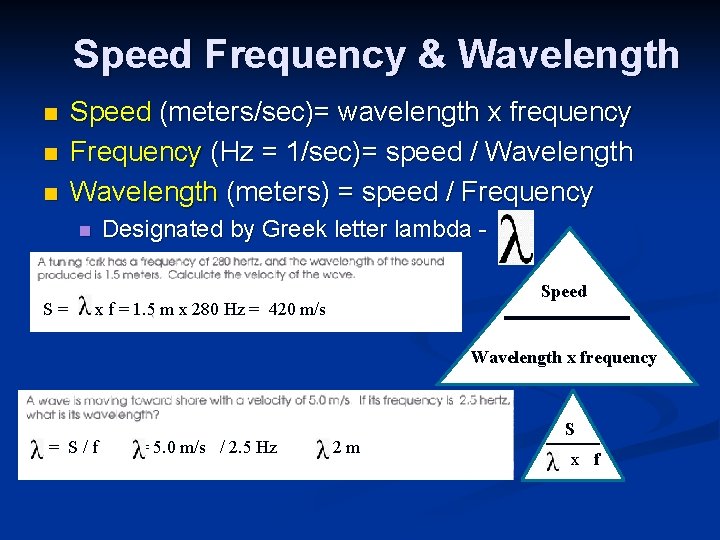
Speed · n n Speed (v) - how fast the wave is moving v=λƒ measured in m/s (or km/s, cm/s, etc)
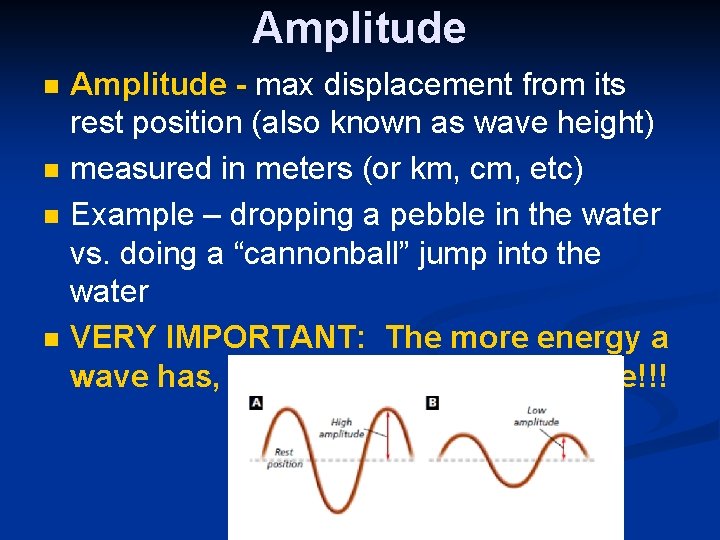
Amplitude n n Amplitude - max displacement from its rest position (also known as wave height) measured in meters (or km, cm, etc) Example – dropping a pebble in the water vs. doing a “cannonball” jump into the water VERY IMPORTANT: The more energy a wave has, the greater is its amplitude!!!
Label these waves…their type and parts. Also list examples of each!!
Speed Frequency & Wavelength n n n Speed (meters/sec)= wavelength x frequency Frequency (Hz = 1/sec)= speed / Wavelength (meters) = speed / Frequency Designated by Greek letter lambda - n S= x f = 1. 5 m x 280 Hz = 420 m/s Speed Wavelength x frequency = S/f = 5. 0 m/s / 2. 5 Hz =2 m S x f
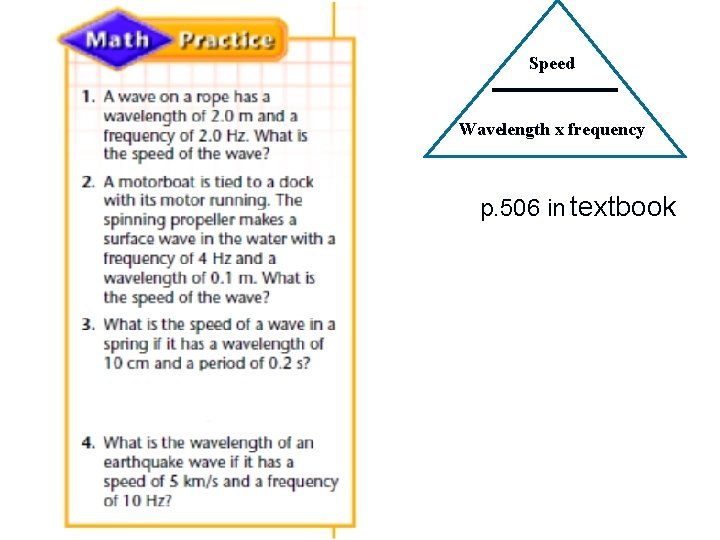
Speed Wavelength x frequency p. 506 in textbook
Waves in students demo
Waves Video n. Waves Video There is a worksheet that goes along with this! 20 minute video!!! This is found in the Discovery Streaming “my content” file!!
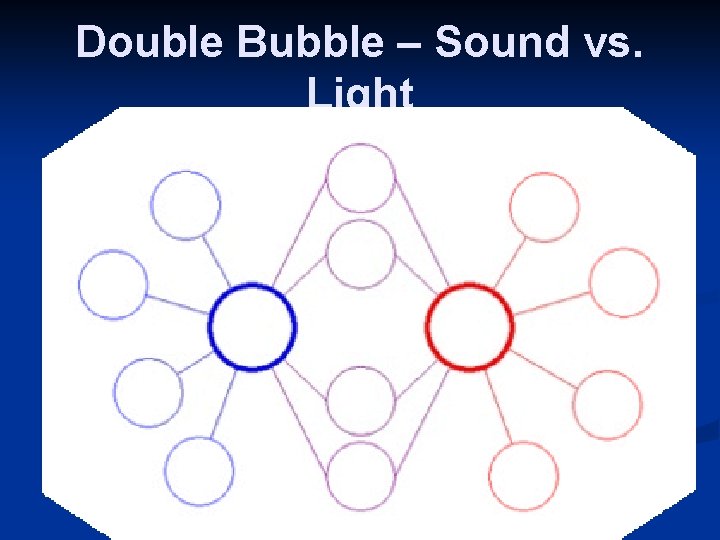
Double Bubble – Sound vs. Light
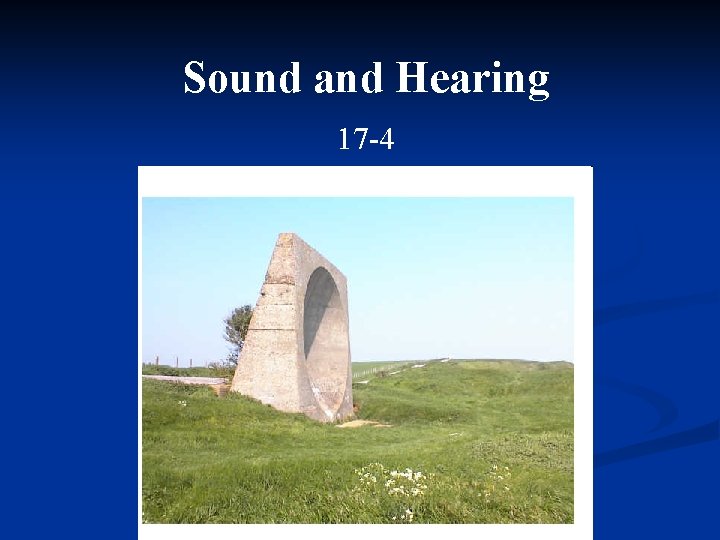
Sound and Hearing 17 -4
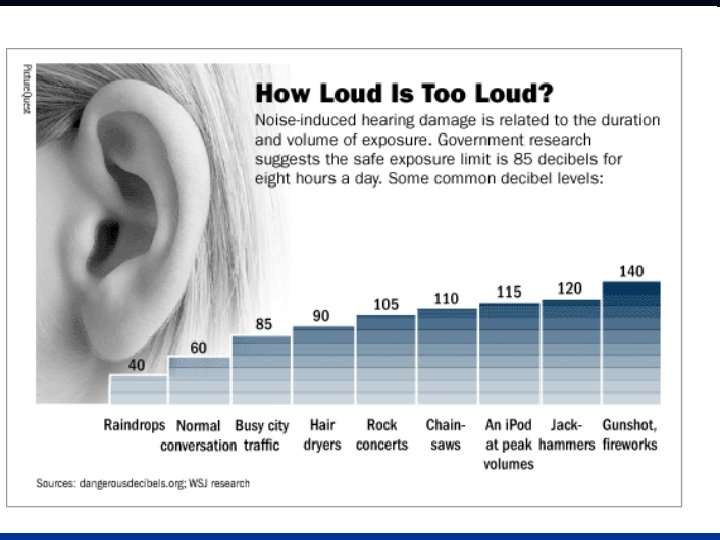
Properties of Sound Waves n n n n n Longitudinal waves speed- travels at different speeds in different media air- 343 m/s fresh water- 1510 m/s Salt water- 1550 m/s Aluminum- 5000 m/s Intensity- rate at which a wave's energy flows through an area measured in Decibels, d. B Loudness- physical response to sound Pitch- frequency of sound as you hear it. Higher frequency, higher note Infrasound and Ultra sound
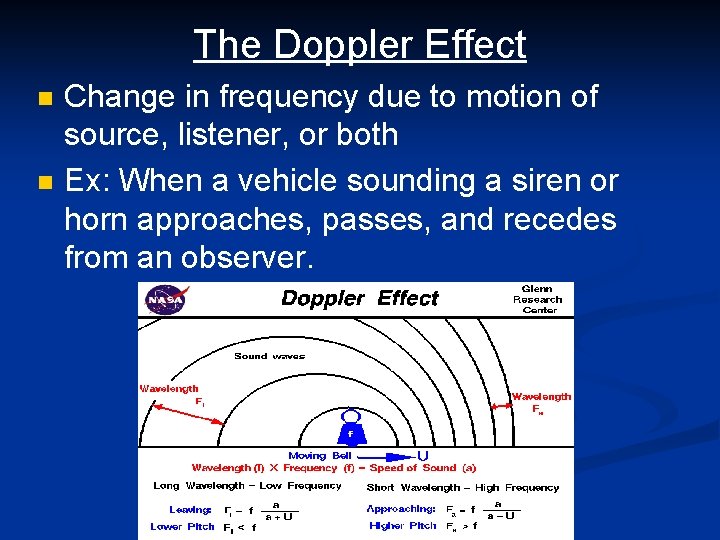
The Doppler Effect n n Change in frequency due to motion of source, listener, or both Ex: When a vehicle sounding a siren or horn approaches, passes, and recedes from an observer.
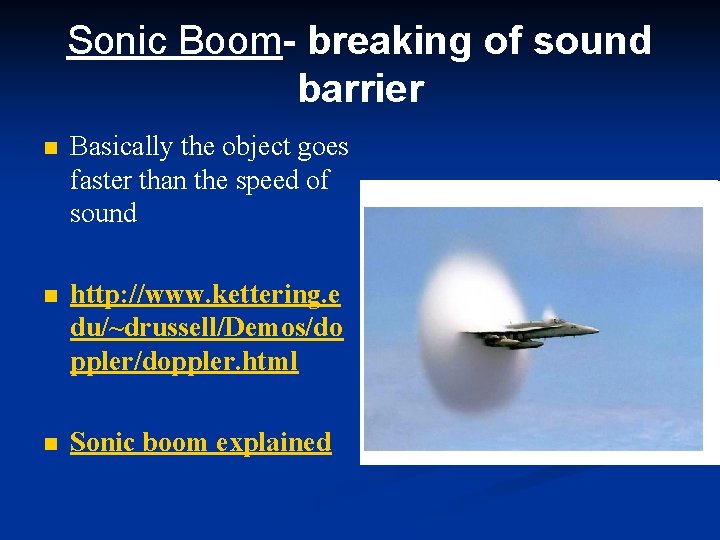
Sonic Boom- breaking of sound barrier n Basically the object goes faster than the speed of sound n http: //www. kettering. e du/~drussell/Demos/do ppler/doppler. html n Sonic boom explained
Wrap-up What is the Doppler effect? What is a sonic boom?
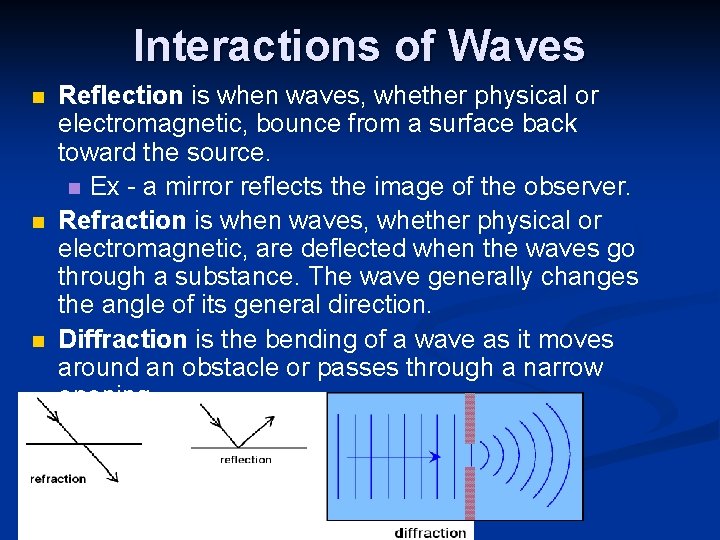
Interactions of Waves n n n Reflection is when waves, whether physical or electromagnetic, bounce from a surface back toward the source. n Ex - a mirror reflects the image of the observer. Refraction is when waves, whether physical or electromagnetic, are deflected when the waves go through a substance. The wave generally changes the angle of its general direction. Diffraction is the bending of a wave as it moves around an obstacle or passes through a narrow opening.
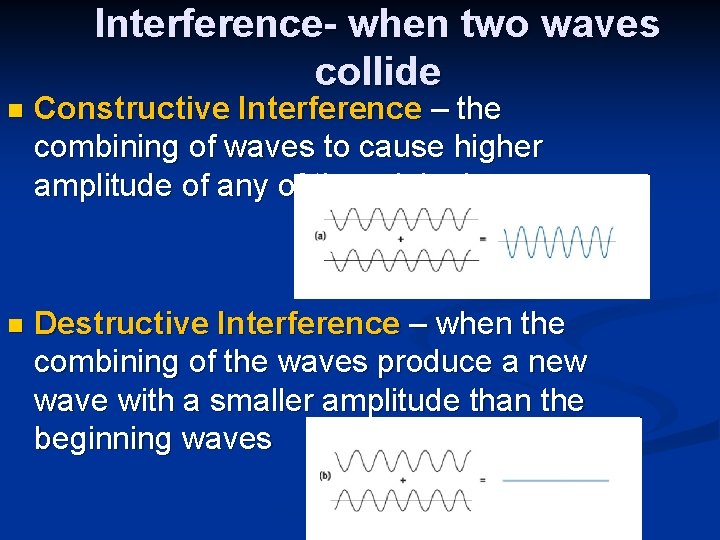
Interference- when two waves collide n Constructive Interference – the combining of waves to cause higher amplitude of any of the original waves. n Destructive Interference – when the combining of the waves produce a new wave with a smaller amplitude than the beginning waves
Standing Waves n appear to stay in one place n result of constructive and destructive interference between original wave and reflected wave contains node(s) and antinode(s) n n Forms only if half a wavelength or a multiple of it fits exactly into the length of the rope n Standing Waves Video Clip
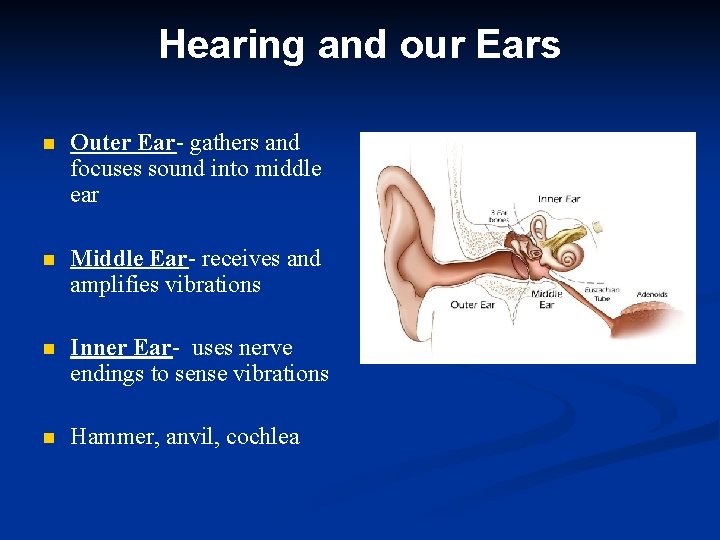
Hearing and our Ears n Outer Ear- gathers and focuses sound into middle ear n Middle Ear- receives and amplifies vibrations n Inner Ear- uses nerve endings to sense vibrations n Hammer, anvil, cochlea
Instruments n alter pitch by changing frequency of standing waves n change tension, length, and amplitude n Resonance- increased amplitude over time because of added energy. Resonance animation n
Video Clip n Sonic Boom n Sonic boom explained n Deadliest catch – monster waves n World’s Biggest Wave ever surfed