
Physical Regions And Water Systems of the United
- Slides: 14
Physical Regions And Water Systems of the United States
United States Facts • Located in North America, which is the third largest continent. • North America is connected to South America by an isthmus. • United States classified into nine physical regions. These regions are of great contrast to each other.
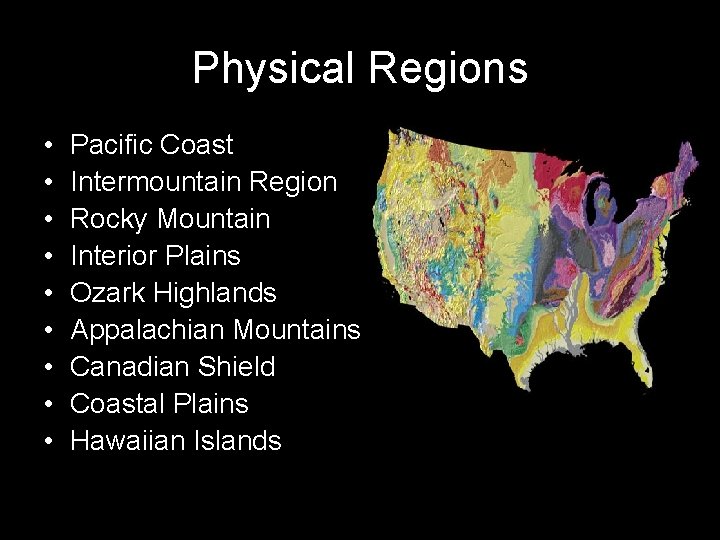
Physical Regions • • • Pacific Coast Intermountain Region Rocky Mountain Interior Plains Ozark Highlands Appalachian Mountains Canadian Shield Coastal Plains Hawaiian Islands
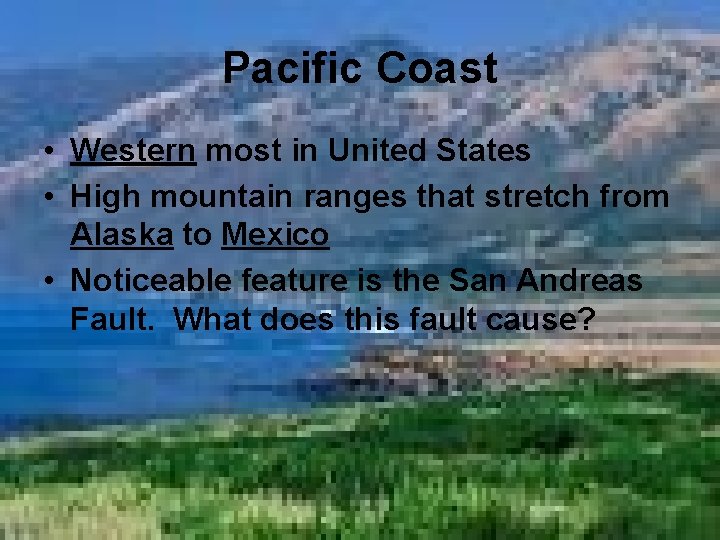
Pacific Coast • Western most in United States • High mountain ranges that stretch from Alaska to Mexico • Noticeable feature is the San Andreas Fault. What does this fault cause?
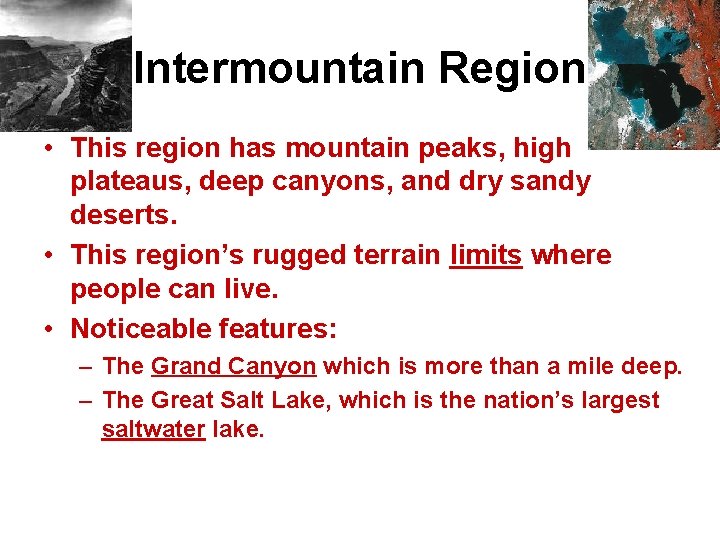
Intermountain Region • This region has mountain peaks, high plateaus, deep canyons, and dry sandy deserts. • This region’s rugged terrain limits where people can live. • Noticeable features: – The Grand Canyon which is more than a mile deep. – The Great Salt Lake, which is the nation’s largest saltwater lake.
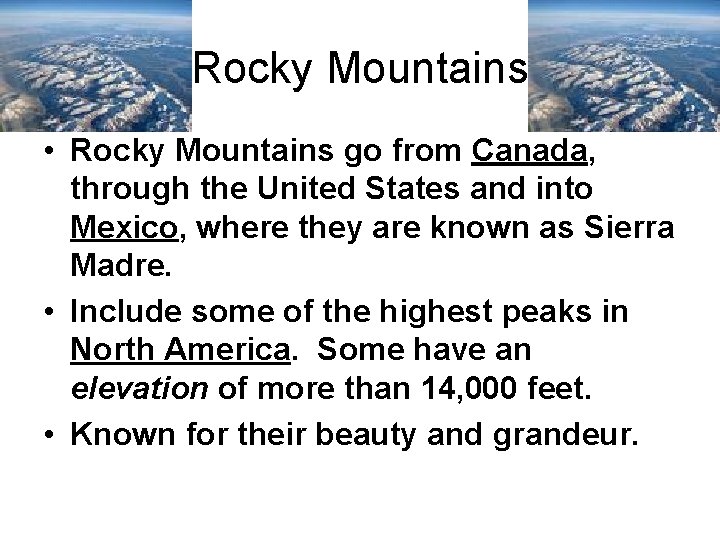
Rocky Mountains • Rocky Mountains go from Canada, through the United States and into Mexico, where they are known as Sierra Madre. • Include some of the highest peaks in North America. Some have an elevation of more than 14, 000 feet. • Known for their beauty and grandeur.
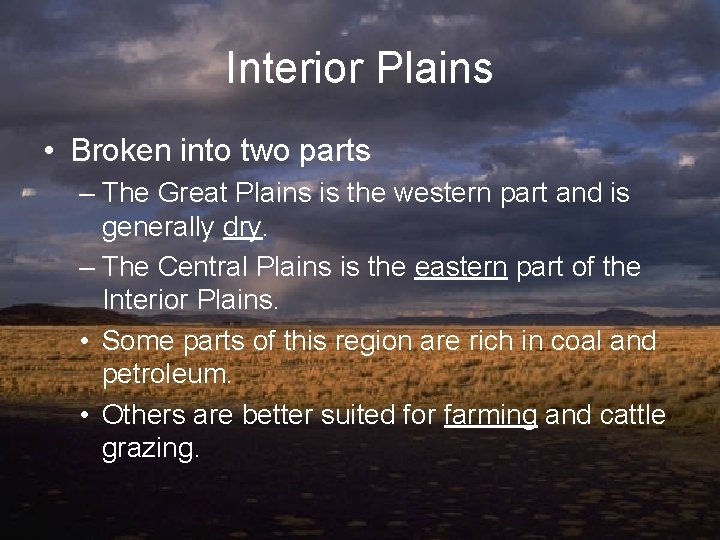
Interior Plains • Broken into two parts – The Great Plains is the western part and is generally dry. – The Central Plains is the eastern part of the Interior Plains. • Some parts of this region are rich in coal and petroleum. • Others are better suited for farming and cattle grazing.
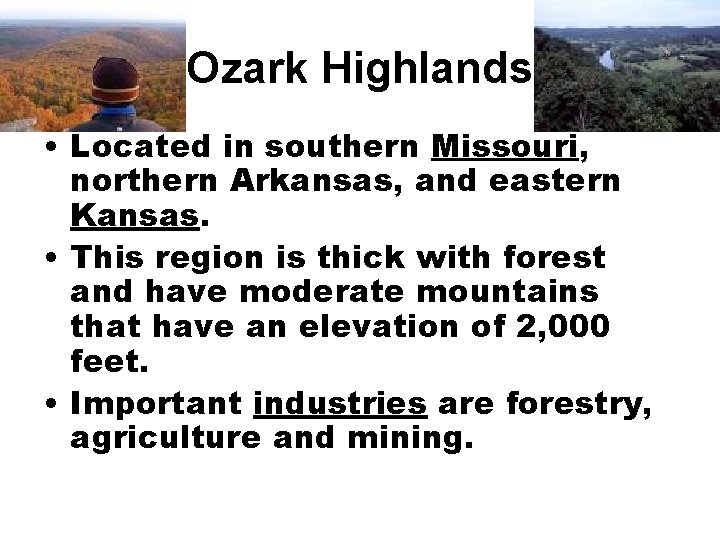
Ozark Highlands • Located in southern Missouri, northern Arkansas, and eastern Kansas. • This region is thick with forest and have moderate mountains that have an elevation of 2, 000 feet. • Important industries are forestry, agriculture and mining.
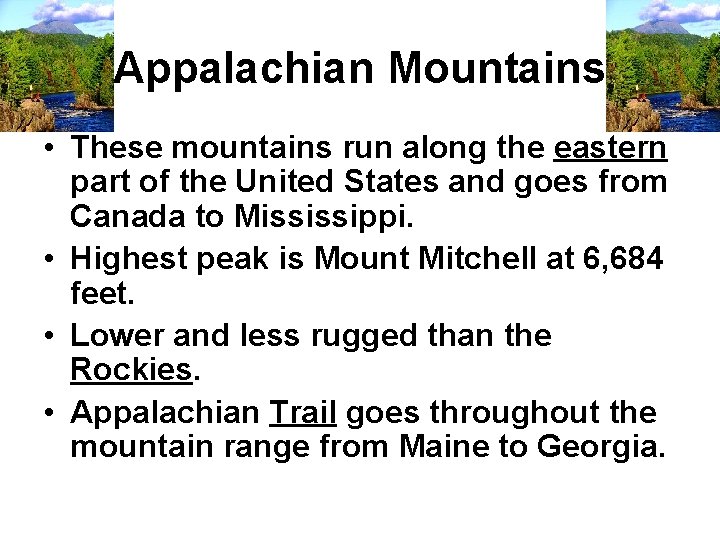
Appalachian Mountains • These mountains run along the eastern part of the United States and goes from Canada to Mississippi. • Highest peak is Mount Mitchell at 6, 684 feet. • Lower and less rugged than the Rockies. • Appalachian Trail goes throughout the mountain range from Maine to Georgia.
Canadian Shield • Lowland area that is mostly in Canada buy has areas in Michigan, Wisconsin, and Minnesota. • Rich in minerals. • Once a mountainous area, but centuries of erosion has reduced the area to low hills and plains.
Coastal Plains • Eastern most region of the United States and is a fairly flat, lowland area. • Made up of two sub regions: – Atlantic Plain is located between the Atlantic Ocean and Appalachian Mountains. – Gulf Plain lies along the Gulf of Mexico and has large deposits of petroleum.
Hawaiian Islands • Hawaii is 2, 400 miles from California. • Made up of eight large islands and many smaller ones. • Islands are actually visual tops of underwater volcanoes. • Much of Hawaii has a wet, tropical climate and has dense tropical rain forest.
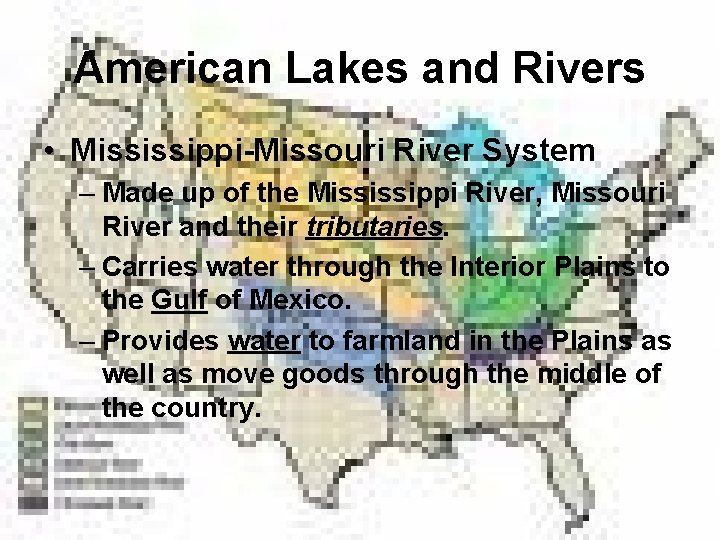
American Lakes and Rivers • Mississippi-Missouri River System – Made up of the Mississippi River, Missouri River and their tributaries. – Carries water through the Interior Plains to the Gulf of Mexico. – Provides water to farmland in the Plains as well as move goods through the middle of the country.
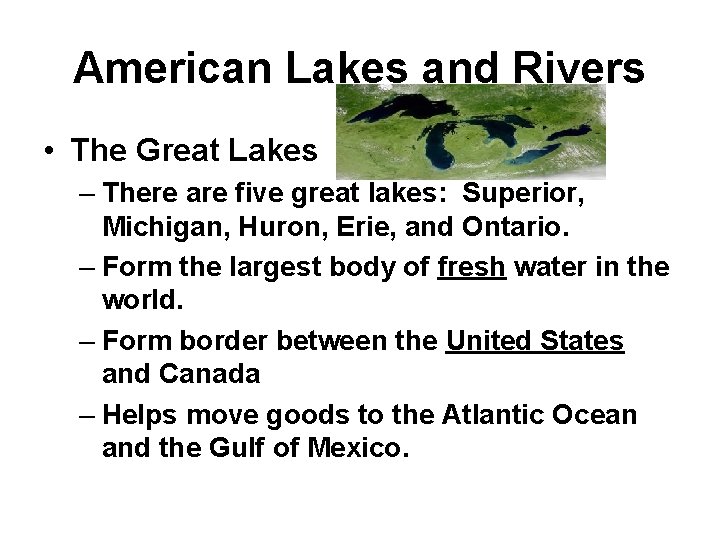
American Lakes and Rivers • The Great Lakes – There are five great lakes: Superior, Michigan, Huron, Erie, and Ontario. – Form the largest body of fresh water in the world. – Form border between the United States and Canada – Helps move goods to the Atlantic Ocean and the Gulf of Mexico.