
Physical properties Texture Texture proportions of sand silt
- Slides: 11
Physical properties – Texture • Texture – proportions of sand, silt, and clay – Determines water holding capacity, water availability, nutrient supply capacity
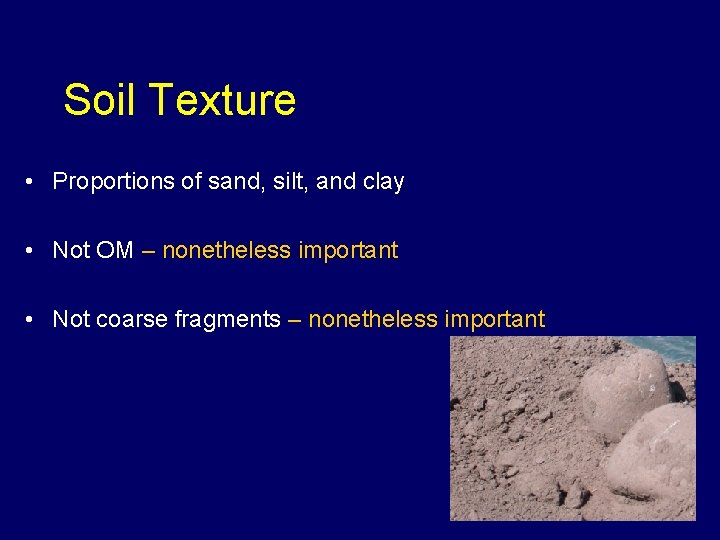
Soil Texture • Proportions of sand, silt, and clay • Not OM – nonetheless important • Not coarse fragments – nonetheless important
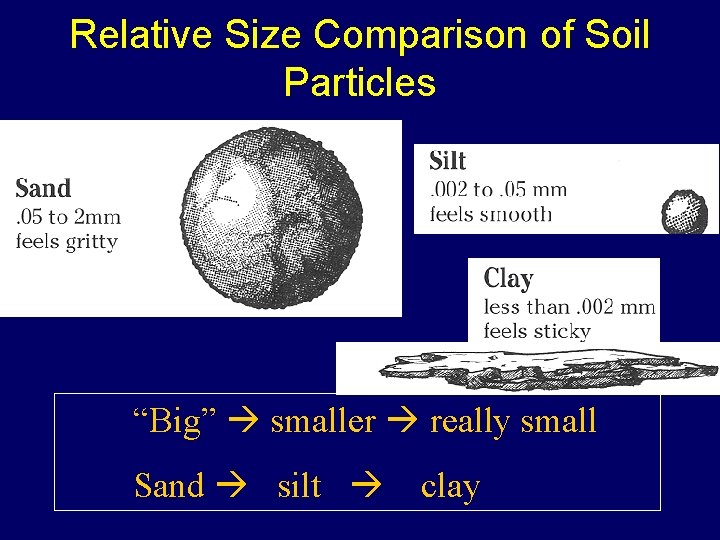
Relative Size Comparison of Soil Particles “Big” smaller really small Sand silt clay
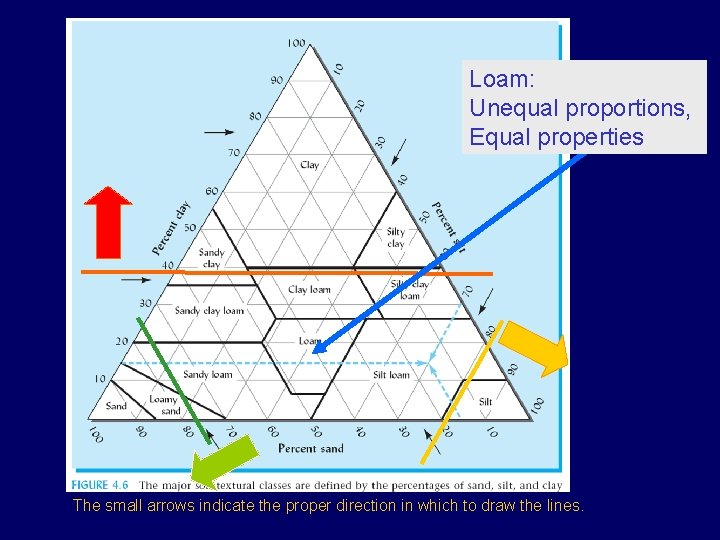
Loam: Unequal proportions, Equal properties The small arrows indicate the proper direction in which to draw the lines.
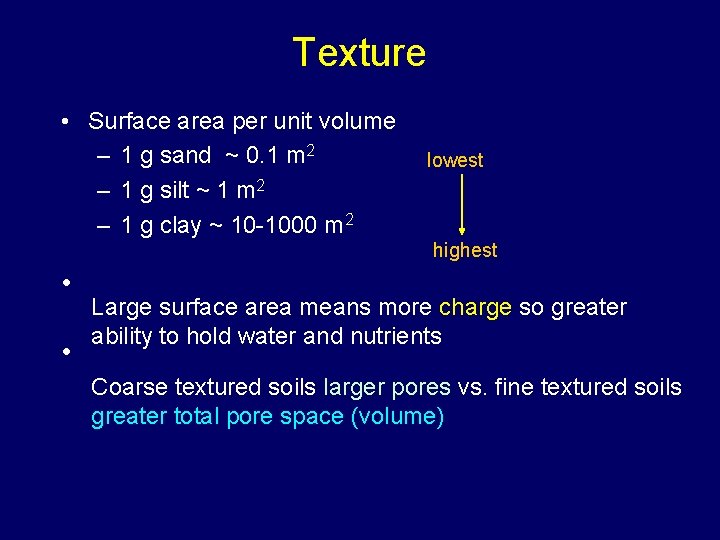
Texture • Surface area per unit volume – 1 g sand ~ 0. 1 m 2 – 1 g silt ~ 1 m 2 – 1 g clay ~ 10 -1000 m 2 lowest highest • • Large surface area means more charge so greater ability to hold water and nutrients Coarse textured soils larger pores vs. fine textured soils greater total pore space (volume)
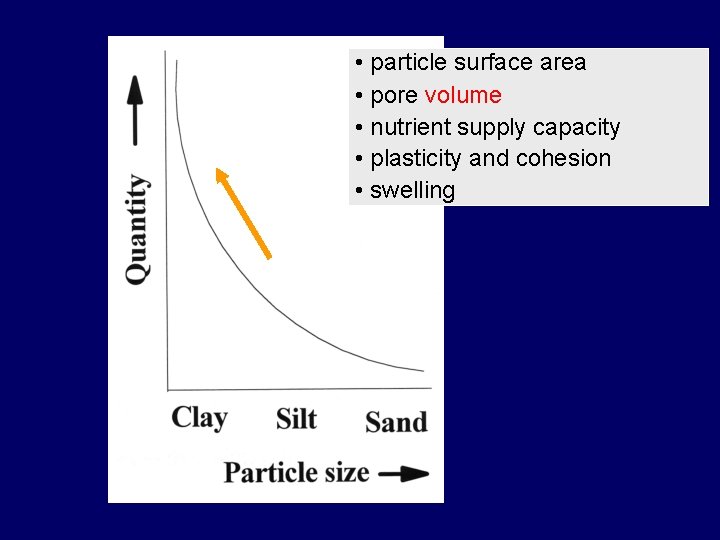
• particle surface area • pore volume • nutrient supply capacity • plasticity and cohesion • swelling
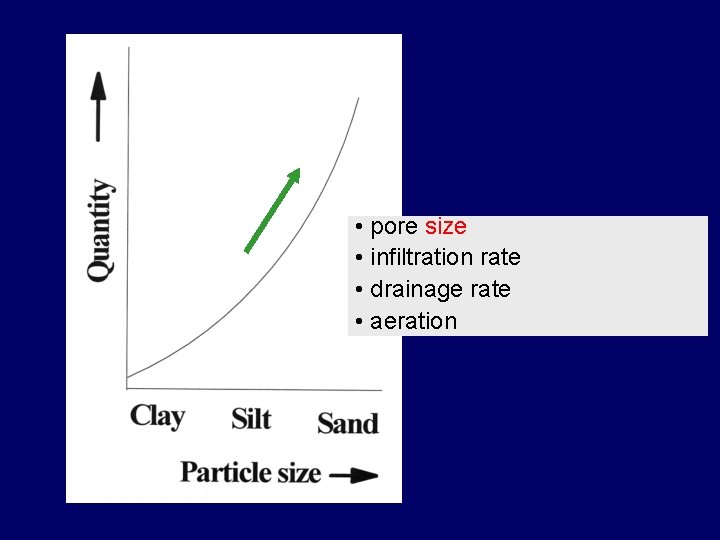
• pore size • infiltration rate • drainage rate • aeration
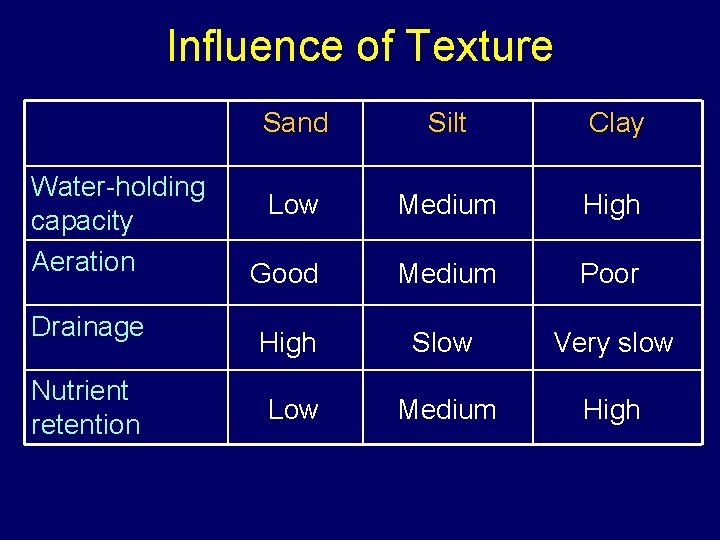
Influence of Texture Water-holding capacity Aeration Drainage Nutrient retention Sand Silt Clay Low Medium High Good Medium Poor High Slow Very slow Low Medium High
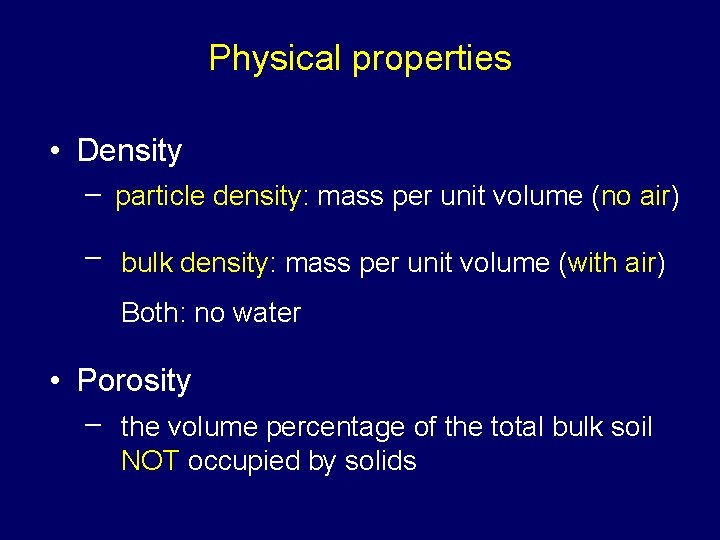
Physical properties • Density – particle density: mass per unit volume (no air) – bulk density: mass per unit volume (with air) Both: no water • Porosity – the volume percentage of the total bulk soil NOT occupied by solids
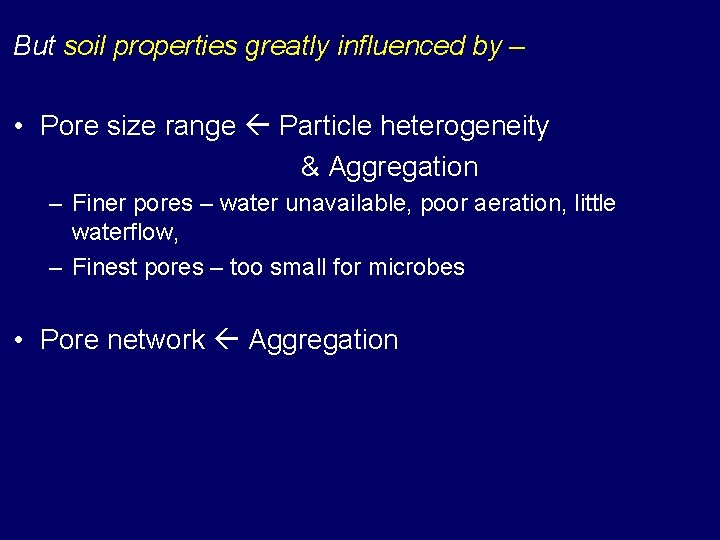
But soil properties greatly influenced by – • Pore size range Particle heterogeneity & Aggregation – Finer pores – water unavailable, poor aeration, little waterflow, – Finest pores – too small for microbes • Pore network Aggregation
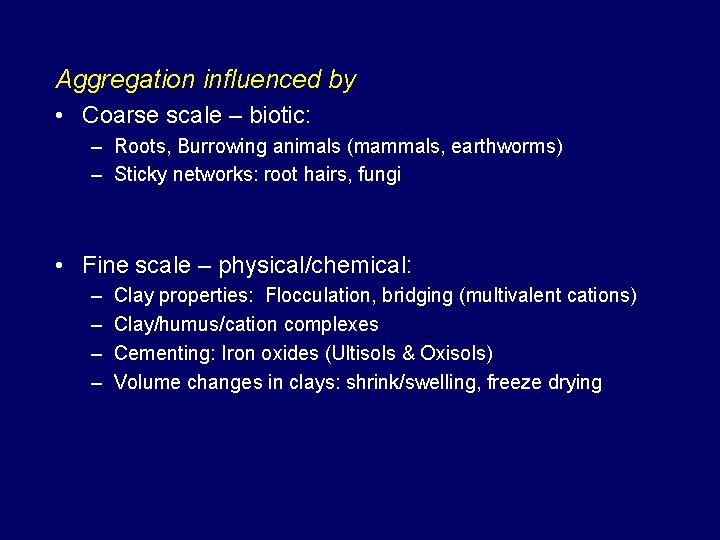
Aggregation influenced by • Coarse scale – biotic: – Roots, Burrowing animals (mammals, earthworms) – Sticky networks: root hairs, fungi • Fine scale – physical/chemical: – – Clay properties: Flocculation, bridging (multivalent cations) Clay/humus/cation complexes Cementing: Iron oxides (Ultisols & Oxisols) Volume changes in clays: shrink/swelling, freeze drying