
Physical Properties of Minerals Color shape density hardness
- Slides: 16
Physical Properties of Minerals Color, shape, density, hardness, etc
Each mineral species has unique and identifiable physical properties. • • Form and habit (Shape) Luster Color and Streak Cleavage and Fracture Hardness Density Tenacity
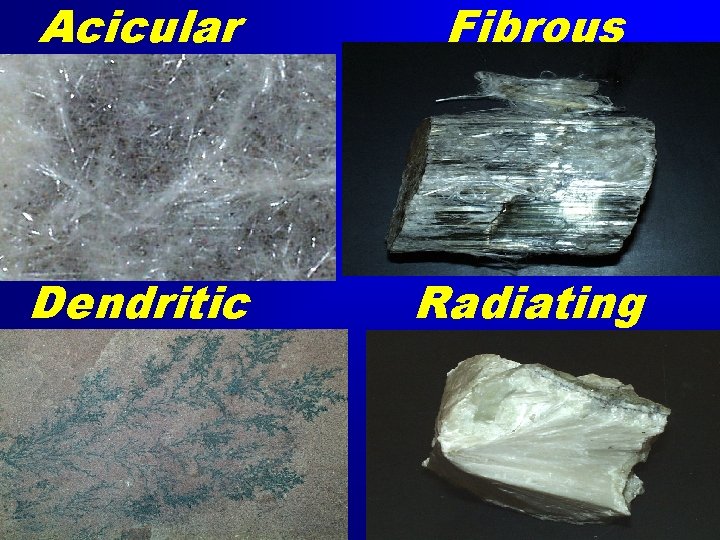
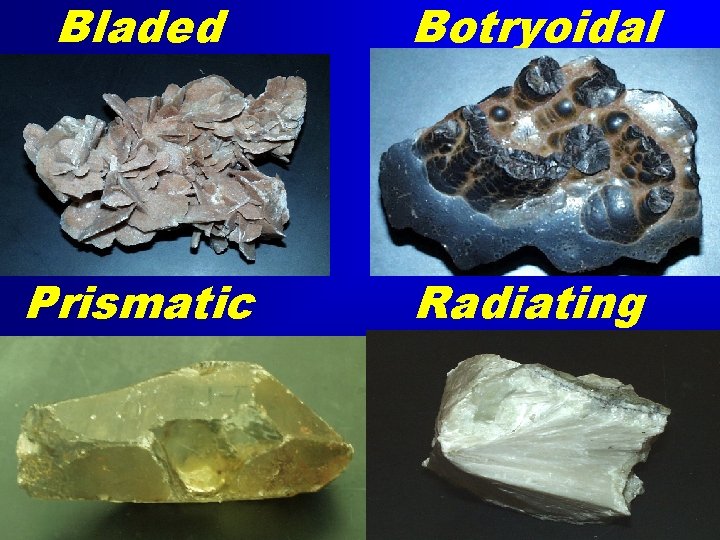
Form and Habit Terms (Crystal Growth Forms) • Prismatic (well developed prism faces) • Columnar (Irregular prism faces) • Acicular (needle-like) • Botryoidal (rounded growth surface) • Tabular (Platey) • Stellate (Radiating) • Fibrous (fibers, asbestiform) • Dendritic (tree-like)
Acicular Fibrous Dendritic Radiating
Bladed Botryoidal Prismatic Radiating
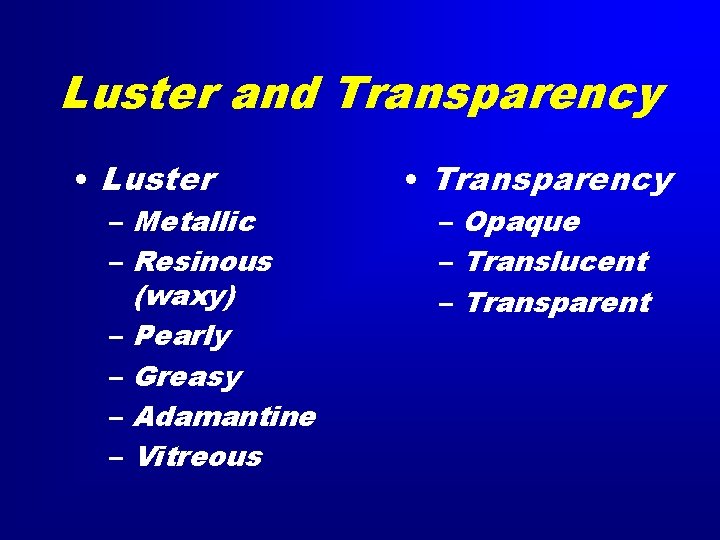
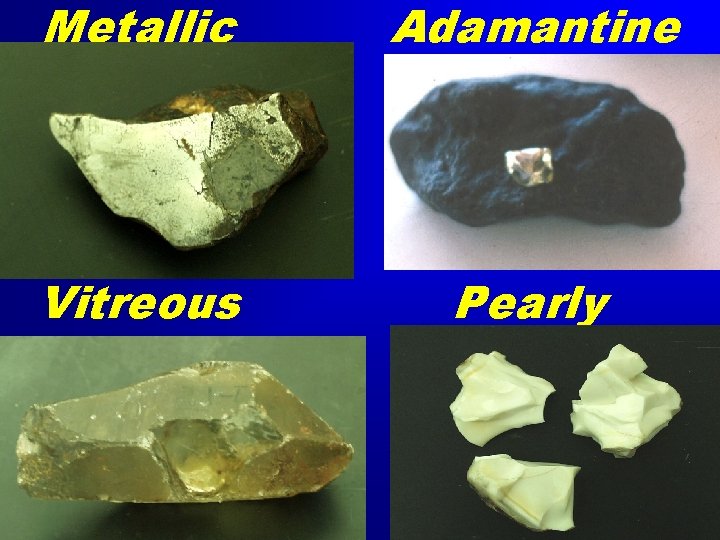
Luster and Transparency • Luster – Metallic – Resinous (waxy) – Pearly – Greasy – Adamantine – Vitreous • Transparency – Opaque – Translucent – Transparent
Metallic Adamantine Vitreous Pearly
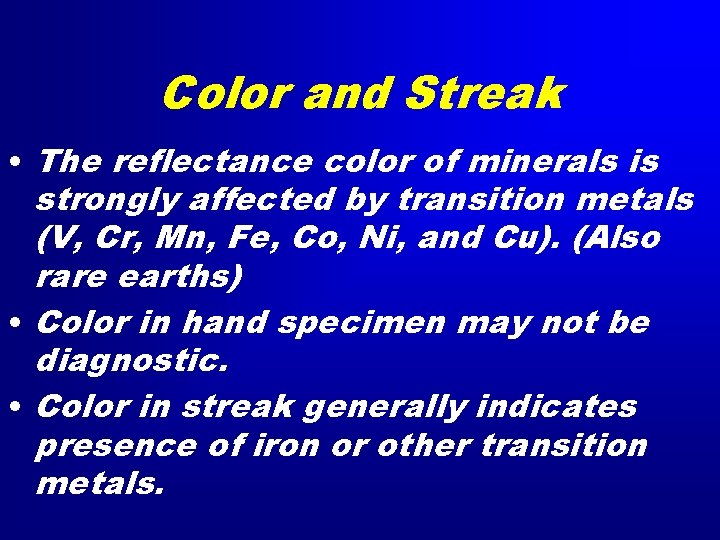
Color and Streak • The reflectance color of minerals is strongly affected by transition metals (V, Cr, Mn, Fe, Co, Ni, and Cu). (Also rare earths) • Color in hand specimen may not be diagnostic. • Color in streak generally indicates presence of iron or other transition metals.
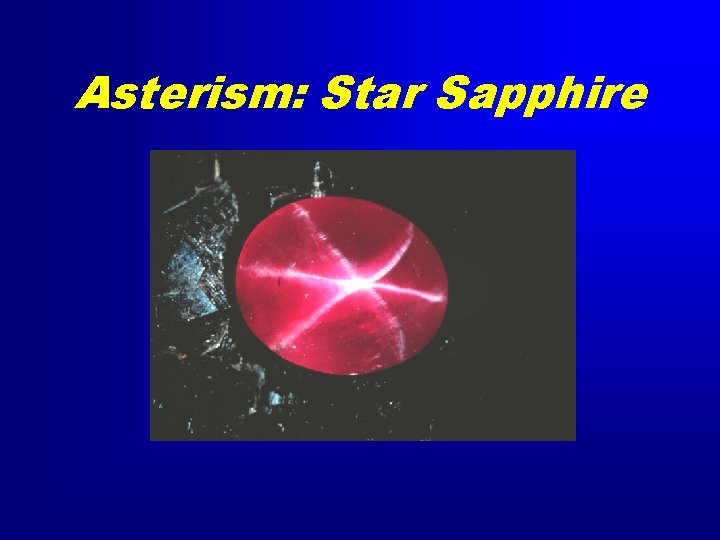
Chatoyance, Asterism, and Luminescence • Chatoyance and asterism are optical effects due to diffraction of light from small inclusions. • Luminescence is emission of light. – Visible or UV (black light) – Tribo-luminescence – Cathodo-luminescence is emission of light from electron bombardment
Asterism: Star Sapphire
Cleavage and Fracture • Crystals tend to break on planes of weakness. – Cleavage: perfect – Parting: irregular – Hackly: very irregular – Conchoidal Fracture: no cleavage, breaks like glass.
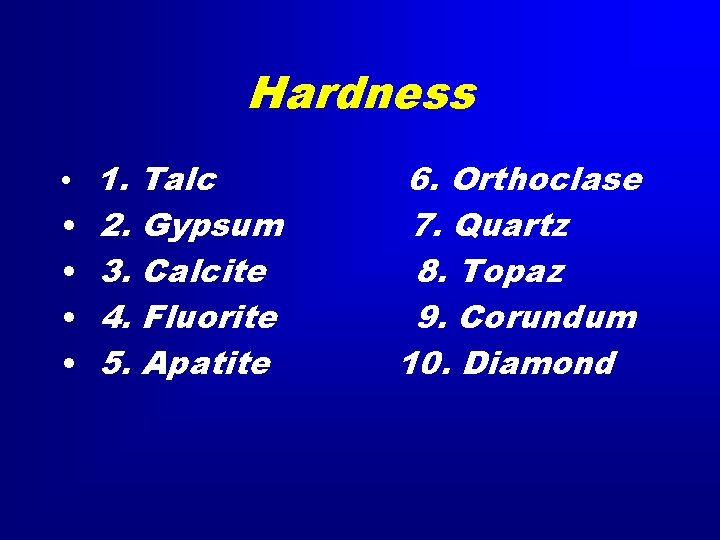
Hardness • • • 1. Talc 2. Gypsum 3. Calcite 4. Fluorite 5. Apatite 6. Orthoclase 7. Quartz 8. Topaz 9. Corundum 10. Diamond
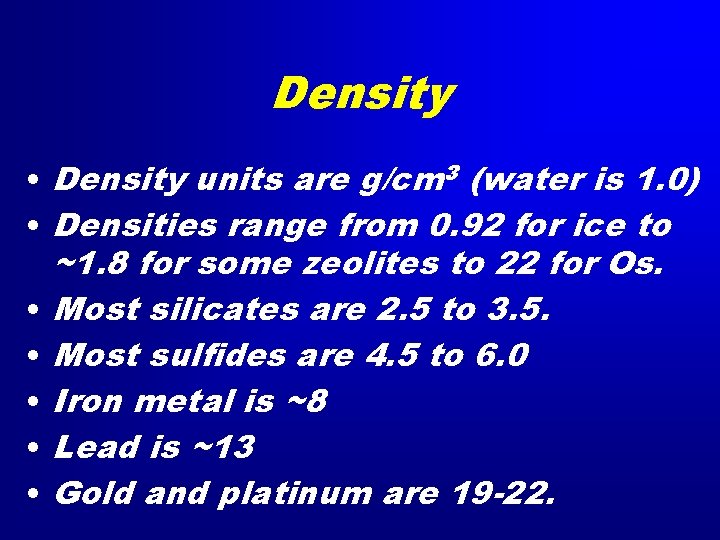
Density • Density units are g/cm 3 (water is 1. 0) • Densities range from 0. 92 for ice to ~1. 8 for some zeolites to 22 for Os. • Most silicates are 2. 5 to 3. 5. • Most sulfides are 4. 5 to 6. 0 • Iron metal is ~8 • Lead is ~13 • Gold and platinum are 19 -22.
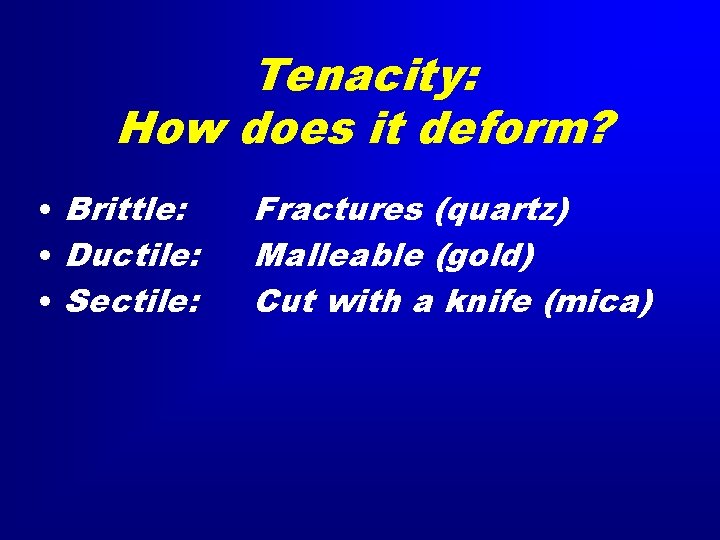
Tenacity: How does it deform? • Brittle: • Ductile: • Sectile: Fractures (quartz) Malleable (gold) Cut with a knife (mica)
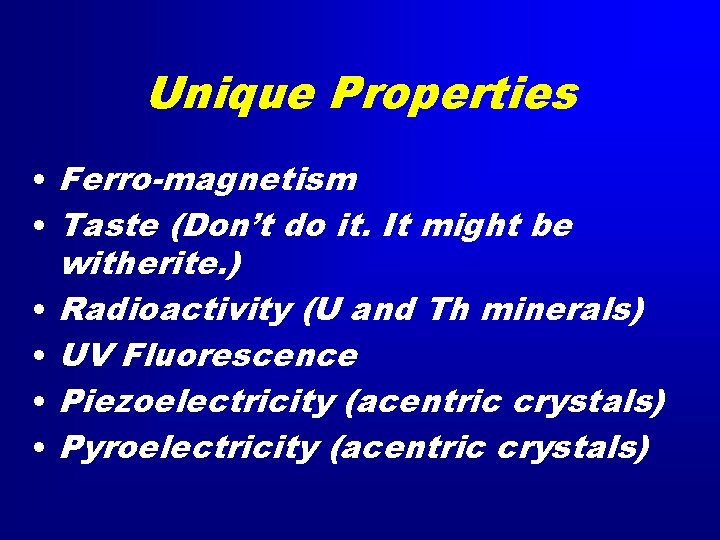
Unique Properties • Ferro-magnetism • Taste (Don’t do it. It might be witherite. ) • Radioactivity (U and Th minerals) • UV Fluorescence • Piezoelectricity (acentric crystals) • Pyroelectricity (acentric crystals)
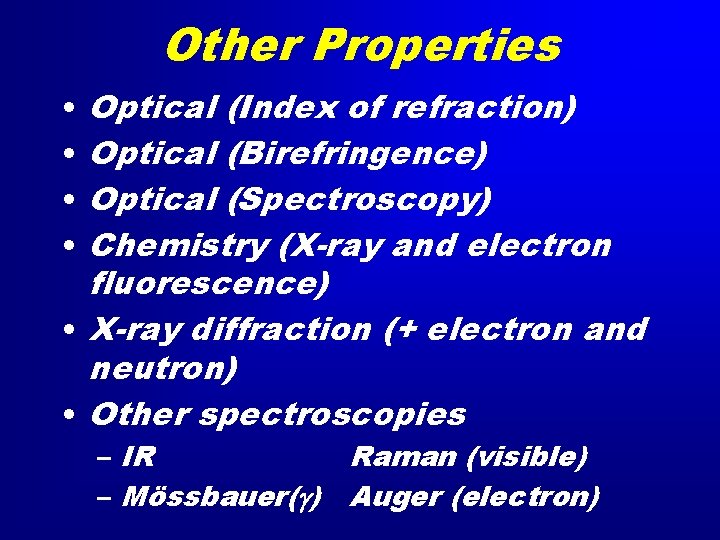
Other Properties Optical (Index of refraction) Optical (Birefringence) Optical (Spectroscopy) Chemistry (X-ray and electron fluorescence) • X-ray diffraction (+ electron and neutron) • Other spectroscopies • • – IR – Mössbauer(g) Raman (visible) Auger (electron)