
Physical Properties of Hydraulic and Pneumatic Fluids Mohammad
- Slides: 18
Physical Properties of Hydraulic and Pneumatic Fluids Mohammad I. Kilani Mechatronics Engineering Department University of Jordan
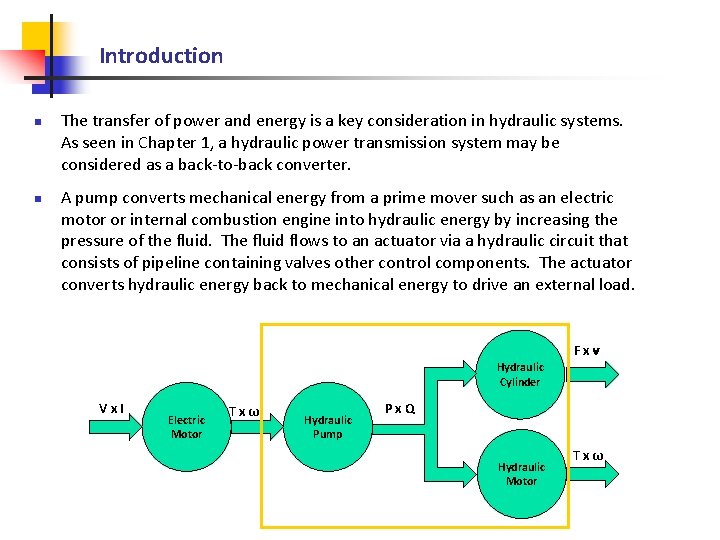
Introduction n n The transfer of power and energy is a key consideration in hydraulic systems. As seen in Chapter 1, a hydraulic power transmission system may be considered as a back-to-back converter. A pump converts mechanical energy from a prime mover such as an electric motor or internal combustion engine into hydraulic energy by increasing the pressure of the fluid. The fluid flows to an actuator via a hydraulic circuit that consists of pipeline containing valves other control components. The actuator converts hydraulic energy back to mechanical energy to drive an external load. Fxv Hydraulic Cylinder Vx. I Electric Motor Txω Hydraulic Pump Px. Q Hydraulic Motor Txω
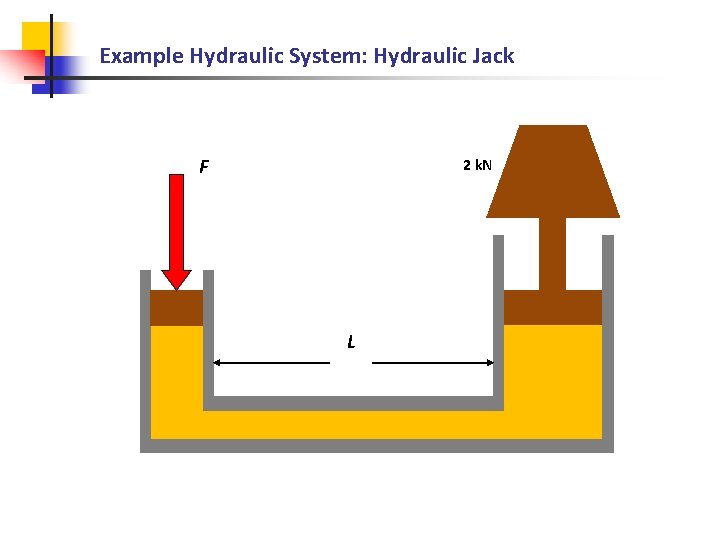
Example Hydraulic System: Hydraulic Jack F 2 k. N L
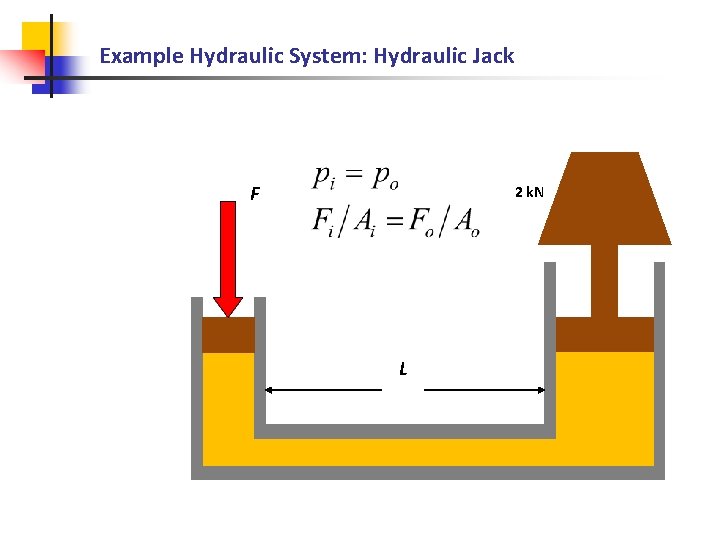
Example Hydraulic System: Hydraulic Jack F 2 k. N L
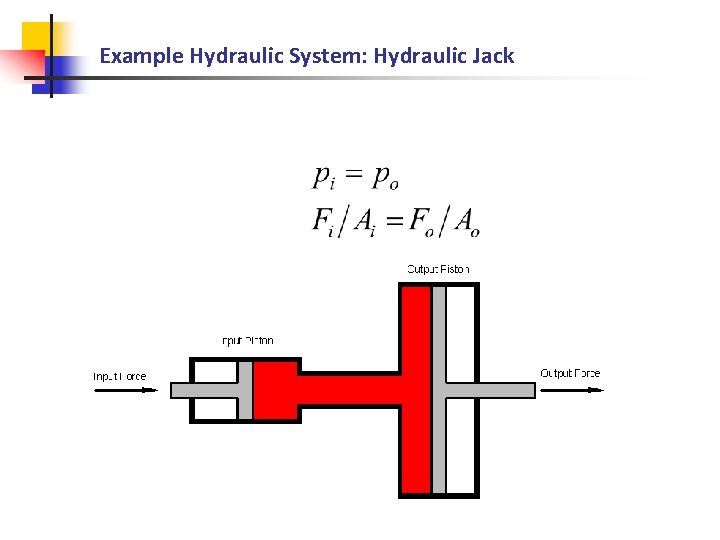
Example Hydraulic System: Hydraulic Jack
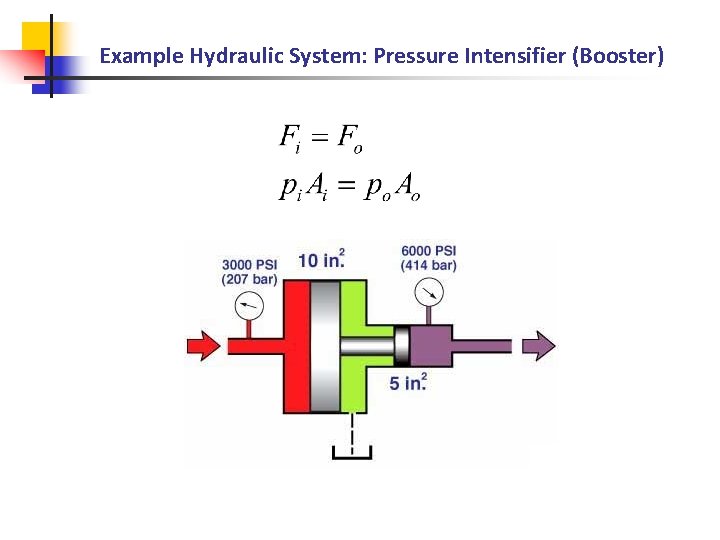
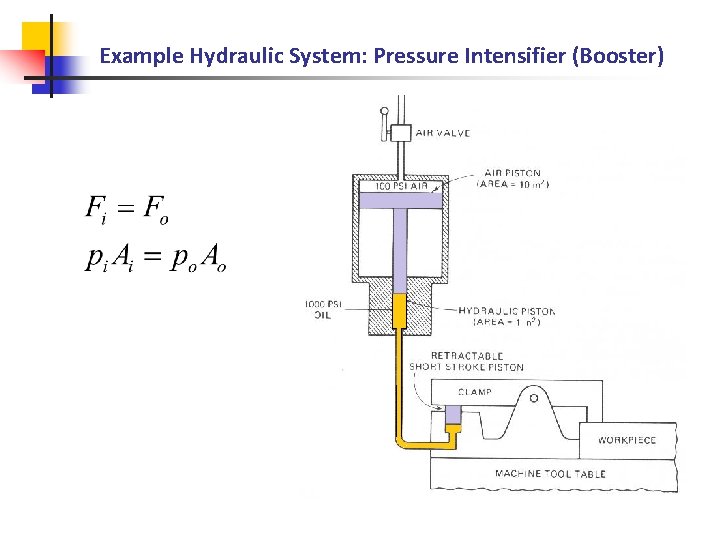
Example Hydraulic System: Pressure Intensifier (Booster)
Example Hydraulic System: Pressure Intensifier (Booster)
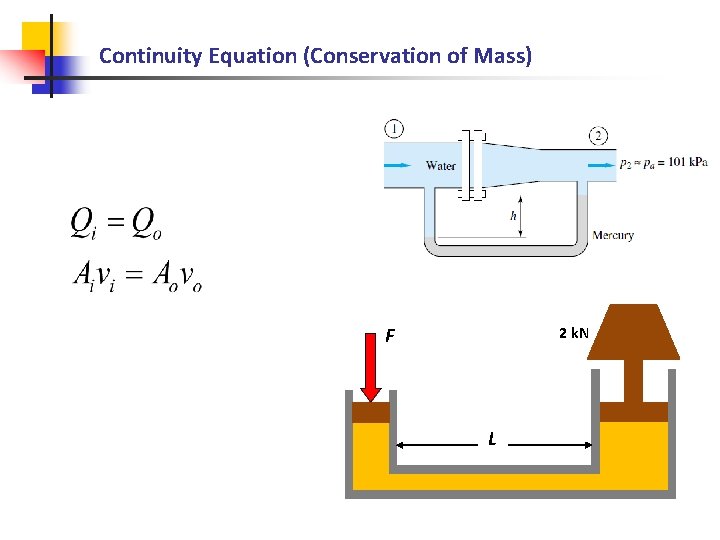
Continuity Equation (Conservation of Mass) F 2 k. N L
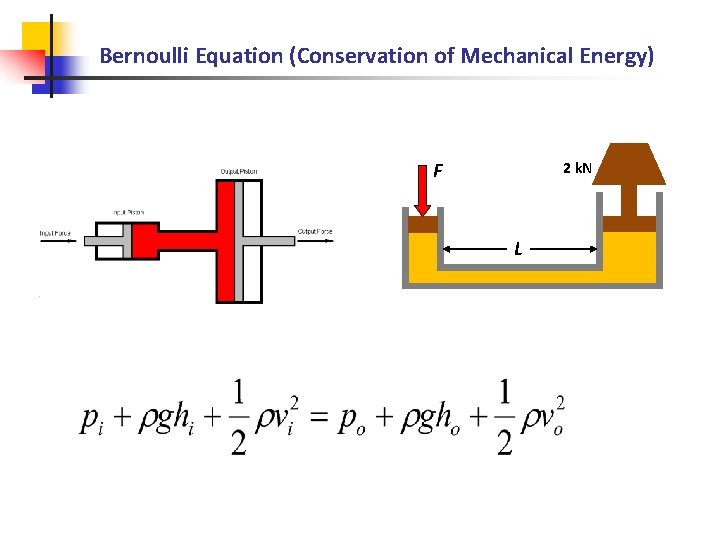
Bernoulli Equation (Conservation of Mechanical Energy) F 2 k. N L
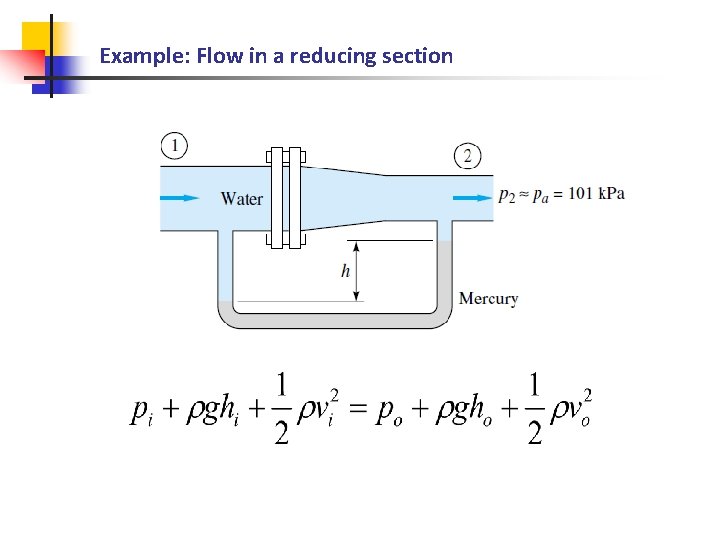
Example: Flow in a reducing section
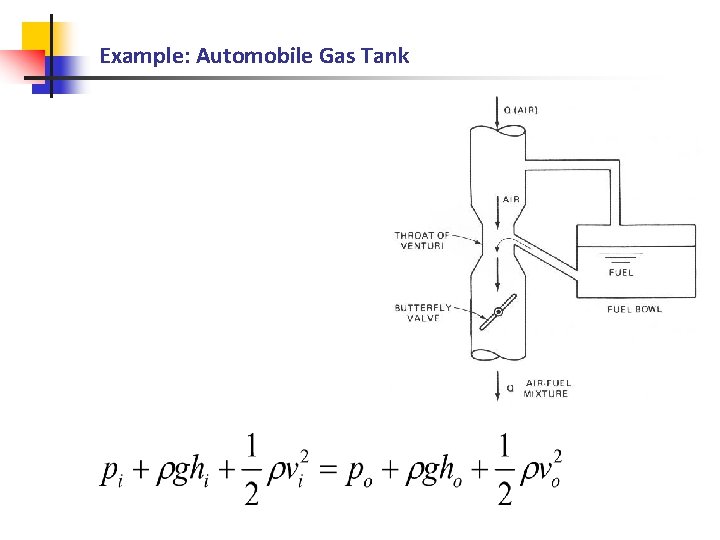
Example: Automobile Gas Tank
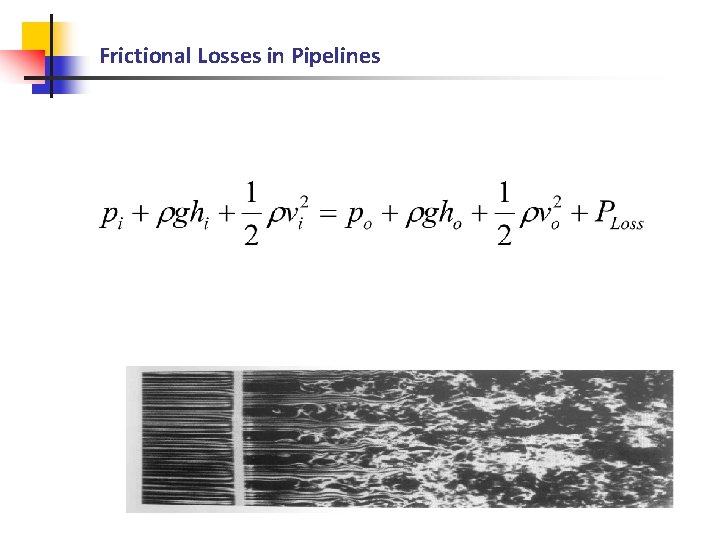
Frictional Losses in Pipelines
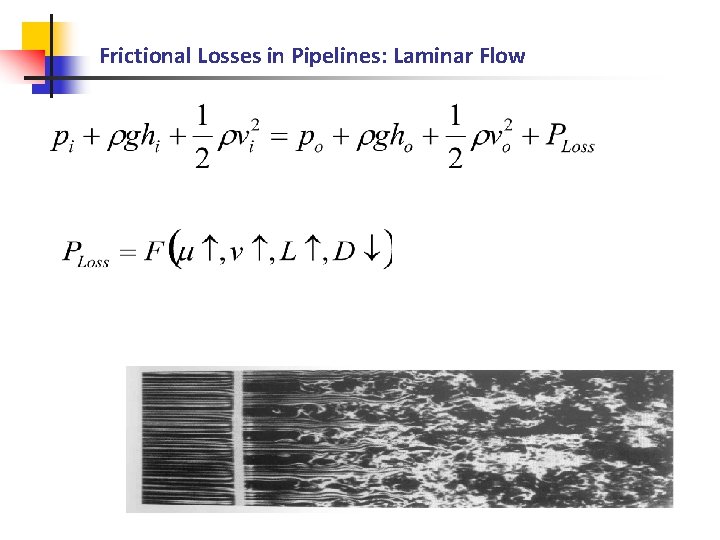
Frictional Losses in Pipelines: Laminar Flow
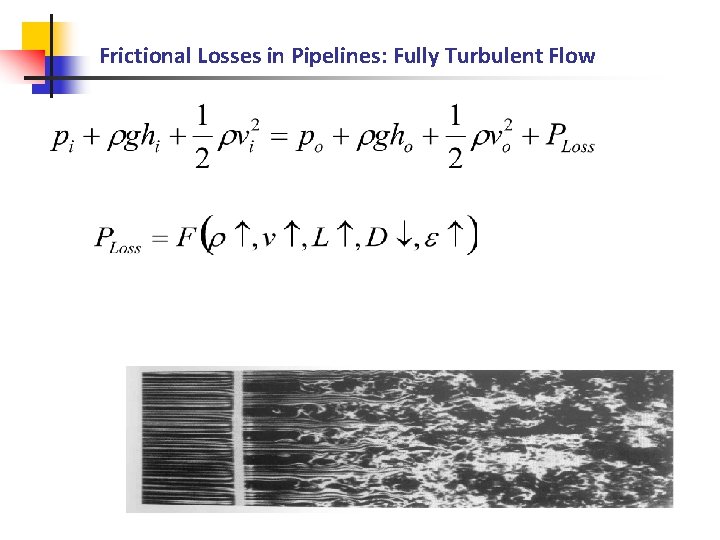
Frictional Losses in Pipelines: Fully Turbulent Flow
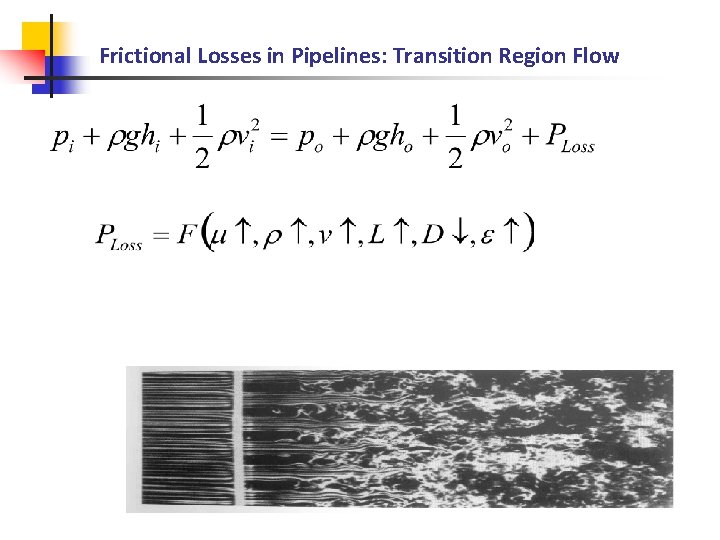
Frictional Losses in Pipelines: Transition Region Flow
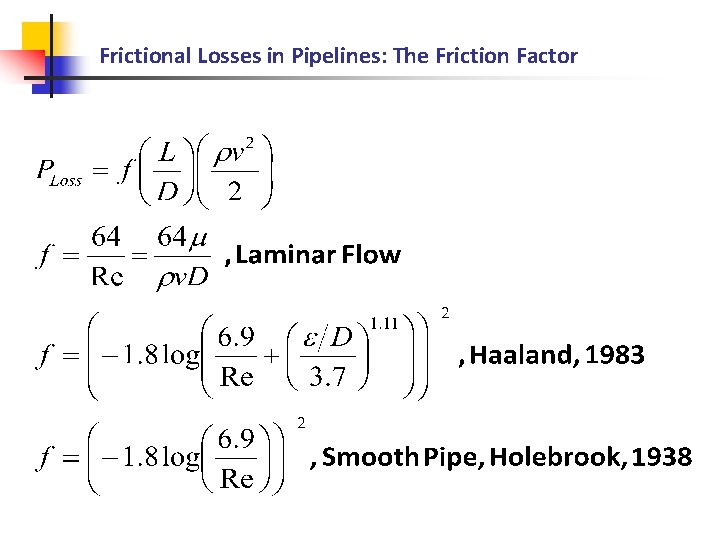
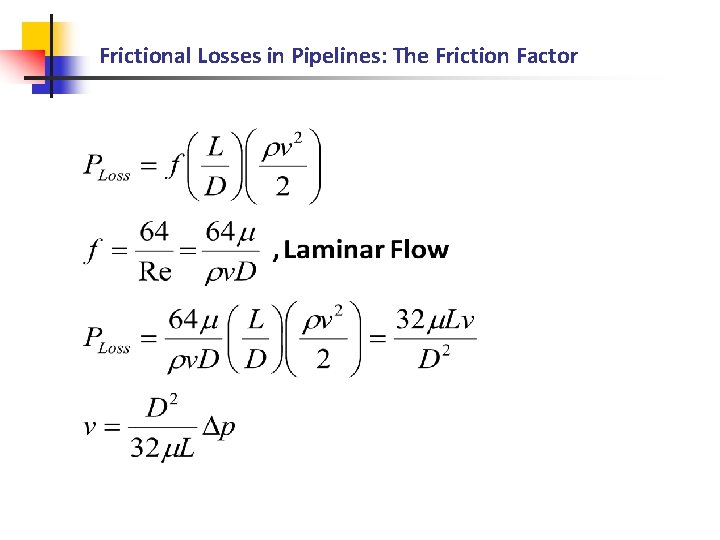
Frictional Losses in Pipelines: The Friction Factor
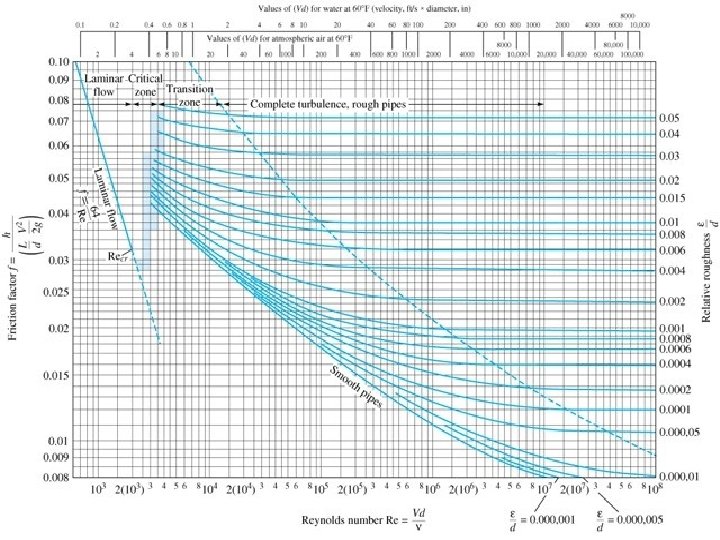
Frictional Losses in Pipelines: The Friction Factor
Frictional Losses in Pipelines: Transition Region Flow