
Physical Outcomes of Stress Kimberly E OBrien Ph
Physical Outcomes of Stress Kimberly E. O’Brien, Ph. D Central Michigan University
Agenda • What is stress? • Physical, emotional, and cognitive experience • How does stress affect the body • How to release stress from the body
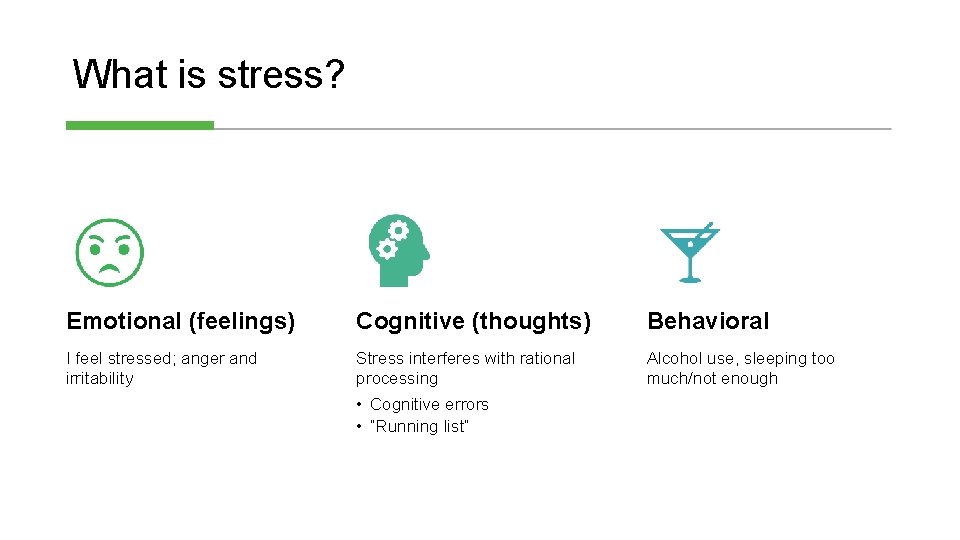
What is stress? Emotional (feelings) Cognitive (thoughts) Behavioral I feel stressed; anger and irritability Stress interferes with rational processing Alcohol use, sleeping too much/not enough • Cognitive errors • “Running list”
Physical • Your body cannot tell the difference between being chased by a bear versus, say, an exam and reacts the same way • Thinking is surprisingly very demanding on the body • Humans eat more metabolically easy foods than other animals • Fight or flight also prepares us to think • After too much time in “fight or flight, ” the body wears down • Allostatic load
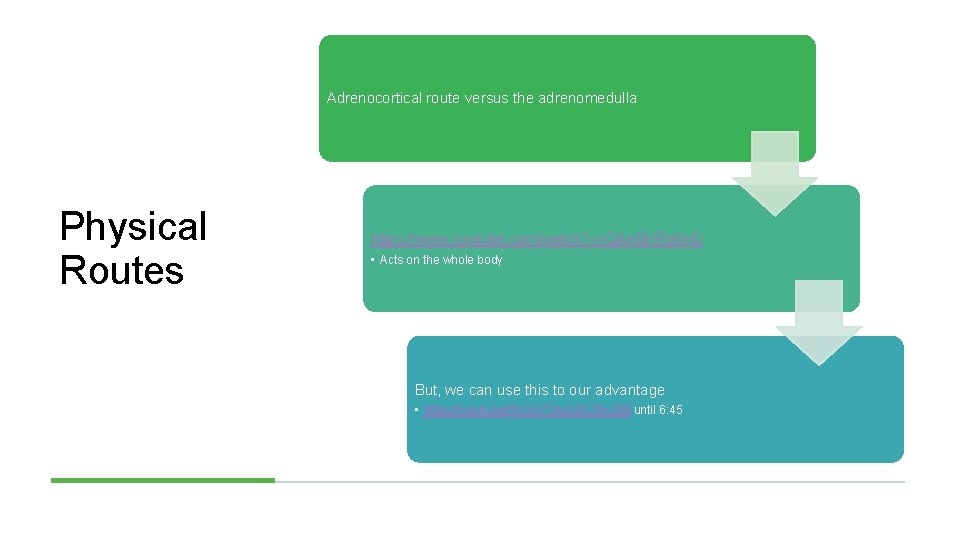
Adrenocortical route versus the adrenomedulla Physical Routes https: //www. youtube. com/watch? v=QAe. BKRa. Nri 0 • Acts on the whole body But, we can use this to our advantage • https: //youtu. be/Rc. Gy. VTAo. XEU? t=299 until 6: 45
Other Physio Processes • Blood pressure not a good indicator • You are stressed if you feel stressed • If you’re drowning, it doesn’t matter if the pool is 2 feet deep or 10 feet deep • Muscle tension, poor posture, headaches, stomach aches • Poor eating and exercise • Immune system function
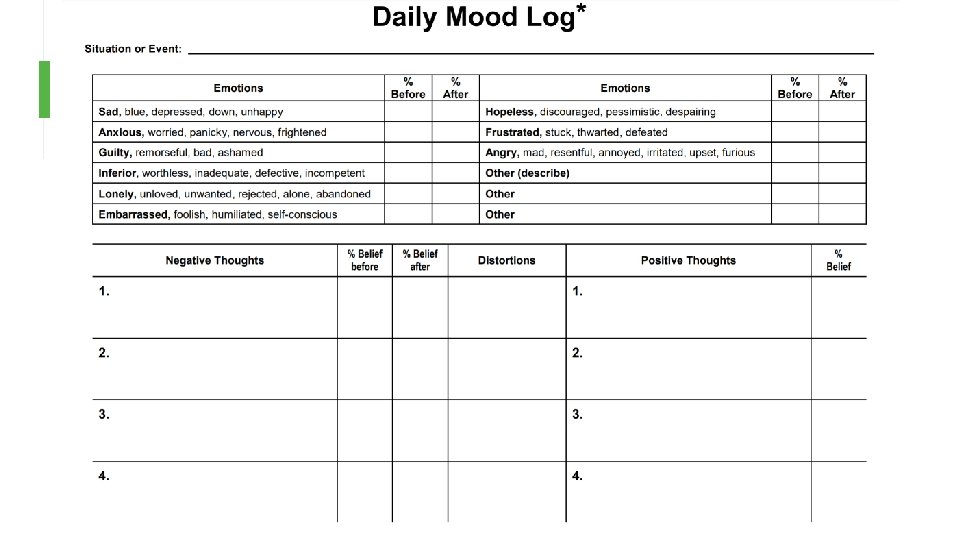
Releasing Stress • Psychology • Cognitive Behavioral Route • Change your cognitions to change your behavior • Progressive Muscle Relaxation • Helps people recover after surgery • Mindfulness • You pay a fee for the counseling center- you may as well use it. You don’t have to be sick to get better!
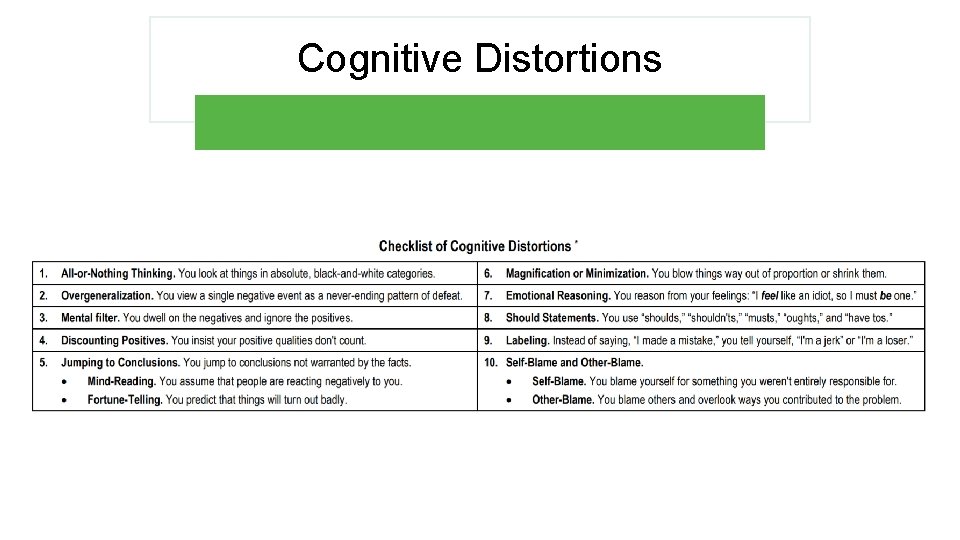
Cognitive Distortions
Other Avenues Yoga and other exercise Music Animals Getting stuff done The biggest predictor of anxiety before an exam is not being prepared
Questions
- Slides: 11