
Physical Oceanography Chap 15 The Oceans Sea Water

- Slides: 34
Physical Oceanography Chap. 15 The Oceans Sea Water Ocean Movements
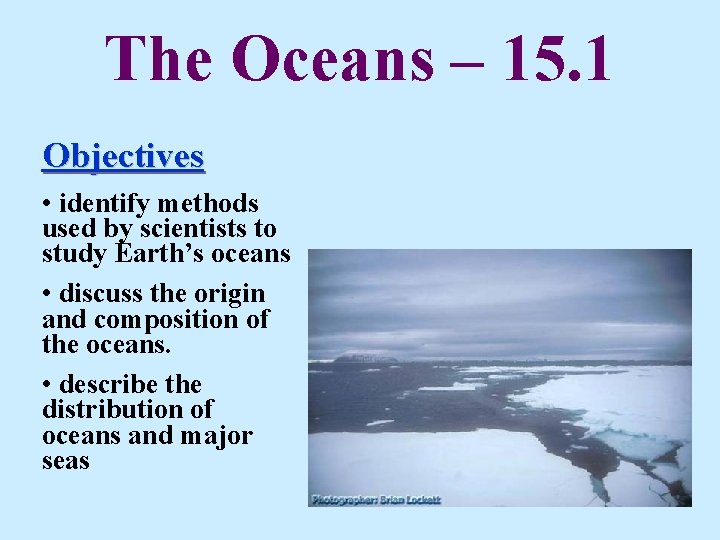
The Oceans – 15. 1 Objectives • identify methods used by scientists to study Earth’s oceans • discuss the origin and composition of the oceans. • describe the distribution of oceans and major seas
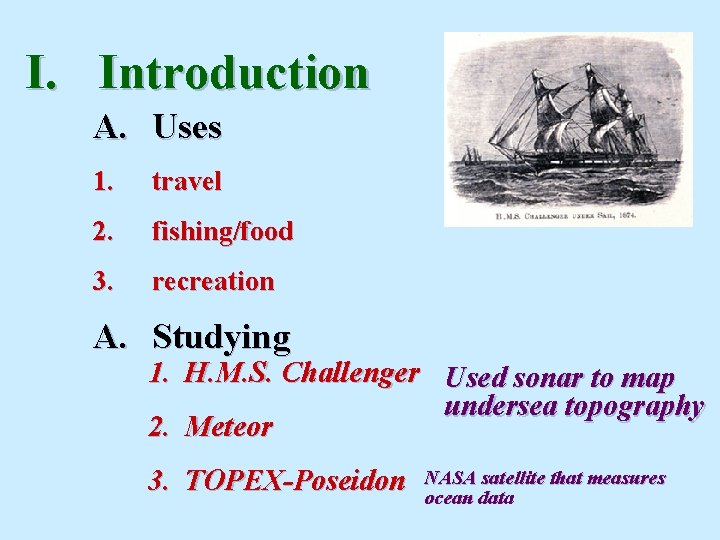
I. Introduction A. Uses 1. travel 2. fishing/food 3. recreation A. Studying 1. H. M. S. Challenger Used sonar to map undersea topography 2. Meteor 3. TOPEX-Poseidon NASA satellite that measures ocean data
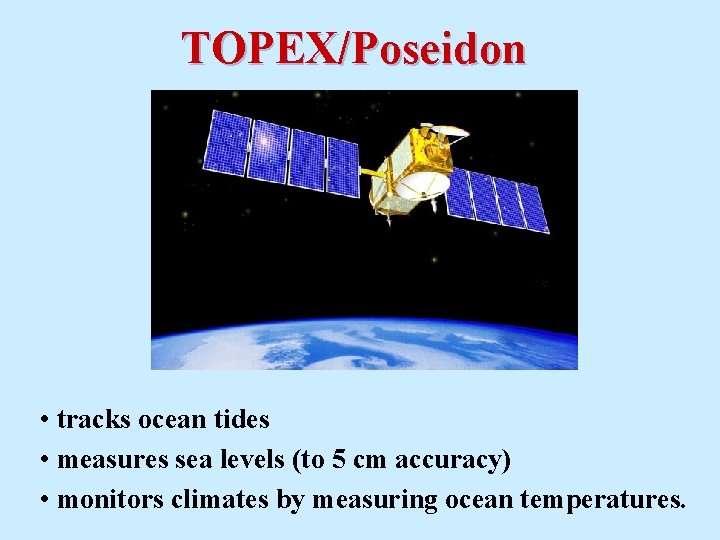
TOPEX/Poseidon • tracks ocean tides • measures sea levels (to 5 cm accuracy) • monitors climates by measuring ocean temperatures.
II. Ocean origins A. Oceans are as old as Earth’s rocks 1. Lava flows have been dated at 4. 6 b. y. 2. These formed rocks by cooling quickly (in water)
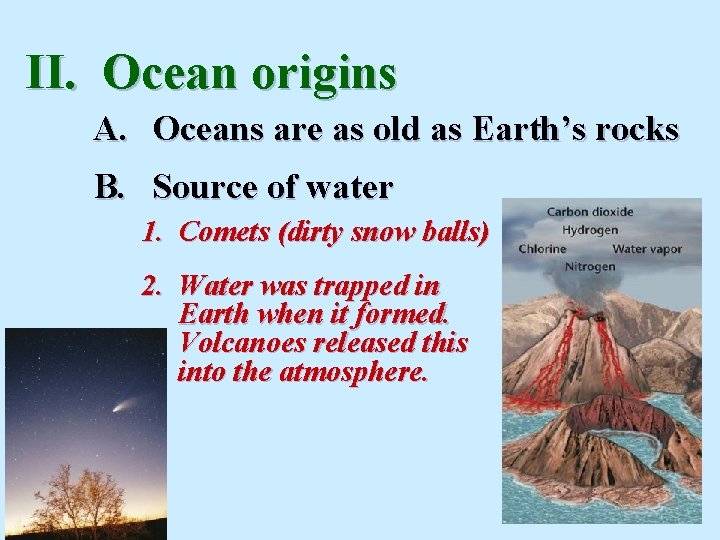
II. Ocean origins A. Oceans are as old as Earth’s rocks B. Source of water 1. Comets (dirty snow balls) 2. Water was trapped in Earth when it formed. Volcanoes released this into the atmosphere.
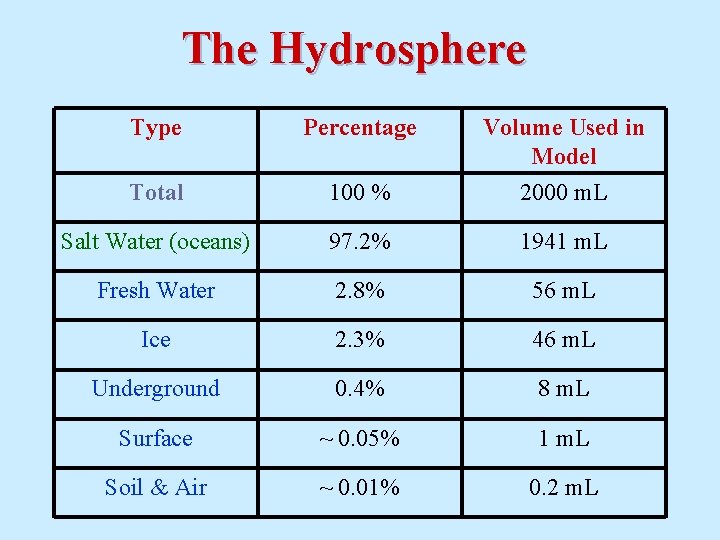
The Hydrosphere Type Percentage Total 100 % Volume Used in Model 2000 m. L Salt Water (oceans) 97. 2% 1941 m. L Fresh Water 2. 8% 56 m. L Ice 2. 3% 46 m. L Underground 0. 4% 8 m. L Surface ~ 0. 05% 1 m. L Soil & Air ~ 0. 01% 0. 2 m. L
III. Earth’s Water A. Location B. Amount of frozen water has varied 1. During ice ages as much as 10% of hydrosphere was frozen. 2. Sea level varied by hundreds of meters. Due to melting of glaciers and tectonic forces altering sea floor.
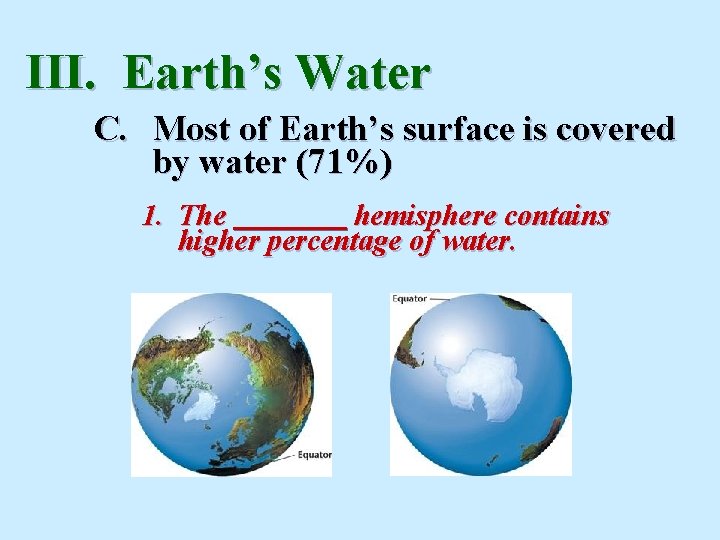
III. Earth’s Water C. Most of Earth’s surface is covered by water (71%) 1. The hemisphere contains higher percentage of water.
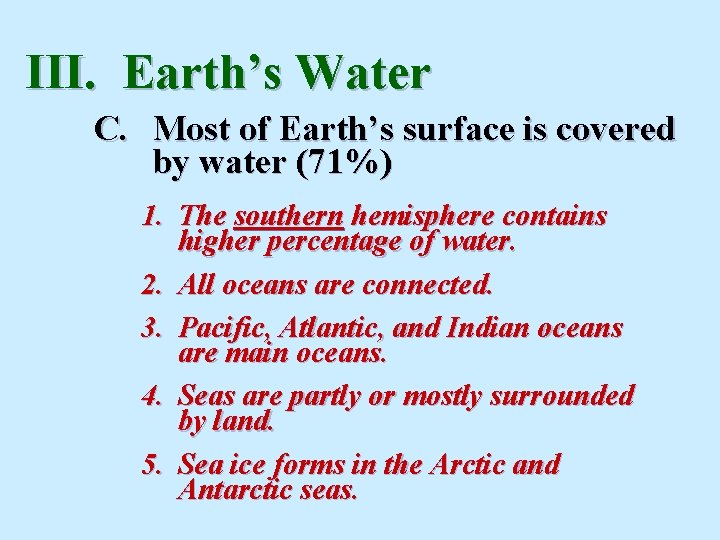
III. Earth’s Water C. Most of Earth’s surface is covered by water (71%) 1. The southern hemisphere contains higher percentage of water. 2. All oceans are connected. 3. Pacific, Atlantic, and Indian oceans are main oceans. 4. Seas are partly or mostly surrounded by land. 5. Sea ice forms in the Arctic and Antarctic seas.
Seawater - 15. 2 Objectives • compare & contrast physical and chemical properties of seawater • explain ocean layering • describe the formation of deepwater masses
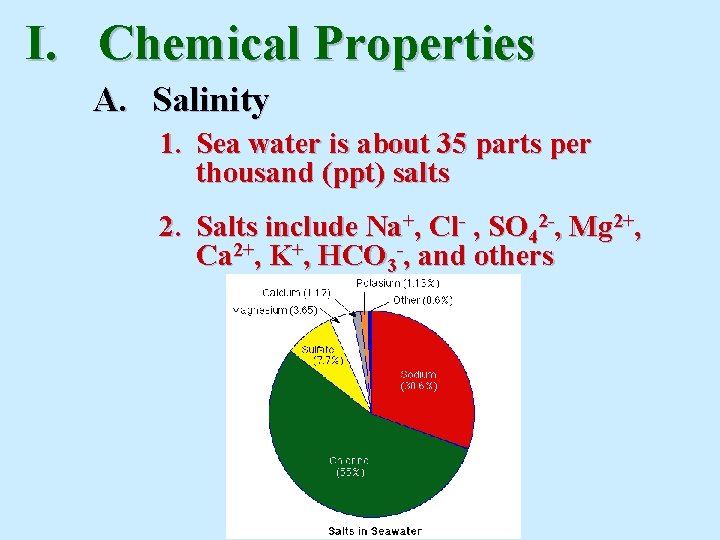
I. Chemical Properties A. Salinity 1. Sea water is about 35 parts per thousand (ppt) salts 2. Salts include Na+, Cl- , SO 42 -, Mg 2+, Ca 2+, K+, HCO 3 -, and others
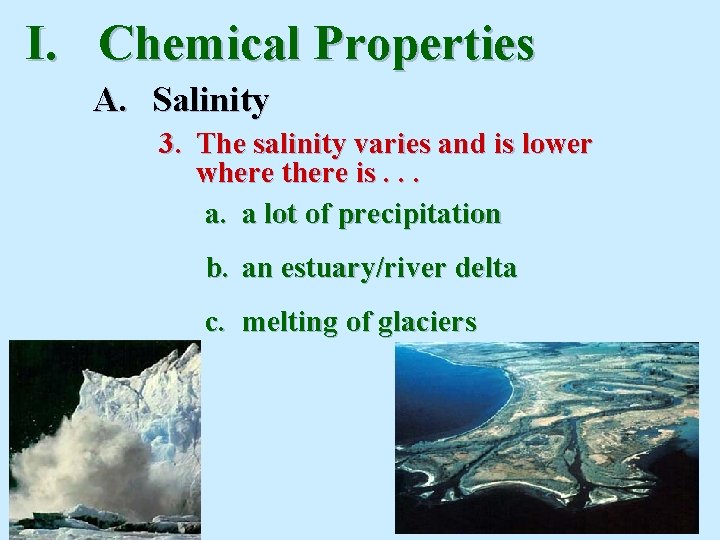
I. Chemical Properties A. Salinity 3. The salinity varies and is lower where there is. . . a. a lot of precipitation b. an estuary/river delta c. melting of glaciers
I. Chemical Properties A. Salinity 4. Source of sea salt a. the atmosphere (Cl- and SO 42 -) b. weathering rocks (Na+, K+, Ca 2+ from feldspar) 5. Removing sea salt a. deposited when water evaporates
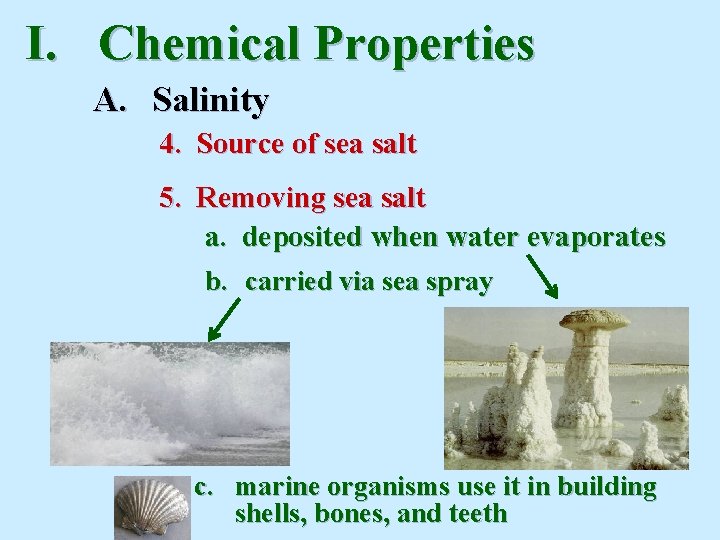
I. Chemical Properties A. Salinity 4. Source of sea salt 5. Removing sea salt a. deposited when water evaporates b. carried via sea spray c. marine organisms use it in building shells, bones, and teeth
II. Physical Properties A. Density is greater than 1. 00 g/cm 3 • Density of fresh water is 1. 00 g/cm 3 B. Freezing point is less than 0ºC C. Light absorption
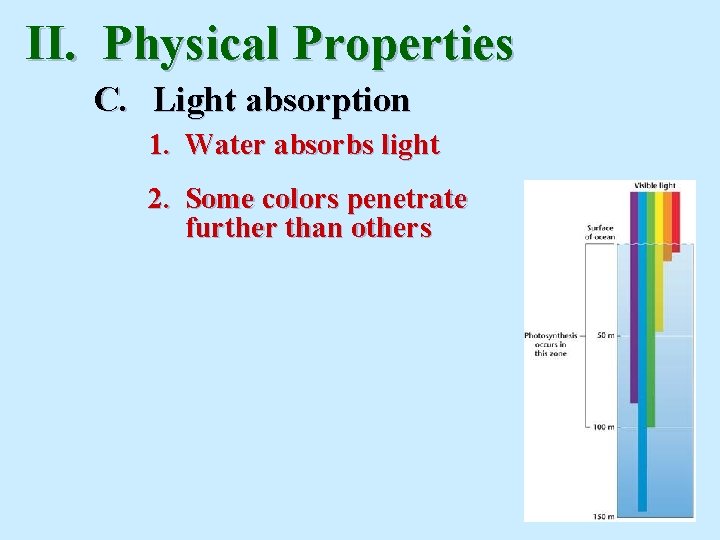
II. Physical Properties C. Light absorption 1. Water absorbs light 2. Some colors penetrate further than others
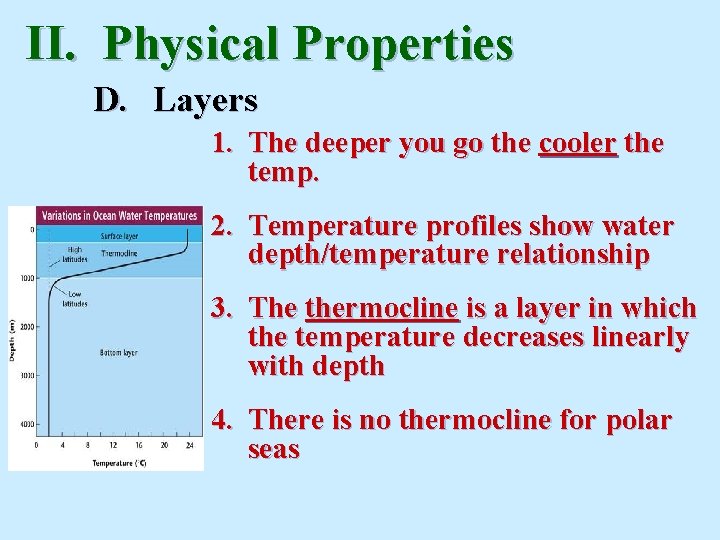
II. Physical Properties D. Layers 1. The deeper you go the cooler the temp. 2. Temperature profiles show water depth/temperature relationship 3. The thermocline is a layer in which the temperature decreases linearly with depth 4. There is no thermocline for polar seas
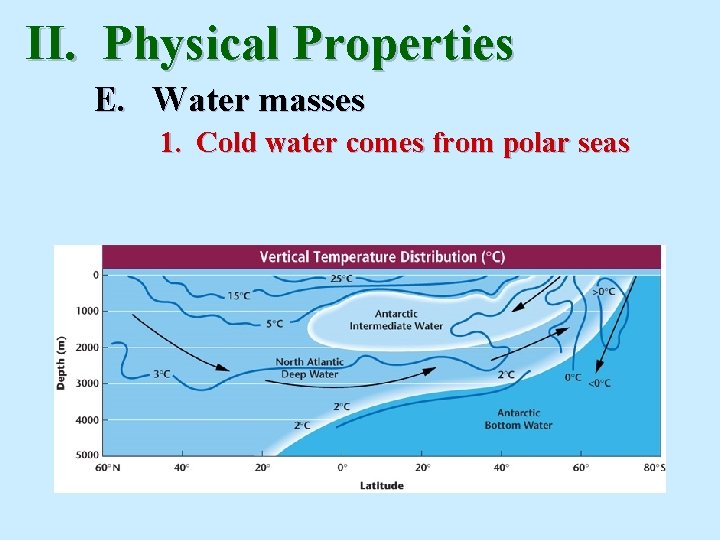
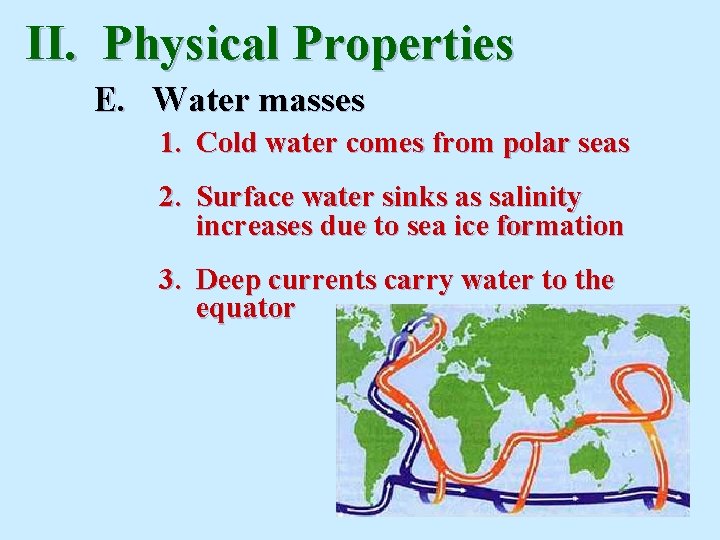
II. Physical Properties E. Water masses 1. Cold water comes from polar seas
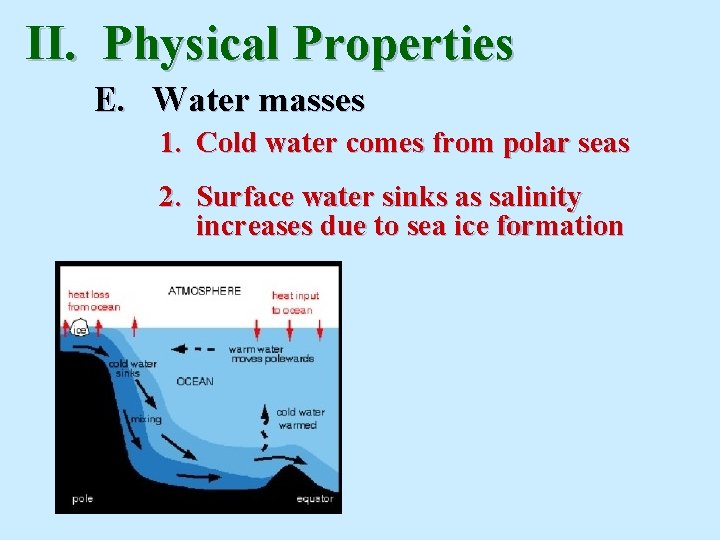
II. Physical Properties E. Water masses 1. Cold water comes from polar seas 2. Surface water sinks as salinity increases due to sea ice formation
II. Physical Properties E. Water masses 1. Cold water comes from polar seas 2. Surface water sinks as salinity increases due to sea ice formation 3. Deep currents carry water to the equator
Ocean Movements – 15. 3 Objectives • describe the physical properties of waves • explain how tides form • compare and contrast various ocean currents http: //tv-antenna. com/heavy-seas/3/
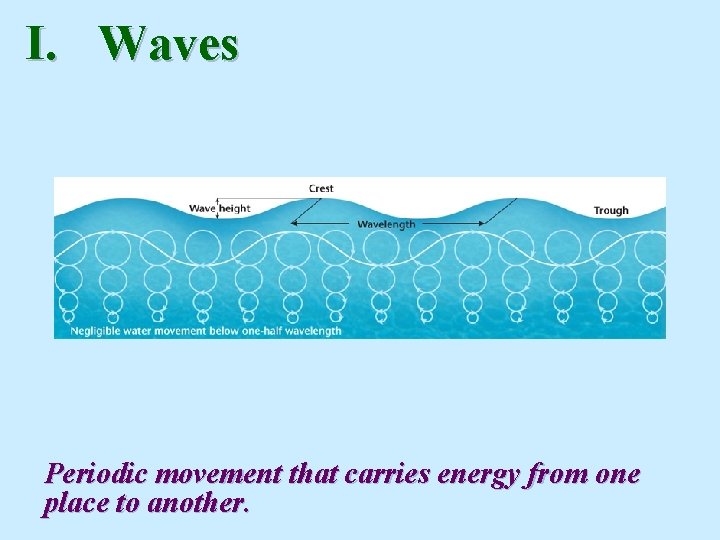
I. Waves Periodic movement that carries energy from one place to another.
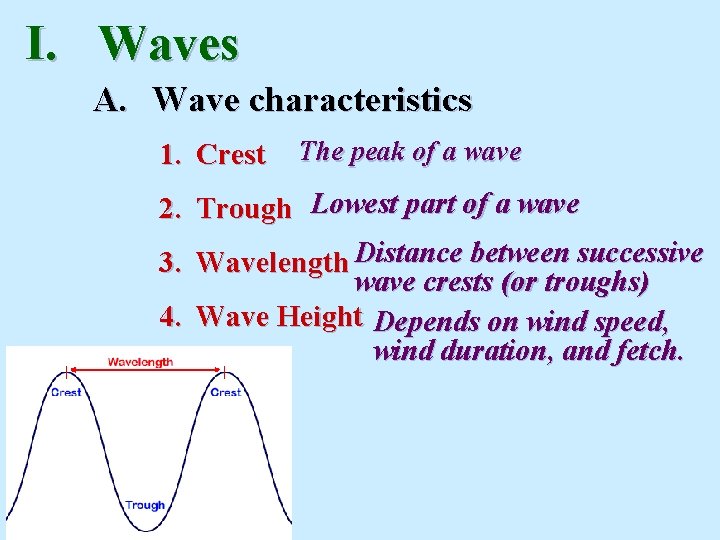
I. Waves A. Wave characteristics 1. Crest The peak of a wave 2. Trough Lowest part of a wave 3. Wavelength Distance between successive wave crests (or troughs) 4. Wave Height Depends on wind speed, wind duration, and fetch.
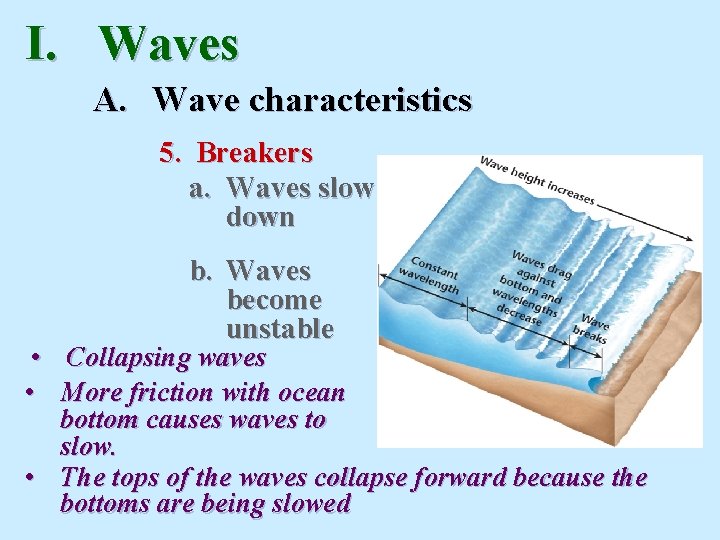
I. Waves A. Wave characteristics 5. Breakers a. Waves slow down b. Waves become unstable • Collapsing waves • More friction with ocean bottom causes waves to slow. • The tops of the waves collapse forward because the bottoms are being slowed
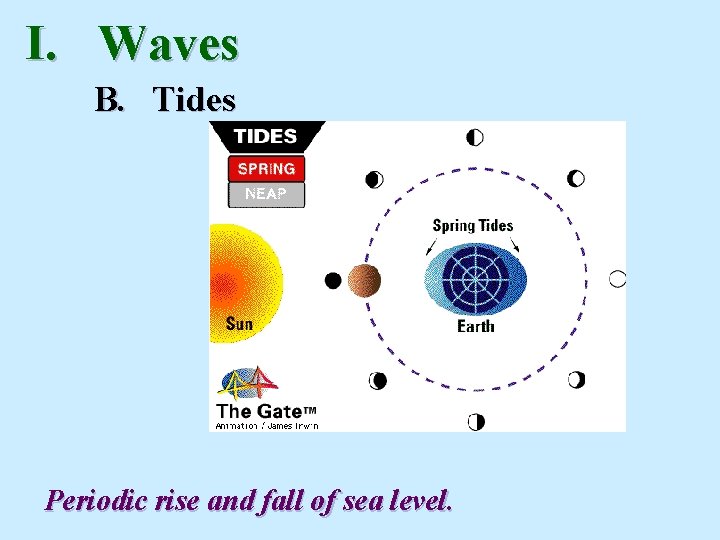
I. Waves B. Tides Periodic rise and fall of sea level.
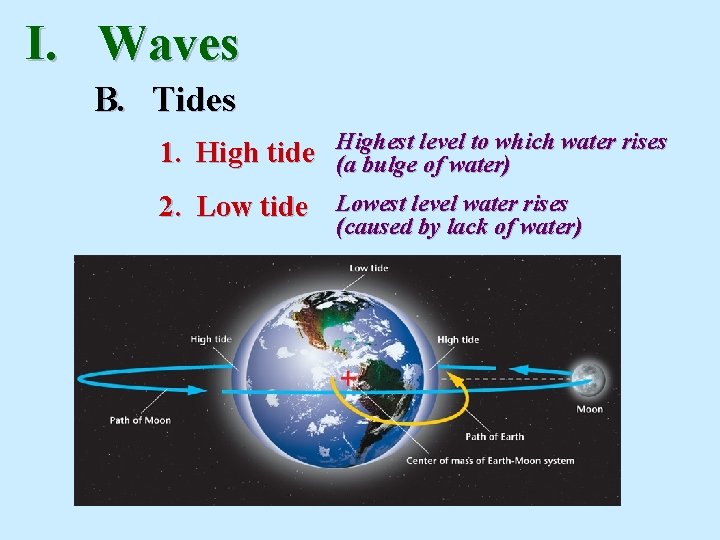
I. Waves B. Tides 1. High tide Highest level to which water rises (a bulge of water) 2. Low tide Lowest level water rises (caused by lack of water)
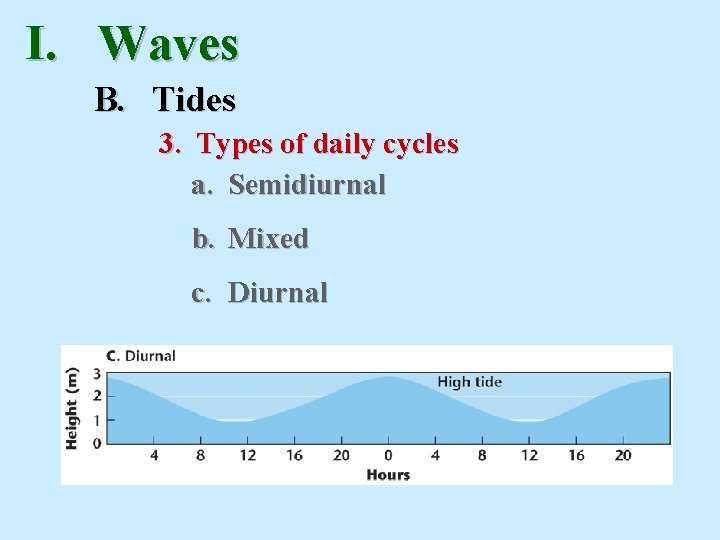
I. Waves B. Tides 3. Types of daily cycles a. Semidiurnal b. Mixed c. Diurnal
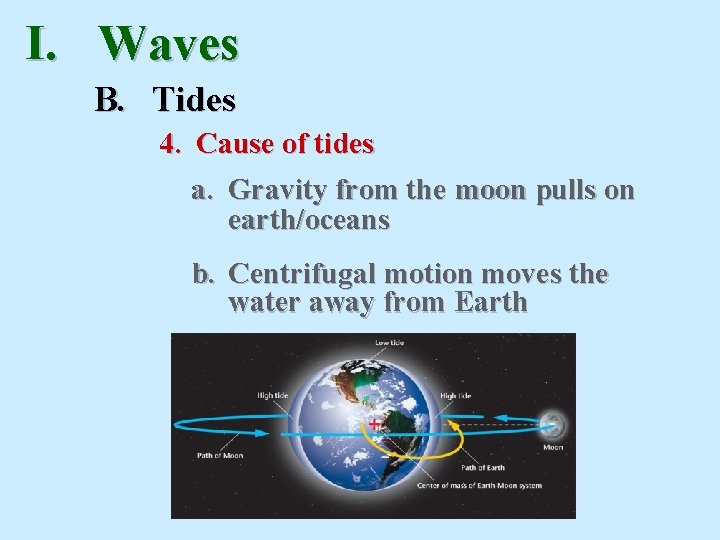
I. Waves B. Tides 4. Cause of tides a. Gravity from the moon pulls on earth/oceans b. Centrifugal motion moves the water away from Earth
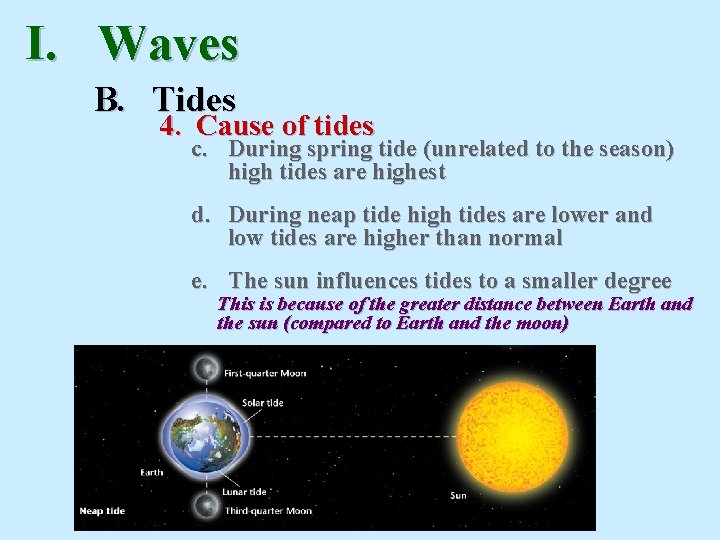
I. Waves B. Tides 4. Cause of tides c. During spring tide (unrelated to the season) high tides are highest d. During neap tide high tides are lower and low tides are higher than normal e. The sun influences tides to a smaller degree This is because of the greater distance between Earth and the sun (compared to Earth and the moon)
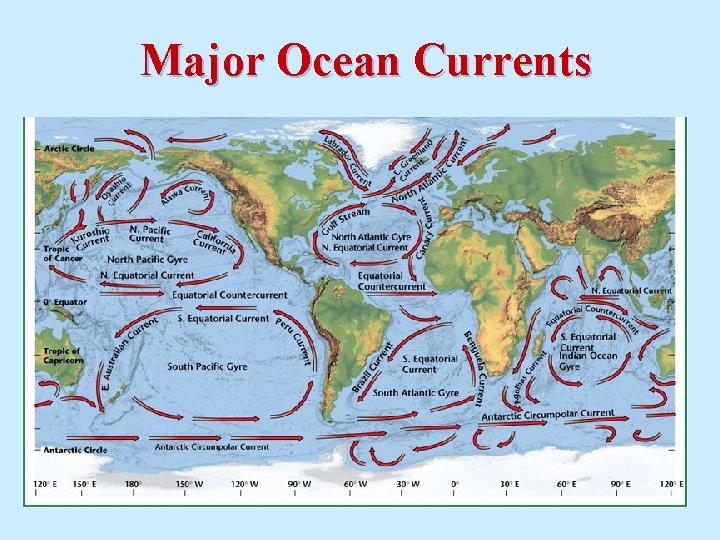
II. Ocean Currents bottom water according to A. Density currents Move temperature and salinity differences B. Surface currents Driven by surface wind. 1. Follow global wind patterns 2. Currents from the poles bring colder water, while currents from equator bring warmer water 3. Gyres develop due to landmasses interacting with current flow Circular surface ocean currents
Major Ocean Currents
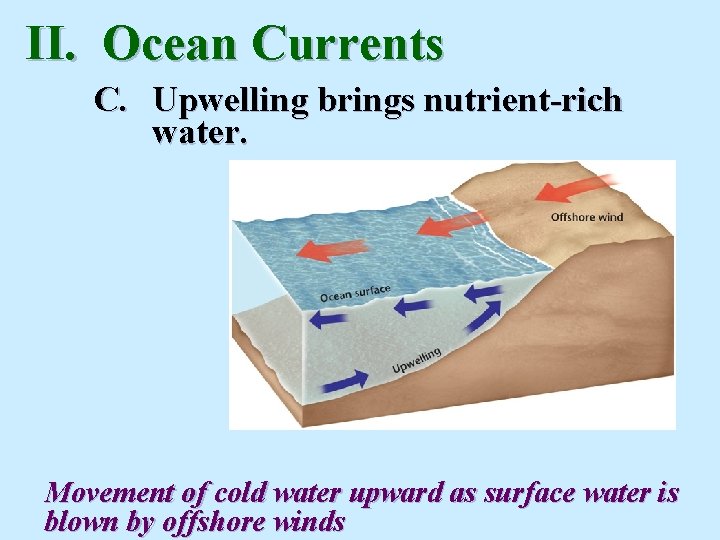
II. Ocean Currents C. Upwelling brings nutrient-rich water. Movement of cold water upward as surface water is blown by offshore winds
The End