
Physical Geography of Latin America The Three Divisions
- Slides: 35
Physical Geography of Latin America
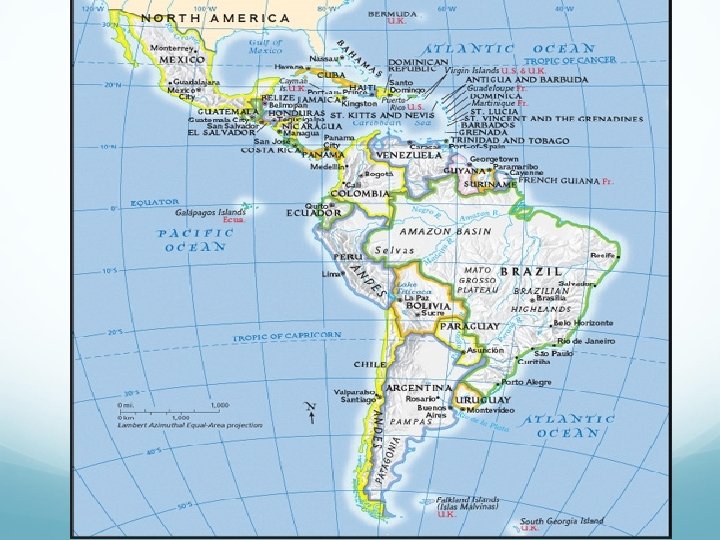
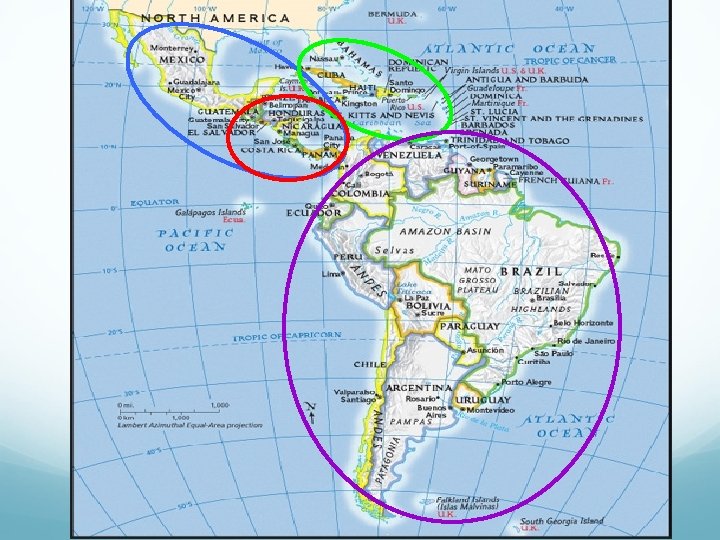
The Three Divisions Geographers divide Latin America into three areas: Middle America: includes Mexico and the 7 countries of Central America South America: the largest land area of Latin America Of S. America’s 13 countries, Brazil is the largest in land area and population Caribbean (aka-West Indies): The Bahamas, the Greater Antilles, and the Lesser Antilles
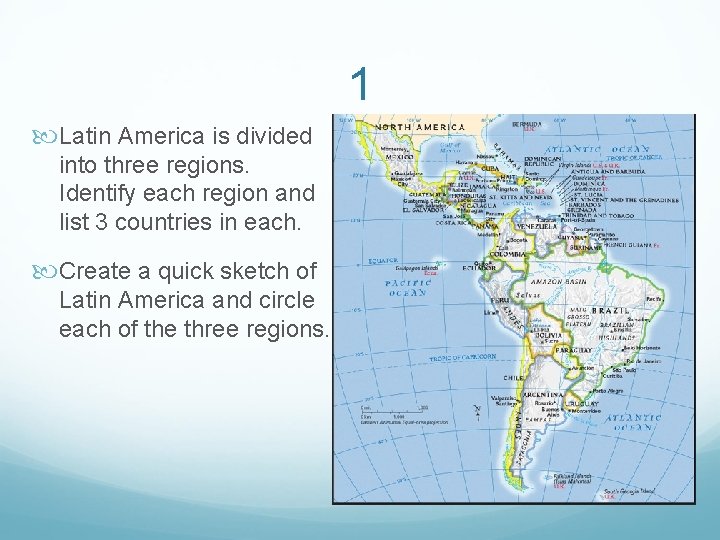
1 Latin America is divided into three regions. Identify each region and list 3 countries in each. Create a quick sketch of Latin America and circle each of the three regions.
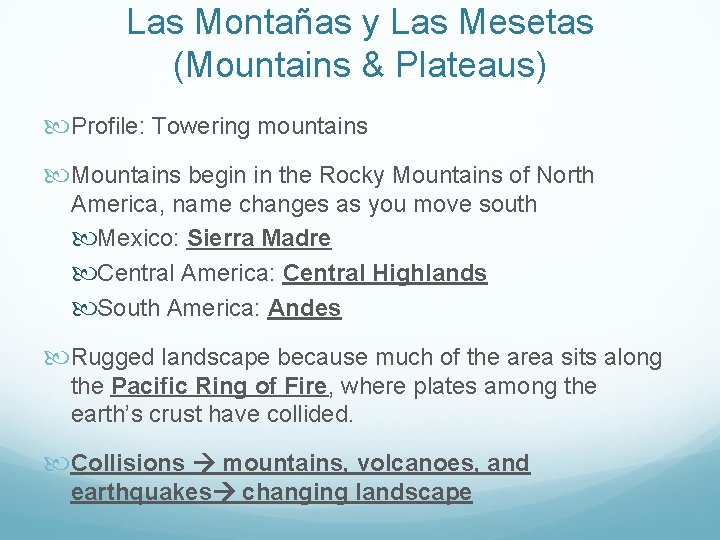
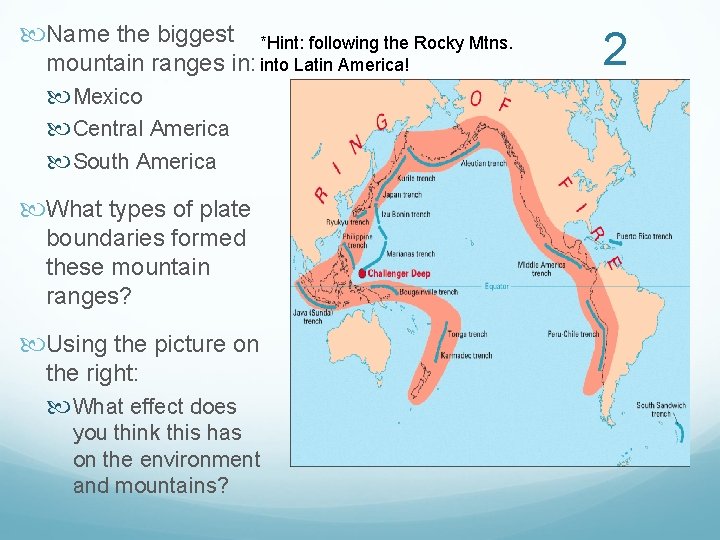
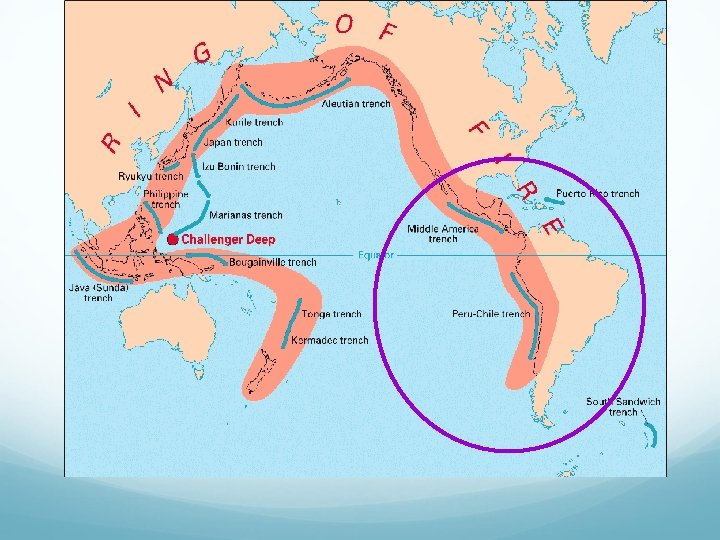
Las Montañas y Las Mesetas (Mountains & Plateaus) Profile: Towering mountains Mountains begin in the Rocky Mountains of North America, name changes as you move south Mexico: Sierra Madre Central America: Central Highlands South America: Andes Rugged landscape because much of the area sits along the Pacific Ring of Fire, where plates among the earth’s crust have collided. Collisions mountains, volcanoes, and earthquakes changing landscape
Name the biggest mountain ranges Mexico Central America South America *Hint: following the Rocky Mtns. in: into Latin America! What types of plate boundaries formed these mountain ranges? Using the picture on the right: What effect does you think this has on the environment and mountains? 2
3 - Pros & Cons of the Physical Geography- Mountains Write these notes: Pros Lowland mountain areas = cooler climate Rich natural resources: water, volcanic soil, timber, minerals Cons Ruggedness blocks movement & trade Isolation* QUESTION: before cars and other modern transportation methods, how could mountains cause isolation? Radio, TV, air transport work to break down physical barriers. QUESTION: If you were the owner of a radio/tv station, why would not enjoy the physical environment of Latin America?
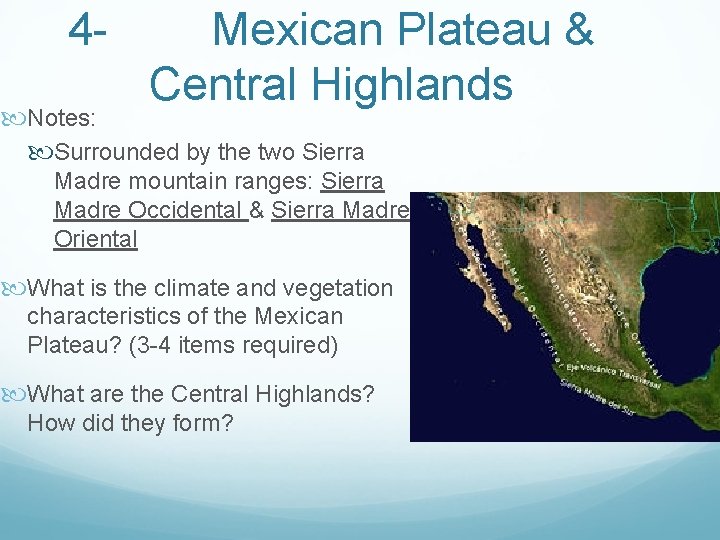
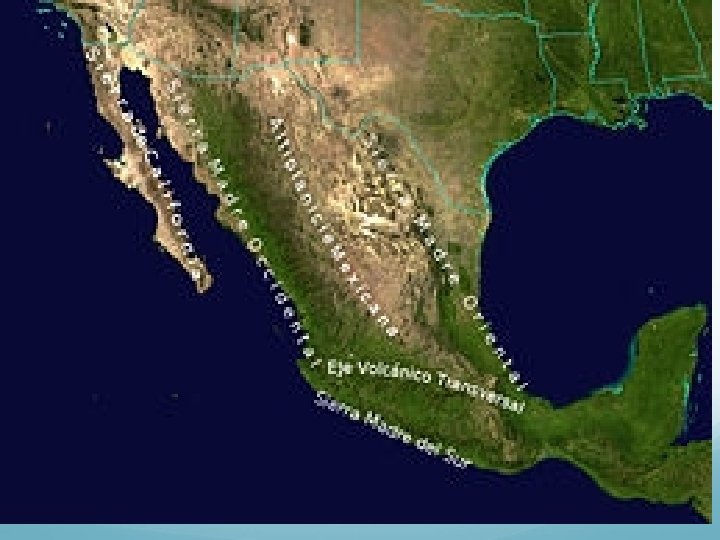
4 - Mexican Plateau & Central Highlands Notes: Surrounded by the two Sierra Madre mountain ranges: Sierra Madre Occidental & Sierra Madre Oriental What is the climate and vegetation characteristics of the Mexican Plateau? (3 -4 items required) What are the Central Highlands? How did they form?
Central Highlands
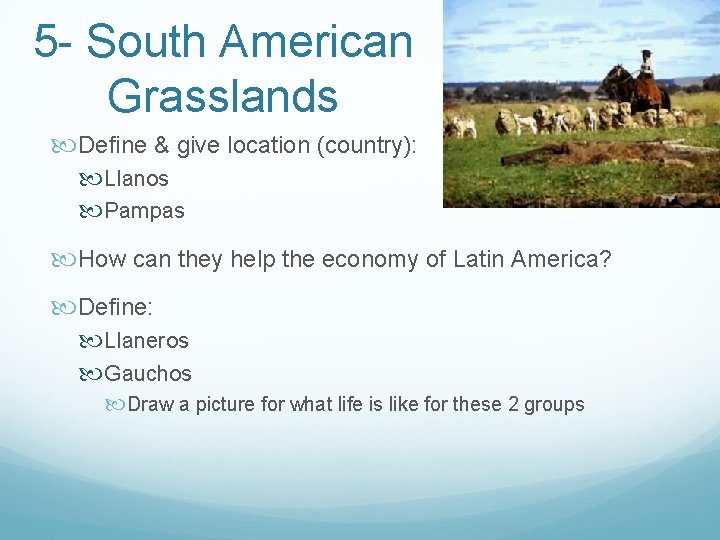
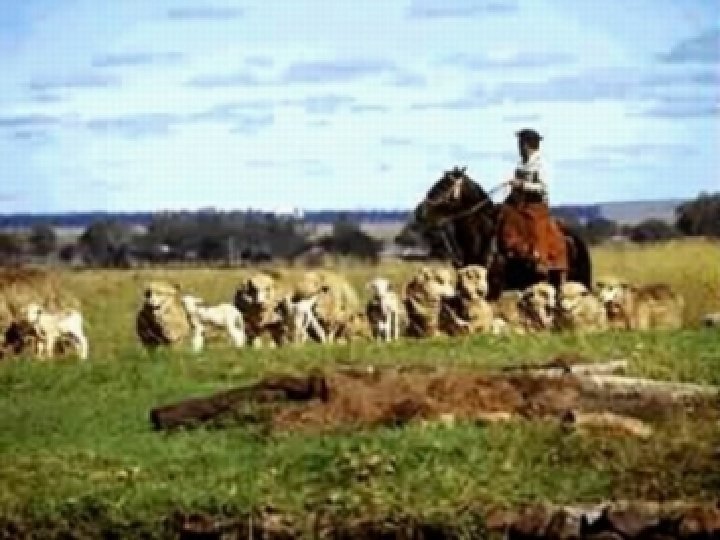
South American Grasslands Llanos of Colombia, Pampas of Argentina Pampas: a major “breadbasket”, produce large amounts of wheat & corn Provide wide grazing lands for beef cattle Employ cowhands to drive herd across the grass/terrain Llaneros: Llanos Gauchos: pampas How can they help the economy of Latin America?
5 - South American Grasslands Define & give location (country): Llanos Pampas How can they help the economy of Latin America? Define: Llaneros Gauchos Draw a picture for what life is like for these 2 groups
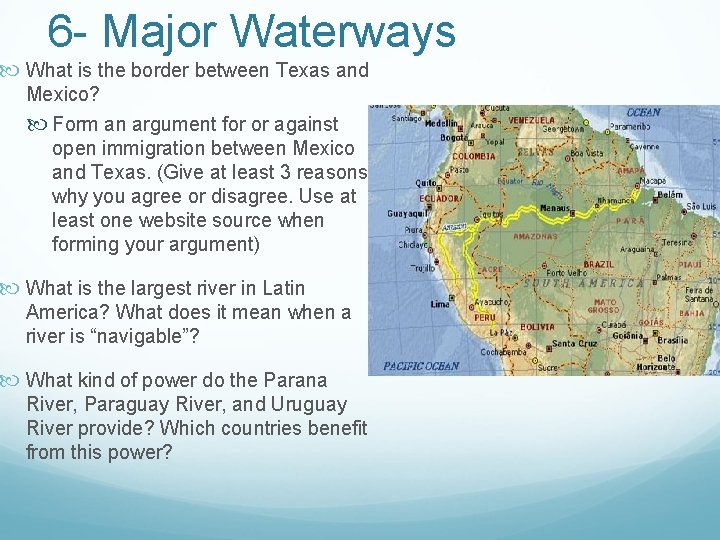
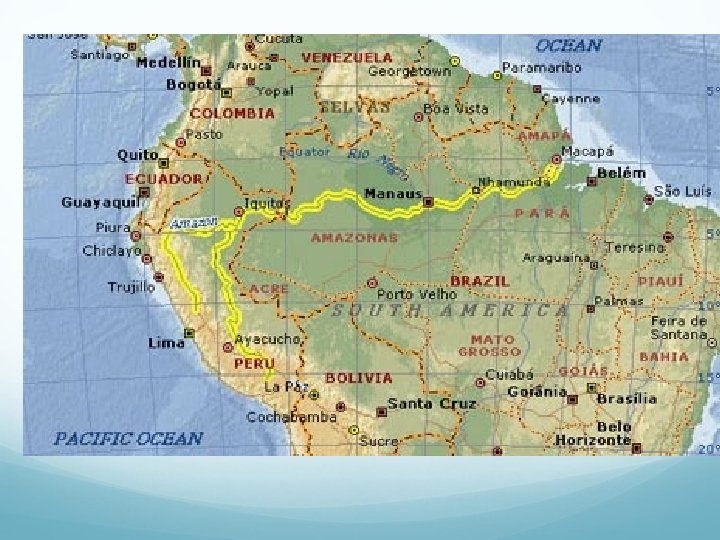
H 2 O (Water) Rio Grande: border between Mexico & the US Amazon = world’s widest river (#2 longest) Is navigable!! Parana, Paraguay, and Uruguay Rivers provide hydroelectric power, or electricity generated from the energy of water Argentina, Bolivia, Brazil, Paraguay, and Uruguay Also provides inland water routes
6 - Major Waterways What is the border between Texas and Mexico? Form an argument for or against open immigration between Mexico and Texas. (Give at least 3 reasons why you agree or disagree. Use at least one website source when forming your argument) What is the largest river in Latin America? What does it mean when a river is “navigable”? What kind of power do the Parana River, Paraguay River, and Uruguay River provide? Which countries benefit from this power?
The Andes
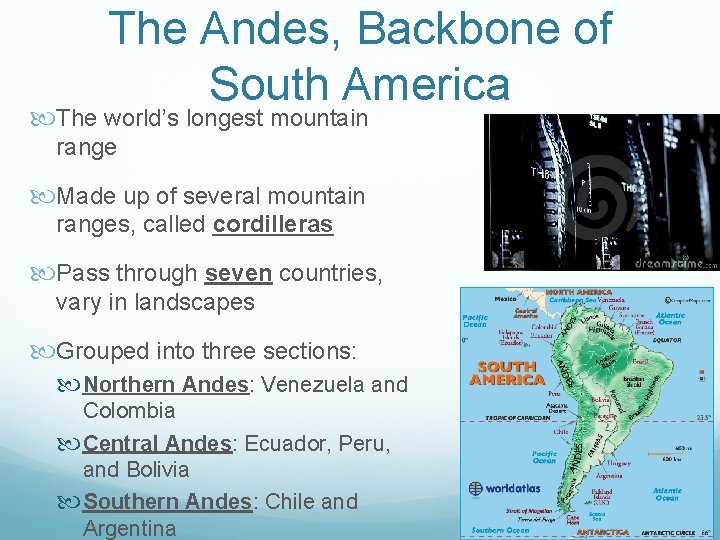
The Andes, Backbone of South America The world’s longest mountain range Made up of several mountain ranges, called cordilleras Pass through seven countries, vary in landscapes Grouped into three sections: Northern Andes: Venezuela and Colombia Central Andes: Ecuador, Peru, and Bolivia Southern Andes: Chile and Argentina
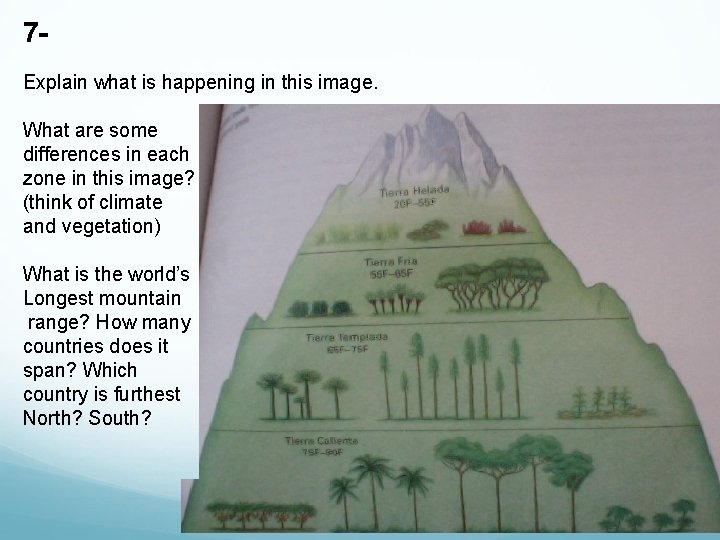
7 Explain what is happening in this image. What are some differences in each zone in this image? (think of climate and vegetation) What is the world’s Longest mountain range? How many countries does it span? Which country is furthest North? South?
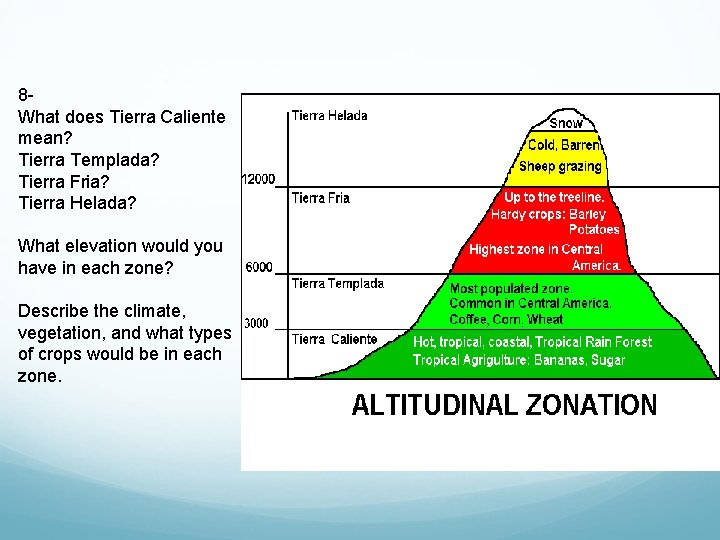
8 What does Tierra Caliente mean? Tierra Templada? Tierra Fria? Tierra Helada? What elevation would you have in each zone? Describe the climate, vegetation, and what types of crops would be in each zone.
Tierra Caliente: Tropical! Lowest elevation zone Anywhere from Sea level to no higher than 3, 000 feet Tropical climate, year-round warm temperatures (75 -80 degrees) Eastern slopes: Broadleaf Evergreen forests Western slopes: tropical grasslands Heat = difficult places to live Crops: bananas, rice, sugarcane
Tierra Templada: Land of Eternal Spring 3, 000 -6, 000 feet above sea level Mild, temperate climate with temperatures between 65 & 75 degrees yearly. Vegetation changes with elevation Lower elevations: palms, bamboo, jungle vines Higher elevations: broadleaf evergreen forests More populated, Mestizos (indigenous + European) Lower levels: grow oranges & bananas Higher levels: corn, beans, other veggies Main commercial crop: Coffee
Tierra Fría Between 6, 000 & 12, 000 feet Average temps: 55 -65 degrees, colder at night (freezing at higher elevations) Altiplano (11, 000): Lake Titicaca World’s highest navigable lake (12, 500 feet above sea level) Navigable large & deep enough to hold large boats Hidden treasures! Tree line—between 10, 000 & 12, 000 feet Crops: potatoes, wheat, barley, corn, apples & pears
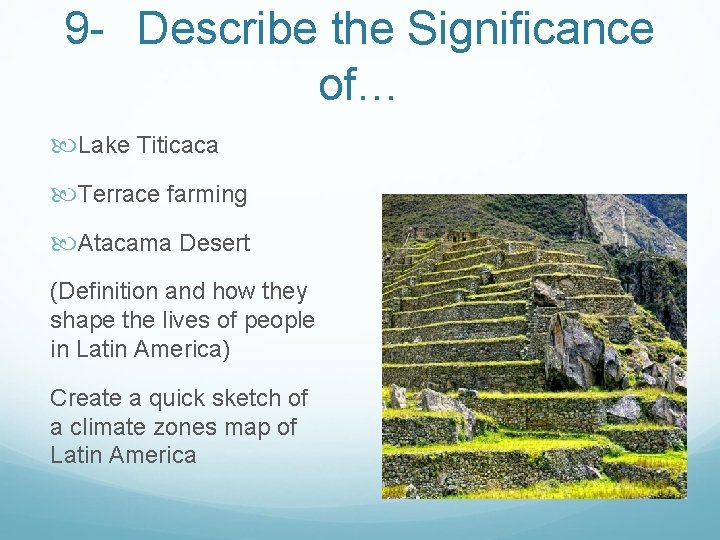
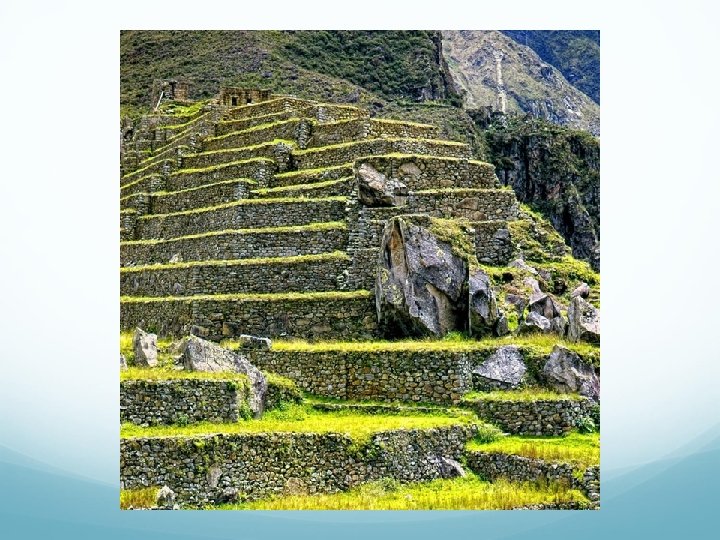
Adaptations in the Tierra Fria Build houses of stone or adobe brick (thicker) Body adaptation: larger lungs Farmers practice terracing to create flat lands on the slopes and steep hillsides of this area. Vertical Trade: trade of farm products between the higher & lower elevation zones People of lower elevations bring their crops to the people of the higher elevations (low high) Bananas, oranges, tomatoes Higher elevations bring to lower (High low) Potatoes, wheat
9 - Describe the Significance of… Lake Titicaca Terrace farming Atacama Desert (Definition and how they shape the lives of people in Latin America) Create a quick sketch of a climate zones map of Latin America
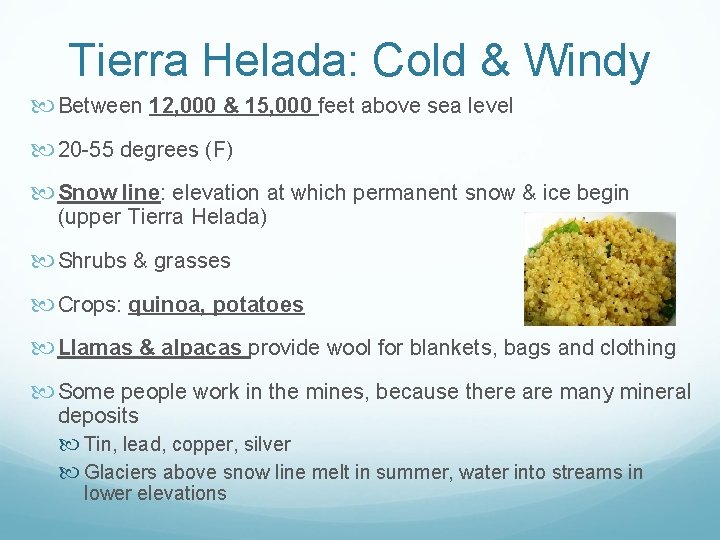
Tierra Helada: Cold & Windy Between 12, 000 & 15, 000 feet above sea level 20 -55 degrees (F) Snow line: elevation at which permanent snow & ice begin (upper Tierra Helada) Shrubs & grasses Crops: quinoa, potatoes Llamas & alpacas provide wool for blankets, bags and clothing Some people work in the mines, because there are many mineral deposits Tin, lead, copper, silver Glaciers above snow line melt in summer, water into streams in lower elevations
Climate Regions
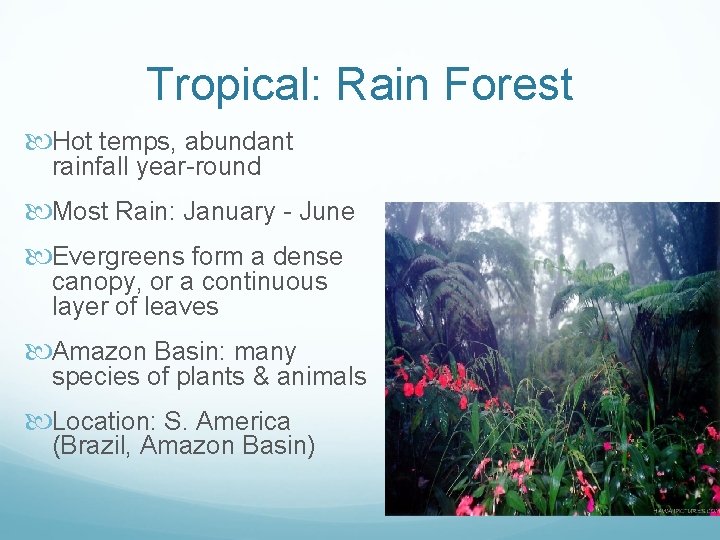
Tropical: Rain Forest Hot temps, abundant rainfall year-round Most Rain: January - June Evergreens form a dense canopy, or a continuous layer of leaves Amazon Basin: many species of plants & animals Location: S. America (Brazil, Amazon Basin)
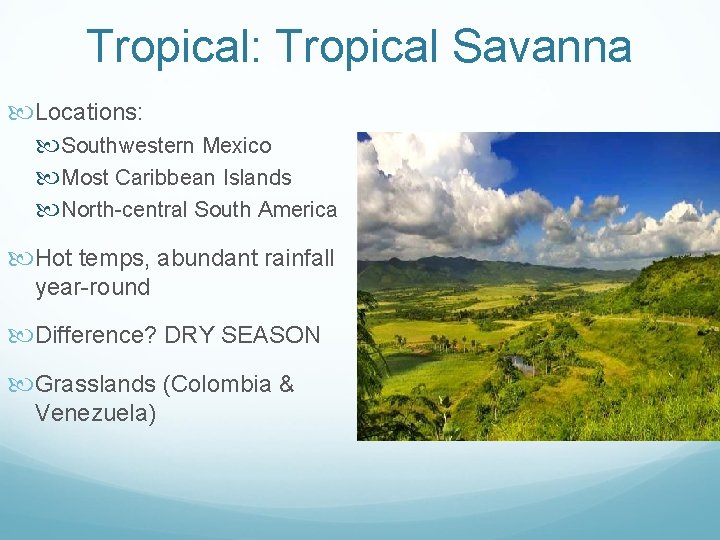
Tropical: Tropical Savanna Locations: Southwestern Mexico Most Caribbean Islands North-central South America Hot temps, abundant rainfall year-round Difference? DRY SEASON Grasslands (Colombia & Venezuela)
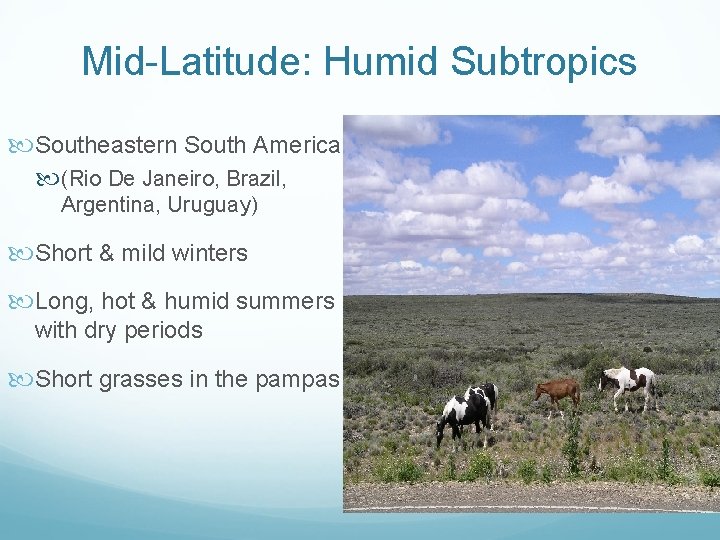
Mid-Latitude: Humid Subtropics Southeastern South America (Rio De Janeiro, Brazil, Argentina, Uruguay) Short & mild winters Long, hot & humid summers with dry periods Short grasses in the pampas
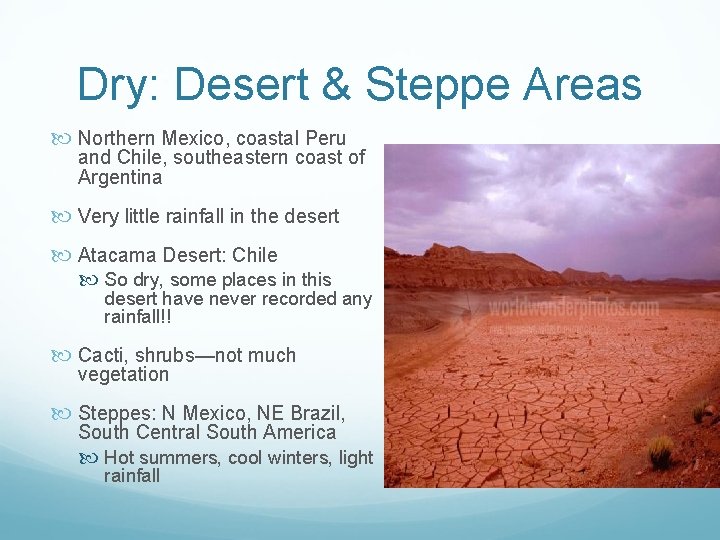
Dry: Desert & Steppe Areas Northern Mexico, coastal Peru and Chile, southeastern coast of Argentina Very little rainfall in the desert Atacama Desert: Chile So dry, some places in this desert have never recorded any rainfall!! Cacti, shrubs—not much vegetation Steppes: N Mexico, NE Brazil, South Central South America Hot summers, cool winters, light rainfall