
PHYSICAL GEOGRAPHY OF EAST ASIA MAJOR GEOGRAPHIC CHARACTERISTICS
- Slides: 17
PHYSICAL GEOGRAPHY OF EAST ASIA
MAJOR GEOGRAPHIC CHARACTERISTICS OF EAST ASIA � World’s MOST POPULOUS REGION � One of the world’s earliest culture hearths � Population concentrated in the East, in river basins, coastal areas, and special economic zones
SUB-REGIONS OF EAST ASIA � CHINA PROPER- Eastern half; the core of China � XIZANG (TIBET)- Tall mountains and high plateaus; sparsely populated � XINJIANG- Vast desert basin and mountain rims; gateway to the Islam world � MONGOLIA- Mostly desert � The JAKOTA TRIANGLE � Japan, South Korea, Taiwan
PHYSICAL GEOGRAPHY � LONGITUDINAL EXTENT (East to West) Comparable to the U. S. � LATITUDINAL RANGE (North to South): Comparable to Northern Quebec to Central Caribbean � Bordered by oceans, high mountains, steppe country, and desert
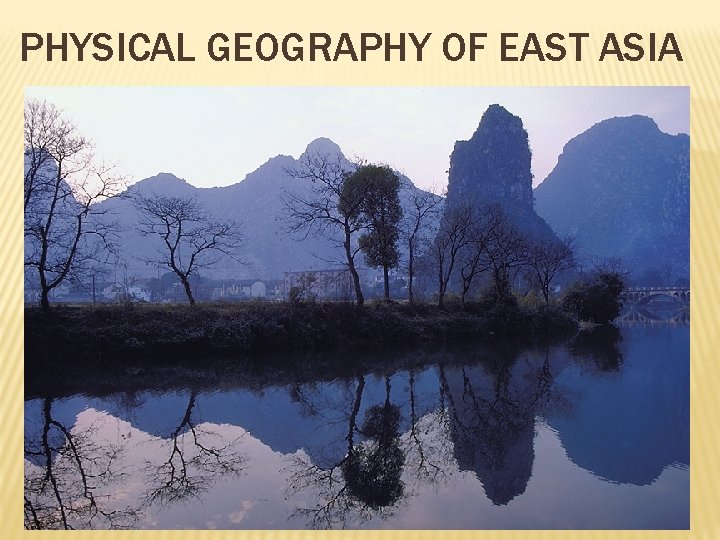
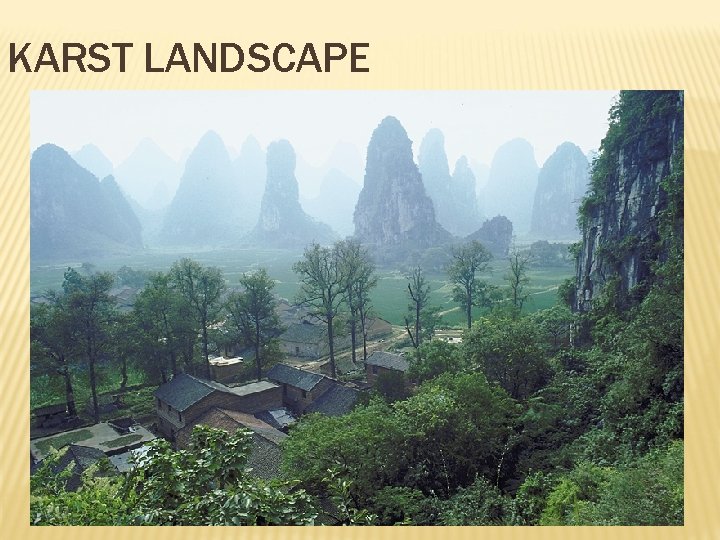
KARST LANDSCAPE
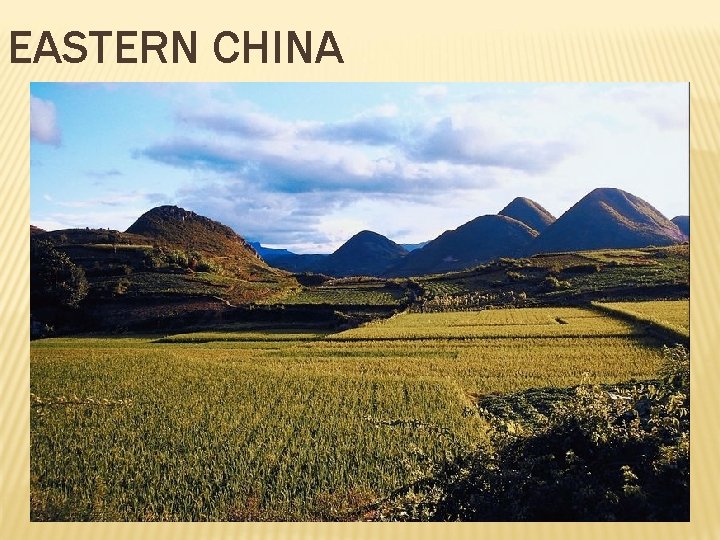
EASTERN CHINA
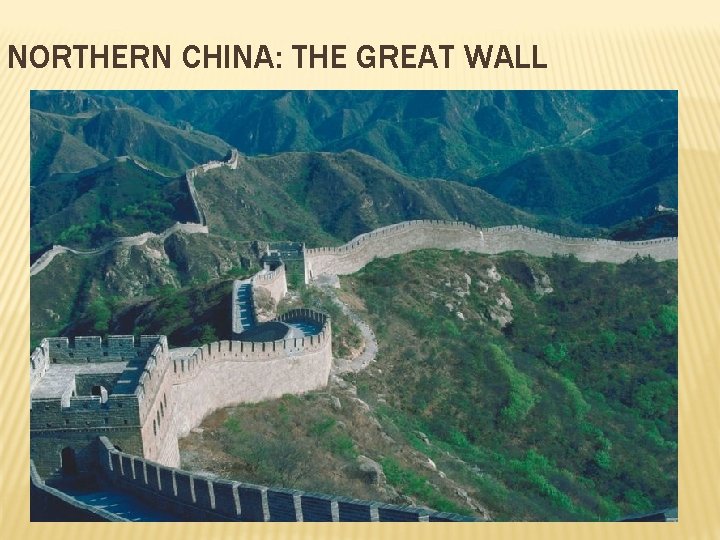
NORTHERN CHINA: THE GREAT WALL
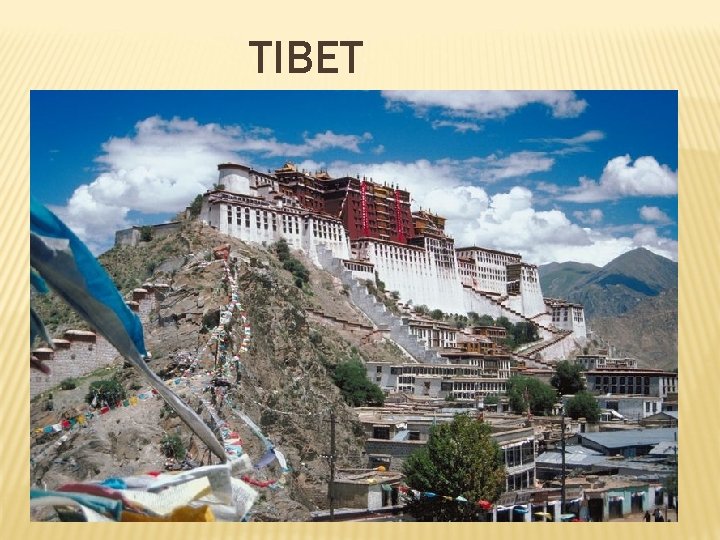
TIBET
CLIMATE � CLIMATE TYPES INCLUDE: B (Dry); C (Humid temperate); D (Humid cold); and H (Unclassified Highlands) � Includes the largest area of highland climate in the world � Desert conditions prevail in the Northern and Western interior � Coastal, peninsular, and insular East Asia have more moderate climates than the interior regions
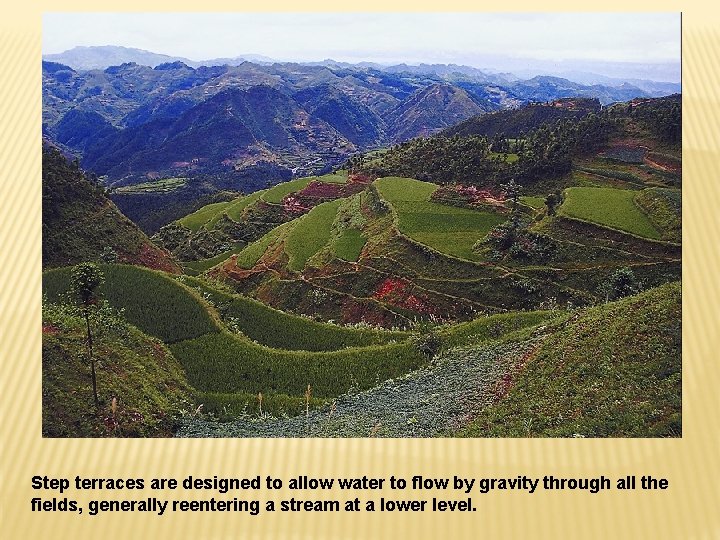
Step terraces are designed to allow water to flow by gravity through all the fields, generally reentering a stream at a lower level.
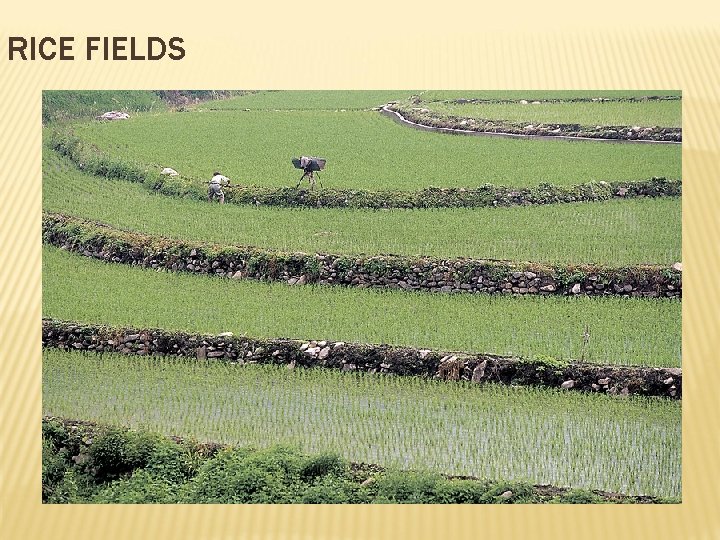
RICE FIELDS
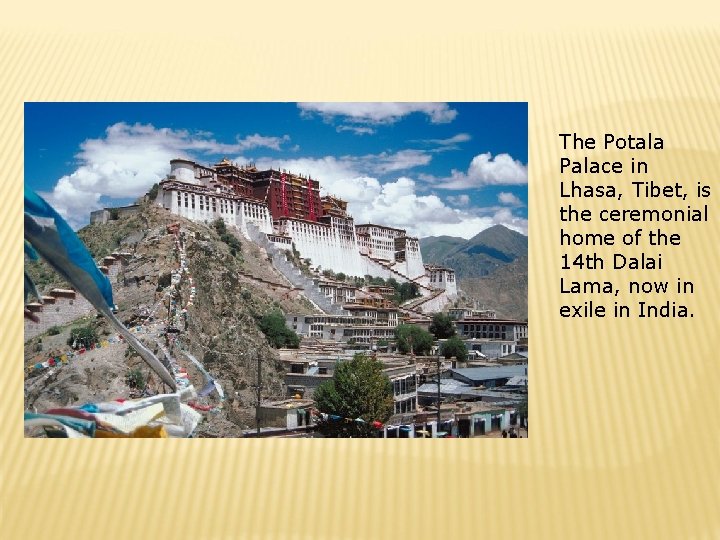
XIZANG (TIBET) � � � � A harsh physical environment Sparsely populated Came under Chinese control during the Manchu Dynasty in 1720 Gained separate status in the late 19 th Century China’s Communist regime took control in the 1950 s Cornerstone of Buddhism, the Dalai Lama, and monasteries Now an autonomous region
The Potala Palace in Lhasa, Tibet, is the ceremonial home of the 14 th Dalai Lama, now in exile in India.
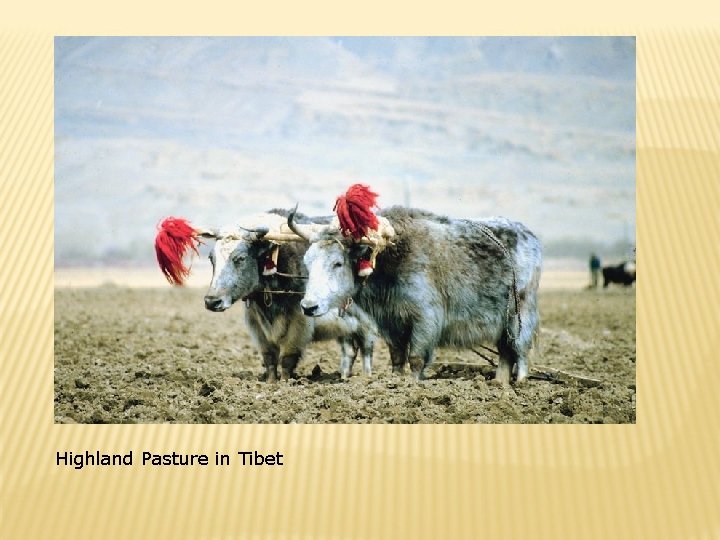
Highland Pasture in Tibet
XINJIANG � Comprises one-sixth of China’s total land area � A region of high mountains and basins � Chinese only account for 40% of the population � Muslims account for half of the population � Has extensive reserves of oil and natural gas
THE JAKOTA TRIANGLE � CHARACTERISTICS � Small, Confined land area (Japan and Taiwan are islands and the Koreas are on a Peninsula) � Hazardous region- earthquakes, tsunamis and typhoons � Great cities and high-tech industry � Enormous consumption of raw materials, but few raw materials produced locally � Global links and rapid development
KNOWN HAZARDS FOR THIS REGION �Earthquakes �Tsunamis �Volcanic Activity (Japan) �Typhoons �Floods �Drought