
Physical Geography of Canada www Craig Marlatt comschool



- Slides: 21
Physical Geography of Canada www. Craig. Marlatt. com/school
Physical Geography 1. 2. 3. 4. Climate Landforms Soil and Vegetation Ecozones
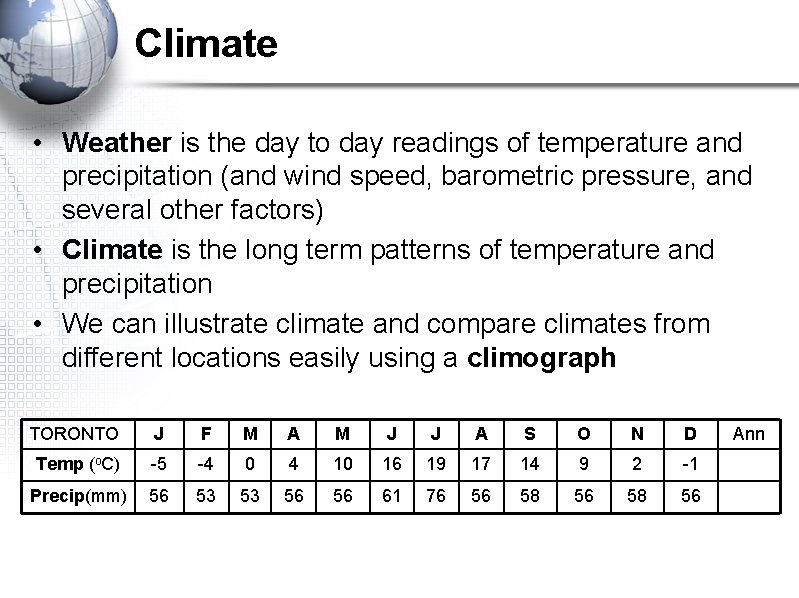
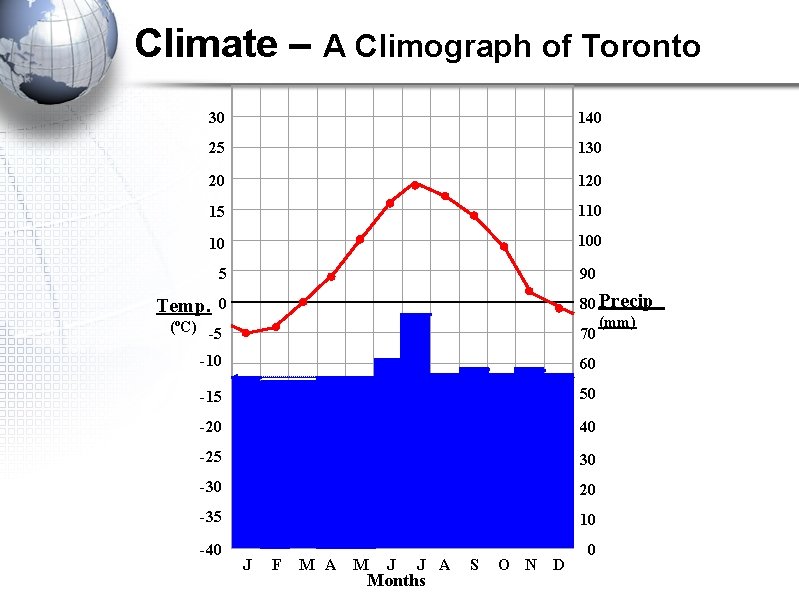
Climate • Weather is the day to day readings of temperature and precipitation (and wind speed, barometric pressure, and several other factors) • Climate is the long term patterns of temperature and precipitation • We can illustrate climate and compare climates from different locations easily using a climograph TORONTO J F M A M J J A S O N D Temp (o. C) -5 -4 0 4 10 16 19 17 14 9 2 -1 Precip(mm) 56 53 53 56 56 61 76 56 58 56 Ann
Climate – A Climograph of Toronto 30 25 20 15 10 5 Temp. 0 (o. C) -5 -10 -15 -20 -25 -30 -35 -40 30 20 J F M A M J J A Months S O N D 140 130 120 110 100 90 80 Precip (mm) 70 60 50 40 10 0
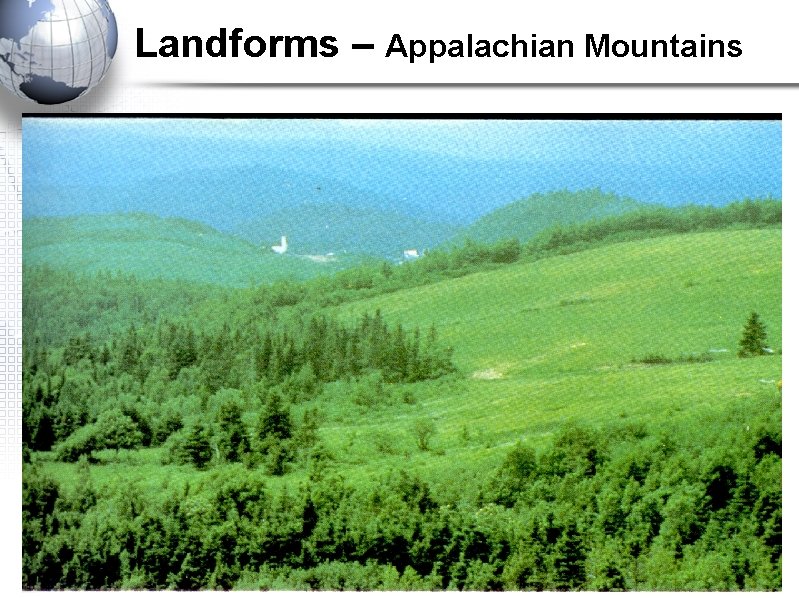
Landforms – Appalachian Mountains
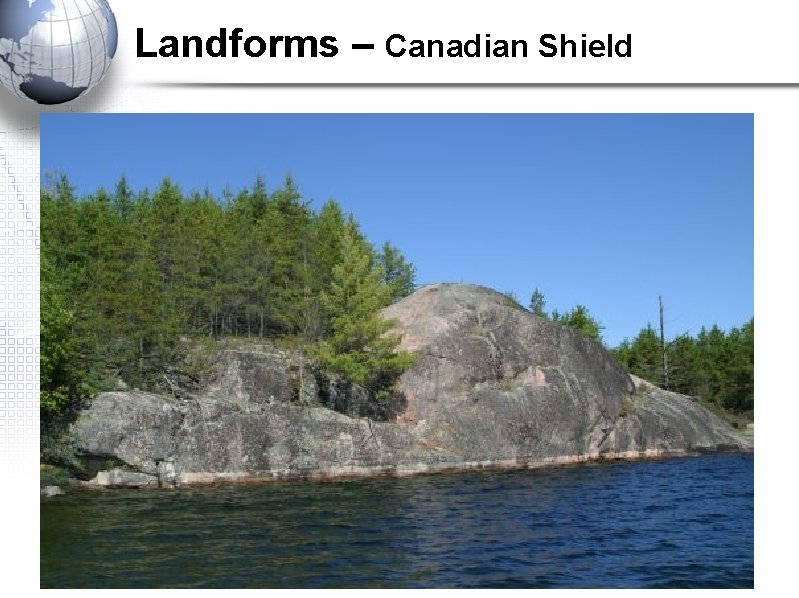
Landforms – Canadian Shield
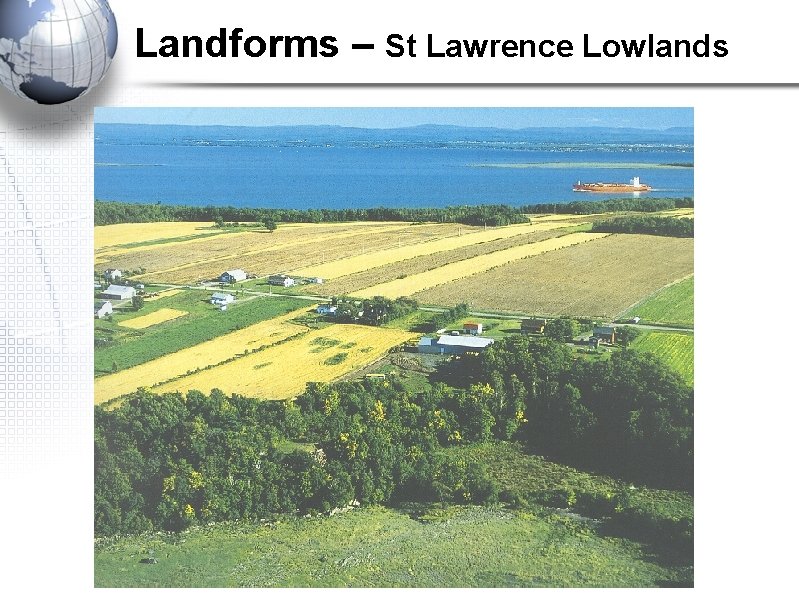
Landforms – St Lawrence Lowlands
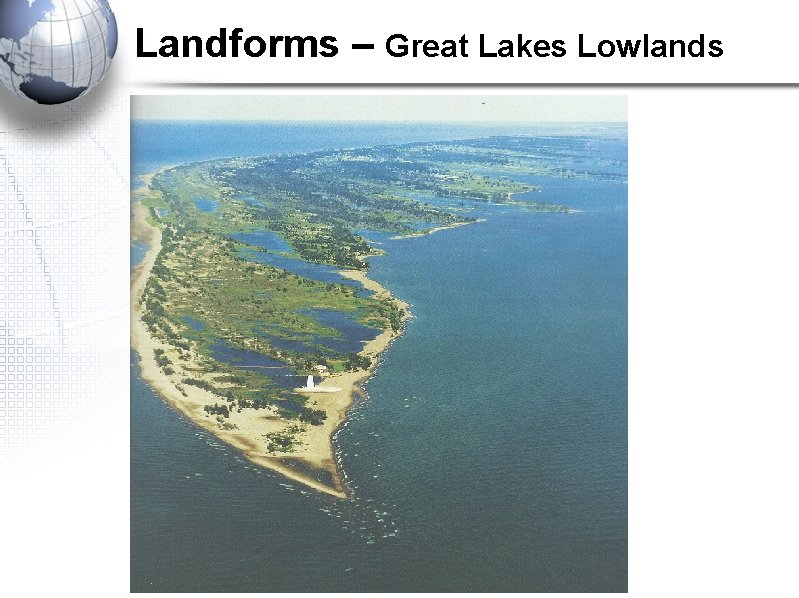
Landforms – Great Lakes Lowlands
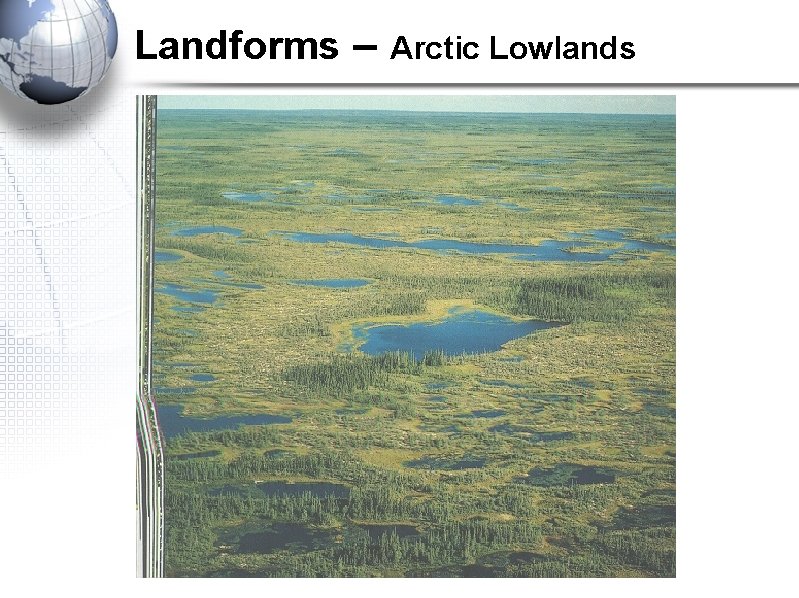
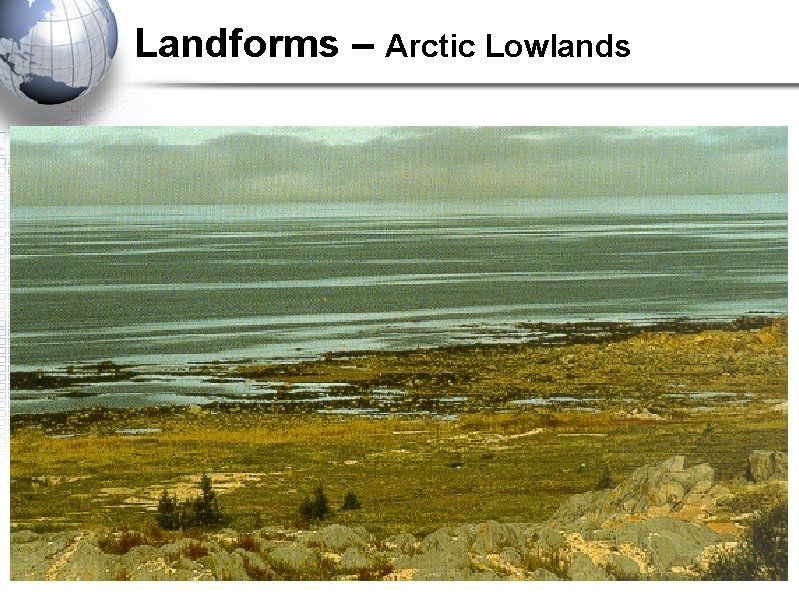
Landforms – Arctic Lowlands
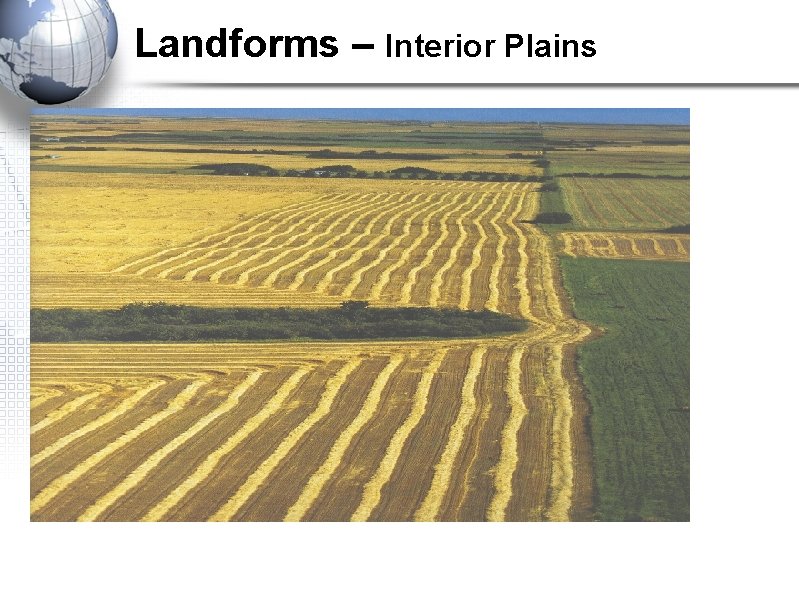
Landforms – Interior Plains
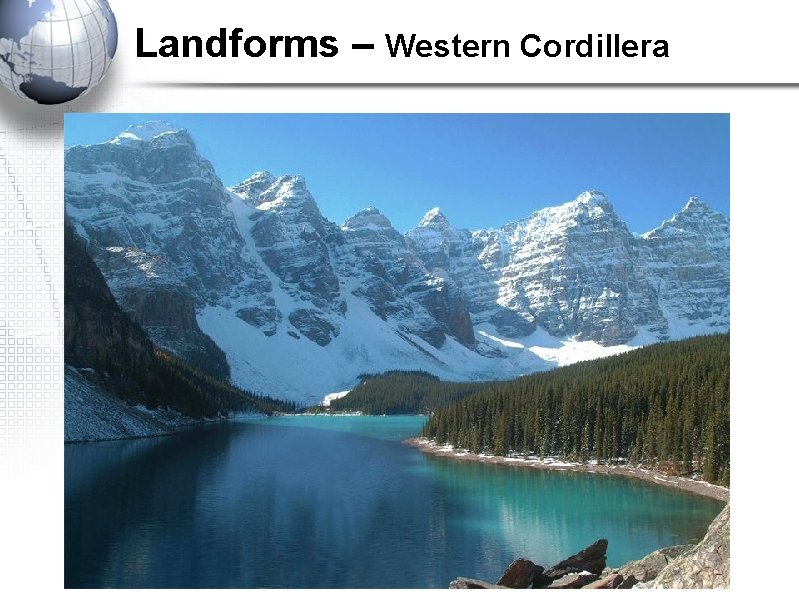
Landforms – Western Cordillera
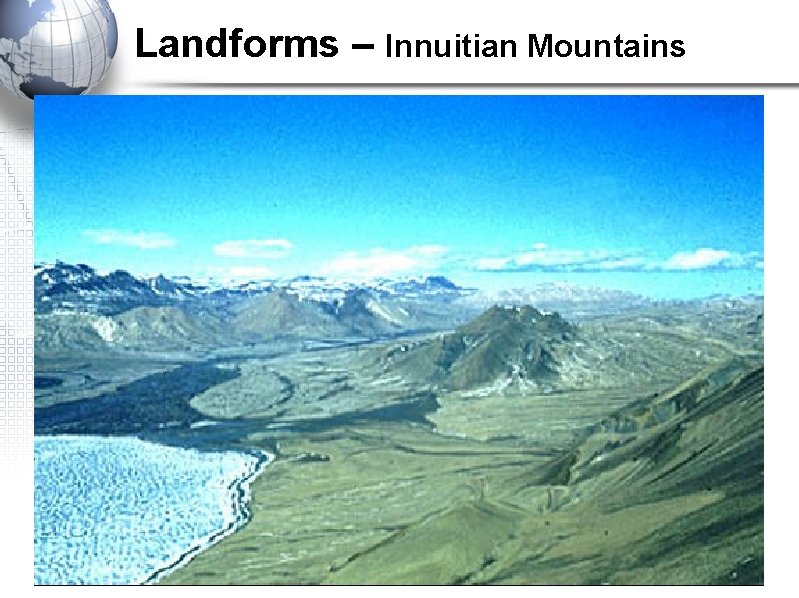
Landforms – Innuitian Mountains
Landforms – Arctic Lowlands
Landforms
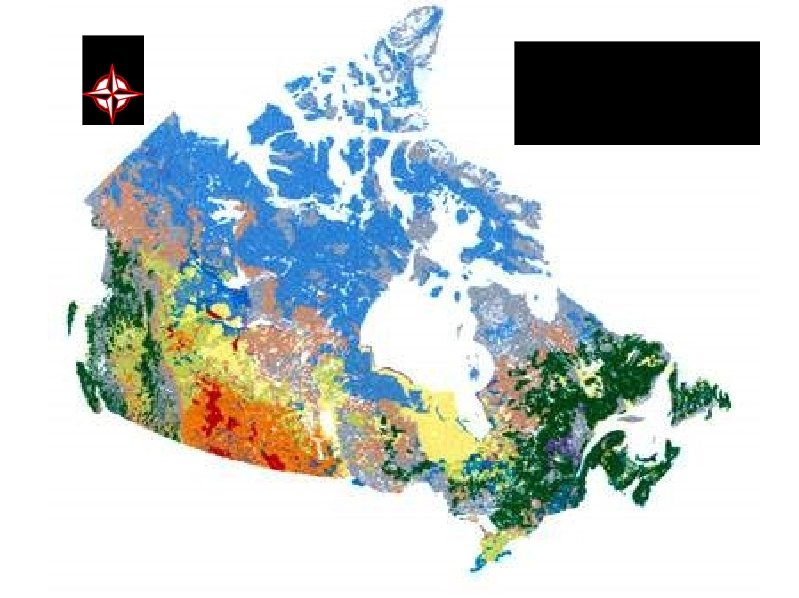
Soil and Vegetation • Soil is a naturally occurring, unconsolidated or loose material on the surface of the earth, capable of supporting life • Soil is made up of four components (MOMA): – – Minerals Organic Material Moisture Air • More about qualities of soil (and their disappearance!) will be discussed in Unit 3
Soil and Vegetation • Vegetation is a general term for the plant life of a region (which very much depends on soil quality) • In Canada, we have everything from desert cactus to massive rainforest trees, and everything in between – – – Mosses Plants Shrubs Coniferous trees Deciduous trees
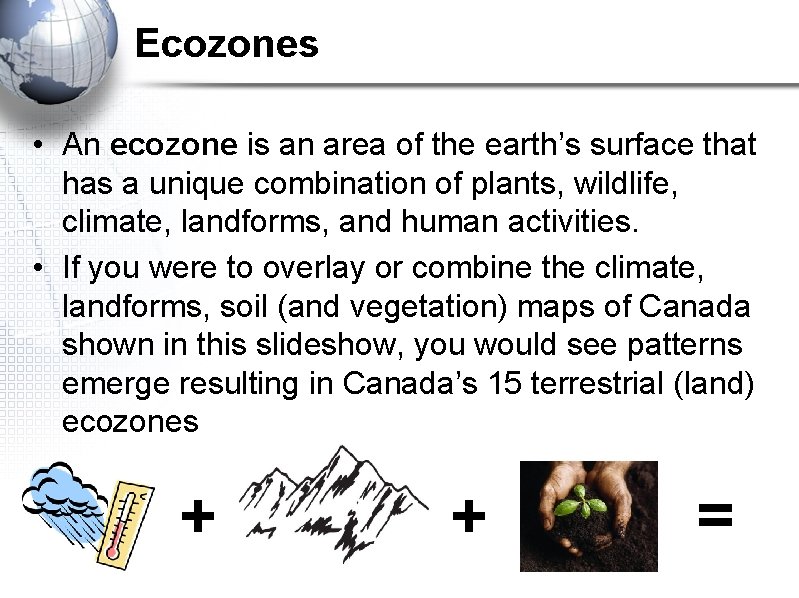
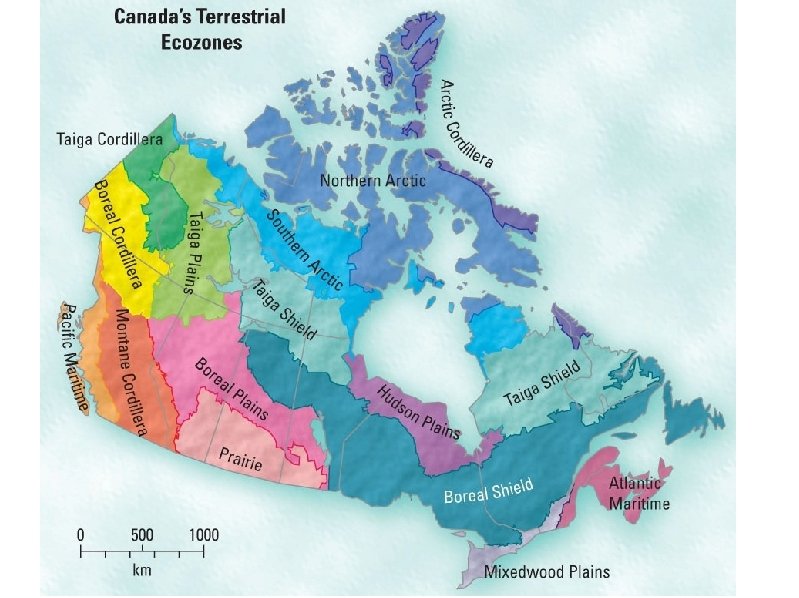
Ecozones • An ecozone is an area of the earth’s surface that has a unique combination of plants, wildlife, climate, landforms, and human activities. • If you were to overlay or combine the climate, landforms, soil (and vegetation) maps of Canada shown in this slideshow, you would see patterns emerge resulting in Canada’s 15 terrestrial (land) ecozones + + =