
PHYSICAL FITNESS Physical Fitness The ability to do
PHYSICAL FITNESS

Physical Fitness � The ability to do everyday activities without becoming short of breath, sore, or tired � The four components of Fitness: � Strength � Endurance � Flexibility � Body composition
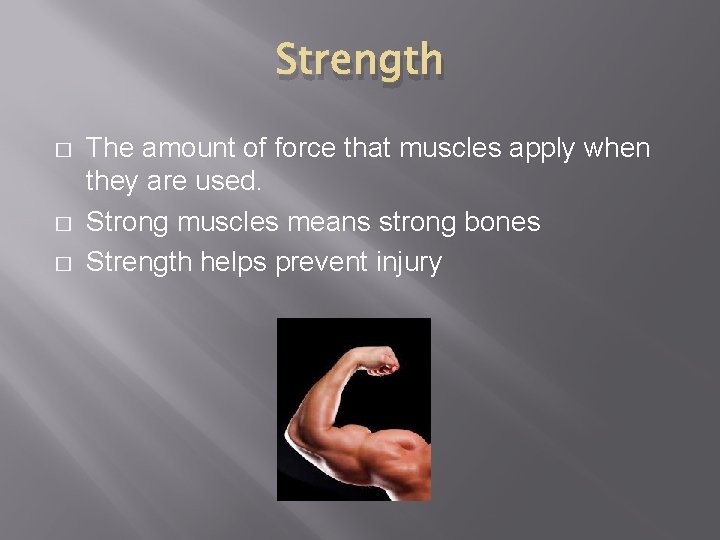
Strength � � � The amount of force that muscles apply when they are used. Strong muscles means strong bones Strength helps prevent injury
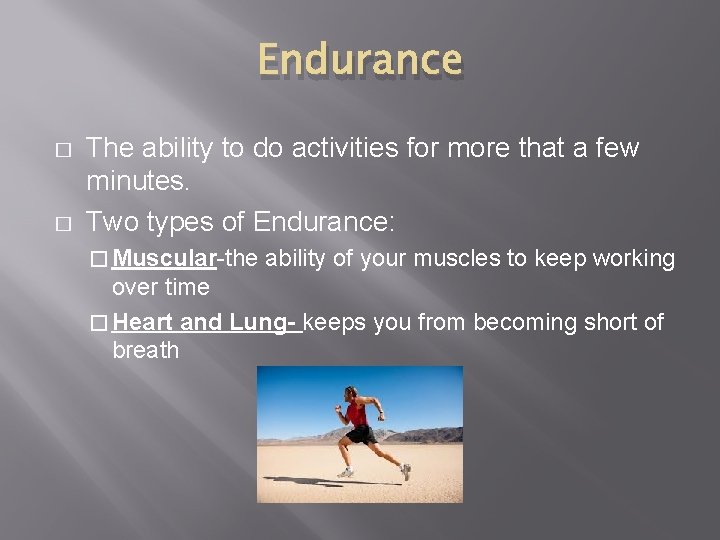
Endurance � � The ability to do activities for more that a few minutes. Two types of Endurance: � Muscular-the ability of your muscles to keep working over time � Heart and Lung- keeps you from becoming short of breath

Flexibility � � � The ability to bend and twist joints easily If you are flexible, you less likely to get injured during physical activity. To improve flexibility you can stretch � Stretching- joints any activity that loosens muscles and
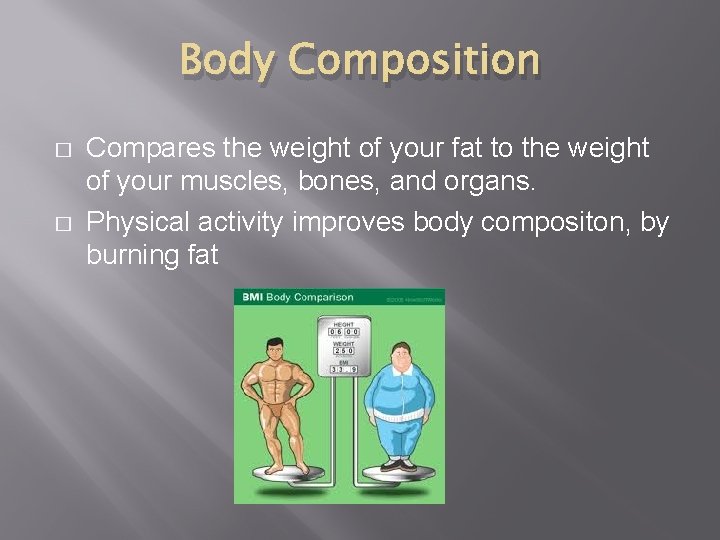
Body Composition � � Compares the weight of your fat to the weight of your muscles, bones, and organs. Physical activity improves body compositon, by burning fat
Your Fitness Program � Exercise- any physical activity that maintains or improves fitness � Examples: Push-ups Running Playing a sport � Why should you exercise? � Lack of exercise can make everyday activities difficult � Less stress � Less chance of disease � Longer life span

Testing Your Fitness � There are different tests for the different components of fitness: � Flexibility� Muscular Sit and reach Endurance- Push-ups, curl-ups, and pull- ups � Heart and Lung Endurance- 1 mile run

Fitness Goals � Set short-term goals � Helps meet long-term goals � How important fitness is to you will determine your goals � See a doctor before starting □ What is meant by: To get better or stronger you must challenge yourself? � Examples: � Push-ups � Sit and Reach � Mile � Shuttle Run
F. I. T � � � Exercise improves Fitness Exercise programs must change to see improvements These changes are broken into three catagories: � Frequency- how often you exercise � Intensity- how hard you exercise � Time- how long you exercise � Do not increase more than one part of FIT at a time � Do not increase any part too much.
Monitoring Your Heart Rate � � � Heart Rate- The number of times your heart beats per minute, also known as your Pulse Target Heart Rate Range(THRR)- is 60 percent to 85 percent of your maximum heart rate Maximum Heart Rate(MHR)- is the largest number of times your heart can beat per minute during exercise � MHR equation- 220 -age � THRR equation MHR x. 6=low range MHR x. 85=high range
Monitoring Heart Rate (con’t) � � Resting Heart Rate(RHR)- the number of times your heart beats per minute when you are not exercising. Recovery Time- the amount of time your heart takes to return to RHR after exercise � Increase fitness, decrease recovery time
- Slides: 12