
PHYSICAL FACTORS OF ENVIRONMENT PHYSICAL FACTORS air temperature

- Slides: 19
PHYSICAL FACTORS OF ENVIRONMENT
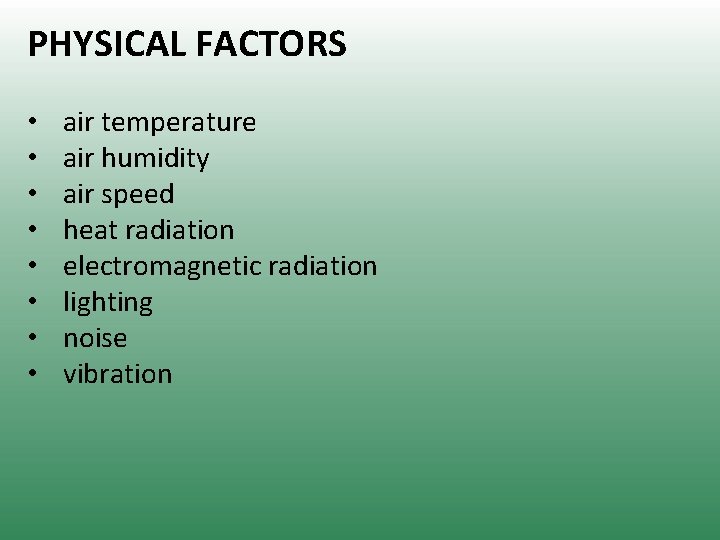
PHYSICAL FACTORS • • air temperature air humidity air speed heat radiation electromagnetic radiation lighting noise vibration
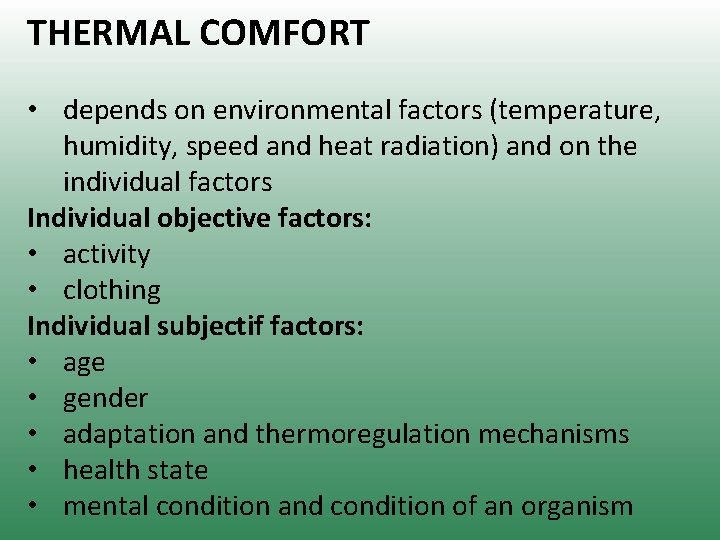
THERMAL COMFORT • depends on environmental factors (temperature, humidity, speed and heat radiation) and on the individual factors Individual objective factors: • activity • clothing Individual subjectif factors: • age • gender • adaptation and thermoregulation mechanisms • health state • mental condition and condition of an organism
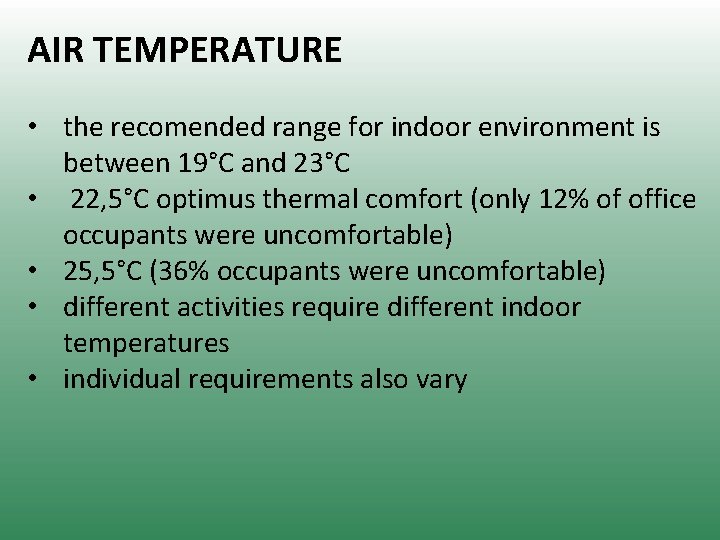
AIR TEMPERATURE • the recomended range for indoor environment is between 19°C and 23°C • 22, 5°C optimus thermal comfort (only 12% of office occupants were uncomfortable) • 25, 5°C (36% occupants were uncomfortable) • different activities require different indoor temperatures • individual requirements also vary
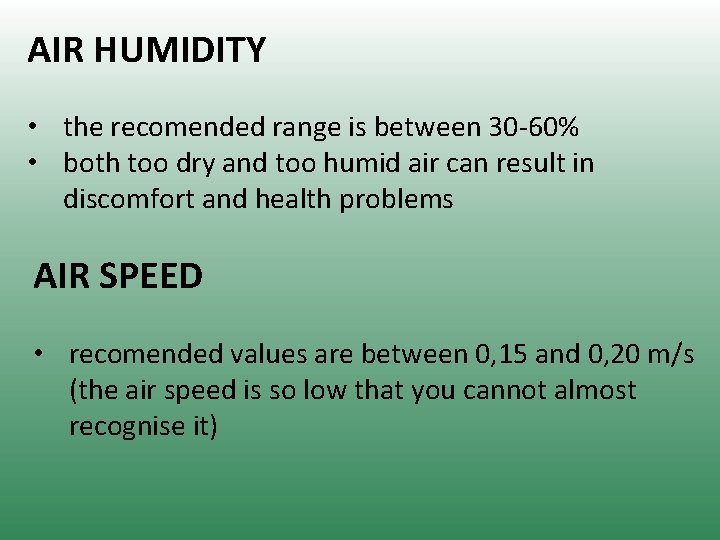
AIR HUMIDITY • the recomended range is between 30 -60% • both too dry and too humid air can result in discomfort and health problems AIR SPEED • recomended values are between 0, 15 and 0, 20 m/s (the air speed is so low that you cannot almost recognise it)
HEAT RADIATION • the principal of heat radiation is infrared energy exchange between the human body and surrounding surfaces
ELECTROMAGNETIC RADIATION a form of radiant energy released into the space by certain electromagnetic processes • it consists of eletromagnetic waves • electromagnetic waves are characterised by frequency or wavelenght Two types: • non-ionising radiation • ionisign radiation
ELECTROMAGNETIC SPECTRUM • • • radio waves microwaves infrared radiation visible light ultraviolet radiatio gamma rays Sources: • natural (sun, stars, storms, radioactive rocks) • man-made (radios, TV transmitters, microwaves, ovens, computers, cell phones, medical devices)
RADIO WAVES a type of EMR with the longest wavelenghts in EM spectrum • used mainly for communication Health effects: large doses are believed to cause: • brain tumors • sleep disorders • headaches • neurological problems and other disorders
MICROWAVES electromagnetic waves with the wavelenghts measured in centimeters • information transmission (radars) • heat the food in microwave ovens Health effects: high levels can cause: • burns • eye cataracts • temporary sterility (kill sperm)
SOLAR RADIATION emitted by the Sun only 40% of solar energy reaches the Eearth´s surface (partially absorbed by the atmosphere) • Ultraviolet (UV) • Visible light • Infrared (IR)
ULTRAVIOLET RADIATION • UVA • UVB • UVC (doesn´t reach the Earth´s surface)
HEALTH EFFECTS OF UV Positive: • stimulation of metabolism • stimulation of vegetative nervous system and immunity • stimulation of synthesis of vitamin D 3 • curative dermatological effect (psoriasis) - UVA • bactericidal effect (disinfection)
HEALTH EFFECTS OF UV Negative: long term • skin cancer • skin aging, loss of skin elasticity • immune suppression • eye diseases (cataracts, macular degeneration) short term • sunburn, sunstroke, heatstroke • blindness • solar retinopathy
IONISING RADIATION Types: • Alpha • Beta • Gamma Sources: • radioactive minerals • cosmic radiation • man-made sources
INFRARED RADIATION • nonvisible • thermal radiation Health effects: • burns
HEALTH EFFECTS OF IONISING RADIATION Deterministic effect: occures alway after a certain (specific) dose of irradiation acute post-irradiation syndrom • after minutes or hours - nausea, vomiting, diarrhoea, malaise and fatigue • one or two weeks latency period with almost no symptomes • heamatopoietic syndrom and gastro-intestinal syndrom with skin injury, irreversible medullar damage, death
late post-irradiation effects • till 40 years after irradiation • leukemia • lung cancer • other malignities • effects on embrio and foetus depend on the period of pregnancy
HEALTH EFFECTS OF IONISING RADIATION Stochastic effect: no straight dose-effect relationship it is not possible to set up an equivalent dose which is fully safe even the smallest dose is connected with an increase of late effects • malignant tumors • genetic disorders