
Physical Examination of the Upper Extremities BY ABDULLAH
Physical Examination of the Upper Extremities BY ABDULLAH RADWAN
Shoulder Examination ANATOMY • Bones • Joints • Muscles • Bursae • Nerves • Blood supply
SHOULDER JOINTS 1. 2. 3. 4. Glenohumeral Scapula thoracic Acromio-clavicular Sterno-clavicular
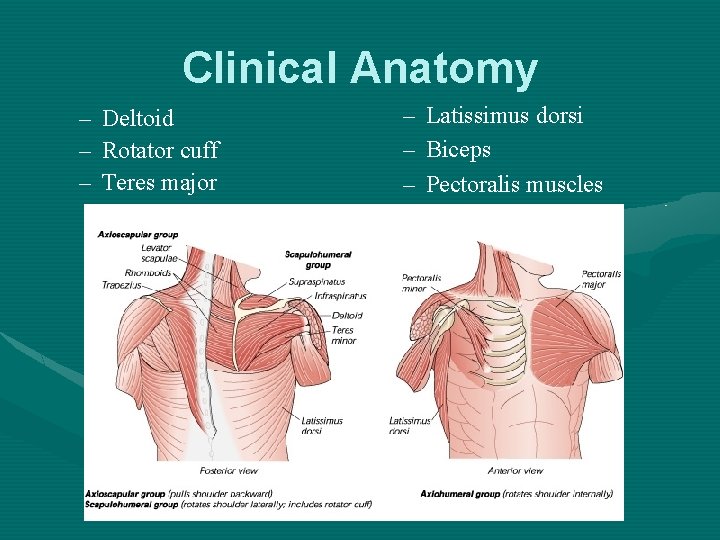
Clinical Anatomy – Deltoid – Rotator cuff – Teres major – – – Latissimus dorsi Biceps Pectoralis muscles
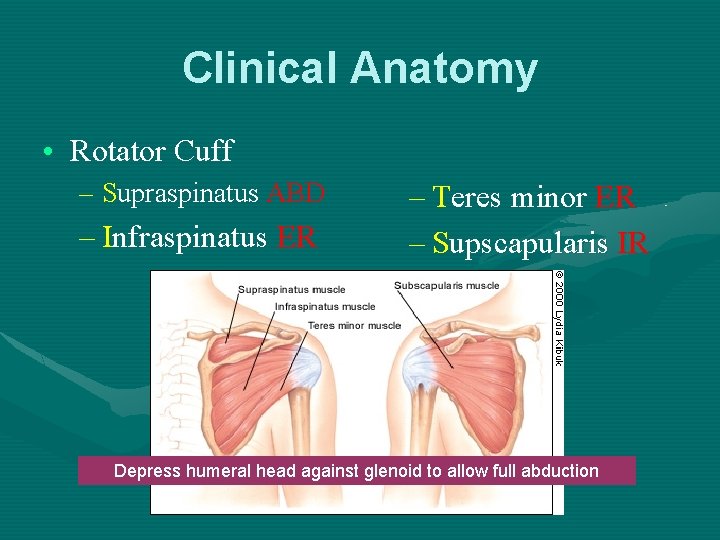
Clinical Anatomy • Rotator Cuff – Supraspinatus ABD – Infraspinatus ER – Teres minor ER – Supscapularis IR Depress humeral head against glenoid to allow full abduction
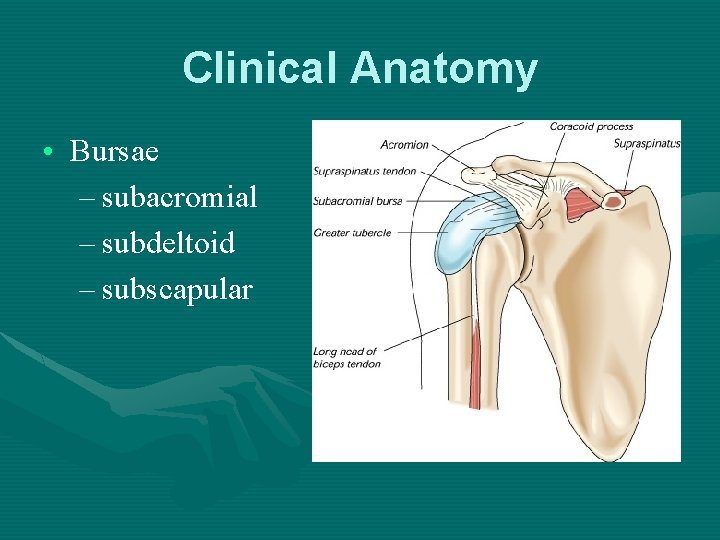
Clinical Anatomy • Bursae – subacromial – subdeltoid – subscapular
Physical Examination • • • Inspection Palpation –pression Range of motion examination Neurological examination Special tests for the shoulder problems Examination of the related areas
Shoulder Inspection • • Anterior side Posterior side Lateral side Medial side
Physical Exam Inspection • Front & back • Height of shoulder and scapulae • Muscle atrophy, asymmetry
SHOULDER PALPATION and PRESSION • • • Bones Joints Muscles Bursae Nerves Lymph nodes

SHOULDER Range Of Motion • • • Flexion-180 degree Extension -45 degree Abduction -180 degree Adduction -30 degree Internal rotation -90 degree External rotation -90 degree
Physical Exam Range of Motion • Forward flexion: – 0 o – 180 o
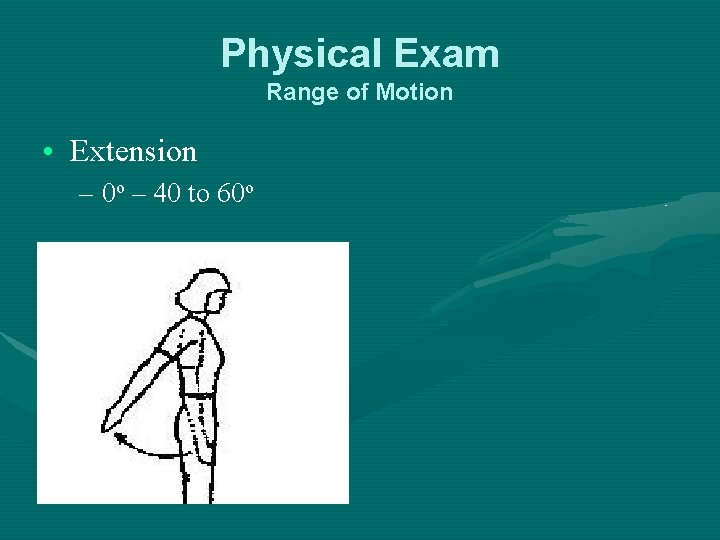
Physical Exam Range of Motion • Extension – 0 o – 40 to 60 o
Physical Exam Range of Motion • Internal rotation – 80 -90 o • External rotation – 80 -90 o
Neurological Examination of the Shoulder Muscle tests : • Flexion • Extension • Abduction • Adduction • Internal rotation • External rotation
Muscle testing scoring • • • 0 No contraction 1 Flicker or trace contraction 2 Active movement, with gravity eliminated 3 Active movement against gravity 4 Active movement against gravity and resistance • 5 Normal power
Shoulder Abduction muscle test
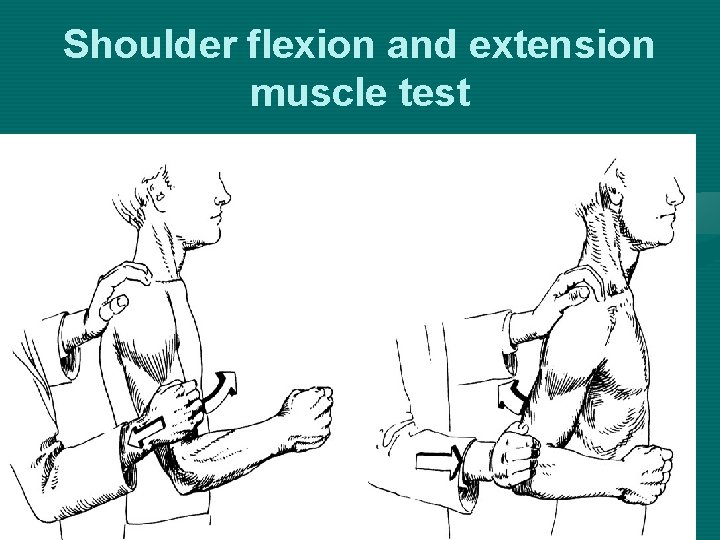
Shoulder flexion and extension muscle test
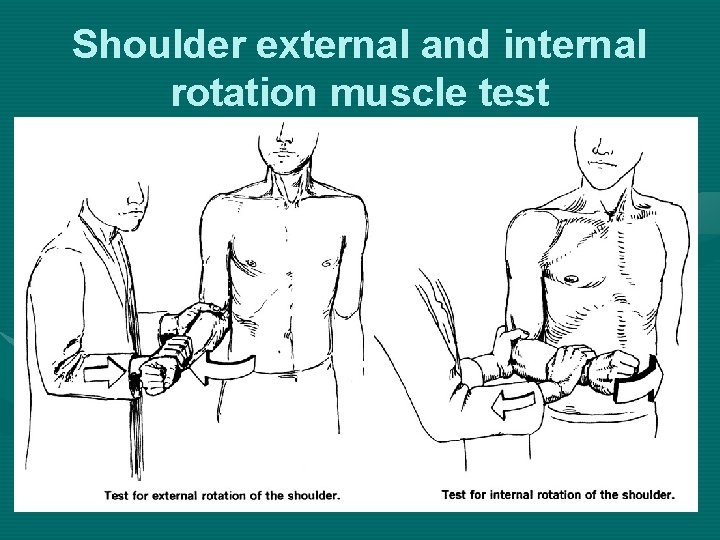
Shoulder external and internal rotation muscle test
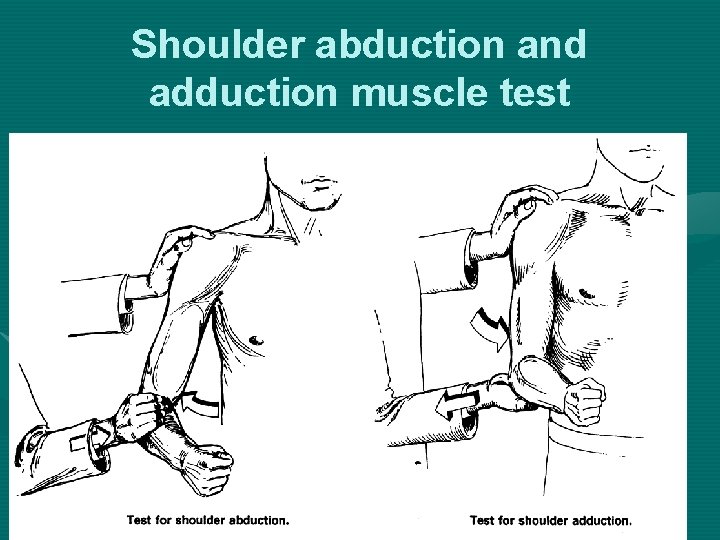
Shoulder abduction and adduction muscle test
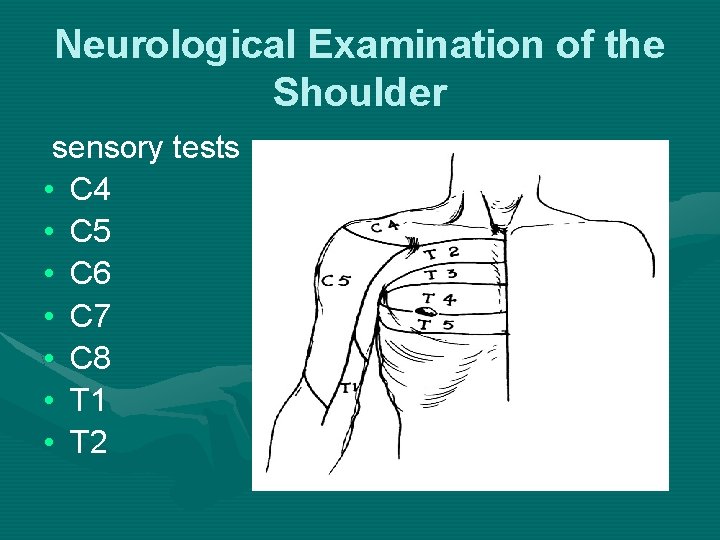
Neurological Examination of the Shoulder sensory tests : • C 4 • C 5 • C 6 • C 7 • C 8 • T 1 • T 2
Special Tests for the Shoulder Problems • Yergason test –biceps tendinitis • Neer impingement test-acromioclavicular impingement • Drop arm test –rotator cuff tear • Resisted flexion (Speed)test –biceps tendinitis • Resisted abduction(Supraspinatus) testsupraspinatus lesion • Aprehension test –glenohumeral joint
Yergason test • Yergason test for biceps tendon instability or tendonitis. • The patient's elbow is flexed to 90 degrees, and the examiner resists the patient's active attempts to supinate the arm and flex the elbow.
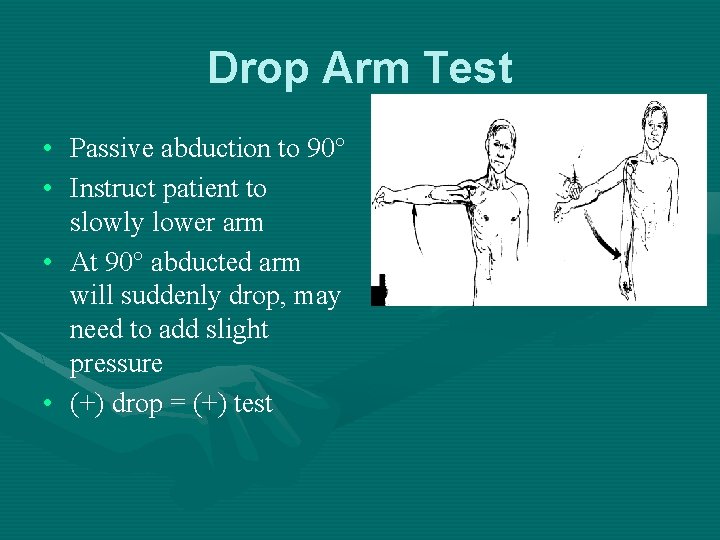
Drop Arm Test • Passive abduction to 90° • Instruct patient to slowly lower arm • At 90° abducted arm will suddenly drop, may need to add slight pressure • (+) drop = (+) test
SHOULDER PAIN SPECIAL TESTS • Neer – PASSIVE – Forced forward flexion of arm with internally rotated shoulder – Test is positive if pain occurs at same point as with active forward flexion
Speed’s Maneuver • Forward flex the shoulder against resistance while maintaining the elbow in extension and the forearm in supination. Pain or tenderness in the bicipital groove in dicates bicipital tendinitis.
Rotator Cuff Strength Testing • Weakness on exam • Grade strength on 0→ 5 scale • Compare to other side
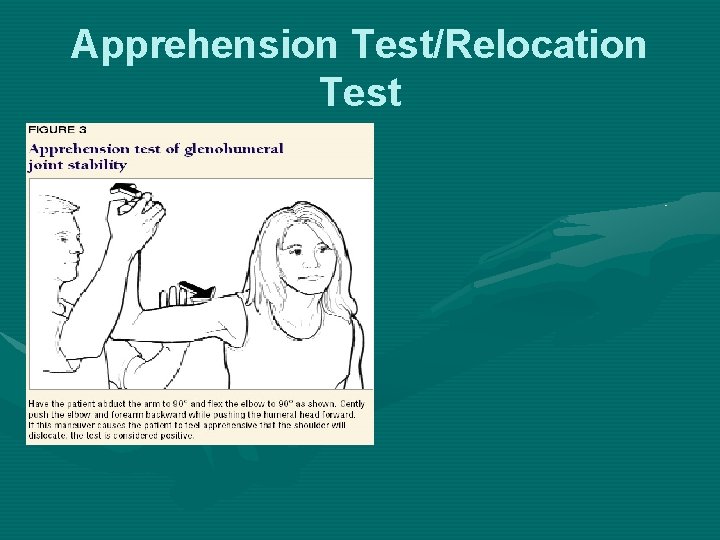
Apprehension Test/Relocation Test
Differantial Diagnosis for shoulder pain • • • Subacromial impingement syndrome Adhesive capsulitis –frozen shoulder Biceps tendinopati Bursitis Rotator cuff pathology Glenohumeral joint pathology Acromioclavicular joint pathology Sternoclavicular joint pathology Myofascial pain syndrome Radiating or referred pain from cervical spine
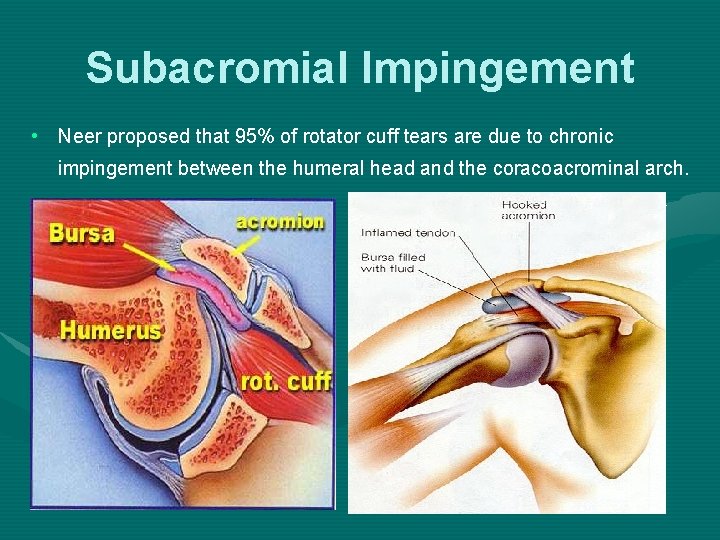
Subacromial Impingement • Neer proposed that 95% of rotator cuff tears are due to chronic impingement between the humeral head and the coracoacrominal arch.
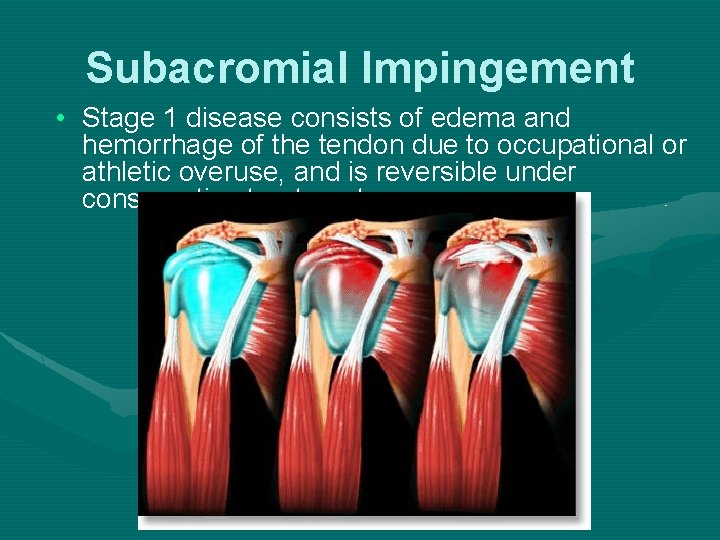
Subacromial Impingement • Stage 1 disease consists of edema and hemorrhage of the tendon due to occupational or athletic overuse, and is reversible under conservative treatment.
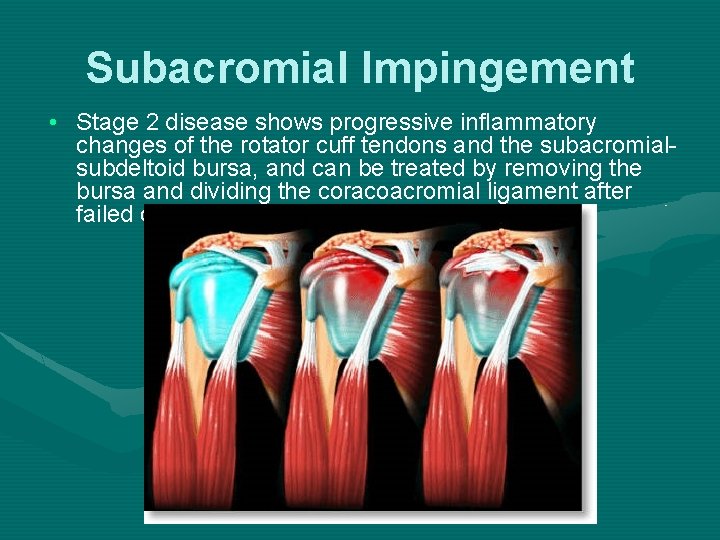
Subacromial Impingement • Stage 2 disease shows progressive inflammatory changes of the rotator cuff tendons and the subacromialsubdeltoid bursa, and can be treated by removing the bursa and dividing the coracoacromial ligament after failed conservative management.
ELBOW EXAMINATION • • Anatomy Evaluation Inspection-Observation Palpation-Pression Range of motion Neurological examination Special tests Examination of related areas
ELBOW ANATOMY • • Bones Joints Ligaments Muscles
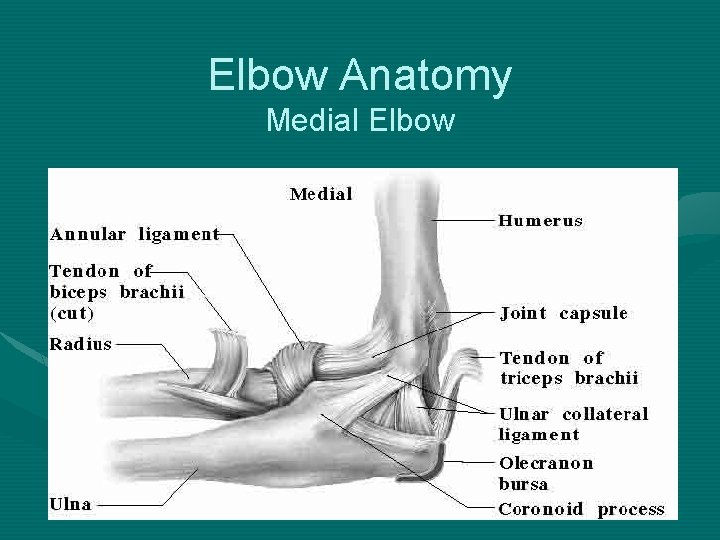
Elbow Anatomy Medial Elbow
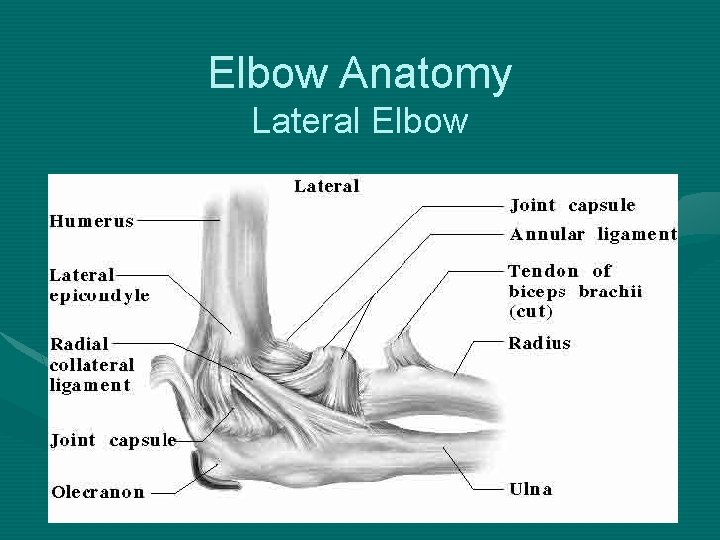
Elbow Anatomy Lateral Elbow
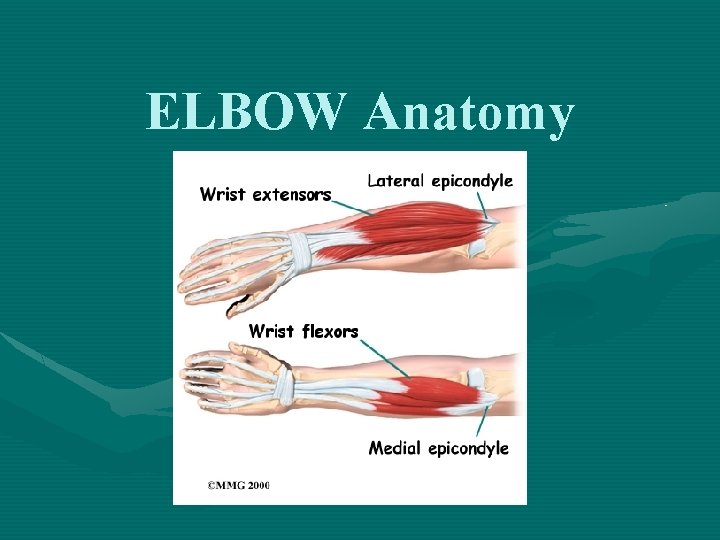
ELBOW Anatomy
EVALUATION • • INSPECTION Anterior –posterior side Medial-lateral side Carrying angle Swelling
PALPATION and PRESSION Bone palpation : • Lateral epicondyle • Radial head • Medial epicondyle • Olecranon
SOFT TISSUE PALPATION Medial aspect • Ulnar nerve • Wrist flexor –pronator group • Medial collateral ligament Lateral aspect • Wrist extensors (ECRL-ECRB) • Lateral collateral ligament • Annular ligament
SOFT TISSUE PALPATION Anterior aspect • Cubital fossa • Brachial artery • Median nerve • Musculo-cutaneus nerve Posterior aspect • Olecranon bursa • Triceps tendon
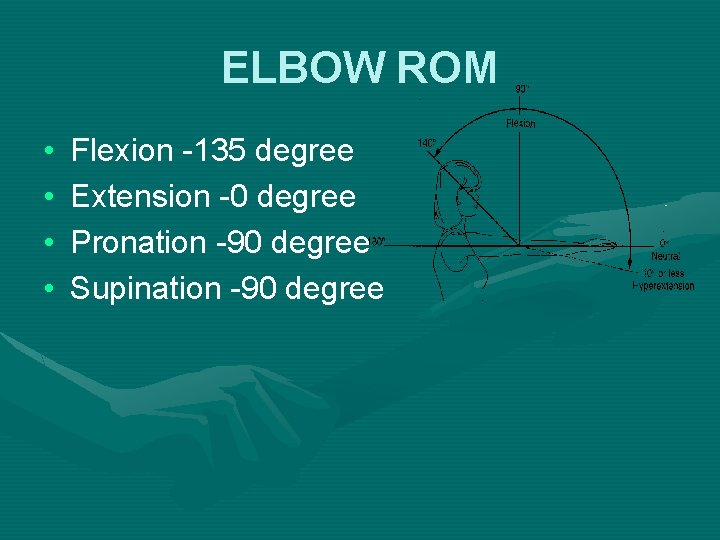
ELBOW ROM • • Flexion -135 degree Extension -0 degree Pronation -90 degree Supination -90 degree
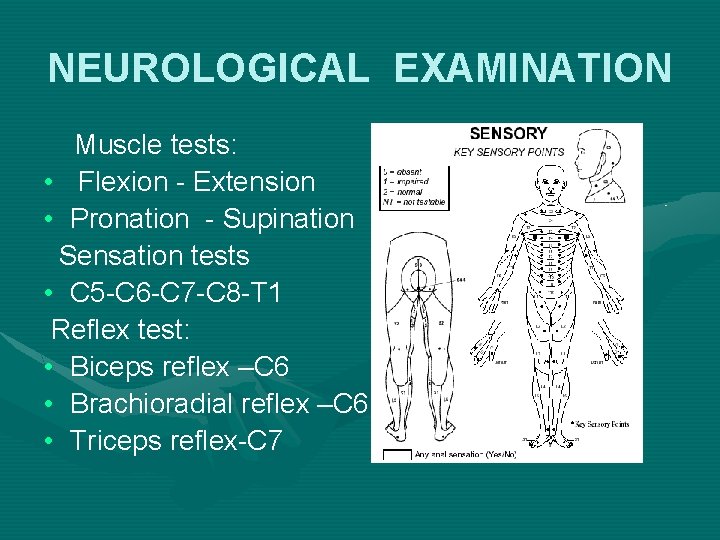
NEUROLOGICAL EXAMINATION Muscle tests: • Flexion - Extension • Pronation - Supination Sensation tests • C 5 -C 6 -C 7 -C 8 -T 1 Reflex test: • Biceps reflex –C 6 • Brachioradial reflex –C 6 • Triceps reflex-C 7
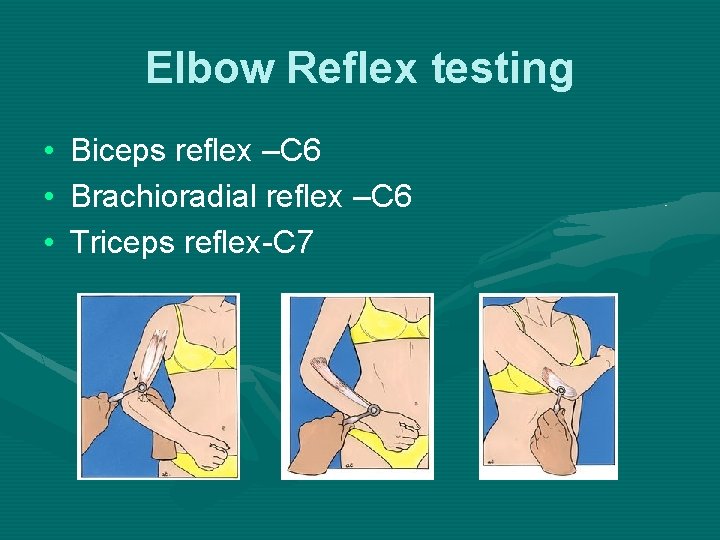
Elbow Reflex testing • • • Biceps reflex –C 6 Brachioradial reflex –C 6 Triceps reflex-C 7
SPECIAL TESTS • • Ligament tests (varus-valgus stres test) Tennis elbow test Golfers elbow test Tinels sign for ulnar nerve
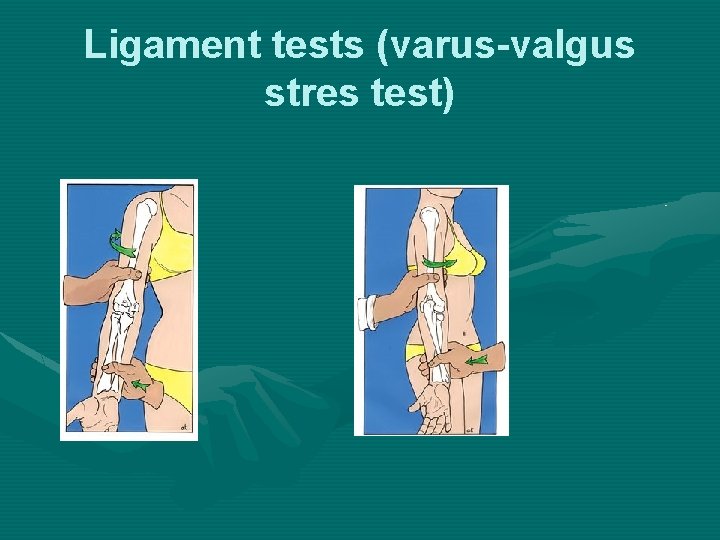
Ligament tests (varus-valgus stres test)
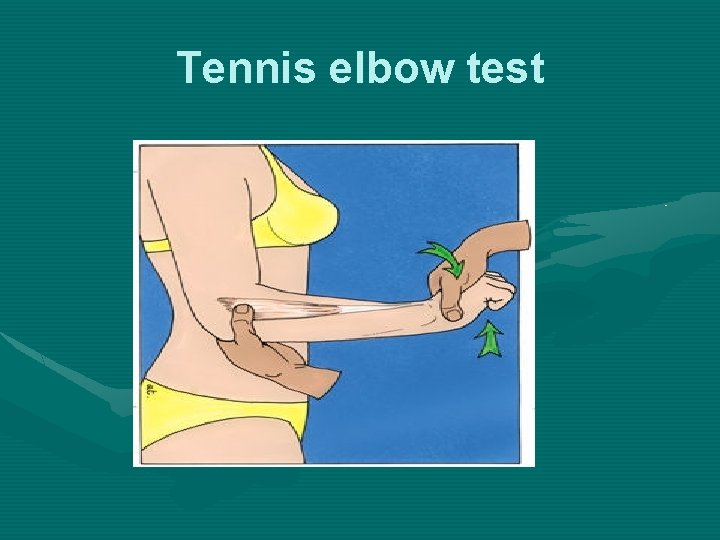
Tennis elbow test

Golfers elbow test
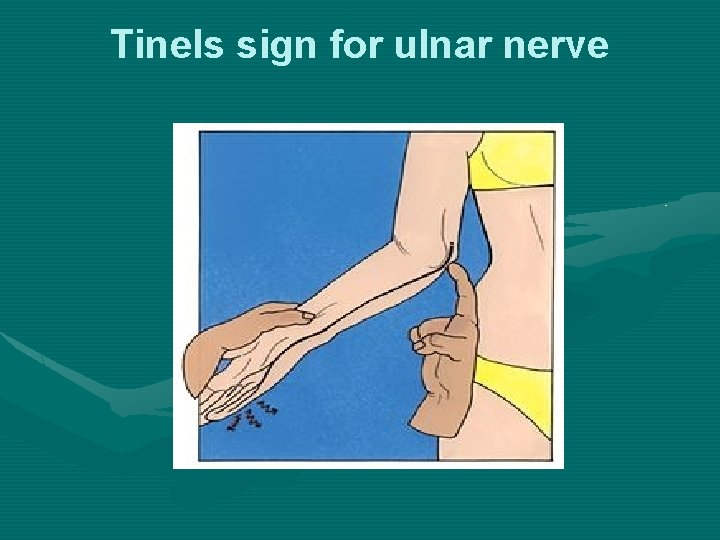
Tinels sign for ulnar nerve
COMMON ELBOW PROBLEMS • • • Lateral epicondylitis Medial epicondylitis Olecranon bursitis Fractures Triceps tendinitis Post immbolization capsular tightness (contracture)
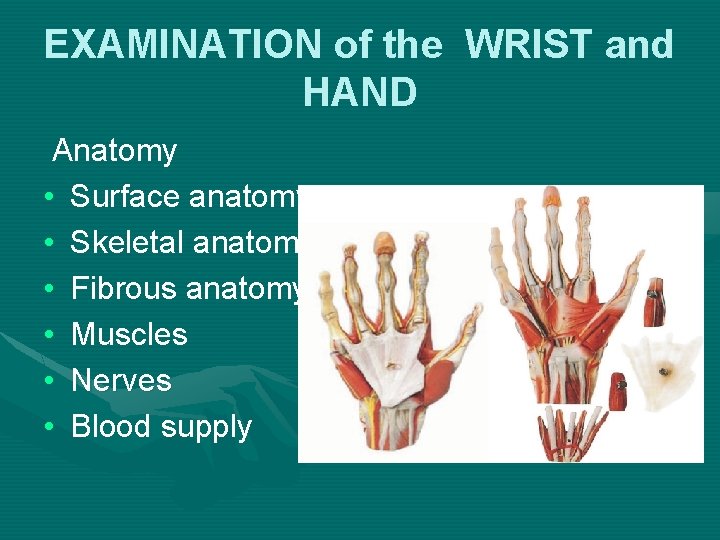
EXAMINATION of the WRIST and HAND Anatomy • Surface anatomy • Skeletal anatomy • Fibrous anatomy • Muscles • Nerves • Blood supply
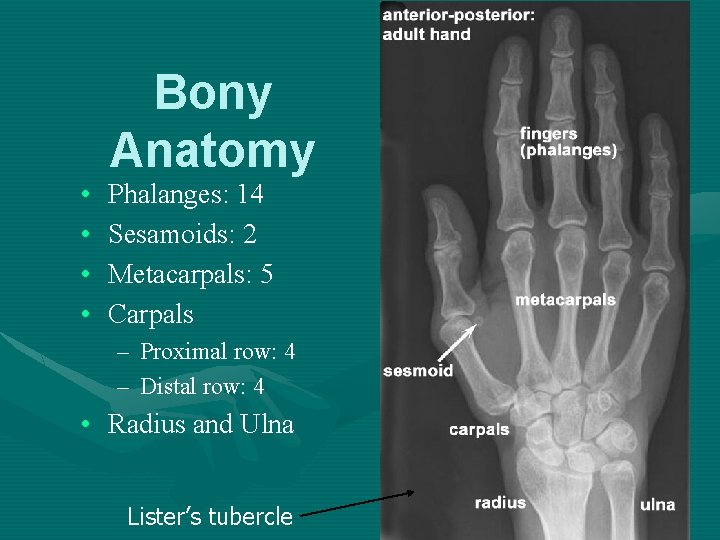
• • Bony Anatomy Phalanges: 14 Sesamoids: 2 Metacarpals: 5 Carpals – Proximal row: 4 – Distal row: 4 • Radius and Ulna Lister’s tubercle
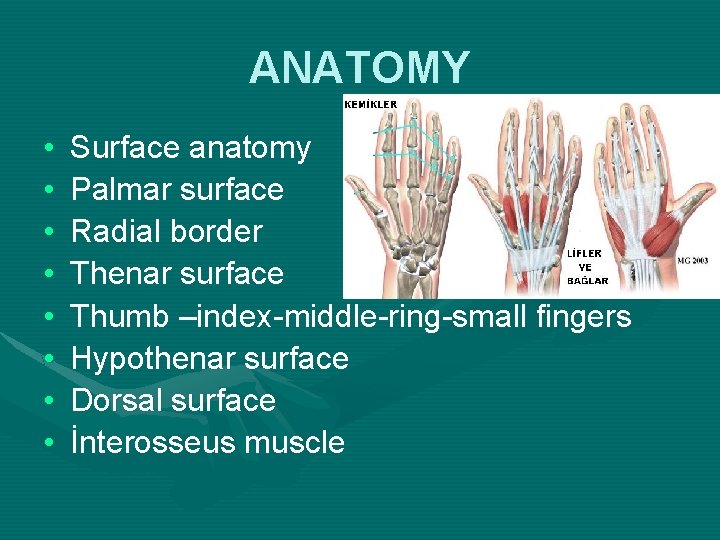
ANATOMY • • Surface anatomy Palmar surface Radial border Thenar surface Thumb –index-middle-ring-small fingers Hypothenar surface Dorsal surface İnterosseus muscle
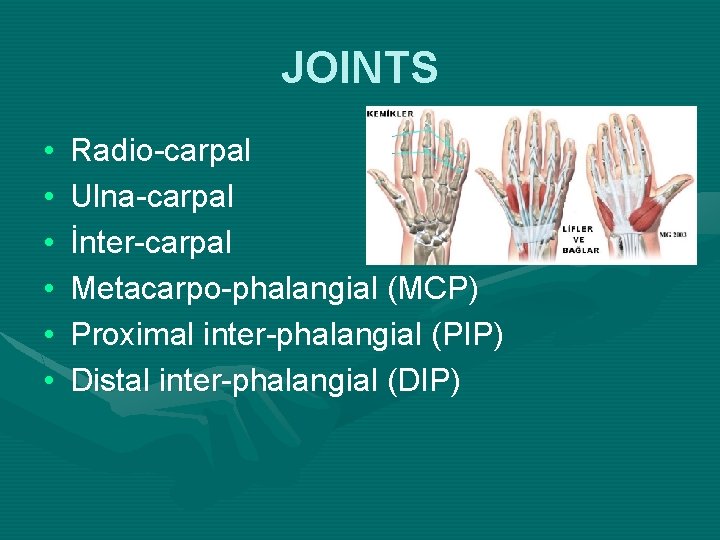
JOINTS • • • Radio-carpal Ulna-carpal İnter-carpal Metacarpo-phalangial (MCP) Proximal inter-phalangial (PIP) Distal inter-phalangial (DIP)
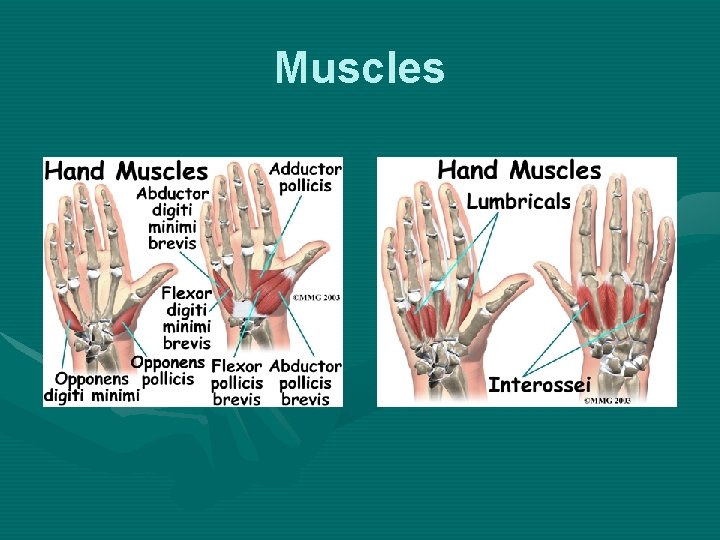
Muscles
EVALUATION • History • Inspection-Observation (dorsum of the handpalm of the hand ) • Palpation-Pression • Range of motion • Functional assessment • Neurological examination • Special tests • Examination of related areas

INSPECTION Palmar Surface • Creases • Thenar and Hypothenar Eminence • Arched Framework • Hills and Valleys • Web Spaces
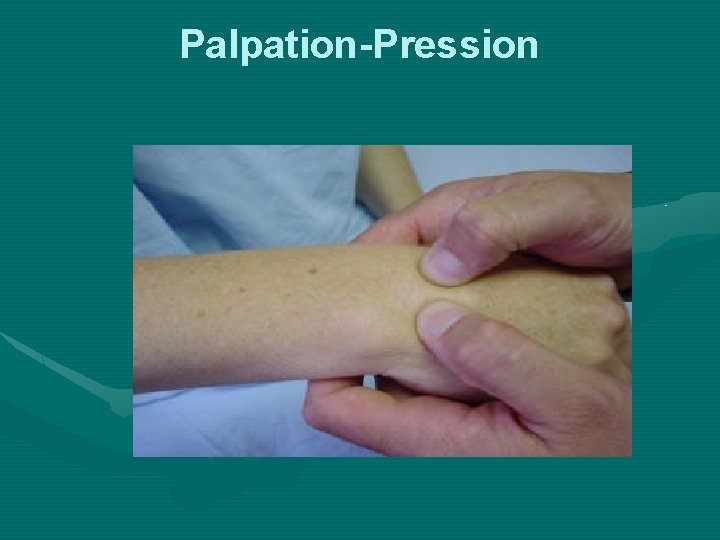
Palpation-Pression
ROM EXAMINATION • • • Forearm pronation-90 degree Forearm supination -90 degree Wrist flexion (palmar flexion)-90 degree Wrist extension (dorsal flexion )-90 degree Wrist radial deviation -30 degree Wrist ulnar deviation -20 degree
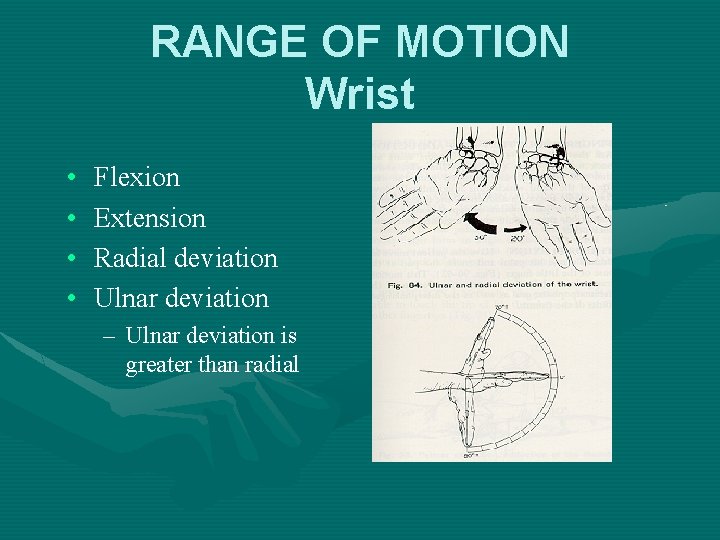
RANGE OF MOTION Wrist • • Flexion Extension Radial deviation Ulnar deviation – Ulnar deviation is greater than radial
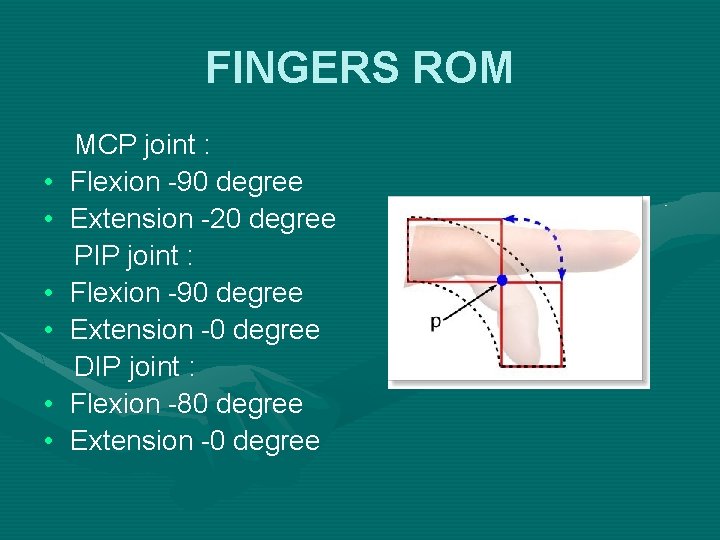
FINGERS ROM • • • MCP joint : Flexion -90 degree Extension -20 degree PIP joint : Flexion -90 degree Extension -0 degree DIP joint : Flexion -80 degree Extension -0 degree
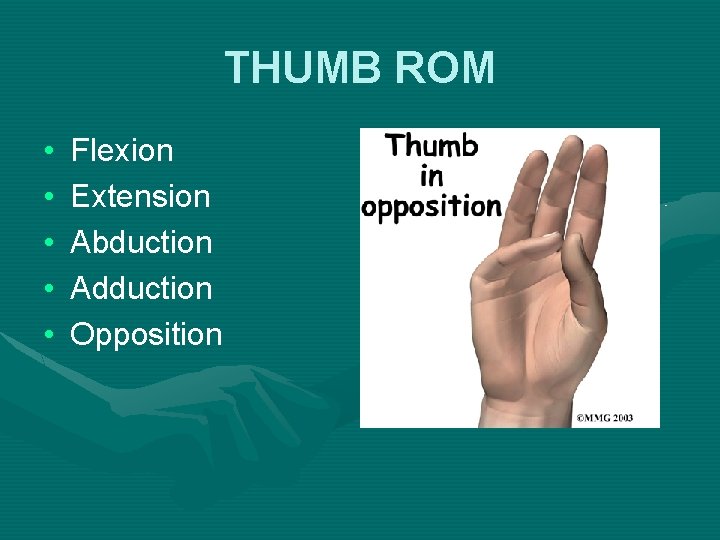
THUMB ROM • • • Flexion Extension Abduction Adduction Opposition
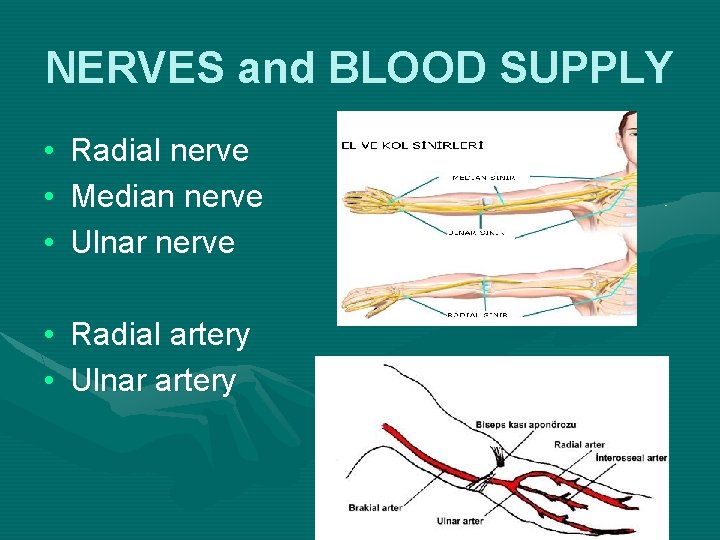
NERVES and BLOOD SUPPLY • • • Radial nerve Median nerve Ulnar nerve • Radial artery • Ulnar artery
COMMON PROBLEMS • Fractures • Tenosynovitis : 1. Thumb extensors –De Querveins disease 2. Finger flexors tenosynovitis 3. Finger extensors tenosynovitis • Arthritis 1. Rheumatoid arthritis (RA) 2. Osteoarthritis (OA) –bouchards nodes -heberdans nodes - First MCP OA-Rhizarthrosis
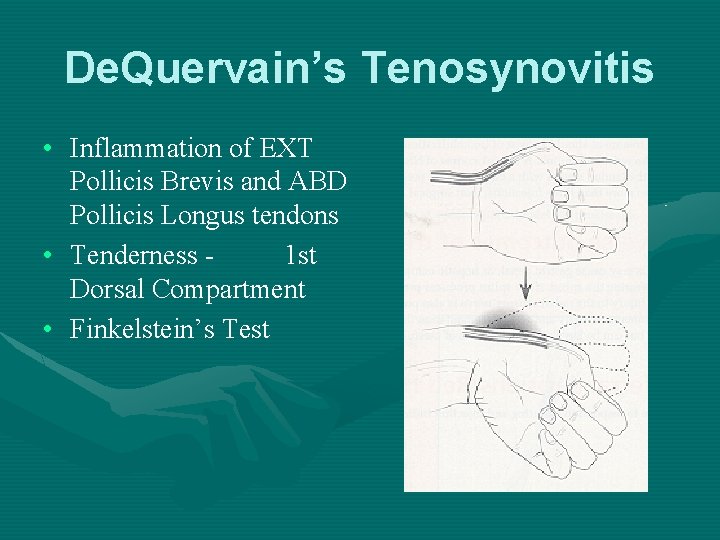
De. Quervain’s Tenosynovitis • Inflammation of EXT Pollicis Brevis and ABD Pollicis Longus tendons • Tenderness 1 st Dorsal Compartment • Finkelstein’s Test
Rheumatoid Arthritis • MCP swelling • Swan neck deformities • Ulnar deviation at MCP joints • Nodules along tendon sheaths
Osteoarthritis • Heberden’s nodes: DIP • Bouchard’s nodes: PIP
COMPRESSION NEUROPATHIES • Median nerve compression syndrome carpal tunel syndrome (tinel and phalen test ) • Pronator syndrome • Ulnar nerve compression syndromes compression at the elbow ulnar tunel syndrome Compresssion at the wrist Guyon canal syndrome • Radial nerve compression syndromes Posterior interosseous nerve syndrome Superficial radial nerve entrapment
SPECIAL TESTS • Finkelsteins test –De Quervein tenosynovitis • Tinel test –CTS, UTS • Phalens test –CTS
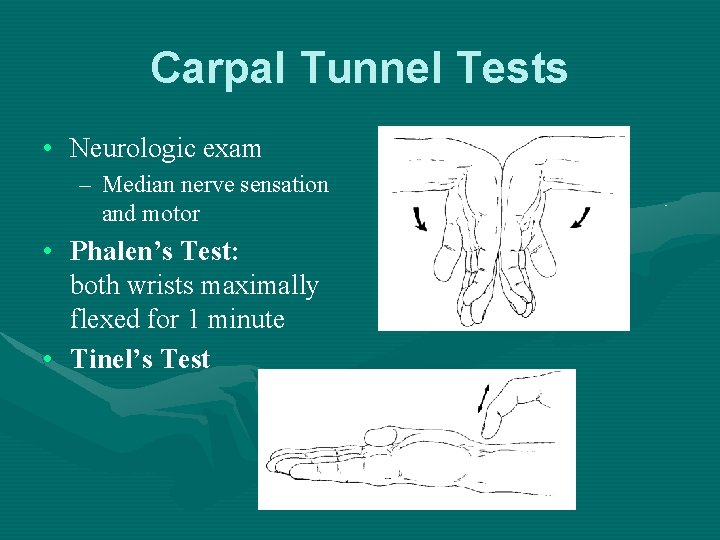
Carpal Tunnel Tests • Neurologic exam – Median nerve sensation and motor • Phalen’s Test: both wrists maximally flexed for 1 minute • Tinel’s Test
- Slides: 70