
Physical Exam of the Hip Whats The Evidence

- Slides: 44
Physical Exam of the Hip: What’s The Evidence Marc R. Safran, MD Professor, Orthopaedic Surgery Chief, Sports Medicine Stanford University
Ron Burgundy Agrees
Introduction § History § Physical Exam § General § Specialized § Imaging – Talk Other
Patient History § Onset – § Acute or Insidious § Recurring § § § Location of Pain Timing of Pain Duration Severity Mechanical Sx
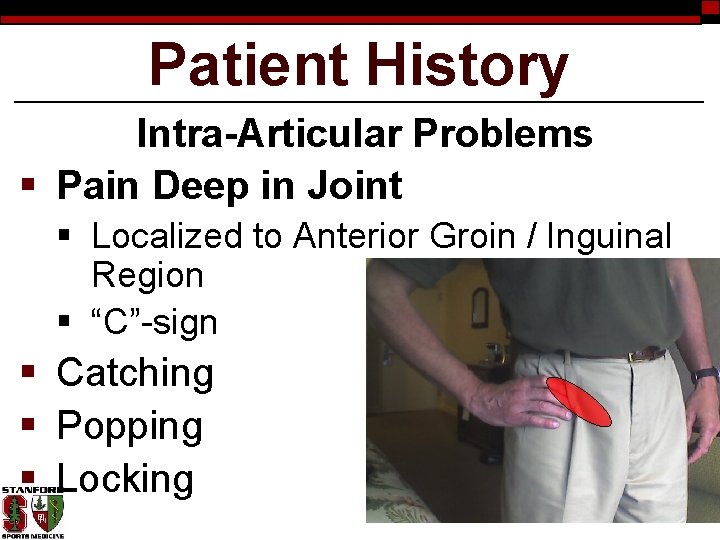
Patient History Intra-Articular Problems § Pain Deep in Joint § Localized to Anterior Groin / Inguinal Region § “C”-sign § Catching § Popping § Locking
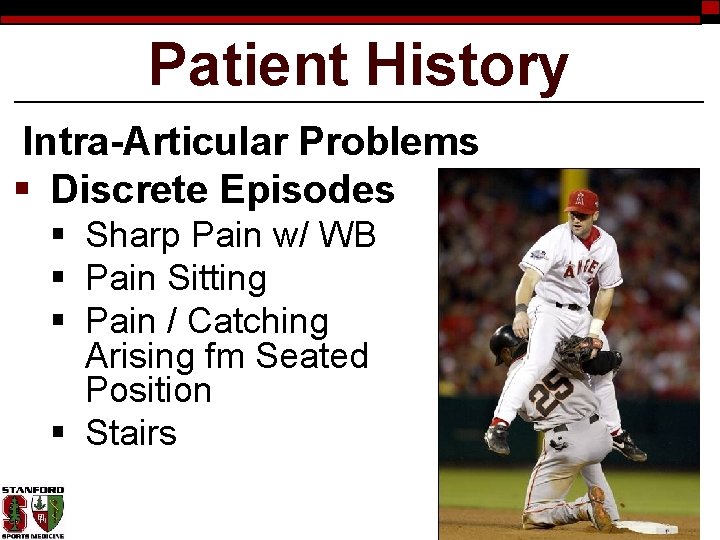
Patient History Intra-Articular Problems § Discrete Episodes § Sharp Pain w/ WB § Pain Sitting § Pain / Catching Arising fm Seated Position § Stairs
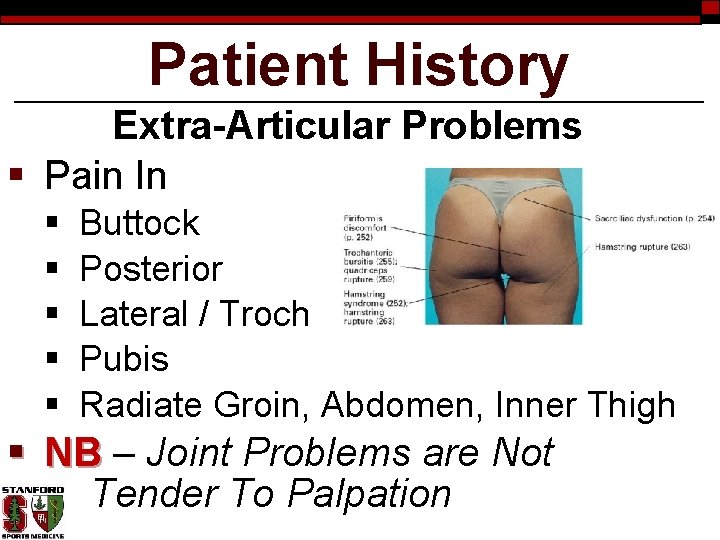
Patient History Extra-Articular Problems § Pain In § § § Buttock Posterior Lateral / Troch Pubis Radiate Groin, Abdomen, Inner Thigh § NB – Joint Problems are Not Tender To Palpation
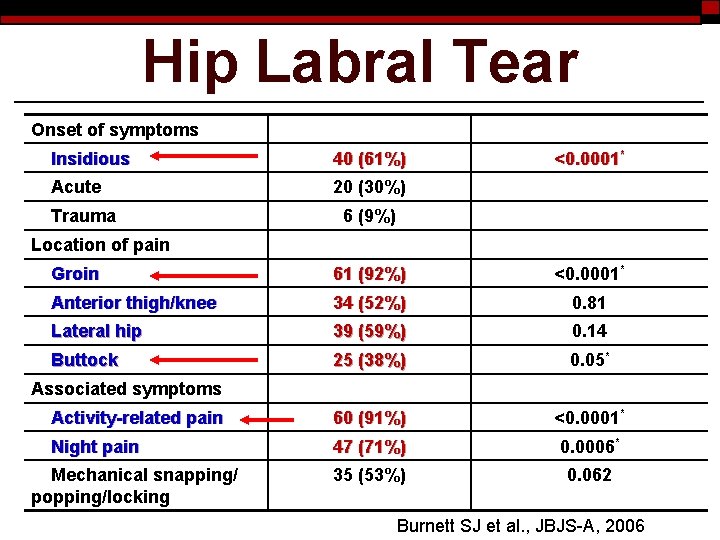
Hip Labral Tear Onset of symptoms Insidious 40 (61%) Acute 20 (30%) Trauma <0. 0001* 6 (9%) Location of pain Groin 61 (92%) <0. 0001* Anterior thigh/knee 34 (52%) 0. 81 Lateral hip 39 (59%) 0. 14 Buttock 25 (38%) 0. 05* Activity-related pain 60 (91%) <0. 0001* Night pain 47 (71%) 0. 0006* 35 (53%) 0. 062 Associated symptoms Mechanical snapping/ popping/locking Burnett SJ et al. , JBJS-A, 2006
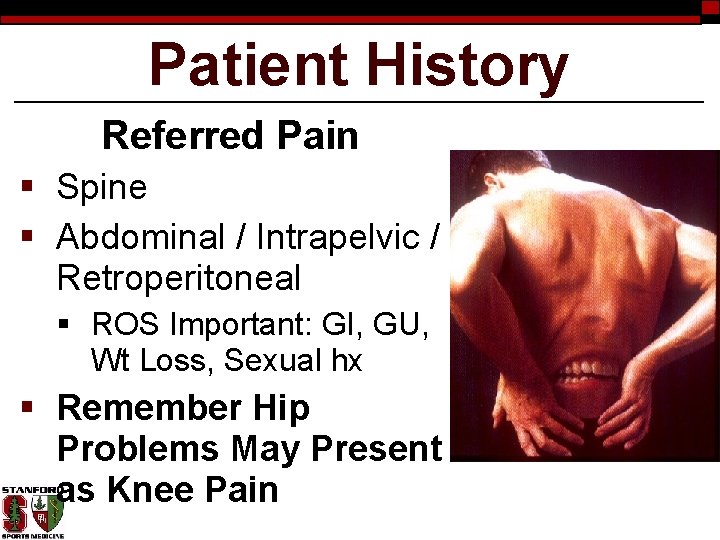
Patient History Referred Pain § Spine § Abdominal / Intrapelvic / Retroperitoneal § ROS Important: GI, GU, Wt Loss, Sexual hx § Remember Hip Problems May Present as Knee Pain
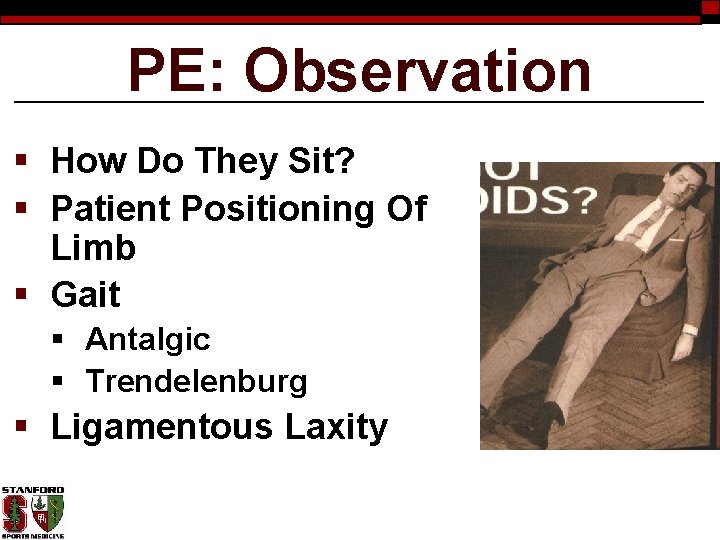
PE: Observation § How Do They Sit? § Patient Positioning Of Limb § Gait § Antalgic § Trendelenburg § Ligamentous Laxity
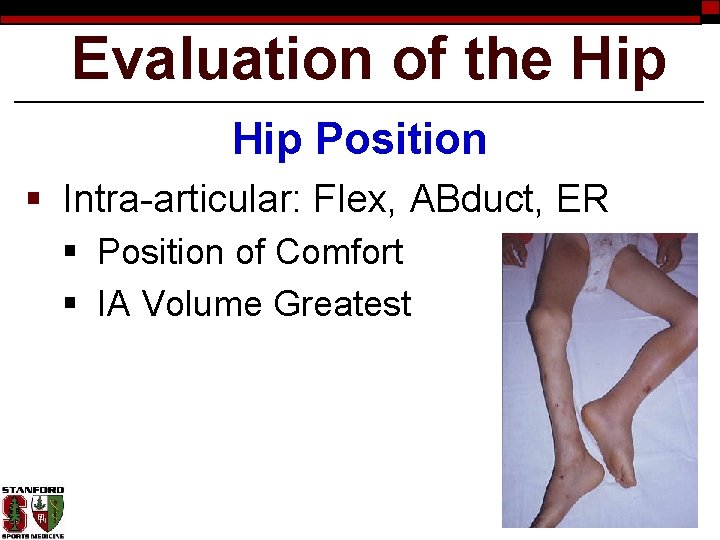
Evaluation of the Hip Position § Intra-articular: Flex, ABduct, ER § Position of Comfort § IA Volume Greatest
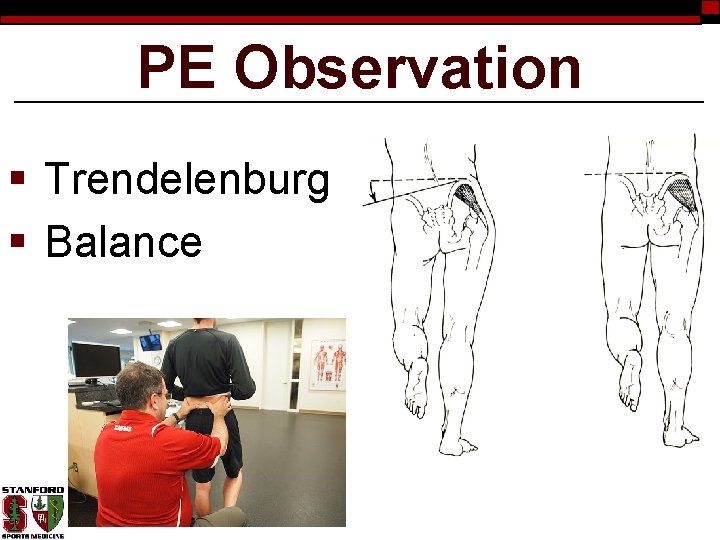
PE Observation § Trendelenburg § Balance
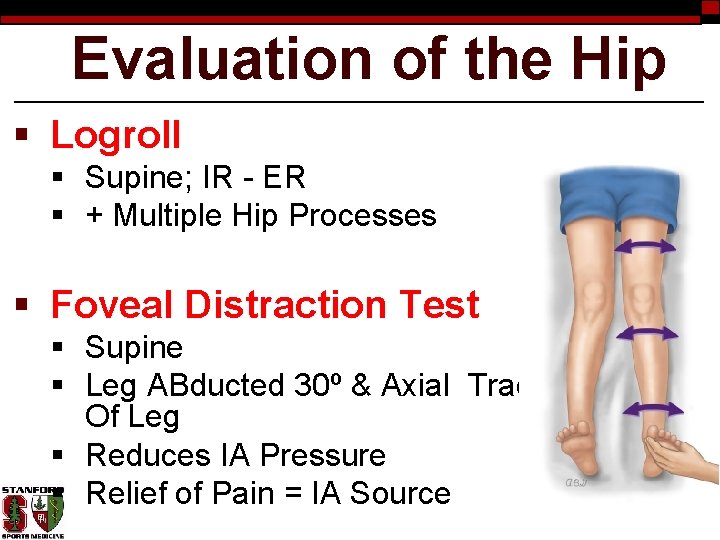
Evaluation of the Hip § Logroll § Supine; IR - ER § + Multiple Hip Processes § Foveal Distraction Test § Supine § Leg ABducted 30º & Axial Traction Of Leg § Reduces IA Pressure § Relief of Pain = IA Source
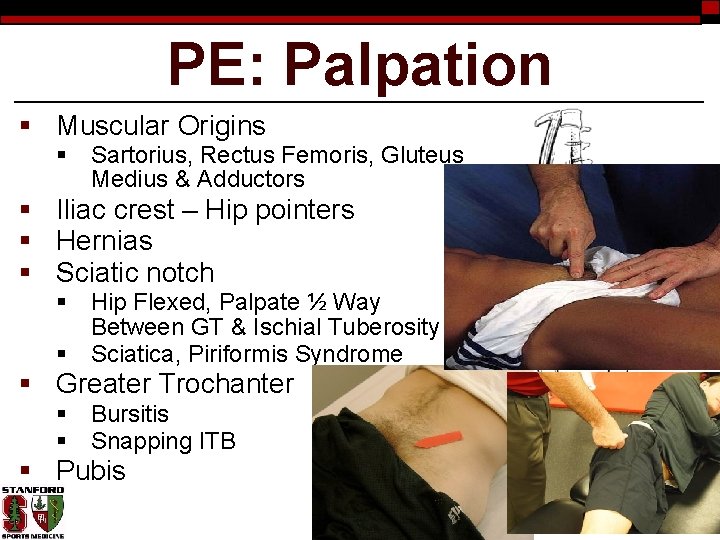
PE: Palpation § Muscular Origins § Sartorius, Rectus Femoris, Gluteus Medius & Adductors § Iliac crest – Hip pointers § Hernias § Sciatic notch § Hip Flexed, Palpate ½ Way Between GT & Ischial Tuberosity § Sciatica, Piriformis Syndrome § Greater Trochanter § Bursitis § Snapping ITB § Pubis
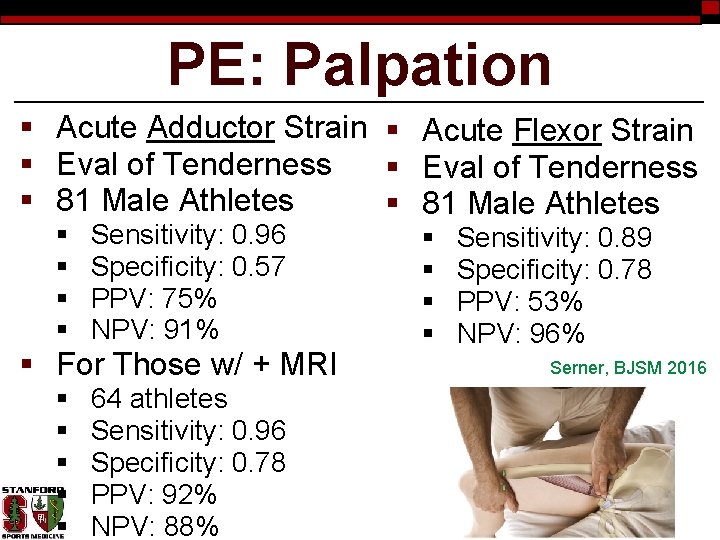
PE: Palpation § Acute Adductor Strain § Acute Flexor Strain § Eval of Tenderness § 81 Male Athletes § § Sensitivity: 0. 96 Specificity: 0. 57 PPV: 75% NPV: 91% § For Those w/ + MRI § § § 64 athletes Sensitivity: 0. 96 Specificity: 0. 78 PPV: 92% NPV: 88% § § Sensitivity: 0. 89 Specificity: 0. 78 PPV: 53% NPV: 96% Serner, BJSM 2016
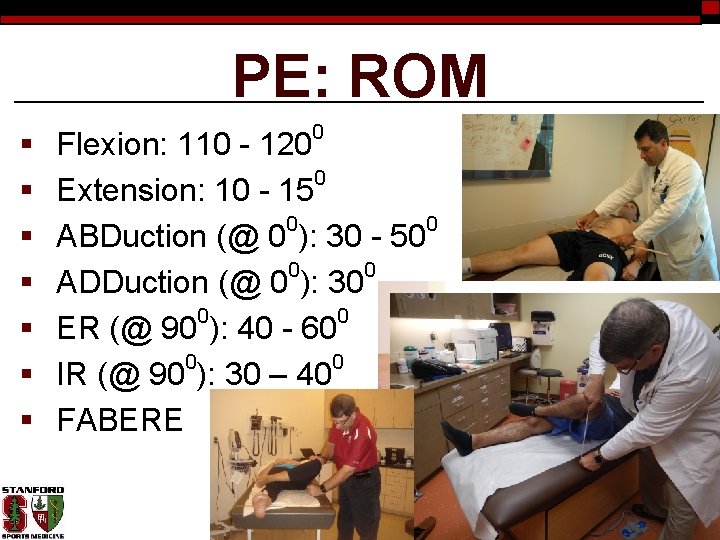
PE: ROM § § § § 0 Flexion: 110 - 120 0 Extension: 10 - 15 0 0 ABDuction (@ 0 ): 30 - 50 0 0 ADDuction (@ 0 ): 30 0 0 ER (@ 90 ): 40 - 60 0 0 IR (@ 90 ): 30 – 40 FABERE
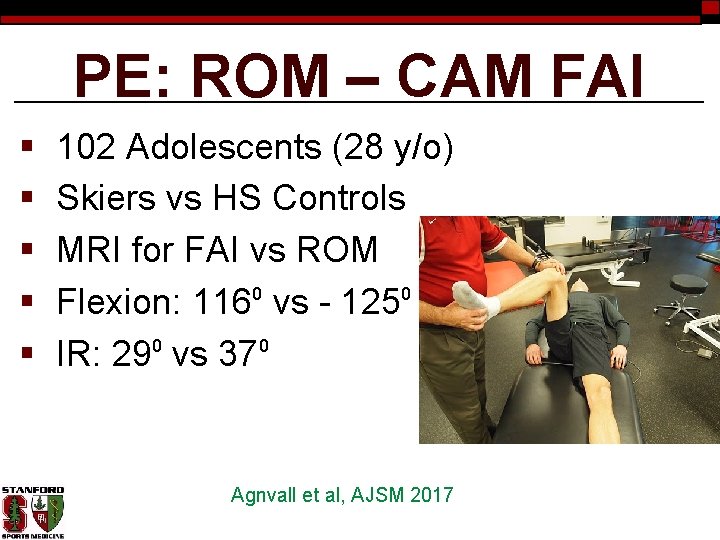
PE: ROM – CAM FAI § § § 102 Adolescents (28 y/o) Skiers vs HS Controls MRI for FAI vs ROM Flexion: 1160 vs - 1250 0 0 IR: 29 vs 37 Agnvall et al, AJSM 2017
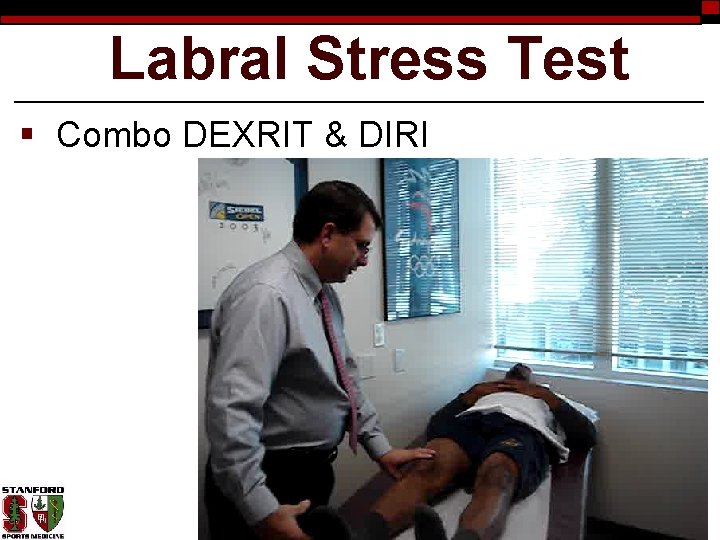
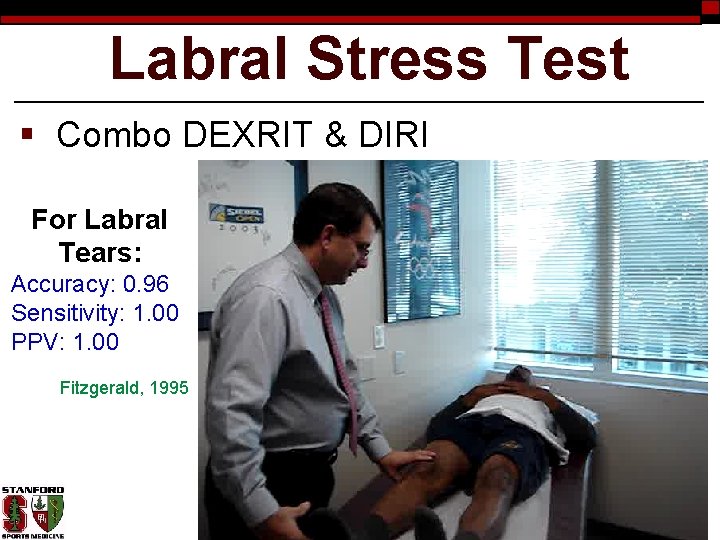
Labral Stress Test § Combo DEXRIT & DIRI
Labral Stress Test § Combo DEXRIT & DIRI For Labral Tears: Accuracy: 0. 96 Sensitivity: 1. 00 PPV: 1. 00 Fitzgerald, 1995
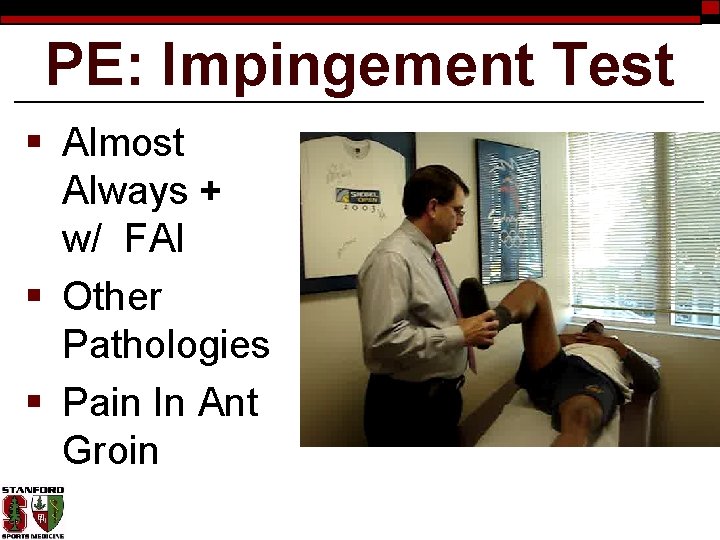
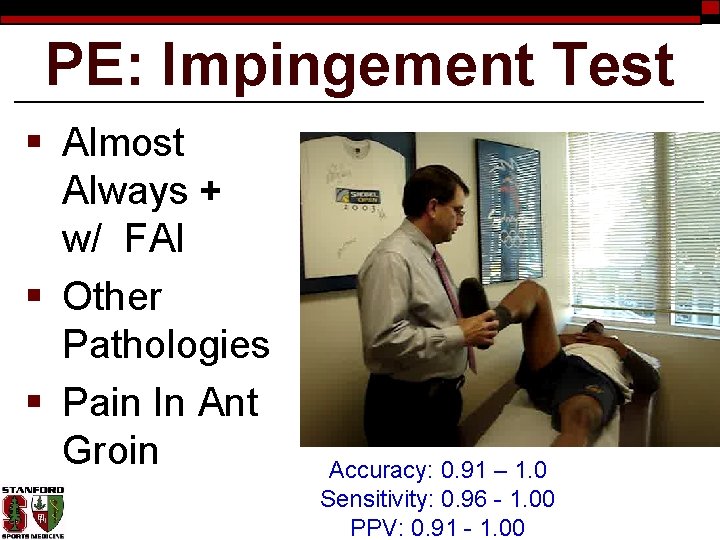
PE: Impingement Test § Almost Always + w/ FAI § Other Pathologies § Pain In Ant Groin
PE: Impingement Test § Almost Always + w/ FAI § Other Pathologies § Pain In Ant Groin Accuracy: 0. 91 – 1. 0 Sensitivity: 0. 96 - 1. 00 PPV: 0. 91 - 1. 00
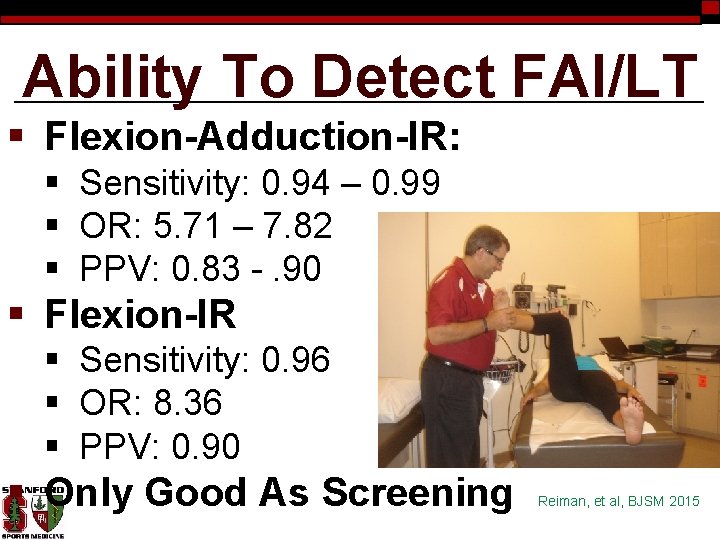
Ability To Detect FAI/LT § Flexion-Adduction-IR: § Sensitivity: 0. 94 – 0. 99 § OR: 5. 71 – 7. 82 § PPV: 0. 83 -. 90 § Flexion-IR § Sensitivity: 0. 96 § OR: 8. 36 § PPV: 0. 90 § Only Good As Screening Reiman, et al, BJSM 2015
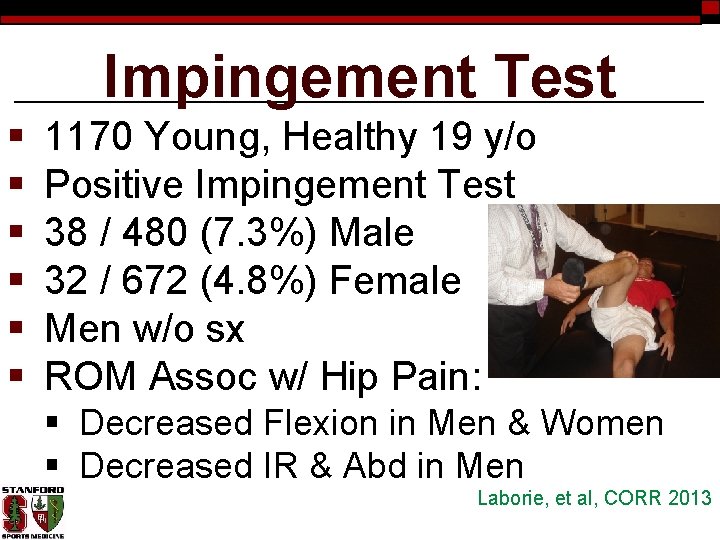
Impingement Test § § § 1170 Young, Healthy 19 y/o Positive Impingement Test 38 / 480 (7. 3%) Male 32 / 672 (4. 8%) Female Men w/o sx ROM Assoc w/ Hip Pain: § Decreased Flexion in Men & Women § Decreased IR & Abd in Men Laborie, et al, CORR 2013
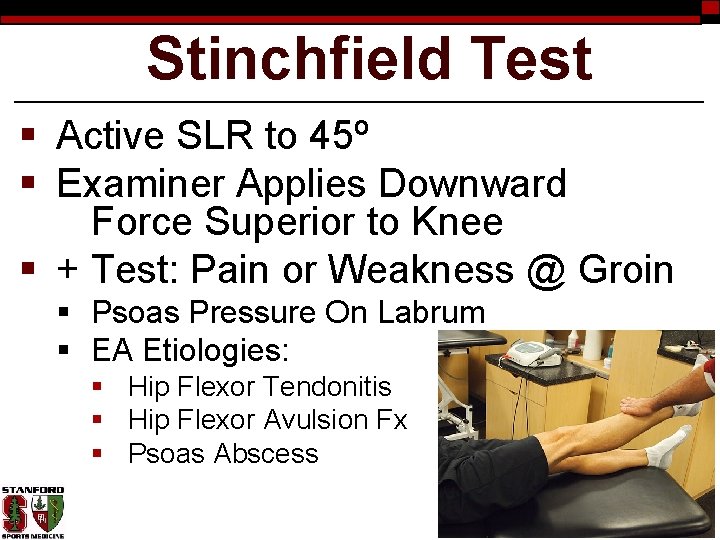
Stinchfield Test § Active SLR to 45º § Examiner Applies Downward Force Superior to Knee § + Test: Pain or Weakness @ Groin § Psoas Pressure On Labrum § EA Etiologies: § Hip Flexor Tendonitis § Hip Flexor Avulsion Fx § Psoas Abscess
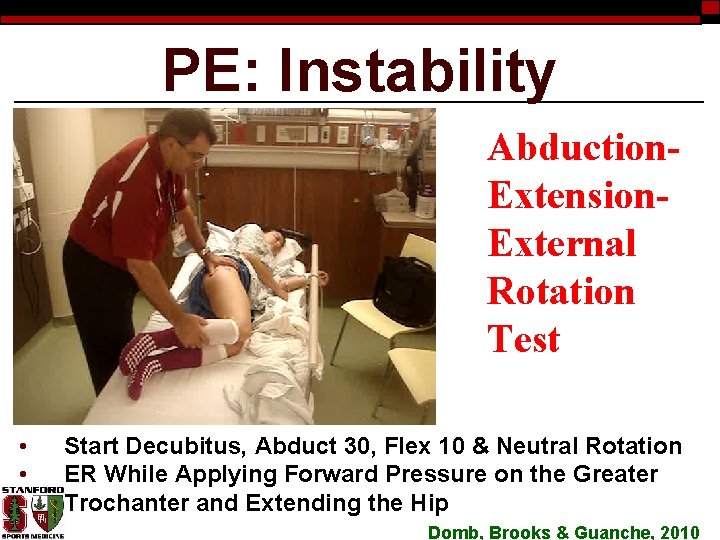
PE: Instability Abduction. Extension. External Rotation Test • • Start Decubitus, Abduct 30, Flex 10 & Neutral Rotation ER While Applying Forward Pressure on the Greater Trochanter and Extending the Hip Domb, Brooks & Guanche, 2010
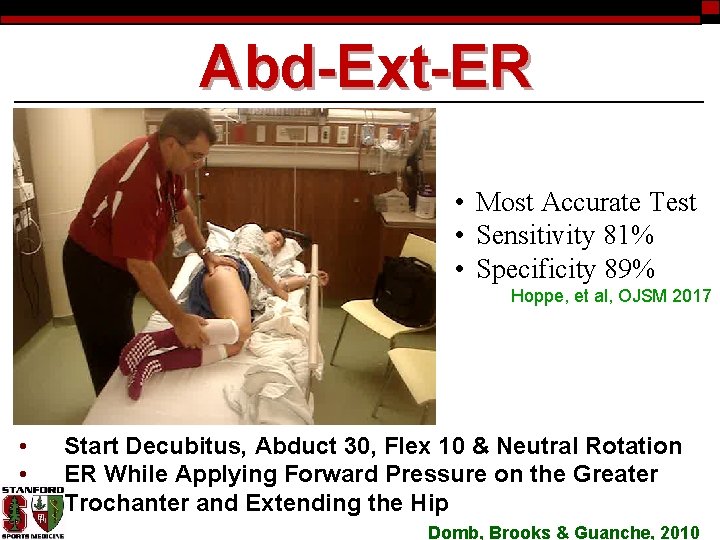
Abd-Ext-ER • Most Accurate Test • Sensitivity 81% • Specificity 89% Hoppe, et al, OJSM 2017 • • Start Decubitus, Abduct 30, Flex 10 & Neutral Rotation ER While Applying Forward Pressure on the Greater Trochanter and Extending the Hip Domb, Brooks & Guanche, 2010
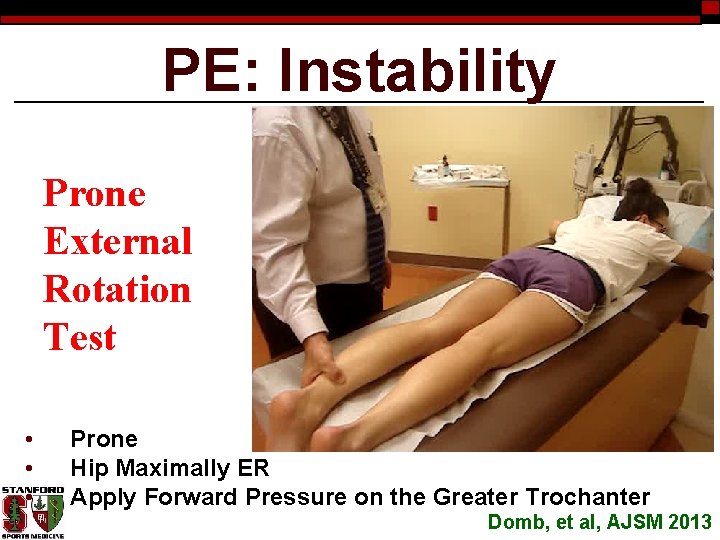
PE: Instability Prone External Rotation Test • • • Prone Hip Maximally ER Apply Forward Pressure on the Greater Trochanter Domb, et al, AJSM 2013
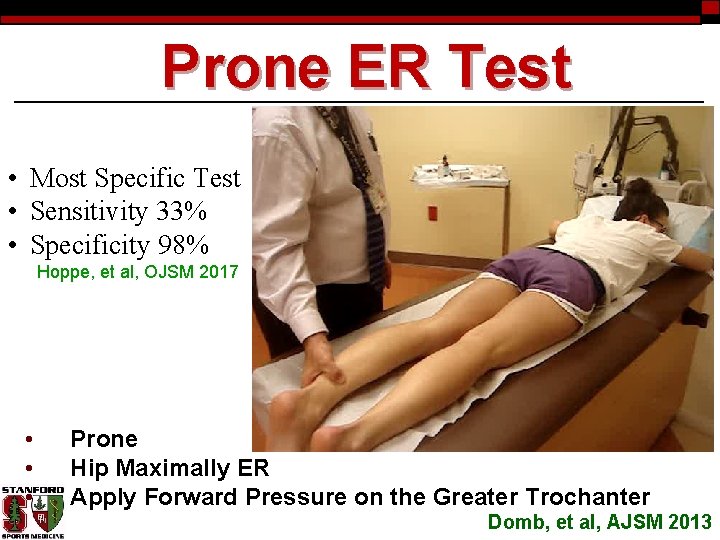
Prone ER Test • Most Specific Test • Sensitivity 33% • Specificity 98% Hoppe, et al, OJSM 2017 • • • Prone Hip Maximally ER Apply Forward Pressure on the Greater Trochanter Domb, et al, AJSM 2013
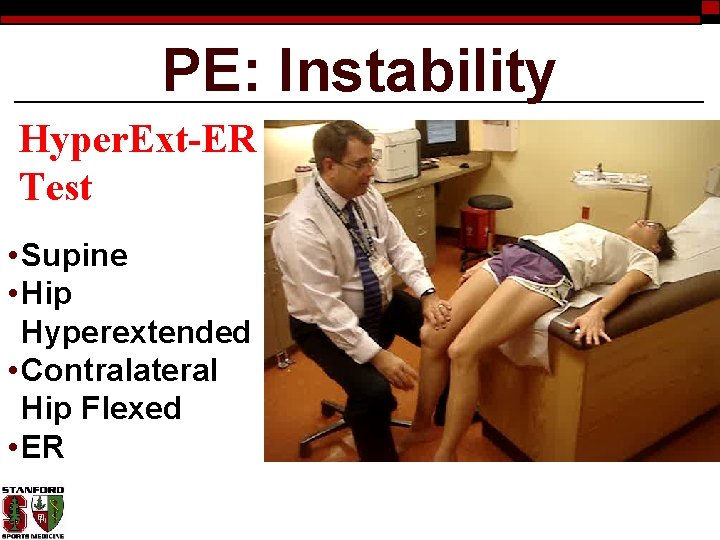
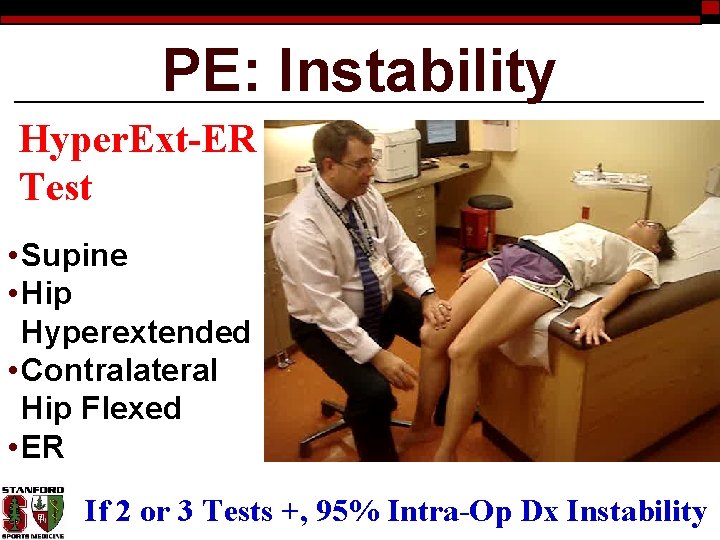
PE: Instability Hyper. Ext-ER Test • Supine • Hip Hyperextended • Contralateral Hip Flexed • ER
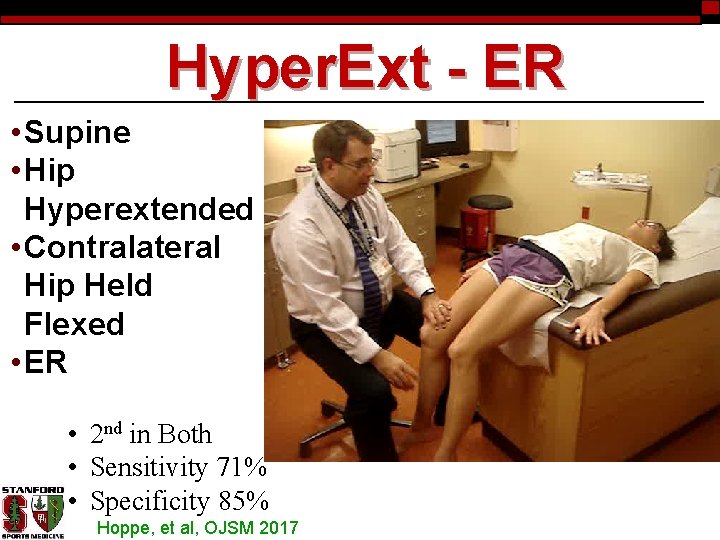
Hyper. Ext - ER • Supine • Hip Hyperextended • Contralateral Hip Held Flexed • ER • 2 nd in Both • Sensitivity 71% • Specificity 85% Hoppe, et al, OJSM 2017
PE: Instability Hyper. Ext-ER Test • Supine • Hip Hyperextended • Contralateral Hip Flexed • ER If 2 or 3 Tests +, 95% Intra-Op Dx Instability
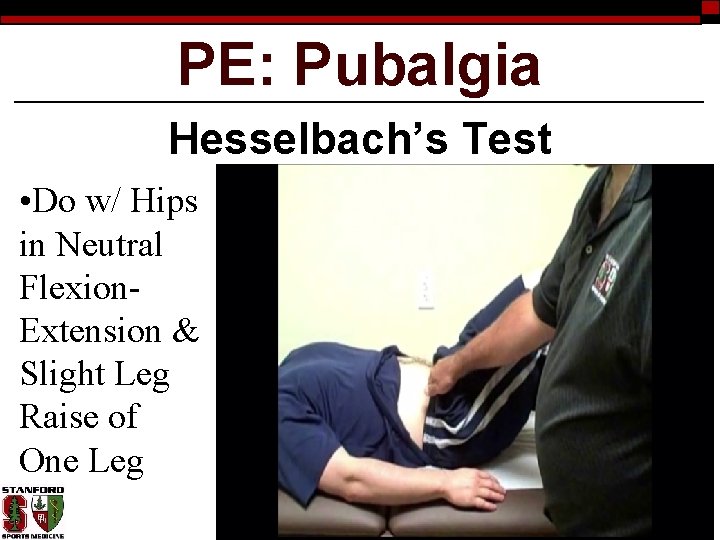
PE: Pubalgia Hesselbach’s Test • Do w/ Hips in Neutral Flexion. Extension & Slight Leg Raise of One Leg
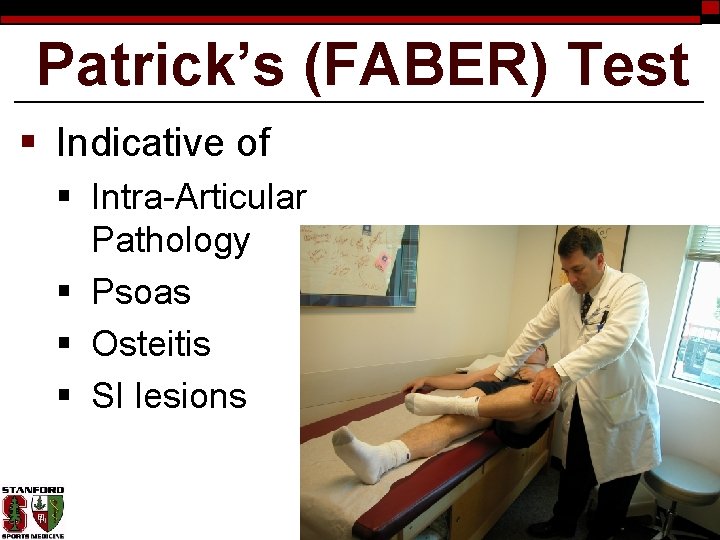
Patrick’s (FABER) Test § Indicative of § Intra-Articular Pathology § Psoas § Osteitis § SI lesions
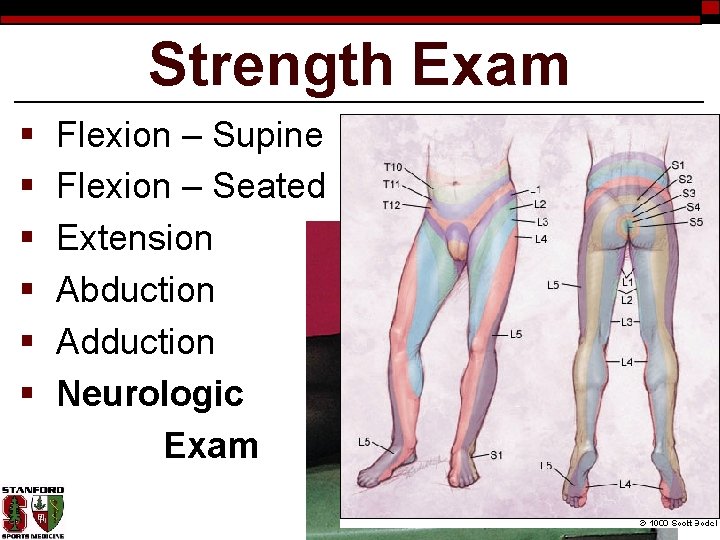
Strength Exam § § § Flexion – Supine Flexion – Seated Extension Abduction Adduction Neurologic Exam
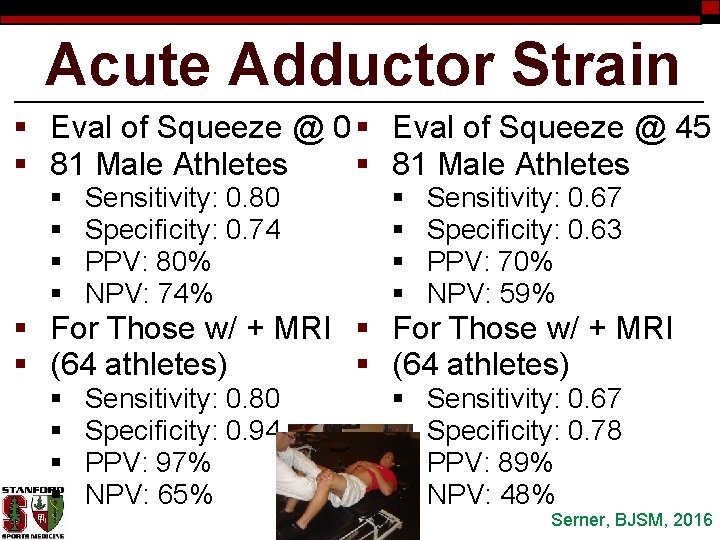
Acute Adductor Strain § Eval of Squeeze @ 0 § Eval of Squeeze @ 45 § 81 Male Athletes § § Sensitivity: 0. 80 Specificity: 0. 74 PPV: 80% NPV: 74% § § Sensitivity: 0. 67 Specificity: 0. 63 PPV: 70% NPV: 59% § For Those w/ + MRI § (64 athletes) § § Sensitivity: 0. 80 Specificity: 0. 94 PPV: 97% NPV: 65% § § Sensitivity: 0. 67 Specificity: 0. 78 PPV: 89% NPV: 48% Serner, BJSM, 2016
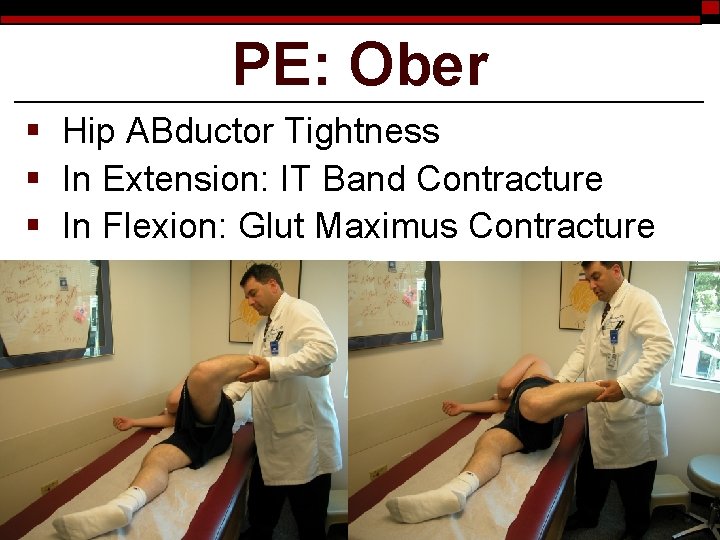
PE: Ober § Hip ABductor Tightness § In Extension: IT Band Contracture § In Flexion: Glut Maximus Contracture
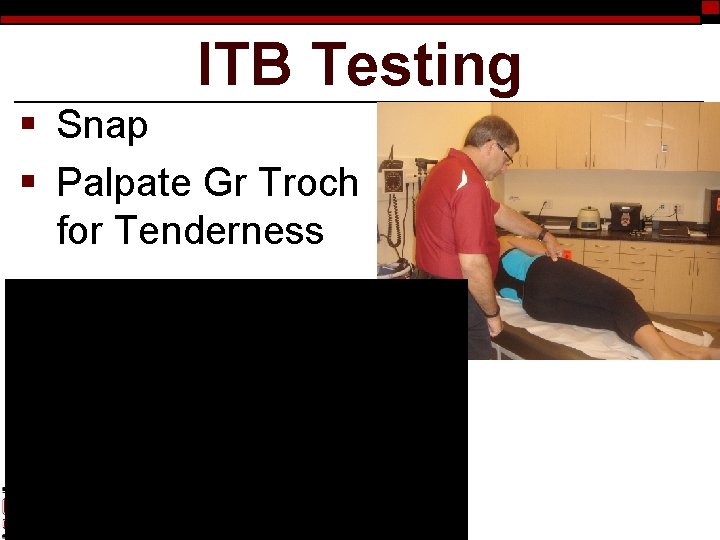
ITB Testing § Snap § Palpate Gr Troch for Tenderness
ITB Testing § Snap – Patient Reproducing
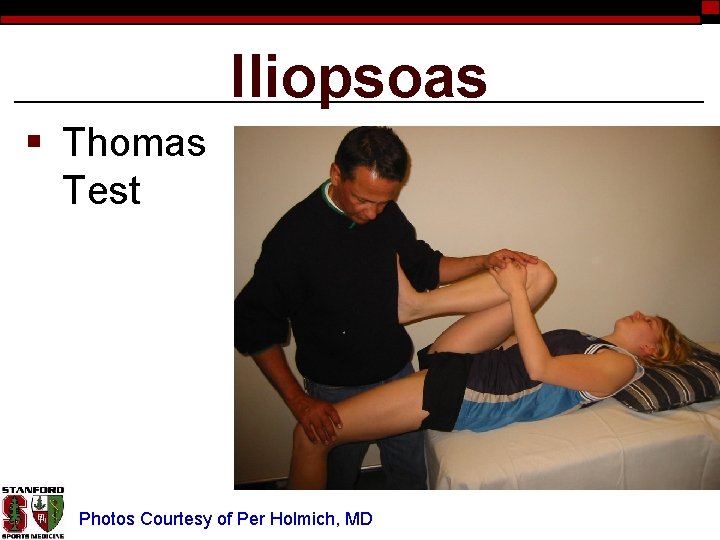
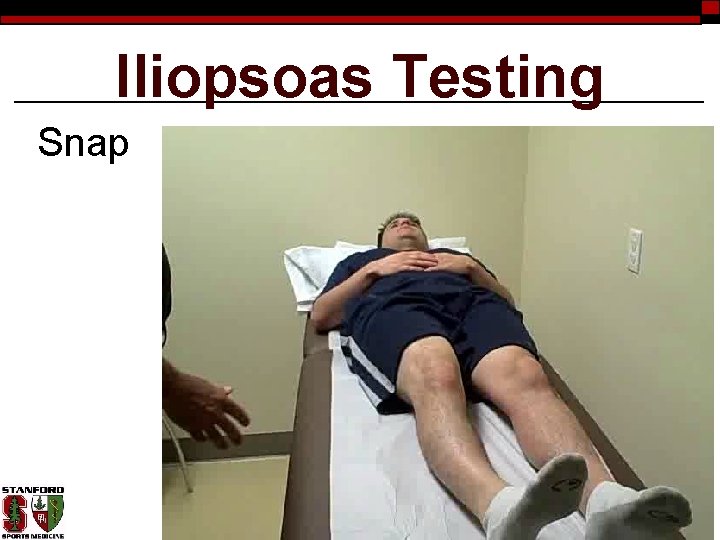
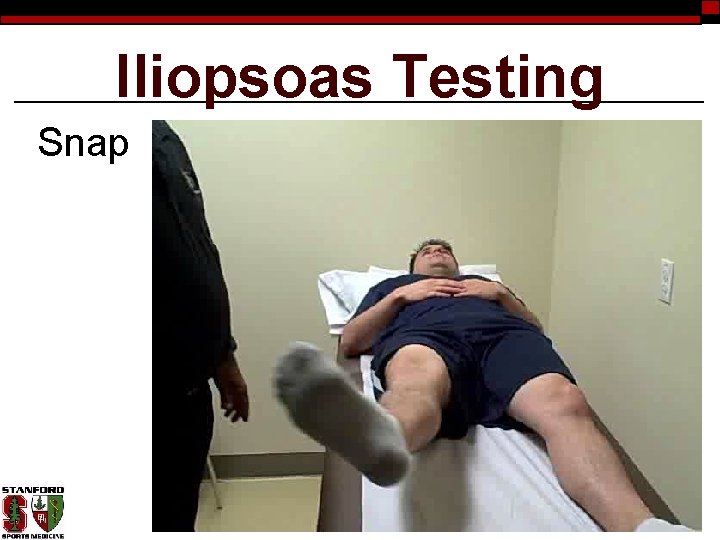
Iliopsoas § Thomas Test Photos Courtesy of Per Holmich, MD
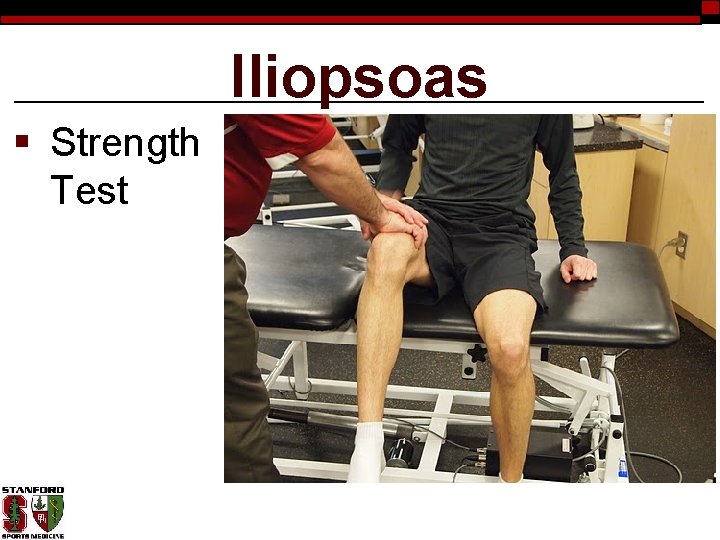
Iliopsoas § Strength Test
Iliopsoas Testing Snap
Iliopsoas Testing Snap
Conclusion § Good Hx & PE § Determine IA or EA § Radiographs: AP Pelvis & Lateral § Imaging To Confirm Diagnosis § MRI Arthrogram w/ Ropivacaine
Thank You