
PHYSICAL EDUCATION WHAT THE COURSE LOOKS LIKE OCR

- Slides: 32
PHYSICAL EDUCATION
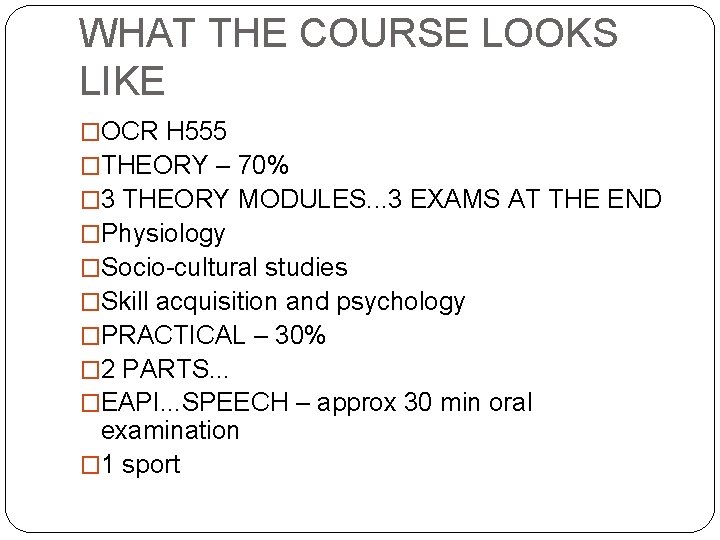
WHAT THE COURSE LOOKS LIKE �OCR H 555 �THEORY – 70% � 3 THEORY MODULES. . . 3 EXAMS AT THE END �Physiology �Socio-cultural studies �Skill acquisition and psychology �PRACTICAL – 30% � 2 PARTS. . . �EAPI. . . SPEECH – approx 30 min oral examination � 1 sport
Check what practical sports you are allowed to do at A level PE!!! �http: //www. ocr. org. uk/Images/234840 -guide-to- non-exam-assessment-as-a-level. pdf#
Skill Acquisition
What makes a skilful performance? �https: //www. youtube. com/watch? v=l. M 6 VMa. B 8 Ipc
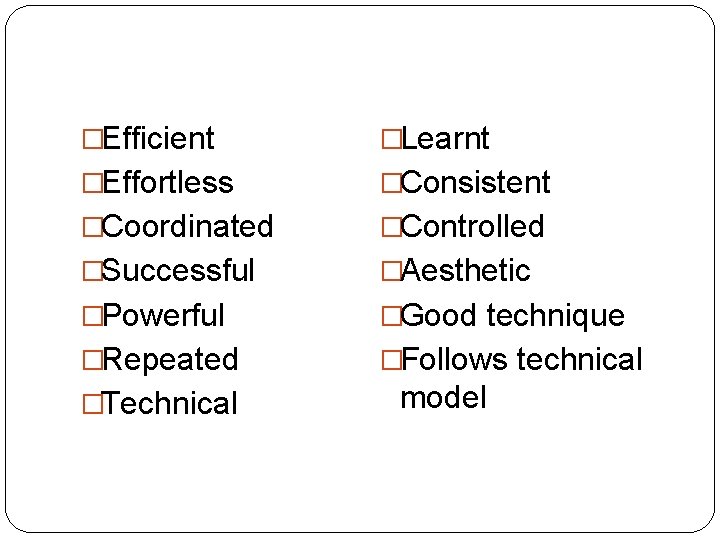
�Efficient �Learnt �Effortless �Consistent �Coordinated �Controlled �Successful �Aesthetic �Powerful �Good technique �Repeated �Follows technical �Technical model
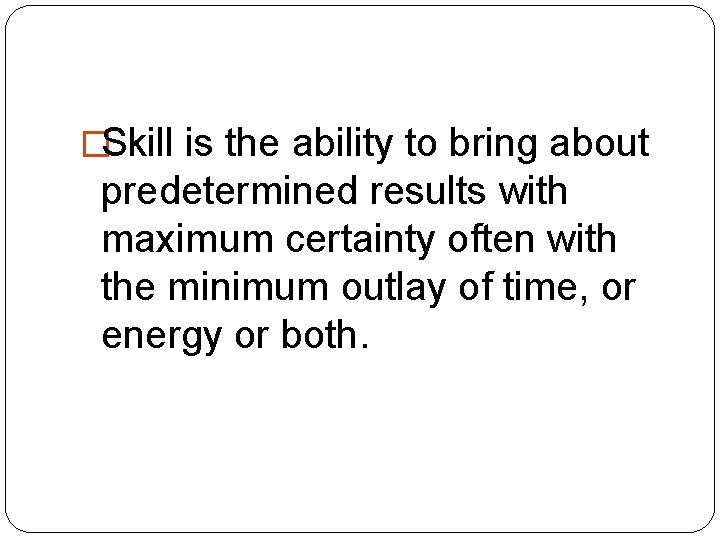
�Skill is the ability to bring about predetermined results with maximum certainty often with the minimum outlay of time, or energy or both.
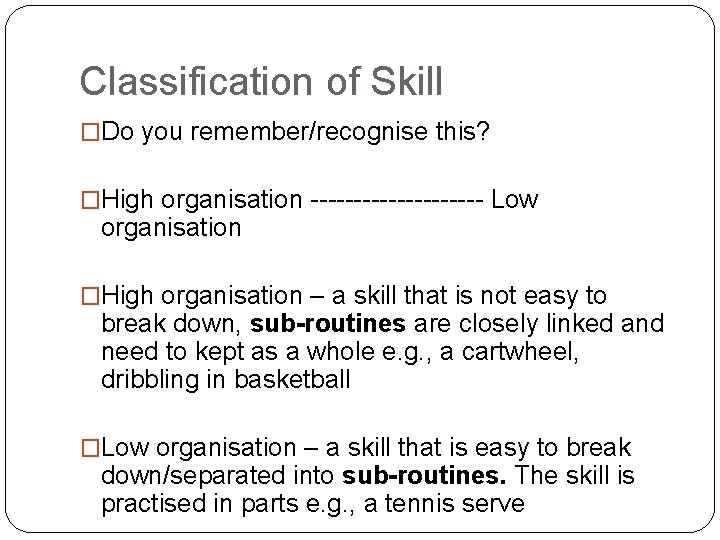
Classification of Skill �Do you remember/recognise this? �High organisation ---------- Low organisation �High organisation – a skill that is not easy to break down, sub-routines are closely linked and need to kept as a whole e. g. , a cartwheel, dribbling in basketball �Low organisation – a skill that is easy to break down/separated into sub-routines. The skill is practised in parts e. g. , a tennis serve
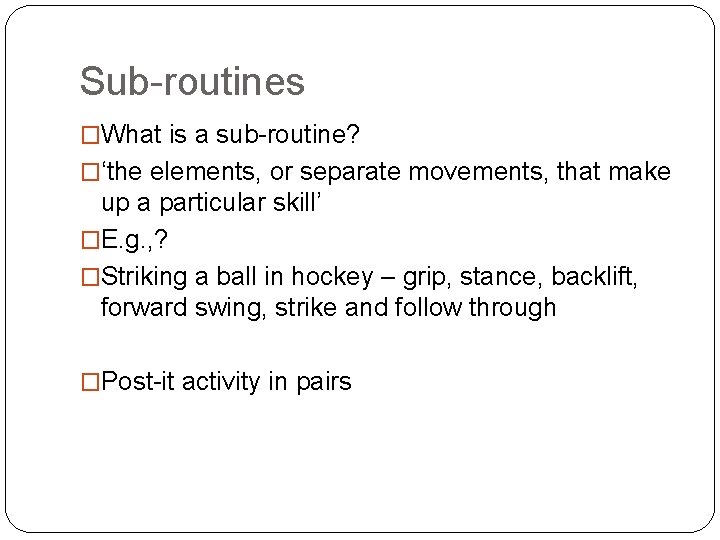
Sub-routines �What is a sub-routine? �‘the elements, or separate movements, that make up a particular skill’ �E. g. , ? �Striking a ball in hockey – grip, stance, backlift, forward swing, strike and follow through �Post-it activity in pairs
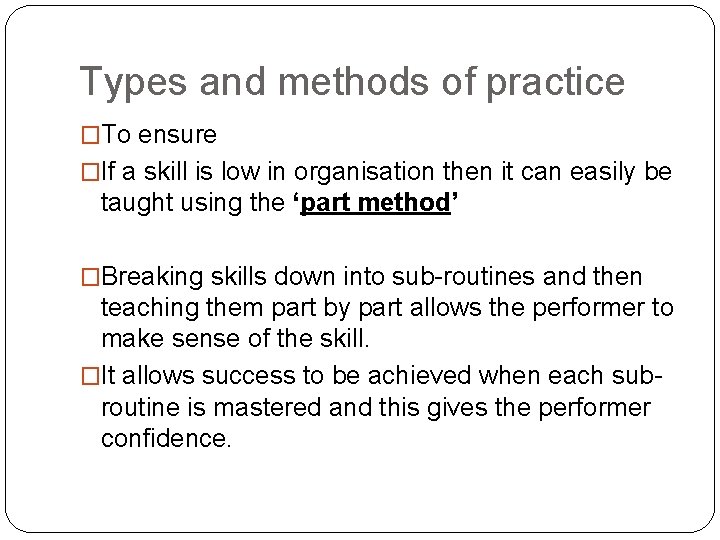
Types and methods of practice �To ensure �If a skill is low in organisation then it can easily be taught using the ‘part method’ �Breaking skills down into sub-routines and then teaching them part by part allows the performer to make sense of the skill. �It allows success to be achieved when each subroutine is mastered and this gives the performer confidence.
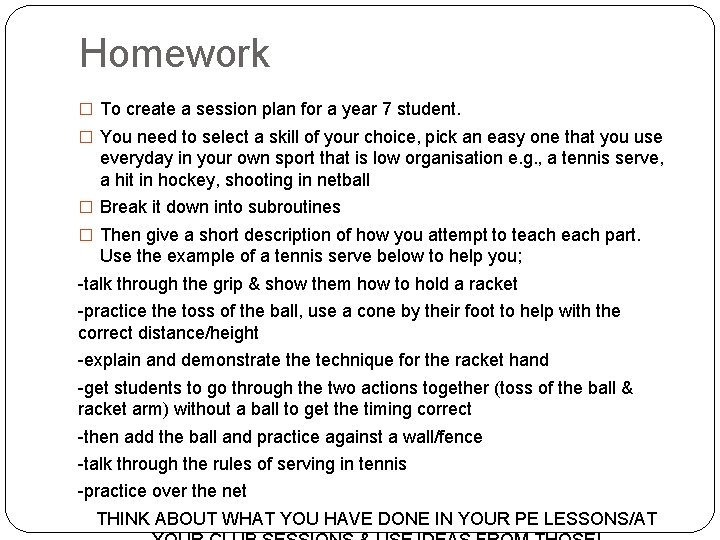
Homework � To create a session plan for a year 7 student. � You need to select a skill of your choice, pick an easy one that you use everyday in your own sport that is low organisation e. g. , a tennis serve, a hit in hockey, shooting in netball � Break it down into subroutines � Then give a short description of how you attempt to teach part. Use the example of a tennis serve below to help you; -talk through the grip & show them how to hold a racket -practice the toss of the ball, use a cone by their foot to help with the correct distance/height -explain and demonstrate the technique for the racket hand -get students to go through the two actions together (toss of the ball & racket arm) without a ball to get the timing correct -then add the ball and practice against a wall/fence -talk through the rules of serving in tennis -practice over the net THINK ABOUT WHAT YOU HAVE DONE IN YOUR PE LESSONS/AT
Anatomy and Physiology
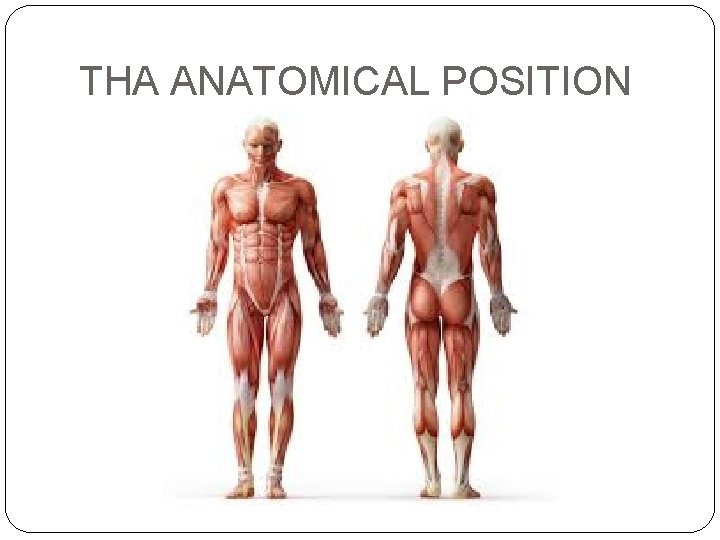
THA ANATOMICAL POSITION
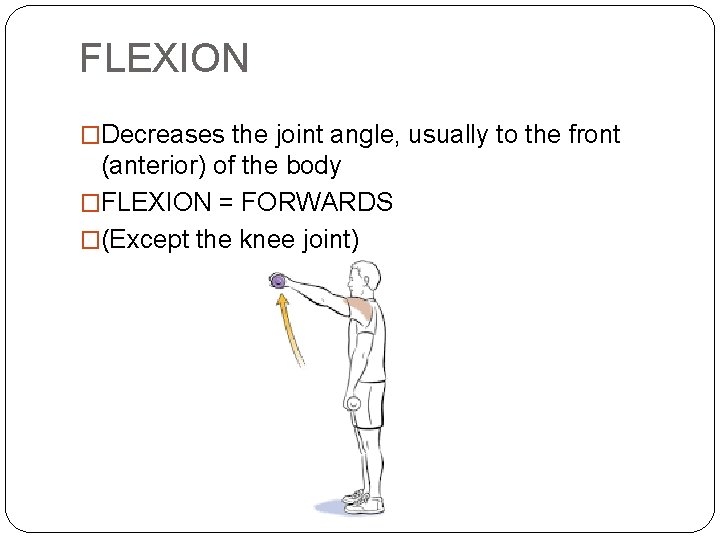
FLEXION �Decreases the joint angle, usually to the front (anterior) of the body �FLEXION = FORWARDS �(Except the knee joint)
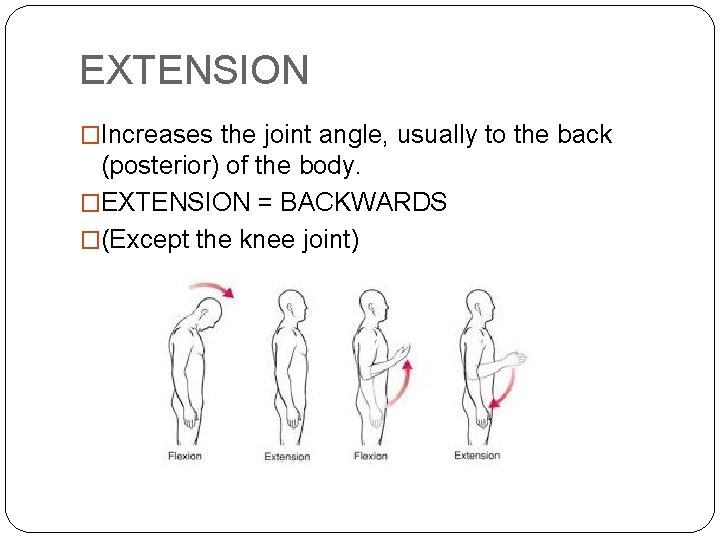
EXTENSION �Increases the joint angle, usually to the back (posterior) of the body. �EXTENSION = BACKWARDS �(Except the knee joint)
ABDUCTION AND ADDUCTION �ABDUCTION of a joint moves the articulating bone away from the midline of the body. �ADDUCTION of a joint moves the articulating bone towards the midline of the body. �Shoulder, wrist, hip
DORSI FLEXION AND PLANTAR FLEXION �UNIQUE TO ANKLE JOINT �DORSI FLEXION – brings Toes closer to the Tibia up (toes up!) �PLANTAR FLEXION – moving toes further away from tibia (Plantar – Point you toes) �When do you use these two actions in sport? ? Give a sporting example for each. . .
HORIZONTAL FLEXION AND EXTENSION �Unique to SHOULDER JOINT �HORIZONTAL FLEXION of a joint moves the articulating bone closer to the midline of the body. �(FLEXION. . . BUT HORIZONTALLY!) �HORIZONTAL EXTENSION of a joint moves the articulating bone away from midline of body. �(EXTENSION. . . BUT HORIZONTALLY!)
PRONATION AND SUPINATION �Unique to wrist joint
ROTATION (MEDIAL AND LATERAL) �Cylindrical shape �Medial – towards midline �Lateral – away from midline �No partner as it can go in either direction!
CIRCUMDUCTION �Combination of series of movements �CONE SHAPE �No partner as it can go in either direction!
Davies says. . ! �Stand in the anatomical position with you anterior view facing the front. . .
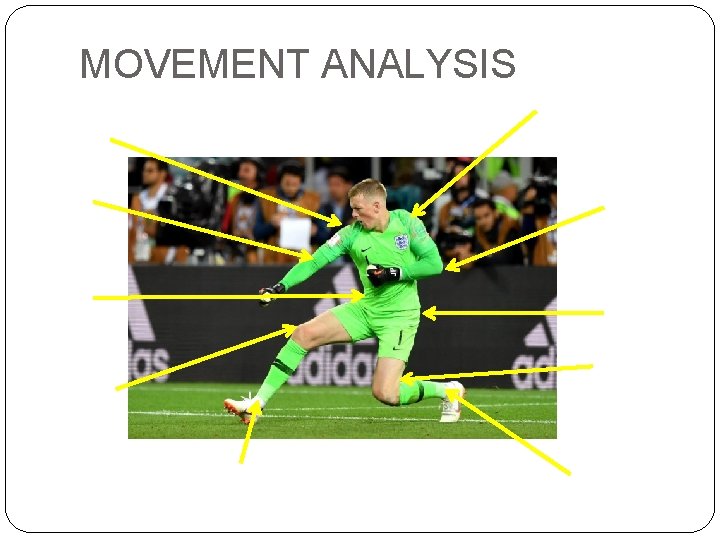
MOVEMENT ANALYSIS
Homework �Find a picture of a sportsperson performing in your chosen sport �Use one colour pen to annotate using arrows all of the bone names that you know from GCSE (eg femur, humerus) �Use a second colour pen to annotate any joint names that you know from GCSE (eg shoulder – ball and socket) �Use a third colour pen to do an in depth movement analysis using the terms we have used in this session. . . remember take each joint back to the anatomical position if you are confuded what it is doing!!
Sport & Society
�Sport has had a major influence on our society. �It has helped by preparing the population for war, to hunt for food or to improve their fitness to work. �Sport has also been used as a tool to bring communities together on holy days and festival.
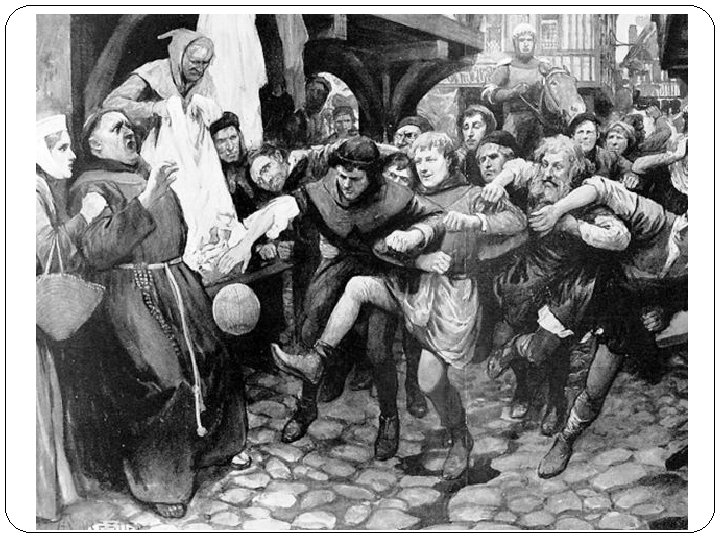
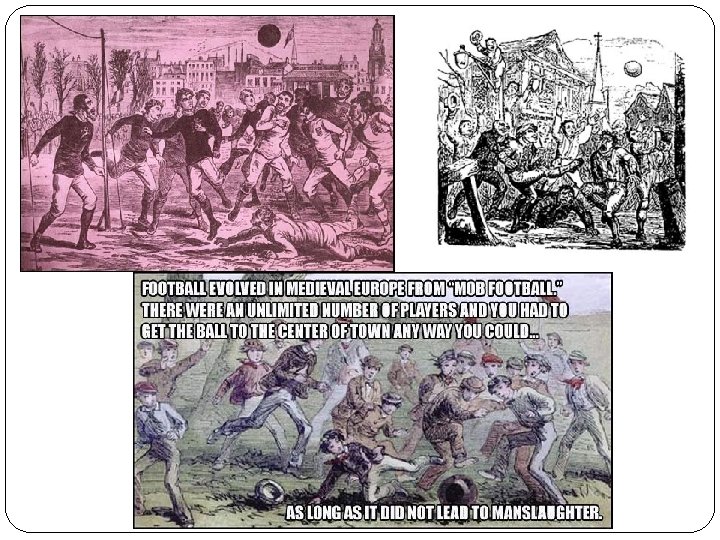
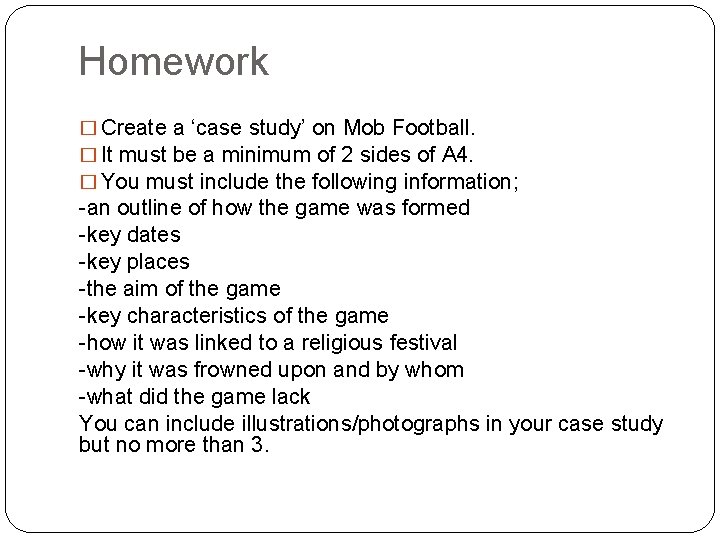
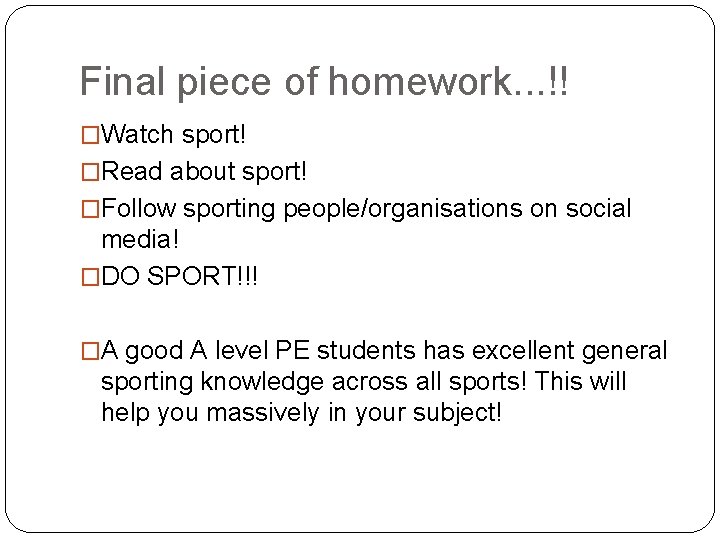
Mob football �A game for peasants with very few rules �Played between villages, at a time of celebration and festivity �It was so violent that people living nearby would barricade their homes during games �Both groups of villagers would try to force a ball into the centre of the ‘enemy’ village �There were very few rules, Shrovetide football had vague rules restricting only murder or manslaughter! �The game was frowned upon by the middle classes due to its un-Christian nature and its lack
�https: //www. youtube. com/watch? v=n. KDj. FEt. LV 88
Homework � Create a ‘case study’ on Mob Football. � It must be a minimum of 2 sides of A 4. � You must include the following information; -an outline of how the game was formed -key dates -key places -the aim of the game -key characteristics of the game -how it was linked to a religious festival -why it was frowned upon and by whom -what did the game lack You can include illustrations/photographs in your case study but no more than 3.
Final piece of homework. . . !! �Watch sport! �Read about sport! �Follow sporting people/organisations on social media! �DO SPORT!!! �A good A level PE students has excellent general sporting knowledge across all sports! This will help you massively in your subject!