
PHYSICAL EDUCATION AND STUDENTS WITH Autism Spectrum Disorder

- Slides: 17
PHYSICAL EDUCATION AND STUDENTS WITH
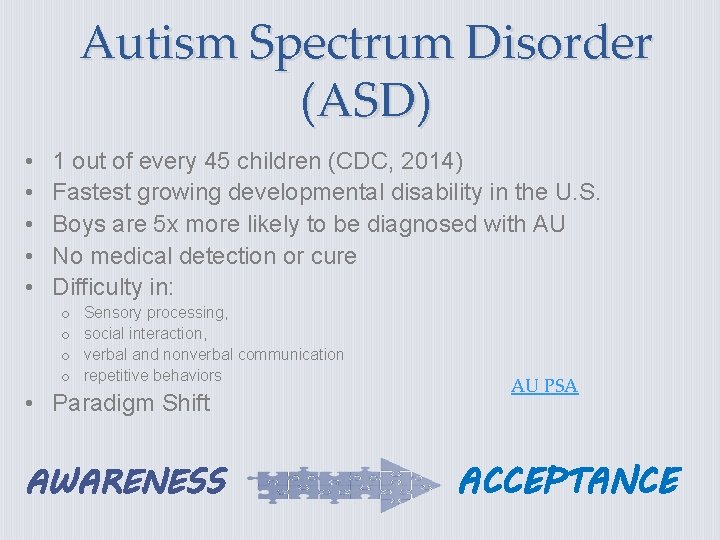
Autism Spectrum Disorder (ASD) • • • 1 out of every 45 children (CDC, 2014) Fastest growing developmental disability in the U. S. Boys are 5 x more likely to be diagnosed with AU No medical detection or cure Difficulty in: o o Sensory processing, social interaction, verbal and nonverbal communication repetitive behaviors • Paradigm Shift AWARENESS AU PSA ACCEPTANCE
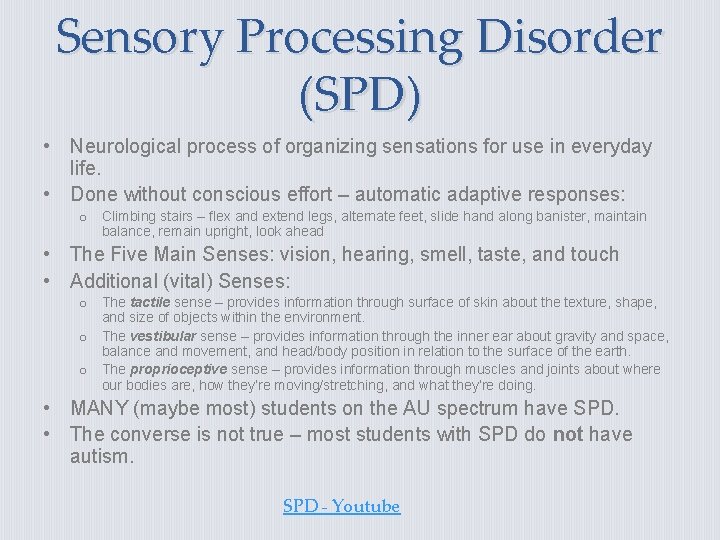
Sensory Processing Disorder (SPD) • Neurological process of organizing sensations for use in everyday life. • Done without conscious effort – automatic adaptive responses: o Climbing stairs – flex and extend legs, alternate feet, slide hand along banister, maintain balance, remain upright, look ahead • The Five Main Senses: vision, hearing, smell, taste, and touch • Additional (vital) Senses: o The tactile sense – provides information through surface of skin about the texture, shape, and size of objects within the environment. o The vestibular sense – provides information through the inner ear about gravity and space, balance and movement, and head/body position in relation to the surface of the earth. o The proprioceptive sense – provides information through muscles and joints about where our bodies are, how they’re moving/stretching, and what they’re doing. • MANY (maybe most) students on the AU spectrum have SPD. • The converse is not true – most students with SPD do not have autism. SPD - Youtube
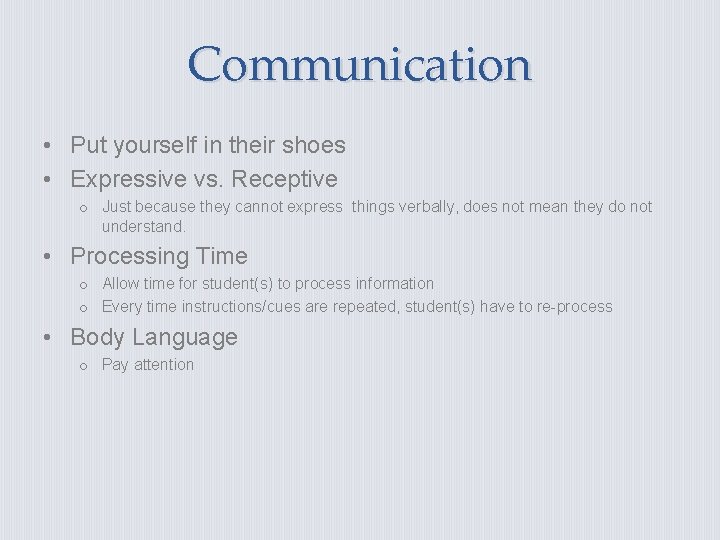
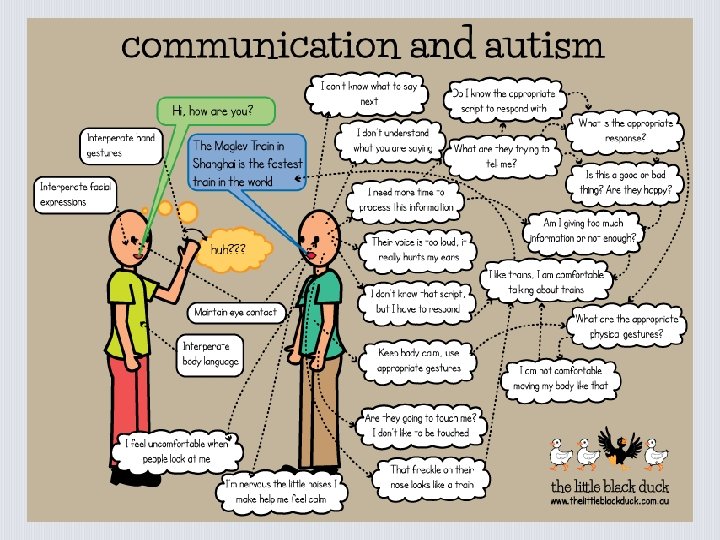
Communication • Put yourself in their shoes • Expressive vs. Receptive o Just because they cannot express things verbally, does not mean they do not understand. • Processing Time o Allow time for student(s) to process information o Every time instructions/cues are repeated, student(s) have to re-process • Body Language o Pay attention
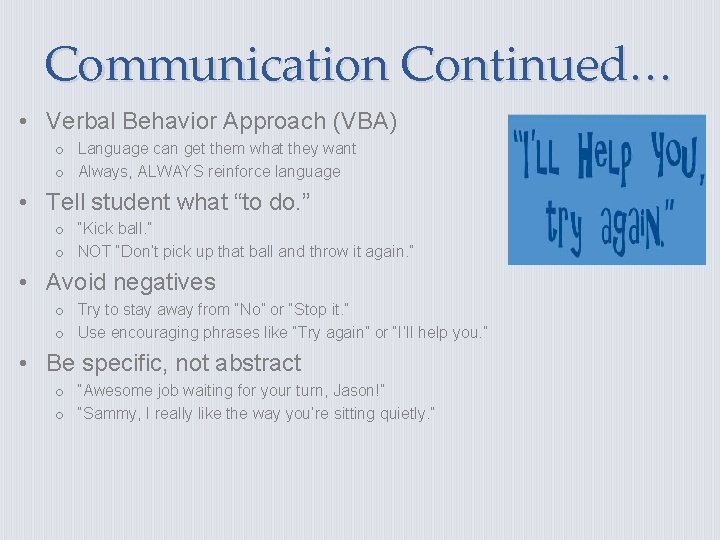
Communication Continued… • Verbal Behavior Approach (VBA) o Language can get them what they want o Always, ALWAYS reinforce language • Tell student what “to do. ” o “Kick ball. ” o NOT “Don’t pick up that ball and throw it again. ” • Avoid negatives o Try to stay away from “No” or “Stop it. ” o Use encouraging phrases like “Try again” or “I’ll help you. ” • Be specific, not abstract o “Awesome job waiting for your turn, Jason!” o “Sammy, I really like the way you’re sitting quietly. ”
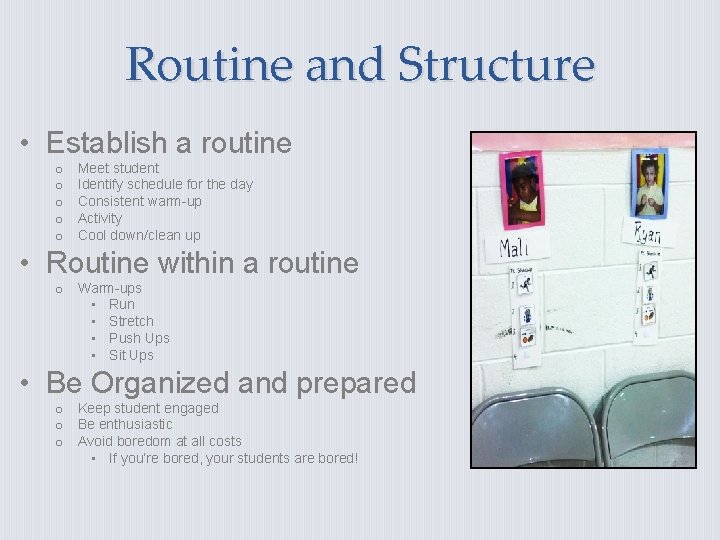
Routine and Structure • Establish a routine o o o Meet student Identify schedule for the day Consistent warm-up Activity Cool down/clean up • Routine within a routine o Warm-ups • Run • Stretch • Push Ups • Sit Ups • Be Organized and prepared o Keep student engaged o Be enthusiastic o Avoid boredom at all costs • If you’re bored, your students are bored!
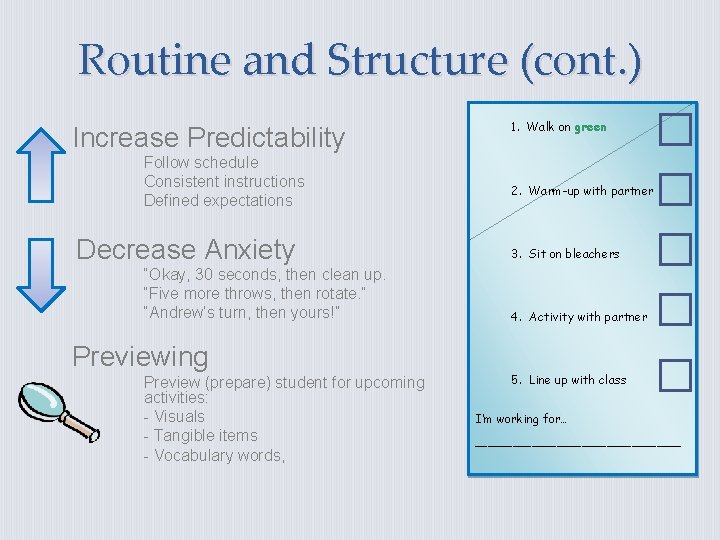
Routine and Structure (cont. ) Increase Predictability Follow schedule Consistent instructions Defined expectations Decrease Anxiety “Okay, 30 seconds, then clean up. “Five more throws, then rotate. ” “Andrew’s turn, then yours!” Previewing Preview (prepare) student for upcoming activities: - Visuals - Tangible items - Vocabulary words, 1. Walk on green 2. Warm-up with partner 3. Sit on bleachers 4. Activity with partner 5. Line up with class I’m working for… _________________
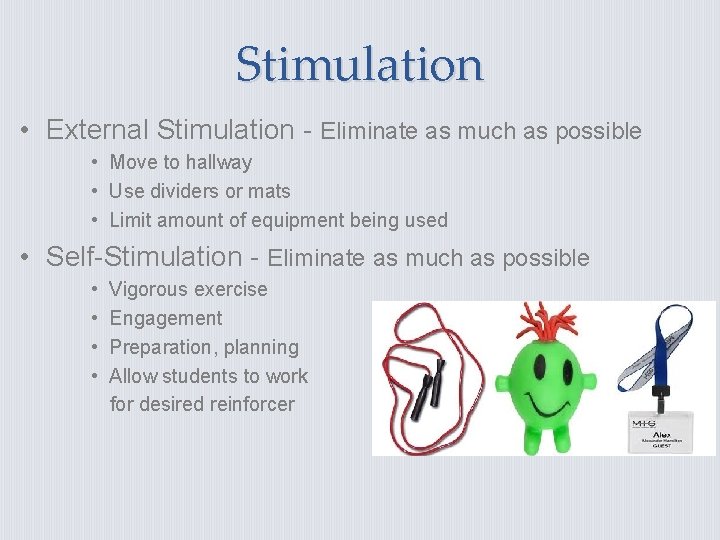
Stimulation • External Stimulation - Eliminate as much as possible • Move to hallway • Use dividers or mats • Limit amount of equipment being used • Self-Stimulation - Eliminate as much as possible • • Vigorous exercise Engagement Preparation, planning Allow students to work for desired reinforcer
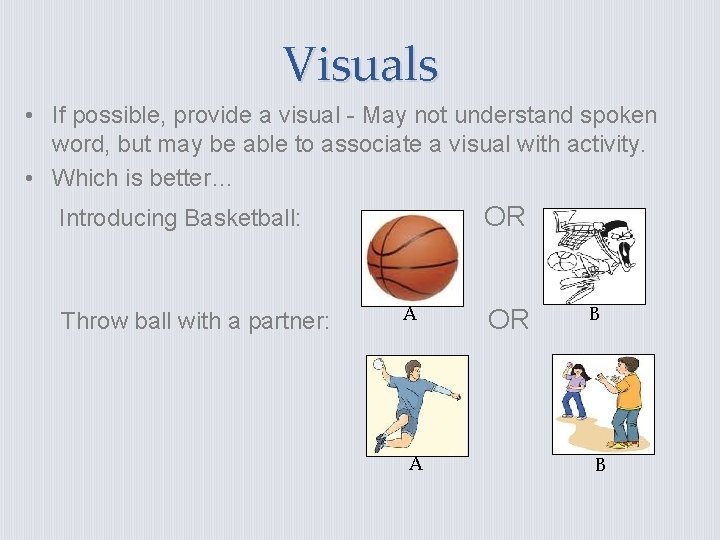
Visuals • If possible, provide a visual - May not understand spoken word, but may be able to associate a visual with activity. • Which is better… OR Introducing Basketball: Throw ball with a partner: A A OR B B
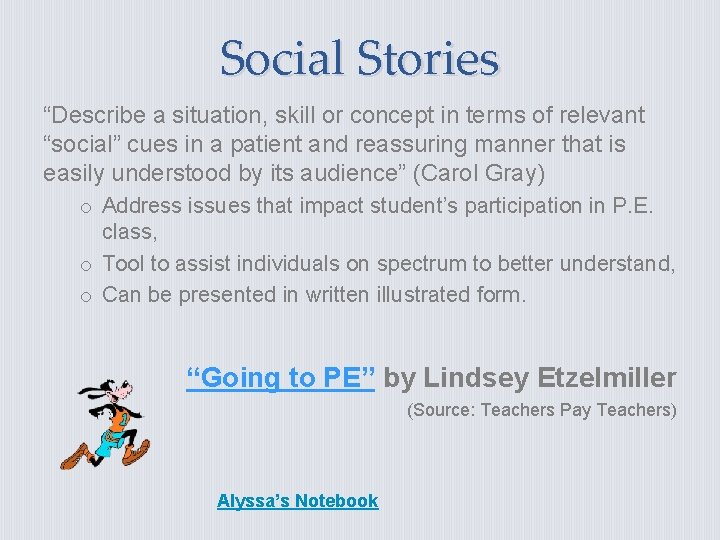
Social Stories “Describe a situation, skill or concept in terms of relevant “social” cues in a patient and reassuring manner that is easily understood by its audience” (Carol Gray) o Address issues that impact student’s participation in P. E. class, o Tool to assist individuals on spectrum to better understand, o Can be presented in written illustrated form. “Going to PE” by Lindsey Etzelmiller (Source: Teachers Pay Teachers) Alyssa’s Notebook
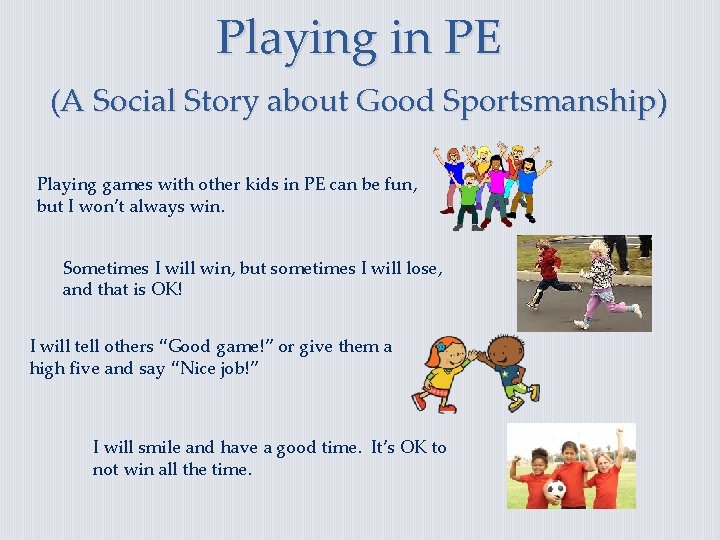
Playing in PE (A Social Story about Good Sportsmanship) Playing games with other kids in PE can be fun, but I won’t always win. Sometimes I will win, but sometimes I will lose, and that is OK! I will tell others “Good game!” or give them a high five and say “Nice job!” I will smile and have a good time. It’s OK to not win all the time.
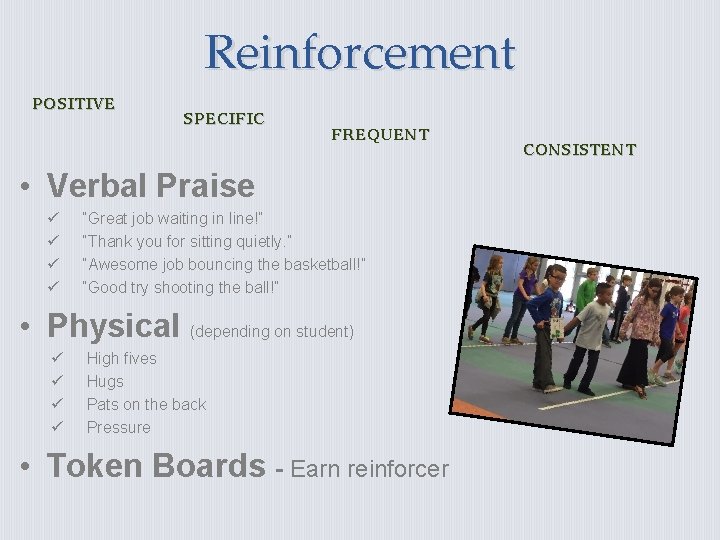
Reinforcement POSITIVE SPECIFIC FREQUENT • Verbal Praise ü ü “Great job waiting in line!” “Thank you for sitting quietly. ” “Awesome job bouncing the basketball!” “Good try shooting the ball!” • Physical (depending on student) ü ü High fives Hugs Pats on the back Pressure • Token Boards - Earn reinforcer CONSISTENT
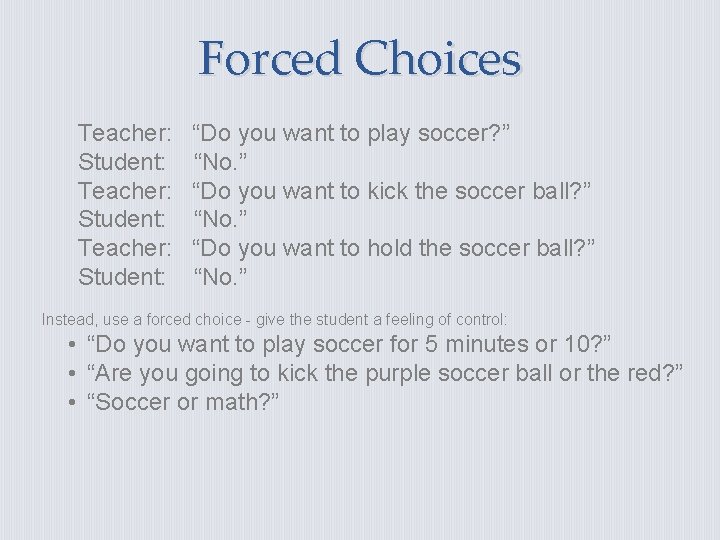
Forced Choices Teacher: Student: “Do you want to play soccer? ” “No. ” “Do you want to kick the soccer ball? ” “No. ” “Do you want to hold the soccer ball? ” “No. ” Instead, use a forced choice - give the student a feeling of control: • “Do you want to play soccer for 5 minutes or 10? ” • “Are you going to kick the purple soccer ball or the red? ” • “Soccer or math? ”
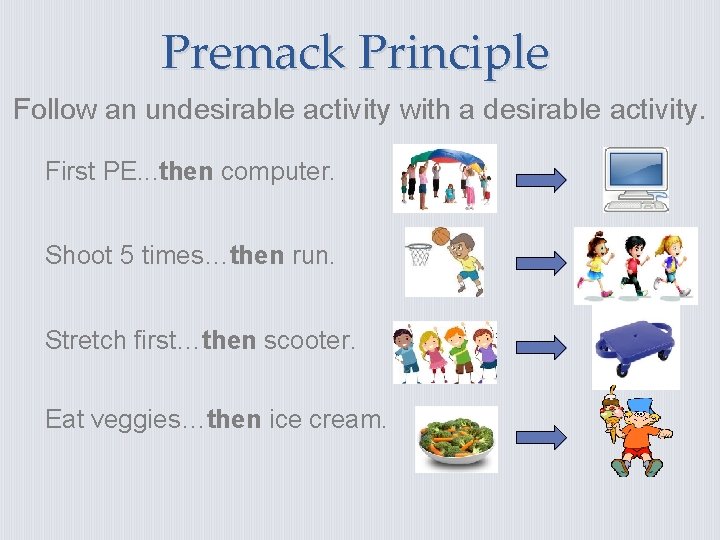
Premack Principle Follow an undesirable activity with a desirable activity. First PE. . . then computer. Shoot 5 times…then run. Stretch first…then scooter. Eat veggies…then ice cream.
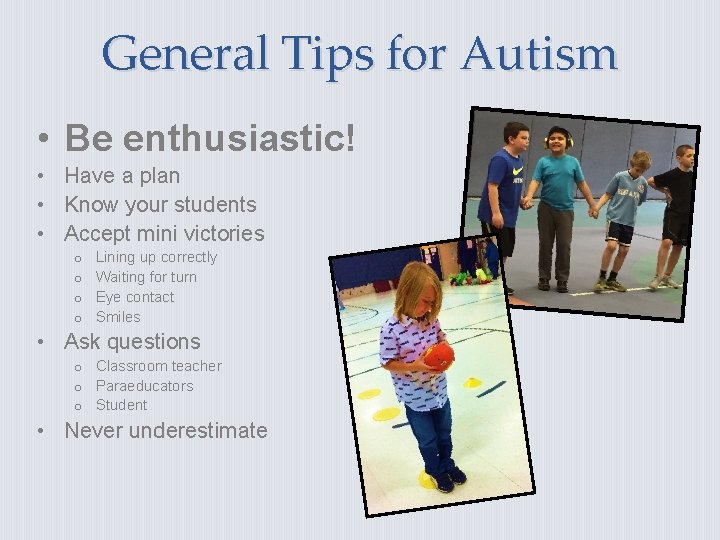
General Tips for Autism • Be enthusiastic! • Have a plan • Know your students • Accept mini victories o o Lining up correctly Waiting for turn Eye contact Smiles • Ask questions o Classroom teacher o Paraeducators o Student • Never underestimate
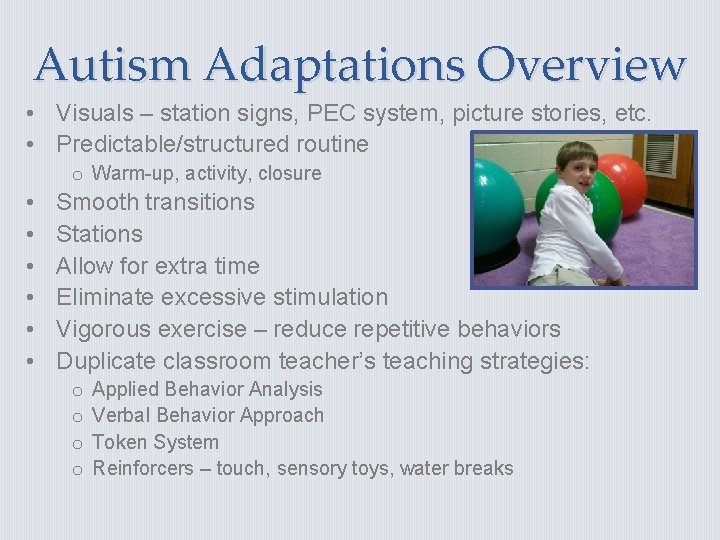
Autism Adaptations Overview • Visuals – station signs, PEC system, picture stories, etc. • Predictable/structured routine o Warm-up, activity, closure • • • Smooth transitions Stations Allow for extra time Eliminate excessive stimulation Vigorous exercise – reduce repetitive behaviors Duplicate classroom teacher’s teaching strategies: o o Applied Behavior Analysis Verbal Behavior Approach Token System Reinforcers – touch, sensory toys, water breaks