
Physical Disabilities Affecting Mobility Part I September 29
Physical Disabilities Affecting Mobility Part I September 29, 2005

Mobility Disabilities l Congenital. – Before, during, or immediately after birth. Cerebral palsy. l Spina Bifida. l Congenital Osteogenesis Imperfecta. l Arthrogryposis. l Dwarfism. l Amputation. l
Mobility Disabilities l Acquired Disabilities – Impact mobility later in life. l l l l Traumatic Brain Injury Stroke Amputations Muscular dystrophy Rheumatoid Arthritis Multiple Sclerosis Myasthenia Gravis Spinal Cord Injury
Congenital Mobility Disabilities l Cerebral palsy – More than 700, 000 cases in America – Injury to the brain at birth or during birth – Bleeding in the brain – Lack of oxygen – Can be acquired due to brain damage, infections, meningitis.
Cerebral Palsy l Cerebral palsy is the most common physical disability in childhood. It is estimated 2 to 3 people out of every 1000 will have cerebral palsy. This condition is not hereditary and there is no cure. Many causes of cerebral palsy are still not known or understood. • ©Copyright 2002 cerebral palsy league of Qld
Cerebral Palsy (Cont) l l l Areas of the brain that govern motor control. Voluntary muscle systems Spasticity – tense, contracting muscles. Athetosis – constant uncontrolled motion of limbs, head, and eyes. Ataxia – poor muscle control, balance , coordination. Changes in mental processes and perception.
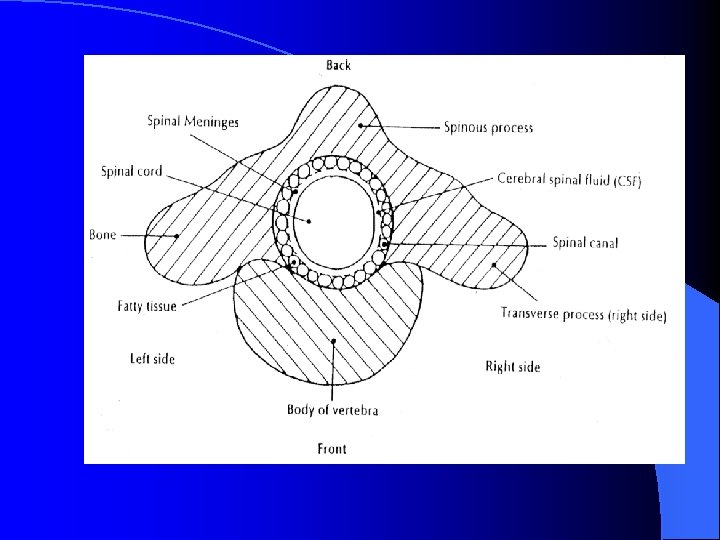
Spina Bifida l Condition resulting from the neural tube not closing completely during the first four weeks of fetal development. l One in 2000 babies born in the US l Myelomeningocele – accompanied by hydrocephalus l Meningocele – meninges protrude from the opening in the vertebral column.
Spina Bifida l Spina Bifida Occulta – Incomplete vertebral development – Meninges are closed around the spinal cord. – Usually normal function not effected.
Spina Bifida l l l l Paralysis Use of braces, crutches, and wheelchairs Bowel and bladder function may be affected. Higher risk for obesity Learning problems Latex allergies Folic acid
Congenital Amputation l Infants born without a limb, or with a significantly changed limb, twice the amount of those who lose a limb by accident, disease, or violent crime. l transverse deficiency or amelia – Congenital amputation resulting in the complete absence of a limb beyond a certain point (and leaving a stump).
Congenital Amputation l Longitudinal deficiencies – When a specific part of a limb is missing; for example, when the fibula bone in the lower leg is missing, but the rest of the leg is intact. l Phocomelia – The condition in which only a mid-portion of a limb is missing, as when the hands or feet are attached directly to the trunk.
Traumatic Brain Injury l Acquired damage to the brain that results when the head is hit, strikes a stationary object, or is shaken violently l #1 killer of people under age 34 in the U. S. l One of the leading causes of death & disability among children & adolescents
Traumatic Brain Injury l Occurs most frequently between ages 15 -24 l Males 4 x more prevalent than females l MVA accidents (especially motorcycles) are the leading cause l 500, 000 new cases per year; 95% survival rate
Traumatic Brain Injury l Impact may range from mild physical disability to pervasive physical, behavioral, & cognitive deficits l Lifelong cost to an individual is said to exceed $4. 5 million
Traumatic Brain Injury l Tentative conclusions re: psychosocial adaptation to TBI • Emotional difficulties, psychological reactions & personality changes result from a complex interplay of changes in neurological structure, pre-existing behavior patterns, & alterations of social supports
TBI: psychosocial adaptation continued l n n n Great variability in adaptation Increased anxiety, denial of impairment, depression, anger & hostility. Is it psychosocial reaction to personal losses vs. biological changes due to injury? Can’t really determine. Display inability to accurately appraise the extent & severity of impairments & consequent psychosocial risk
TBI: psychosocial adaptation continued n n n Follow-up studies suggest, people with TBI seldom attain satisfactory adaptation to their disability No support to suggest severity of disability is related to severity of emotional and behavioral problems Age of injury MAY affect adaptation/response; thought adolescence & young adults may have greater difficulty
Muscular Dystrophy l Irreversible change of muscle tissue in structure and strength. l Four common types of muscular dystrophy – Duchenne (most common) – Becker – Facioscapulohumeral – Myotonic
Duchenne Muscular Dystrophy l 85% of all MD types are this type l Caused by the deficiency of the muscular protein dystophin l Diminished ambulation leading to wheelchair use by early adolescence l Gradual limitation on eating, dressing, and personal hygiene
Duchenne Muscular Dystrophy Steadily failing respiratory ability resulting in death usually by the age of 20 years. l Intellectual development may be limited. l Depression and anxiety common reactions among children and adolescents with MD l • Liveneh & Antonak, 1997 Rare inherited condition l Muscles replaced by fat and connective tissue. l
Duchenne Muscular Dystrophy l Early symptoms begin at ages 2 to 5 years l Extensive accommodations usually needed by adolescence such as electric wheelchairs, leg braces.
- Slides: 22