
Physical design for BRT ITDP India Staff Meeting
Physical design for BRT ITDP India Staff Meeting Capacity Building Sessions
Bus Types Double Axle Standard bus (10. 5 -11 m) Semi-Low-Floor bus (11 -12 m) Low-Floor bus (12 m) Triple axle Non-articulated bus (13 -15 m) Articulated bus (16 -18 m) Four Axle Bi-Articulated bus (22 -24 m)

Bus Types Wheelbase Front overhang Rear overhang Turntable axis

Standard Bus
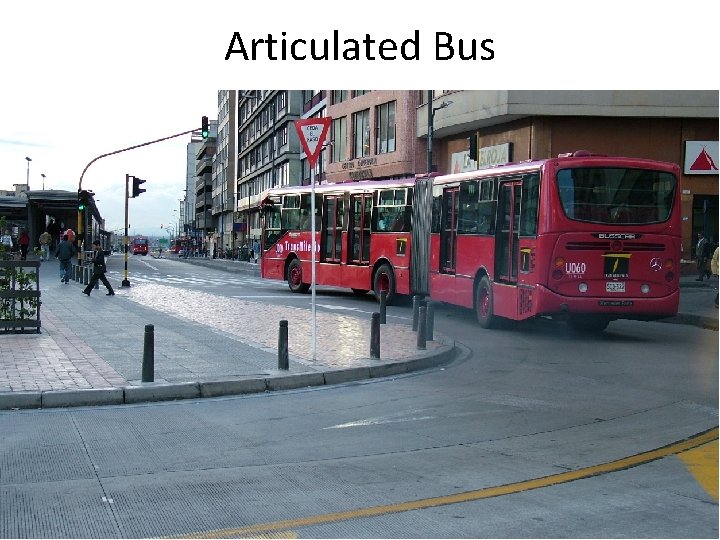
Articulated Bus
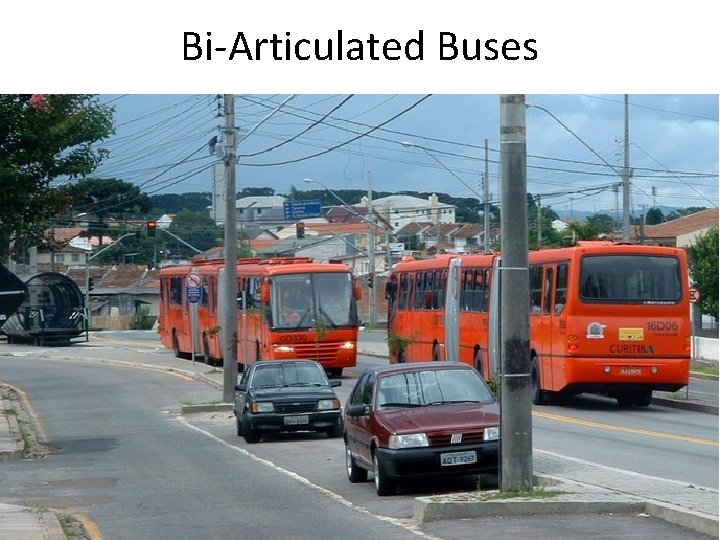
Bi-Articulated Buses

Bi-Articulated Bus Turning
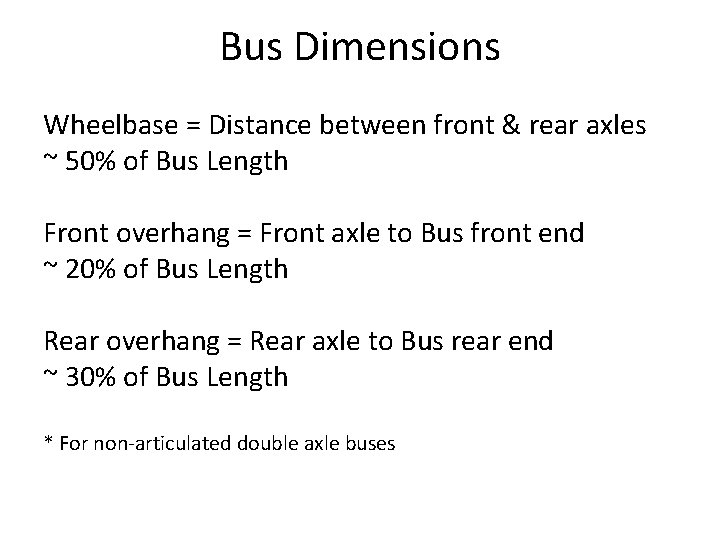
Bus Dimensions Wheelbase = Distance between front & rear axles ~ 50% of Bus Length Front overhang = Front axle to Bus front end ~ 20% of Bus Length Rear overhang = Rear axle to Bus rear end ~ 30% of Bus Length * For non-articulated double axle buses
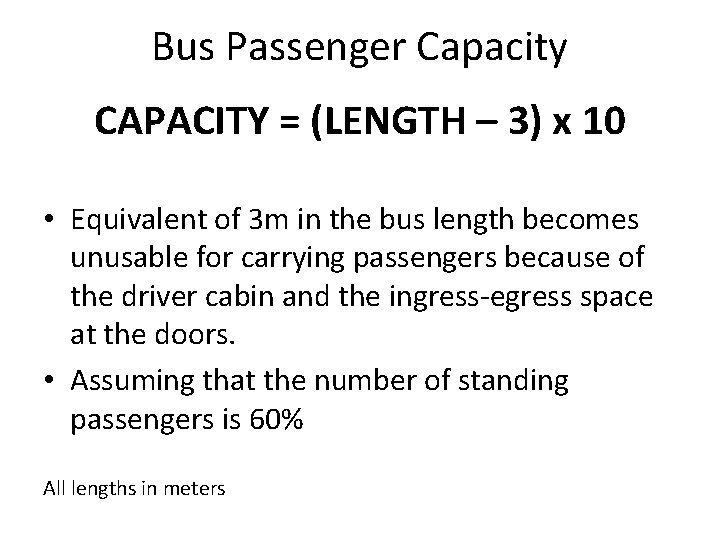
Bus Passenger Capacity CAPACITY = (LENGTH – 3) x 10 • Equivalent of 3 m in the bus length becomes unusable for carrying passengers because of the driver cabin and the ingress-egress space at the doors. • Assuming that the number of standing passengers is 60% All lengths in meters
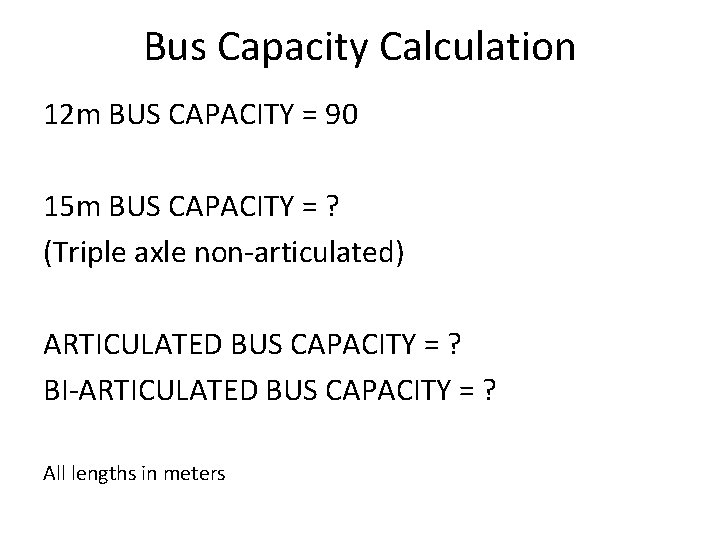
Bus Capacity Calculation 12 m BUS CAPACITY = 90 15 m BUS CAPACITY = ? (Triple axle non-articulated) ARTICULATED BUS CAPACITY = ? BI-ARTICULATED BUS CAPACITY = ? All lengths in meters
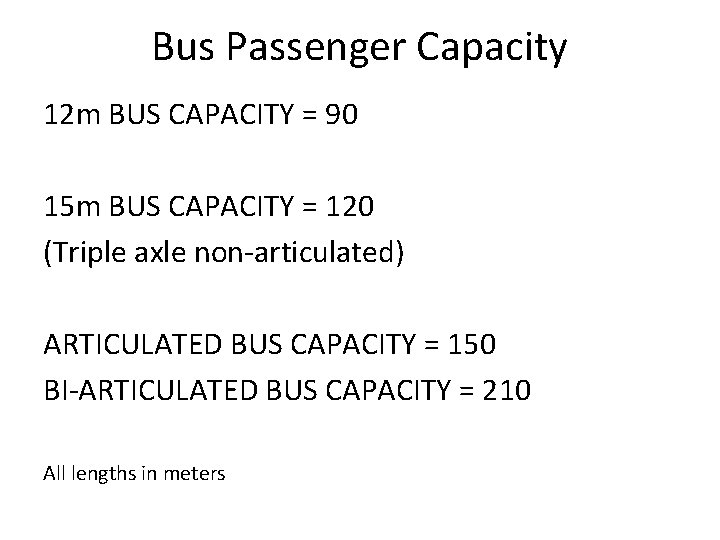
Bus Passenger Capacity 12 m BUS CAPACITY = 90 15 m BUS CAPACITY = 120 (Triple axle non-articulated) ARTICULATED BUS CAPACITY = 150 BI-ARTICULATED BUS CAPACITY = 210 All lengths in meters
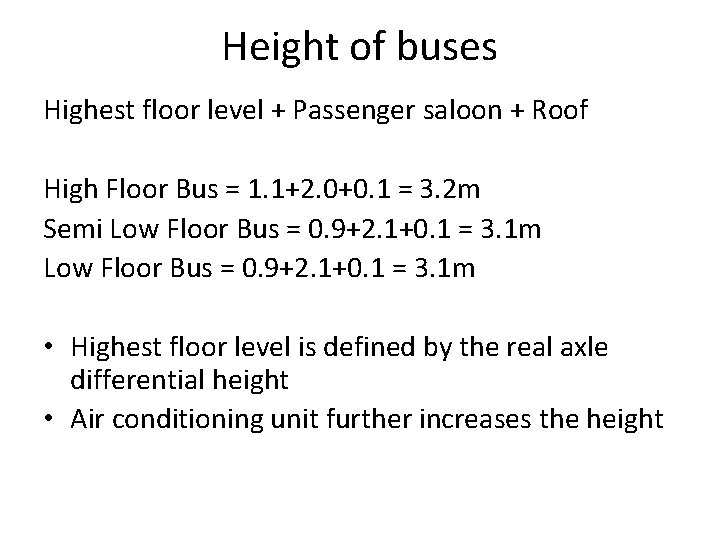
Height of buses Highest floor level + Passenger saloon + Roof High Floor Bus = 1. 1+2. 0+0. 1 = 3. 2 m Semi Low Floor Bus = 0. 9+2. 1+0. 1 = 3. 1 m • Highest floor level is defined by the real axle differential height • Air conditioning unit further increases the height
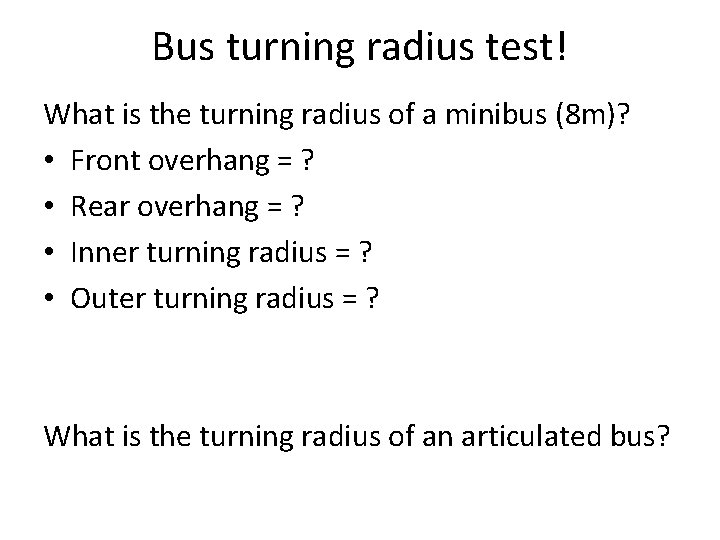
Bus turning radius test! What is the turning radius of a minibus (8 m)? • Front overhang = ? • Rear overhang = ? • Inner turning radius = ? • Outer turning radius = ? What is the turning radius of an articulated bus?
Station modules (Transmilenio)
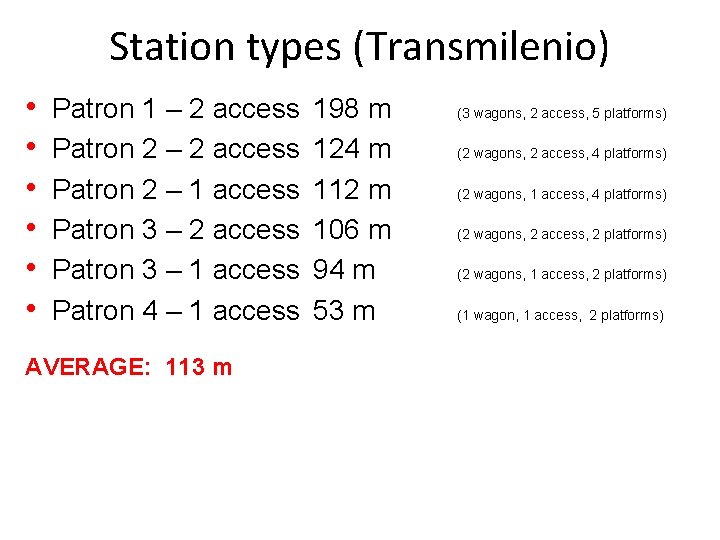
Station types (Transmilenio) • • • Patron 1 – 2 access Patron 2 – 1 access Patron 3 – 2 access Patron 3 – 1 access Patron 4 – 1 access AVERAGE: 113 m 198 m 124 m 112 m 106 m 94 m 53 m (3 wagons, 2 access, 5 platforms) (2 wagons, 2 access, 4 platforms) (2 wagons, 1 access, 4 platforms) (2 wagons, 2 access, 2 platforms) (2 wagons, 1 access, 2 platforms) (1 wagon, 1 access, 2 platforms)

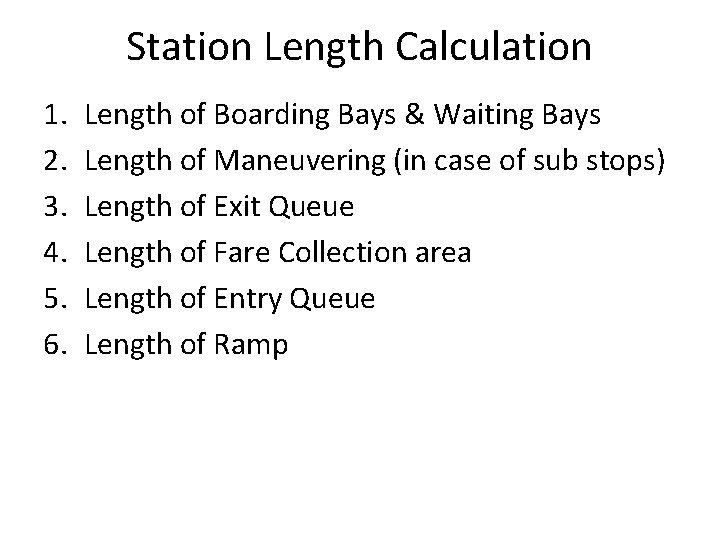
Station Length Calculation 1. 2. 3. 4. 5. 6. Length of Boarding Bays & Waiting Bays Length of Maneuvering (in case of sub stops) Length of Exit Queue Length of Fare Collection area Length of Entry Queue Length of Ramp
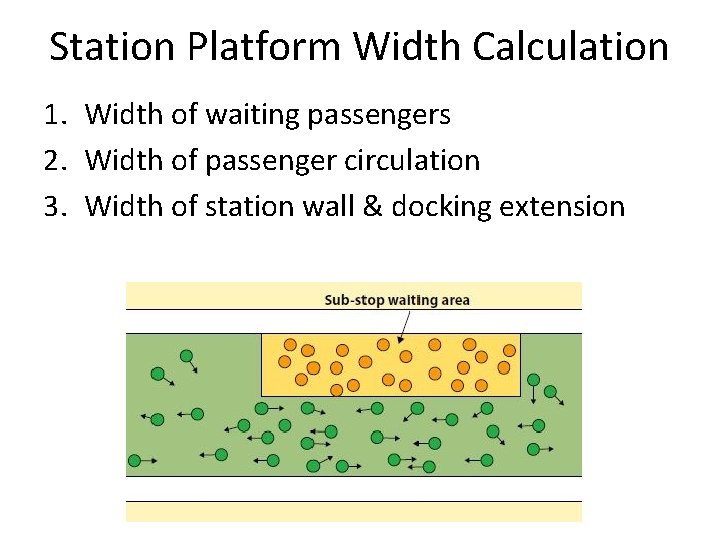
Station Platform Width Calculation 1. Width of waiting passengers 2. Width of passenger circulation 3. Width of station wall & docking extension
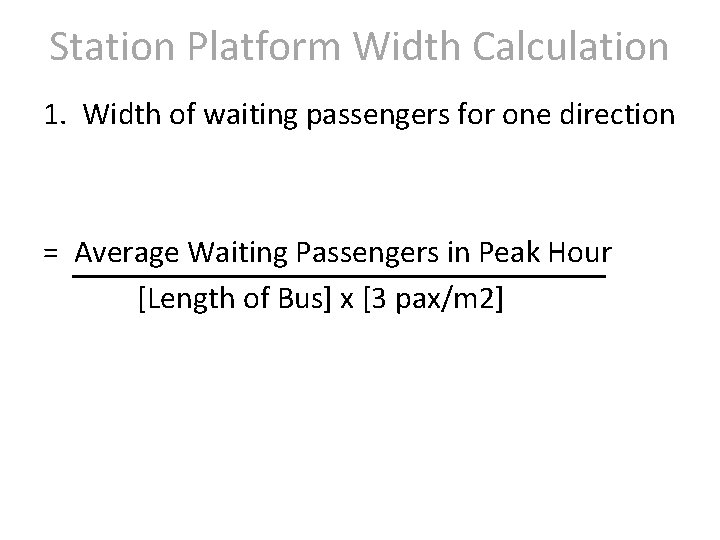
Station Platform Width Calculation 1. Width of waiting passengers for one direction = Average Waiting Passengers in Peak Hour [Length of Bus] x [3 pax/m 2]
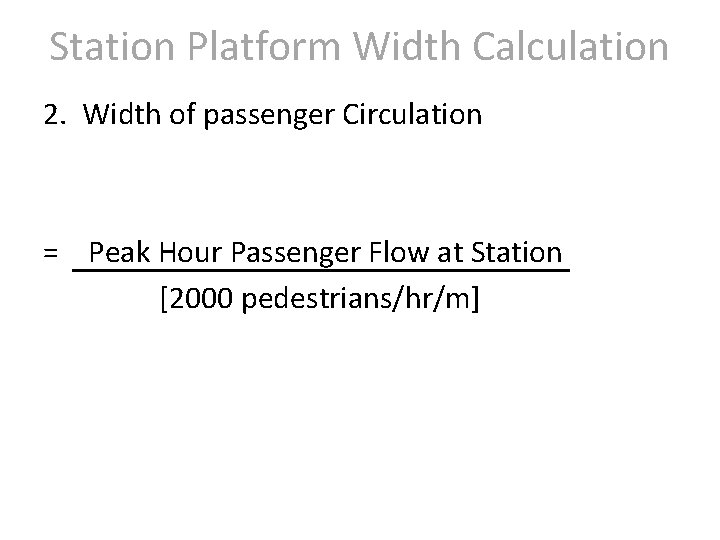
Station Platform Width Calculation 2. Width of passenger Circulation = Peak Hour Passenger Flow at Station [2000 pedestrians/hr/m]
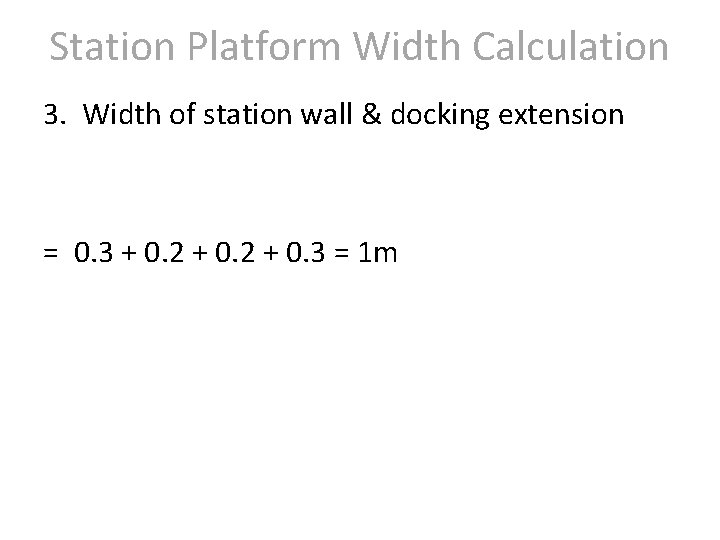
Station Platform Width Calculation 3. Width of station wall & docking extension = 0. 3 + 0. 2 + 0. 3 = 1 m
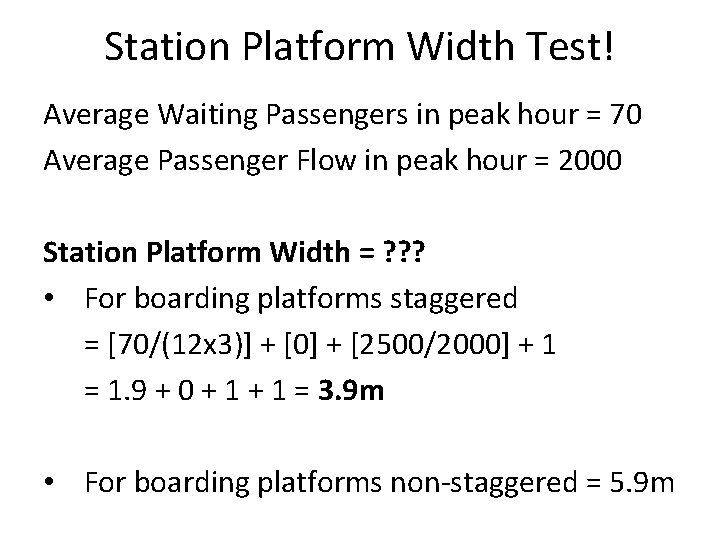
Station Platform Width Test! Average Waiting Passengers in peak hour = 70 Average Passenger Flow in peak hour = 2000 Station Platform Width = ? ? ? • For boarding platforms staggered = [70/(12 x 3)] + [0] + [2500/2000] + 1 = 1. 9 + 0 + 1 = 3. 9 m • For boarding platforms non-staggered = 5. 9 m
- Slides: 22