
Physical Chemical Changes Physical Properties Remember the difference
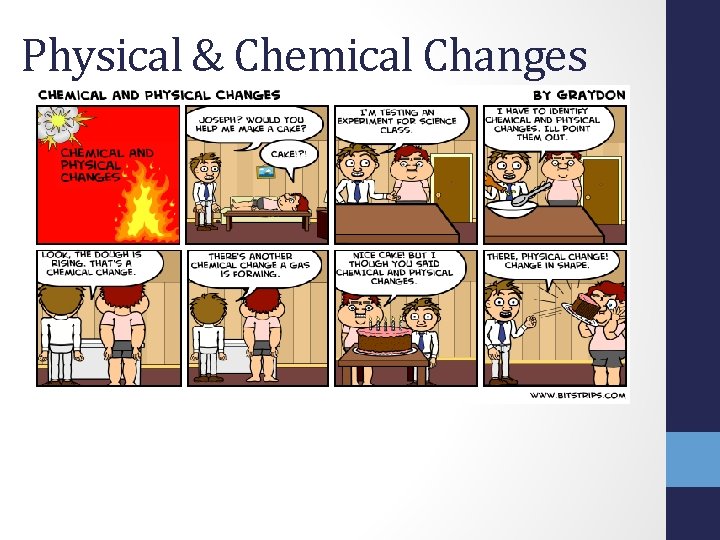
Physical & Chemical Changes
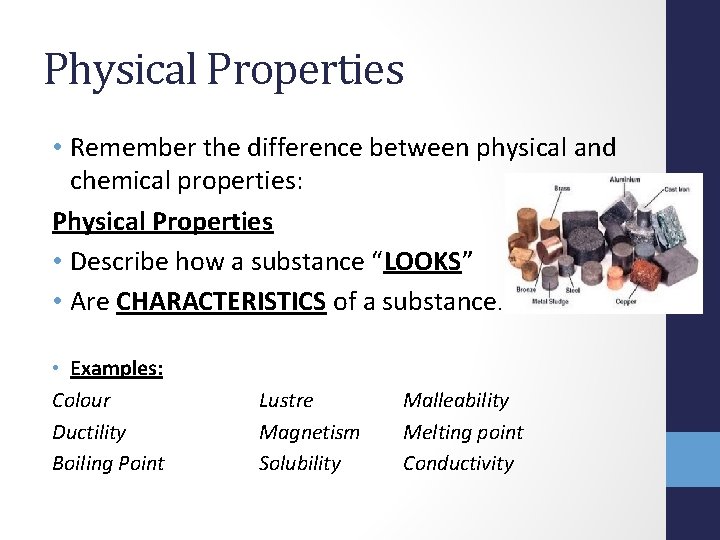
Physical Properties • Remember the difference between physical and chemical properties: Physical Properties • Describe how a substance “LOOKS” • Are CHARACTERISTICS of a substance. • Examples: Colour Ductility Boiling Point Lustre Magnetism Solubility Malleability Melting point Conductivity
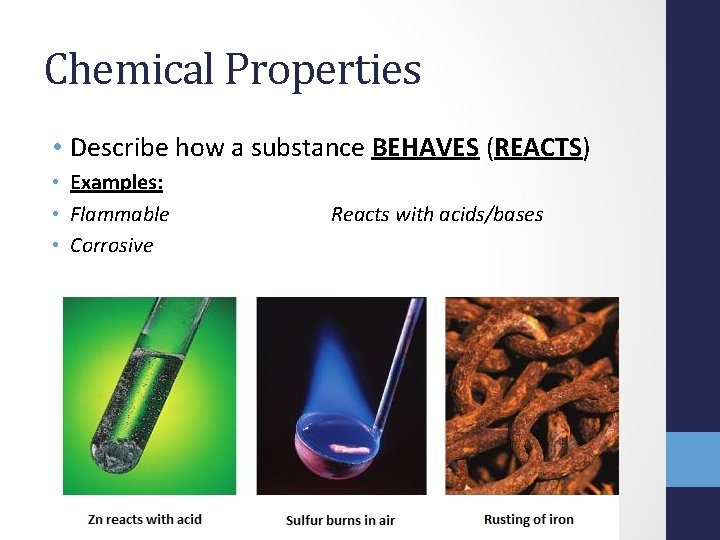
Chemical Properties • Describe how a substance BEHAVES (REACTS) • Examples: • Flammable • Corrosive Reacts with acids/bases
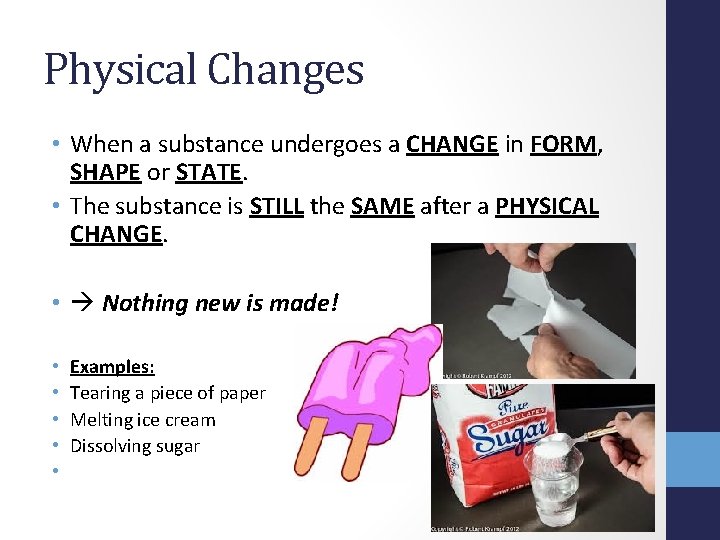
Physical Changes • When a substance undergoes a CHANGE in FORM, SHAPE or STATE. • The substance is STILL the SAME after a PHYSICAL CHANGE. • Nothing new is made! • • • Examples: Tearing a piece of paper Melting ice cream Dissolving sugar
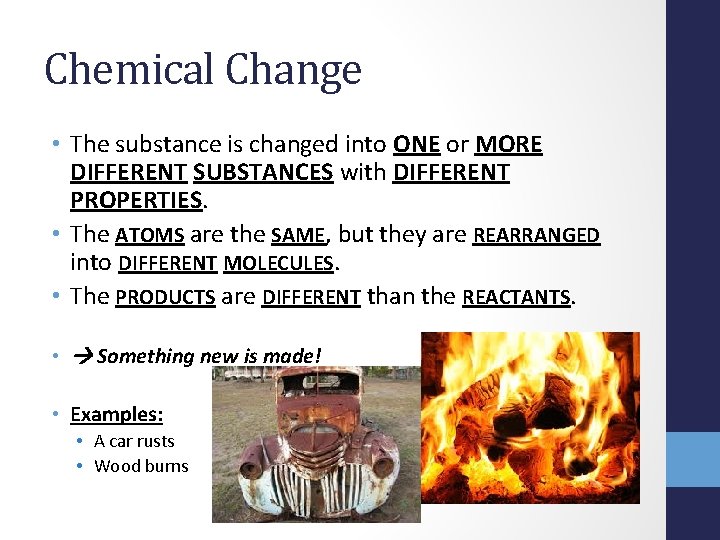
Chemical Change • The substance is changed into ONE or MORE DIFFERENT SUBSTANCES with DIFFERENT PROPERTIES. • The ATOMS are the SAME, but they are REARRANGED into DIFFERENT MOLECULES. • The PRODUCTS are DIFFERENT than the REACTANTS. • Something new is made! • Examples: • A car rusts • Wood burns
Identify the following… Margarine spoils in the fridge Chocolate goes soft in the hot sun Clear liquid is mixed with a base and turns purple Metal on a bike frame rusts Water disappears from a glass over time Sawdust is formed when wood is being sawed Brown liquid is being formed when coffee grinds are put in hot water • Ice breaks into smaller pieces • CO 2 is dissolved in carbonated drinks. • •
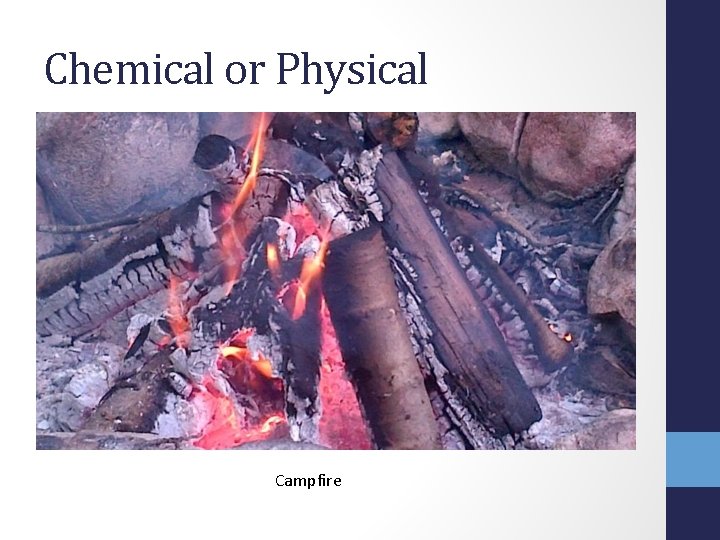
Chemical or Physical Campfire
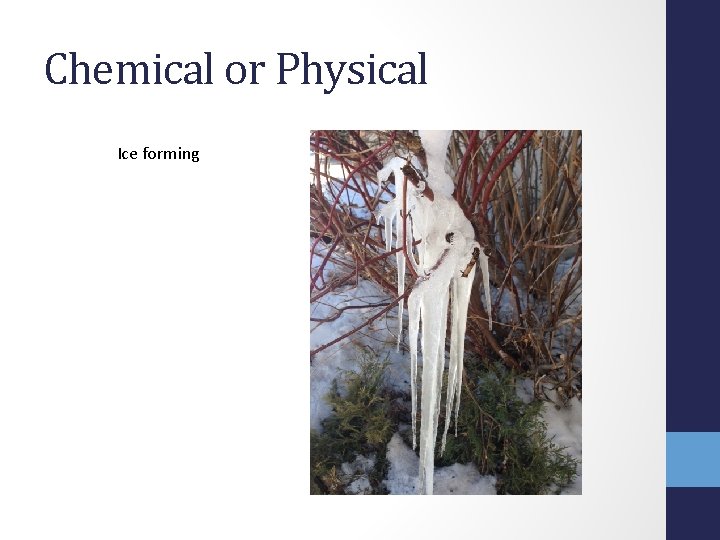
Chemical or Physical Ice forming
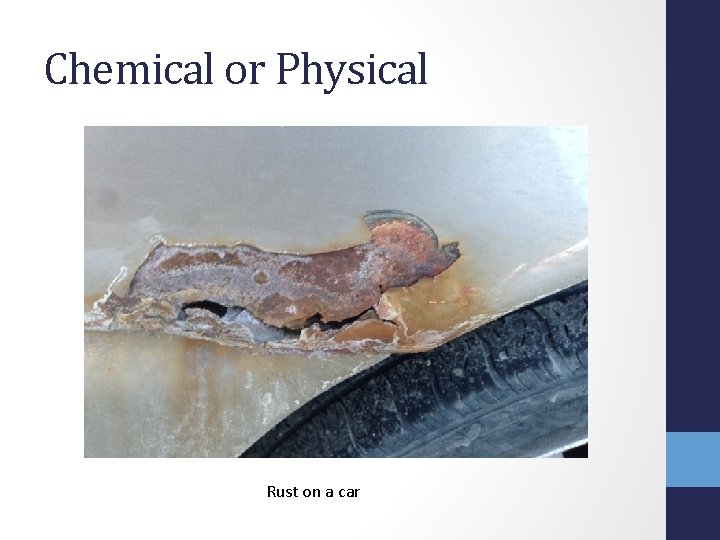
Chemical or Physical Rust on a car
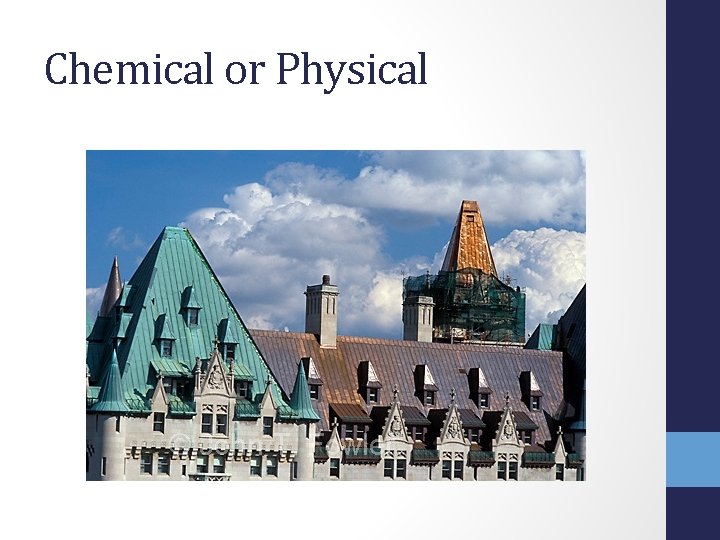
Chemical or Physical
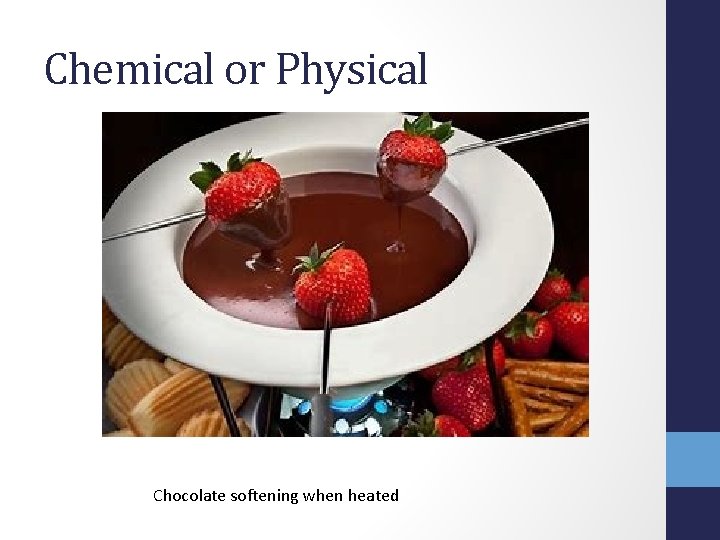
Chemical or Physical Chocolate softening when heated
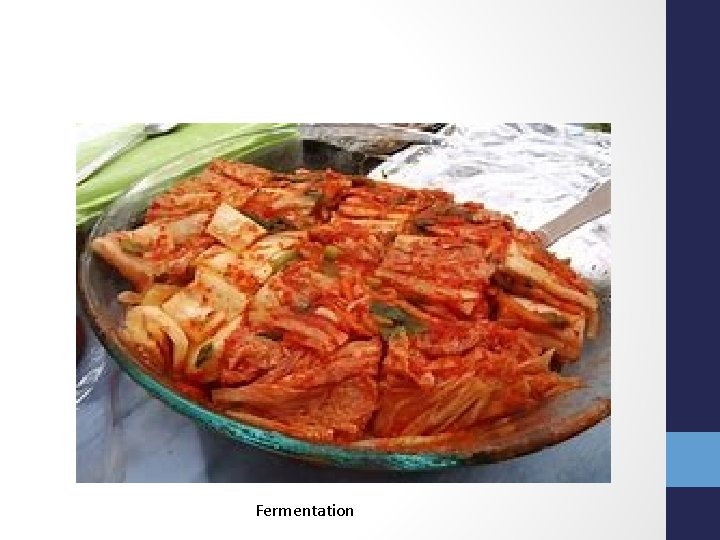
Fermentation
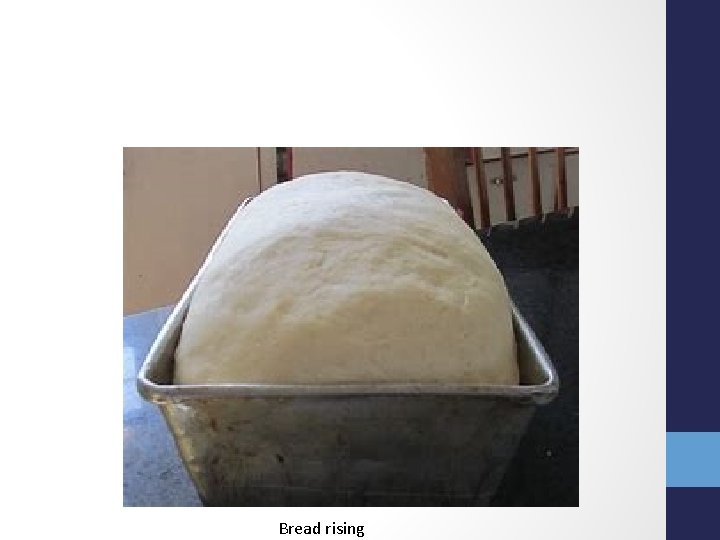
Bread rising
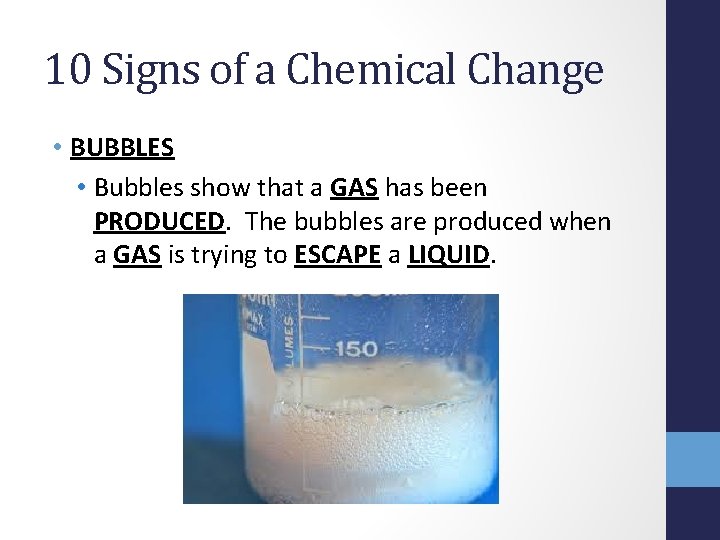
10 Signs of a Chemical Change • BUBBLES • Bubbles show that a GAS has been PRODUCED. The bubbles are produced when a GAS is trying to ESCAPE a LIQUID.
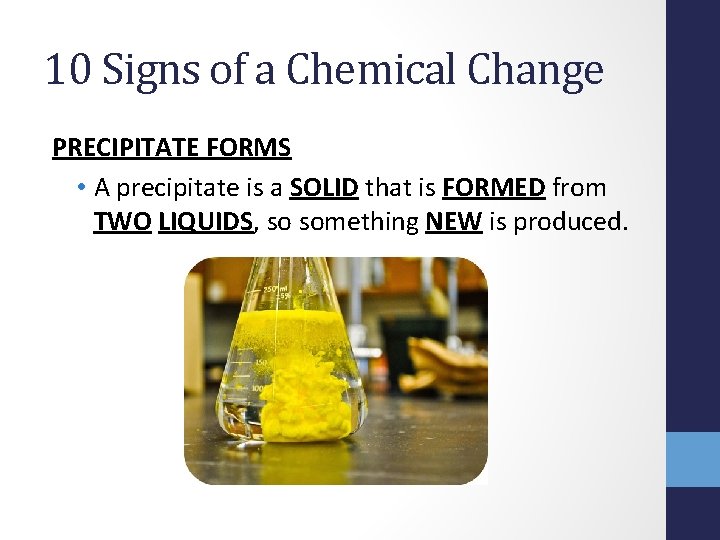
10 Signs of a Chemical Change PRECIPITATE FORMS • A precipitate is a SOLID that is FORMED from TWO LIQUIDS, so something NEW is produced.
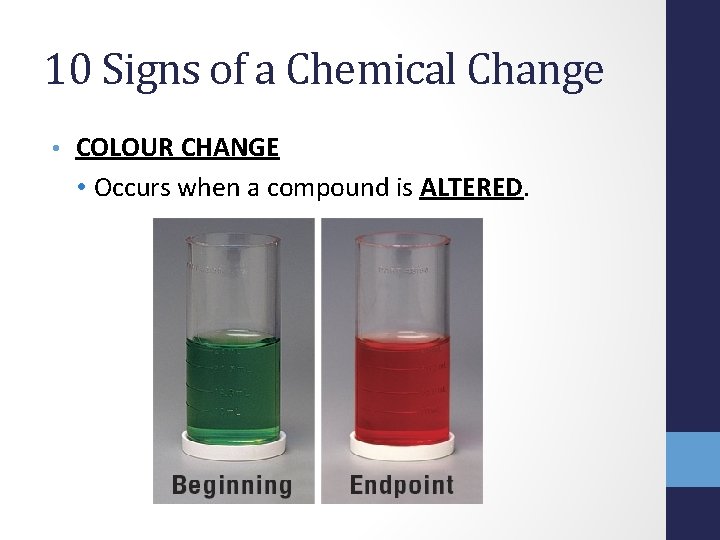
10 Signs of a Chemical Change • COLOUR CHANGE • Occurs when a compound is ALTERED.
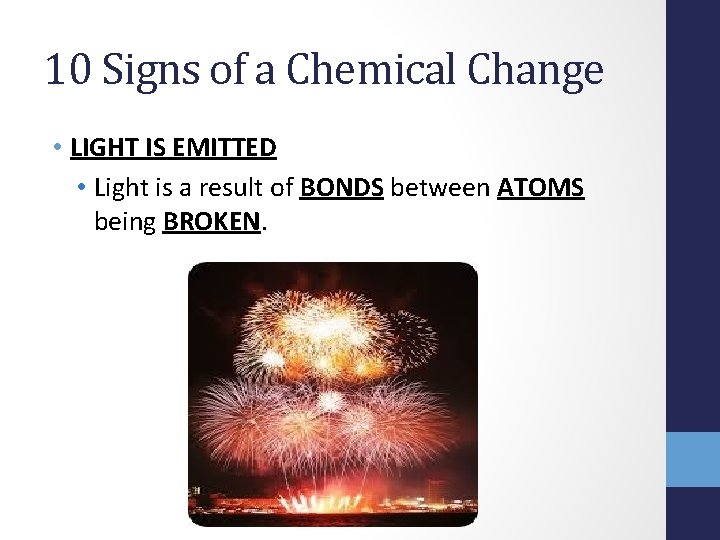
10 Signs of a Chemical Change • LIGHT IS EMITTED • Light is a result of BONDS between ATOMS being BROKEN.
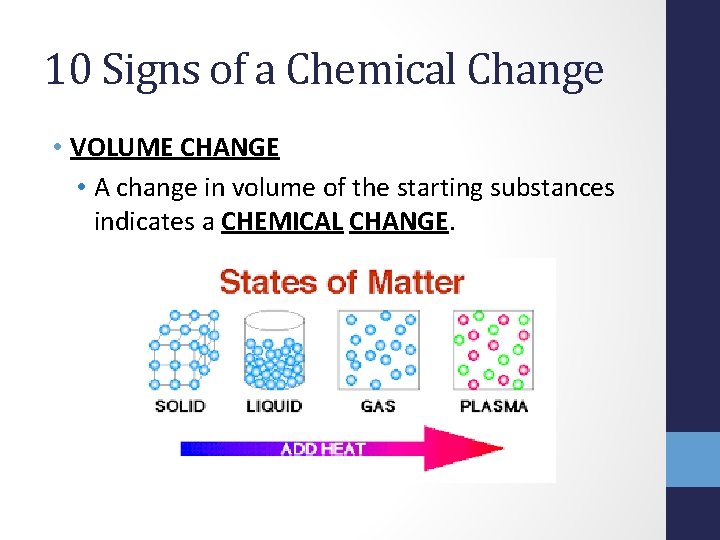
10 Signs of a Chemical Change • VOLUME CHANGE • A change in volume of the starting substances indicates a CHEMICAL CHANGE.
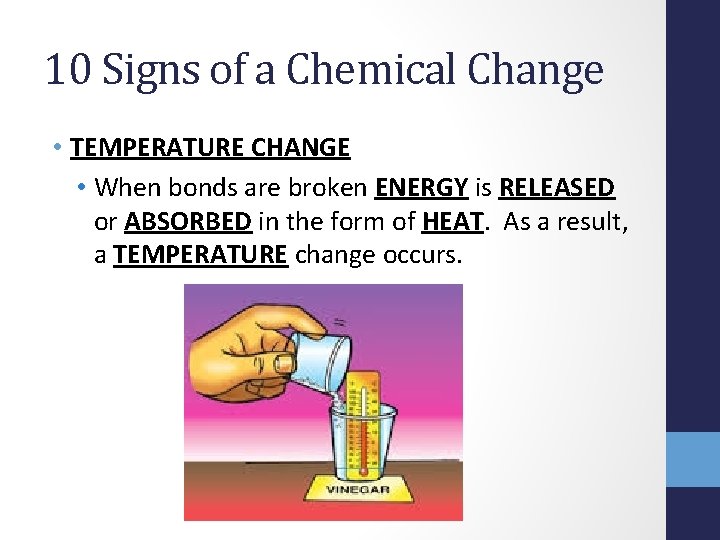
10 Signs of a Chemical Change • TEMPERATURE CHANGE • When bonds are broken ENERGY is RELEASED or ABSORBED in the form of HEAT. As a result, a TEMPERATURE change occurs.
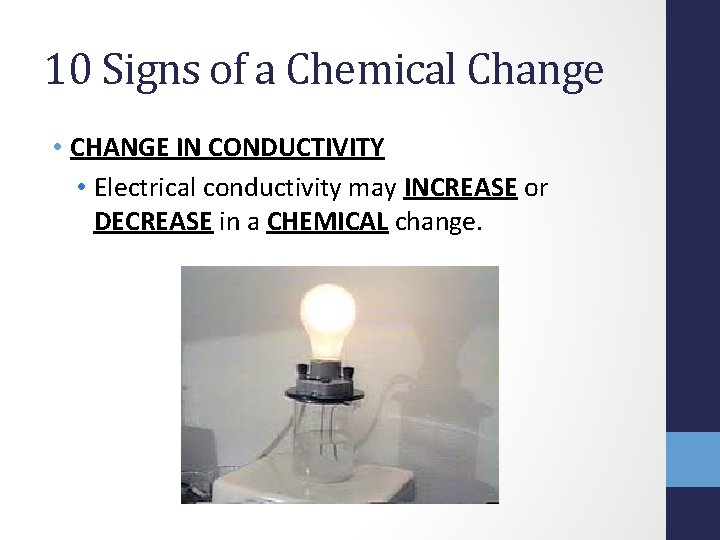
10 Signs of a Chemical Change • CHANGE IN CONDUCTIVITY • Electrical conductivity may INCREASE or DECREASE in a CHEMICAL change.
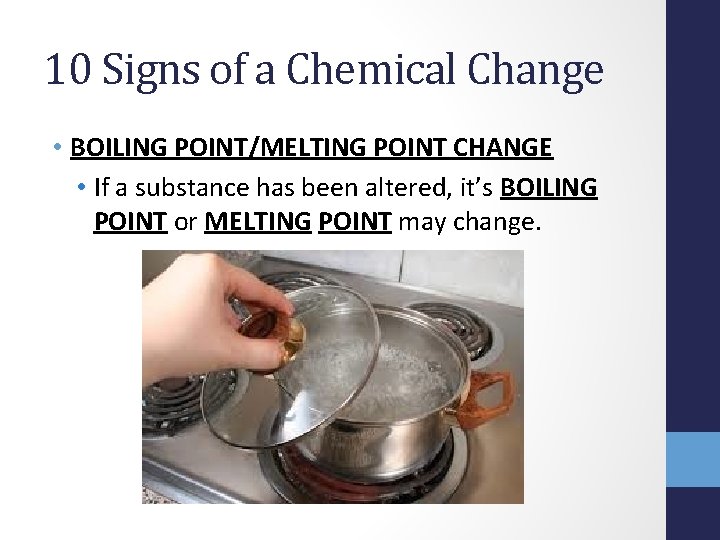
10 Signs of a Chemical Change • BOILING POINT/MELTING POINT CHANGE • If a substance has been altered, it’s BOILING POINT or MELTING POINT may change.
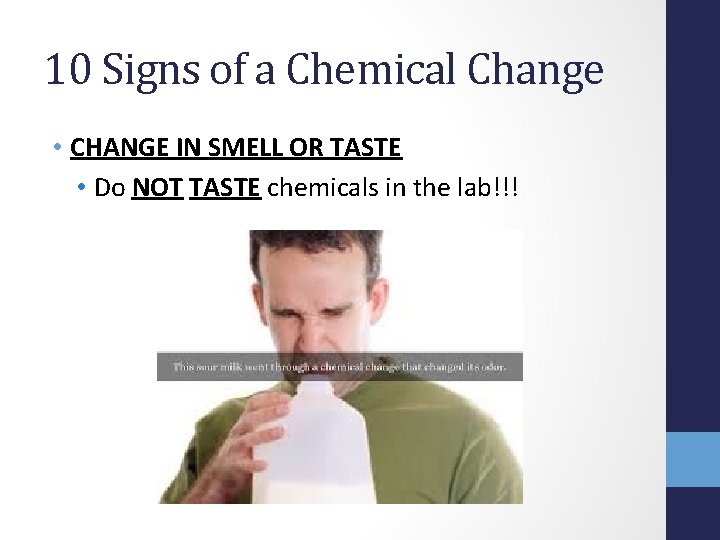
10 Signs of a Chemical Change • CHANGE IN SMELL OR TASTE • Do NOT TASTE chemicals in the lab!!!

10 Signs of a Chemical Change • CHANGE IN DISTINCT CHEMICAL PROPERTIES • A change in PROPERTIES means something NEW is produced.
Video • Chemical Reactions that changed history
- Slides: 24