
PHYSICAL CAPITAL DEFINITION stock variable a collection of
PHYSICAL CAPITAL DEFINITION: - stock variable - a collection of resources (machines, tools, infrastructures) - gives production services which increase future income
• TYPES of CAPITAL: 1. Fixed capital (in firms) 2. Infrastructure 3. Public equipment 4. Residential buildings • TEMPORAL CONCEPT of CAPITAL • DEPRECIATION and INVESTMENT - Physical - Replacement - Technological - Extension
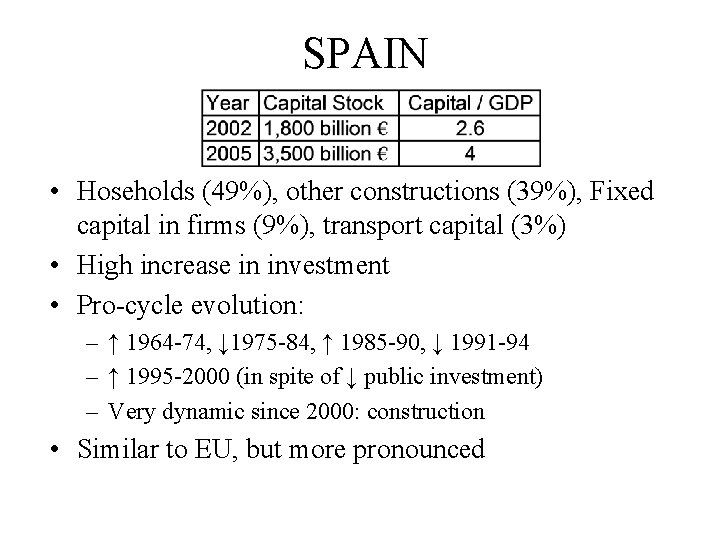
SPAIN • Hoseholds (49%), other constructions (39%), Fixed capital in firms (9%), transport capital (3%) • High increase in investment • Pro-cycle evolution: – ↑ 1964 -74, ↓ 1975 -84, ↑ 1985 -90, ↓ 1991 -94 – ↑ 1995 -2000 (in spite of ↓ public investment) – Very dynamic since 2000: construction • Similar to EU, but more pronounced
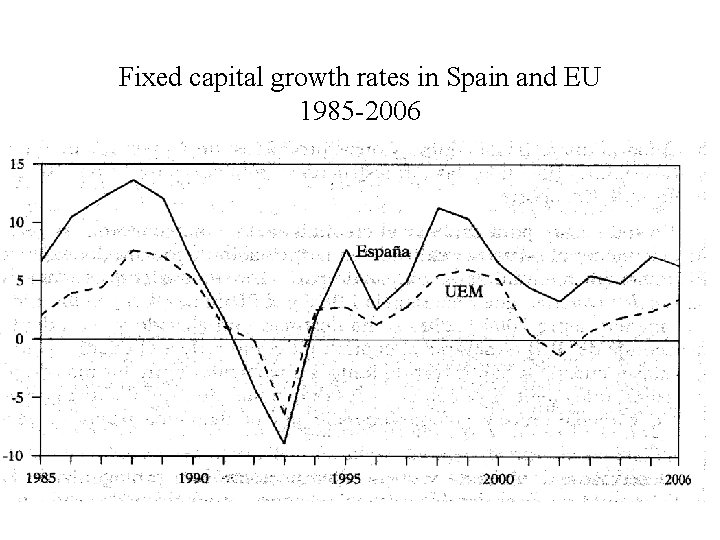
Fixed capital growth rates in Spain and EU 1985 -2006
Types of capital: • Fixed capital (firms investment): stable (55 %) • Infrastructure: stable (10 %), but used to balance public deficit • Public equipment: less stable (from 5% in 1960 to 10% nowadays) • Residential buildings: reduced until 1995 (from 25 to 20%) and recovered in last years (25%)
FIRM INVESTMENT is key (15 % of GDP). Depends on: A. Expected production: expectation B. Cost of use of capital, that depends on: – Labor relative cost (> labor cost = < capital cost) (except technological progress) – Price of capital – fiscal benefits (less important) – Financial cost: Interest rate (i) = market i + firm i [low i in 1970´s and high i afterwards (until 1996)] C. Adjustment speed to desired capital D. Uncertainty and institutional framework: EU
INFRASTRUCTURE • • • Capital goods Public nature but directed to firms External effects with high spatial influence Very difficult to substitute Direct and indirect influence in production
• Evolution of public investment (%) in relation to GDP in Spain – – – 1970 -77: high (3%) 1978 -1986: reduction to increase social expenditures 1988 -91: high (3%) 1992 -2000: reduction to meet Maastricht conditions 2000 -nowadays: new increase, with structural funds • Sectors – – 1960´s: hydraulic works 1970´s: roads and railroads 1988 -96: railcars (“autovías”) and AVE to Sevilla Nowadays: high-speed trains in all Spain, and airports
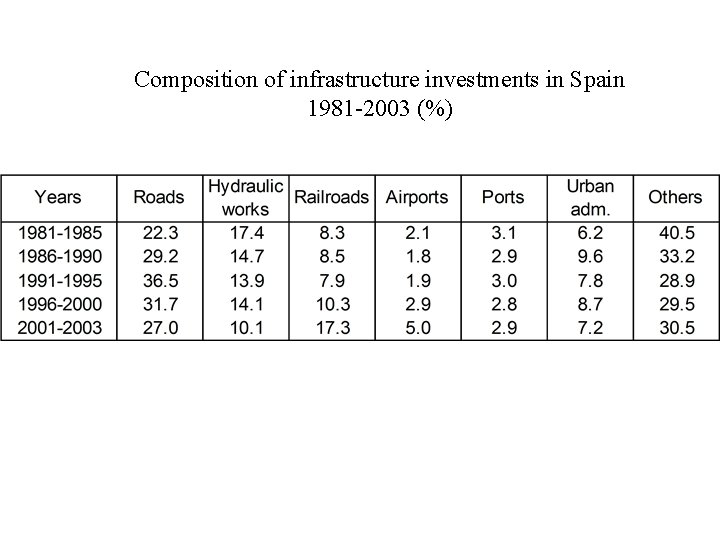
Composition of infrastructure investments in Spain 1981 -2003 (%)
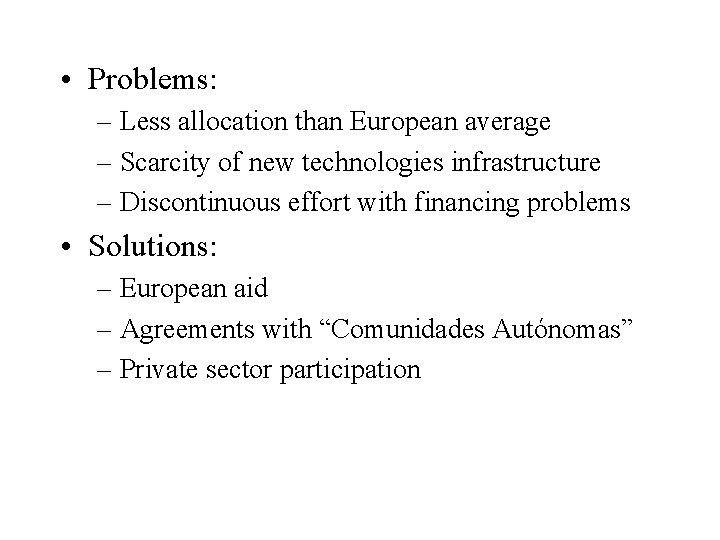
• Problems: – Less allocation than European average – Scarcity of new technologies infrastructure – Discontinuous effort with financing problems • Solutions: – European aid – Agreements with “Comunidades Autónomas” – Private sector participation
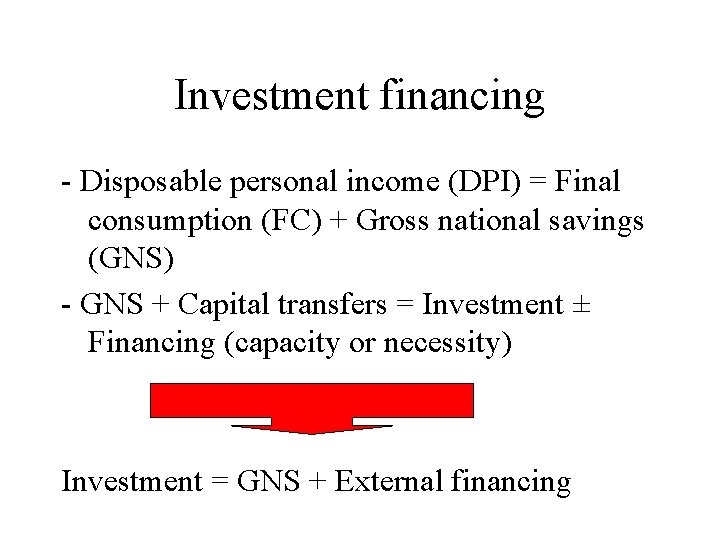
Investment financing - Disposable personal income (DPI) = Final consumption (FC) + Gross national savings (GNS) - GNS + Capital transfers = Investment ± Financing (capacity or necessity) Investment = GNS + External financing
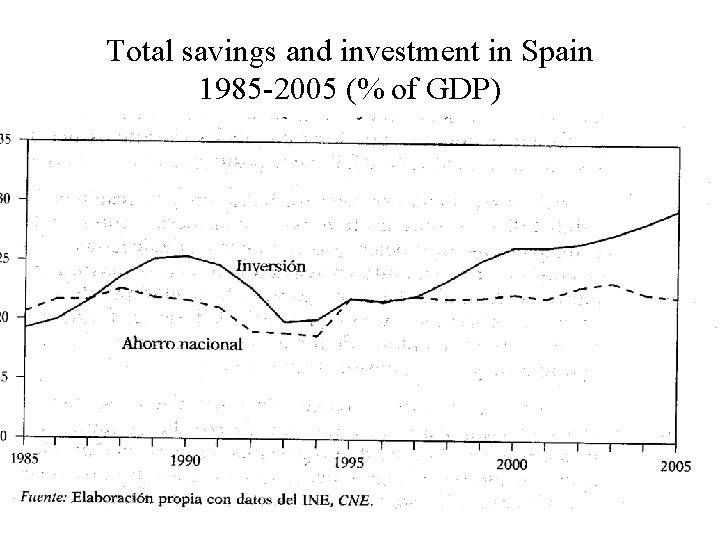
Total savings and investment in Spain 1985 -2005 (% of GDP)
• Necessity of external financing: problems of distrust, credit rise, deficit of current balance (example: devaluation of peseta in 1992 -93) • Fall of savings in last decades
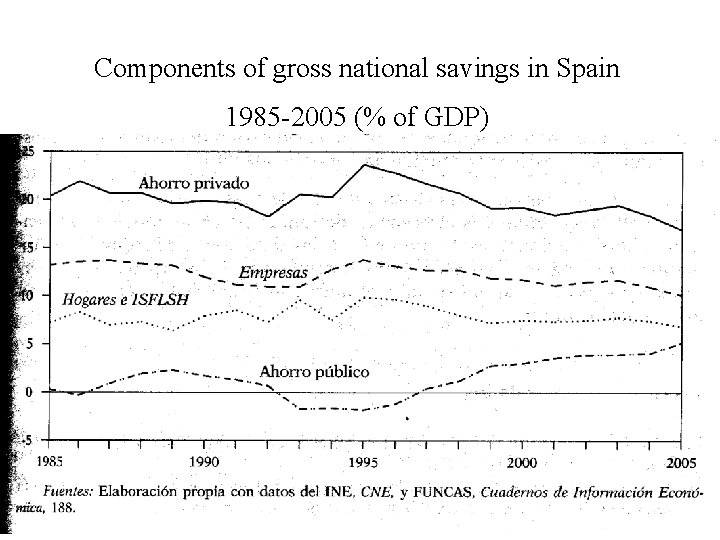
Components of gross national savings in Spain 1985 -2005 (% of GDP)
• Public savings: fall until 1997 • Private savings: constant (20%) – Household savings: fall – Firm savings: increase • Causes of decline in household savings: – Increase in household income until 1985 – High interest rates that reduce savings – Progressive taxes and little fiscal incentives to save – Unemployment, social benefits and quotations – Increase of riches with real-state – Relationship between the 3 agents
- Slides: 15