
Physical Aspects of Climate Change Philipp Mager 1430434
- Slides: 8
Physical Aspects of Climate Change Philipp Mager 1430434 Institute of Physics Wissenschaftliches Arbeiten und Präsentationstechnik Prof. Dr. Ulrich Hohenester
Observations and Measurements in the Climate System Global-scale observations since ~1950 Paleoclimatic Reconstructions extend Records back to millions of years Together they provide a full view of change in our climate system Atmosphere Oceans Cryosphere Land surface 2/8
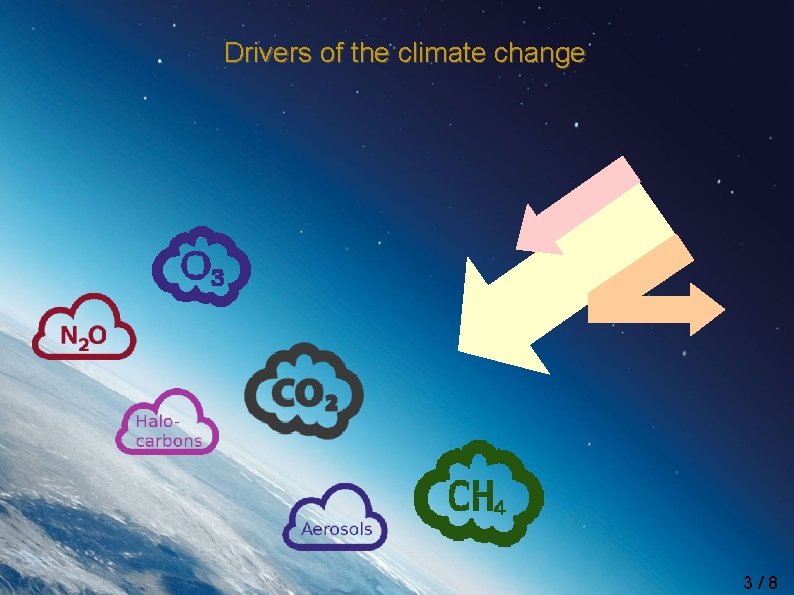
Drivers of the climate change 3/8
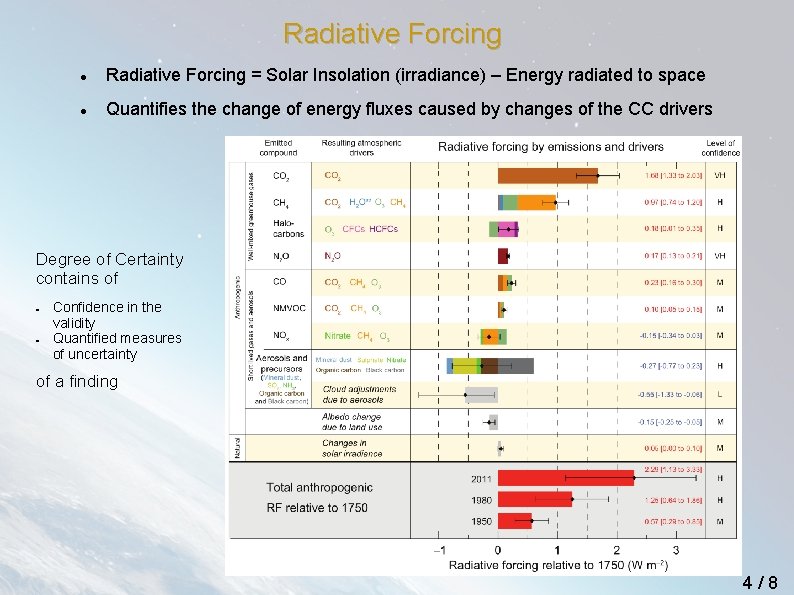
Radiative Forcing = Solar Insolation (irradiance) – Energy radiated to space Quantifies the change of energy fluxes caused by changes of the CC drivers Degree of Certainty contains of Confidence in the validity Quantified measures of uncertainty of a finding 4/8
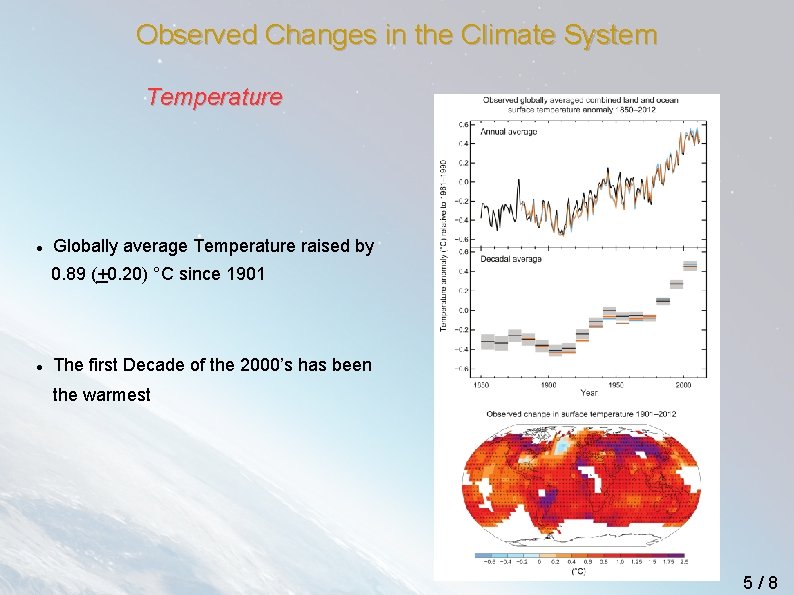
Observed Changes in the Climate System Temperature Globally average Temperature raised by 0. 89 (+0. 20) °C since 1901 The first Decade of the 2000’s has been the warmest 5/8
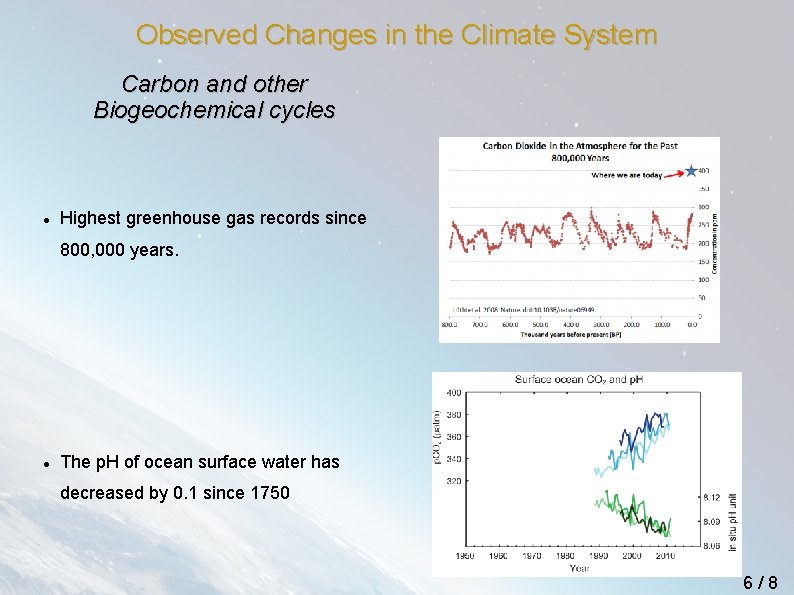
Observed Changes in the Climate System Carbon and other Biogeochemical cycles Highest greenhouse gas records since 800, 000 years. The p. H of ocean surface water has decreased by 0. 1 since 1750 6/8
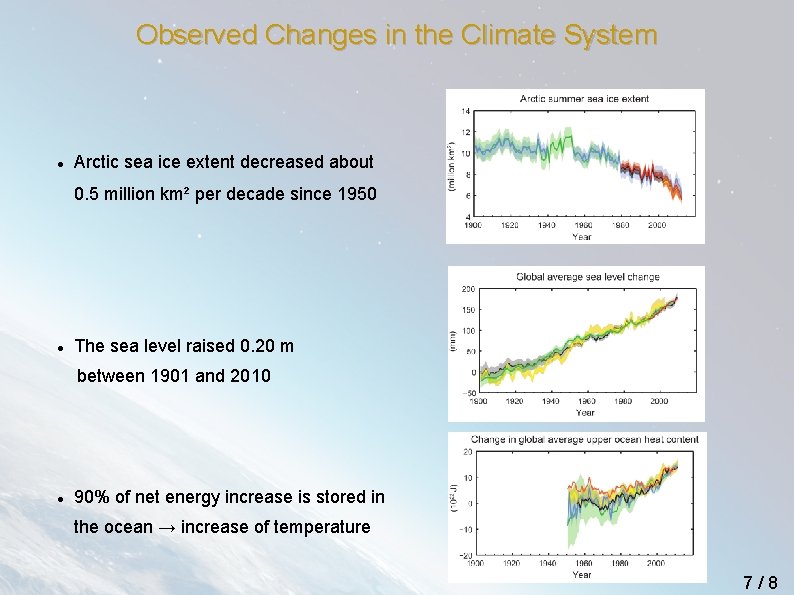
Observed Changes in the Climate System Arctic sea ice extent decreased about 0. 5 million km² per decade since 1950 The sea level raised 0. 20 m between 1901 and 2010 90% of net energy increase is stored in the ocean → increase of temperature 7/8
References / Sources “Climate Change 2013: The Physical Science Basis” (IPCC 2013 Report) "Introduction to Atmospheric Chemistry", Daniel J. Jacob, Princeton University Press, 1999 https: //en. wikipedia. org/wiki/Radiative_forcing 8/8