
Physical Appearance Dress Chapter 5 The Visible Self
Physical Appearance & Dress Chapter 5, The Visible Self
Main Points Genetic adaptation and cultural adaptation Reasons for human physical diversity Sheldon’s somatotypes How sex differentiation influences choices about dress • How nutrition, growth, age influence choices about dress • •
• Our perception of body’s physical form is obscured by modifications and supplements that change it, cover it, or create illusions of its real form

Human body and physical characteristics • Body build or body conformation (human form) • Facial features • Amount of hair • Hair texture/color • Skin texture/color – Individuals modify or supplement physical characteristics • Body=framework for dress
• Genes regulate growth and development of individuals – in correlation with environment and diet • Gene pool=total complement of genes shared by potential reproductive members of a population
• Speciation=when populations are totally separated by geographical or behavioral barriers and the separated populates adapt to different environments through process of natural selection – Human population has never been separated long enough from others to evolve into different species
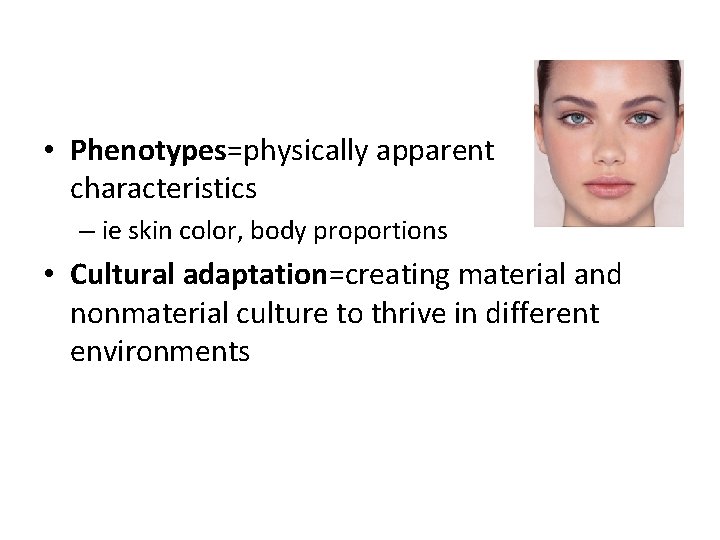
• Phenotypes=physically apparent characteristics – ie skin color, body proportions • Cultural adaptation=creating material and nonmaterial culture to thrive in different environments
Cultural adaptation advantage • Speed • humans can invent new solutions to problems of different environments using dress – adapt to cold by wearing heavy coats
• Culture is possible because humans have evolved with a complex brain and nervous system coupled with a capacity for speech – enables us to develop and manipulate visual and verbal symbols—the heart of culture
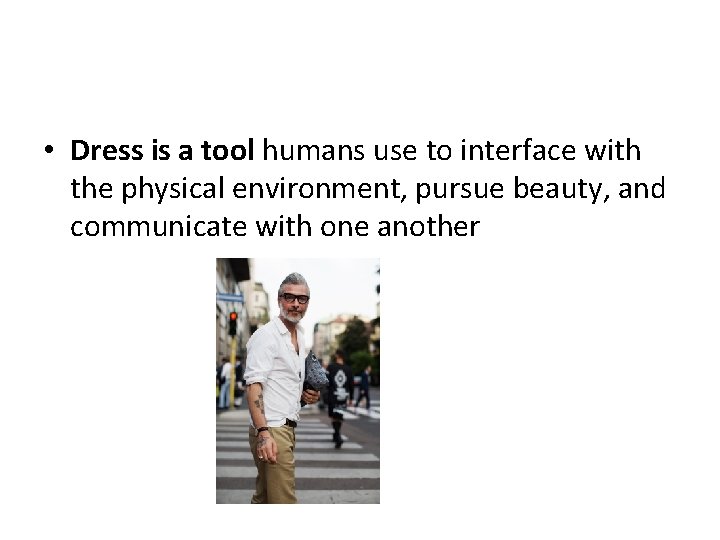
• Dress is a tool humans use to interface with the physical environment, pursue beauty, and communicate with one another
Physical Diversity • Variations in physical characteristics have to do with: – Heredity – Environmental influences – Age – Individual development
Where does physical diversity come from? • May be adaptations to environmental conditions – Skin color; body proportions • Skin color varies by latitude – populations closer to the equator have darker skin, while those farther away have lighter skin
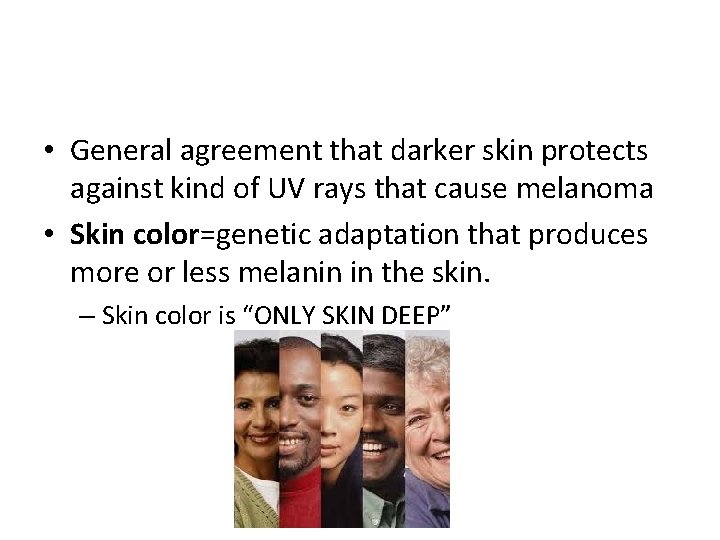
• General agreement that darker skin protects against kind of UV rays that cause melanoma • Skin color=genetic adaptation that produces more or less melanin in the skin. – Skin color is “ONLY SKIN DEEP”
Environments & Body Proportions • Cold climate populations=shorter and stockier • Hot climates=linear bodies • Stockier person has less surface area per unit of mass and maintains heat better – keeps them warmer • Liner person has more surface area and loses heat more rapidly – keeps them cooler
EYES • Epicanthic fold=fold of skin that covers part or all of the edge of the upper eyelid – Common in Asian populations, Central American, and !Kung of Africa
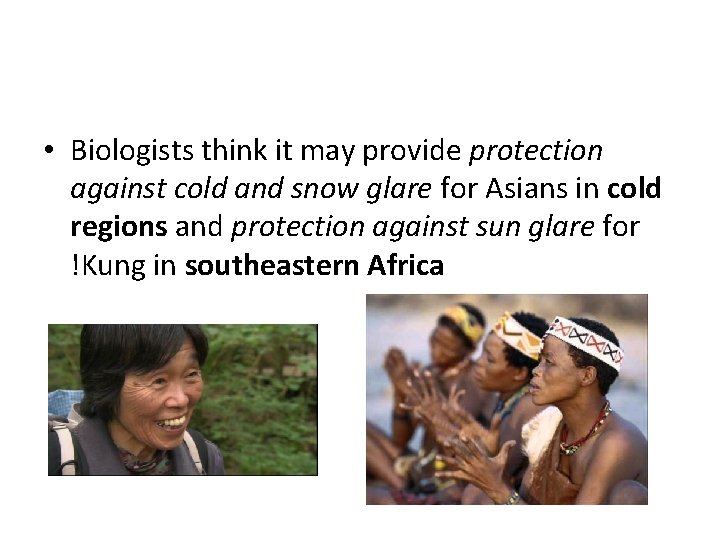
• Biologists think it may provide protection against cold and snow glare for Asians in cold regions and protection against sun glare for !Kung in southeastern Africa
Sociocultural factors: • language, religion, and political differences may also act as barriers and slow mingling of genes between groups • Geography: – greater the geographic/cultural distance=greater the physical differences
Race • Race=social concept that didn’t begin until Age of Exploration and widespread European ship travel (Alain Corcos) – “Europeans were struck by the fact that the people they encountered appeared to be physically different from themselves and they quickly began to devise systems of classification”
• Racial categories=result of human’s attempts to ID biologically distinct groupings based upon physical appearance • Racial categories organized by anthropologists based on supposedly correlated physical traits —skin color in the forefront

• Swedish naturalist: Linnaeus=four races of humans in classification system of all known animals – American/red – European/white – Asiatic/yellow – African/ black
Adam Clayton Powell Jr. • Concluded that it was the way a person thinks that determines the race • No one knew whether he was black, white, or Italian – He was of African American and European ancestry • Example of how dress can play a role in racial confusion: – popular in the 1950 s to transform hair texture in emulation of Euro-Americans • Powell’s family identified as black for their participation in the African American community • “passed as black” for their behavior and self identification
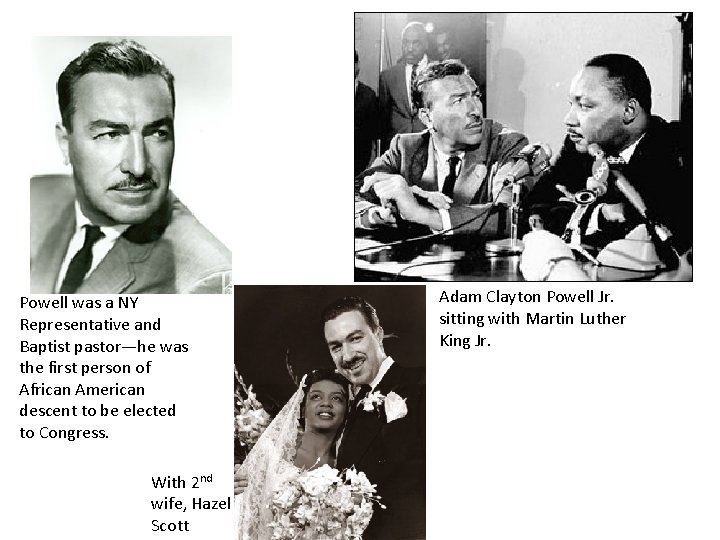
Powell was a NY Representative and Baptist pastor—he was the first person of African American descent to be elected to Congress. With 2 nd wife, Hazel Scott Adam Clayton Powell Jr. sitting with Martin Luther King Jr.
Ethnicity • Ethnic group=change indicating the decreased importance of biological categories and other great importance of culture • If humans must be categorized… – Ethnicity more useful than race because it reflects shared culture and history rather than physical appearance
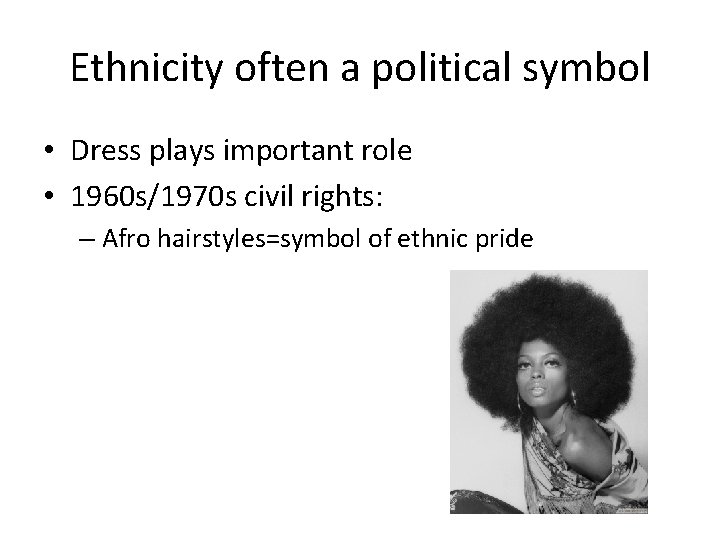
Ethnicity often a political symbol • Dress plays important role • 1960 s/1970 s civil rights: – Afro hairstyles=symbol of ethnic pride
Sex differentiation • Sex differentiation=instead of fitting stereotype for man or woman, each individual falls somewhere on continuum running from almost all male to almost all female in physical characteristics. • Dress becomes more important – for people whose bodies fall in the middle of the graph, who are neither very female nor very male.
• In some populations, differences between male and female body configuration appear to be greater than in others. – Dress usually accentuates sexual differences
• Sometimes society emphasizes or deemphasizes sexual characteristics – EX: 1950 s= tight waist, full bust, broad hips (hourglass) – 1970 s=disco men=shirt open with chest hair apparent – 1990 s=grunge/hip hop layers of loose clothing revealing little of body – 21 st century=women expose midriffs, low rise jeans and crop tops showing belly piercings or tattoos
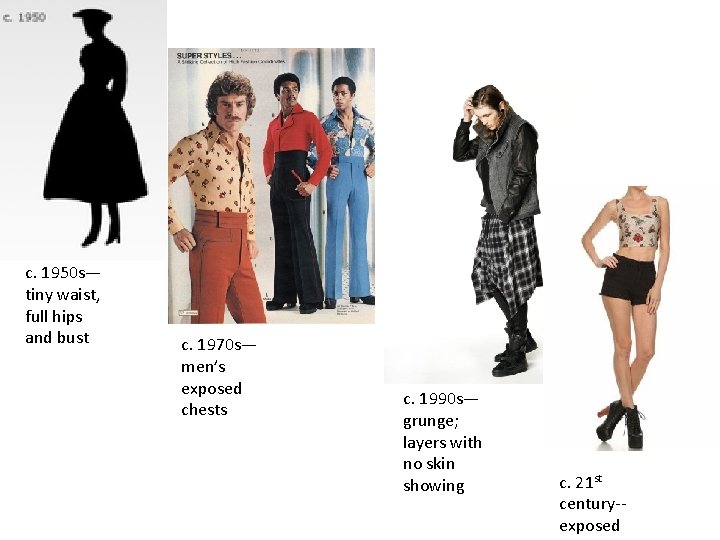
c. 1950 s— tiny waist, full hips and bust c. 1970 s— men’s exposed chests c. 1990 s— grunge; layers with no skin showing c. 21 st century-exposed
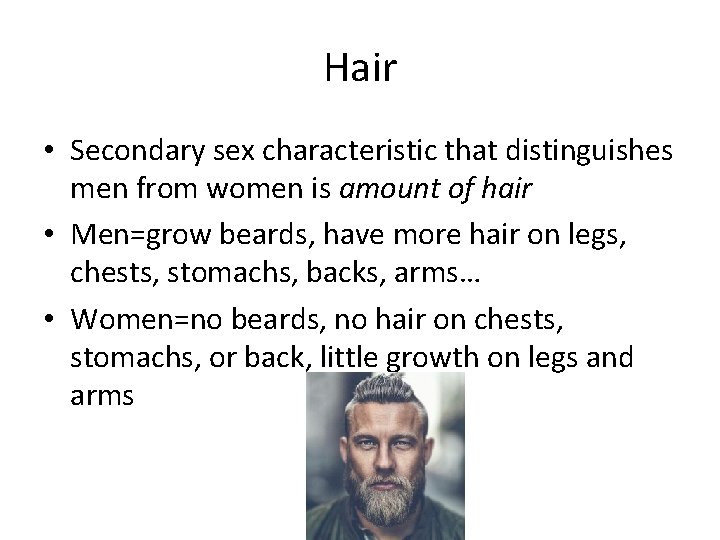
Hair • Secondary sex characteristic that distinguishes men from women is amount of hair • Men=grow beards, have more hair on legs, chests, stomachs, backs, arms… • Women=no beards, no hair on chests, stomachs, or back, little growth on legs and arms
Body conformation: • Sheldon: classified women and men of different ethnic backgrounds according to degree to which they exhibited characteristics of three major body types: somatypes: – endomorphic=round, prominent abs – mesomorphic=large boned, muscular – ectomorphic=linear, slender
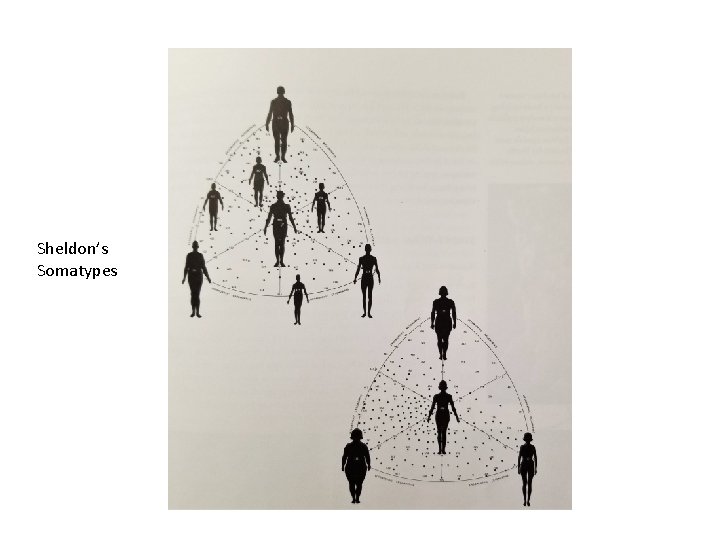
Sheldon’s Somatypes
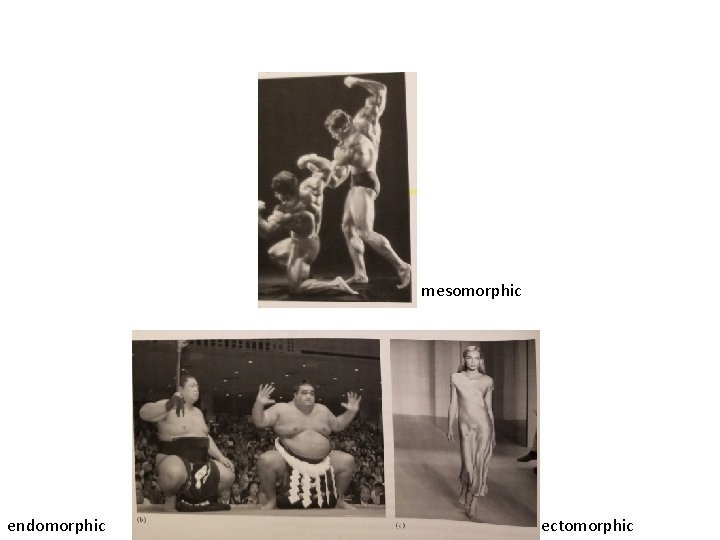
mesomorphic endomorphic ectomorphic
• Model can be useful for looking at people in context • Body is armature – 3 D form that bends/moves which must be fitted by flat materials like fabrics and skins

Nutrition/Disease • Amount and type of food can account for differences in body development • Climate can limit what food can be grown – Arctic region=severe cold and seal was major source of food for Inuit (needed high calorie diet to make up for heat loss) – SE Asia=rice flourishes in water soaked ground
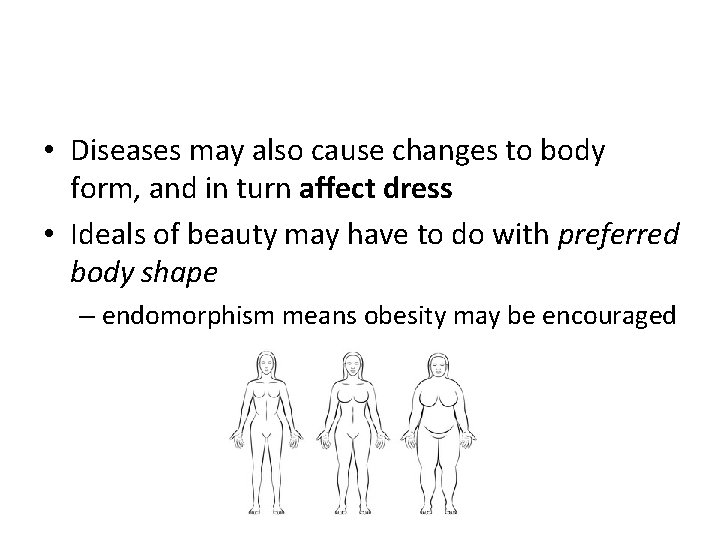
• Diseases may also cause changes to body form, and in turn affect dress • Ideals of beauty may have to do with preferred body shape – endomorphism means obesity may be encouraged
• Negative changes in body type (according to societal acceptance) may cause individuals to alter their dress to cause illusion of preferred body shape
• Improper nutrition=physical appearance may be affected – height weight, stomachs distend, muscles atrophy; skin and hair can change color or texture; bones deform; teeth decay; skin sensitive
• Improved nutrition changes body shape of next generations—taller, live longer, etc. • Has implications for apparel manufacturers to develop garments to fit body • EX: vintage clothing—smaller at turn of century compared to now
Growth/Age • Body changes with maturation/age • Young bodies change rapidly and constantly need different clothes to suit their evolving bodies • maternity wear; post partum body – rounder/curvier making her change choice of dress • body fat % change through life for both men and women
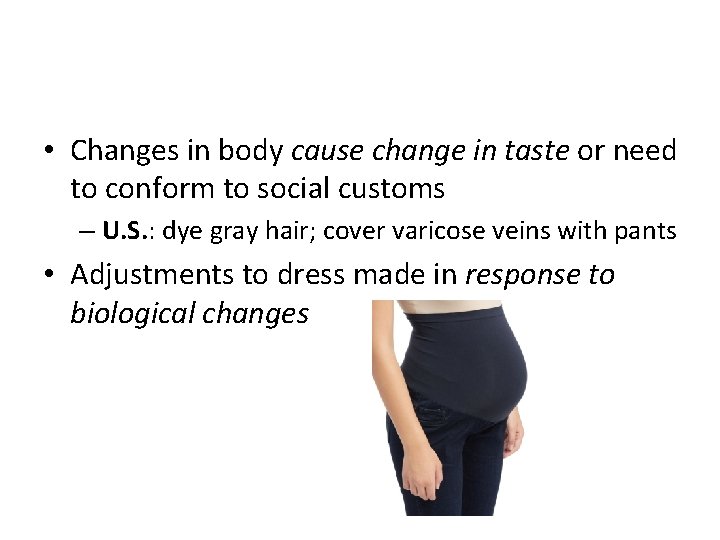
• Changes in body cause change in taste or need to conform to social customs – U. S. : dye gray hair; cover varicose veins with pants • Adjustments to dress made in response to biological changes
Technology • Level of Technology affects food supply • Inedible can sometimes be made edible with suitable technology • Long time habits and religious beliefs may prohibit use of nutritious foods which may influence shape of body
- Slides: 41