
PHYSICAL AND EMOTIONAL NEEDS OF CHILDREN Page 7
- Slides: 14
PHYSICAL AND EMOTIONAL NEEDS OF CHILDREN Page 7 &8 Care Giving
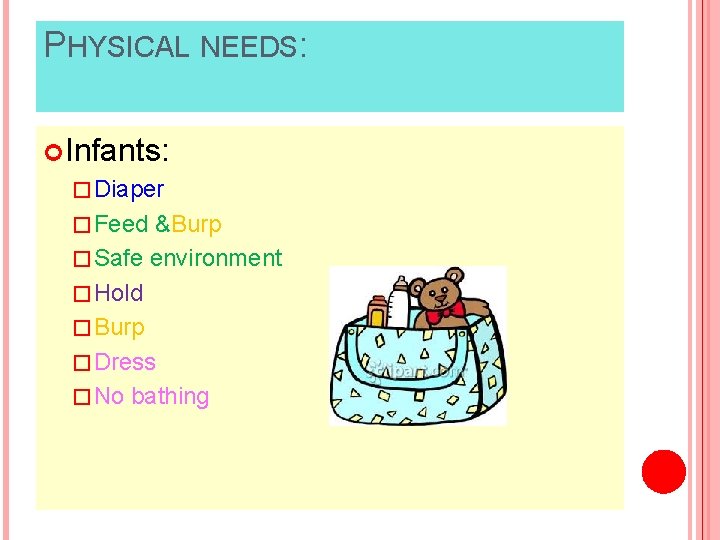
PHYSICAL NEEDS: Infants: � Diaper � Feed &Burp � Safe environment � Hold � Burp � Dress � No bathing
TODDLERS (1&2 YEAR OLDS) Safe environment toilet paper tube test Bathing-difficult Dress-difficult Feed-cut in tiny pieces, not: hot dogs, grapes, skins, chips. carrots, hard candy Etc. Toilet training
PRESCHOOL AGE (3&4 YEAR OLDS) Cut up meat-small bites Dress (zippers, buttons, etc. ) Bathe - imagination Toilet training (remind) Non-toxic, safe toys
SCHOOL AGE (5 -10) Cut up meat Details of dress Bath- modest Toilet- complete Homework help
EMOTIONAL NEEDS INFANTS � Hold a lot � Talking to them helps to learn the language � Gentle, tender movements
TODDLERS Laptime- hold Key words- listen, (ask YES/NO questions) Sense of humor Positive attitude- tone of voice
PRESCHOOLERS Listen-understanding-repeat sentences back Preschool games-#’s, ABC’s, shapes, colors “WHY? ”-answer it patiently Pretend with them
SCHOOL AGE Independence-give space Games-competition Listen to relate- “I understand how you “feel””
NOBODY DESERVES ABUSE!!! Physical- hitting, slapping (spanking) Emotional- yelling, name calling, tearing them down Sexual- inappropriately touching private areas Neglect- basic need not being met Illegal substance- parents under influence/ alcohol, drugs or giving to a child If you suspect a child is being abused tell your parents/the authorities.
TIME OUTS If a child you are babysitting misbehaves, TIME OUT, is a good way to discipline them. What is the rule for how long a child should have time out? Answer: ONE MINUTE for each year of age. 2 years = 2 minutes for example. 10 years= 10 minutes
DISCIPLINING A CHILD STEPS 1. 2. 3. Ask “What did you do wrong? ” “What can you do to make it right? ” “What will you do differently next time? ”
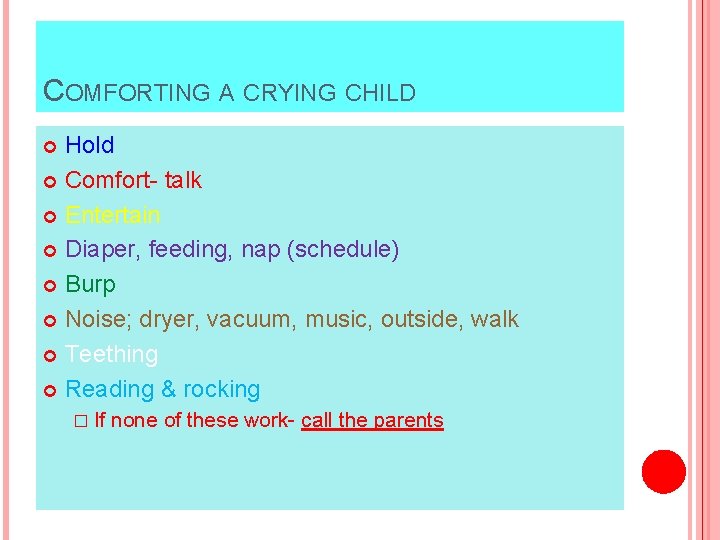
COMFORTING A CRYING CHILD Hold Comfort- talk Entertain Diaper, feeding, nap (schedule) Burp Noise; dryer, vacuum, music, outside, walk Teething Reading & rocking � If none of these work- call the parents
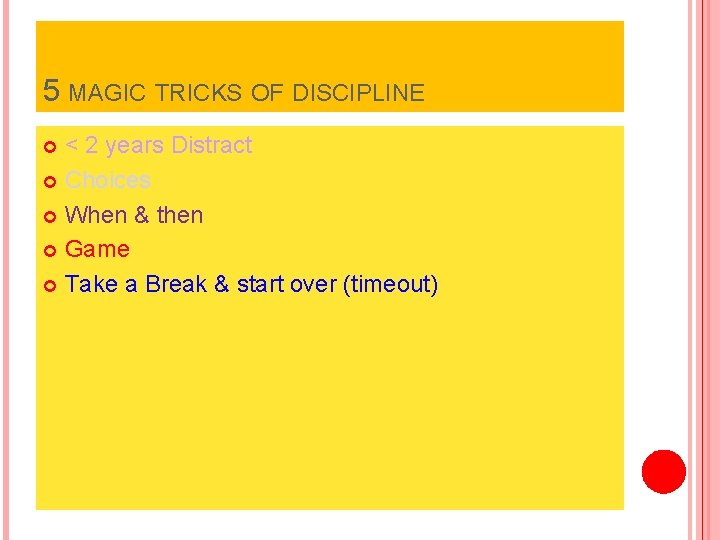
5 MAGIC TRICKS OF DISCIPLINE < 2 years Distract Choices When & then Game Take a Break & start over (timeout)