
Physical and Chemical Structure of the Ocean Why
- Slides: 35
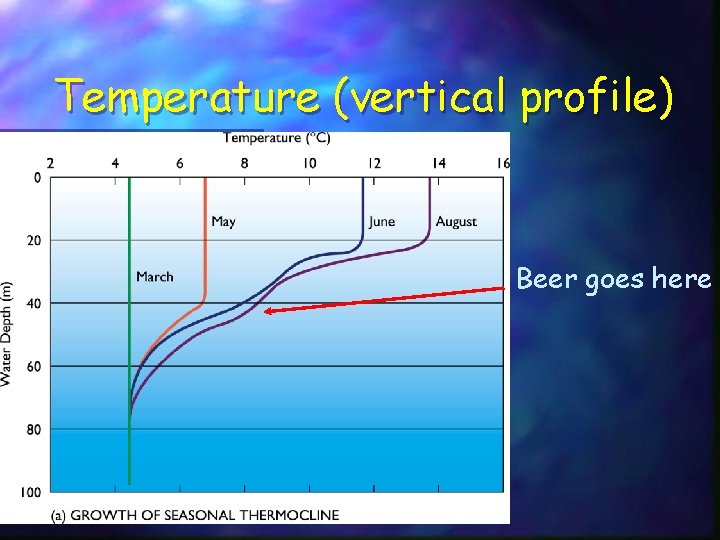
Physical and Chemical Structure of the Ocean Why are the oceans blue? How do you keep your beer cool in the tropics?
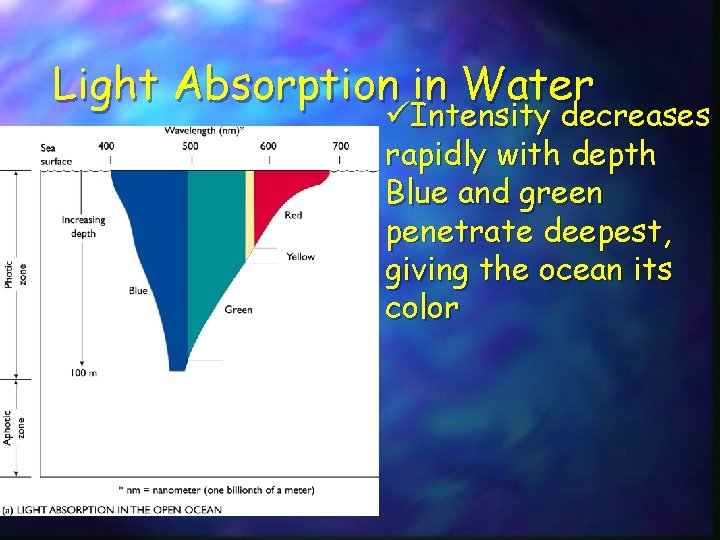
Light Absorption in Water üIntensity decreases rapidly with depth Blue and green penetrate deepest, giving the ocean its color
Why do objects lose their color with depth? F The colors other than blue (and green) are absorbed by the water molecules in the first few meters -only blue (and green) are reflected
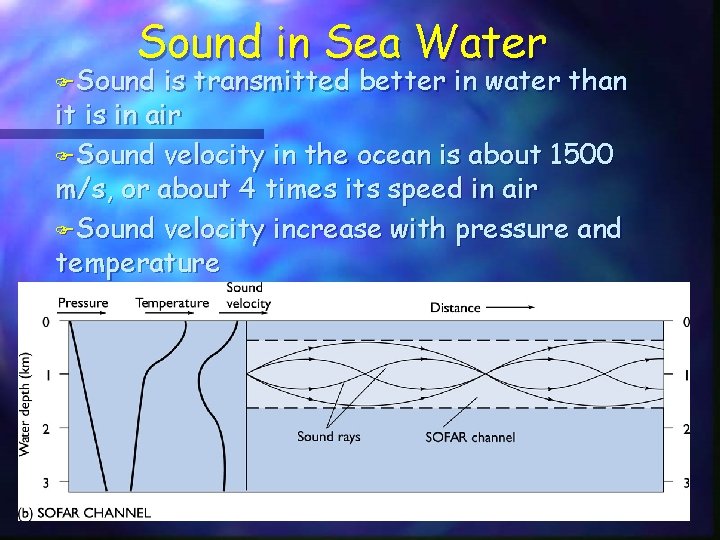
Sound in Sea Water FSound is transmitted better in water than it is in air FSound velocity in the ocean is about 1500 m/s, or about 4 times its speed in air FSound velocity increase with pressure and temperature
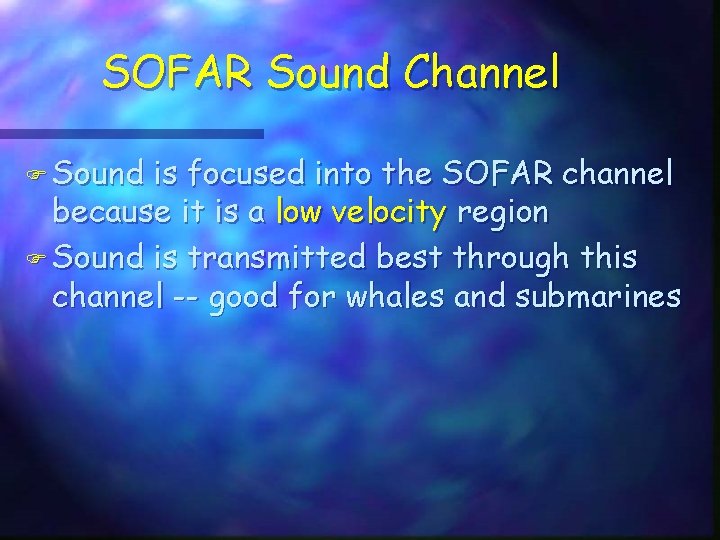
SOFAR Sound Channel F Sound is focused into the SOFAR channel because it is a low velocity region F Sound is transmitted best through this channel -- good for whales and submarines
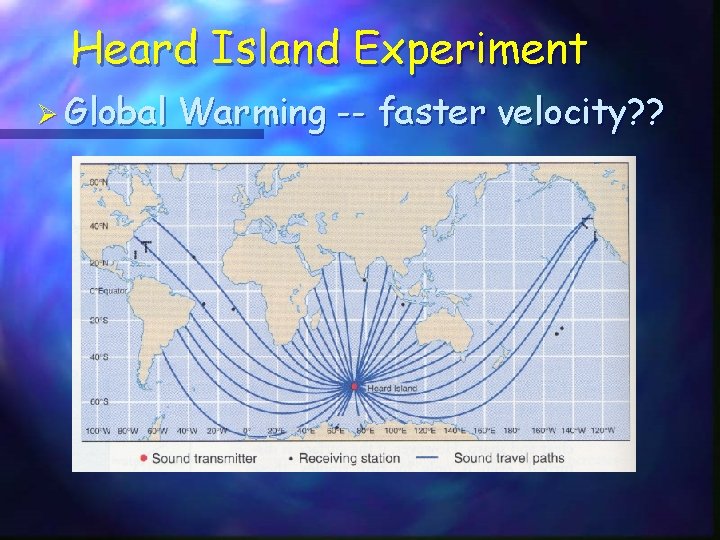
Heard Island Experiment Ø Global Warming -- faster velocity? ?
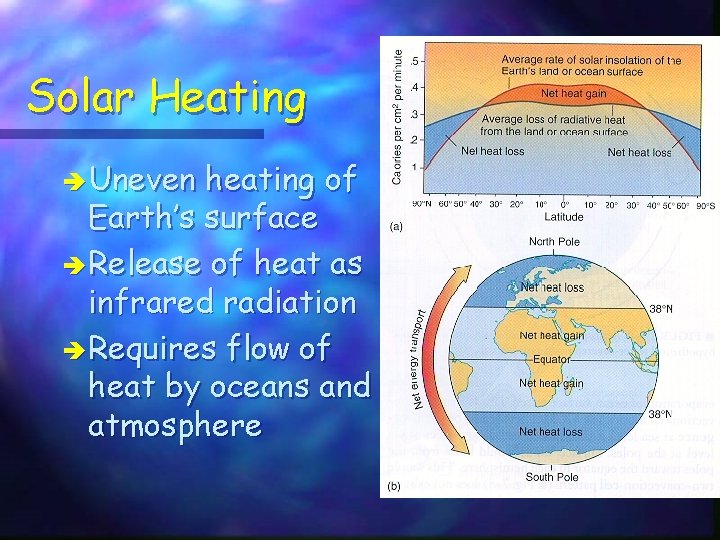
Solar Heating è Uneven heating of Earth’s surface è Release of heat as infrared radiation è Requires flow of heat by oceans and atmosphere
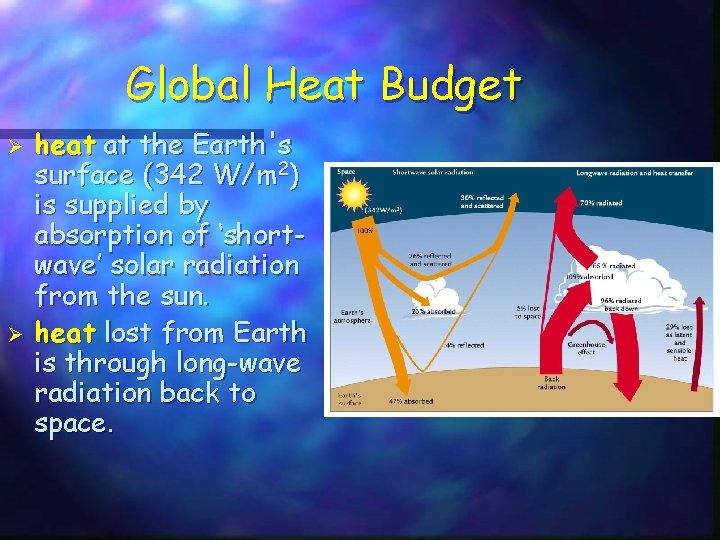
Global Heat Budget Ø Ø heat at the Earth's surface (342 W/m 2) is supplied by absorption of ‘shortwave’ solar radiation from the sun. heat lost from Earth is through long-wave radiation back to space.
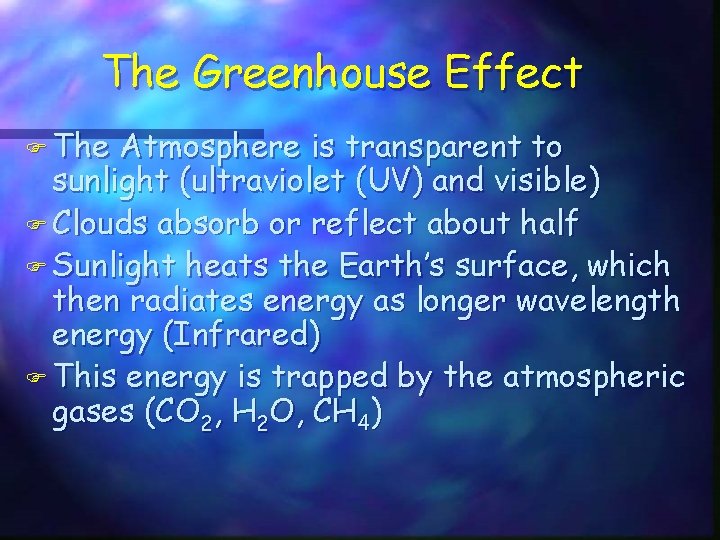
The Greenhouse Effect F The Atmosphere is transparent to sunlight (ultraviolet (UV) and visible) F Clouds absorb or reflect about half F Sunlight heats the Earth’s surface, which then radiates energy as longer wavelength energy (Infrared) F This energy is trapped by the atmospheric gases (CO 2, H 2 O, CH 4)
Special Properties of Water F RECALL: Melting and boiling points are very high Highest heat capacity of common liquids High heat of fusion and vaporization
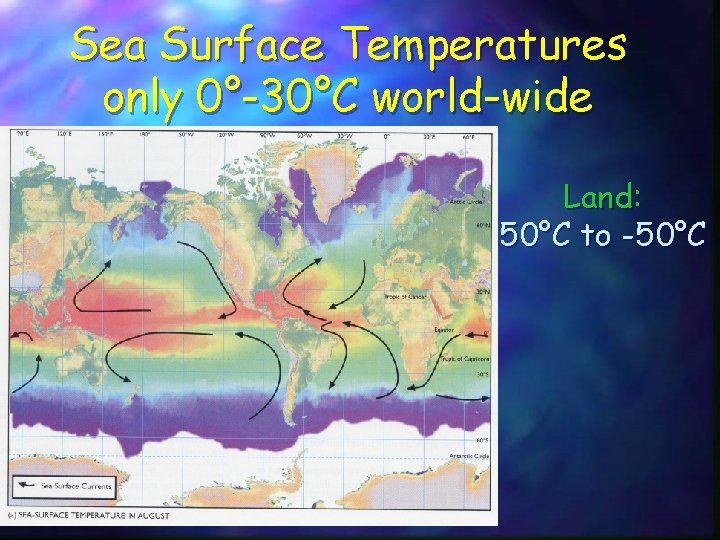
Sea Surface Temperatures only 0°-30°C world-wide Land: 50°C to -50°C
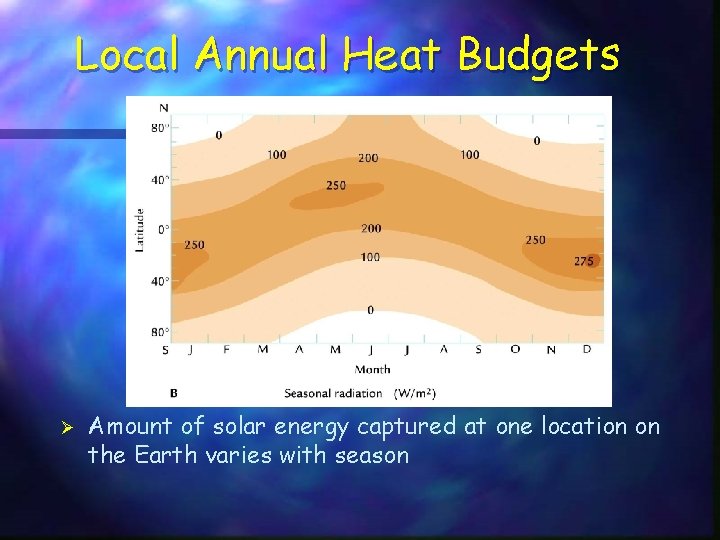
Local Annual Heat Budgets Ø Amount of solar energy captured at one location on the Earth varies with season
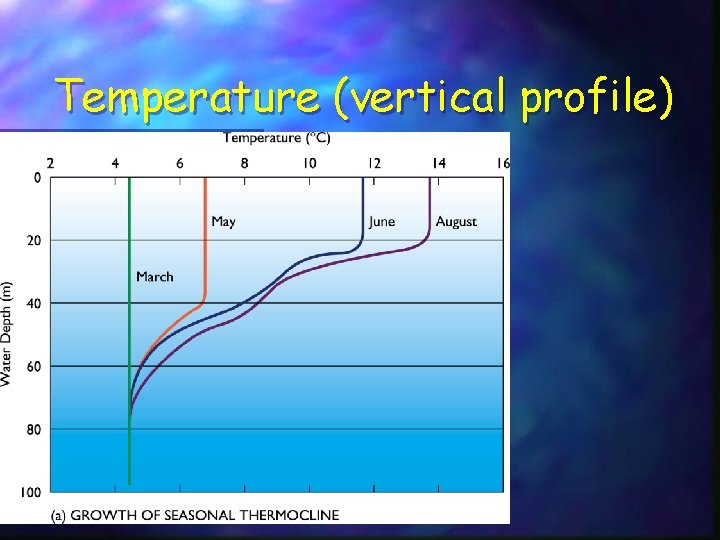
Temperature (vertical profile)
Temperature (vertical profile) Beer goes here
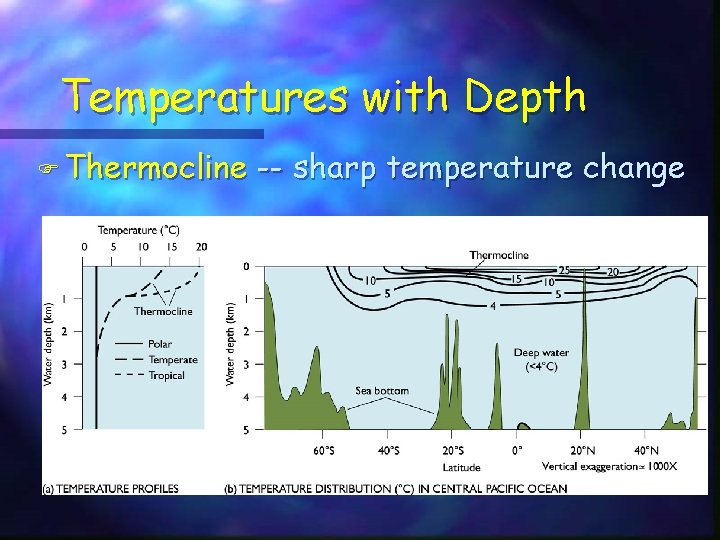
Temperatures with Depth F Thermocline -- sharp temperature change
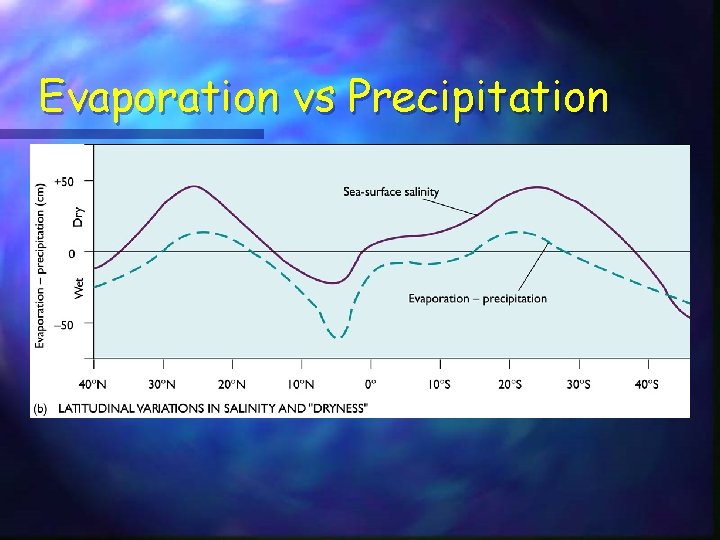
Evaporation - Precipitation F Over the oceans, evaporation exceeds precipitation F The balance is restored by rain over the continents, returning water via rivers
Evaporation vs Precipitation
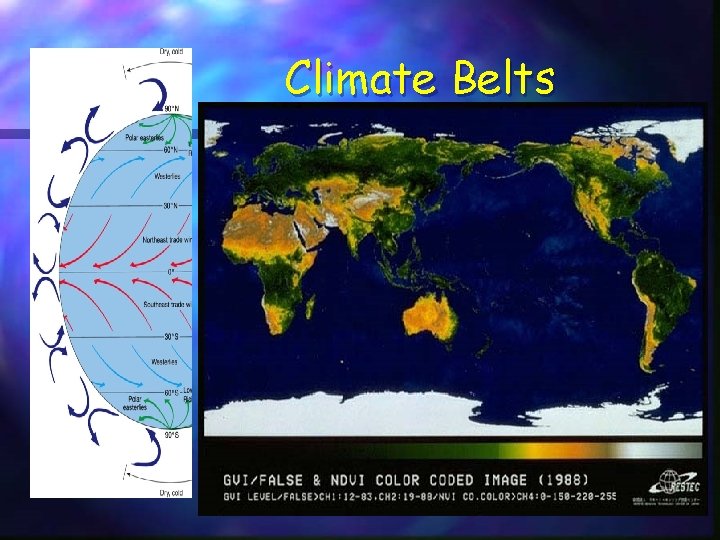
Climate Belts
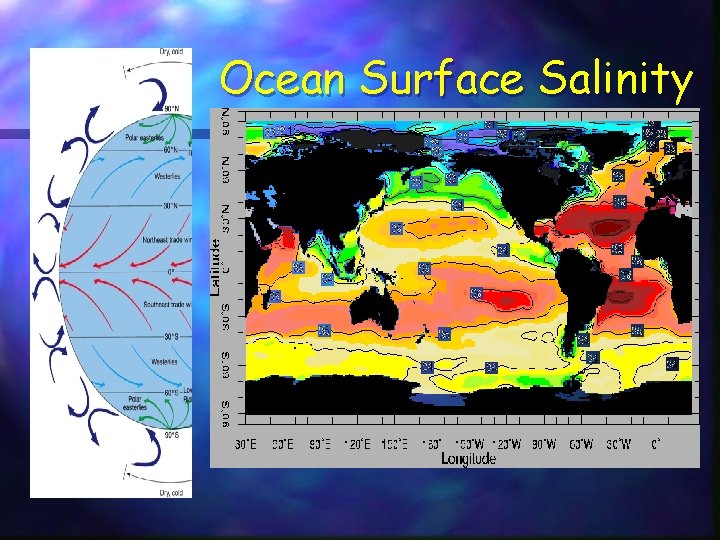
Ocean Surface Salinity
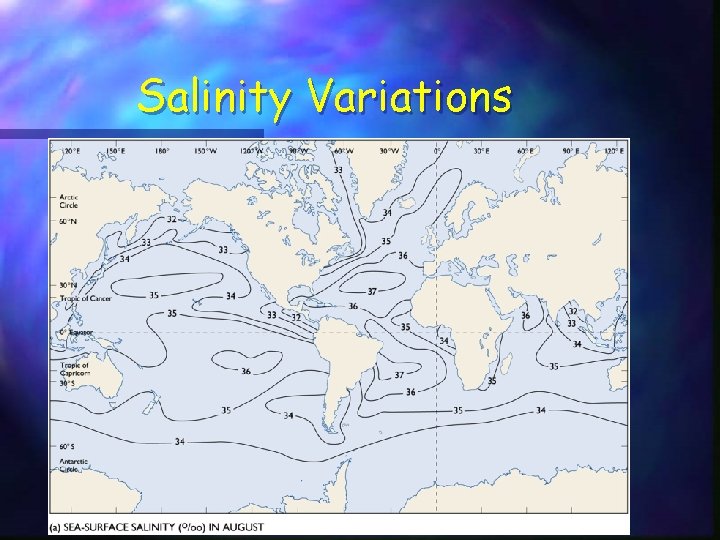
Salinity Variations
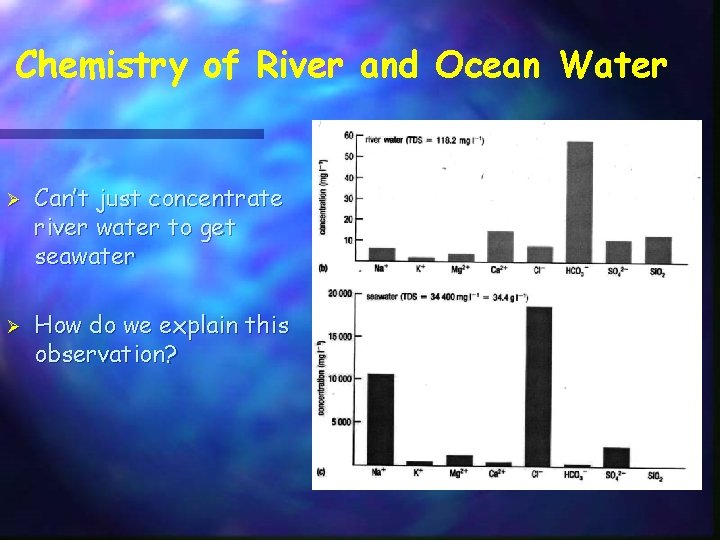
Chemistry of River and Ocean Water Ø Ø Can’t just concentrate river water to get seawater How do we explain this observation?
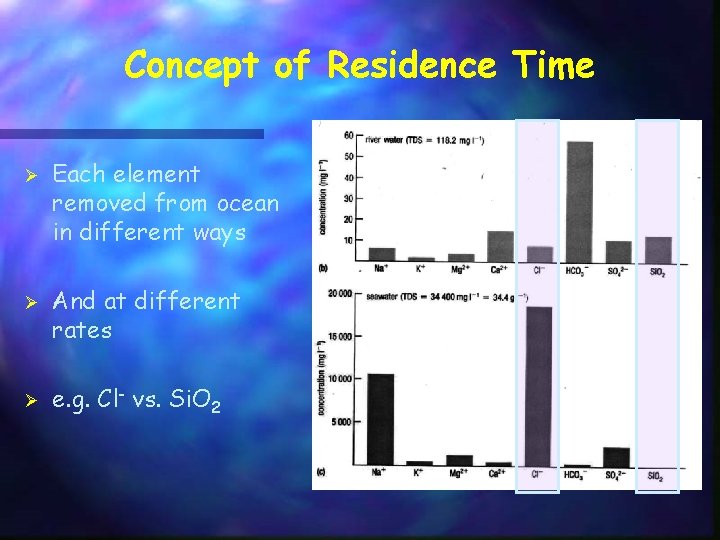
Concept of Residence Time Ø Ø Ø Each element removed from ocean in different ways And at different rates e. g. Cl- vs. Si. O 2
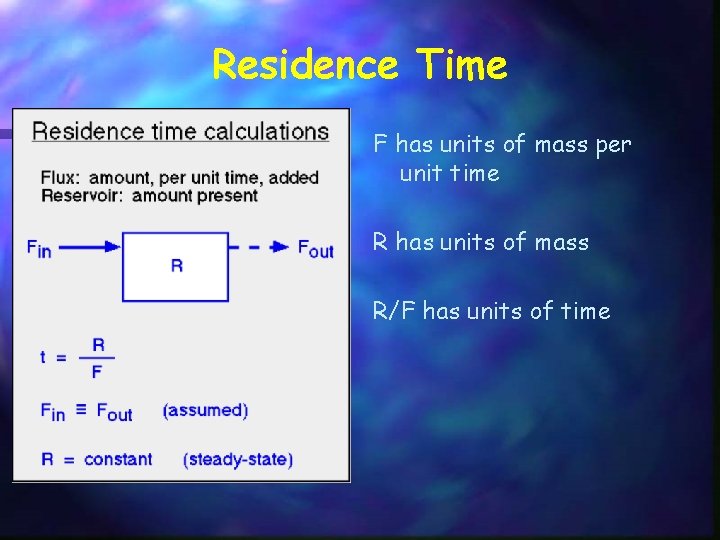
Residence Time F has units of mass per unit time R has units of mass R/F has units of time
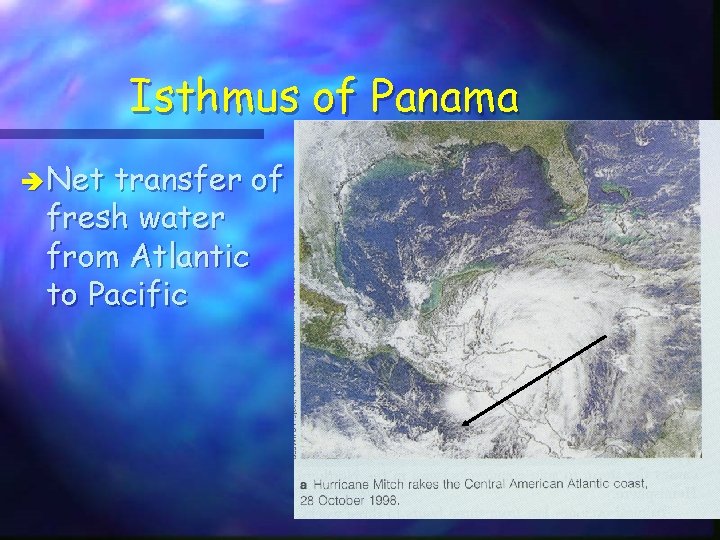
Salinity Variations F Surface salinity follows evaporationprecipitation pattern F Atlantic Ocean is generally more salty than Pacific Ocean, in spite of river input -- why? ?
Isthmus of Panama è Net transfer of fresh water from Atlantic to Pacific
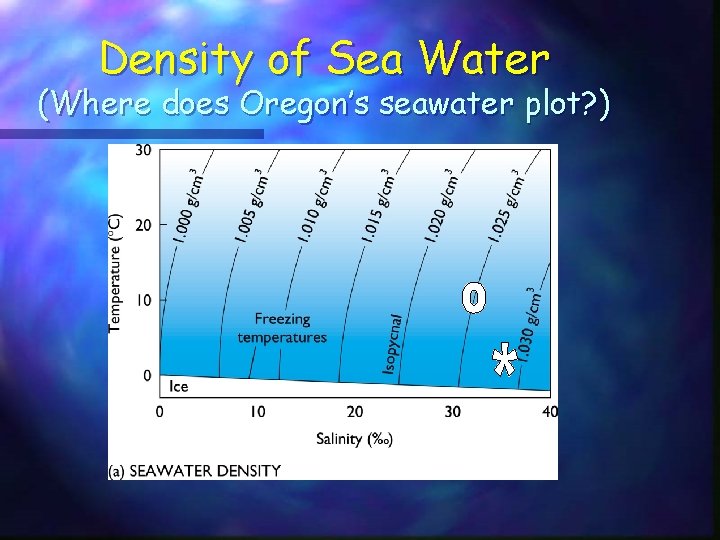
Density of Sea Water (Where does Oregon’s seawater plot? )
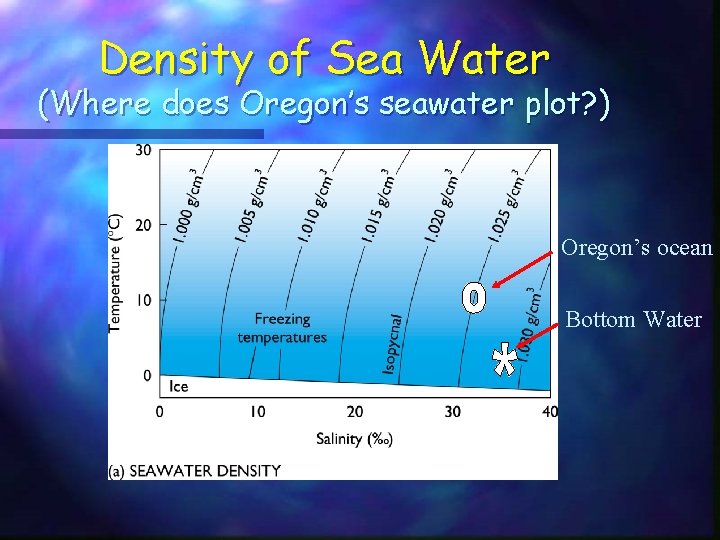
Density of Sea Water (Where does Oregon’s seawater plot? ) Oregon’s ocean Bottom Water
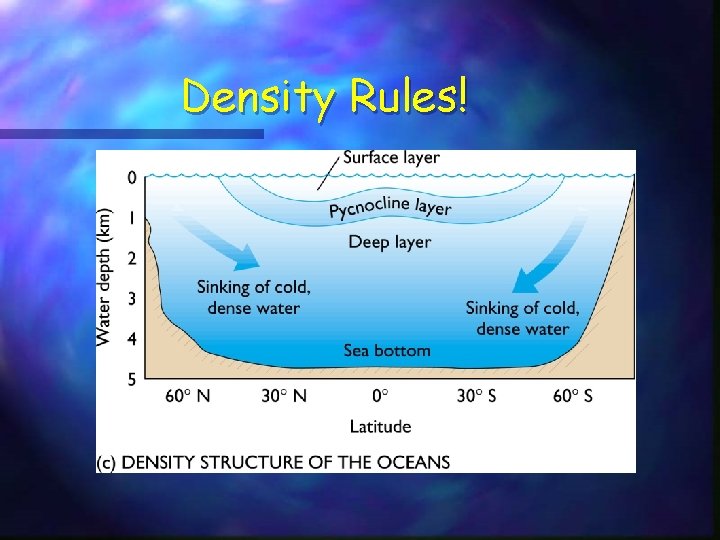
Density Rules!
Where does the Ocean’s Deepest Water Come From? F The densest seawater is COLD and SALTY F This is formed at high latitudes in the North and South Atlantic: North Atlantic Deep Water (NADW) Antarctic Bottom Water (AABW) F Could dense seawater form in the tropics? (evaporation!)
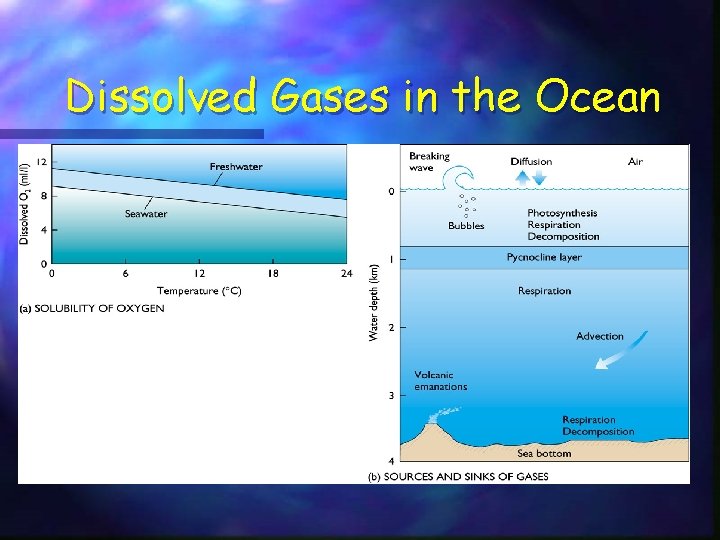
Dissolved Gases in the Ocean
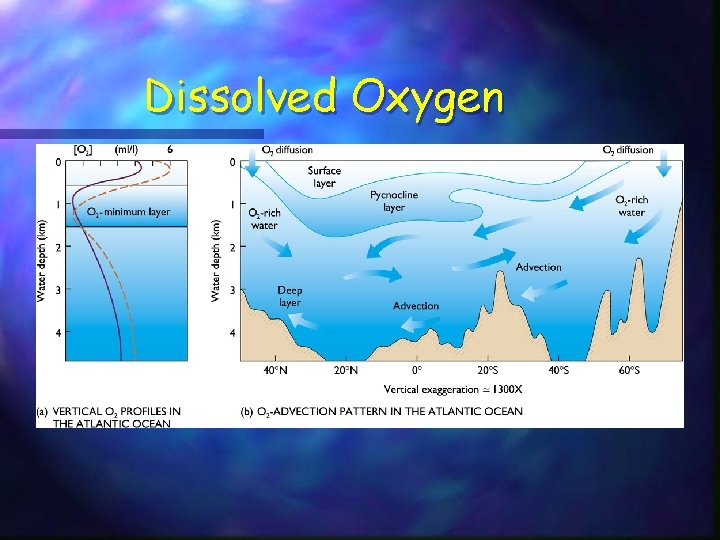
Important Gases in the Ocean F Oxygen -- Respiration, Decomposition F CO 2 -- Photosynthesis, Ca. CO 3 F Nitrogen -- Nutrient for growth F Methane -- a product of decomposition
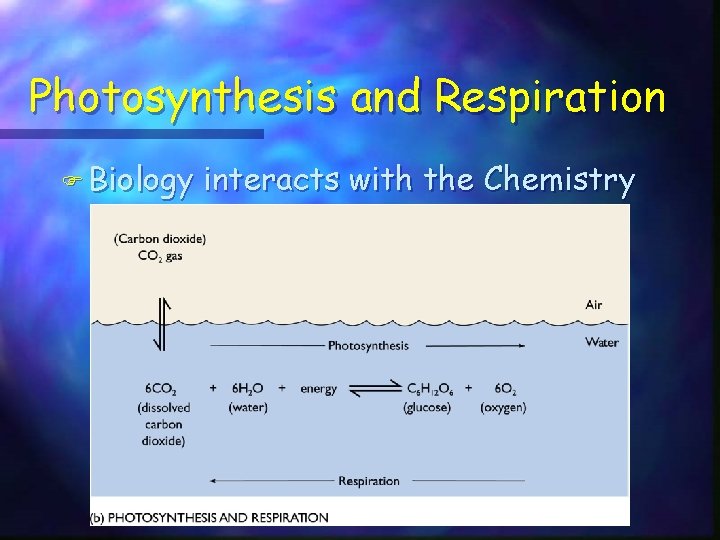
Photosynthesis and Respiration F Biology interacts with the Chemistry
Dissolved Oxygen
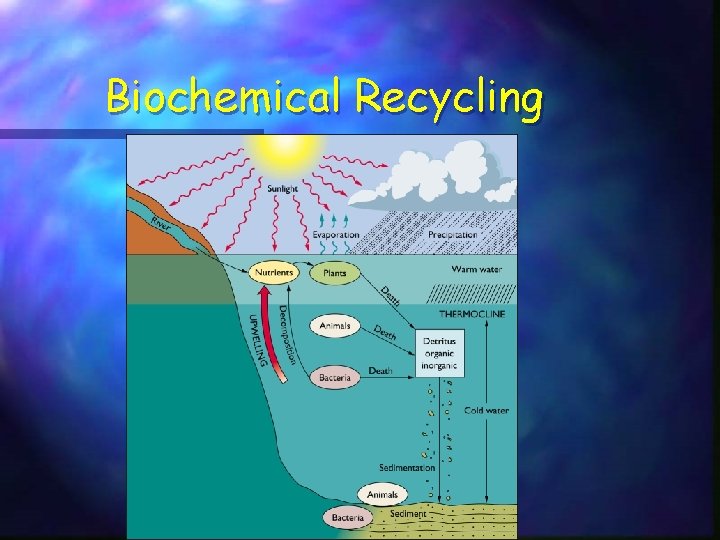
Biochemical Recycling
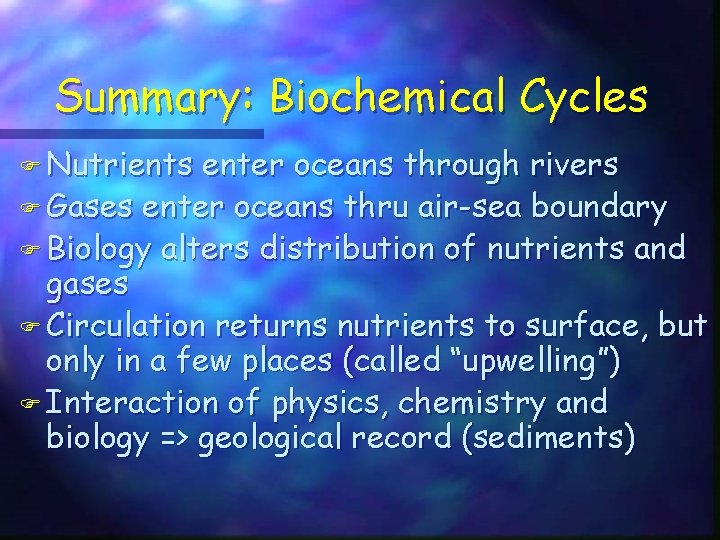
Summary: Biochemical Cycles F Nutrients enter oceans through rivers F Gases enter oceans thru air-sea boundary F Biology alters distribution of nutrients and gases F Circulation returns nutrients to surface, but only in a few places (called “upwelling”) F Interaction of physics, chemistry and biology => geological record (sediments)