
Physical and Chemical Oceanography Section 7 Part II
- Slides: 10
Physical and Chemical Oceanography Section 7 Part II: Tides, Currents and Upwelling
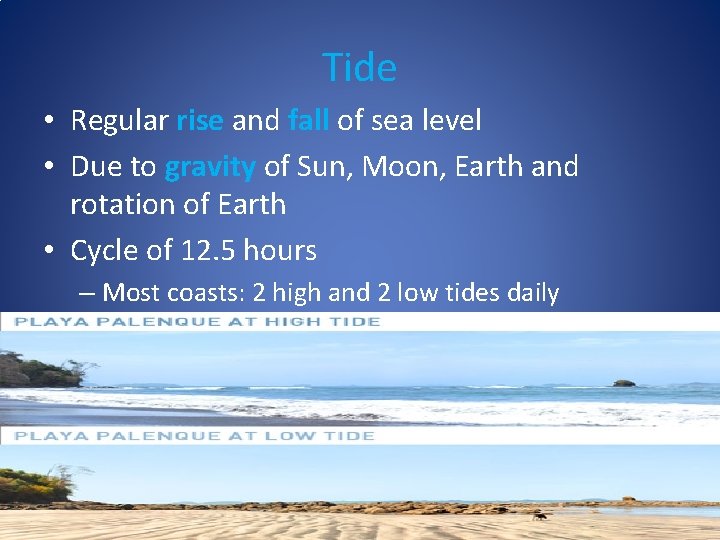
Tide • Regular rise and fall of sea level • Due to gravity of Sun, Moon, Earth and rotation of Earth • Cycle of 12. 5 hours – Most coasts: 2 high and 2 low tides daily
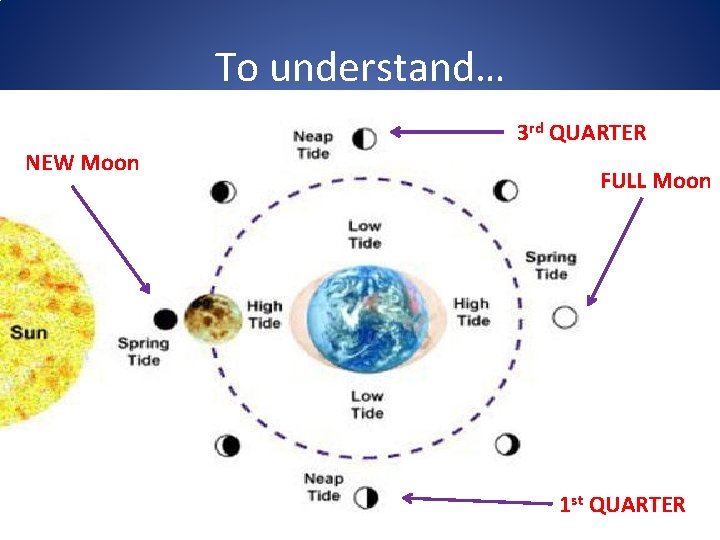
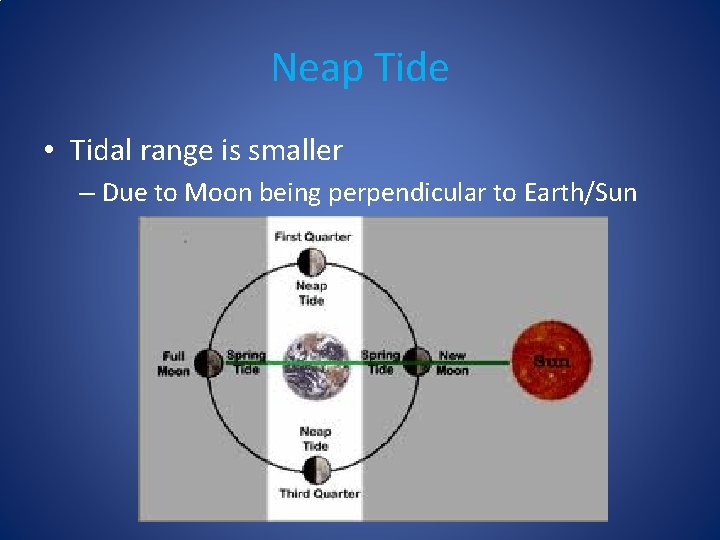
To understand… 3 rd QUARTER NEW Moon FULL Moon 1 st QUARTER
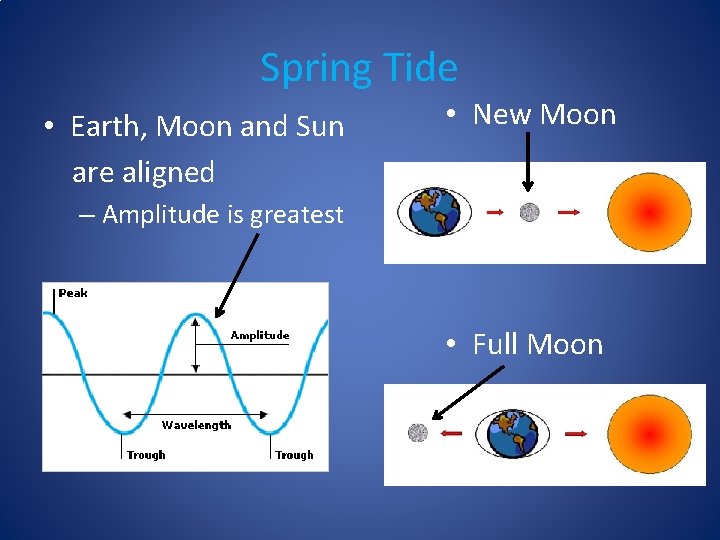
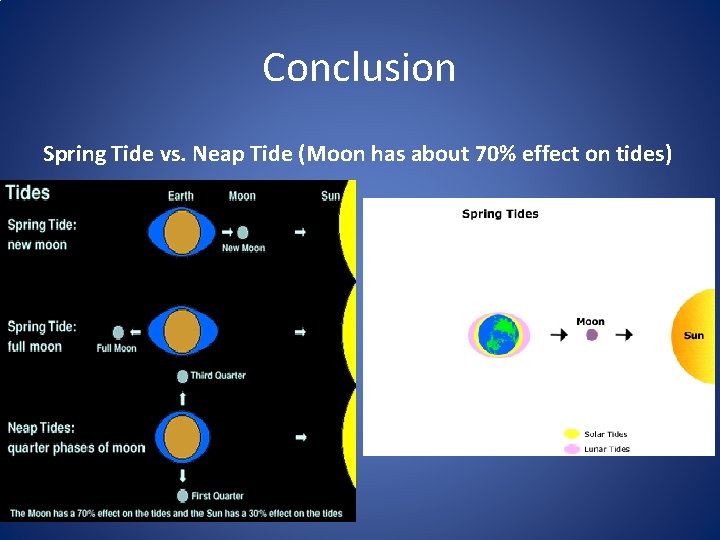
Spring Tide • Earth, Moon and Sun are aligned • New Moon – Amplitude is greatest • Full Moon
Neap Tide • Tidal range is smaller – Due to Moon being perpendicular to Earth/Sun
Conclusion Spring Tide vs. Neap Tide (Moon has about 70% effect on tides)
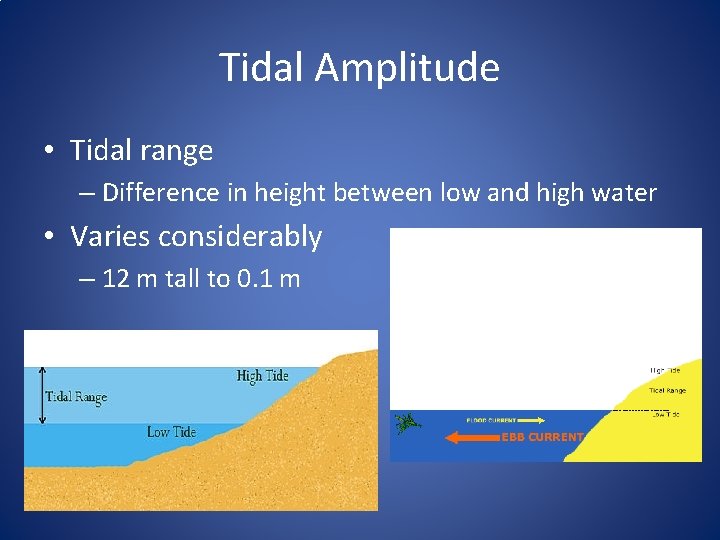
Tidal Amplitude • Tidal range – Difference in height between low and high water • Varies considerably – 12 m tall to 0. 1 m
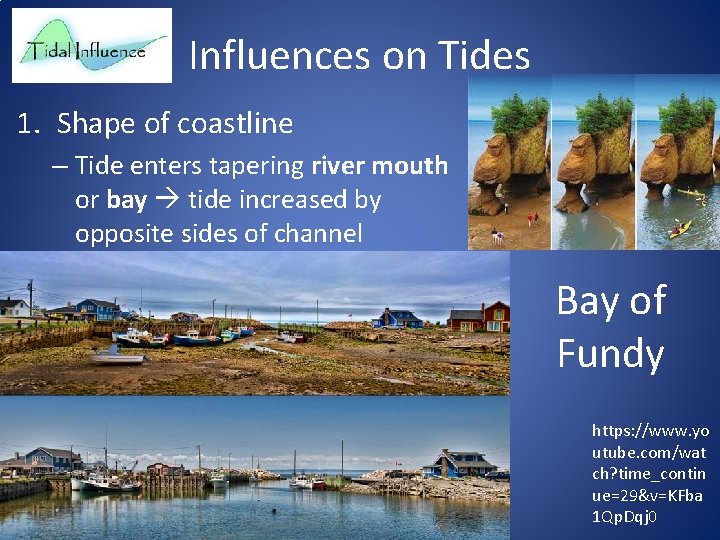
Influences on Tides 1. Shape of coastline – Tide enters tapering river mouth or bay tide increased by opposite sides of channel Bay of Fundy https: //www. yo utube. com/wat ch? time_contin ue=29&v=KFba 1 Qp. Dqj 0
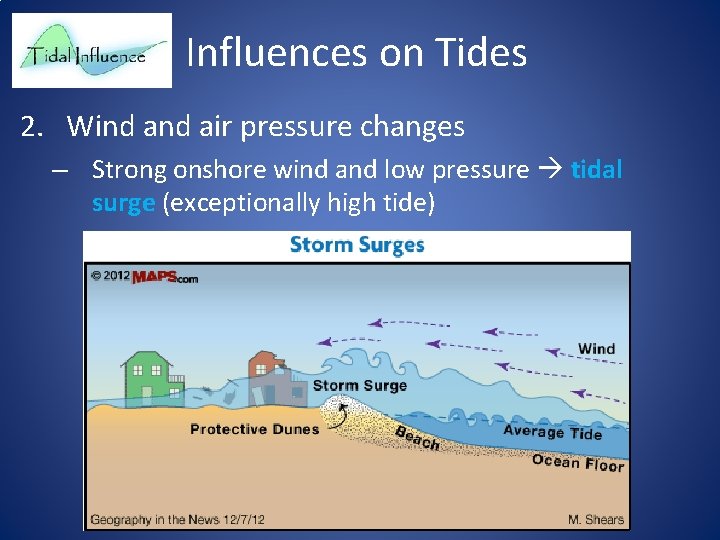
Influences on Tides 2. Wind air pressure changes – Strong onshore wind and low pressure tidal surge (exceptionally high tide)
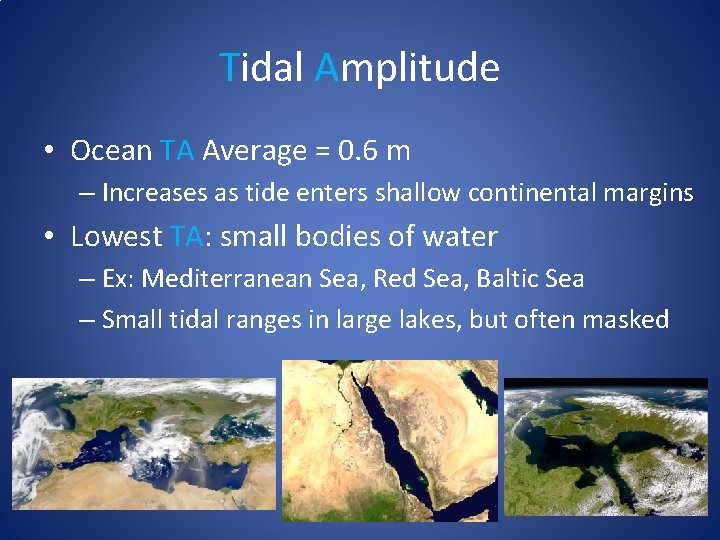
Tidal Amplitude • Ocean TA Average = 0. 6 m – Increases as tide enters shallow continental margins • Lowest TA: small bodies of water – Ex: Mediterranean Sea, Red Sea, Baltic Sea – Small tidal ranges in large lakes, but often masked