
Physical and Chemical Changes A physical change is

- Slides: 11
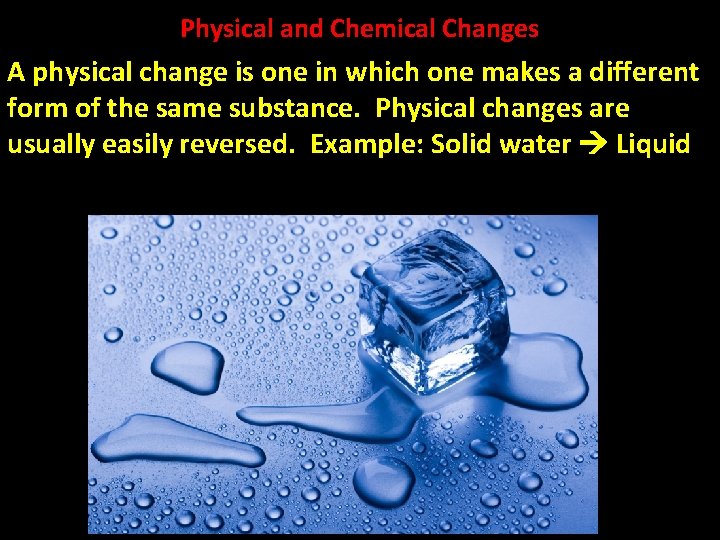
Physical and Chemical Changes A physical change is one in which one makes a different form of the same substance. Physical changes are usually easily reversed. Example: Solid water Liquid
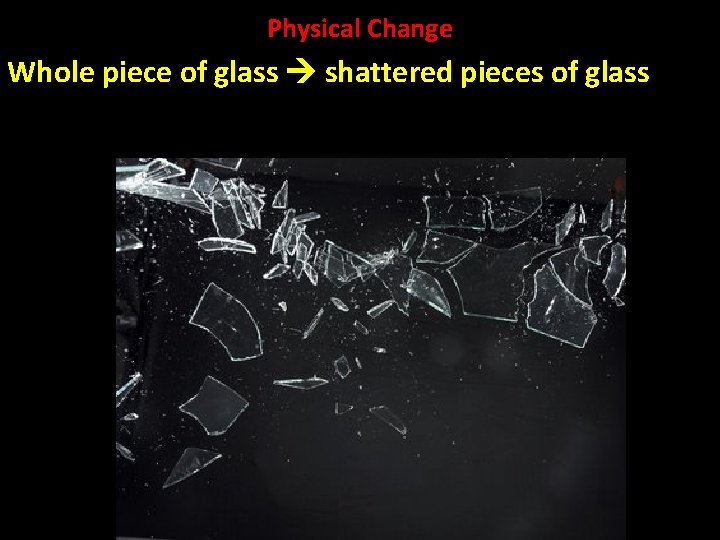
Physical Change Whole piece of glass shattered pieces of glass
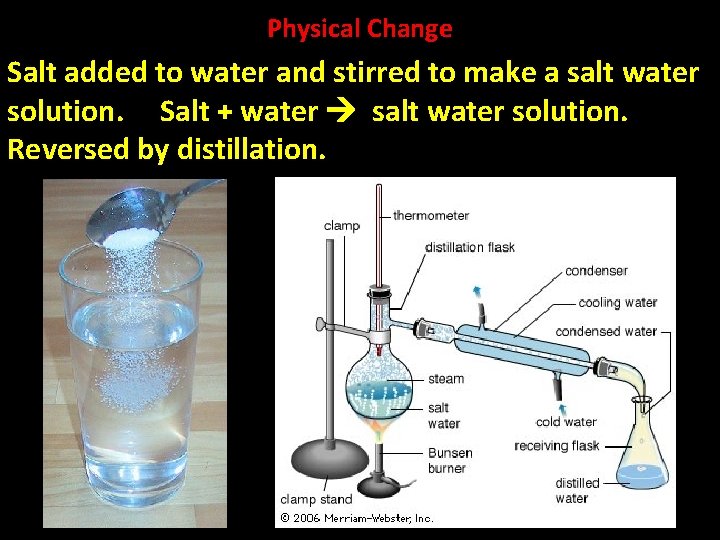
Physical Change Salt added to water and stirred to make a salt water solution. Salt + water salt water solution. Reversed by distillation.
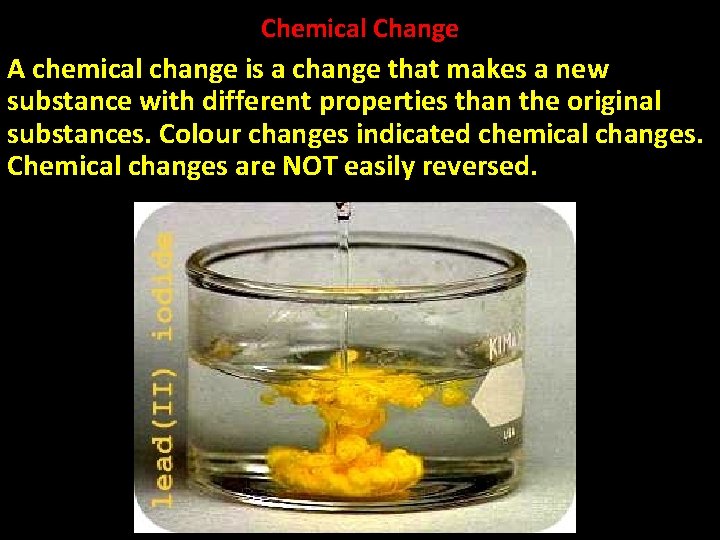
Chemical Change A chemical change is a change that makes a new substance with different properties than the original substances. Colour changes indicated chemical changes. Chemical changes are NOT easily reversed.
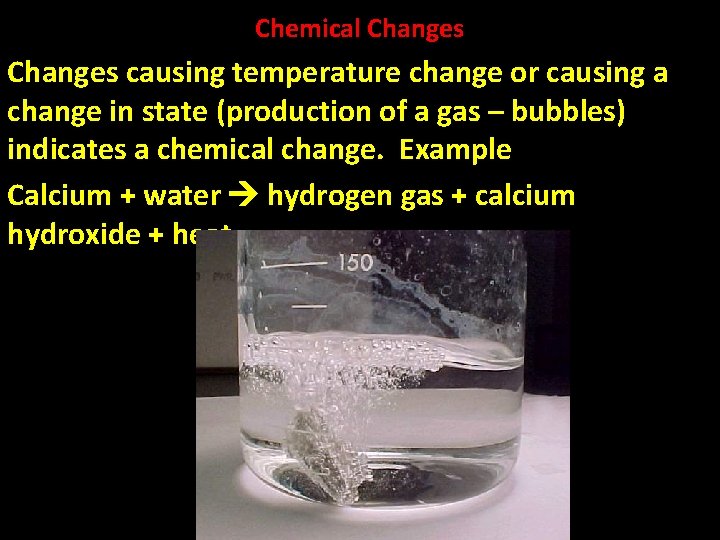
Chemical Changes causing temperature change or causing a change in state (production of a gas – bubbles) indicates a chemical change. Example Calcium + water hydrogen gas + calcium hydroxide + heat
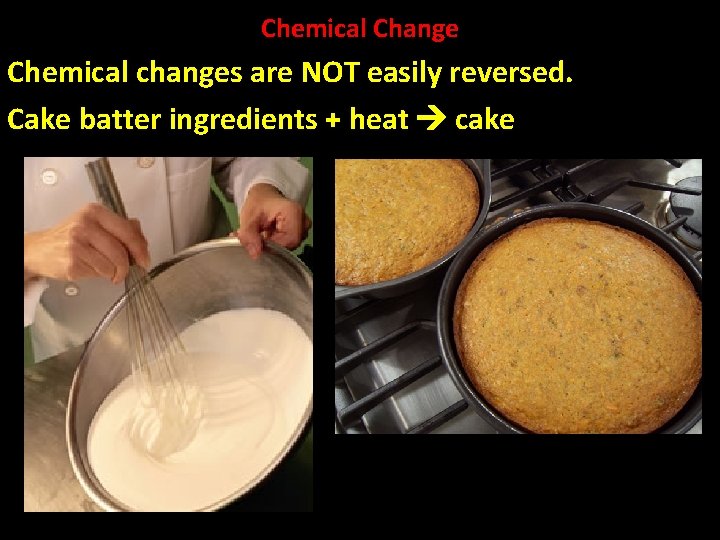
Chemical Change Chemical changes are NOT easily reversed. Cake batter ingredients + heat cake
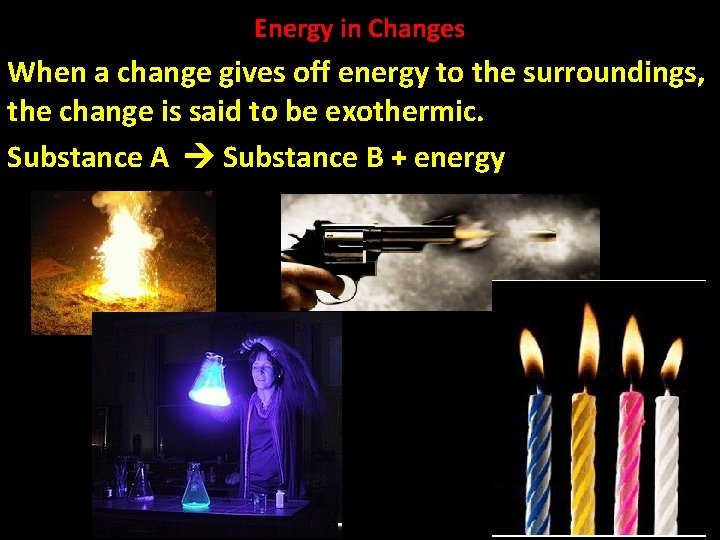
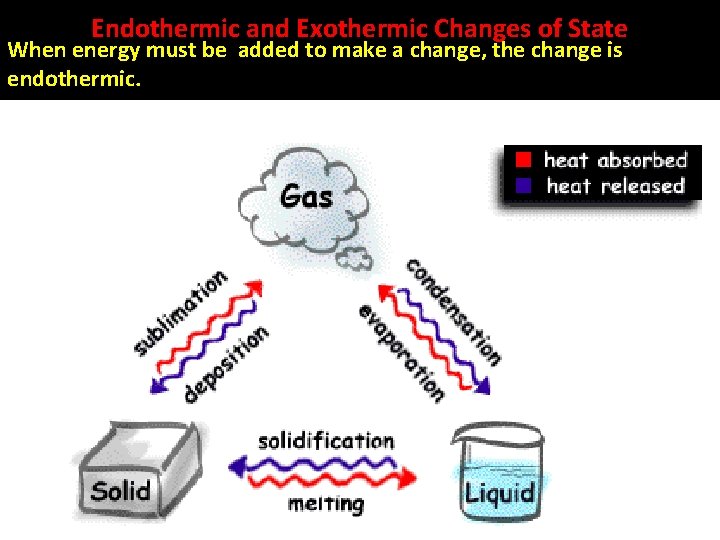
Energy in Changes When a change gives off energy to the surroundings, the change is said to be exothermic. Substance A Substance B + energy
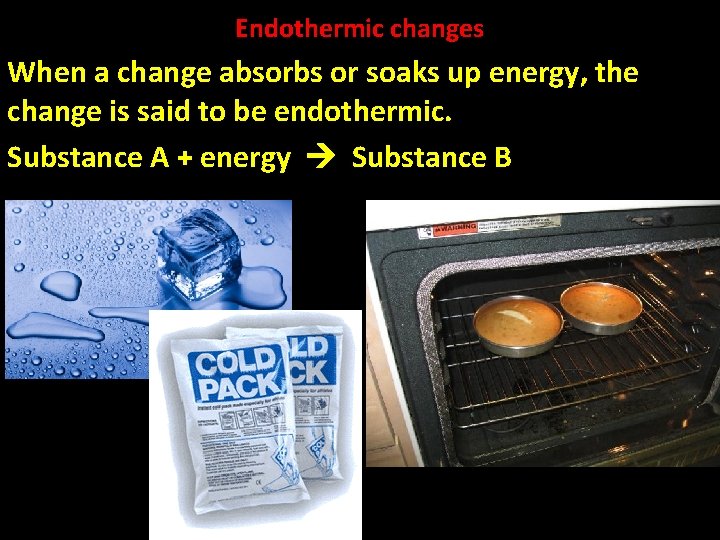
Endothermic changes When a change absorbs or soaks up energy, the change is said to be endothermic. Substance A + energy Substance B
Endothermic and Exothermic Changes of State When energy must be added to make a change, the change is endothermic. When energy m, ust. A
End of Presentation
A A