
Physical Adaptations STRUCTURAL CASE STUDY Polar Bear Adaptation

Physical Adaptations STRUCTURAL
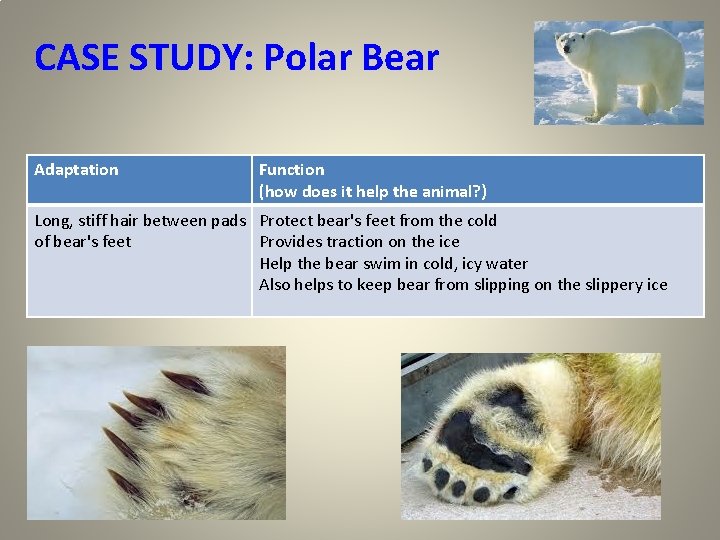
CASE STUDY: Polar Bear Adaptation Function (how does it help the animal? ) Long, stiff hair between pads Protect bear's feet from the cold of bear's feet Provides traction on the ice Help the bear swim in cold, icy water Also helps to keep bear from slipping on the slippery ice
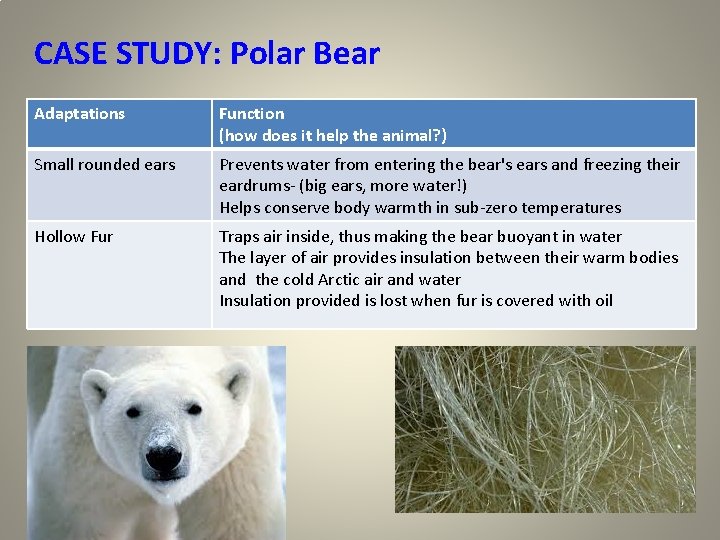
CASE STUDY: Polar Bear Adaptations Function (how does it help the animal? ) Small rounded ears Prevents water from entering the bear's ears and freezing their eardrums- (big ears, more water!) Helps conserve body warmth in sub-zero temperatures Hollow Fur Traps air inside, thus making the bear buoyant in water The layer of air provides insulation between their warm bodies and the cold Arctic air and water Insulation provided is lost when fur is covered with oil
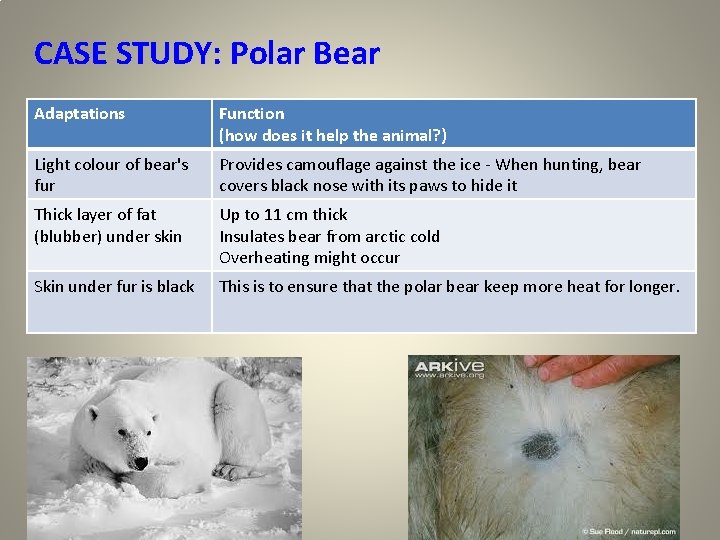
CASE STUDY: Polar Bear Adaptations Function (how does it help the animal? ) Light colour of bear's fur Provides camouflage against the ice - When hunting, bear covers black nose with its paws to hide it Thick layer of fat (blubber) under skin Up to 11 cm thick Insulates bear from arctic cold Overheating might occur Skin under fur is black This is to ensure that the polar bear keep more heat for longer.
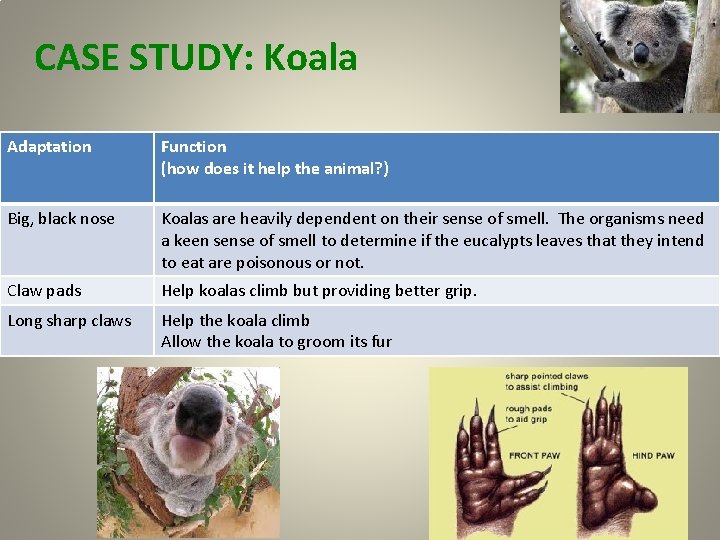
CASE STUDY: Koala Adaptation Function (how does it help the animal? ) Big, black nose Koalas are heavily dependent on their sense of smell. The organisms need a keen sense of smell to determine if the eucalypts leaves that they intend to eat are poisonous or not. Claw pads Help koalas climb but providing better grip. Long sharp claws Help the koala climb Allow the koala to groom its fur
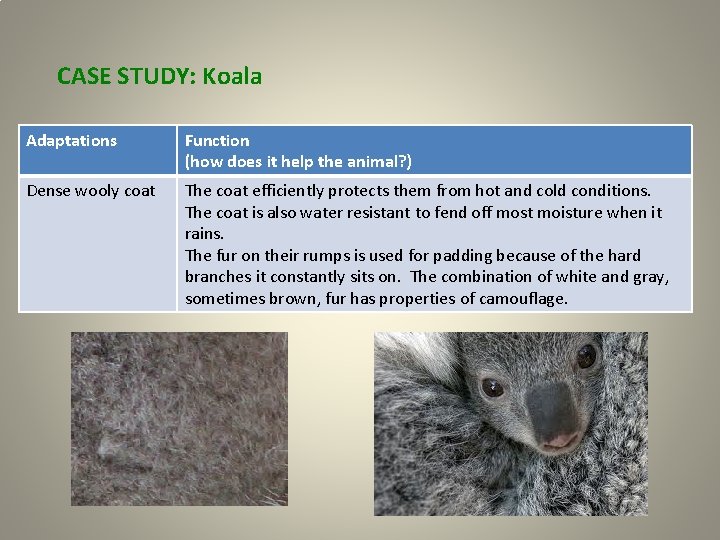
CASE STUDY: Koala Adaptations Function (how does it help the animal? ) Dense wooly coat The coat efficiently protects them from hot and cold conditions. The coat is also water resistant to fend off most moisture when it rains. The fur on their rumps is used for padding because of the hard branches it constantly sits on. The combination of white and gray, sometimes brown, fur has properties of camouflage.
CASE STUDY: Camel http: //www. vtaide. com/png/camel-adaptations 4. htm CASE STUDY: Cacti
- Slides: 7