
Physical Activity for Early Years Start Early Stay
- Slides: 21
Physical Activity for Early Years Start Early, Stay Active for Life
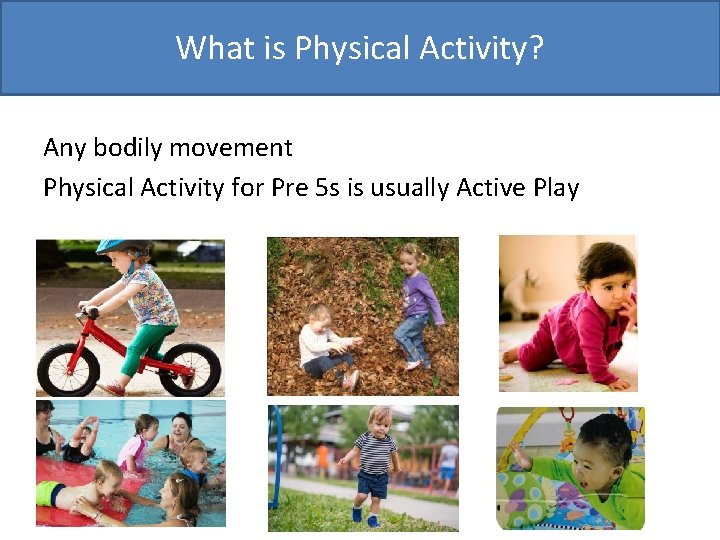
What is Physical Activity? Any bodily movement Physical Activity for Pre 5 s is usually Active Play
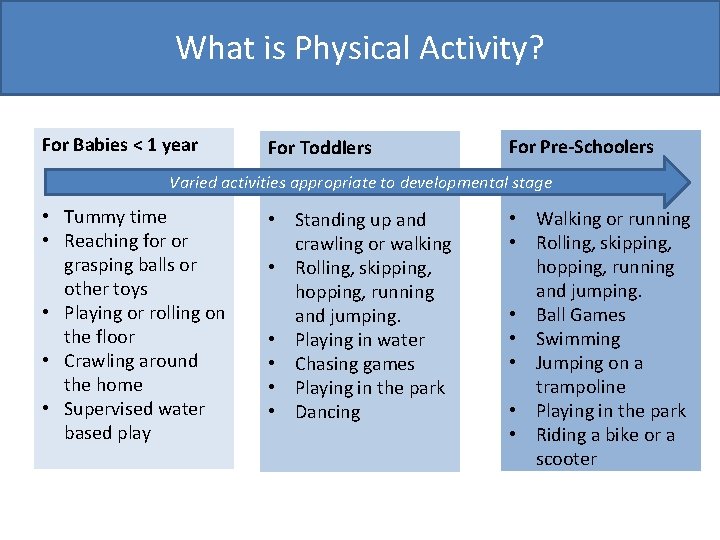
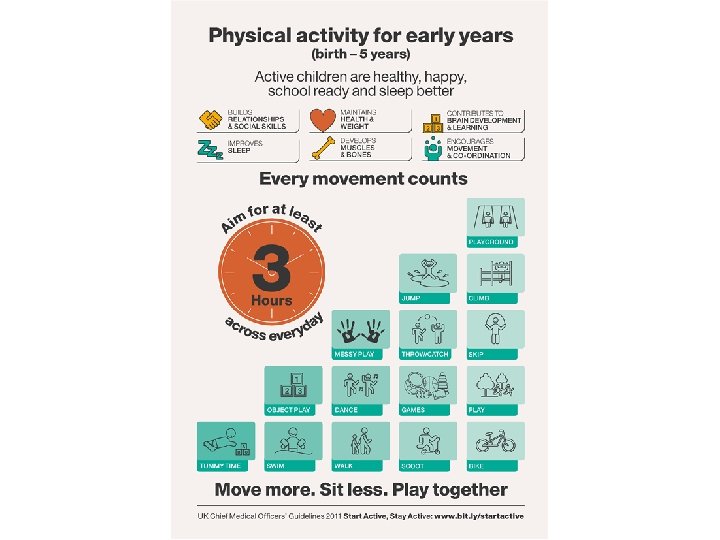
What is Physical Activity? For Babies < 1 year For Toddlers For Pre-Schoolers Varied activities appropriate to developmental stage • Tummy time • Reaching for or grasping balls or other toys • Playing or rolling on the floor • Crawling around the home • Supervised water based play • Standing up and crawling or walking • Rolling, skipping, hopping, running and jumping. • Playing in water • Chasing games • Playing in the park • Dancing • Walking or running • Rolling, skipping, hopping, running and jumping. • Ball Games • Swimming • Jumping on a trampoline • Playing in the park • Riding a bike or a scooter
Benefits of Physical Activity for Early Years • At no other point will children learn as many skills as they do in the first 5 years of life • Is this a ‘teachable moment’ to instil healthy family habits more generally? • Physical activity is crucial for physical development and beneficial for cognitive development
Physical Activity and Motor Skill Development • Physical Activity is crucial for gross and fine motor skill development – We can think of this as ‘physical literacy’ e. g. a trial of passive cycling in infants showed improved body control, balance, grasping and handeye coordination.
Physical Activity and Health in Early Years Systematic Review evidence for PA in Early Years suggests PA improves: • Skeletal health (those in trial showed increased leg bone circumference, but no change in bone mineral content) • Psychosocial Health (those in PA trials showed greater gains in social competence, externalizing behaviour, were less withdrawn & more outgoing) • Cardio-metabolic Health (Some evidence PA improves blood pressure, insulin resistance, cholesterol, blood lipid profiles even amongst pre school age children)
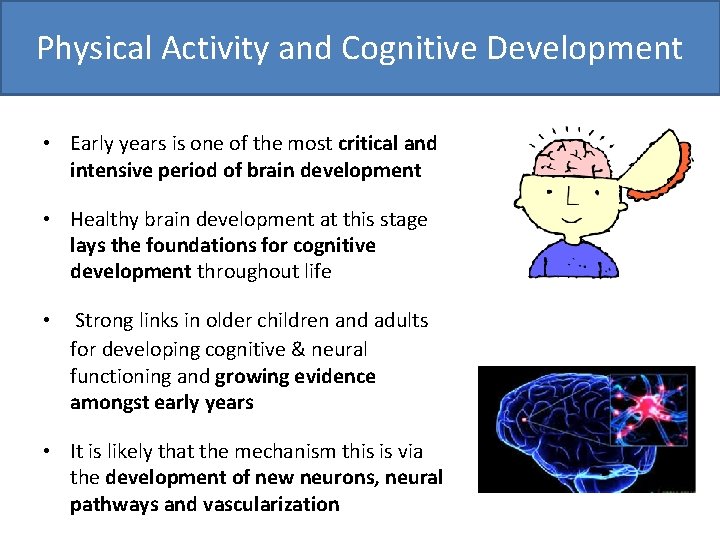
Physical Activity and Cognitive Development • Early years is one of the most critical and intensive period of brain development • Healthy brain development at this stage lays the foundations for cognitive development throughout life • Strong links in older children and adults for developing cognitive & neural functioning and growing evidence amongst early years • It is likely that the mechanism this is via the development of new neurons, neural pathways and vascularization
Physical Activity and Cognitive Development • Systematic Review Evidence suggests increased PA in early years had significant beneficial effects on cognitive development (improving 67% of outcomes in the executive function domain and 60% of outcomes in the language domain) • Emerging evidence in early years for improvement in: – – – Language Flexibility of ideas Sustained attention Self regulation better behavioural control
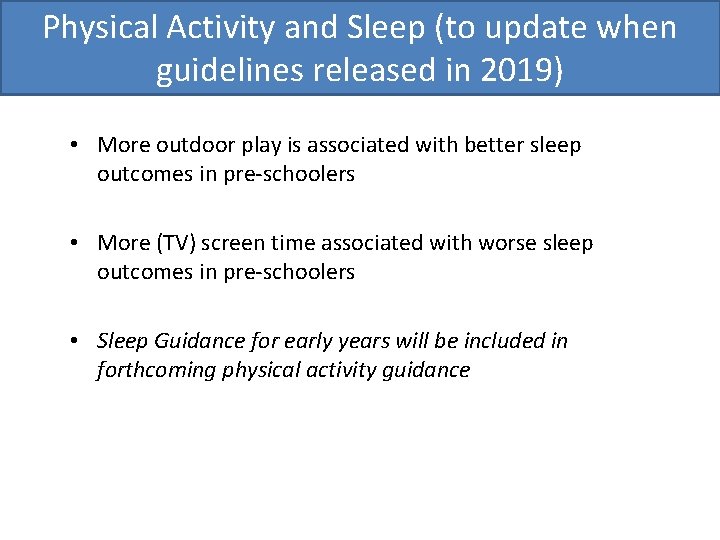
Physical Activity and Sleep (to update when guidelines released in 2019) • More outdoor play is associated with better sleep outcomes in pre-schoolers • More (TV) screen time associated with worse sleep outcomes in pre-schoolers • Sleep Guidance for early years will be included in forthcoming physical activity guidance
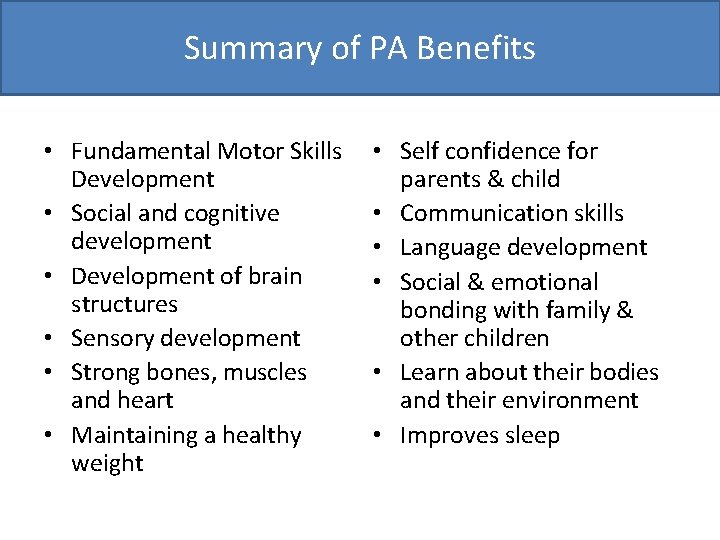
Summary of PA Benefits • Fundamental Motor Skills Development • Social and cognitive development • Development of brain structures • Sensory development • Strong bones, muscles and heart • Maintaining a healthy weight • Self confidence for parents & child • Communication skills • Language development • Social & emotional bonding with family & other children • Learn about their bodies and their environment • Improves sleep
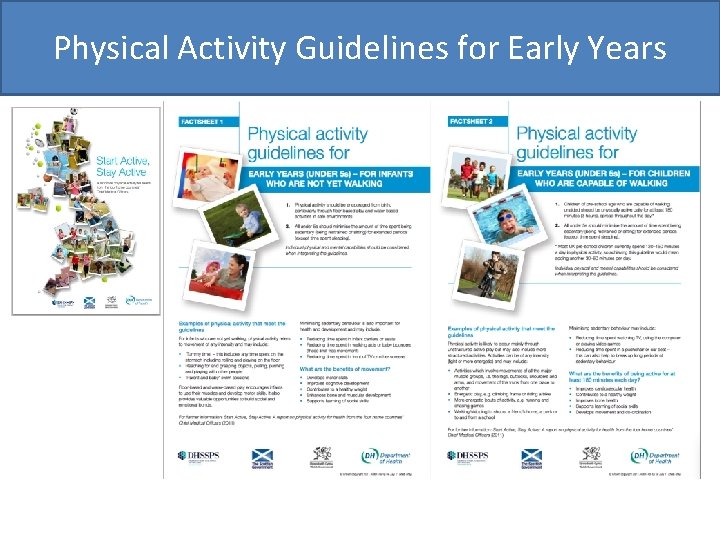
Physical Activity Guidelines for Early Years
Physical Activity Guidelines for Early Years • Non – walkers – Physical activity should be encouraged from birth, particularly through floor based play and waterbased activities • Walkers – Should be physically active daily for at least 180 minutes (3 hours) throughout the day
Early Intervention Needed • Common misconception that this age group are physically active • Physical activity declines and sedentary behaviour increases when children start school, so cannot wait until then to intervene • Growing concern about low fitness and poor motor skills of those beginning school. We need to support children to be healthy and ‘school ready’
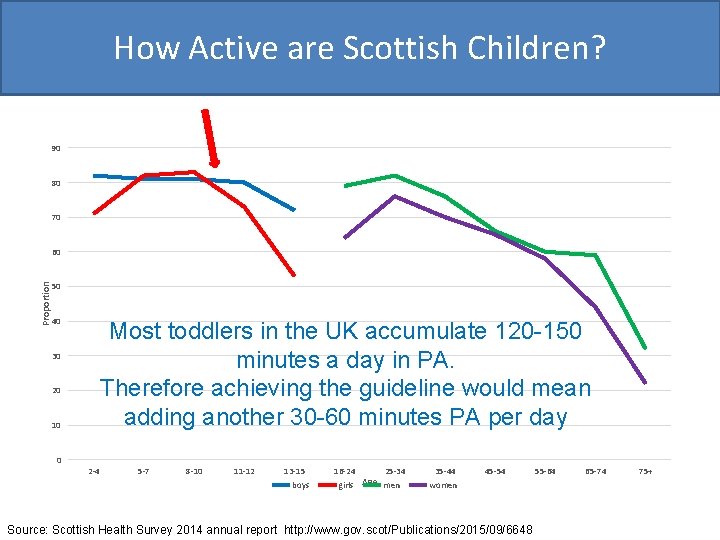
How Active are Scottish Children? 90 80 70 60 Proportion 50 40 Most toddlers in the UK accumulate 120 -150 minutes a day in PA. Therefore achieving the guideline would mean adding another 30 -60 minutes PA per day 30 20 10 0 2 -4 5 -7 8 -10 11 -12 13 -15 boys 16 -24 25 -34 girls Age men 35 -44 45 -54 women Source: Scottish Health Survey 2014 annual report http: //www. gov. scot/Publications/2015/09/6648 55 -64 65 -74 75+
How Active are NHSGGC Children?
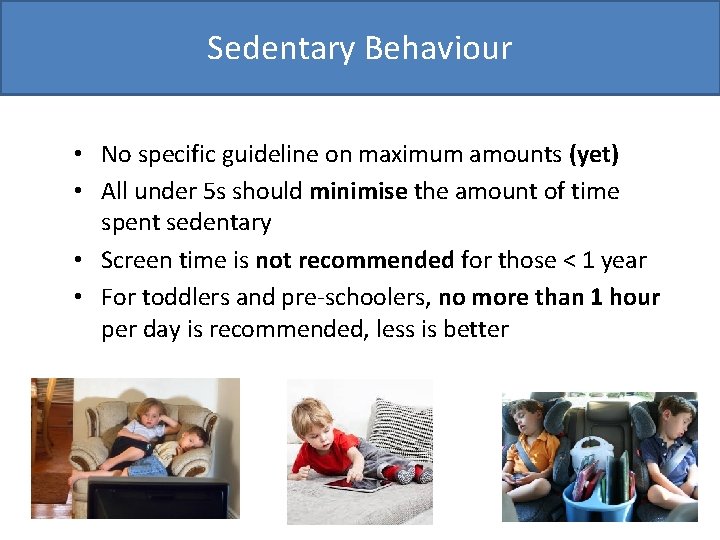
Sedentary Behaviour • No specific guideline on maximum amounts (yet) • All under 5 s should minimise the amount of time spent sedentary • Screen time is not recommended for those < 1 year • For toddlers and pre-schoolers, no more than 1 hour per day is recommended, less is better
Signposting
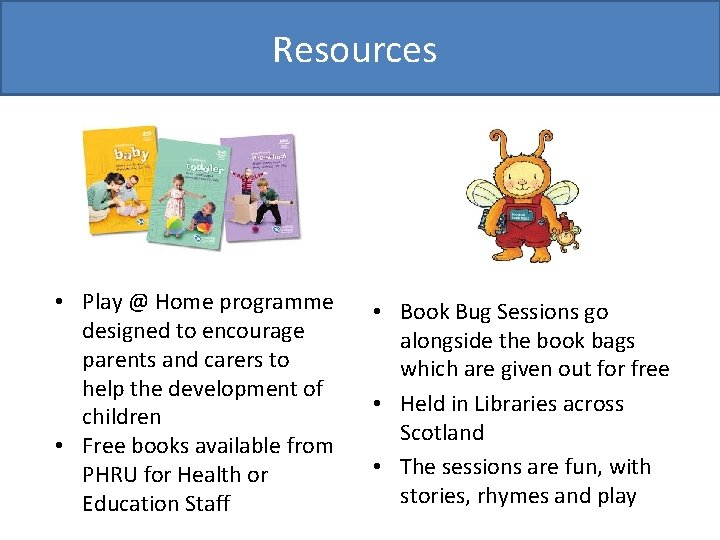
Resources • Play @ Home programme designed to encourage parents and carers to help the development of children • Free books available from PHRU for Health or Education Staff • Book Bug Sessions go alongside the book bags which are given out for free • Held in Libraries across Scotland • The sessions are fun, with stories, rhymes and play
References (Timmons et al, 2012; Metcalf et al, 2008; Saakslahti, 2004 (Khan et al 2014) ) (Clark et al, 2009) Carson et al, 2016 (Cooper, et al, 2015; Janssen et al, 2016; Farooq et al, 2018)
• https: //apcp. csp. org. uk/system/files/awake_time_ideas_2015. pdf • https: //apcp. csp. org. uk/system/files/baby_walkers_-_2014. pdf • https: //apcp. csp. org. uk/documents/parent-leaflet-flat-feet-youngchildren-updated-2015 • https: //apcp. csp. org. uk/documents/parent-leaflet-intoeing-gaitupdated-2015 • https: //apcp. csp. org. uk/system/files/promoting_physical_develop ment_lying_to_sitting_2015. pdf • https: //apcp. csp. org. uk/documents/parent-leaflet-choosing-rightschool-bag-updated-2016 • https: //apcp. csp. org. uk/documents/parent-leaflet-choosingfootwear-children-updated-2016