
Physical Activity A Key to Wellness and Successful
- Slides: 27
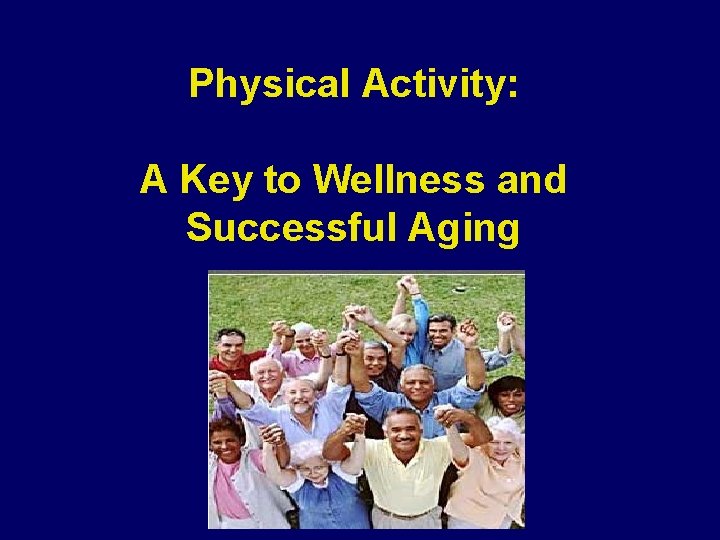
Physical Activity: A Key to Wellness and Successful Aging
SECTION ON GERIATRICS Health Promotion & Wellness Special Interest Group American Physical Therapy Association Adapted from presentations by: Kathryn Brewer, PT, GCS, MEd Linda Eargle, PT, MEd Lori Schrodt, PT, Ph. D
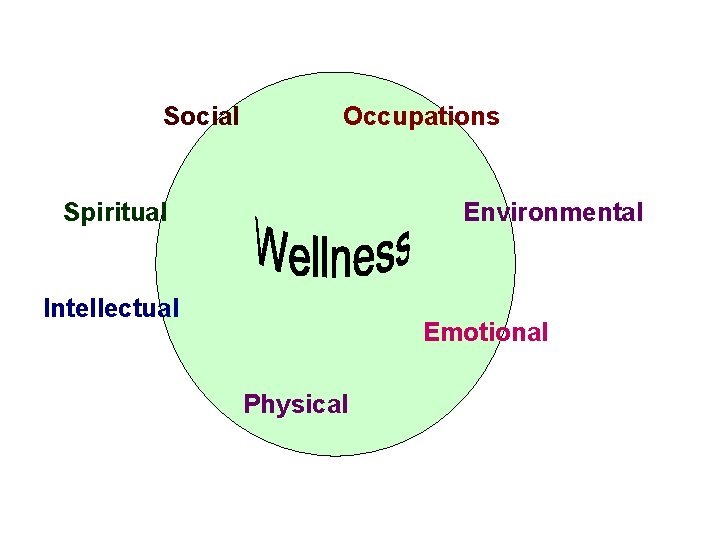
Wellness A lifelong interactive process of becoming aware of and practicing healthy choices to create a more successful and balanced lifestyle.
Social Occupations Spiritual Environmental Intellectual Emotional Physical
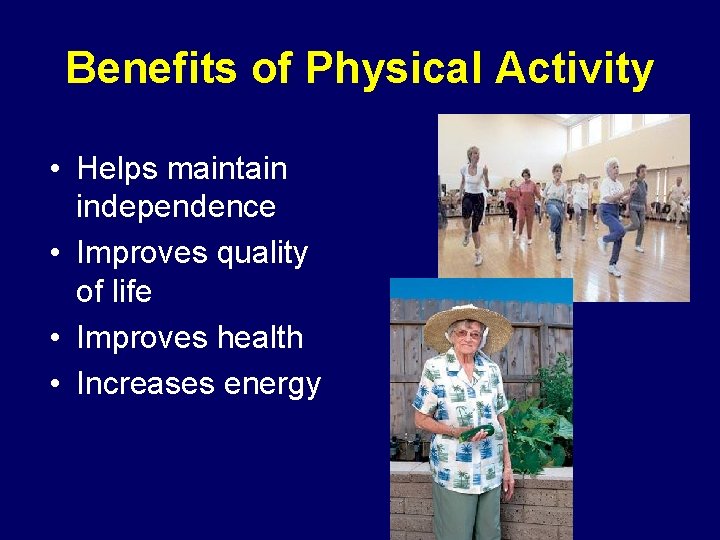
Benefits of Physical Activity • Helps maintain independence • Improves quality of life • Improves health • Increases energy
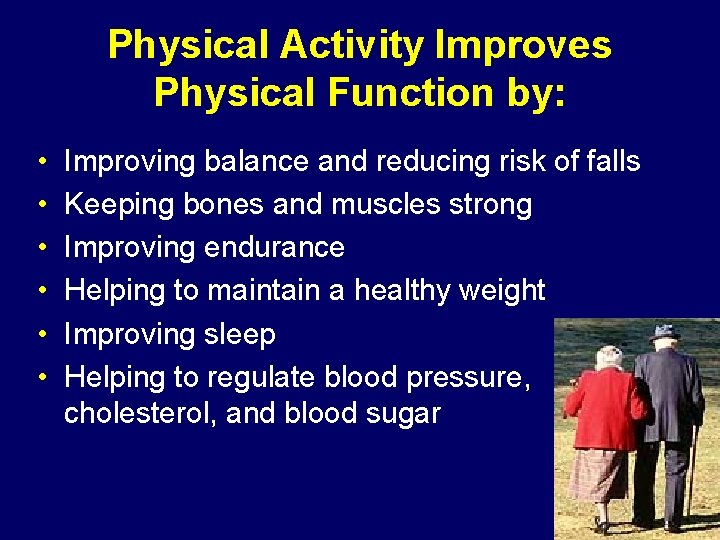
Physical Activity Improves Physical Function by: • • • Improving balance and reducing risk of falls Keeping bones and muscles strong Improving endurance Helping to maintain a healthy weight Improving sleep Helping to regulate blood pressure, cholesterol, and blood sugar
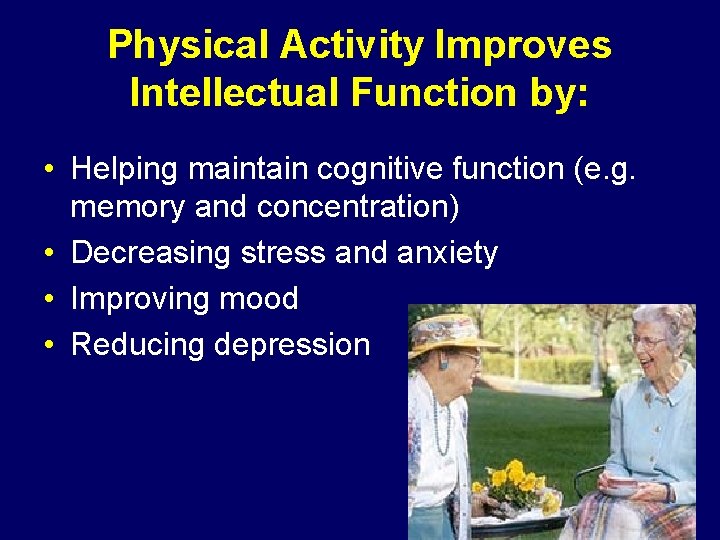
Physical Activity Improves Intellectual Function by: • Helping maintain cognitive function (e. g. memory and concentration) • Decreasing stress and anxiety • Improving mood • Reducing depression
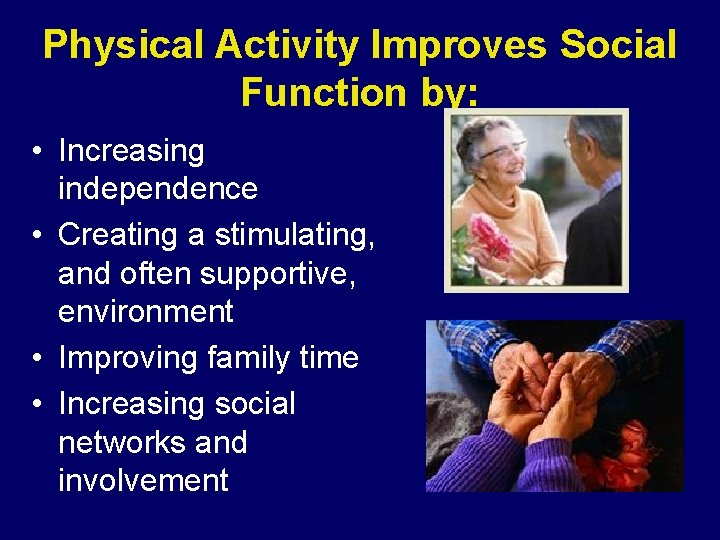
Physical Activity Improves Social Function by: • Increasing independence • Creating a stimulating, and often supportive, environment • Improving family time • Increasing social networks and involvement
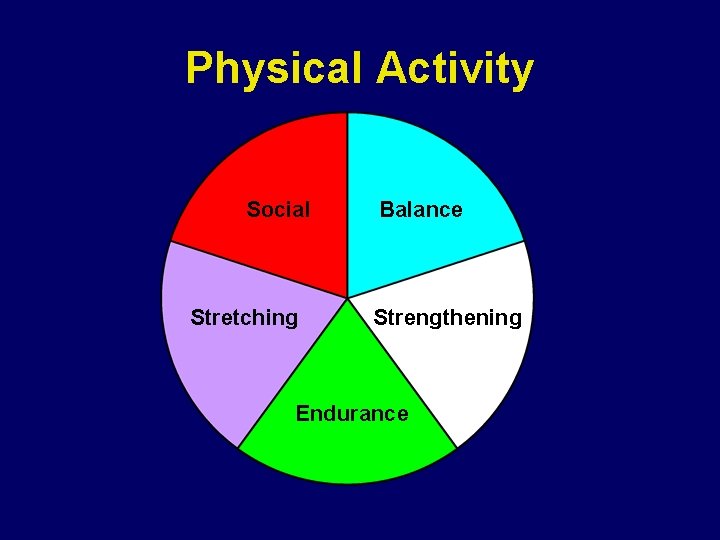
Physical Activity Social Stretching Balance Strengthening Endurance
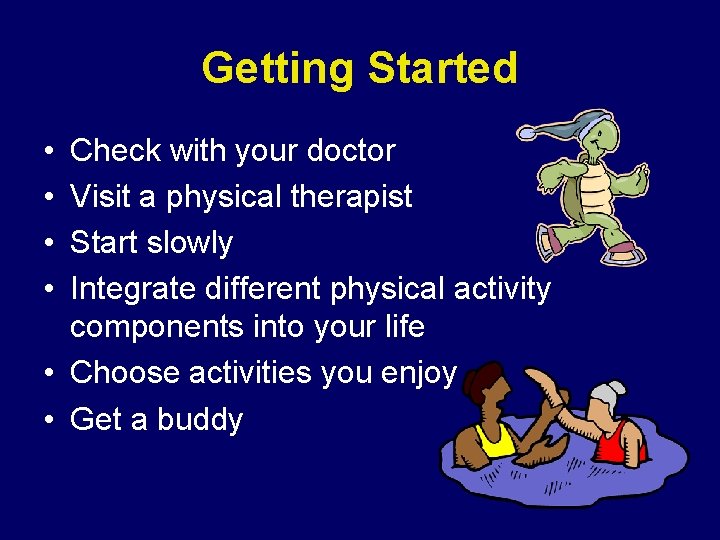
Getting Started • • Check with your doctor Visit a physical therapist Start slowly Integrate different physical activity components into your life • Choose activities you enjoy • Get a buddy
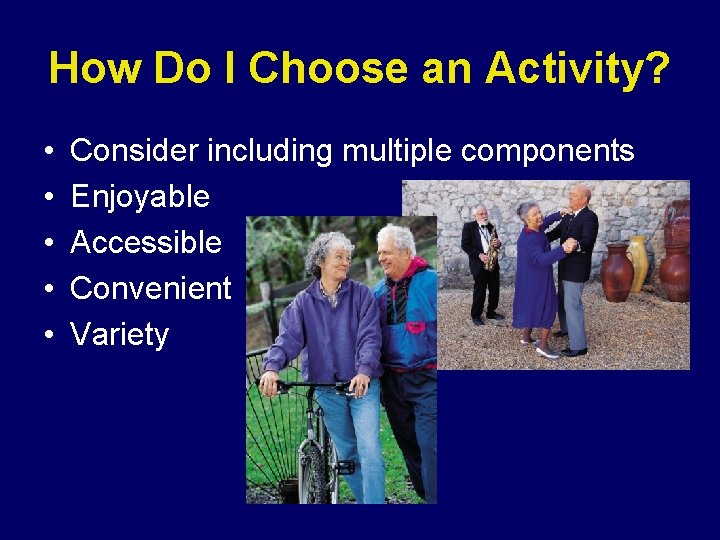
How Do I Choose an Activity? • • • Consider including multiple components Enjoyable Accessible Convenient Variety
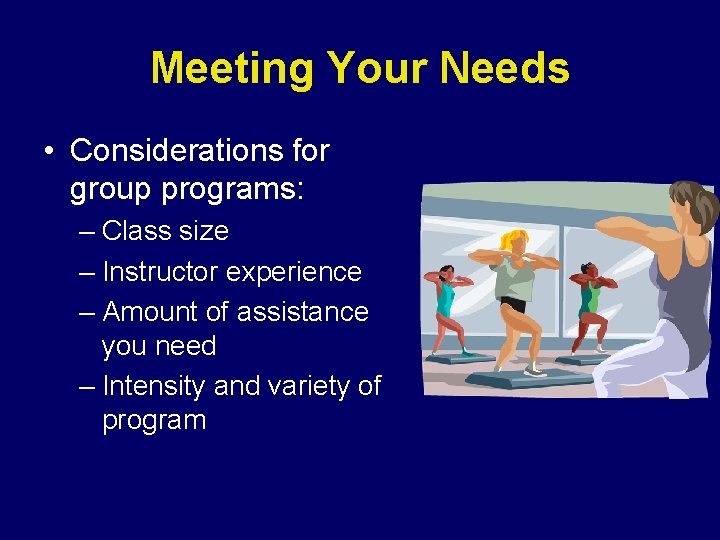
Meeting Your Needs • Considerations for group programs: – Class size – Instructor experience – Amount of assistance you need – Intensity and variety of program
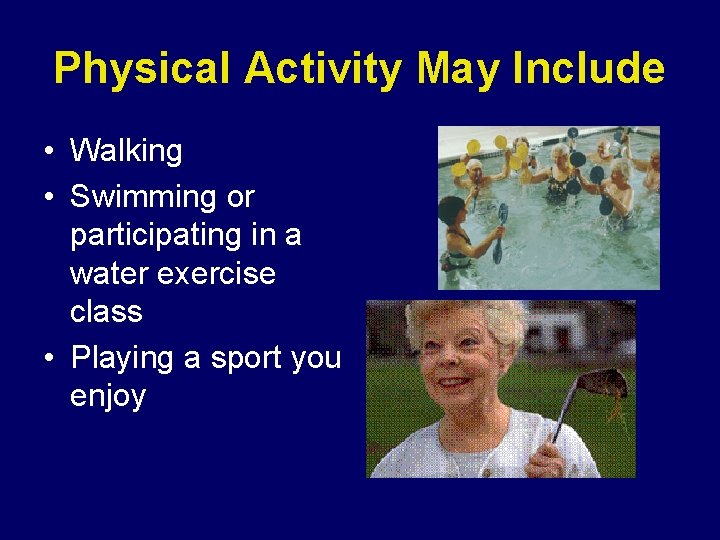
Physical Activity May Include • Walking • Swimming or participating in a water exercise class • Playing a sport you enjoy
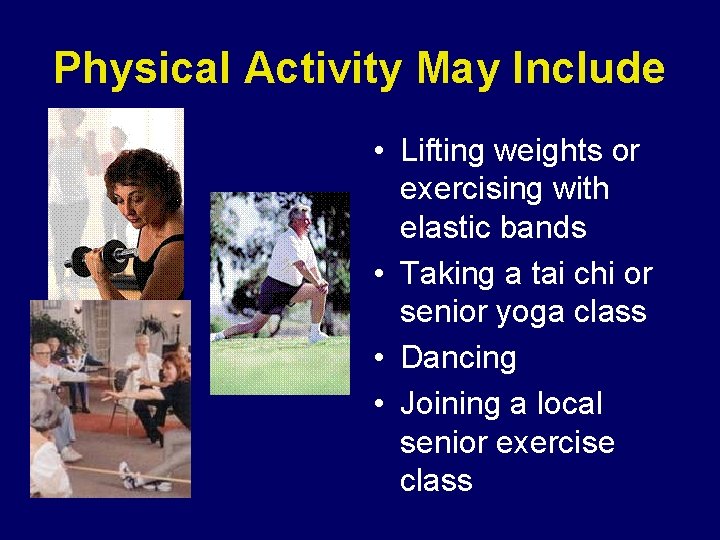
Physical Activity May Include • Lifting weights or exercising with elastic bands • Taking a tai chi or senior yoga class • Dancing • Joining a local senior exercise class
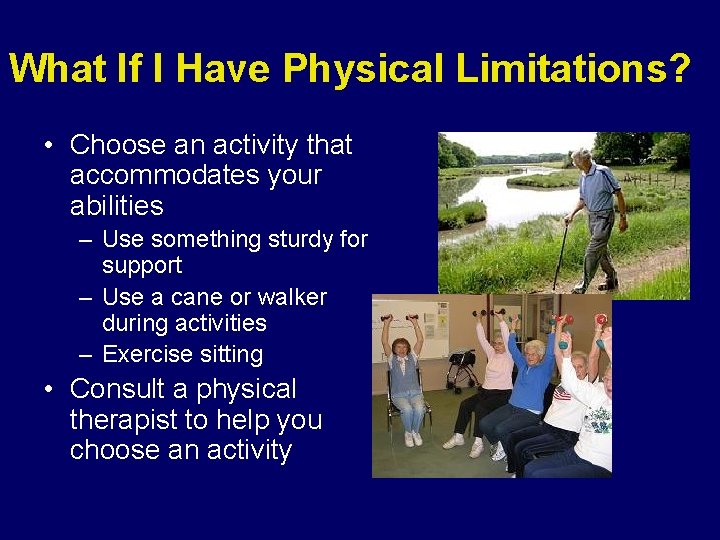
What If I Have Physical Limitations? • Choose an activity that accommodates your abilities – Use something sturdy for support – Use a cane or walker during activities – Exercise sitting • Consult a physical therapist to help you choose an activity
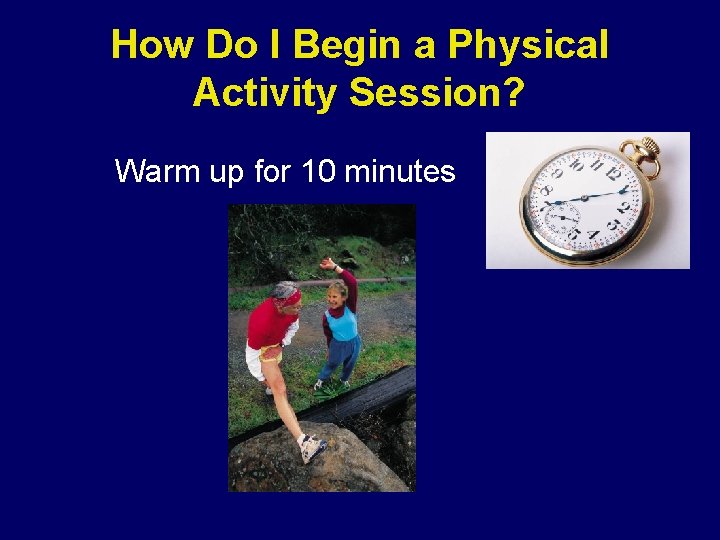
How Do I Begin a Physical Activity Session? Warm up for 10 minutes
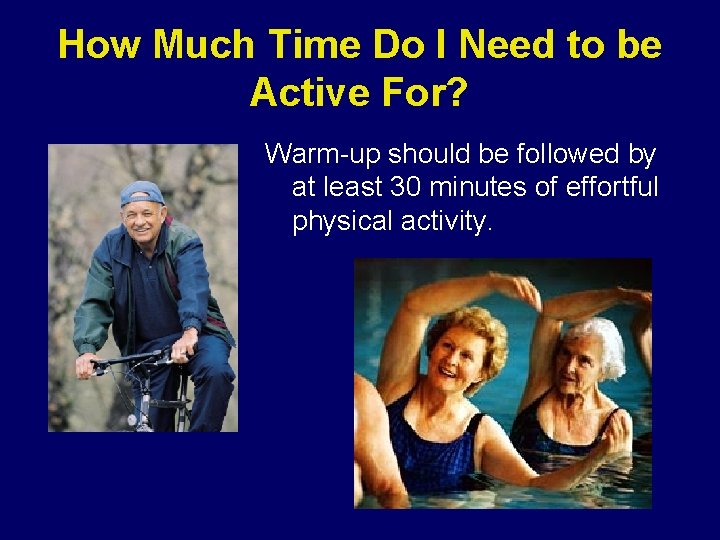
How Much Time Do I Need to be Active For? Warm-up should be followed by at least 30 minutes of effortful physical activity.
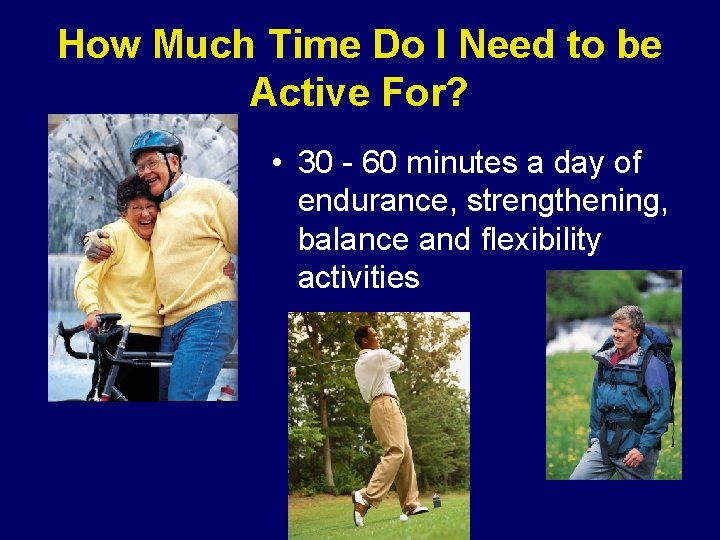
How Much Time Do I Need to be Active For? • 30 - 60 minutes a day of endurance, strengthening, balance and flexibility activities
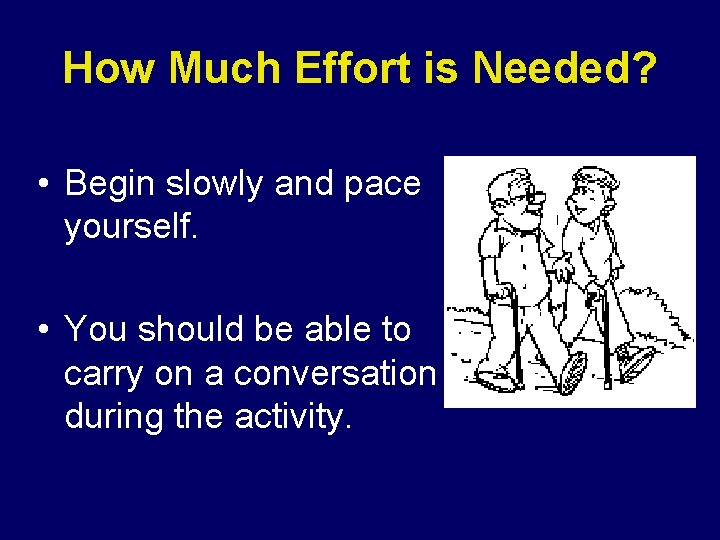
How Much Effort is Needed? • Begin slowly and pace yourself. • You should be able to carry on a conversation during the activity.
How Do I Finish a Physical Activity? Finish your session with a 10 minute cool down and a tall glass of water.
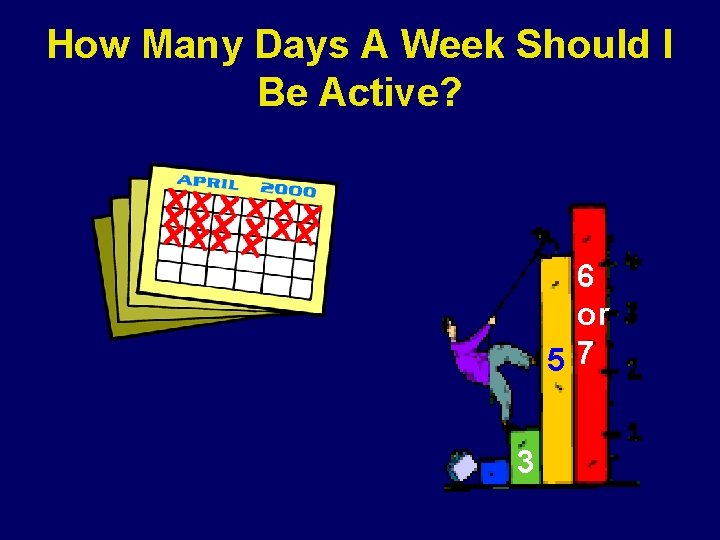
How Many Days A Week Should I Be Active? 6 or 57 3
How might I expect to feel? • When you first begin a physical activity program or advance your current activities it is normal to feel: – Mild muscle stiffness, burning, or fatigue that decreases in 24 hours – Mild increase in heart rate with continued activity, but that returns to normal in 5 minutes
Stop to Rest if You Experience • Shortness of breath (can’t complete sentence) • Dizziness • Heart rate that exceeds prescribed target rate • Onset or worsening of pain
What Does Progress Look Like? • Minor improvement in 2 -3 weeks • Significant improvement in 2 -3 months
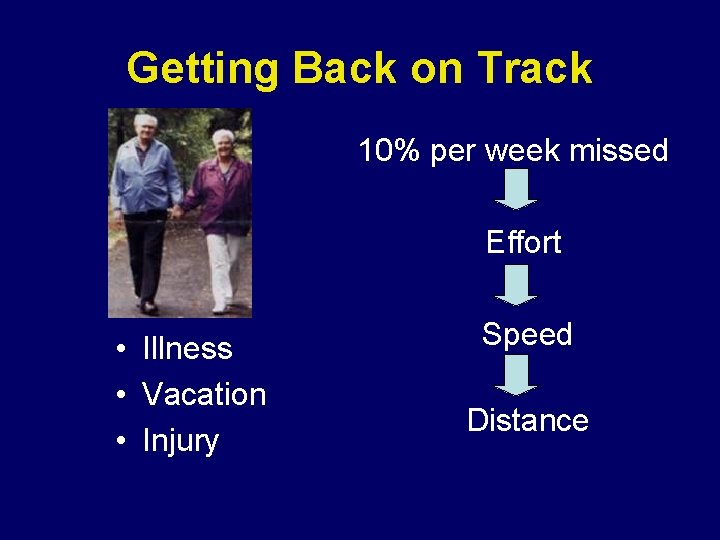
Getting Back on Track 10% per week missed Effort • Illness • Vacation • Injury Speed Distance
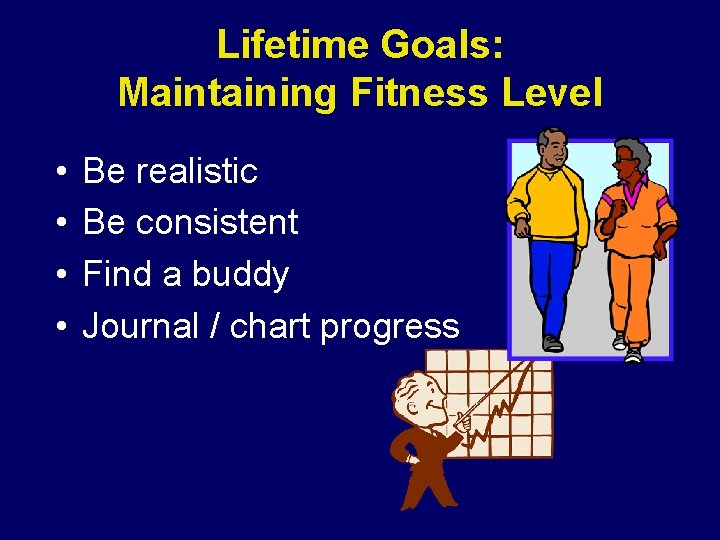
Lifetime Goals: Maintaining Fitness Level • • Be realistic Be consistent Find a buddy Journal / chart progress
Thank You!