
Phylum Porifera The Sponges Read 130 133 The


- Slides: 37
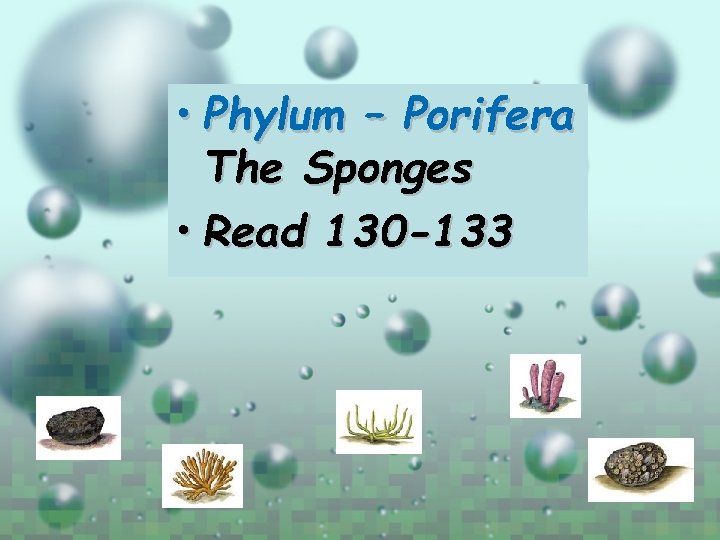
• Phylum – Porifera The Sponges • Read 130 -133
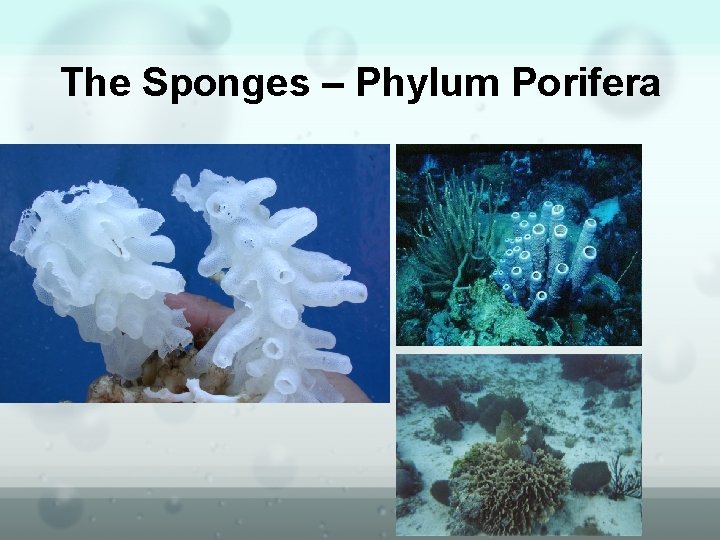
The Sponges – Phylum Porifera
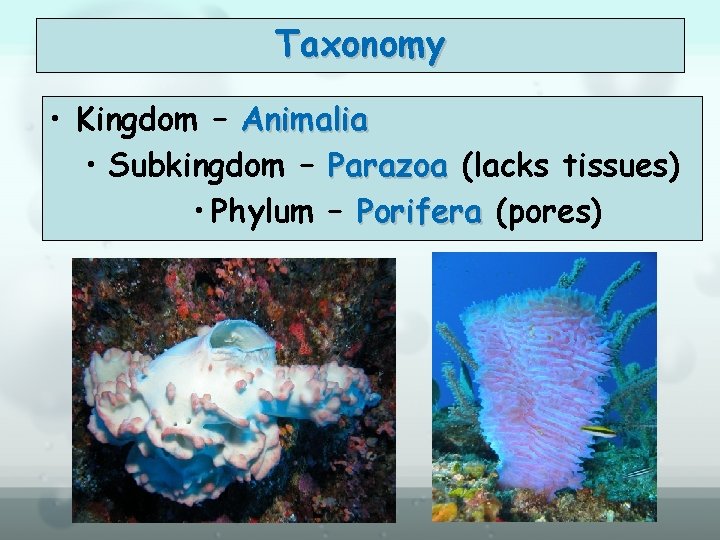
Taxonomy • Kingdom – Animalia • Subkingdom – Parazoa (lacks tissues) • Phylum – Porifera (pores)
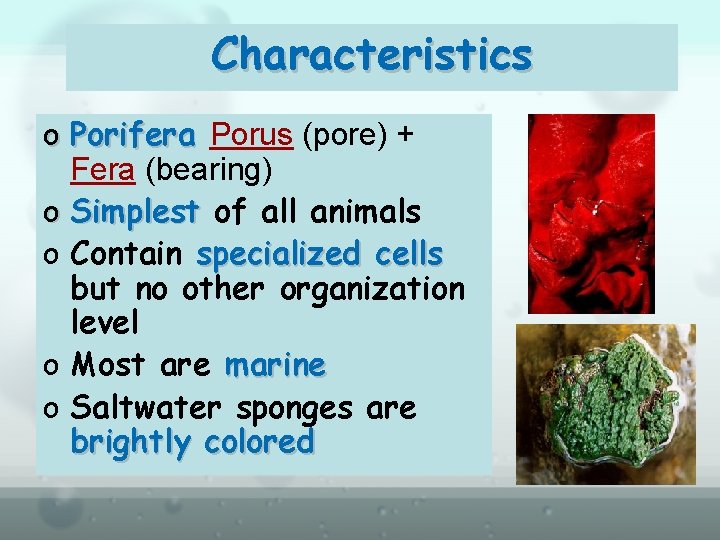
Characteristics o Porifera Porus (pore) + Fera (bearing) o Simplest of all animals o Contain specialized cells but no other organization level o Most are marine o Saltwater sponges are brightly colored
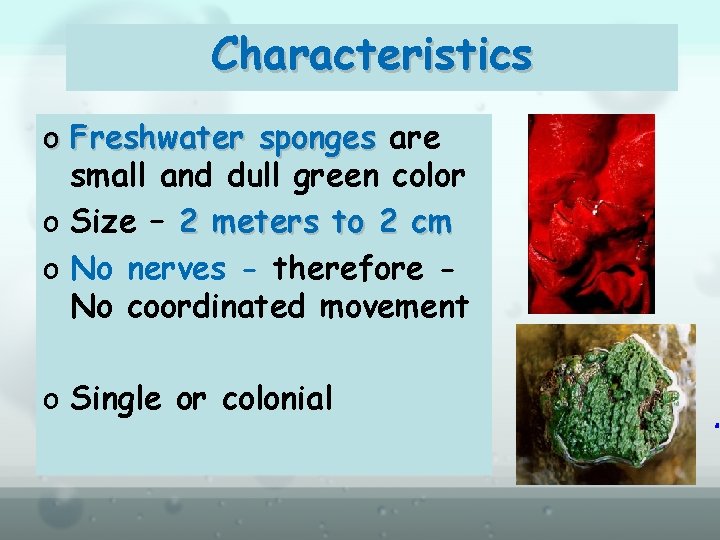
Characteristics o Freshwater sponges are small and dull green color o Size – 2 meters to 2 cm o No nerves - therefore No coordinated movement o Single or colonial
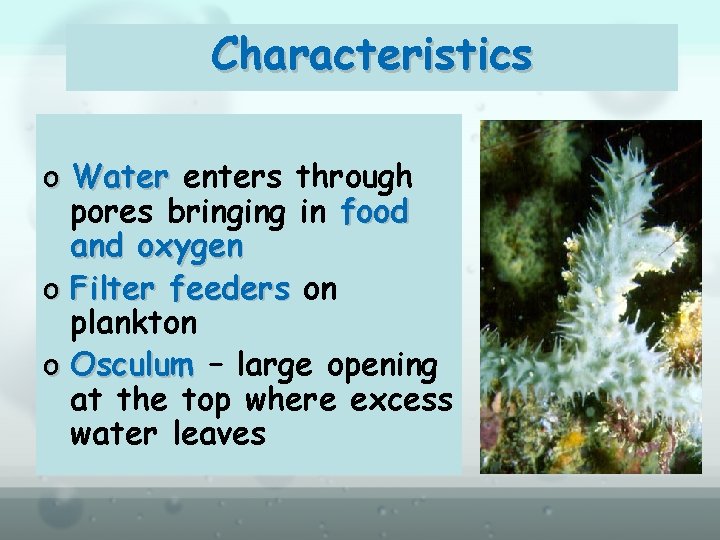
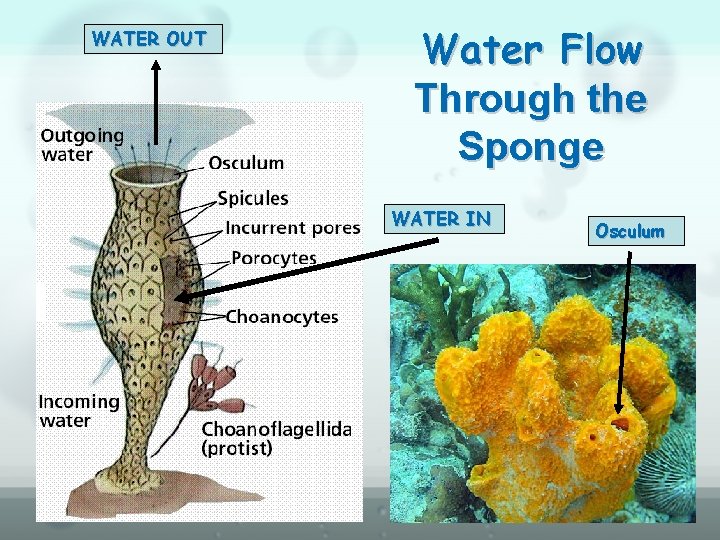
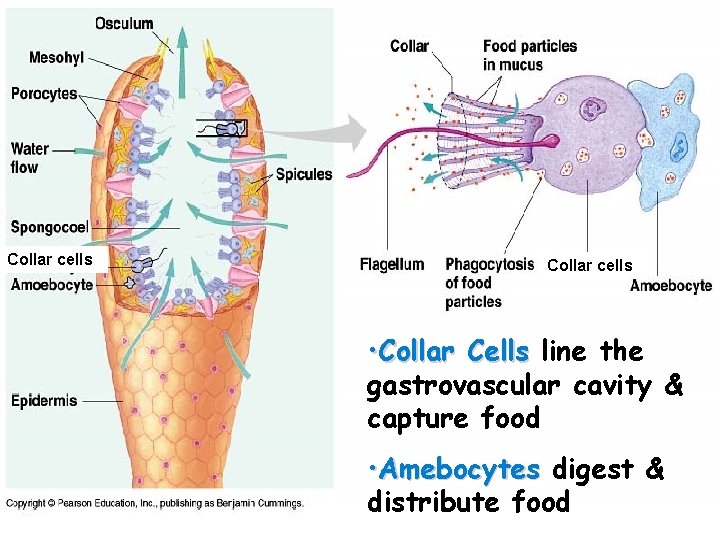
Characteristics o Water enters through pores bringing in food and oxygen o Filter feeders on plankton o Osculum – large opening at the top where excess water leaves
Draw or trace diagram of a sponge from page 131 in your text book
WATER OUT Water Flow Through the Sponge WATER IN Osculum
Characteristics o Asymmetrical o Sessile as adults (attach to rocks) o Free-swimming larval stage called Dipleurula o Also reproduce by fragmentation (pieces break off & form a new sponge)
Sponge Body Structure o Inside body cavity of sponge is hollow o Called the Spongocoel o Have 2 cell layers: § Outer epidermis § Inner endoderm o Jelly-like material between cell layers called mesenchyme
Collar cells • Collar Cells line the gastrovascular cavity & capture food • Amebocytes digest & distribute food
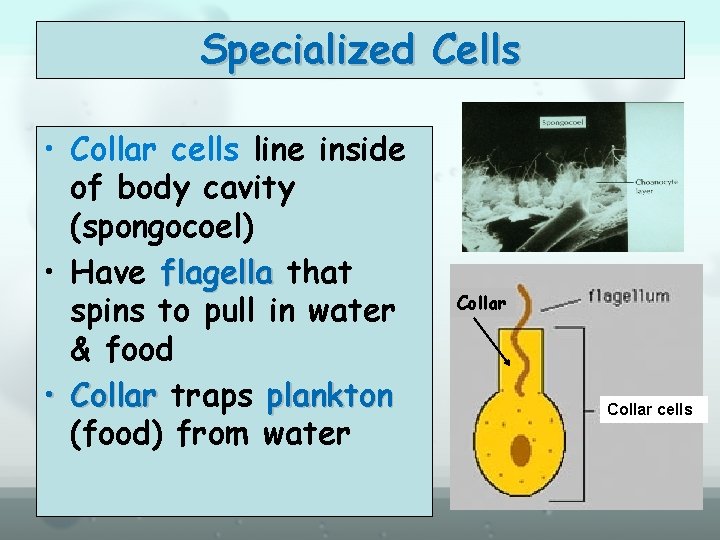
Specialized Cells • Collar cells line inside of body cavity (spongocoel) • Have flagella that spins to pull in water & food • Collar traps plankton (food) from water Collar cells
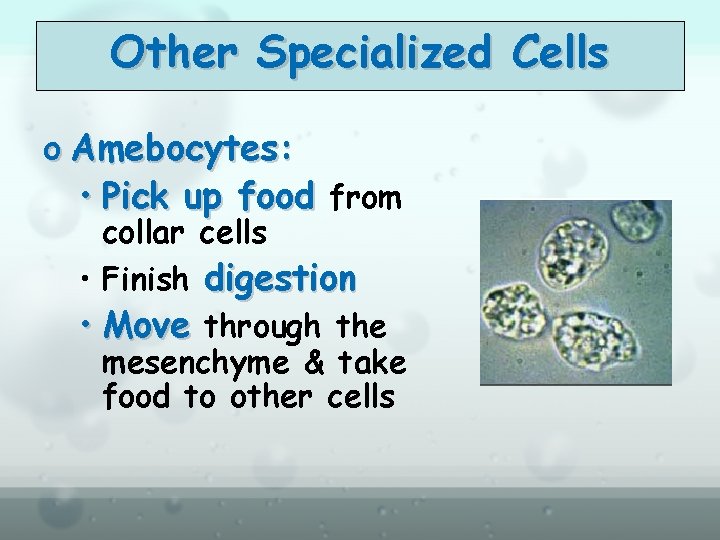
Other Specialized Cells o Amebocytes: • Pick up food from collar cells • Finish digestion • Move through the mesenchyme & take food to other cells
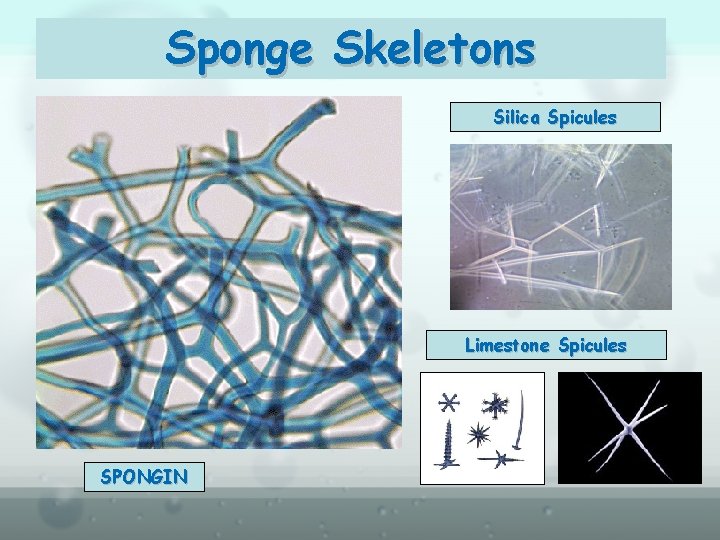
Skeletal Structure of the Sponge • Skeleton made of network of protein fibers called Spongin • Spicules are hard spear or starshaped structures • Spicules made of Ca. CO 3 (limestone) or silica Si. O 2(glass)
Sponge Skeletons Silica Spicules Limestone Spicules SPONGIN
Sponge Skeletons SPICULES VENUS FLOWER BASKET
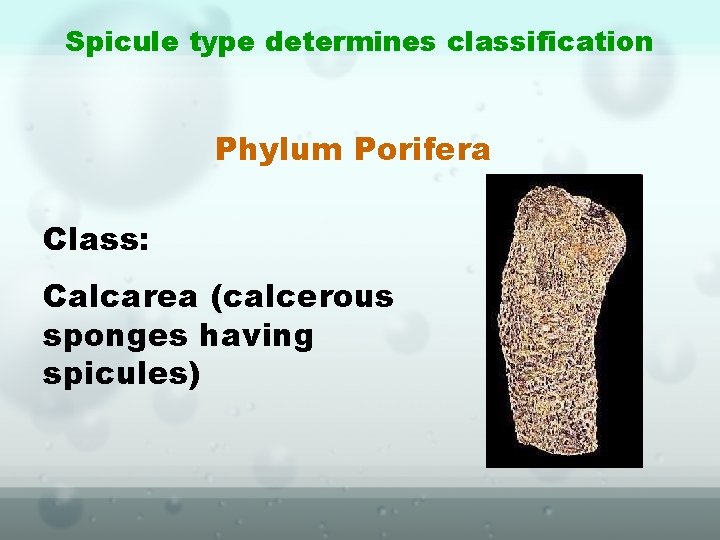
Spicule type determines classification Phylum Porifera Class: Calcarea (calcerous sponges having spicules)
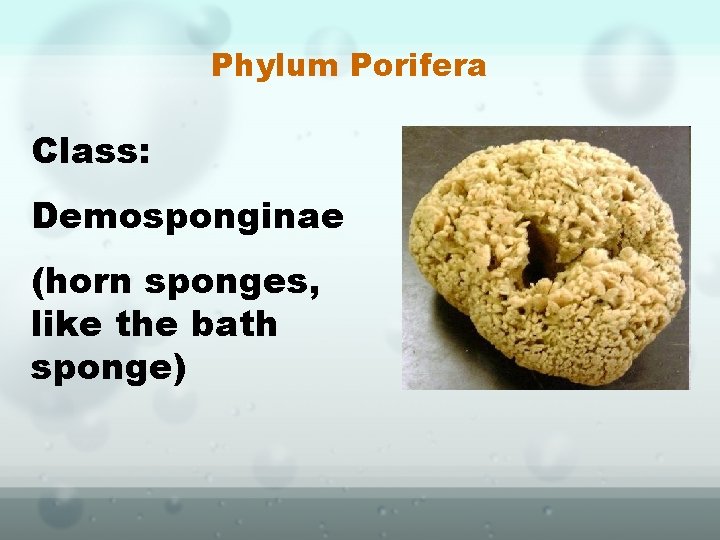
Phylum Porifera Class: Demosponginae (horn sponges, like the bath sponge)
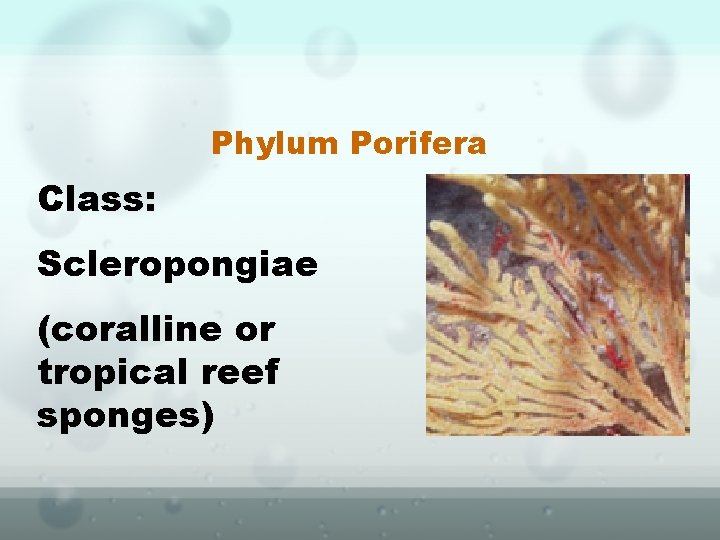
Phylum Porifera Class: Scleropongiae (coralline or tropical reef sponges)
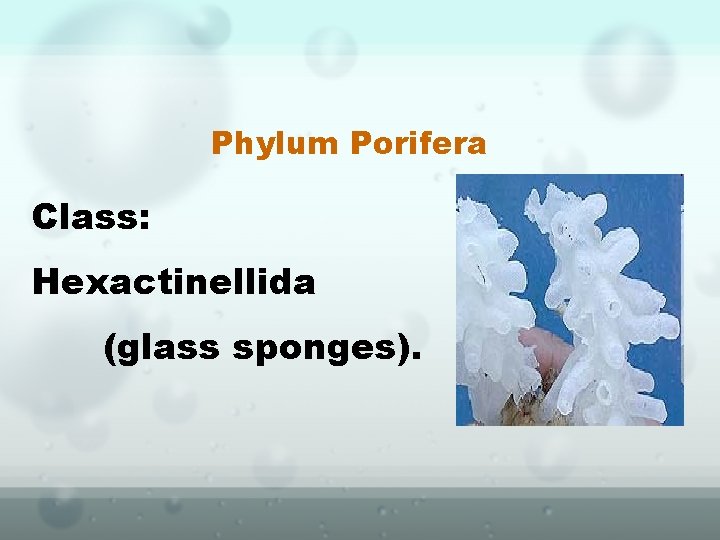
Phylum Porifera Class: Hexactinellida (glass sponges).
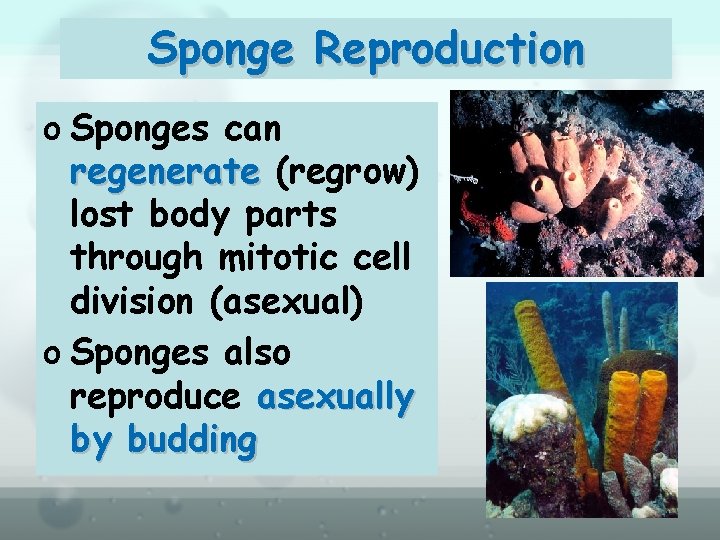
Sponge Reproduction o Sponges can regenerate (regrow) lost body parts through mitotic cell division (asexual) o Sponges also reproduce asexually by budding
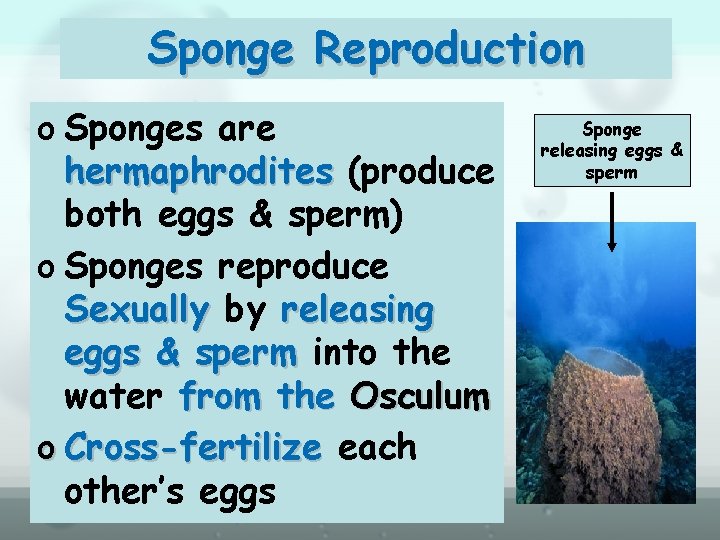
Sponge Reproduction o Sponges are hermaphrodites (produce both eggs & sperm) o Sponges reproduce Sexually by releasing eggs & sperm into the water from the Osculum o Cross-fertilize each other’s eggs Sponge releasing eggs & sperm
Surviving Harsh Conditions o Gemmules are specialized buds made to survive harsh weather (hot or cold) o Contain food, amebocytes and a protective covering of spicules o Released when a sponge dies o Resist dessication (drying out) o Become adult sponge conditions become favorable
Feeding o Filter Feeders o Collar cells collect particles as they pass through the Pore Cells o Items consumed are Resist d diatoms, protozoans, bacteria nad organic matter
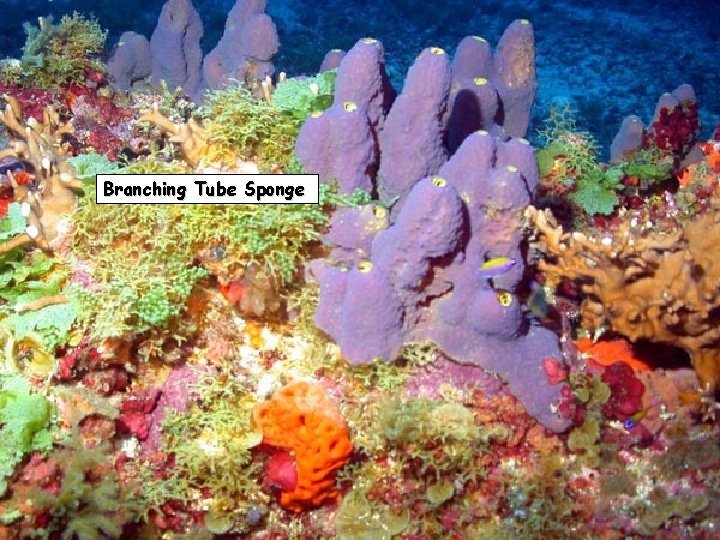
Branching Tube Sponge
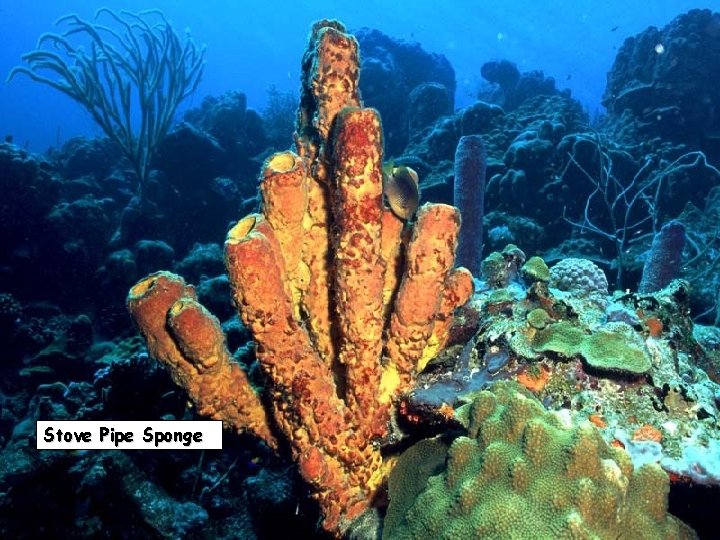
Stove Pipe Sponge
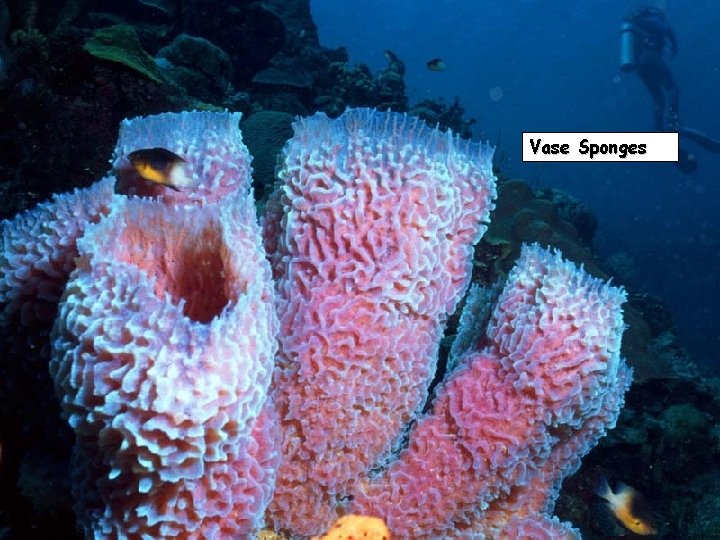
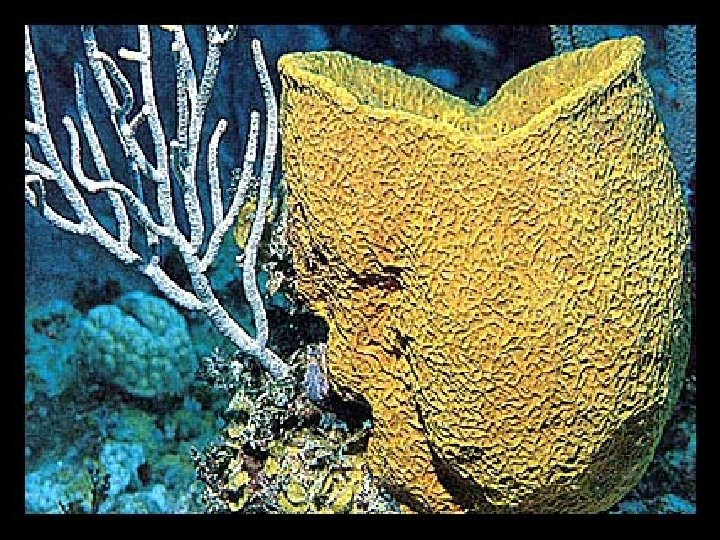
Vase Sponges
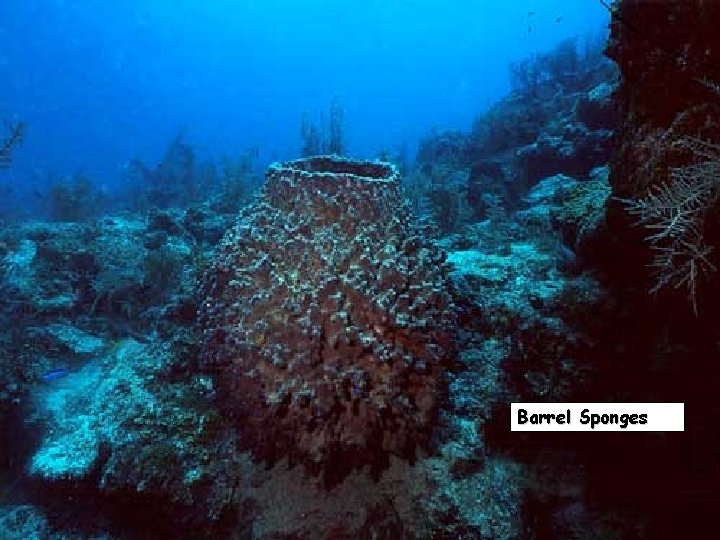
Barrel Sponges
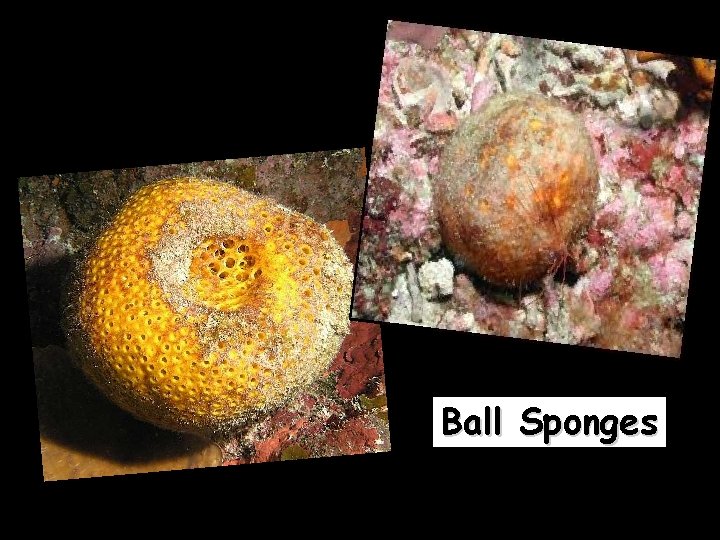
Ball Sponges
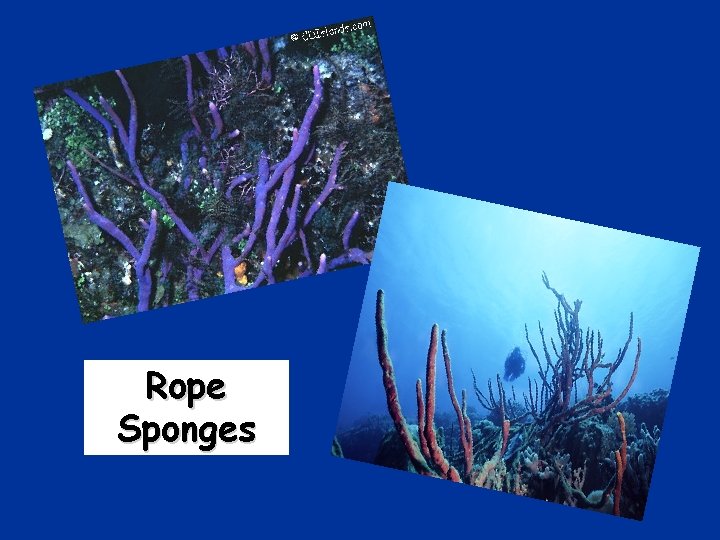
Rope Sponges
Importance of Sponges • • Reefs provide habitat for many animals Vacuums of the sea -- clean up the sea floor/oceans Sponges are a commercial venture Several medicinal compounds, including antibiotics, antivirual drugs, and drugs for leukemia come from sponges.
Cool Stuff – Regeneration! • Tremendous ability to repair and restore lost parts. • Can also reconstitute selves if totally disintegrated. • Sponge tissue has some similarity to human connective tissue. Could lead to aid in tissue transplantation.
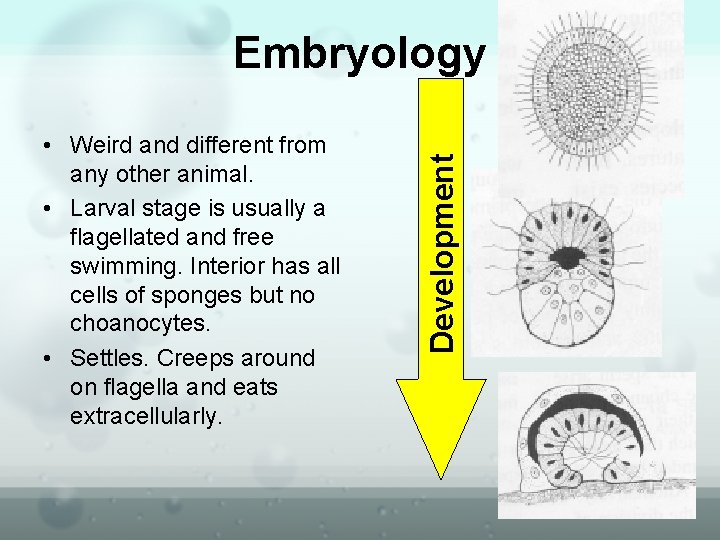
• Weird and different from any other animal. • Larval stage is usually a flagellated and free swimming. Interior has all cells of sponges but no choanocytes. • Settles. Creeps around on flagella and eats extracellularly. Development Embryology