
Phylum Porifera The Sponges 1 Phylum Porifera Phylum

- Slides: 16
Phylum Porifera The Sponges 1 Phylum Porifera
Phylum Porifera Overview l Most primitive of the multicellular animals – l Sponges – – 2 There is some debate if sponges are complex colonial protozans and not metazoans. Over 7, 000 species, approximately 40 species that occur in local waters 2% of all sponges are freshwater, none are terrestrial Phylum Porifera
Phylum Porifera Overview l l 3 Sponges occur in shallow water habitats and vary widely in size (up to 1 m. high) and shape All sponges are sessile filter feeders Phylum Porifera
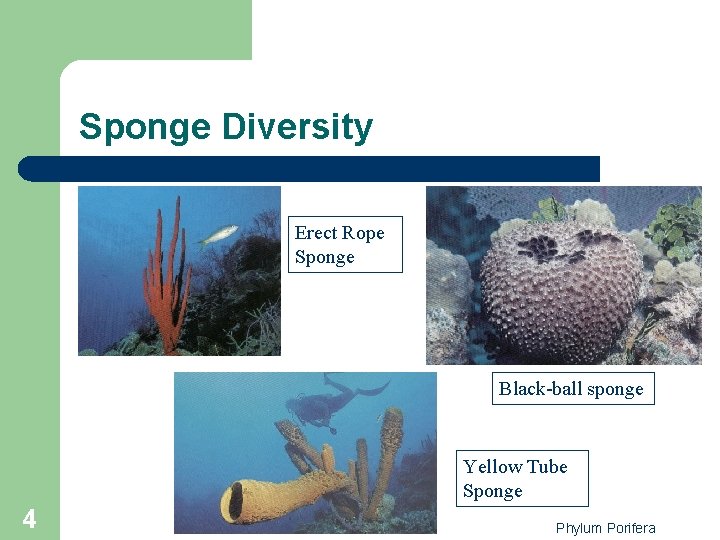
Sponge Diversity Erect Rope Sponge Black-ball sponge Yellow Tube Sponge 4 Phylum Porifera
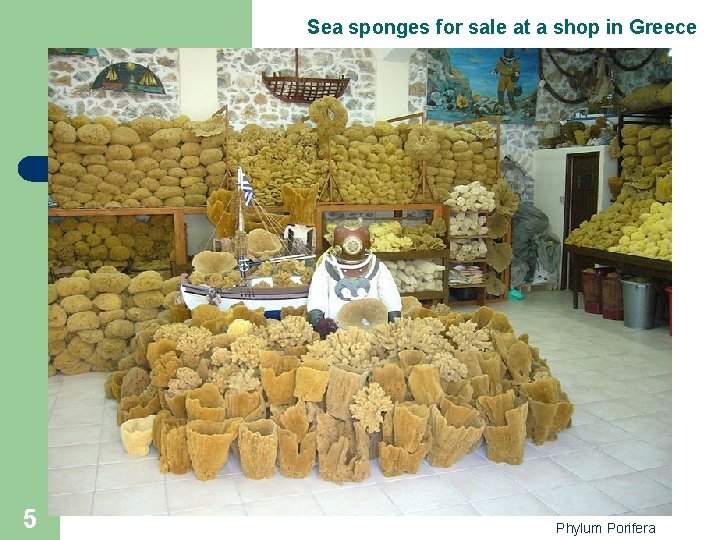
Sea sponges for sale at a shop in Greece 5 Phylum Porifera
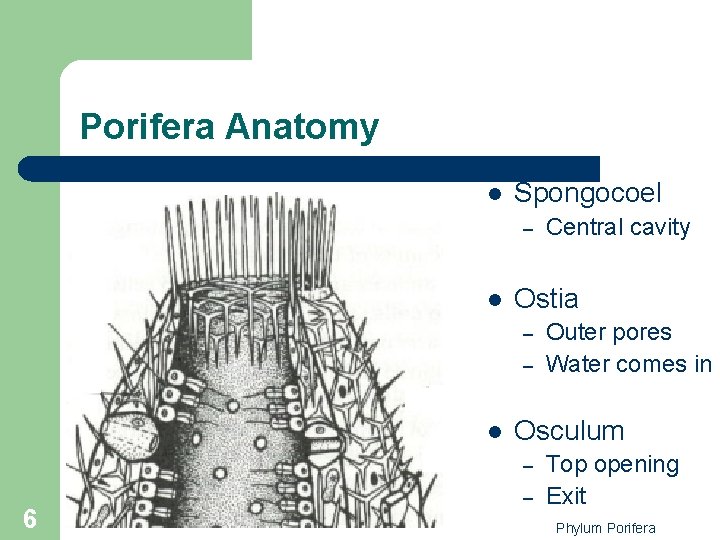
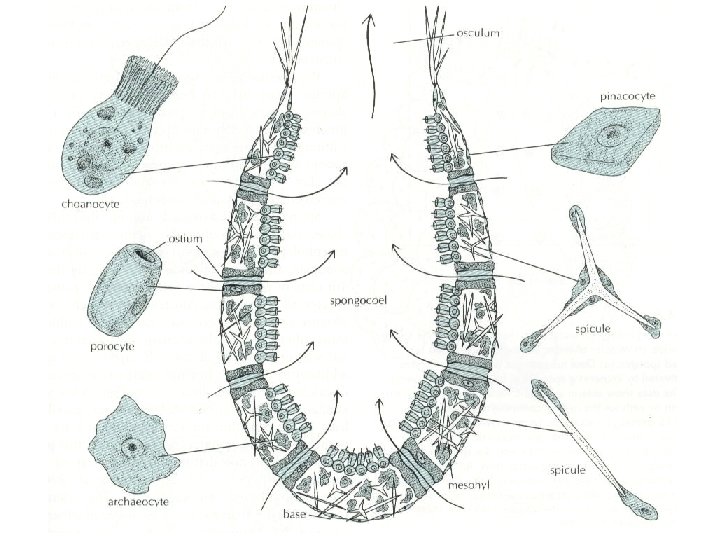
Porifera Anatomy l Spongocoel – l Ostia – – l Outer pores Water comes in Osculum – 6 Central cavity – Top opening Exit Phylum Porifera
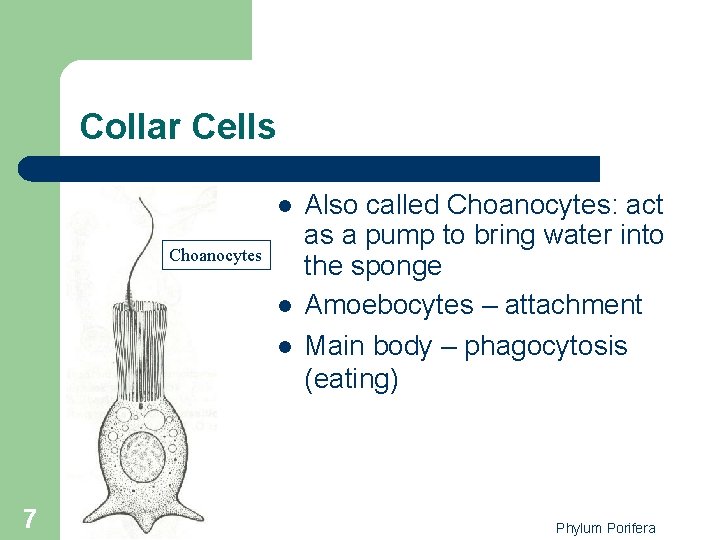
Collar Cells l Choanocytes l l 7 Also called Choanocytes: act as a pump to bring water into the sponge Amoebocytes – attachment Main body – phagocytosis (eating) Phylum Porifera
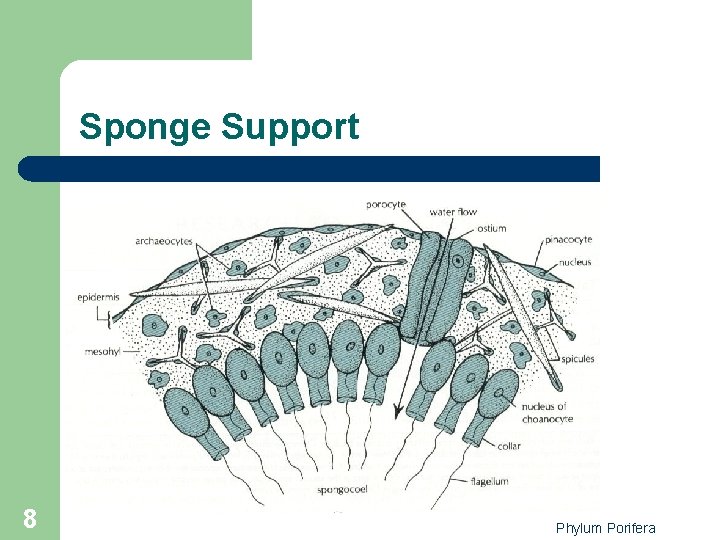
Sponge Support 8 Phylum Porifera
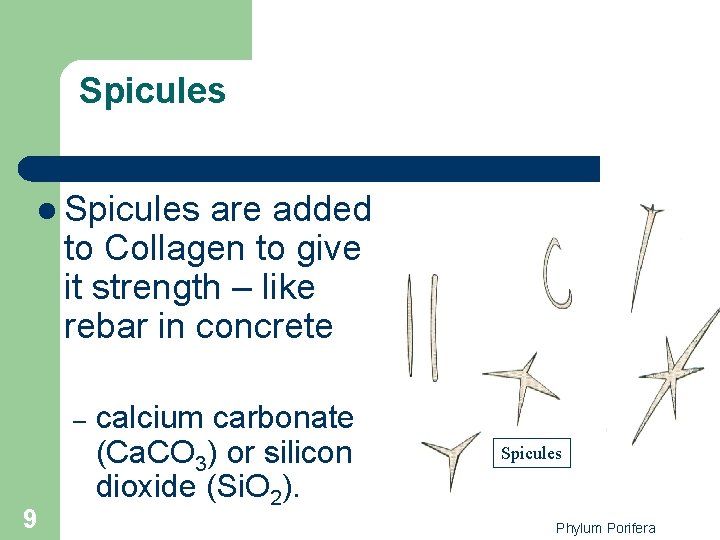
Spicules l Spicules are added to Collagen to give it strength – like rebar in concrete – 9 calcium carbonate (Ca. CO 3) or silicon dioxide (Si. O 2). Spicules Phylum Porifera
Sponge Types
Porifera Reproduction l l l Asexual budding Regeneration: can regenerate from broken pieces Sexual – 11 Usually hermaphroditic with male and female cells scattered throughout the connective tissue. Phylum Porifera
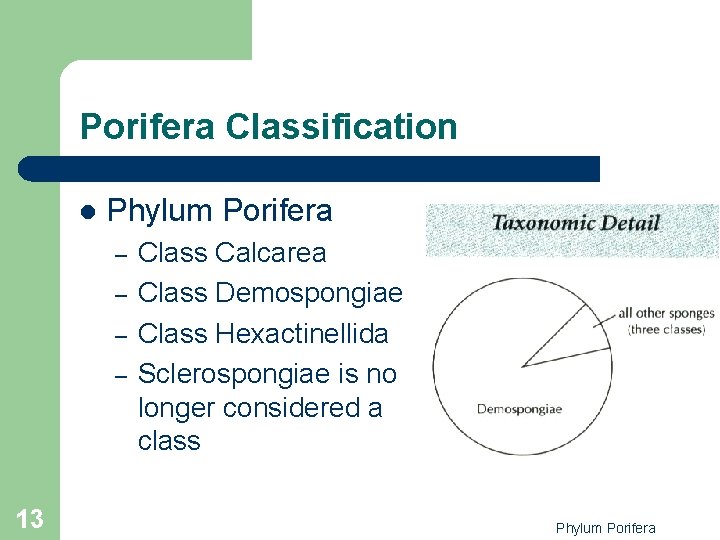
Porifera Classification l Phylum Porifera – – 13 Class Calcarea Class Demospongiae Class Hexactinellida Sclerospongiae is no longer considered a class Phylum Porifera
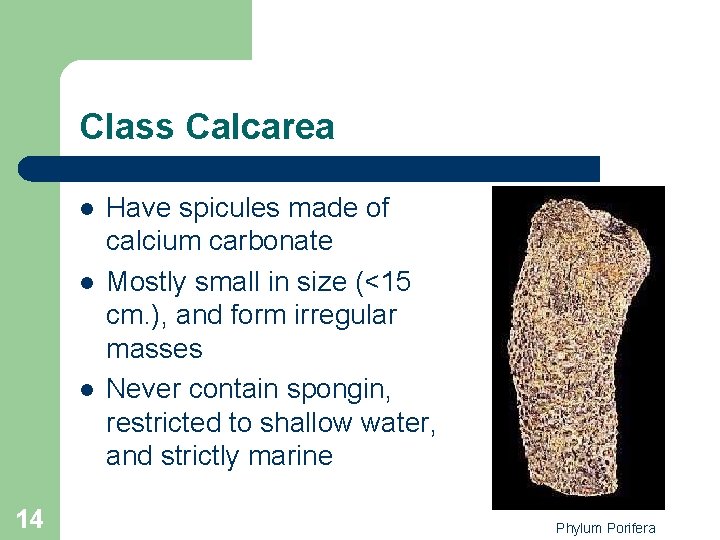
Class Calcarea l l l 14 Have spicules made of calcium carbonate Mostly small in size (<15 cm. ), and form irregular masses Never contain spongin, restricted to shallow water, and strictly marine Phylum Porifera
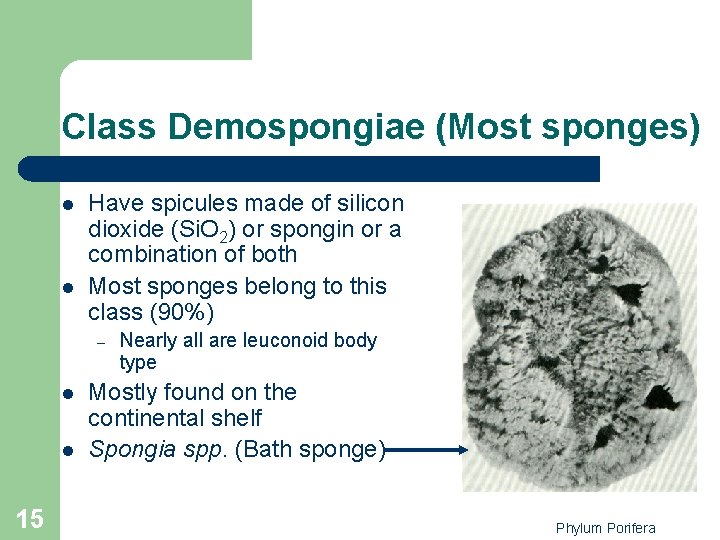
Class Demospongiae (Most sponges) l l Have spicules made of silicon dioxide (Si. O 2) or spongin or a combination of both Most sponges belong to this class (90%) – l l 15 Nearly all are leuconoid body type Mostly found on the continental shelf Spongia spp. (Bath sponge) Phylum Porifera
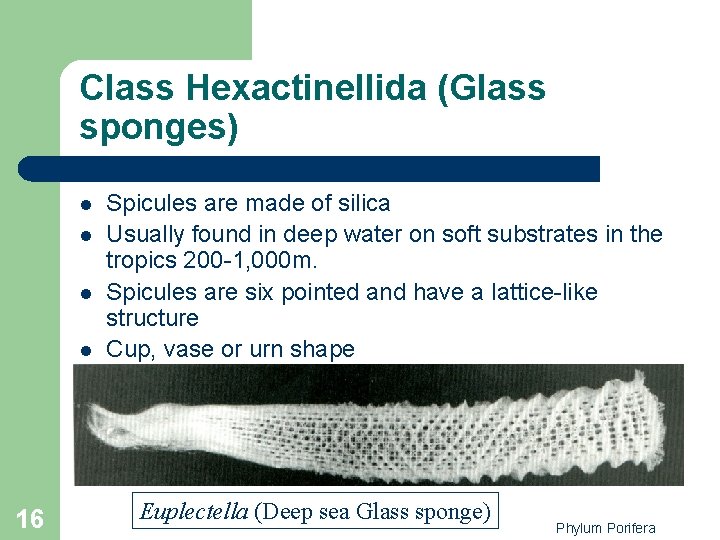
Class Hexactinellida (Glass sponges) l l 16 Spicules are made of silica Usually found in deep water on soft substrates in the tropics 200 -1, 000 m. Spicules are six pointed and have a lattice-like structure Cup, vase or urn shape Euplectella (Deep sea Glass sponge) Phylum Porifera