
Phylum Porifera Sponges Section 26 2 Phylum Porifera
- Slides: 23
Phylum Porifera – Sponges Section 26 -2
Phylum Porifera 26 -2 G 2 analyse the increasing complexity of the Phylum Porifera o o Examine members of the Phylum Porifera and identify their unifying characteristics Describe how poriferans carry out their life functions
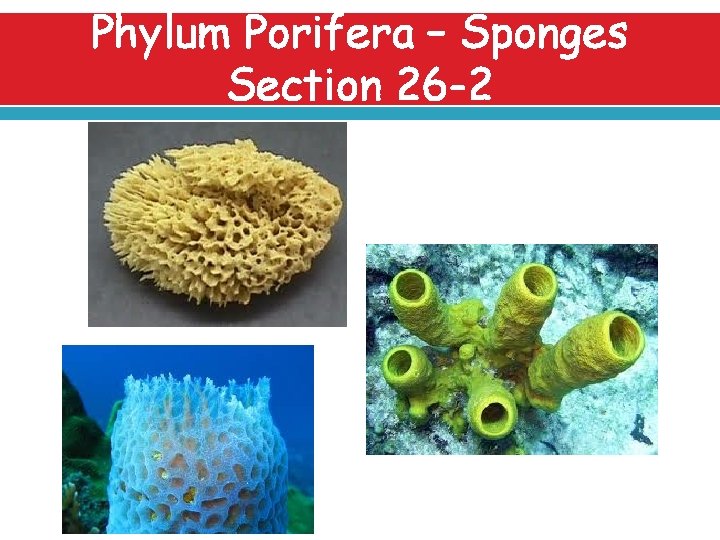
Phylum Porifera – Sponges What is a Sponge? o Sponges are in the phylum Porifera which means “pore-bearers” o Sponges live their entire adult life attached to a single spot (sessile – DO NOT move) o Asymmetrical o Most ancient of all living animals. They first appeared about 580 million years ago!
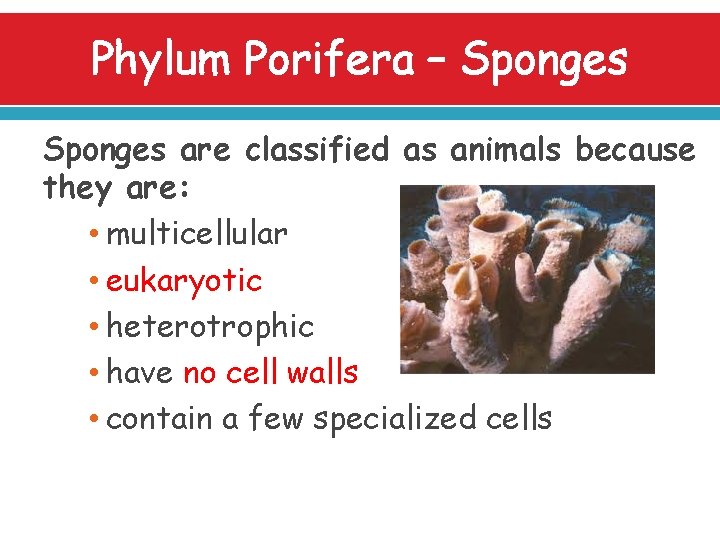
Phylum Porifera – Sponges are classified as animals because they are: • multicellular • eukaryotic • heterotrophic • have no cell walls • contain a few specialized cells
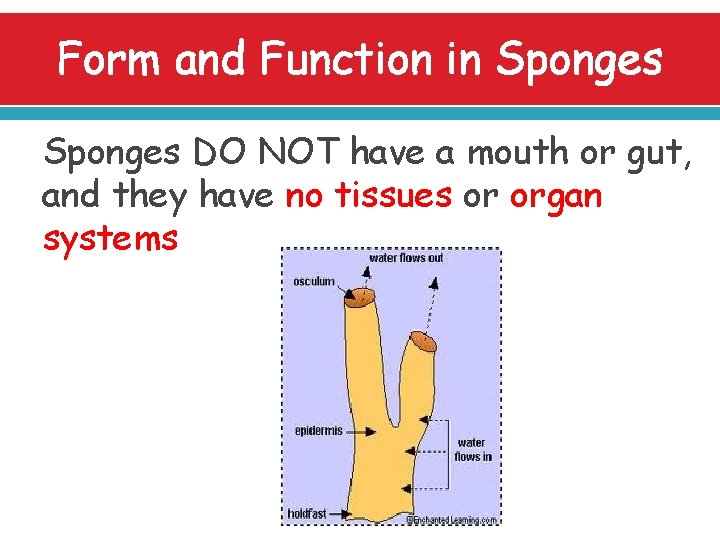
Form and Function in Sponges DO NOT have a mouth or gut, and they have no tissues or organ systems
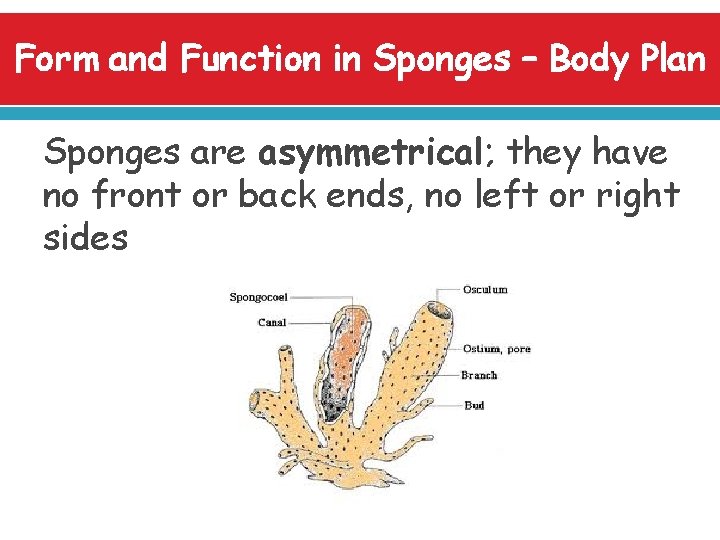
Form and Function in Sponges – Body Plan Sponges are asymmetrical; they have no front or back ends, no left or right sides
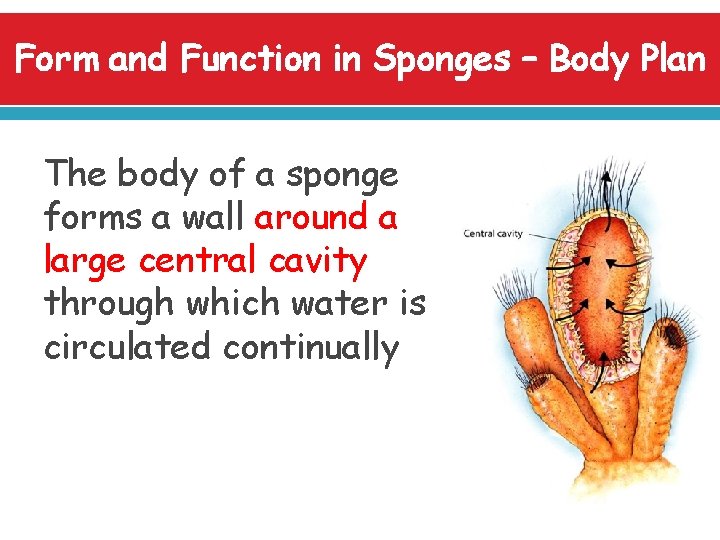
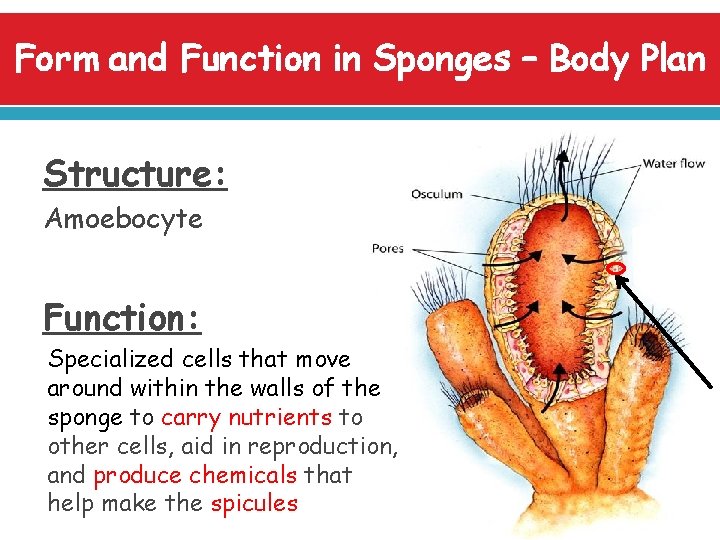
Form and Function in Sponges – Body Plan The body of a sponge forms a wall around a large central cavity through which water is circulated continually
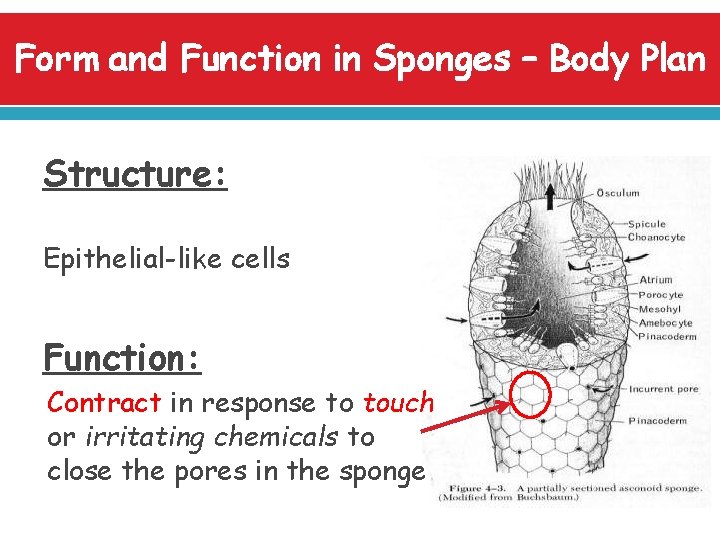
Form and Function in Sponges – Body Plan Structure: Epithelial-like cells Function: Contract in response to touch or irritating chemicals to close the pores in the sponge
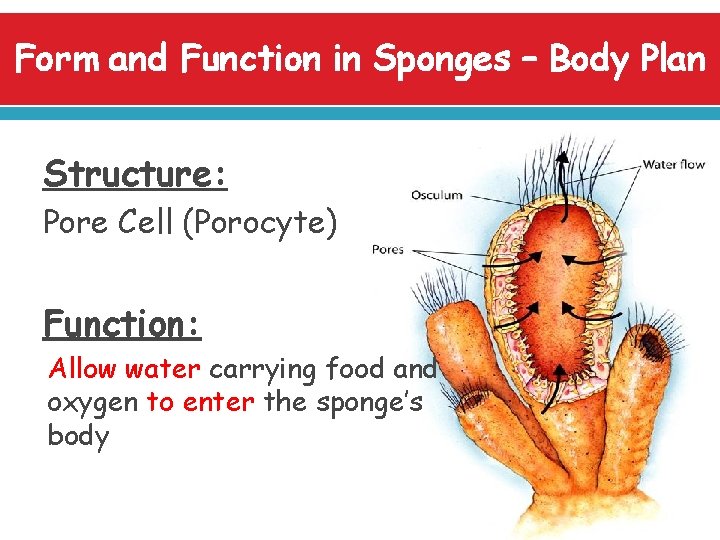
Form and Function in Sponges – Body Plan Structure: Pore Cell (Porocyte) Function: Allow water carrying food and oxygen to enter the sponge’s body
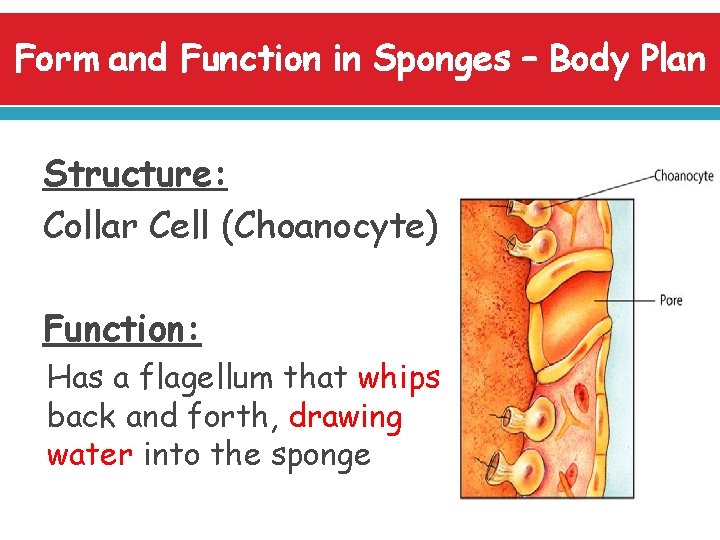
Form and Function in Sponges – Body Plan Structure: Collar Cell (Choanocyte) Function: Has a flagellum that whips back and forth, drawing water into the sponge
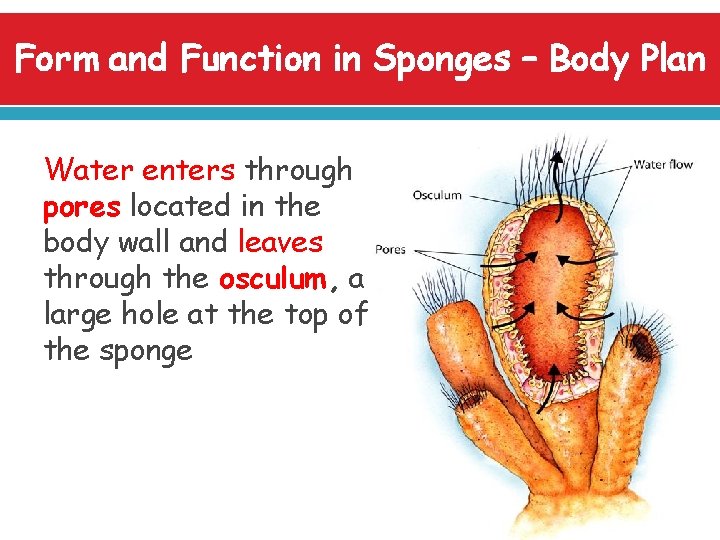
Form and Function in Sponges – Body Plan Water enters through pores located in the body wall and leaves through the osculum, a large hole at the top of the sponge
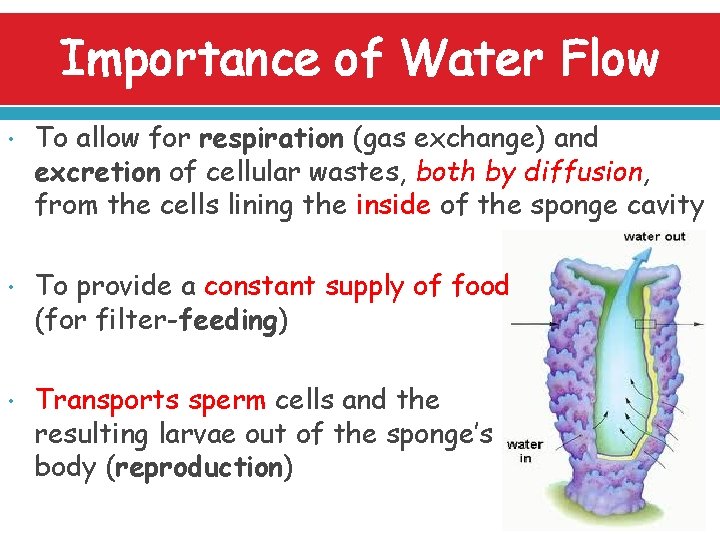
Importance of Water Flow • To allow for respiration (gas exchange) and excretion of cellular wastes, both by diffusion, from the cells lining the inside of the sponge cavity • To provide a constant supply of food (for filter-feeding) • Transports sperm cells and the resulting larvae out of the sponge’s body (reproduction)
Form and Function in Sponges – Body Plan Structure: Amoebocyte Function: Specialized cells that move around within the walls of the sponge to carry nutrients to other cells, aid in reproduction, and produce chemicals that help make the spicules
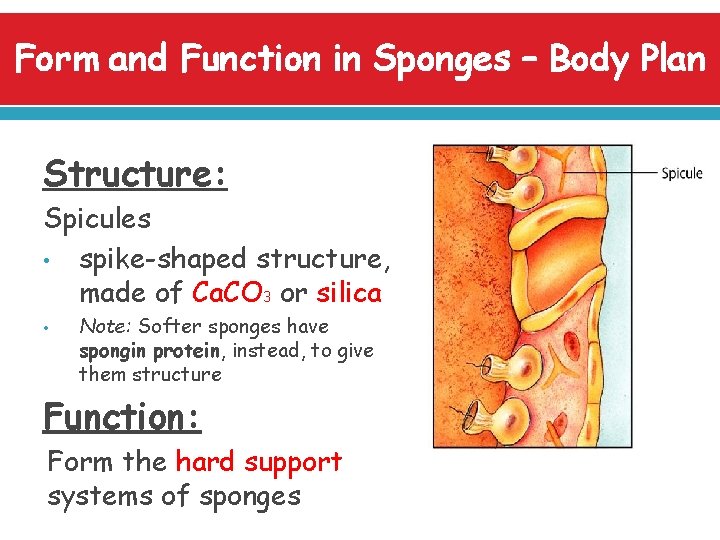
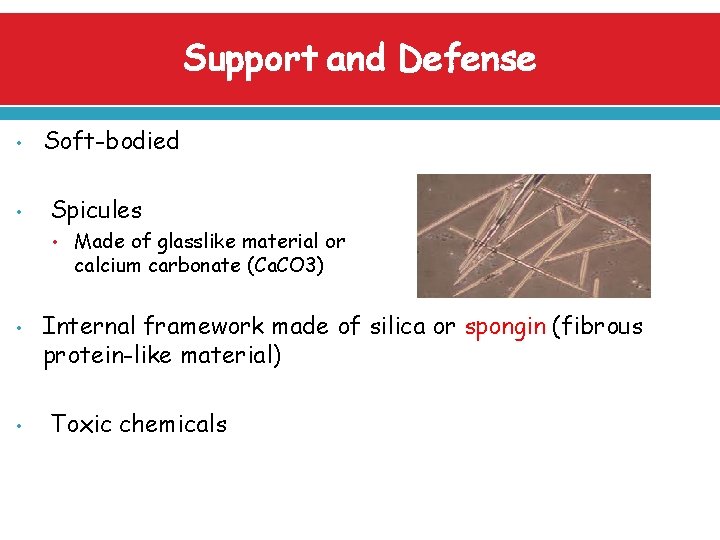
Form and Function in Sponges – Body Plan Structure: Spicules • spike-shaped structure, made of Ca. CO 3 or silica • Note: Softer sponges have spongin protein, instead, to give them structure Function: Form the hard support systems of sponges
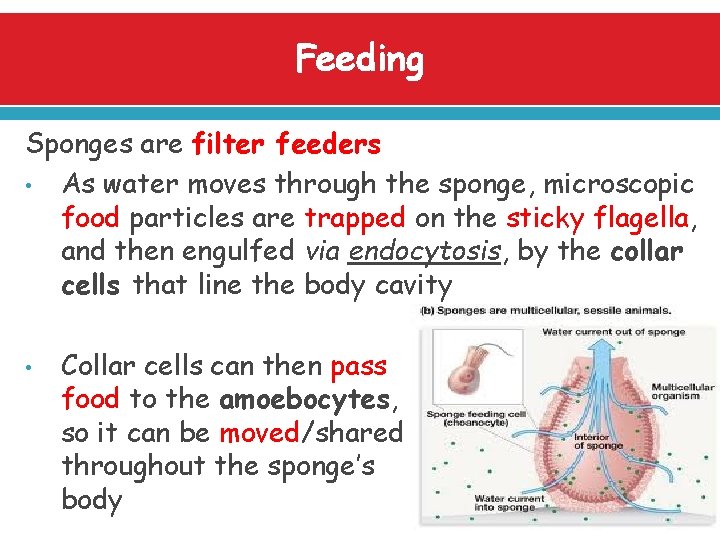
Feeding Sponges are filter feeders • As water moves through the sponge, microscopic food particles are trapped on the sticky flagella, and then engulfed via endocytosis, by the collar cells that line the body cavity • Collar cells can then pass food to the amoebocytes, so it can be moved/shared throughout the sponge’s body
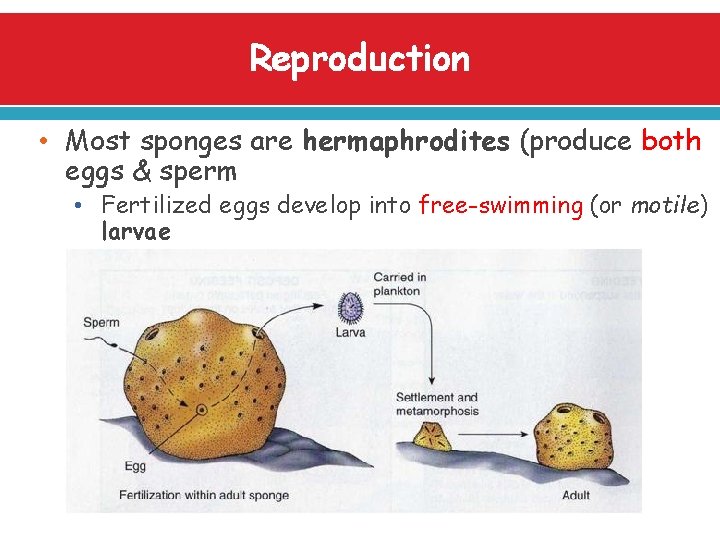
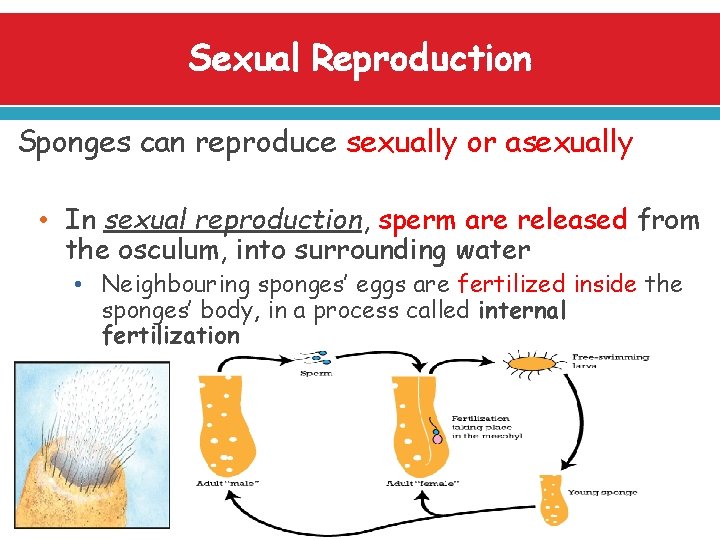
Reproduction • Most sponges are hermaphrodites (produce both eggs & sperm • Fertilized eggs develop into free-swimming (or motile) larvae
Sexual Reproduction Sponges can reproduce sexually or asexually • In sexual reproduction, sperm are released from the osculum, into surrounding water • Neighbouring sponges’ eggs are fertilized inside the sponges’ body, in a process called internal fertilization
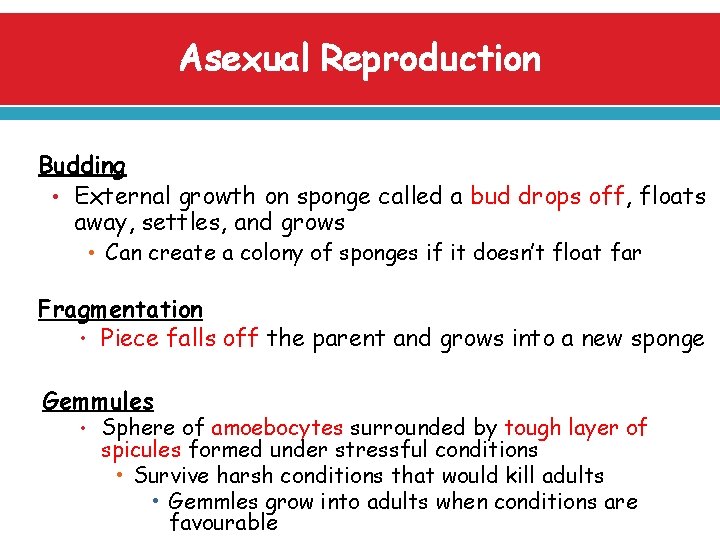
Asexual Reproduction Budding • External growth on sponge called a bud drops off, floats away, settles, and grows • Can create a colony of sponges if it doesn’t float far Fragmentation • Piece falls off the parent and grows into a new sponge Gemmules • Sphere of amoebocytes surrounded by tough layer of spicules formed under stressful conditions • Survive harsh conditions that would kill adults • Gemmles grow into adults when conditions are favourable
Support and Defense • • Soft-bodied Spicules • Made of glasslike material or calcium carbonate (Ca. CO 3) • • Internal framework made of silica or spongin (fibrous protein-like material) Toxic chemicals
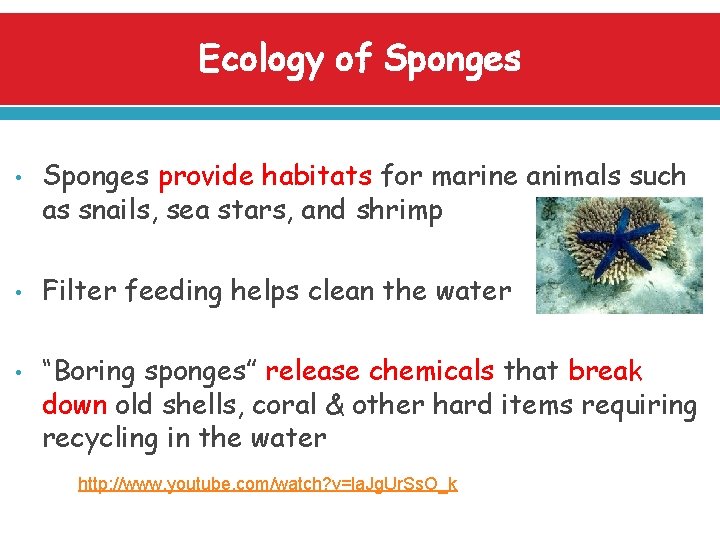
Ecology of Sponges • • • Sponges provide habitats for marine animals such as snails, sea stars, and shrimp Filter feeding helps clean the water “Boring sponges” release chemicals that break down old shells, coral & other hard items requiring recycling in the water http: //www. youtube. com/watch? v=la. Jg. Ur. Ss. O_k
Try This… o In sponges, a spike-shaped structure made of chalklike calcium carbonate or glasslike silica is a(an) • • o • • spicule archaeocyte choanocyte epidermal cell Sponges are detritivores. carnivores. filter feeders. herbivores
Try This… o An immature stage of an organism that looks different from the adult form is a(an) • • gemmule. larva. archaeocyte. choanocyte. o Specialized cells that use flagella to move water through the sponge are • • gemmules. pores. spicules. choanocytes
Try This… o Sponges can reproduce • sexually only. • asexually only. • both sexually and asexually. • by metamorphosis o How do sponges feed, respire, elimate waste?