
Phylum Porifera Sponges pp 560 563 Body Plan
Phylum Porifera - Sponges pp. 560 -563
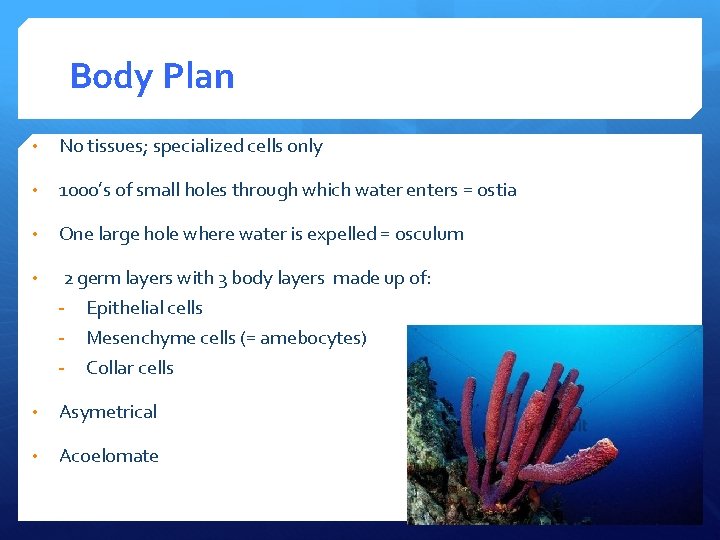
Body Plan • No tissues; specialized cells only • 1000’s of small holes through which water enters = ostia • One large hole where water is expelled = osculum • 2 germ layers with 3 body layers made up of: - Epithelial cells - Mesenchyme cells (= amebocytes) - Collar cells • Asymetrical • Acoelomate

Anatomy
Digestion • Filter feeders • Water is beat in by collar cells’ flagella • Capture food particles from incoming water by phagocytosis • digestion occurs inside food vacuoles within the cells • 50% of food is smaller than the smallest size seen by the light microscope! • Wastes are blown out through osculum
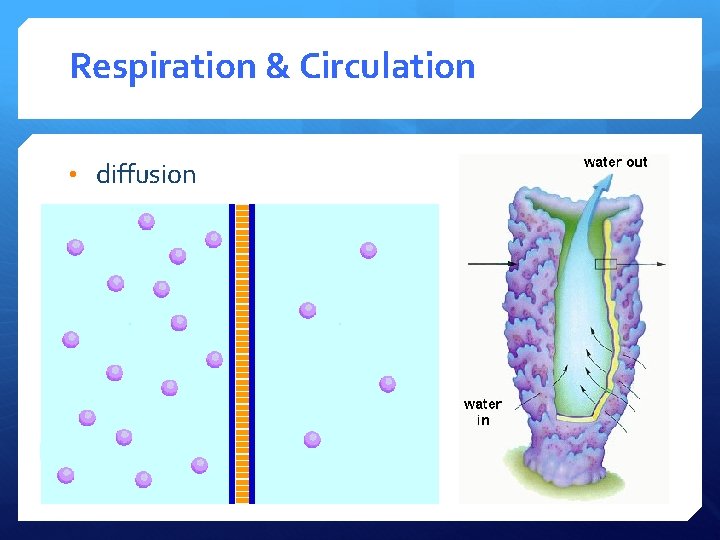
Respiration & Circulation • diffusion
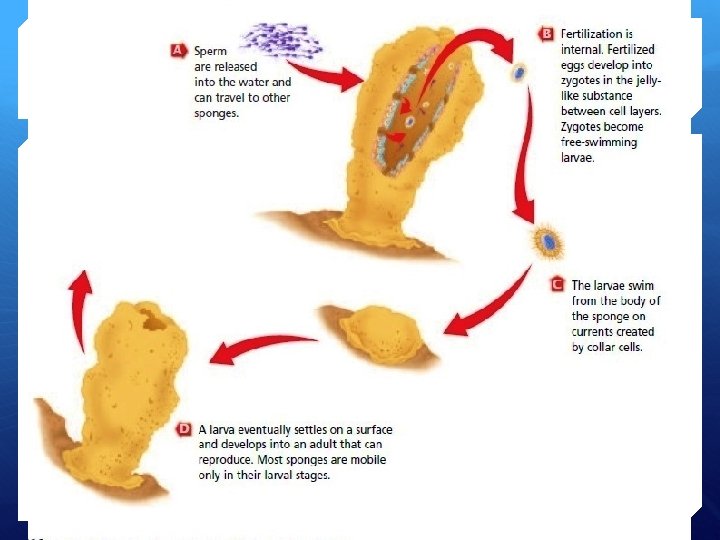
Reproduction 1. Sexual Mesenchyme cells produce eggs or sperm • Sperm is released into the water current • 2. Asexual reproduction • By gemmules which can become dormant survive adverse conditions • By budding
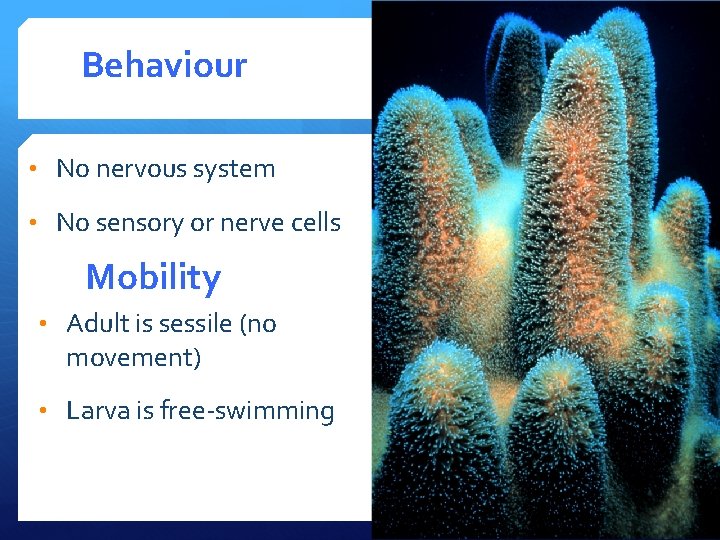
Behaviour • No nervous system • No sensory or nerve cells Mobility • Adult is sessile (no movement) • Larva is free-swimming
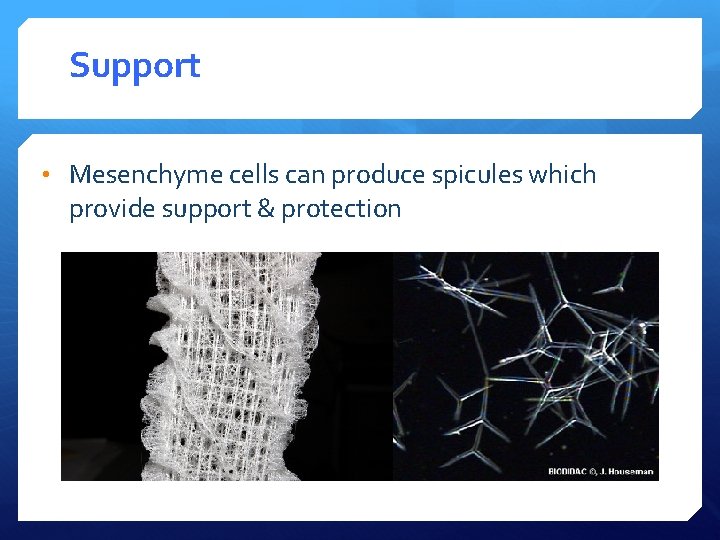
Support • Mesenchyme cells can produce spicules which provide support & protection
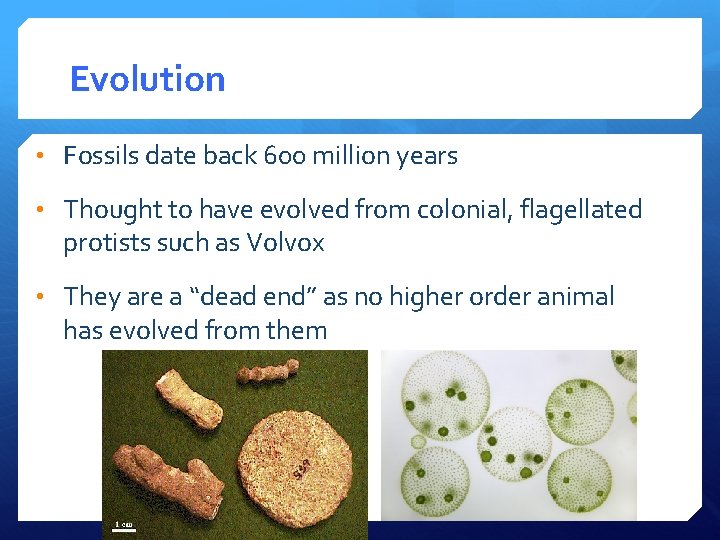
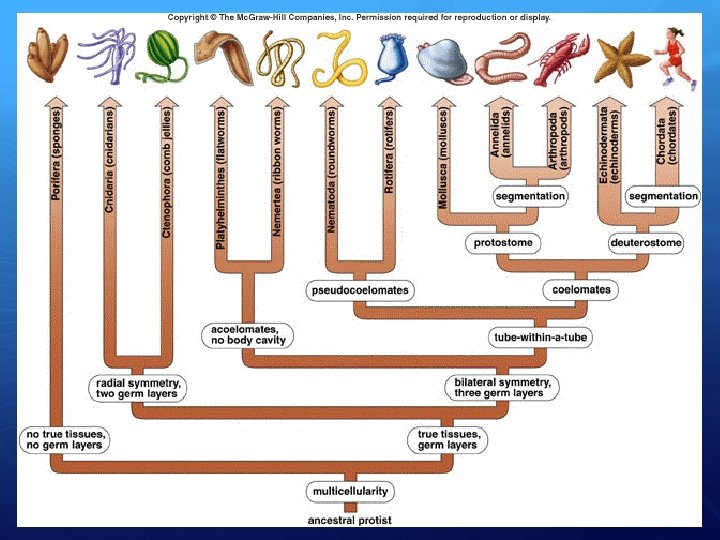
Evolution • Fossils date back 600 million years • Thought to have evolved from colonial, flagellated protists such as Volvox • They are a “dead end” as no higher order animal has evolved from them
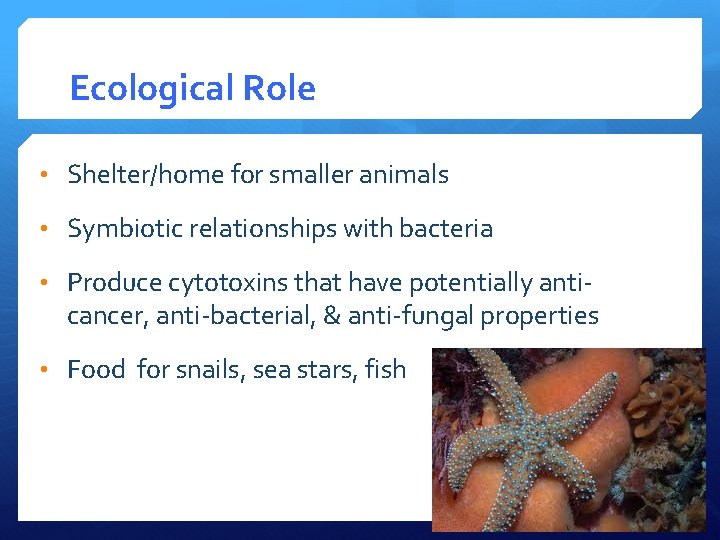
Ecological Role • Shelter/home for smaller animals • Symbiotic relationships with bacteria • Produce cytotoxins that have potentially anti- cancer, anti-bacterial, & anti-fungal properties • Food for snails, sea stars, fish
- Slides: 12