
PHYLUM PORIFERA SPONGES Invertebrate Animals Phylum Porifera n
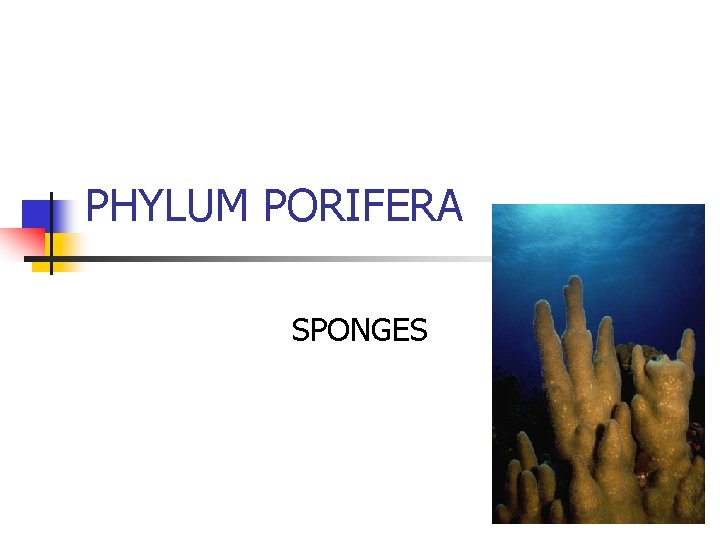
PHYLUM PORIFERA SPONGES
Invertebrate Animals Phylum Porifera n n n Commonly called “sponges” Sessile, filter feeders Asymmetric body shape Multicellular, but have no true tissues, no organs. Cells are differentiated – there is a division of labor ( e. g. , reproduction, feeding, water circulation.
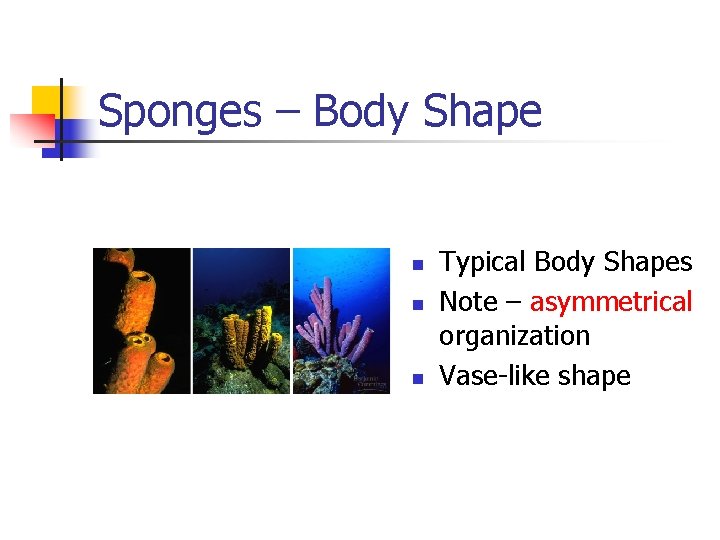
Sponges – Body Shape n n n Typical Body Shapes Note – asymmetrical organization Vase-like shape
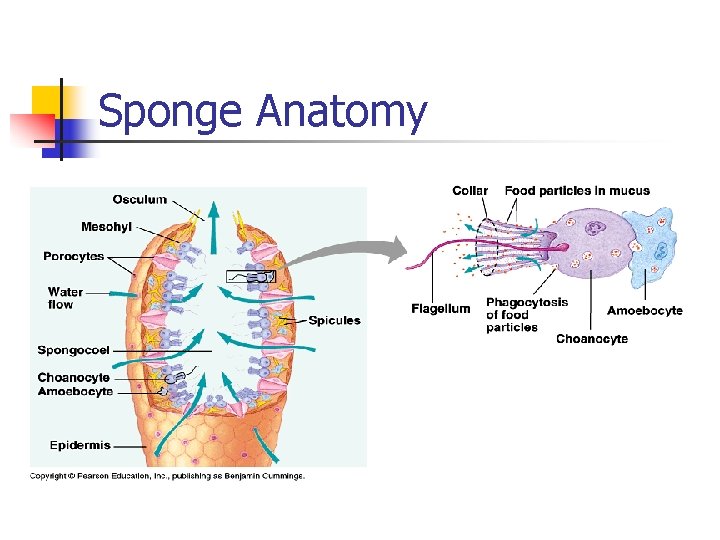
BODY STRUCTURES n n Sponges are sessile animals. This means that they anchor to one spot and move around very little. Like most sessile animals, Sponges are filter feeders. Food particles are filtered out as water flows in. Try to follow the flow of water in the diagram on the next slide.
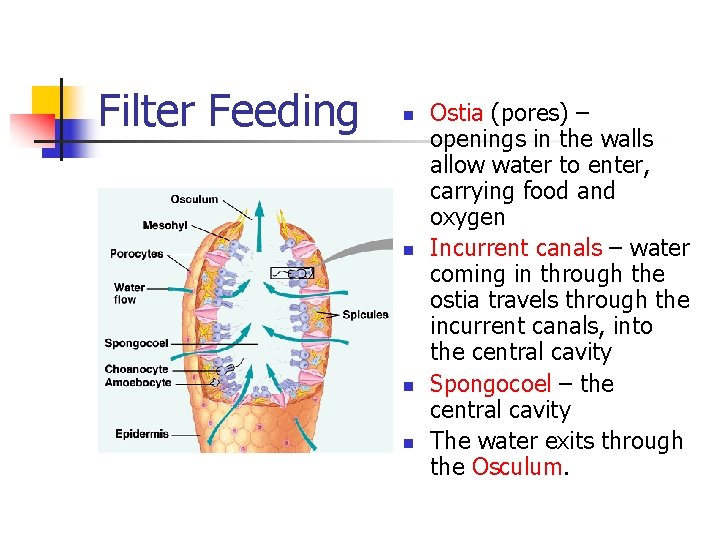
Filter Feeding n n Ostia (pores) – openings in the walls allow water to enter, carrying food and oxygen Incurrent canals – water coming in through the ostia travels through the incurrent canals, into the central cavity Spongocoel – the central cavity The water exits through the Osculum.
Sponge Anatomy
Body Structures – Body Wall n Body Wall – 3 layers n n n Epidermis – a layer of flattened cells covering the exterior (some of these cells can contract) Endodermis – inner layer Mesoglea (or mesophyl) - between the two layers of cells; a semifluid, nonliving matrix
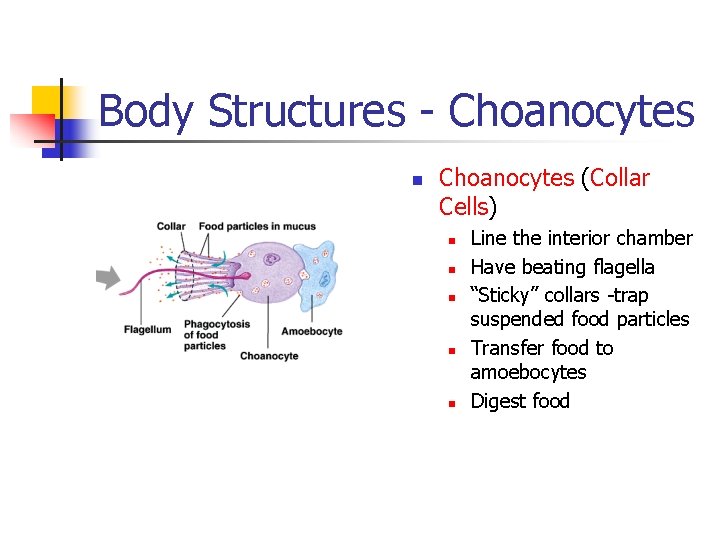
Body Structures - Choanocytes n Choanocytes (Collar Cells) n n n Line the interior chamber Have beating flagella “Sticky” collars -trap suspended food particles Transfer food to amoebocytes Digest food
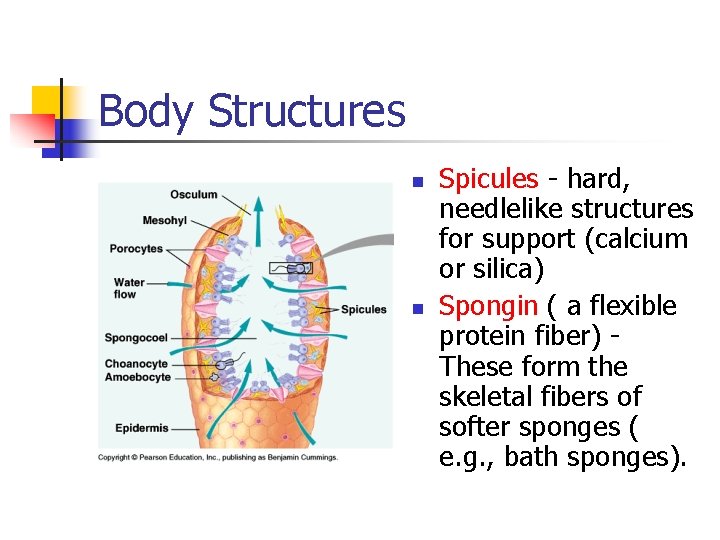
Body Structures n n Spicules - hard, needlelike structures for support (calcium or silica) Spongin ( a flexible protein fiber) These form the skeletal fibers of softer sponges ( e. g. , bath sponges).
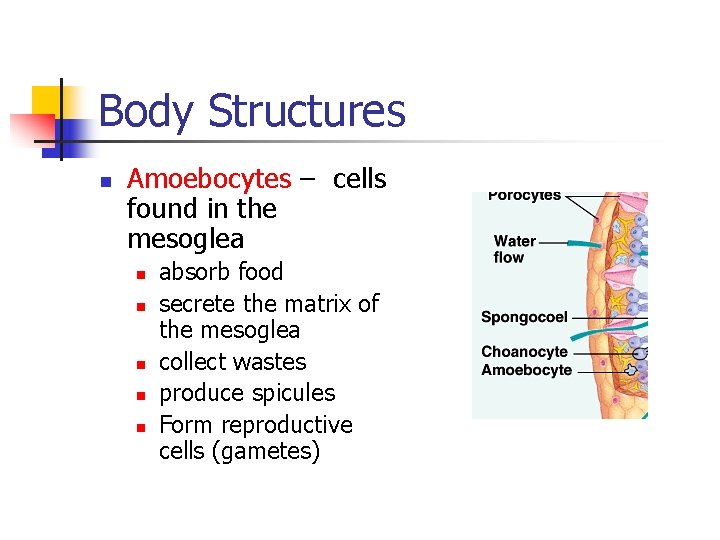
Body Structures n Amoebocytes – cells found in the mesoglea n n n absorb food secrete the matrix of the mesoglea collect wastes produce spicules Form reproductive cells (gametes)
Reproduction n Reproduction - Sponges reproduce sexually and asexually.
Sexual Reproduction n Hermaphrodites – amoebocytes in one sponge form both eggs & sperm Sperm released into the surrounding water are picked up by a nearby sponge and directed to the egg within the mesoglea. The zygote develops into a freeswimming larva.
Asexual reproduction n n Budding Fragmentation Gemmules-a ball of amoebocytes surrounded by a capsule composed of spicules & dead cells Sponges have extensive regeneration abilities for both repair and asexual reproduction.
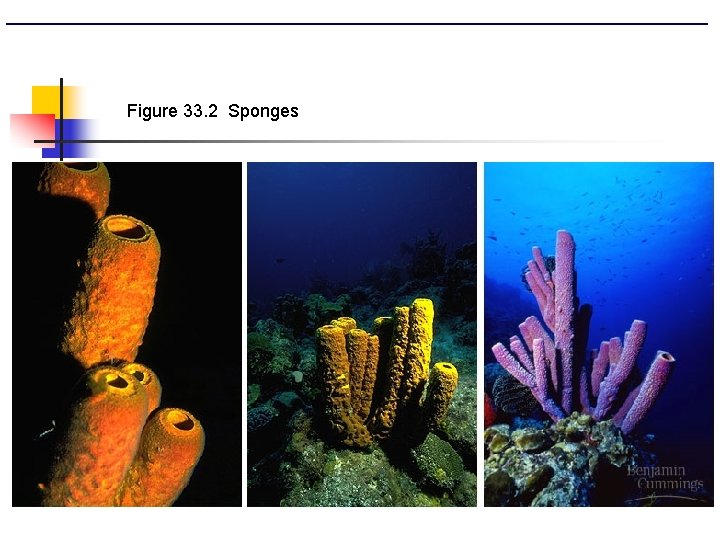
Figure 33. 2 Sponges
- Slides: 14