
Phylum Porifera Sponges Characteristics Sponges are Asymmetrical Filter
- Slides: 16
Phylum Porifera Sponges
Characteristics Sponges are • • • Asymmetrical Filter feeders Cellular level of organization – nothing above Sessile Lacks true embryological germ layers
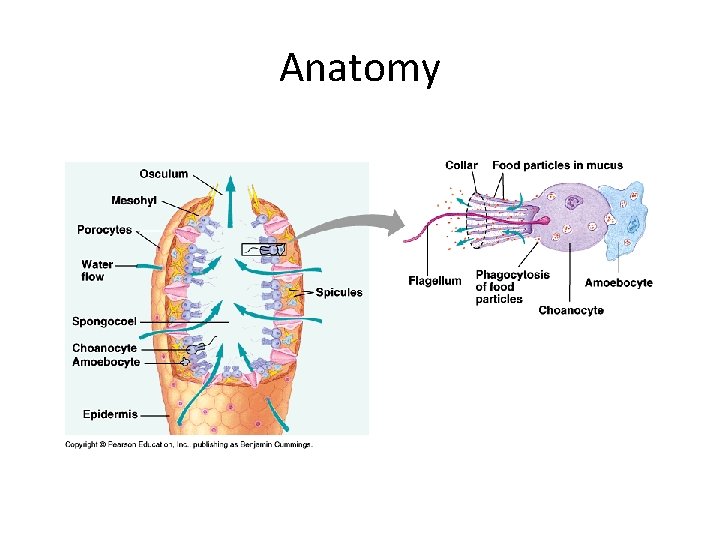
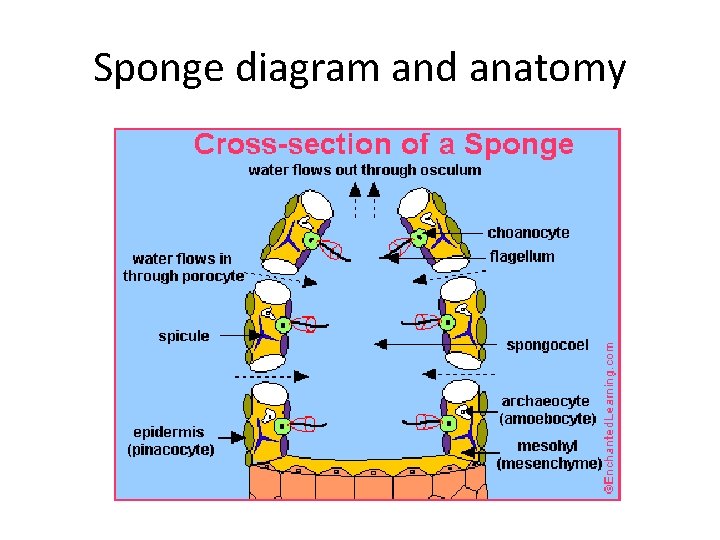
Anatomy
Diet of a sponge • • Tiny, floating organic particles Detritus Plankton Food is collected by choanocytes, distributed by amoebocytes
Sponge reproduction • Most sponges are hermaphrodites • Sexual reproduction – Eggs or sperm released; captured by choanocytes; larval stage; free-floating or moving by cilia; settles and develops • Asexual reproduction – Budding – Fragmentation – gemmules
Classification • • Domain – Eukarya Kingdom – Animalia Phylum – Porifera Classes – Calcarea, Demospongiae, Hexactinellida
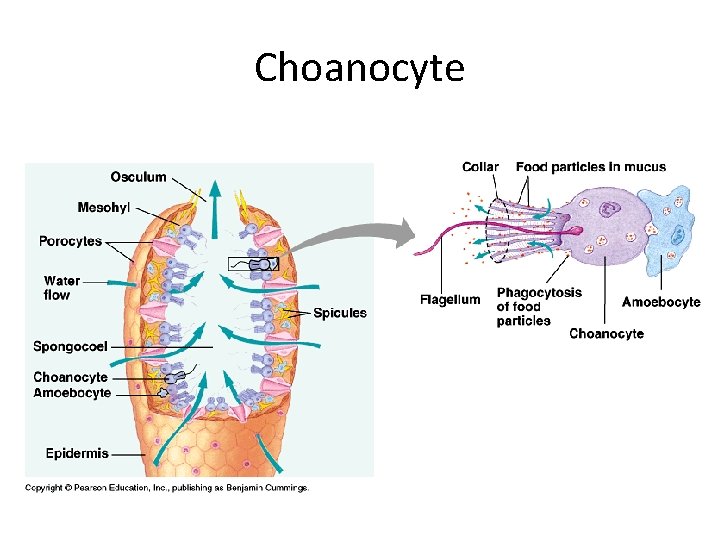
Choanocyte
Vocab terms • archaeocytes (amoebocytes) - Cells with pseudopods, located in the mesohyl. They are used in processing food, distributing it to other cells, and for other functions. benthic - living at or near the bottom of the seas. choanocyte - also called collar cells, choanocytes line the inner cavity of the sponge. They have a sticky, funnel-shaped collar (that collects food particles) and a flagellum (which whips around, moving water). The sponge obtains its nutrients and oxygen by processing flowing water using choanocytes. Choanocytes are also involved in sponge reproduction; they catch floating sperm.
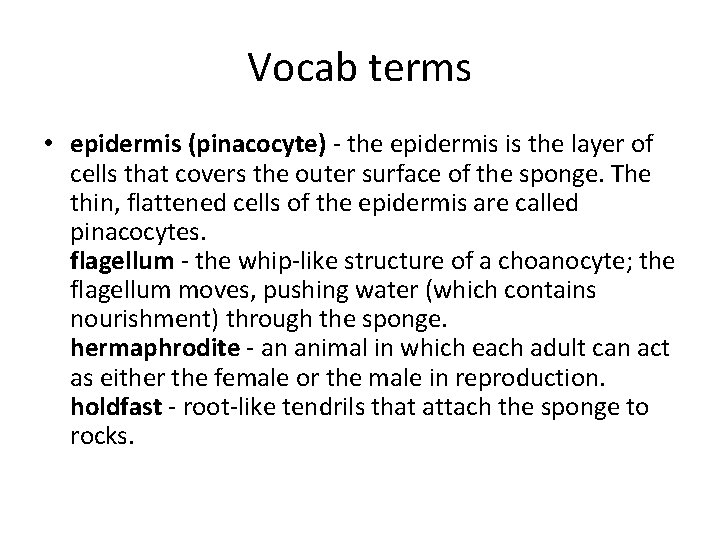
Vocab terms • epidermis (pinacocyte) - the epidermis is the layer of cells that covers the outer surface of the sponge. The thin, flattened cells of the epidermis are called pinacocytes. flagellum - the whip-like structure of a choanocyte; the flagellum moves, pushing water (which contains nourishment) through the sponge. hermaphrodite - an animal in which each adult can act as either the female or the male in reproduction. holdfast - root-like tendrils that attach the sponge to rocks.
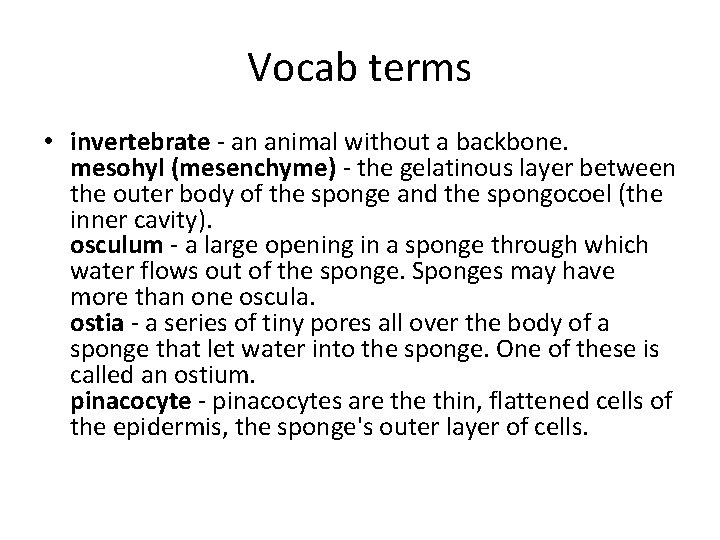
Vocab terms • invertebrate - an animal without a backbone. mesohyl (mesenchyme) - the gelatinous layer between the outer body of the sponge and the spongocoel (the inner cavity). osculum - a large opening in a sponge through which water flows out of the sponge. Sponges may have more than one oscula. ostia - a series of tiny pores all over the body of a sponge that let water into the sponge. One of these is called an ostium. pinacocyte - pinacocytes are thin, flattened cells of the epidermis, the sponge's outer layer of cells.
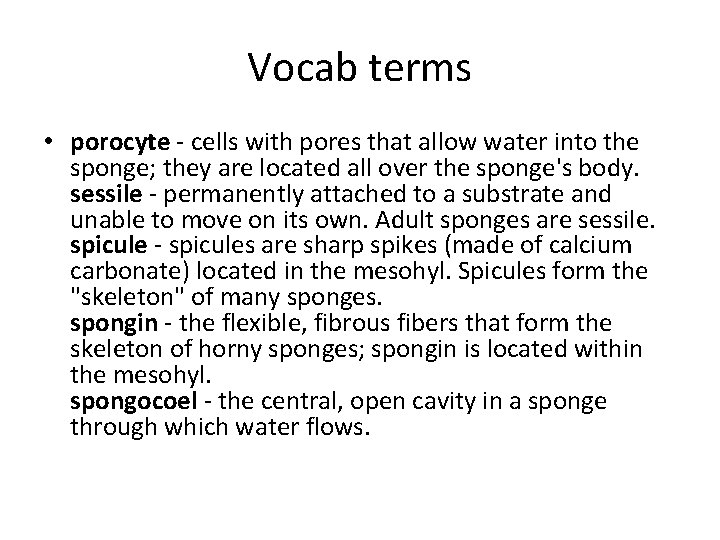
Vocab terms • porocyte - cells with pores that allow water into the sponge; they are located all over the sponge's body. sessile - permanently attached to a substrate and unable to move on its own. Adult sponges are sessile. spicule - spicules are sharp spikes (made of calcium carbonate) located in the mesohyl. Spicules form the "skeleton" of many sponges. spongin - the flexible, fibrous fibers that form the skeleton of horny sponges; spongin is located within the mesohyl. spongocoel - the central, open cavity in a sponge through which water flows.
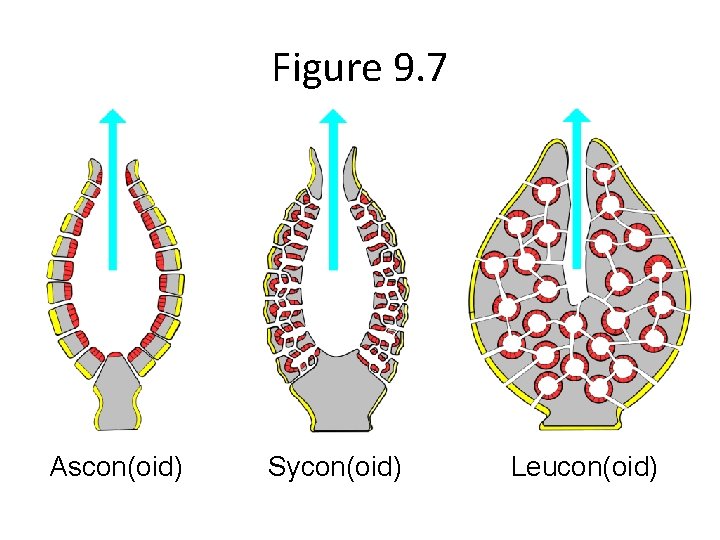
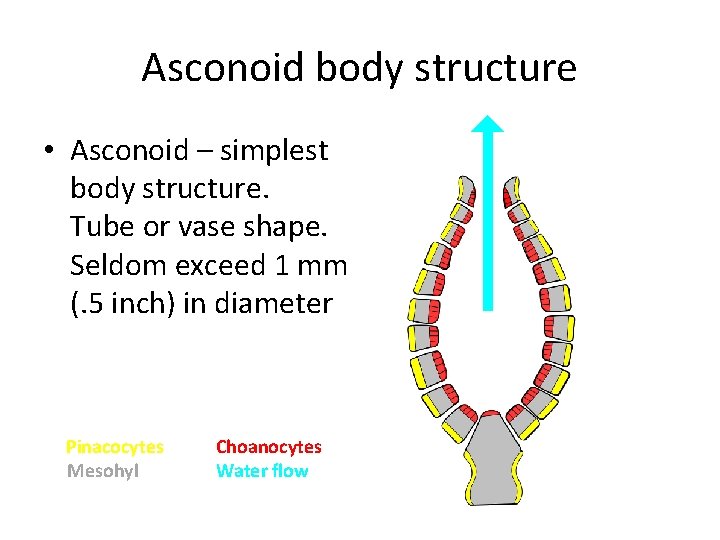
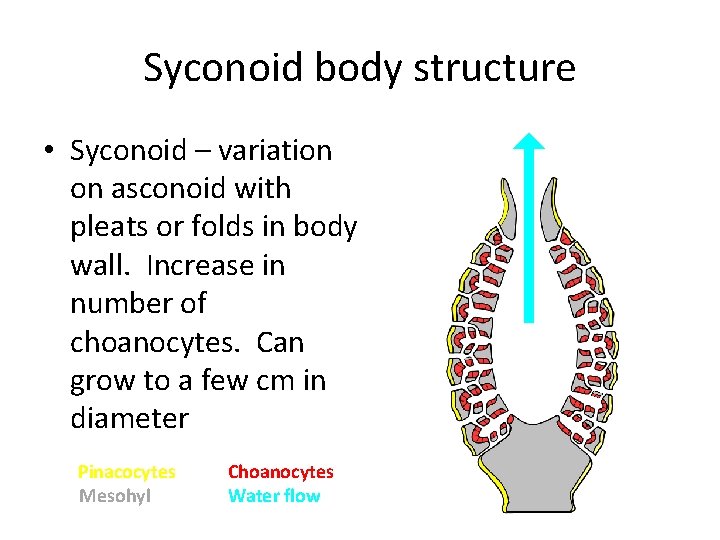
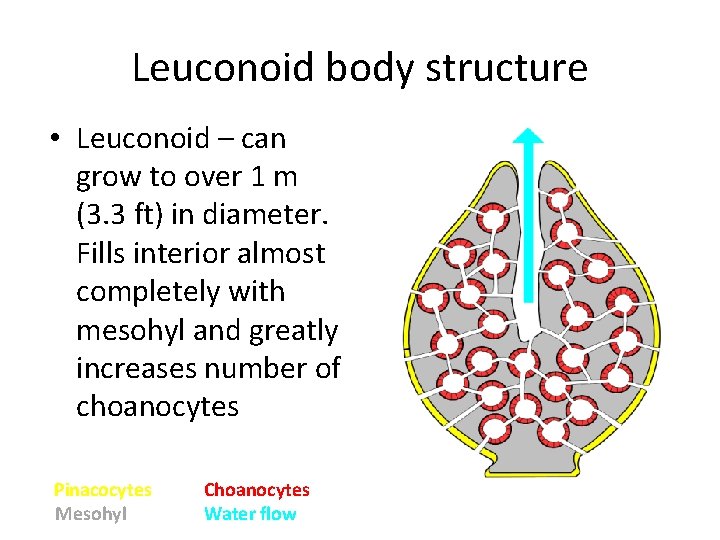
Figure 9. 7 Ascon(oid) Sycon(oid) Leucon(oid)
Asconoid body structure • Asconoid – simplest body structure. Tube or vase shape. Seldom exceed 1 mm (. 5 inch) in diameter Pinacocytes Mesohyl Choanocytes Water flow
Syconoid body structure • Syconoid – variation on asconoid with pleats or folds in body wall. Increase in number of choanocytes. Can grow to a few cm in diameter Pinacocytes Mesohyl Choanocytes Water flow
Leuconoid body structure • Leuconoid – can grow to over 1 m (3. 3 ft) in diameter. Fills interior almost completely with mesohyl and greatly increases number of choanocytes Pinacocytes Mesohyl Choanocytes Water flow
Sponge diagram and anatomy