
Phylum Porifera Prepared by Nada H Lubbad Porifera
Phylum Porifera Prepared by : Nada H. Lubbad
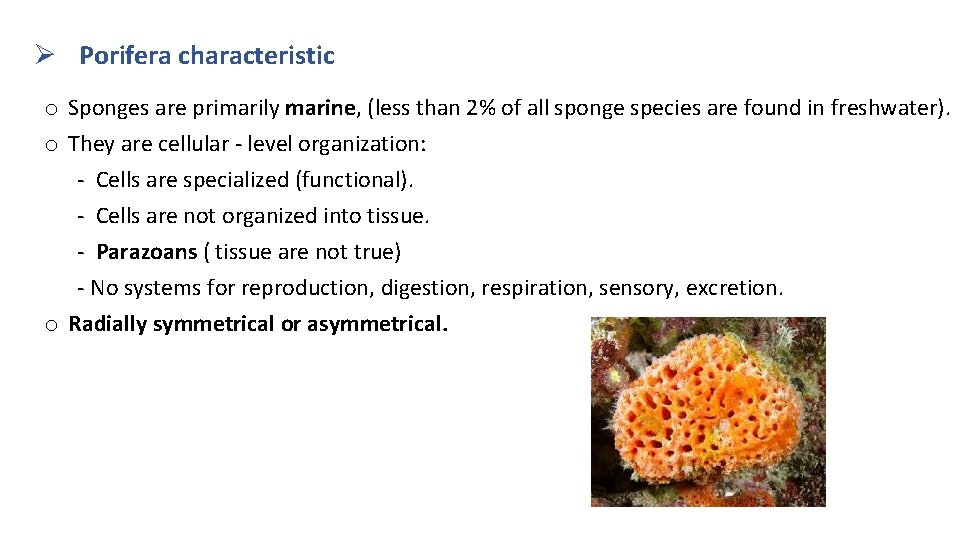
Ø Porifera characteristic o Sponges are primarily marine, (less than 2% of all sponge species are found in freshwater). o They are cellular - level organization: - Cells are specialized (functional). - Cells are not organized into tissue. - Parazoans ( tissue are not true) - No systems for reproduction, digestion, respiration, sensory, excretion. o Radially symmetrical or asymmetrical.

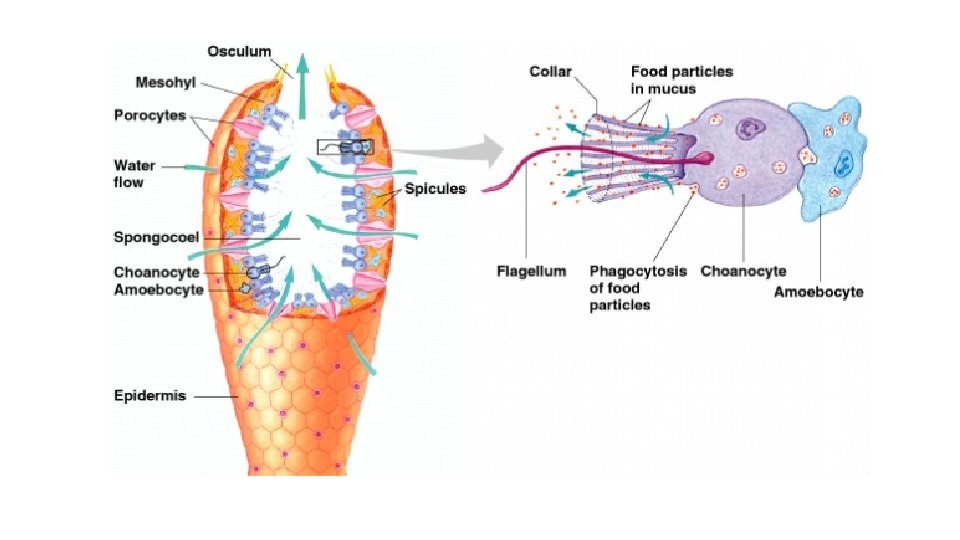
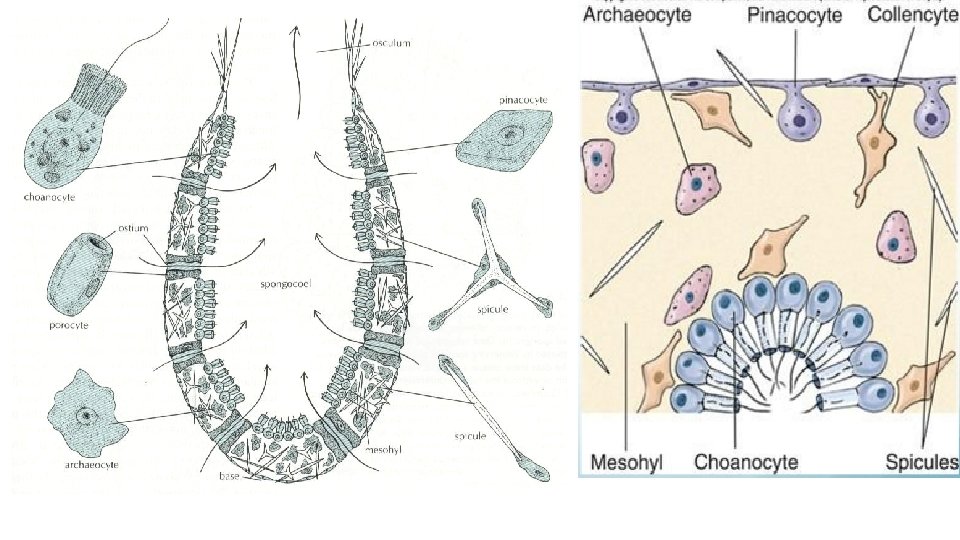
Ø Structure of sponges o A sponge is a rigid perforated bag. o The empty space of this bag is called the spongocoel. o It has three layers : - Inner layer : It is lined with flagellated cells called choanocytes or collar cells. Functions of the collar cells : § They generate currents that help maintain circulation of seawater within and through the sponge. § They capture small food particles. § They capture incoming sperm for fertilization.
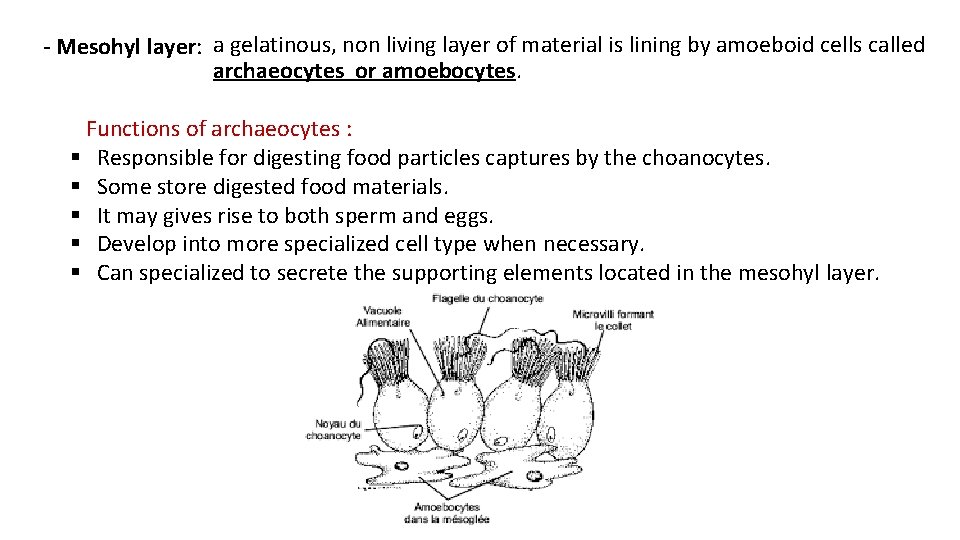
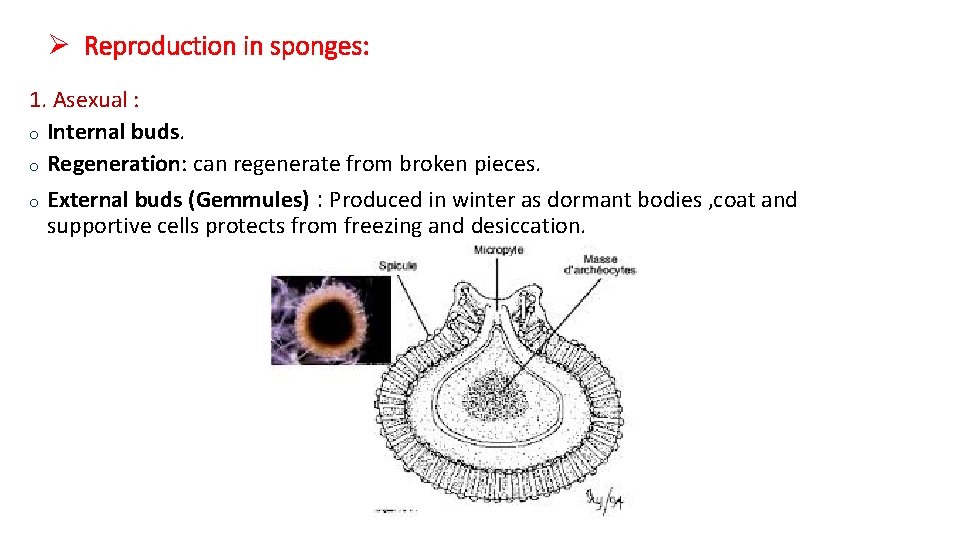
- Mesohyl layer: a gelatinous, non living layer of material is lining by amoeboid cells called archaeocytes or amoebocytes. Functions of archaeocytes : § Responsible for digesting food particles captures by the choanocytes. § Some store digested food materials. § It may gives rise to both sperm and eggs. § Develop into more specialized cell type when necessary. § Can specialized to secrete the supporting elements located in the mesohyl layer.
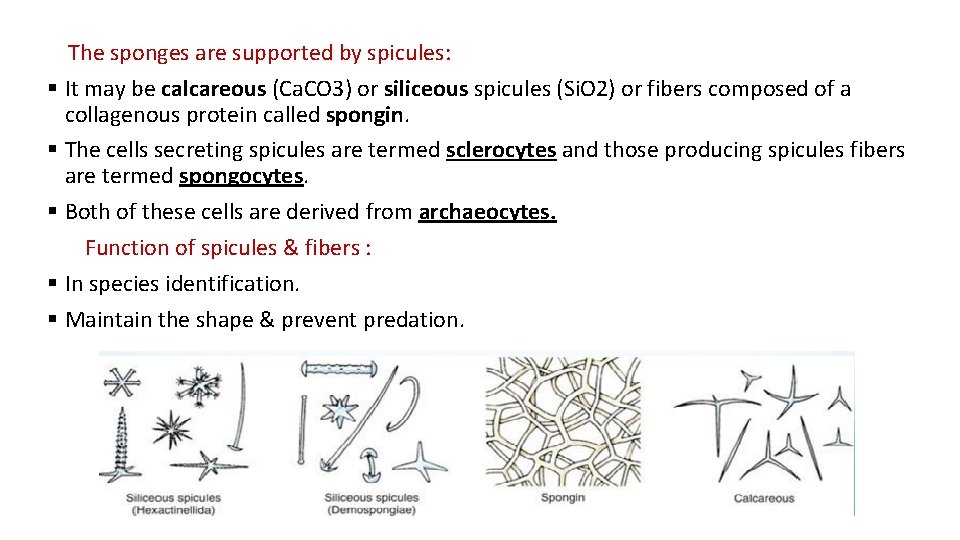
The sponges are supported by spicules: § It may be calcareous (Ca. CO 3) or siliceous spicules (Si. O 2) or fibers composed of a collagenous protein called spongin. § The cells secreting spicules are termed sclerocytes and those producing spicules fibers are termed spongocytes. § Both of these cells are derived from archaeocytes. Function of spicules & fibers : § In species identification. § Maintain the shape & prevent predation.

- Outer layer : flattened contractile cells (Pinacocytes). These cells also line the incurrent canals and the spongocoel in some places where choanocytes are lacking. Contraction of Pinacocytes has the functions : § Enable sponge to undergo minor shape change. § Regulating water flow through the sponge by varying the diameter of incurrent openings. § water flow into the spongocoel through narrow openings called the Ostia & exits the spongocoel through larger opening called osculum.
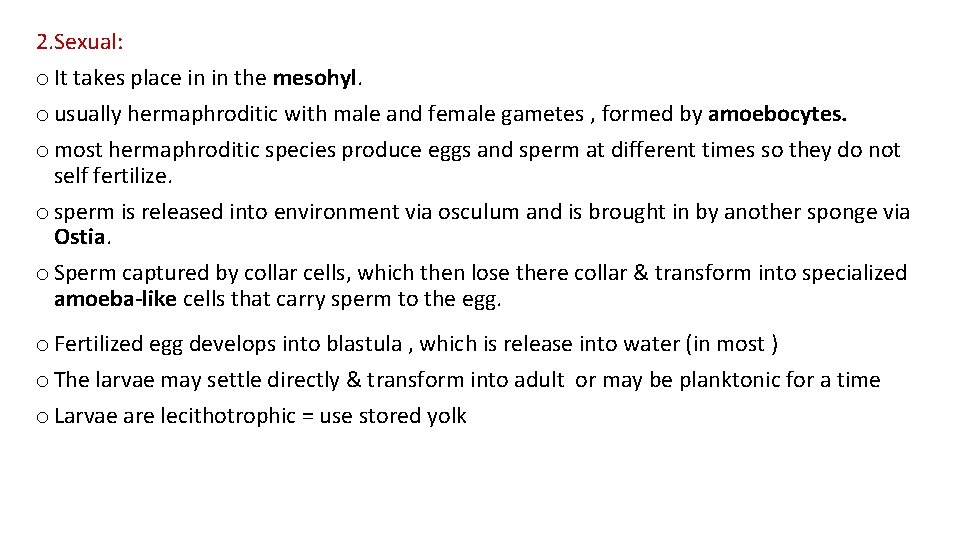
Ø Reproduction in sponges: 1. Asexual : o Internal buds. o Regeneration: can regenerate from broken pieces. o External buds (Gemmules) : Produced in winter as dormant bodies , coat and supportive cells protects from freezing and desiccation.
2. Sexual: o It takes place in in the mesohyl. o usually hermaphroditic with male and female gametes , formed by amoebocytes. o most hermaphroditic species produce eggs and sperm at different times so they do not self fertilize. o sperm is released into environment via osculum and is brought in by another sponge via Ostia. o Sperm captured by collar cells, which then lose there collar & transform into specialized amoeba-like cells that carry sperm to the egg. o Fertilized egg develops into blastula , which is release into water (in most ) o The larvae may settle directly & transform into adult or may be planktonic for a time o Larvae are lecithotrophic = use stored yolk
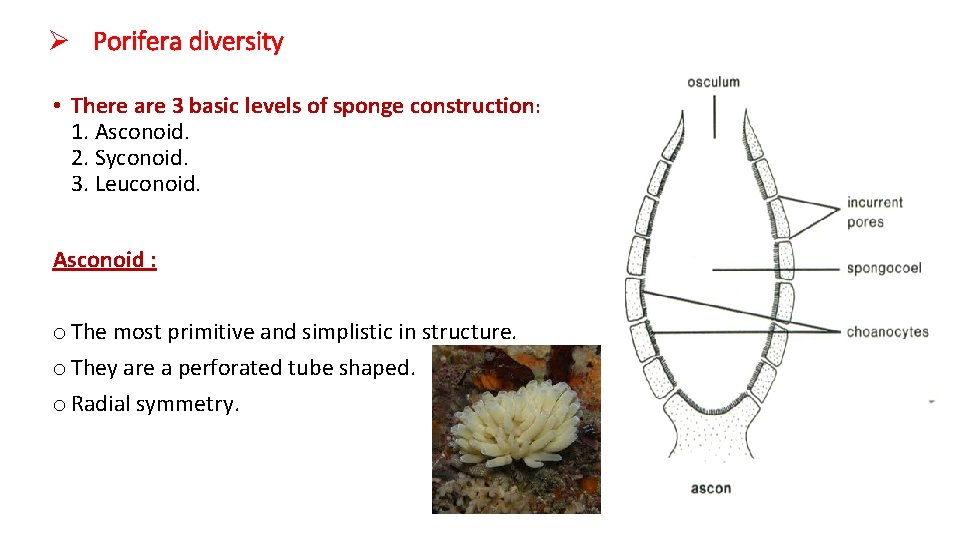
Ø Porifera diversity • There are 3 basic levels of sponge construction: 1. Asconoid. 2. Syconoid. 3. Leuconoid. Asconoid : o The most primitive and simplistic in structure. o They are a perforated tube shaped. o Radial symmetry.
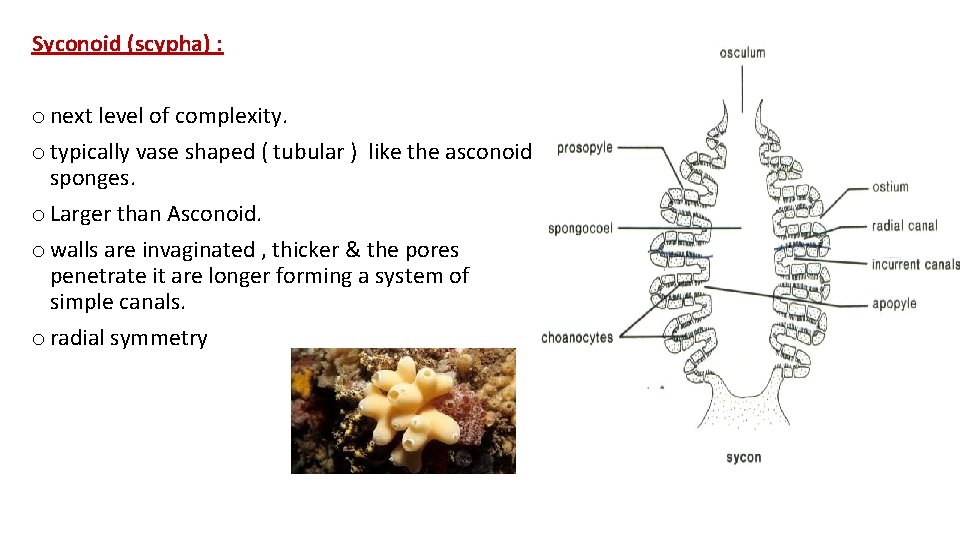
Syconoid (scypha) : o next level of complexity. o typically vase shaped ( tubular ) like the asconoid sponges. o Larger than Asconoid. o walls are invaginated , thicker & the pores penetrate it are longer forming a system of simple canals. o radial symmetry
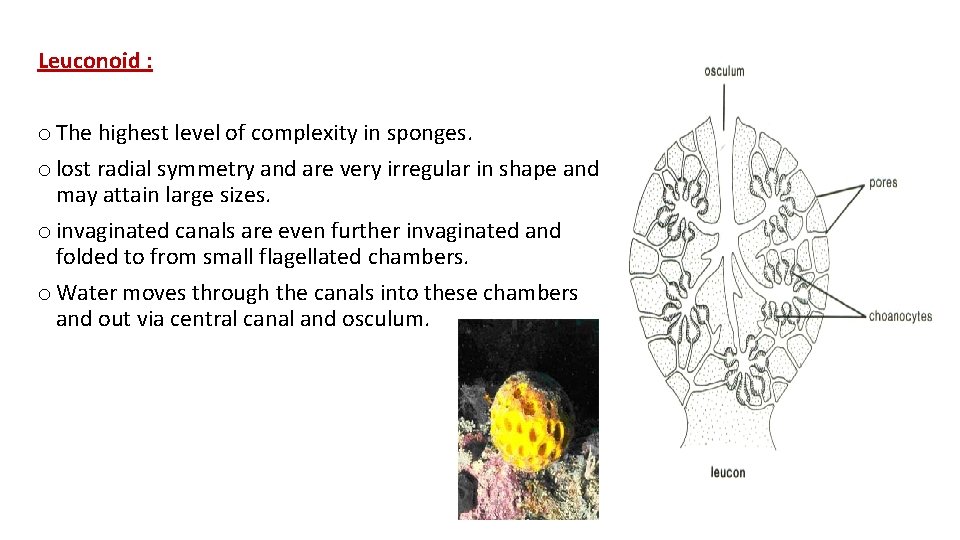
Leuconoid : o The highest level of complexity in sponges. o lost radial symmetry and are very irregular in shape and may attain large sizes. o invaginated canals are even further invaginated and folded to from small flagellated chambers. o Water moves through the canals into these chambers and out via central canal and osculum.
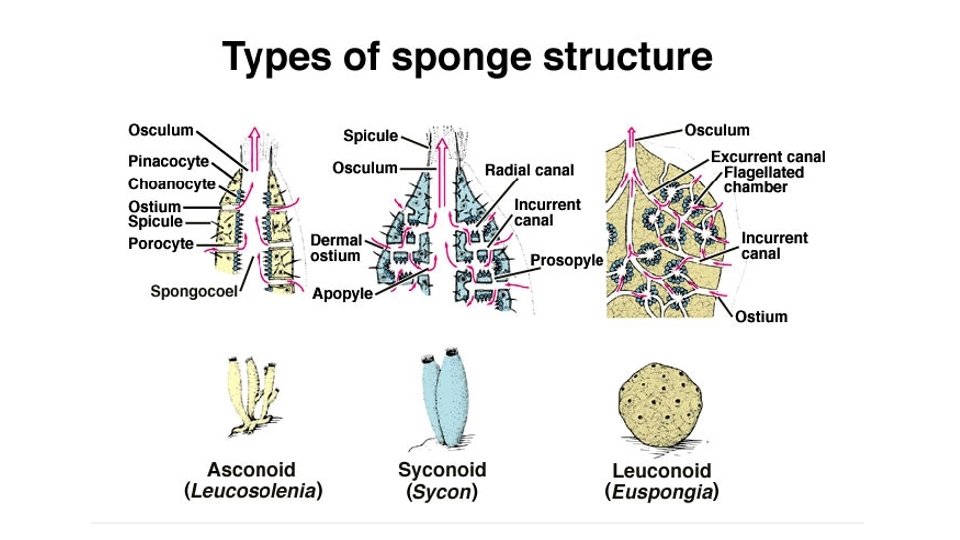
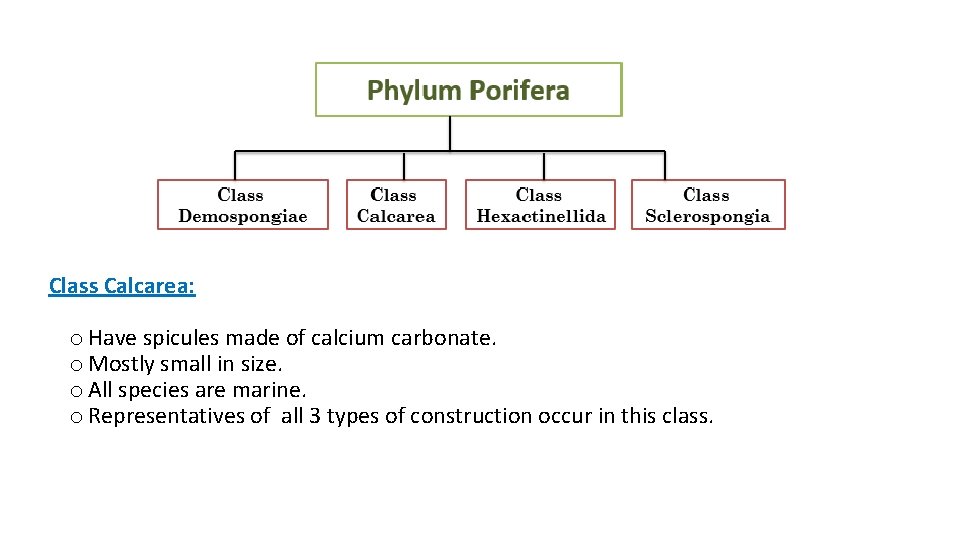
Class Calcarea: o Have spicules made of calcium carbonate. o Mostly small in size. o All species are marine. o Representatives of all 3 types of construction occur in this class.
Class Demospongiae o Members of the largest class. o this class containing 80% of all sponge species. o The supporting spicules and fibers may be composed of spongin and silica but never of Ca. CO 3. o All freshwater sponges are found in this class. Class Hexactinellida o (Hyalospongiae). o It contains sponges whose bodies are supported by 6 -rayed siliceous spicules. o Sponges known as glass sponges are marvels of structural complexity and symmetry.
Class Sclerospongiae Coralline sponge o Most of them live in deep water on corals reef o Sclerospongiae is no longer considered a class. o Ca. CO 3 foundation with Si. O 2 spicules o
- Slides: 17