
Phylum Porifera I General Information Kingdom Animalia Subkindom
Phylum Porifera
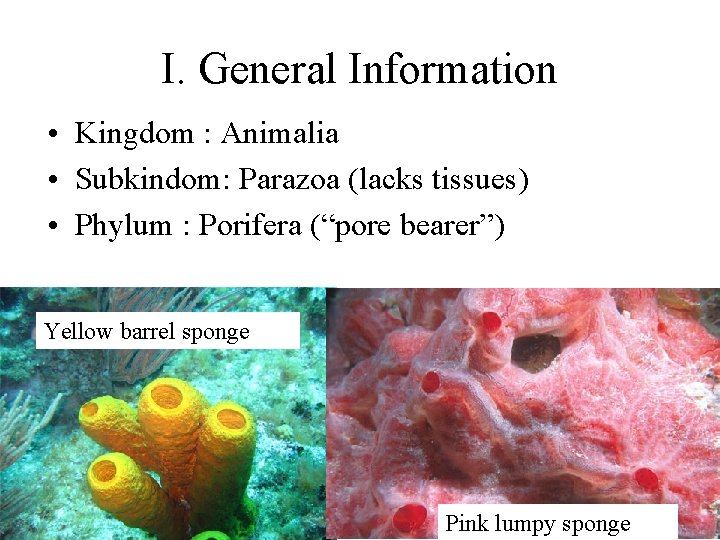
I. General Information • Kingdom : Animalia • Subkindom: Parazoa (lacks tissues) • Phylum : Porifera (“pore bearer”) Yellow barrel sponge Pink lumpy sponge

I. General Information Size range – 1 cm to 2 meters in diameter Giant Barrel sponges
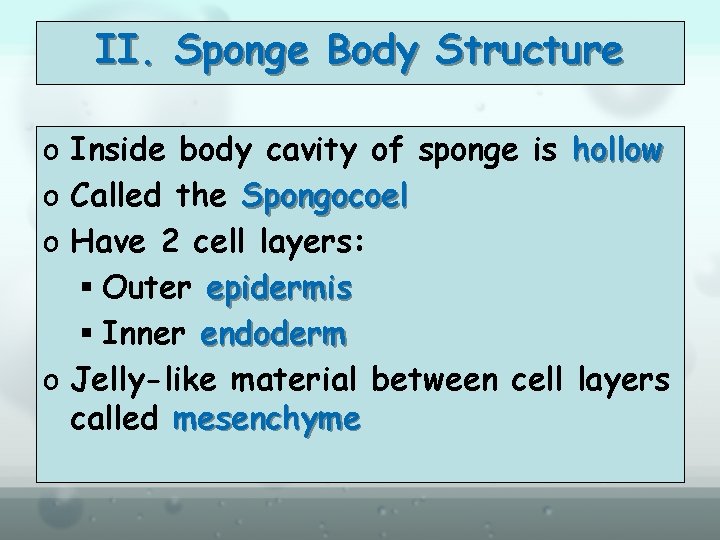
II. Sponge Body Structure o Inside body cavity of sponge is hollow o Called the Spongocoel o Have 2 cell layers: § Outer epidermis § Inner endoderm o Jelly-like material between cell layers called mesenchyme
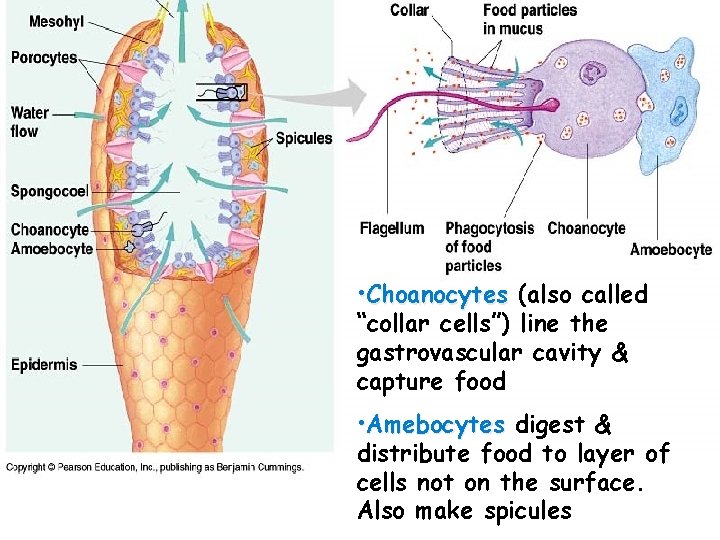
• Choanocytes (also called “collar cells”) line the gastrovascular cavity & capture food • Amebocytes digest & distribute food to layer of cells not on the surface. Also make spicules
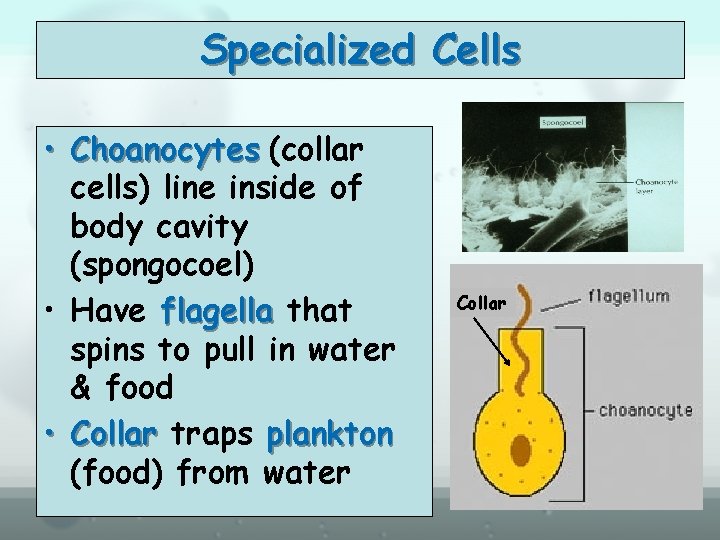
Specialized Cells • Choanocytes (collar cells) line inside of body cavity (spongocoel) • Have flagella that spins to pull in water & food • Collar traps plankton (food) from water Collar
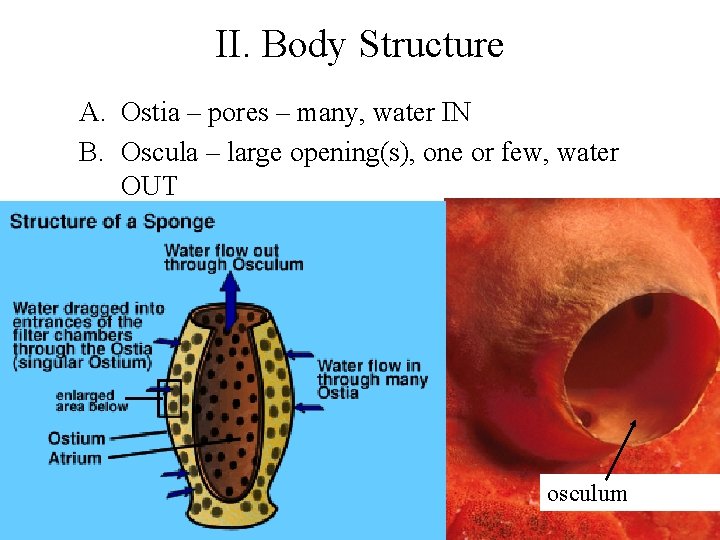
II. Body Structure A. Ostia – pores – many, water IN B. Oscula – large opening(s), one or few, water OUT osculum
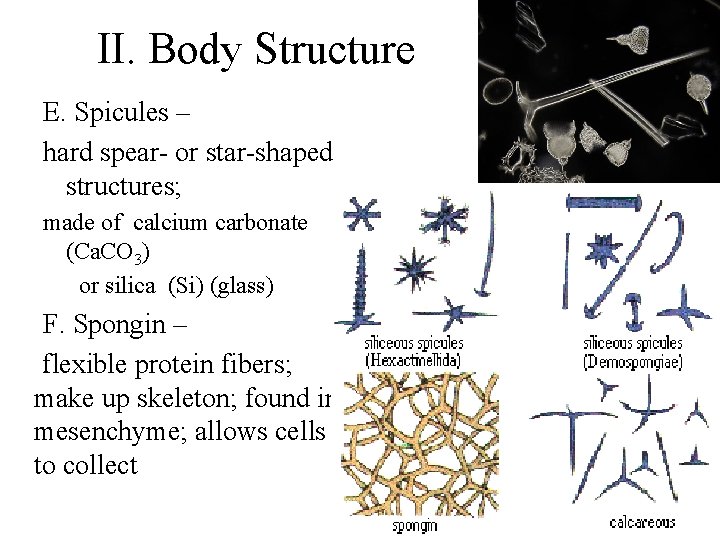
II. Body Structure E. Spicules – hard spear- or star-shaped structures; made of calcium carbonate (Ca. CO 3) or silica (Si) (glass) F. Spongin – flexible protein fibers; make up skeleton; found in mesenchyme; allows cells to collect
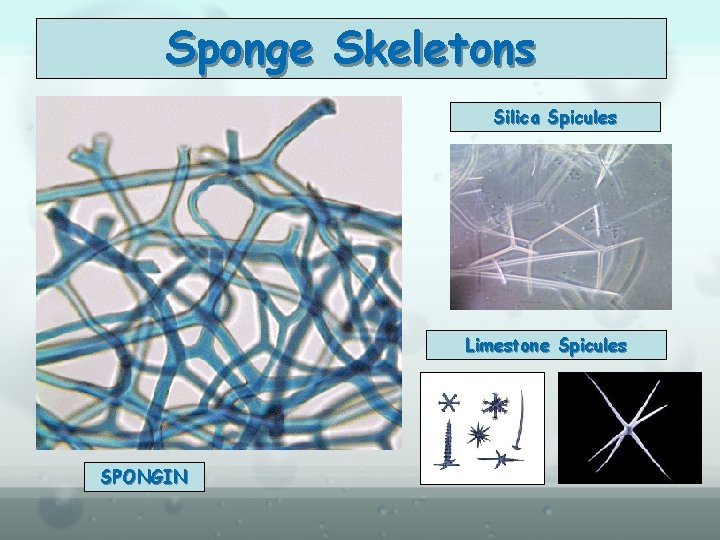
Sponge Skeletons Silica Spicules Limestone Spicules SPONGIN
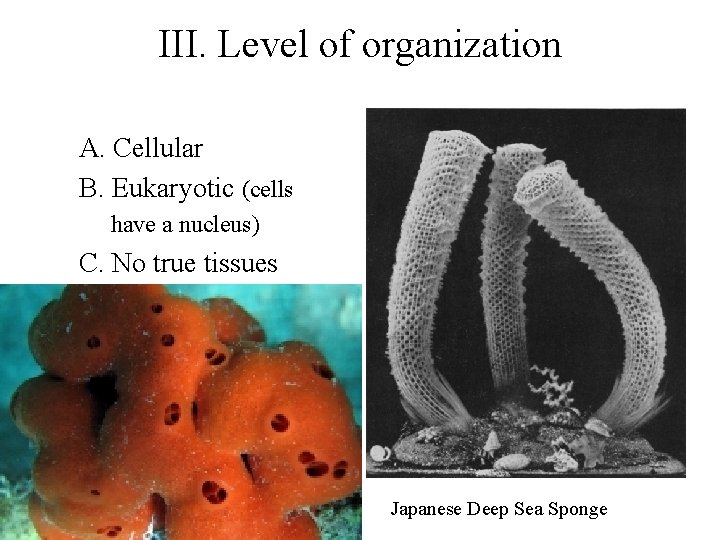
III. Level of organization A. Cellular B. Eukaryotic (cells have a nucleus) C. No true tissues Japanese Deep Sea Sponge
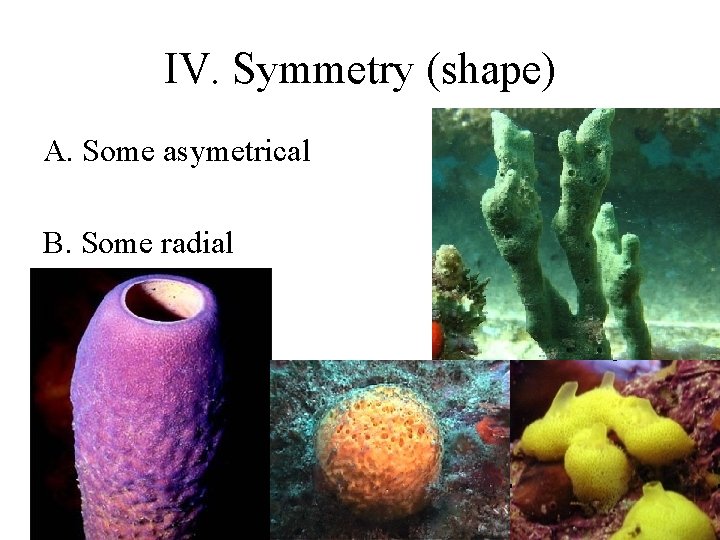
IV. Symmetry (shape) A. Some asymetrical B. Some radial
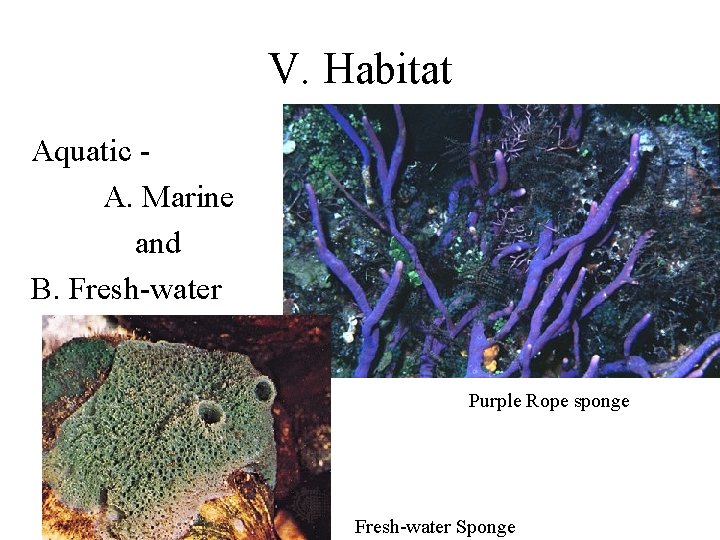
V. Habitat Aquatic A. Marine and B. Fresh-water Purple Rope sponge Fresh-water Sponge
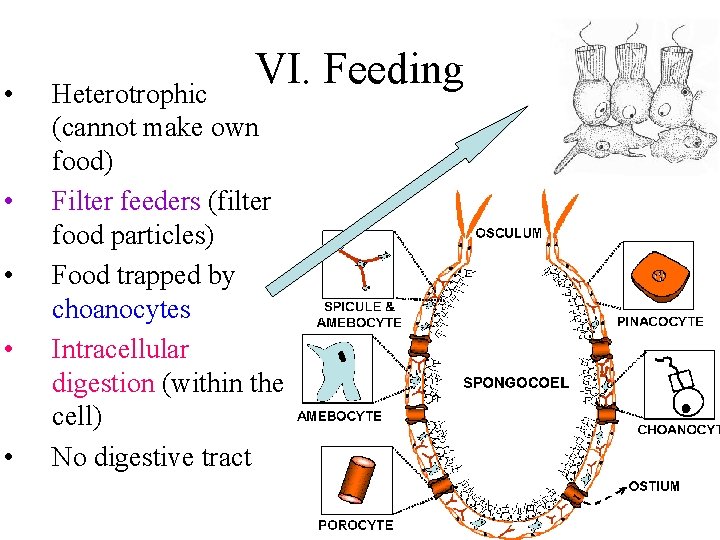
• • • VI. Feeding Heterotrophic (cannot make own food) Filter feeders (filter food particles) Food trapped by choanocytes Intracellular digestion (within the cell) No digestive tract
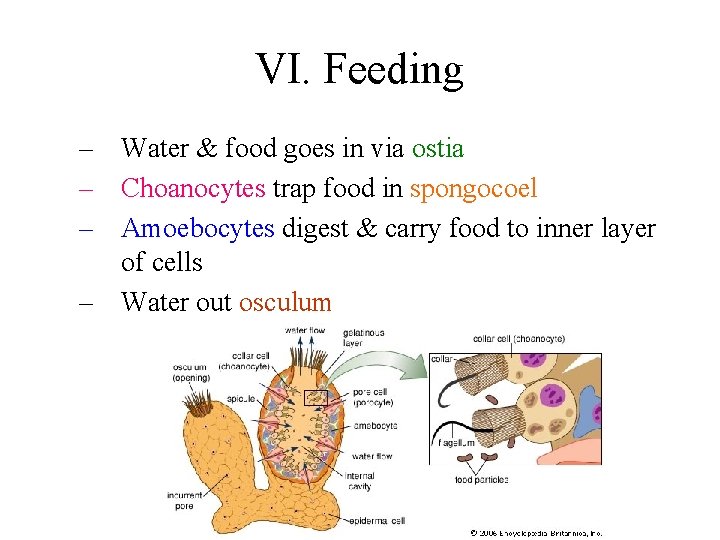
VI. Feeding – Water & food goes in via ostia – Choanocytes trap food in spongocoel – Amoebocytes digest & carry food to inner layer of cells – Water out osculum
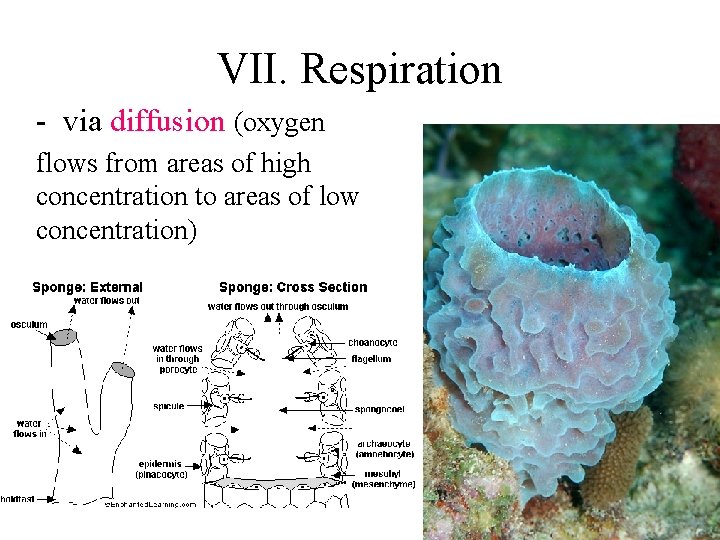
VII. Respiration - via diffusion (oxygen flows from areas of high concentration to areas of low concentration)
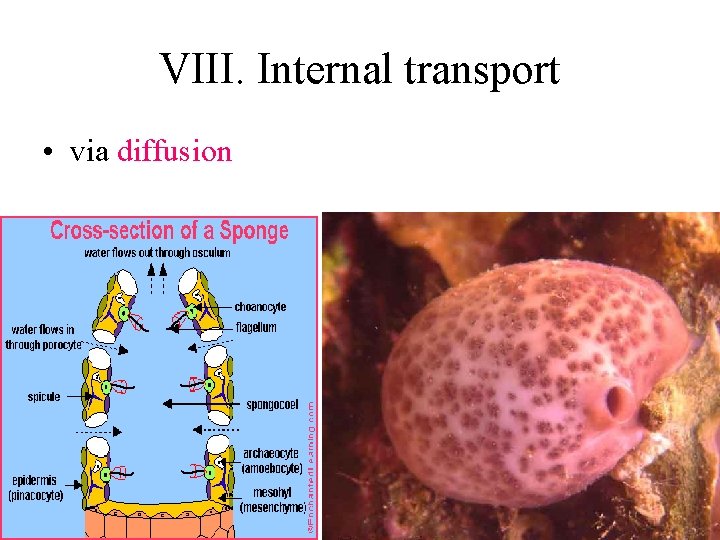
VIII. Internal transport • via diffusion
IX. Excretion Via DIFFUSION!!!!!
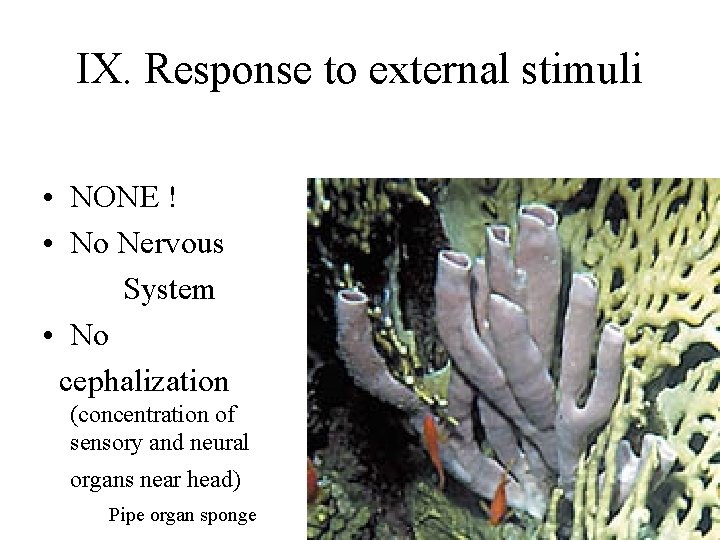
IX. Response to external stimuli • NONE ! • No Nervous System • No cephalization (concentration of sensory and neural organs near head) Pipe organ sponge
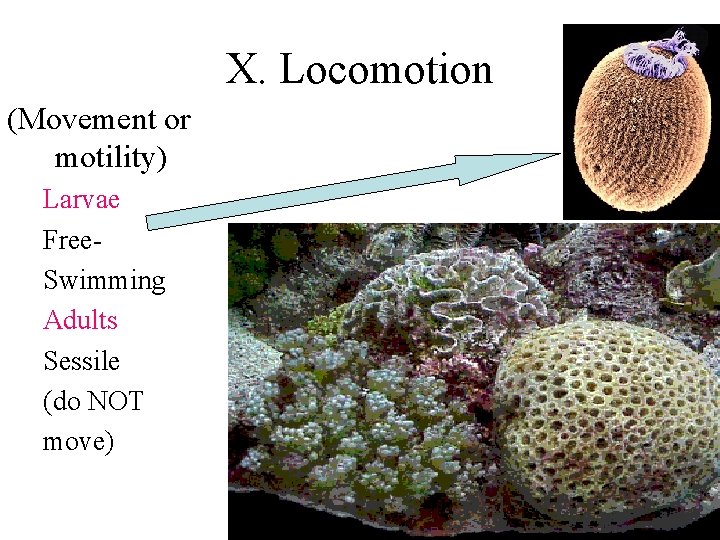
X. Locomotion (Movement or motility) Larvae Free. Swimming Adults Sessile (do NOT move)
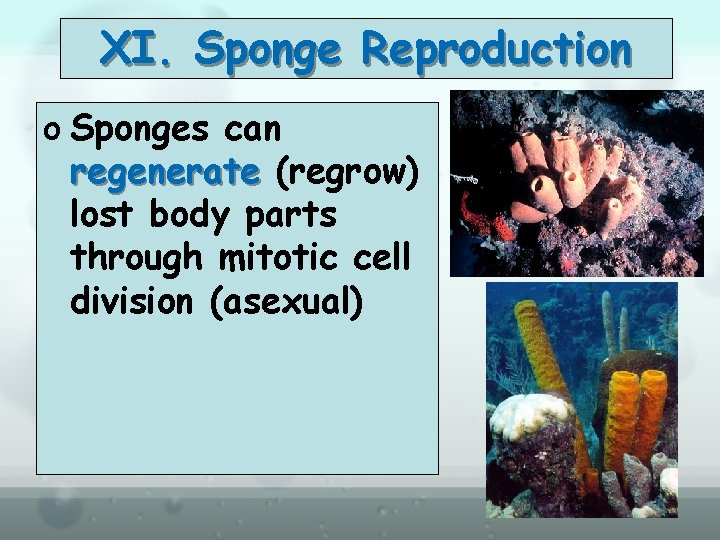
XI. Sponge Reproduction o Sponges can regenerate (regrow) lost body parts through mitotic cell division (asexual)
- Slides: 20