
Phylum Porifera I General Information Kingdom Animalia Phylum

- Slides: 33
Phylum Porifera
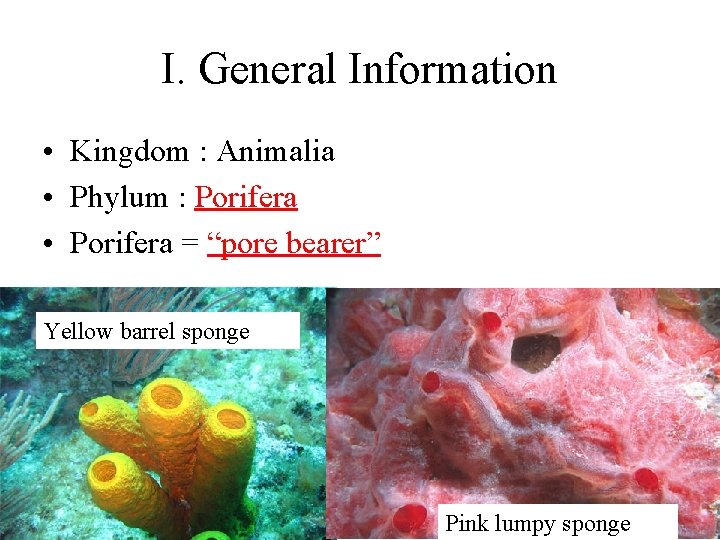
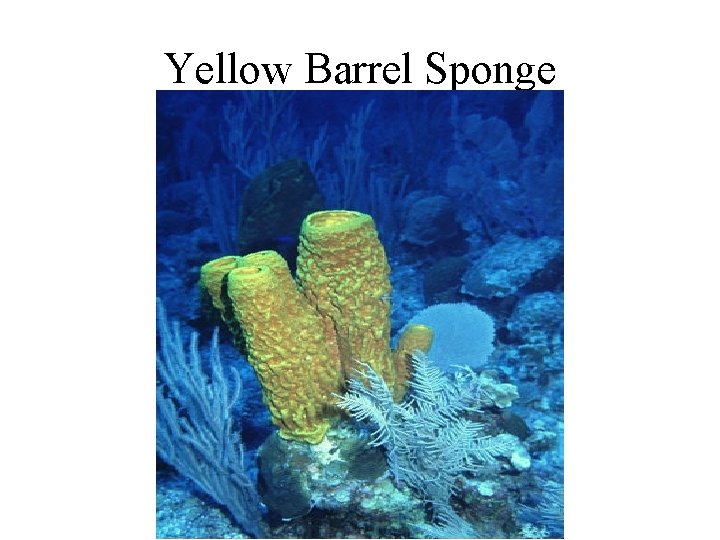
I. General Information • Kingdom : Animalia • Phylum : Porifera • Porifera = “pore bearer” Yellow barrel sponge Pink lumpy sponge
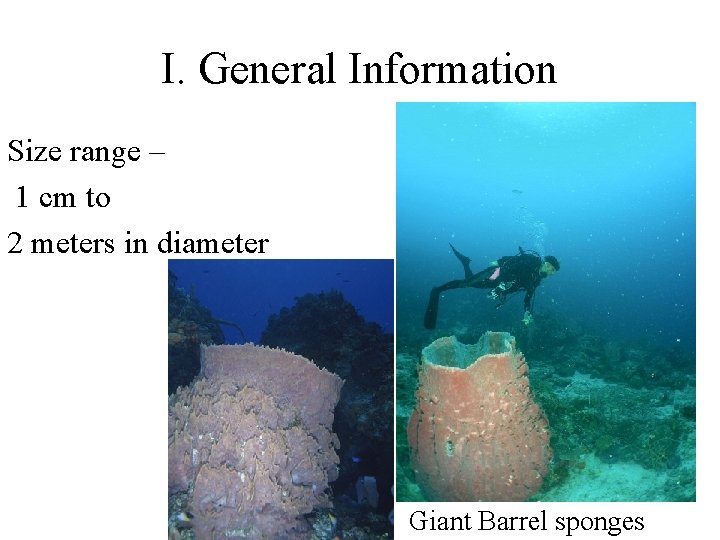
I. General Information Size range – 1 cm to 2 meters in diameter Giant Barrel sponges
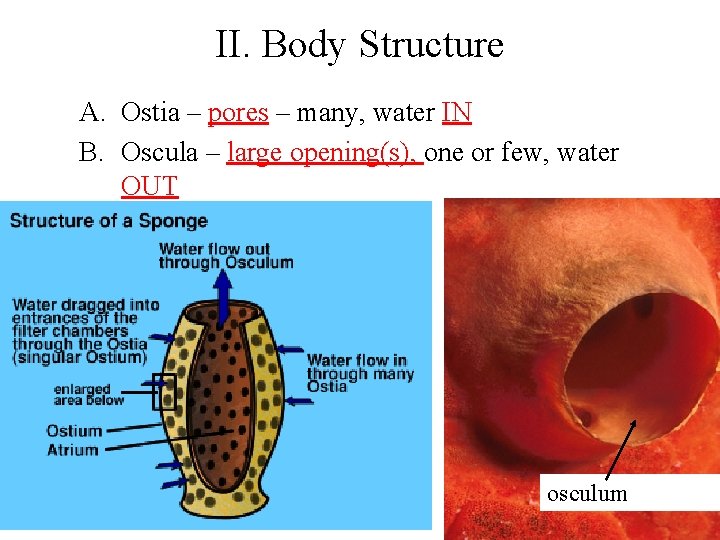
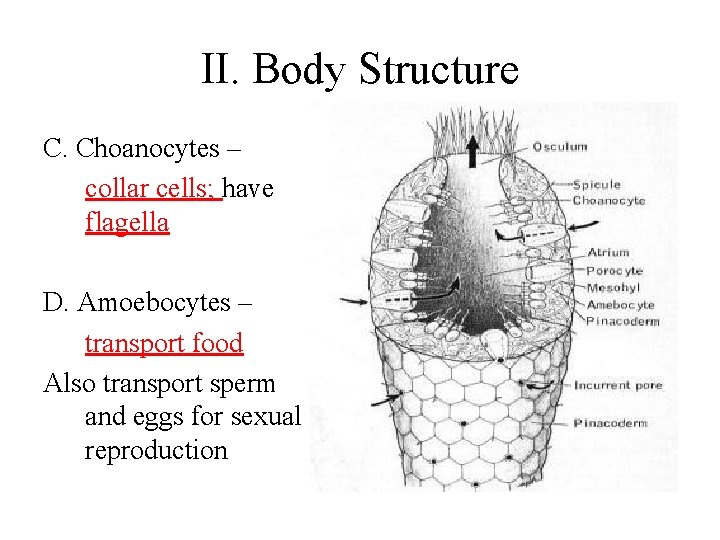
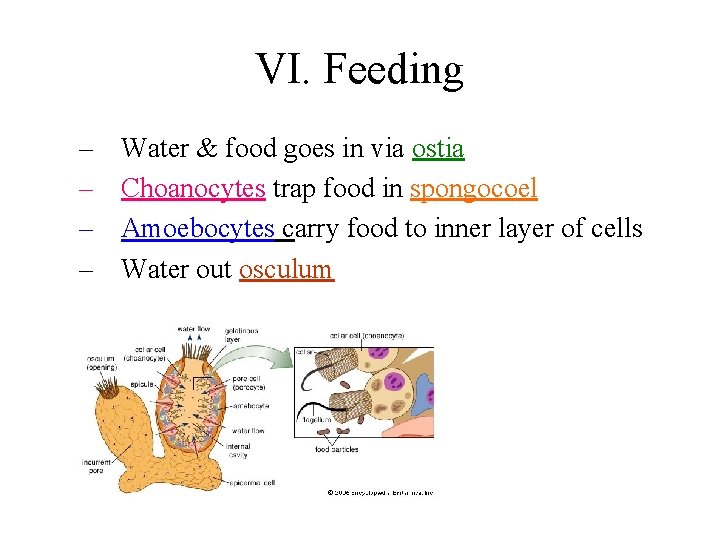
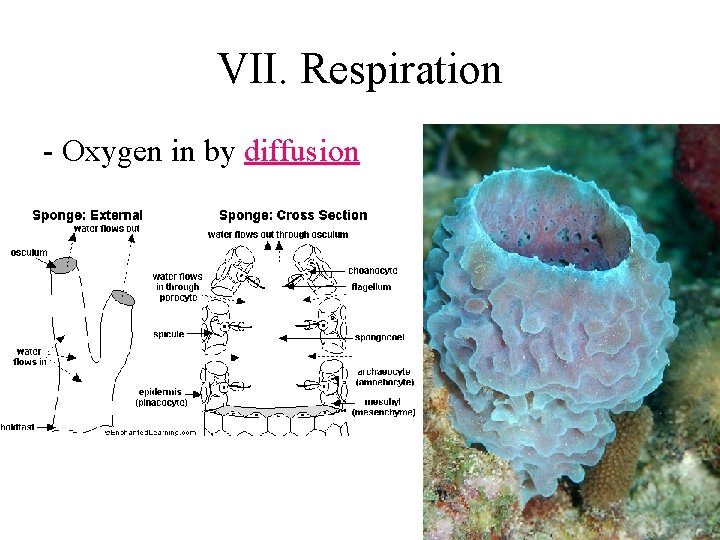
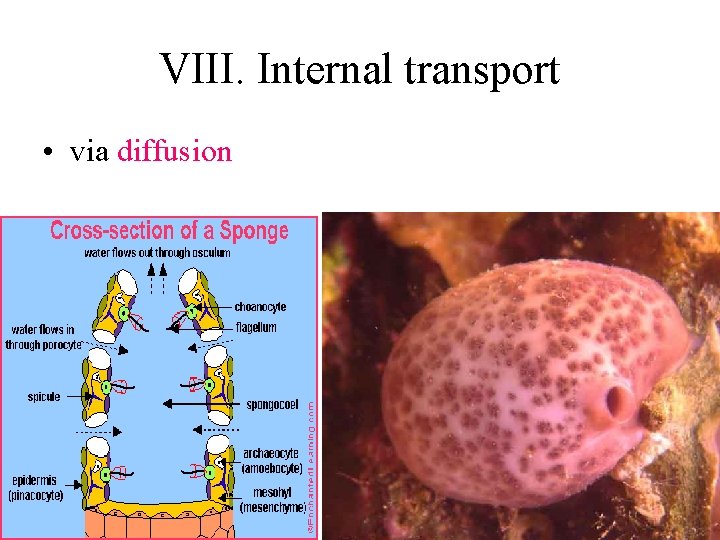
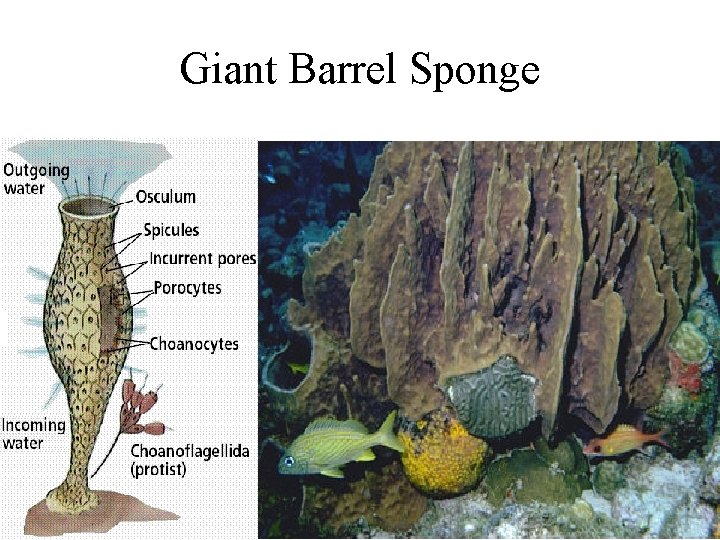
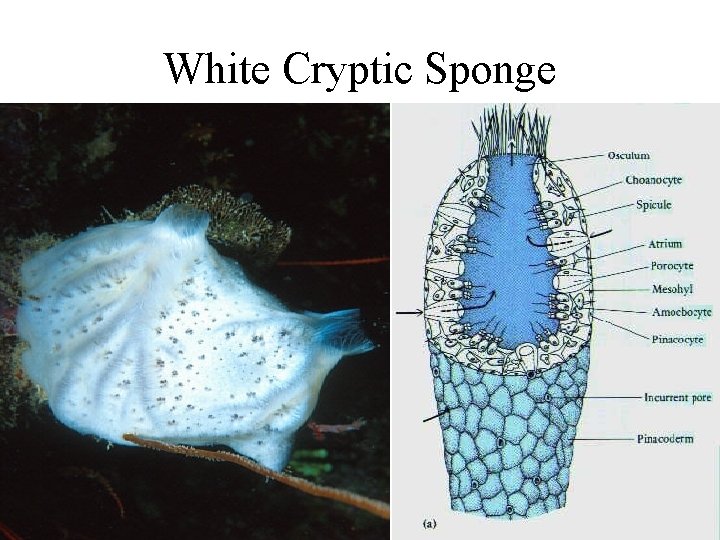
II. Body Structure A. Ostia – pores – many, water IN B. Oscula – large opening(s), one or few, water OUT osculum
II. Body Structure C. Choanocytes – collar cells; have flagella D. Amoebocytes – transport food Also transport sperm and eggs for sexual reproduction
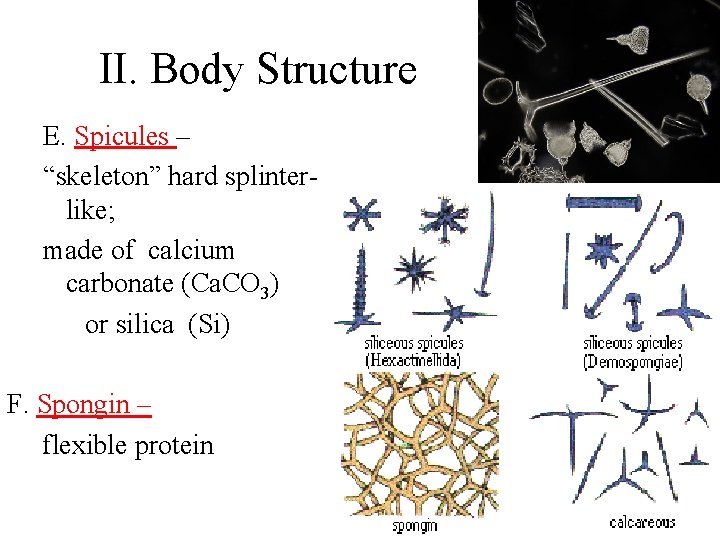
II. Body Structure E. Spicules – “skeleton” hard splinterlike; made of calcium carbonate (Ca. CO 3) or silica (Si) F. Spongin – flexible protein
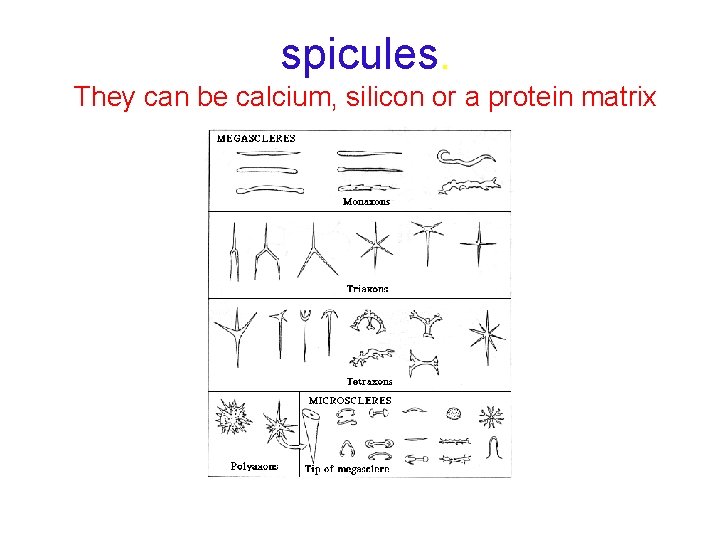
spicules. They can be calcium, silicon or a protein matrix
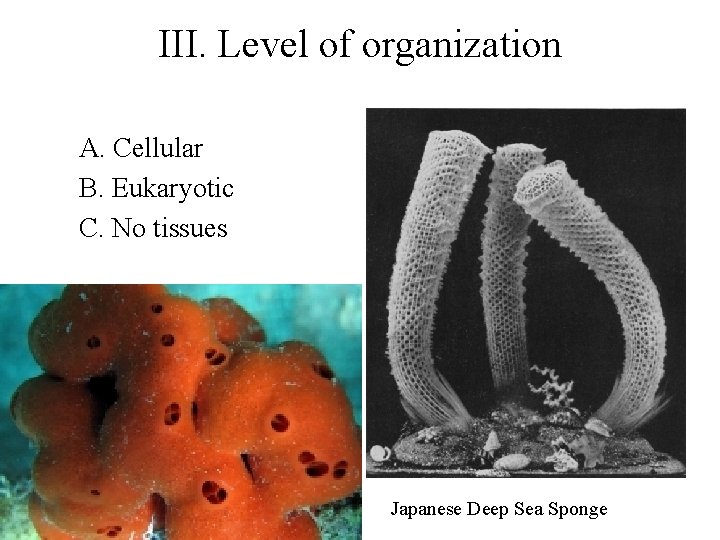
III. Level of organization A. Cellular B. Eukaryotic C. No tissues Japanese Deep Sea Sponge
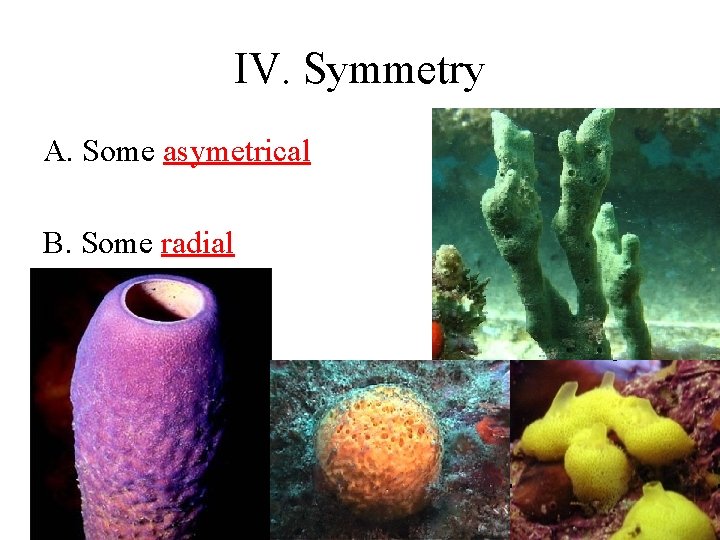
IV. Symmetry A. Some asymetrical B. Some radial
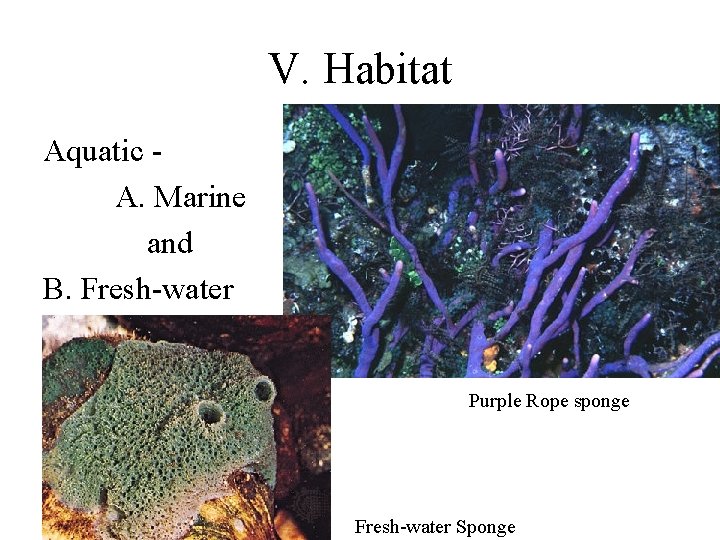
V. Habitat Aquatic A. Marine and B. Fresh-water Purple Rope sponge Fresh-water Sponge
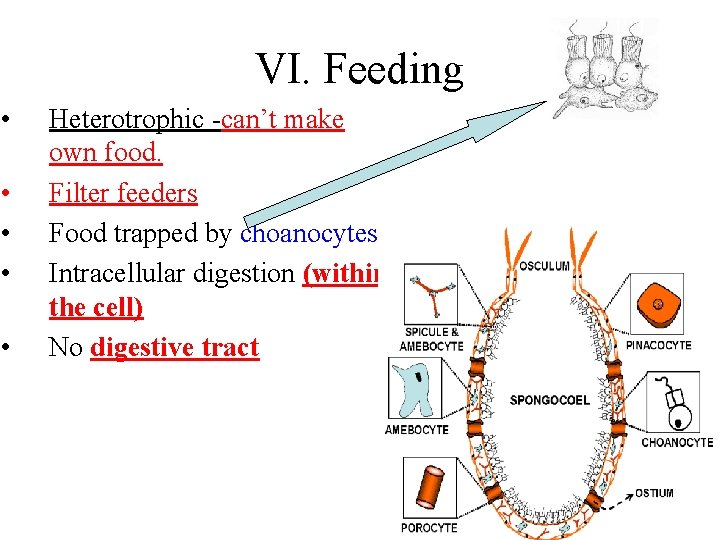
VI. Feeding • • • Heterotrophic -can’t make own food. Filter feeders Food trapped by choanocytes Intracellular digestion (within the cell) No digestive tract
VI. Feeding – – Water & food goes in via ostia Choanocytes trap food in spongocoel Amoebocytes carry food to inner layer of cells Water out osculum
VII. Respiration - Oxygen in by diffusion
VIII. Internal transport • via diffusion
IX. Excretion Via DIFFUSION!!!!!
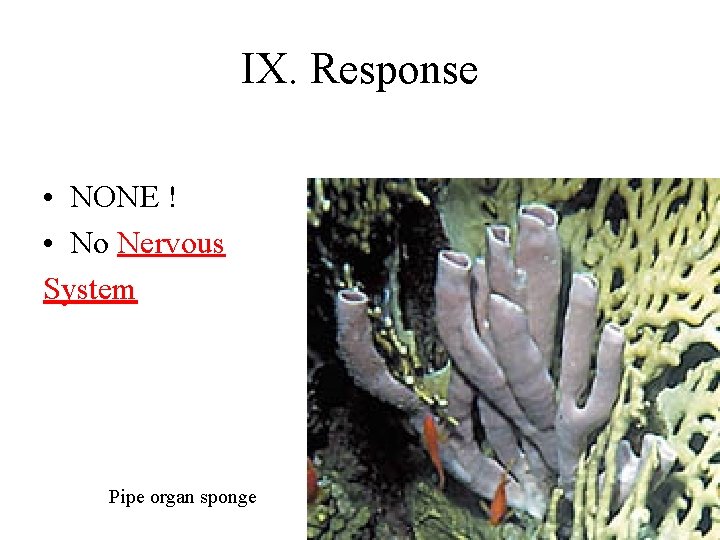
IX. Response • NONE ! • No Nervous System Pipe organ sponge
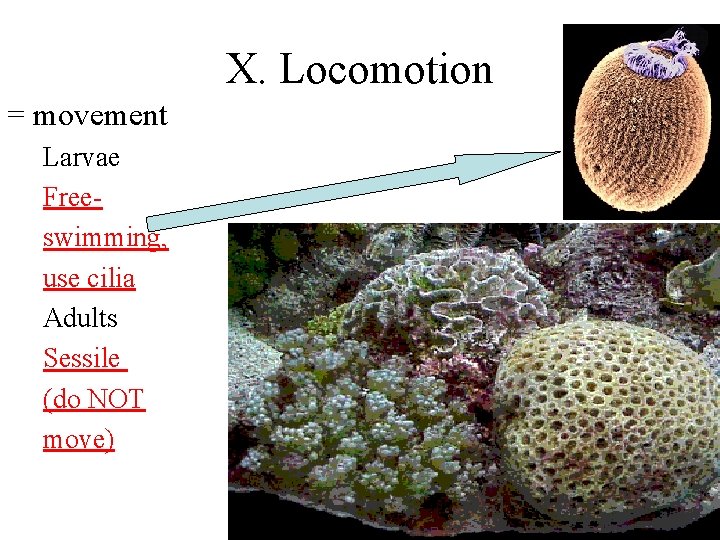
X. Locomotion = movement Larvae Freeswimming, use cilia Adults Sessile (do NOT move)
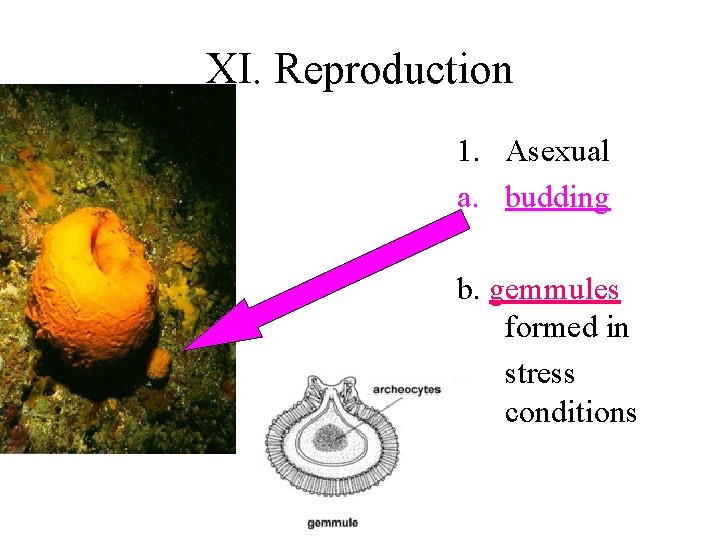
XI. Reproduction 1. Asexual a. budding b. gemmules formed in stress conditions
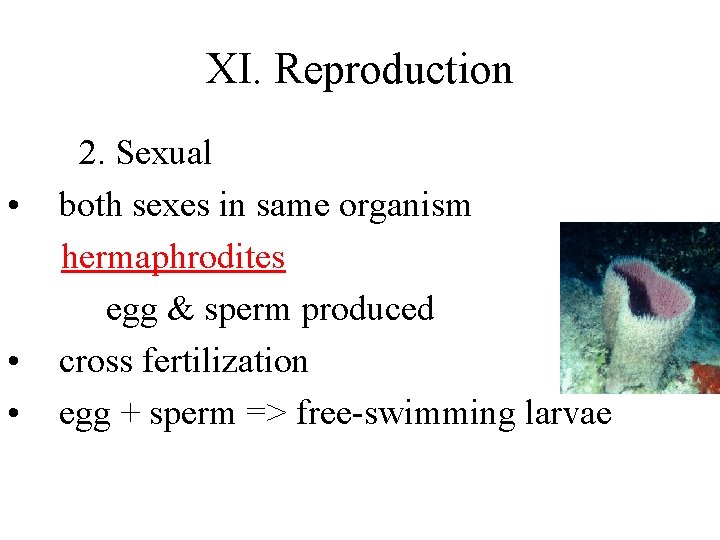
XI. Reproduction • • • 2. Sexual both sexes in same organism hermaphrodites egg & sperm produced cross fertilization egg + sperm => free-swimming larvae
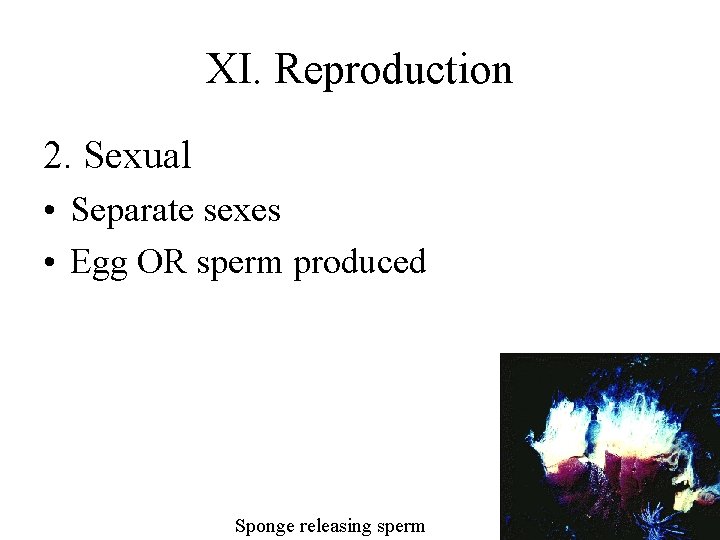
XI. Reproduction 2. Sexual • Separate sexes • Egg OR sperm produced Sponge releasing sperm
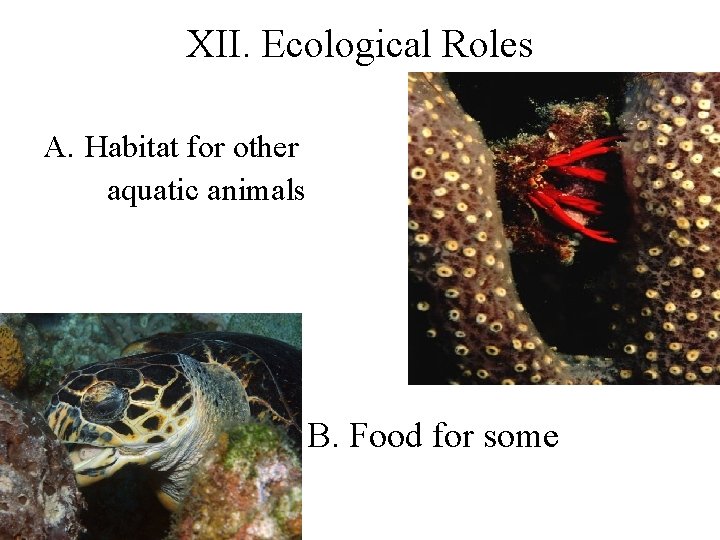
XII. Ecological Roles A. Habitat for other aquatic animals B. Food for some
XII. Ecological Roles C. Home use: bathing, cleaning, home improvement, other
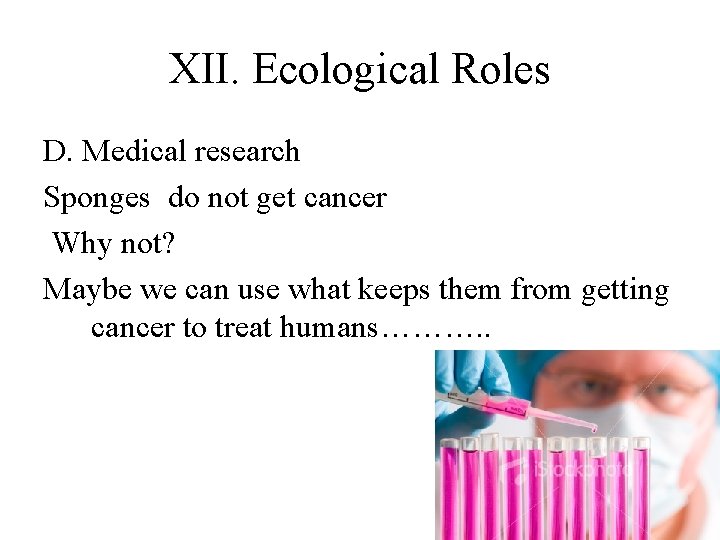
XII. Ecological Roles D. Medical research Sponges do not get cancer Why not? Maybe we can use what keeps them from getting cancer to treat humans………. .
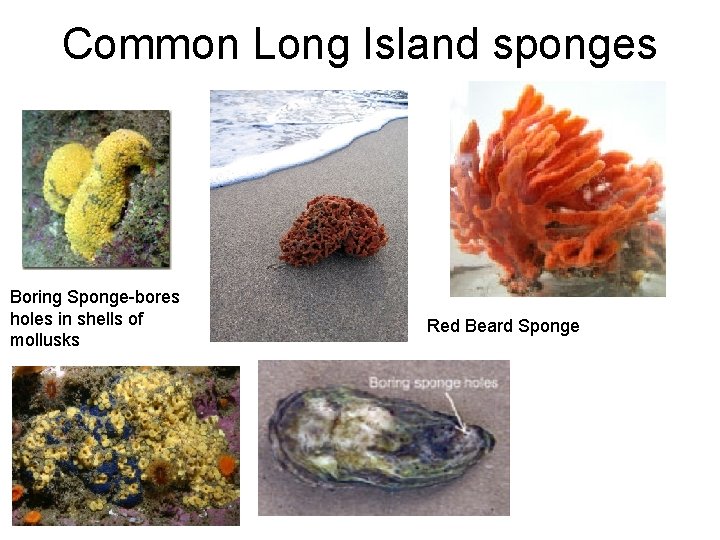
Common Long Island sponges Boring Sponge-bores holes in shells of mollusks Red Beard Sponge
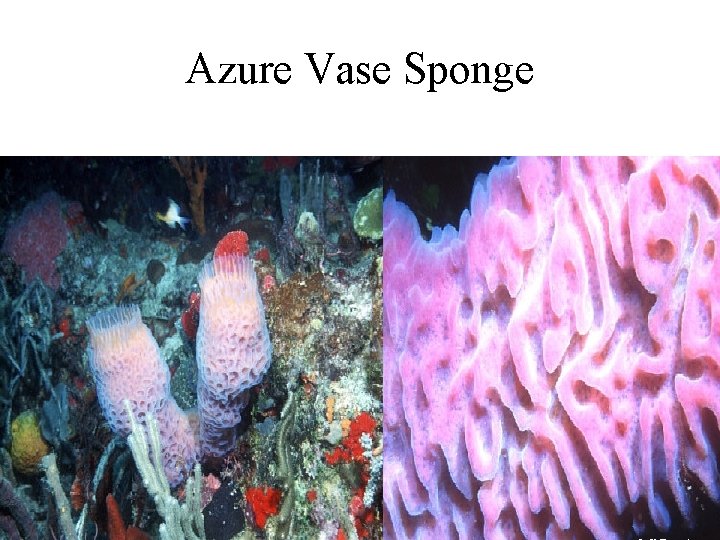
Azure Vase Sponge
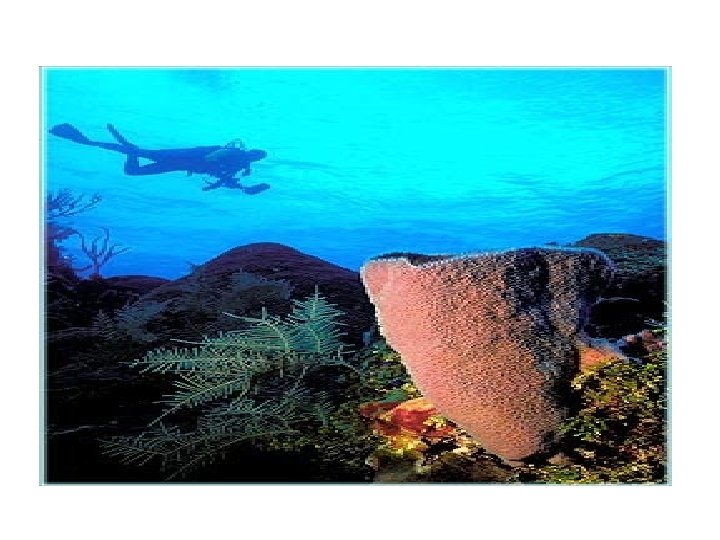
Giant Barrel Sponge
White Cryptic Sponge
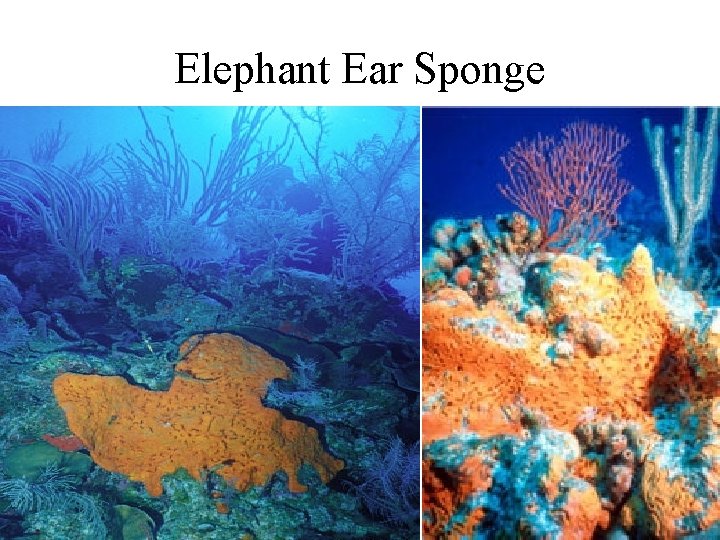
Elephant Ear Sponge
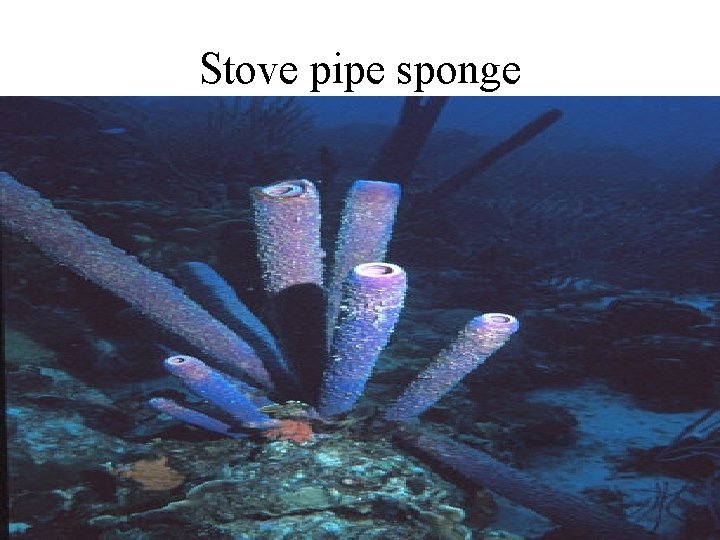
Stove pipe sponge
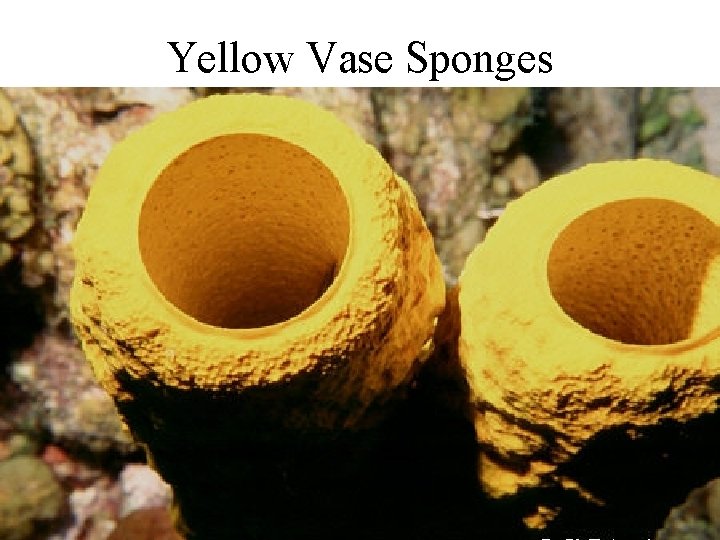
Yellow Vase Sponges
Yellow Barrel Sponge
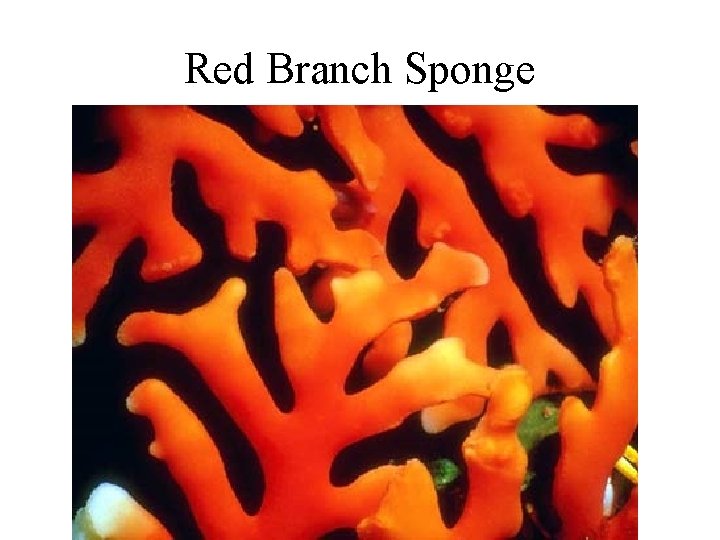
Red Branch Sponge