
Phylum Porifera General characteristics All are aquatic inhabitant
Phylum – Porifera General characteristics: • All are aquatic inhabitant mostly marine, very few are freshwater. • They are sessile and sedentary animals. • Body is perforated by numerous inhalant pores-ostia, hence the name of the group is called Porifera. • They are multicellular organisms having cellular grade of organisation without true tissue. • Body is either asymmetrical or radially symmetrical in some adults. • The outer epithelial wall of the sponges called pinacoderm, and the inner wall called choanoderm. • The middle layer is non living and gelationous called mesohyl or mesenchyme. • The interior of the sponges has a single hollow cavity called spongocoel or paragastric cavity. The folding of the wall of spongocoel with innumerable water canals form a complex structure called canal system.
• Body is supported by an internal skeleton of calcareous or silicious spicules or collagenous fibers called spongin. • Absence of mouth, gut, definite organ and system, muscles and nerve cells and definite germ layers. • All are filter feeders and digestion is intracellular. • Reproduction both asexual and sexual. Fertilization internal. • Mostly hermaphrodite. • Cleavage complete and radial. • All sponges posses power of regeneration. • Two types of larval forms are seen –amphiblastula larva and parenchymula or parenchymella larva.
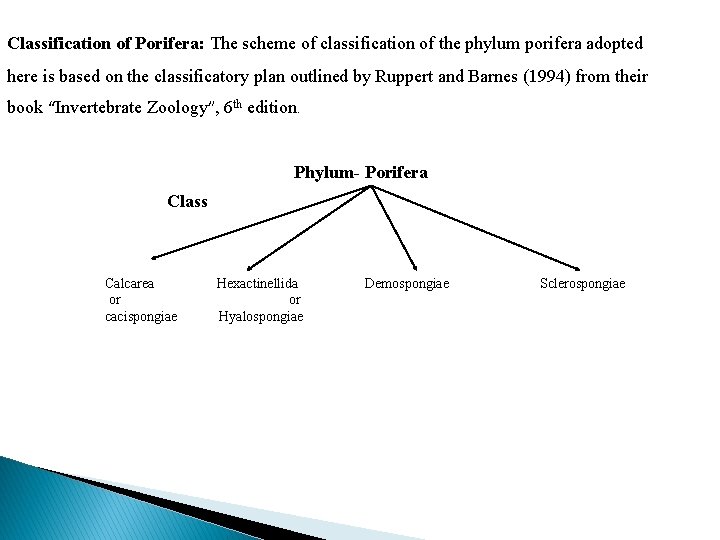
Classification of Porifera: The scheme of classification of the phylum porifera adopted here is based on the classificatory plan outlined by Ruppert and Barnes (1994) from their book “Invertebrate Zoology”, 6 th edition. Phylum- Porifera Class Calcarea or cacispongiae Hexactinellida or Hyalospongiae Demospongiae Sclerospongiae

Sycon sp. Leucosolenia sp. Grantia sp.

Hyalonema sp. (Glass sponge) Pheronema sp. Euplectella sp. (Venus’ flower basket) Rosella sp.

Poterion sp. (Neptune’s cup) Plakina sp. Oscarella sp. Cliona sp. Tethya sp. (Golf ball sponge) Polymastia sp. Ceratoporella sp.

Spongilla sp. Spongia sp. (Bath sponge) Callyspongia sp.

(All coral sponges) Agelas sp. (Elephant ear sponge)

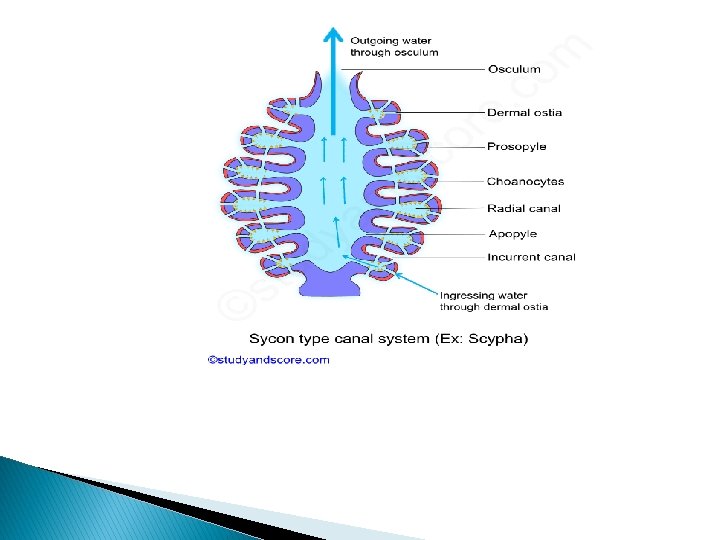


Ostia Spongocoel Found in Rhagon larva( larval form of Demospongiae)

- Slides: 13