
Phylum Platyhelminthes Flatworms p 570 575 CHARACTERISTICS Dorsoventrally
- Slides: 9
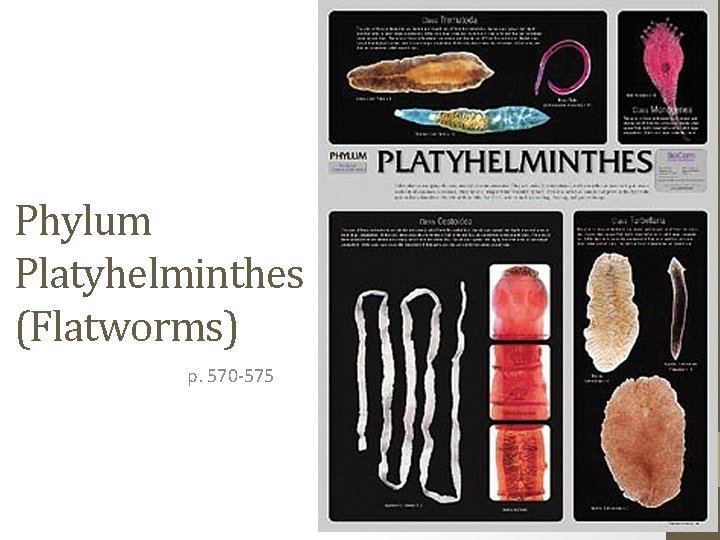
Phylum Platyhelminthes (Flatworms) p. 570 -575
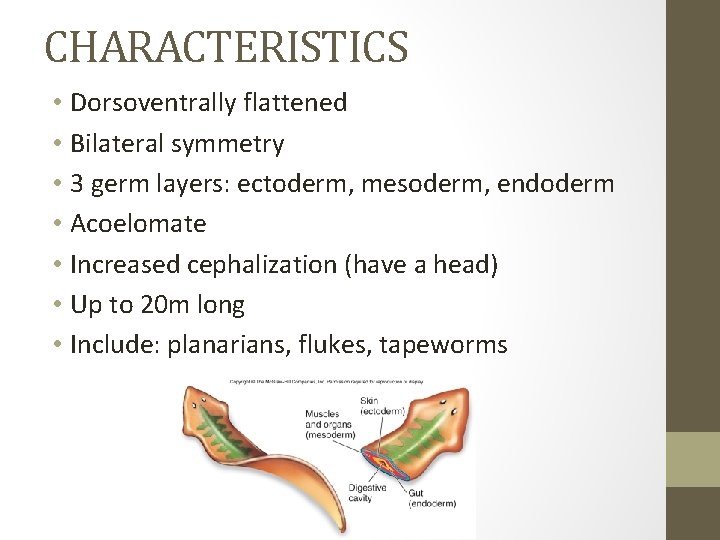
CHARACTERISTICS • Dorsoventrally flattened • Bilateral symmetry • 3 germ layers: ectoderm, mesoderm, endoderm • Acoelomate • Increased cephalization (have a head) • Up to 20 m long • Include: planarians, flukes, tapeworms
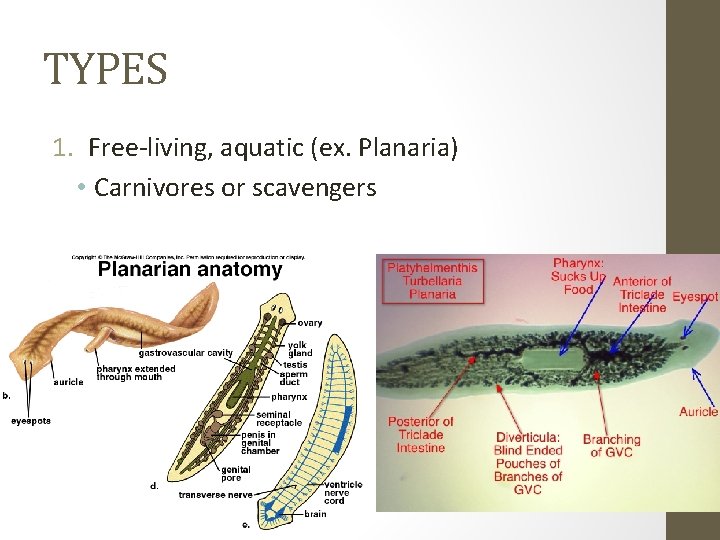
TYPES 1. Free-living, aquatic (ex. Planaria) • Carnivores or scavengers
• Digestive system: one opening to pharynx to gastrovascular cavity to branching intestines (p. 571 Fig. 26 -25) • Mobility: move by cilia & muscle cells • Excretion: Fresh water flatworms have flame cells to deal with liquid waste • Nervous System: § simple brain with nerve cords (looks like a ladder) § Sensory cells sensitive to chemicals, light (ocelli or eyespots), & water flow direction • Circulation & Respiration: diffusion
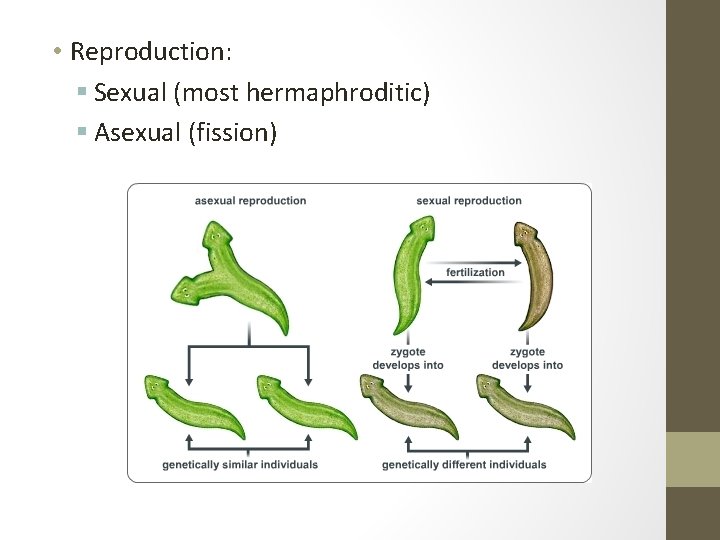
• Reproduction: § Sexual (most hermaphroditic) § Asexual (fission)
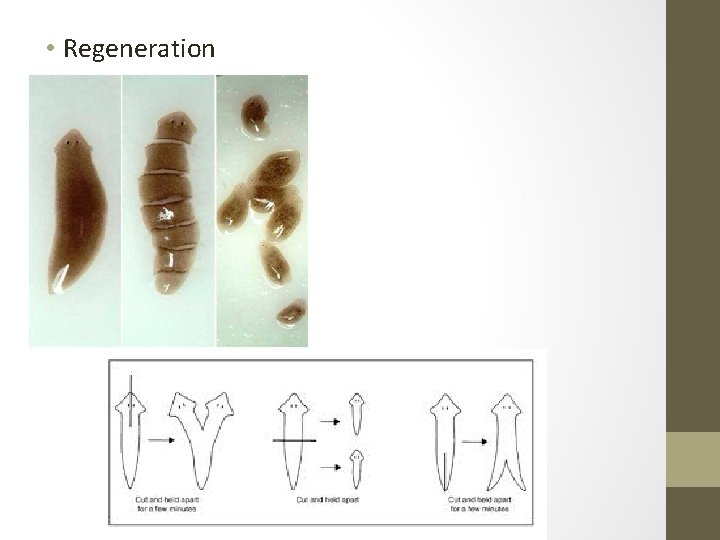
• Regeneration
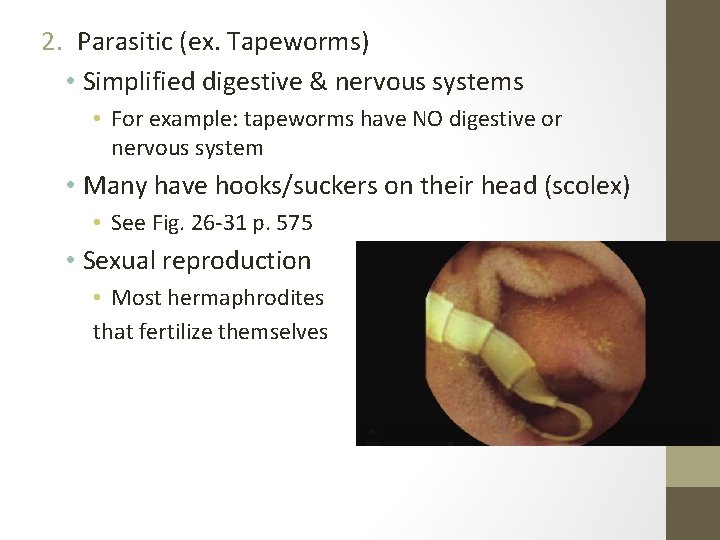
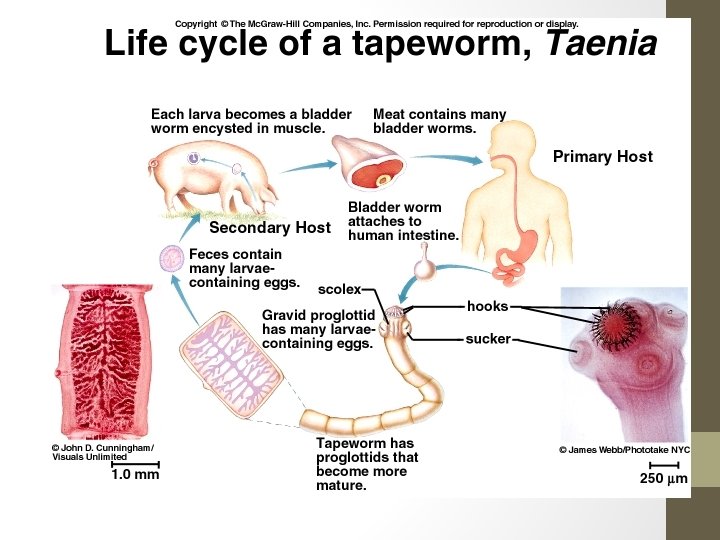
2. Parasitic (ex. Tapeworms) • Simplified digestive & nervous systems • For example: tapeworms have NO digestive or nervous system • Many have hooks/suckers on their head (scolex) • See Fig. 26 -31 p. 575 • Sexual reproduction • Most hermaphrodites that fertilize themselves
Ecological Roles • • Scavengers Some predators preying on smaller organisms Most preyed upon by larger organisms Some parasitic living off of a host or series of hosts, causing some degree of harm