
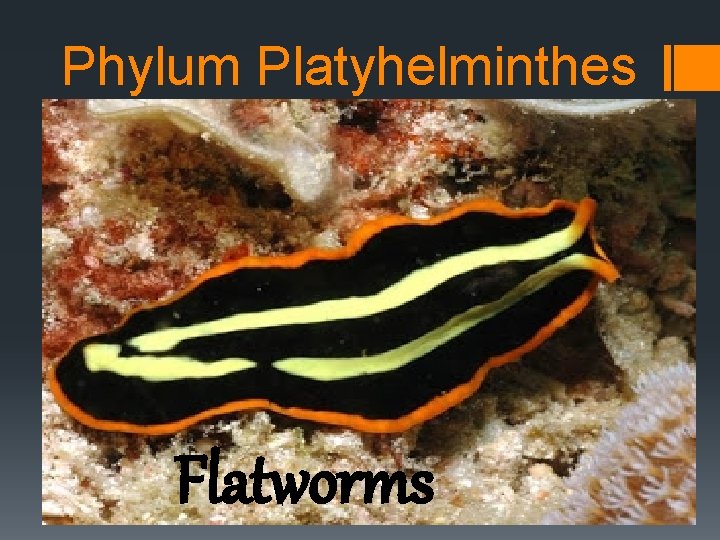
Phylum Platyhelminthes Flatworms General Characteristics Domain Eukarya Kingdom


- Slides: 55
Phylum Platyhelminthes Flatworms
General Characteristics: § Domain Eukarya; Kingdom Animalia; Phylum Platyhelminthes § **Bilateral Symmetry § Eumetazoa- Triploblastic § Acoelomate § Sexual reproduction preferred § Asexual reproduction possible § Dorso-ventrally flattened § Heterotrophs §Unsegmented §Developing organ systems
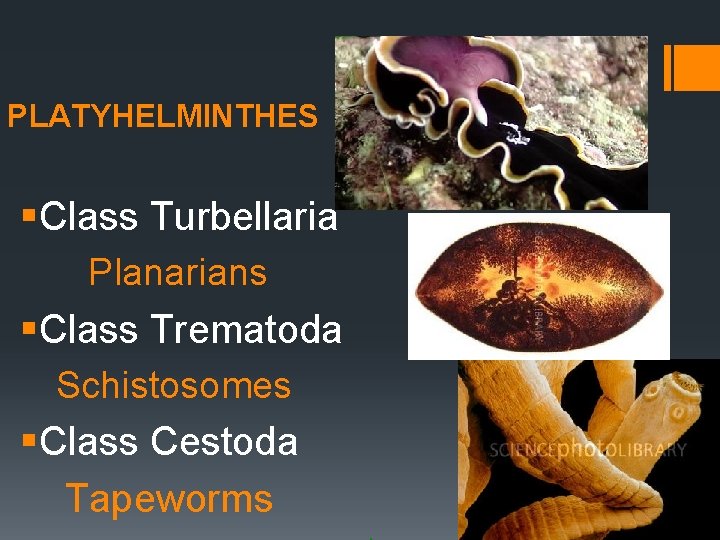
PLATYHELMINTHES §Class Turbellaria Planarians §Class Trematoda Schistosomes §Class Cestoda Tapeworms
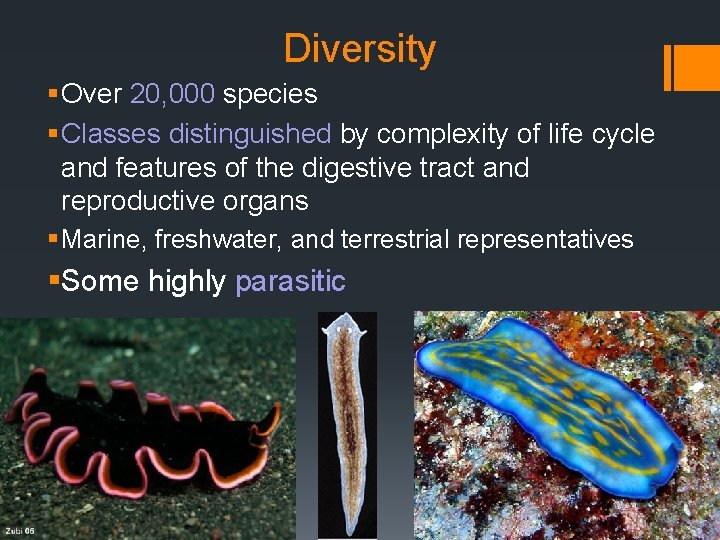
Diversity § Over 20, 000 species § Classes distinguished by complexity of life cycle and features of the digestive tract and reproductive organs § Marine, freshwater, and terrestrial representatives §Some highly parasitic
As bottom dwellers that glide over the ground �Use cilia and muscular contractions �Lay down a sheet of mucous as they travel (like slugs)
Body Description Triploblastic = 3 Layers �Ectoderm �Mesoderm �Endoderm Acoelomates – no coelom cavity
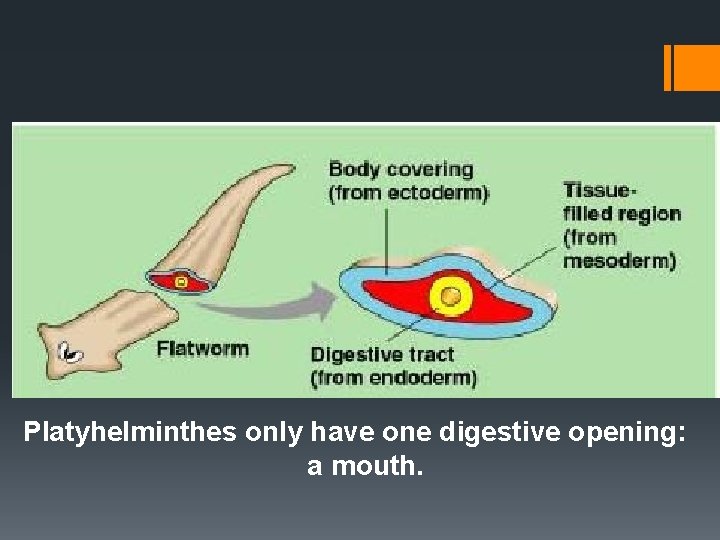
Acoelomate Design Platyhelminthes only have one digestive opening: a mouth.
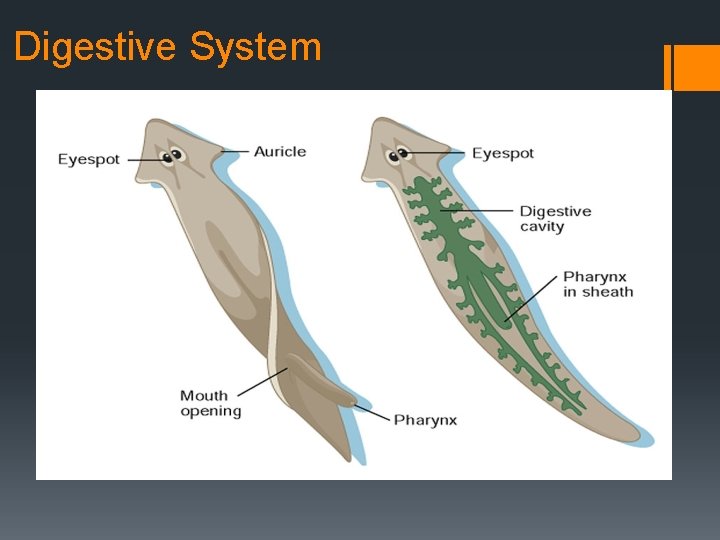
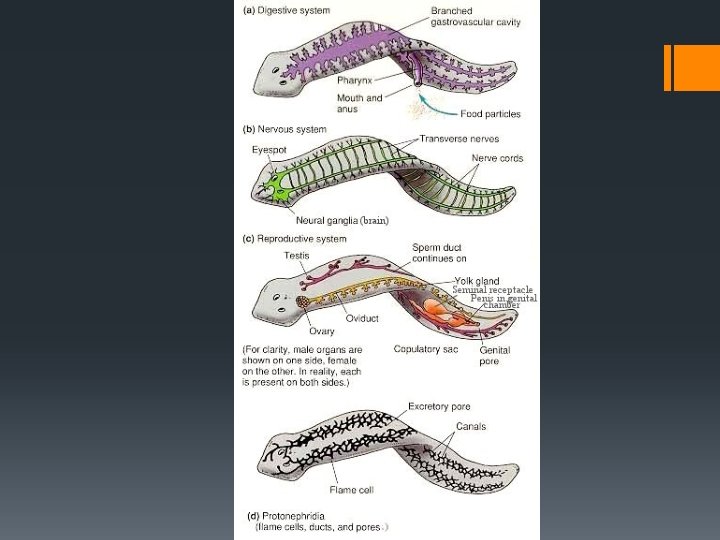
Body Systems DIGESTIVE SYSTEM § Pharynx: muscular ingestion organ § Some digestion takes place outside the body § Enzymes secreted on food particles; helps to break them down so the pharynx can swallow them easier.
Digestive System
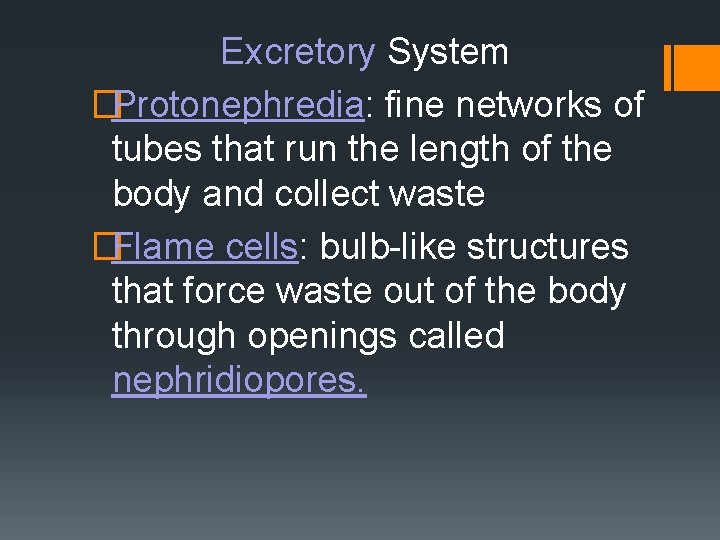
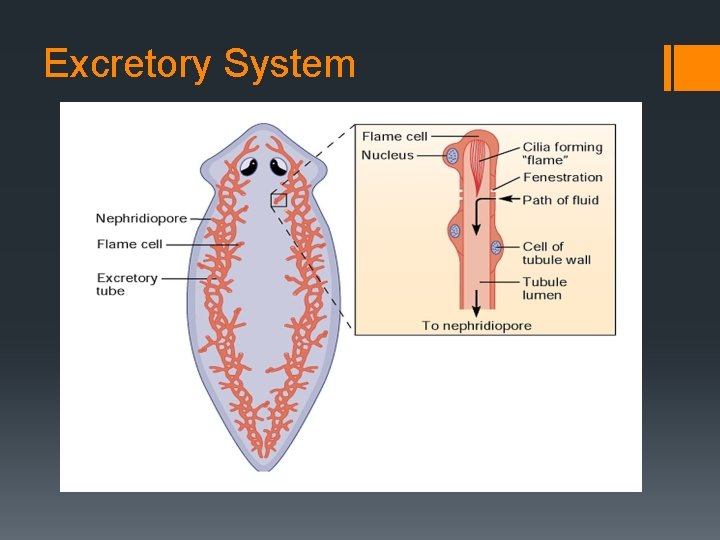
Excretory System �Protonephredia: fine networks of tubes that run the length of the body and collect waste �Flame cells: bulb-like structures that force waste out of the body through openings called nephridiopores.
Excretory System
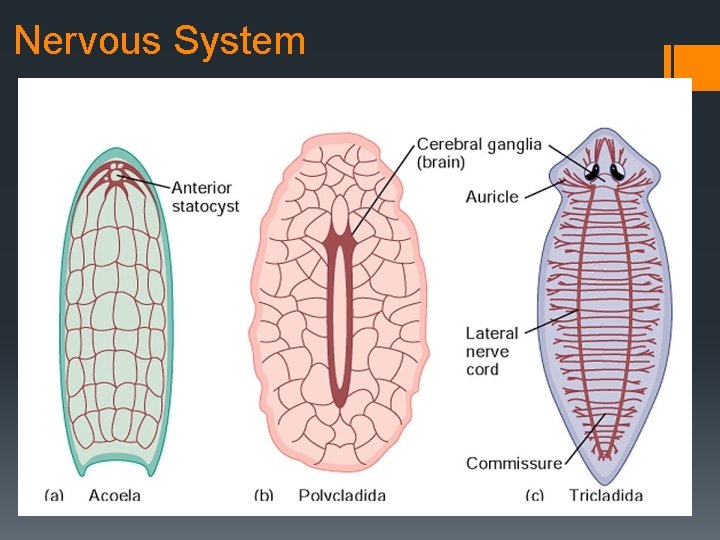
Nervous System §Simple Organisms: Statocysts that sense gravity §Complex Organisms: two main nerve cords with ladder like connections between §Auricles: perceive chemicals §Ocelli: eyespots; detect light §Ganglia: brain like central nervous system
Nervous System
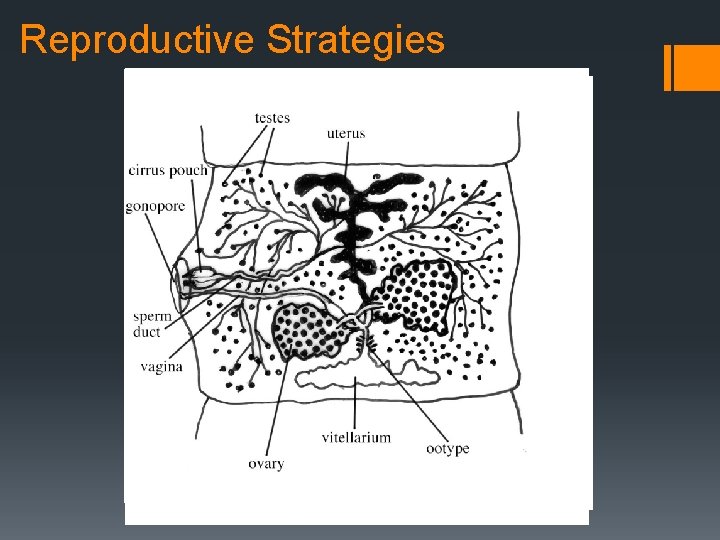
Reproductive System Exhibit both sexual and asexual reproduction §Asexual - fission, regeneration §Sexual - contain both male and female sex organs §Hermaphrodites
Reproductive Strategies
Checkpoint Questions: Answer in COMPLETE SENTENCES. 1. 2. 3. 4. Which phylum do flatworms belong to? Flatworms are triploblastic. What does that mean? What type of body cavity do they have? Explain. Flatworms are the “first” of many things in the animal kingdom. What traits do flatworms display that were not present in Poriferans, Cnidarians, or Ctenophores? 5. Flatworms have the first excretory system. How does it work? Use vocabulary/science words.
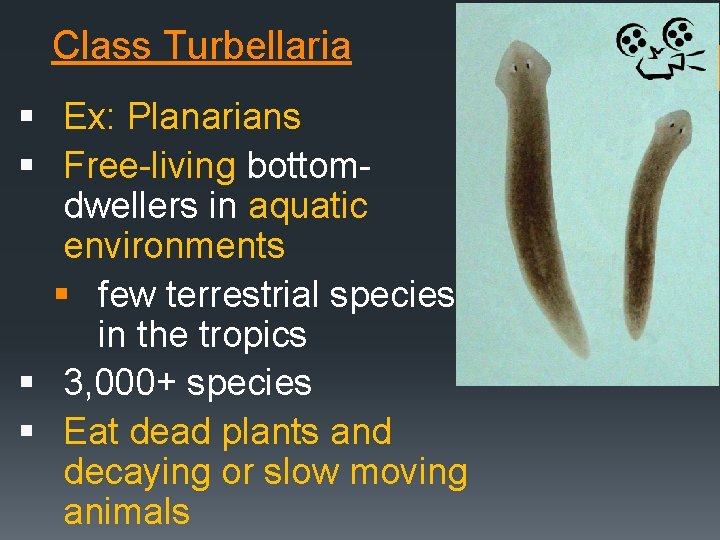
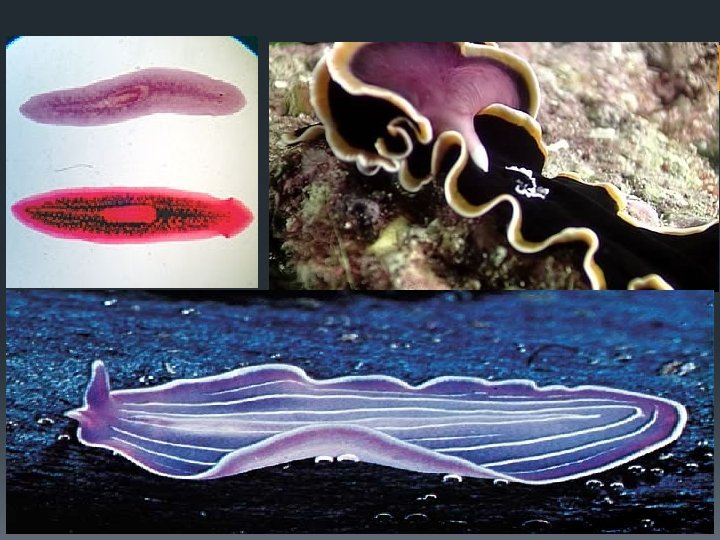
Class Turbellaria § Ex: Planarians § Free-living bottomdwellers in aquatic environments § few terrestrial species in the tropics § 3, 000+ species § Eat dead plants and decaying or slow moving animals
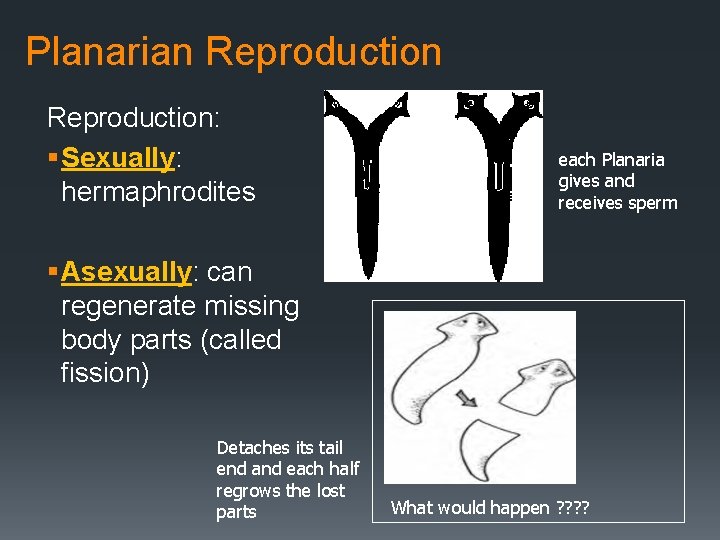
Planarian Reproduction: § Sexually: hermaphrodites each Planaria gives and receives sperm § Asexually: can regenerate missing body parts (called fission) Detaches its tail end and each half regrows the lost parts What would happen ? ?
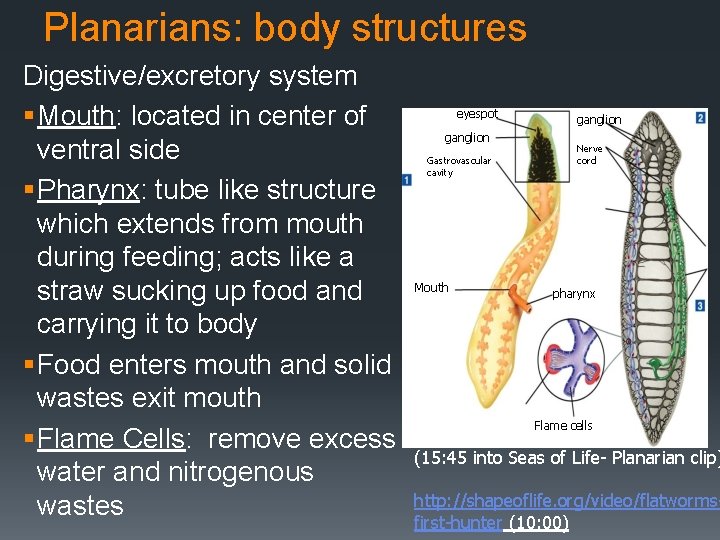
Planarians: body structures Digestive/excretory system § Mouth: located in center of ventral side § Pharynx: tube like structure which extends from mouth during feeding; acts like a straw sucking up food and carrying it to body § Food enters mouth and solid wastes exit mouth § Flame Cells: remove excess water and nitrogenous wastes eyespot ganglion Gastrovascular cavity Mouth ganglion Nerve cord pharynx Flame cells (15: 45 into Seas of Life- Planarian clip) http: //shapeoflife. org/video/flatwormsfirst-hunter (10: 00)
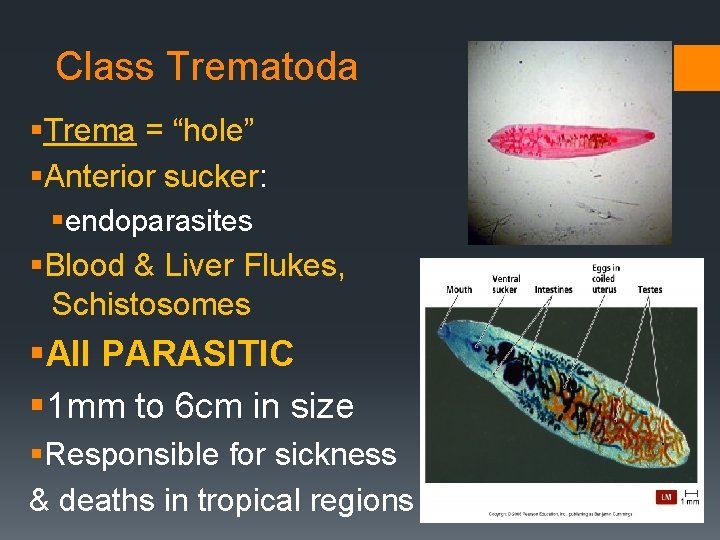
Class Trematoda §Trema = “hole” §Anterior sucker: §endoparasites §Blood & Liver Flukes, Schistosomes §All PARASITIC § 1 mm to 6 cm in size §Responsible for sickness & deaths in tropical regions
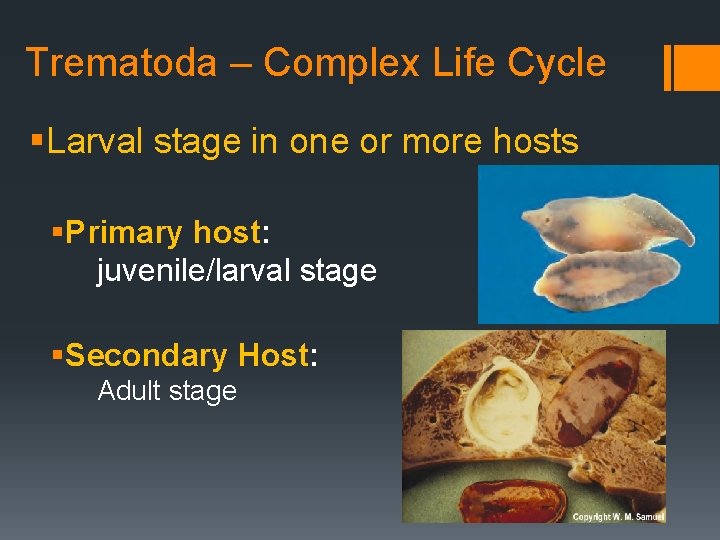
Trematoda – Complex Life Cycle §Larval stage in one or more hosts §Primary host: juvenile/larval stage §Secondary Host: Adult stage
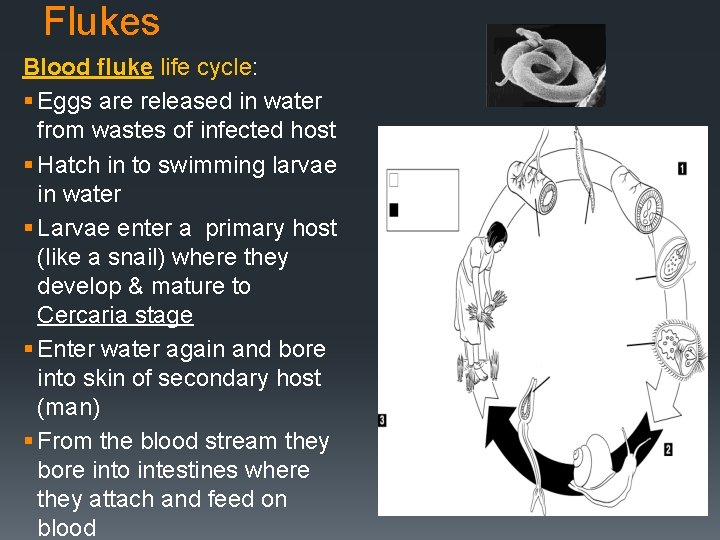
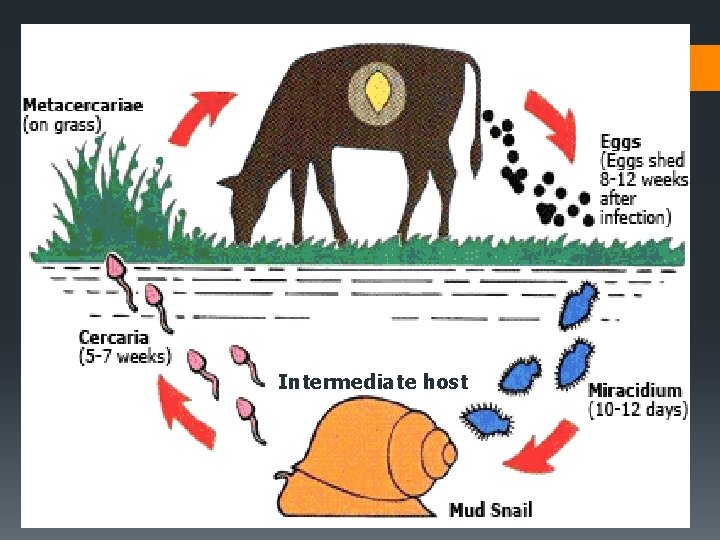
Flukes Blood fluke life cycle: § Eggs are released in water from wastes of infected host § Hatch in to swimming larvae in water § Larvae enter a primary host (like a snail) where they develop & mature to Cercaria stage § Enter water again and bore into skin of secondary host (man) § From the blood stream they bore into intestines where they attach and feed on blood
Intermediate host
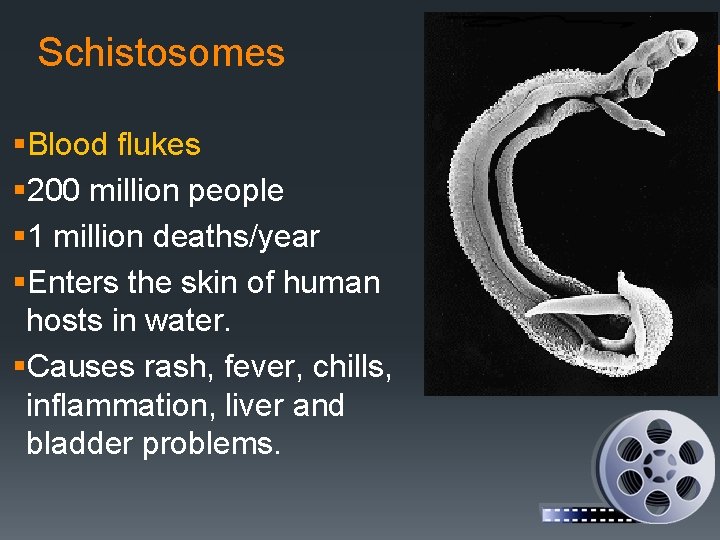
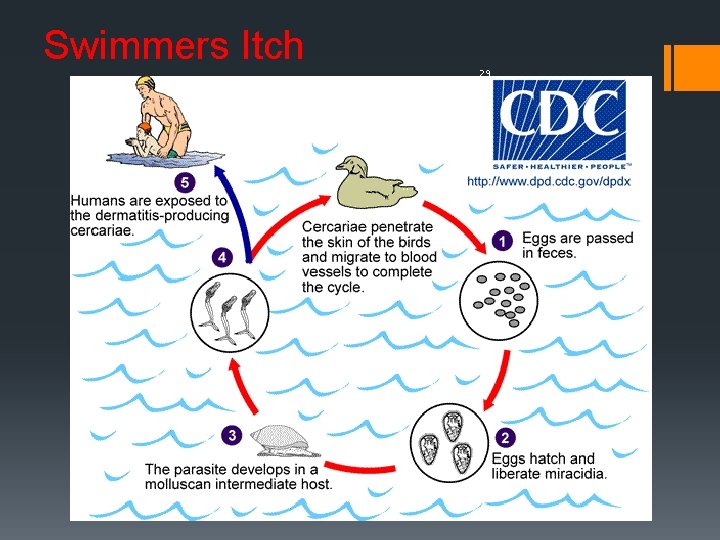
Schistosomes §Blood flukes § 200 million people § 1 million deaths/year §Enters the skin of human hosts in water. §Causes rash, fever, chills, inflammation, liver and bladder problems.
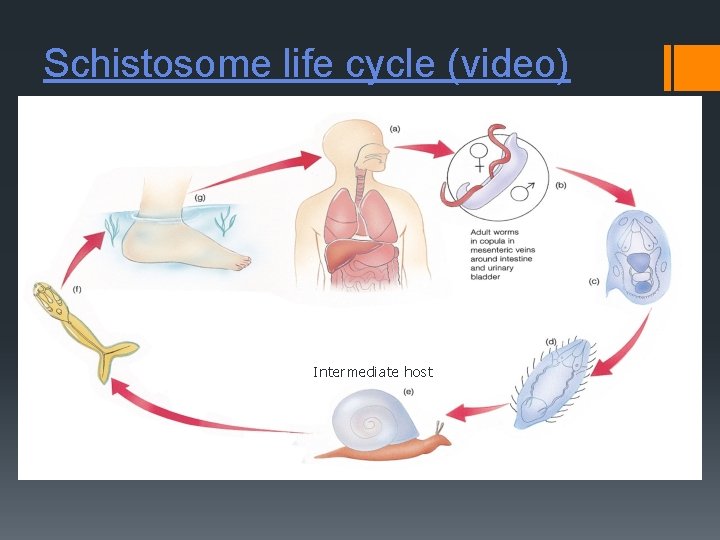
Schistosome life cycle (video) Intermediate host
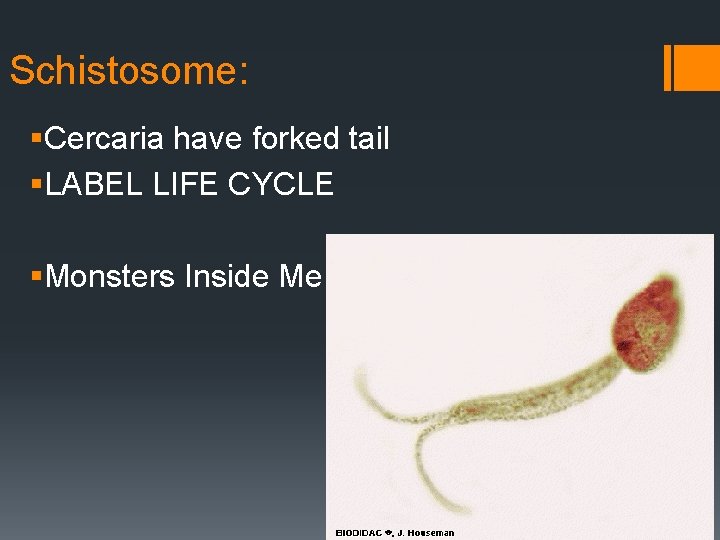
Schistosome: §Cercaria have forked tail §LABEL LIFE CYCLE §Monsters Inside Me (clips 1 -3)
Swimmers Itch 29
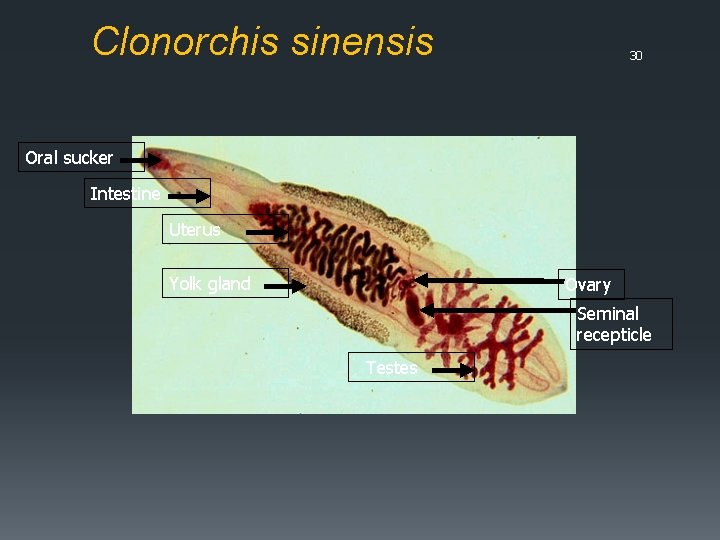
Clonorchis sinensis 30 Oral sucker Intestine Uterus Yolk gland Ovary Seminal recepticle Testes
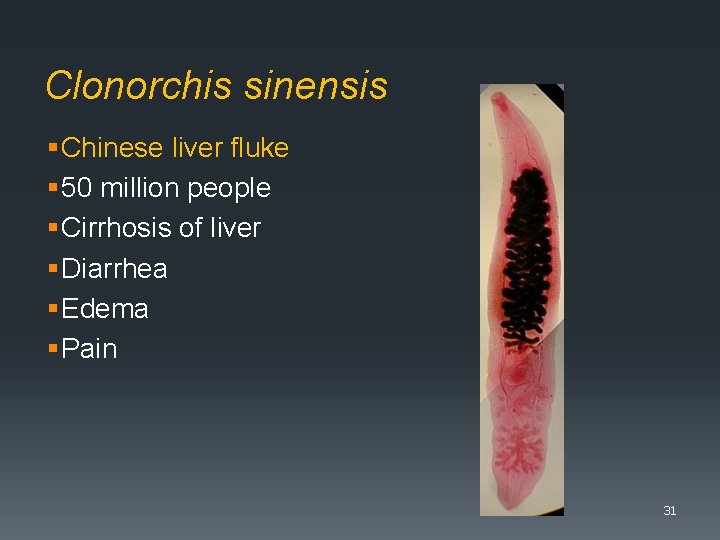
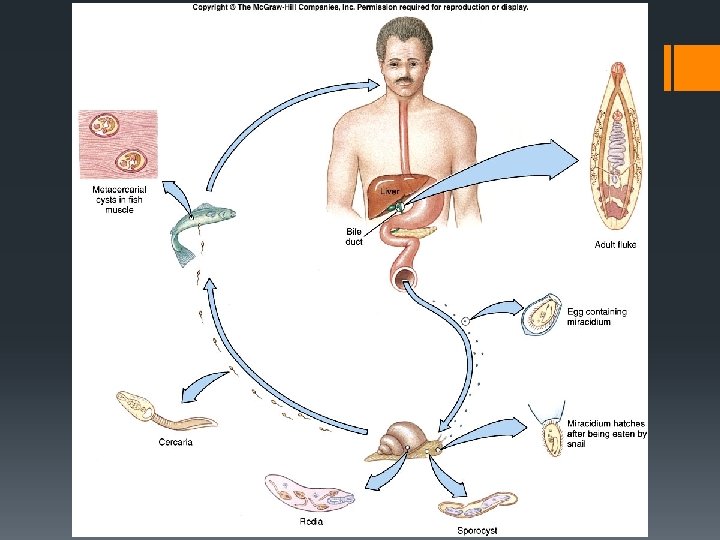
Clonorchis sinensis § Chinese liver fluke § 50 million people § Cirrhosis of liver § Diarrhea § Edema § Pain 31
32
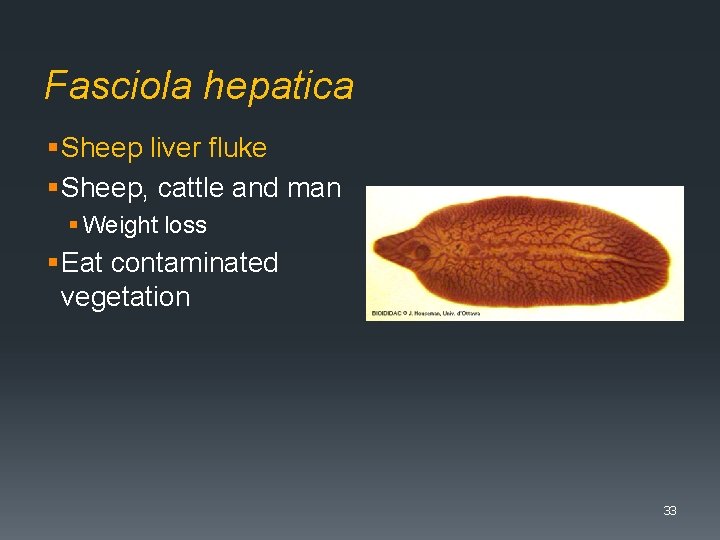
Fasciola hepatica § Sheep liver fluke § Sheep, cattle and man § Weight loss § Eat contaminated vegetation 33
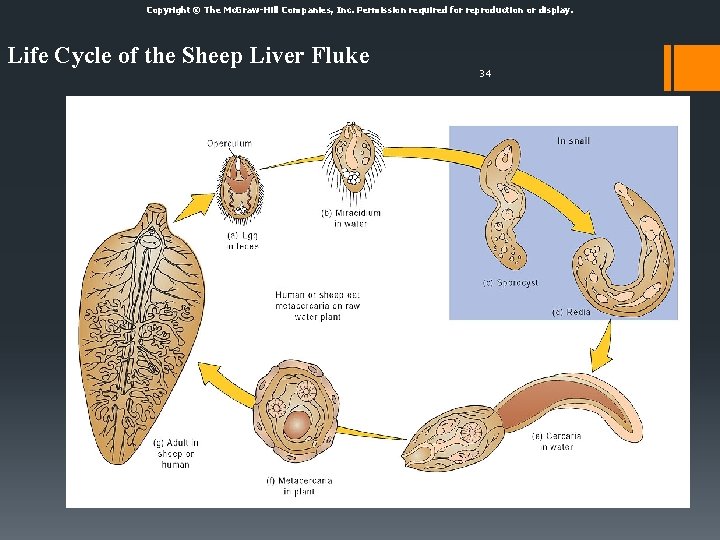
Copyright © The Mc. Graw-Hill Companies, Inc. Permission required for reproduction or display. Life Cycle of the Sheep Liver Fluke 34
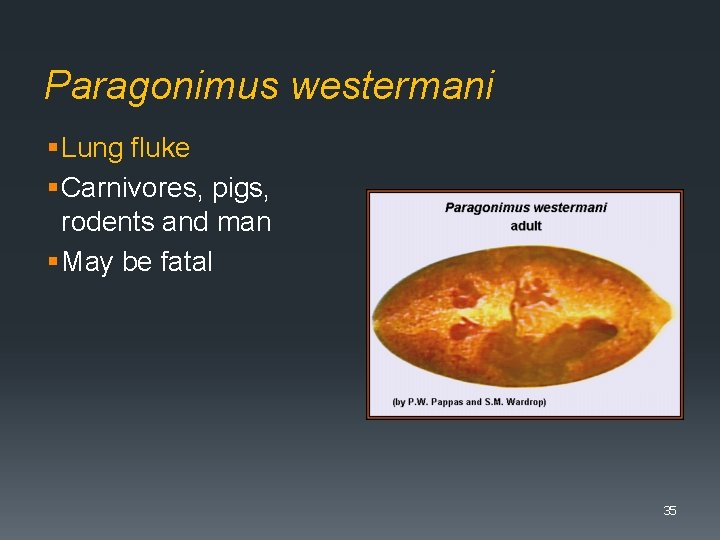
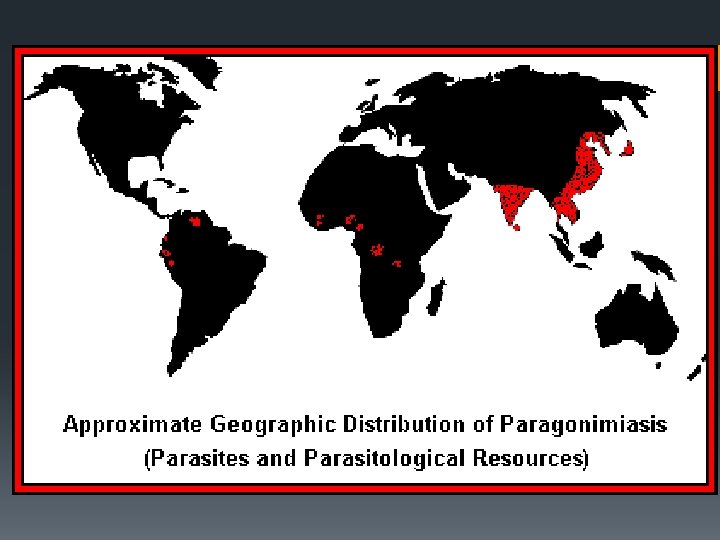
Paragonimus westermani § Lung fluke § Carnivores, pigs, rodents and man § May be fatal 35
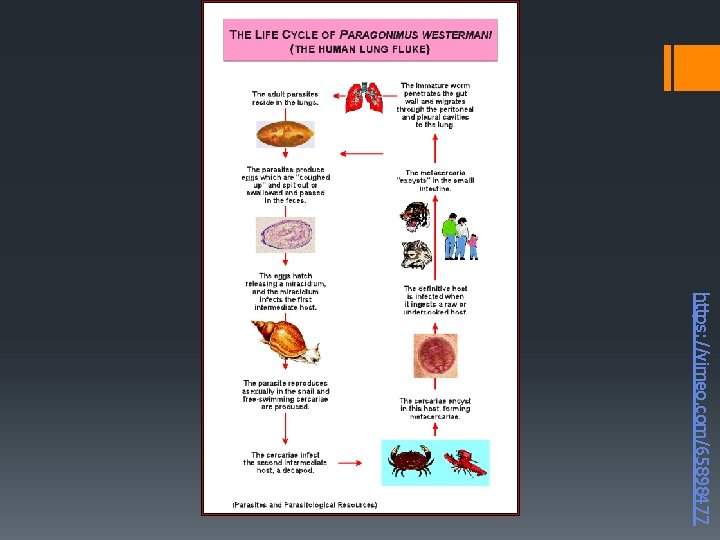
36 https: //vimeo. com/65898477
37
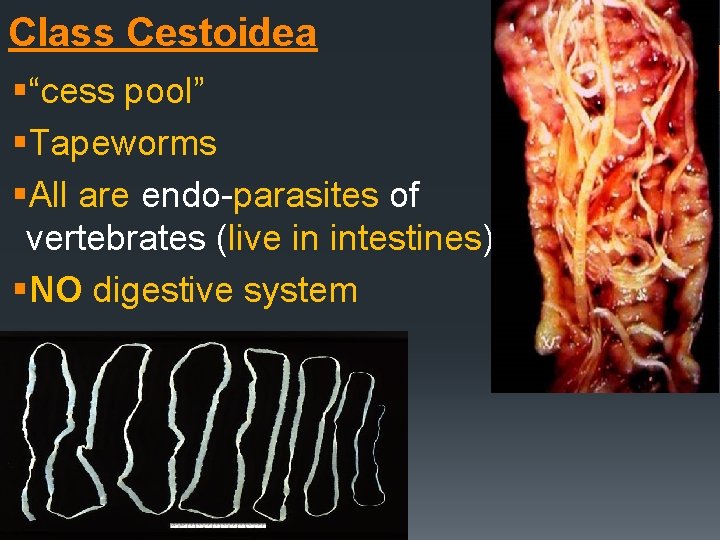
Class Cestoidea §“cess pool” §Tapeworms §All are endo-parasites of vertebrates (live in intestines) §NO digestive system
Effects of Tapeworms §Can cause anemia, malnutrition, weight loss, and secondary infections §Can change behavior of organisms making them more susceptible to predators
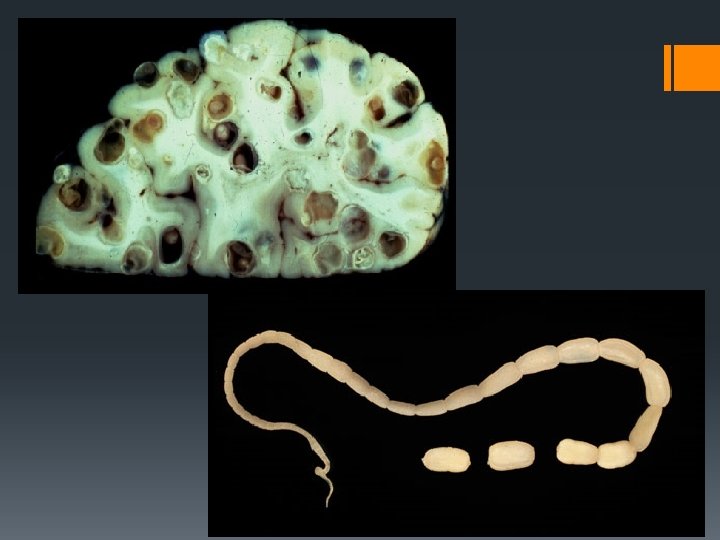
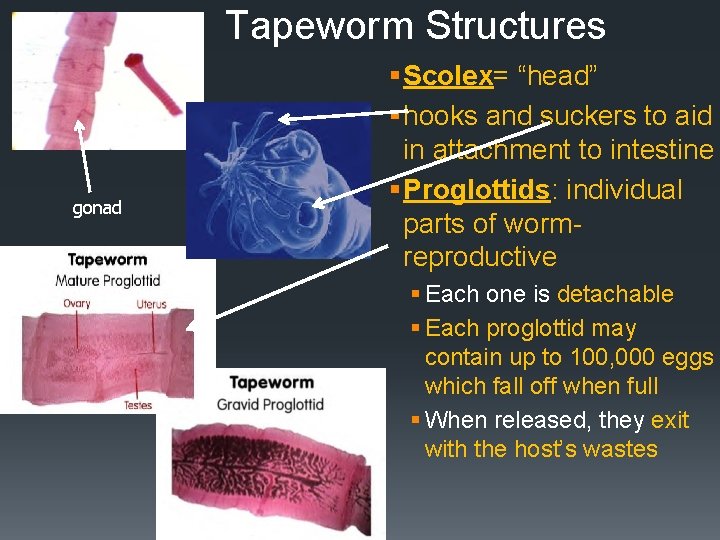
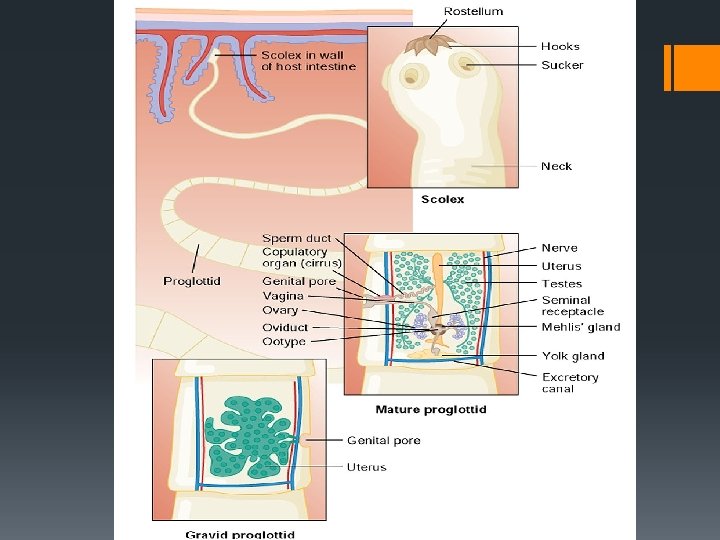
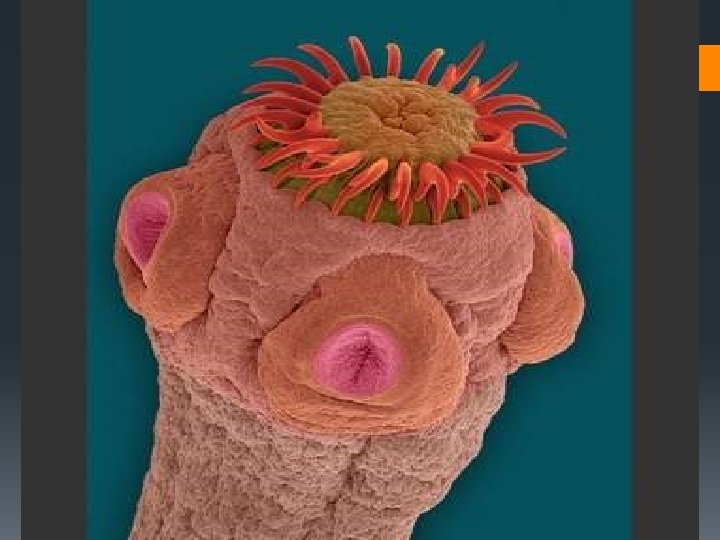
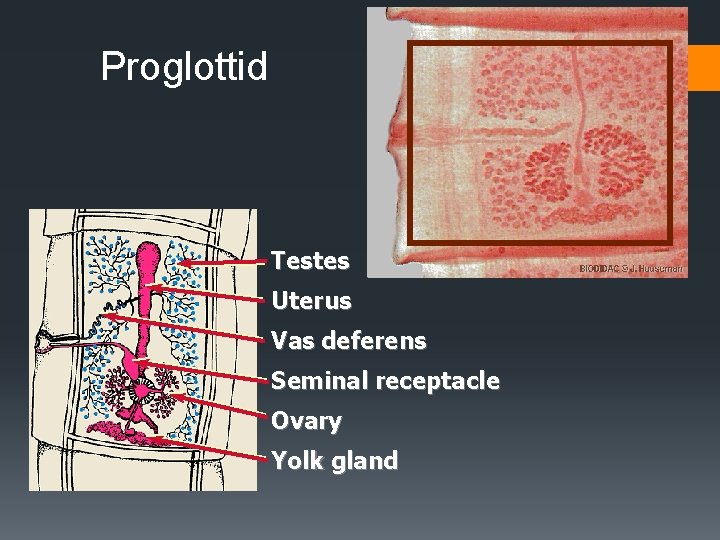
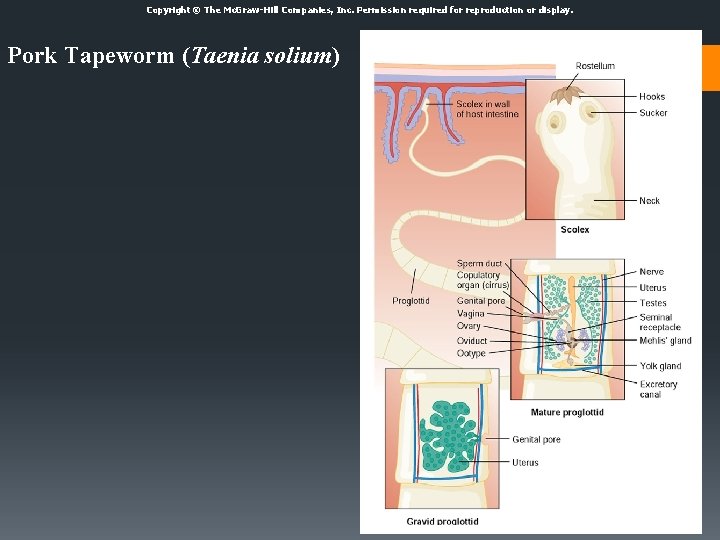
Tapeworm Structures gonad § Scolex= “head” § hooks and suckers to aid in attachment to intestine § Proglottids: individual parts of wormreproductive § Each one is detachable § Each proglottid may contain up to 100, 000 eggs which fall off when full § When released, they exit with the host’s wastes
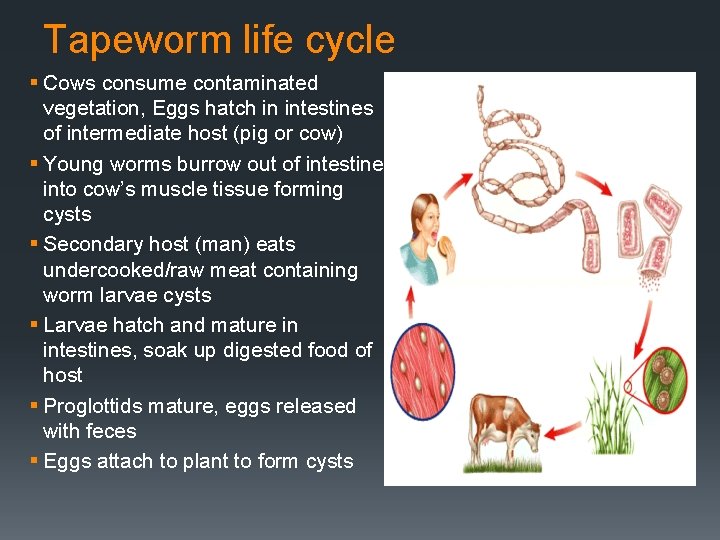
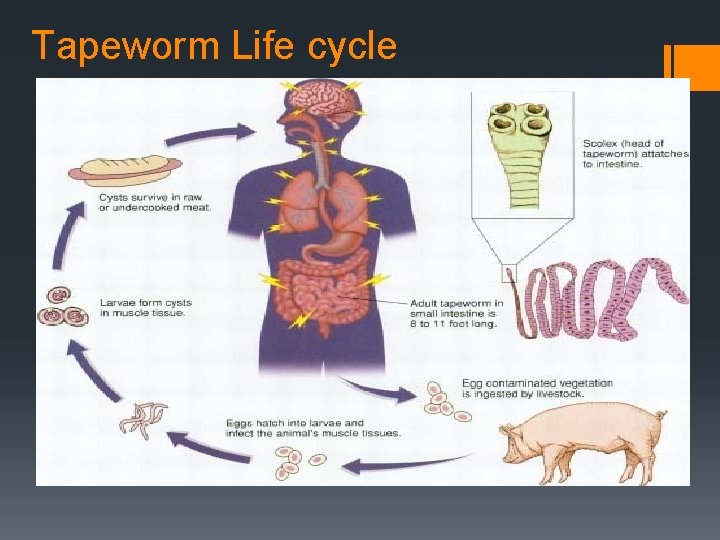
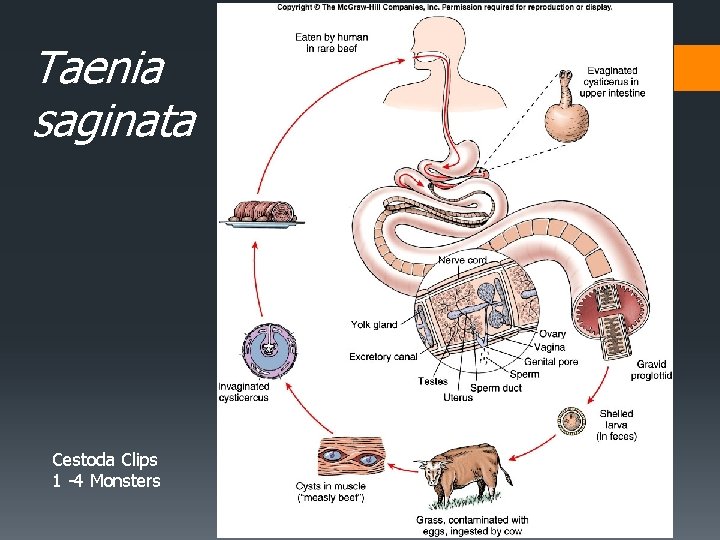
Tapeworm life cycle § Cows consume contaminated vegetation, Eggs hatch in intestines of intermediate host (pig or cow) § Young worms burrow out of intestine into cow’s muscle tissue forming cysts § Secondary host (man) eats undercooked/raw meat containing worm larvae cysts § Larvae hatch and mature in intestines, soak up digested food of host § Proglottids mature, eggs released with feces § Eggs attach to plant to form cysts
Proglottid 45 Testes Uterus Vas deferens Seminal receptacle Ovary Yolk gland
Tapeworm Life cycle
Copyright © The Mc. Graw-Hill Companies, Inc. Permission required for reproduction or display. Pork Tapeworm (Taenia solium) 49
Taenia saginata Cestoda Clips 1 -4 Monsters 50
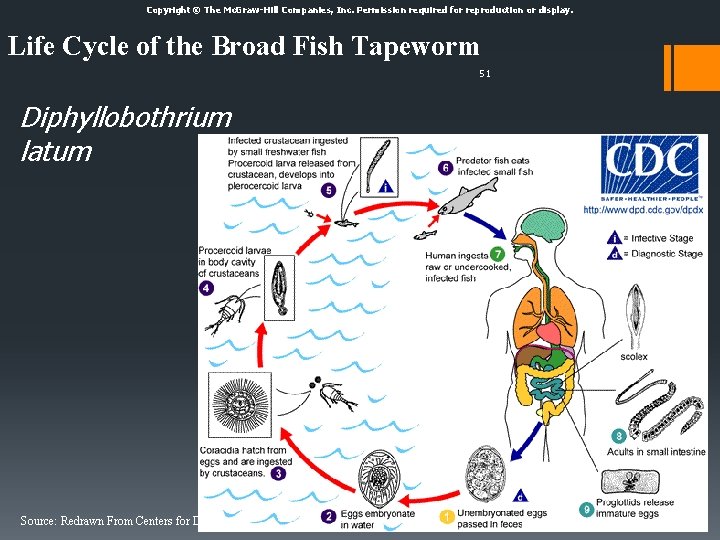
Copyright © The Mc. Graw-Hill Companies, Inc. Permission required for reproduction or display. Life Cycle of the Broad Fish Tapeworm 51 Diphyllobothrium latum Source: Redrawn From Centers for Disease Control, Atlanta, GA.
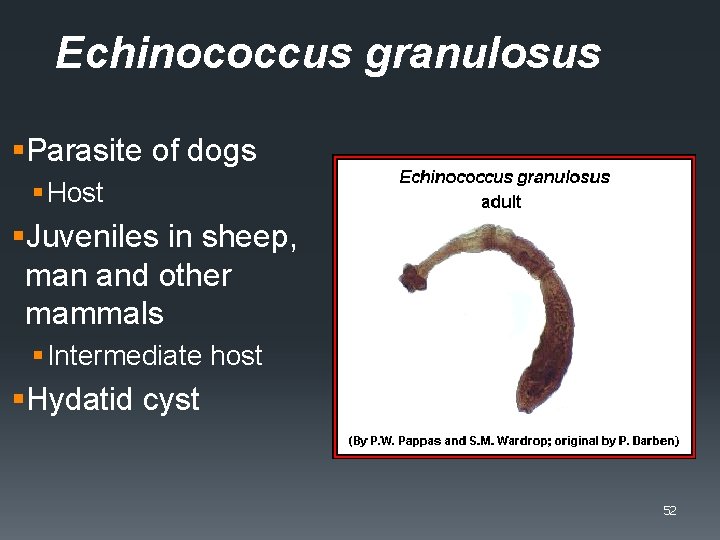
Echinococcus granulosus §Parasite of dogs § Host §Juveniles in sheep, man and other mammals § Intermediate host §Hydatid cyst 52
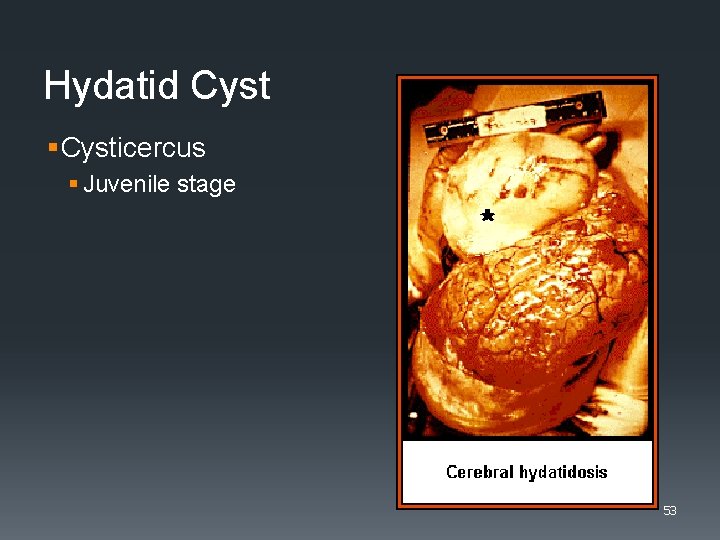
Hydatid Cyst § Cysticercus § Juvenile stage 53
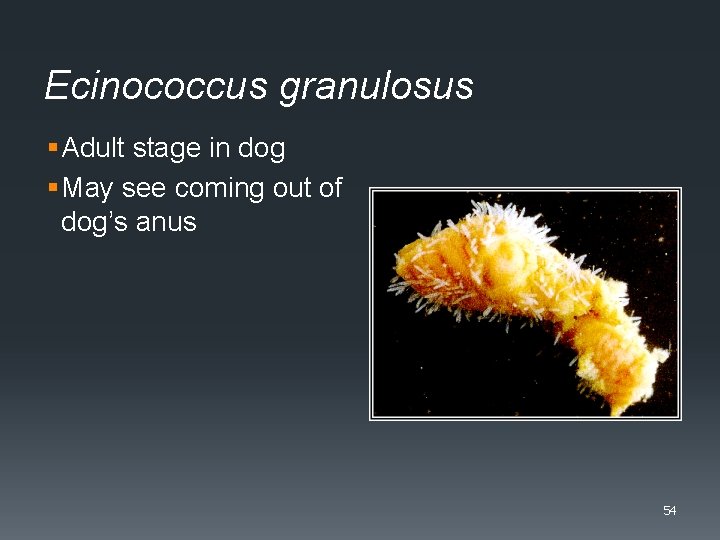
Ecinococcus granulosus § Adult stage in dog § May see coming out of dog’s anus 54
Checkpoint 1. What are three classes of flatworms? 2. Which class contains free living species? 3. How do planarians consume food? 4. How are flukes different from Planarians? 5. How are tapeworms different from Trematodes? 55