
Phylum Platyhelmenthes the flatworms General characteristics Eumetazoa animals
- Slides: 27
Phylum Platyhelmenthes (the flatworms) General characteristics Eumetazoa - animals with tissue – Bilateria - have bilateral symmetry Head end-cephalization Tail end Right and left side Top (dorsal) and bottom (ventral) triploblastic -ectoderm, mesoderm, endoderm. Protostomia - a group of animals whose mouth develops from the blastopore, and the mesoderm forms from an area near the blastopore. Acoelomata - They have a true mesoderm which fills the original blastocoel between the outer epidermis and digestive tract.
Integumentary- Rhabdites and one cell layer epidermis in Turbellaria and usually ciliated; syncytial tegument in other classes. Skeletal - hydrostatic Muscle - longitudinal, transverse, and circular muscles are present. Digestive - incomplete with intracellular and extracellular digestion; no system in Cestoda.
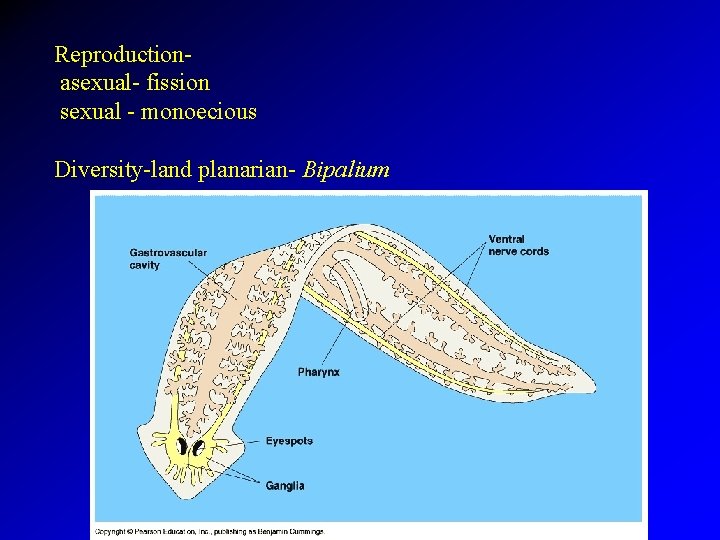
Excretory - flame cells, or excretory tubes in Cestoda. Respiratory - no system, diffusion Circulatory - none, diffusion. Nervous - anterior ganglia, ventral ladder-like system (two lateral cords with transverse cords). a bilobed anterior ganglial mass (brain)
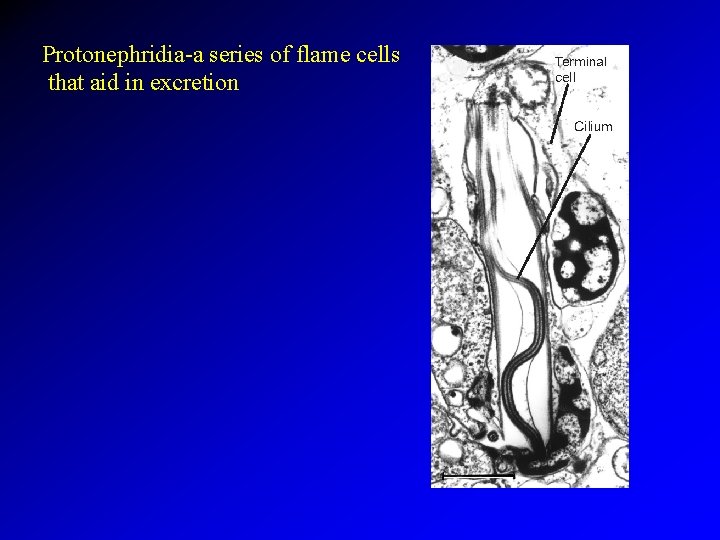
Protonephridia-a series of flame cells that aid in excretion
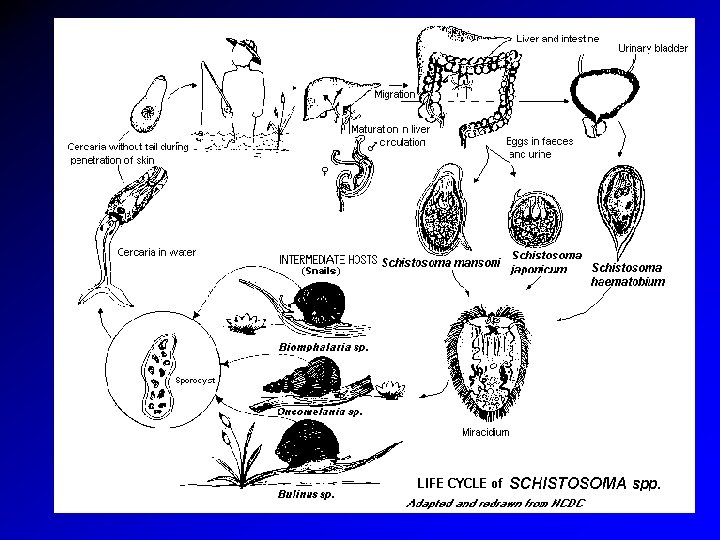
Endocrine - hormones produced by nervous system Reproductive - monoecious in most Well developed reproductive organs, mostly internal fertilization. Two of the parasitic classes have complex life cycles Trematoda Cestoda -
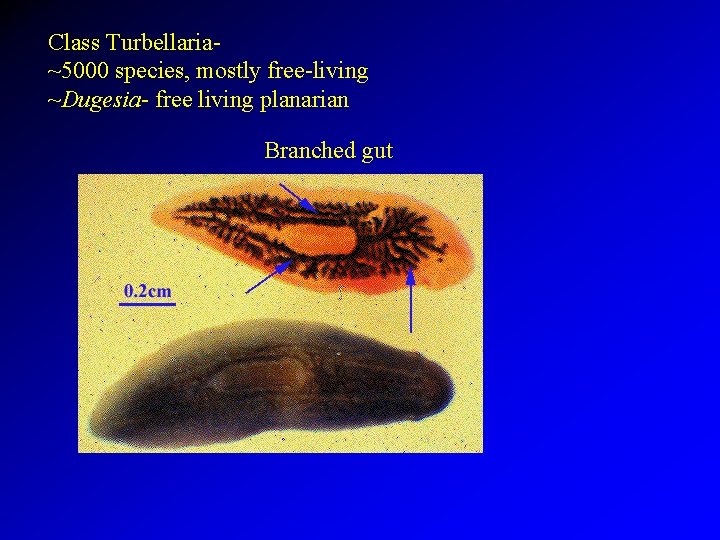
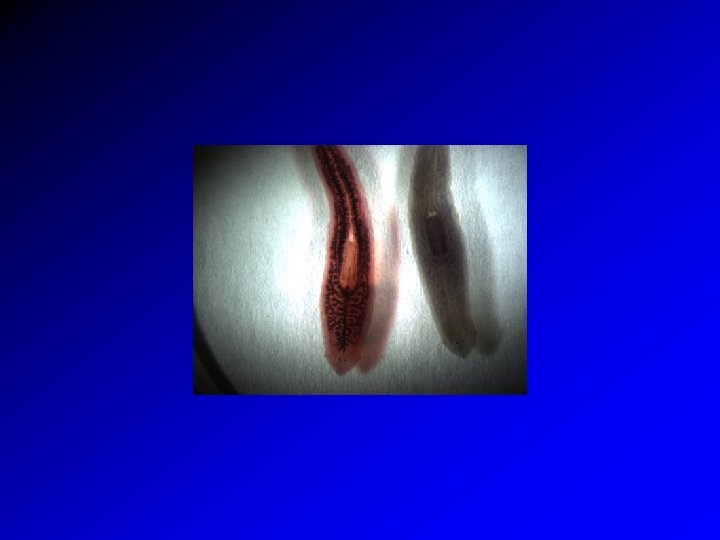
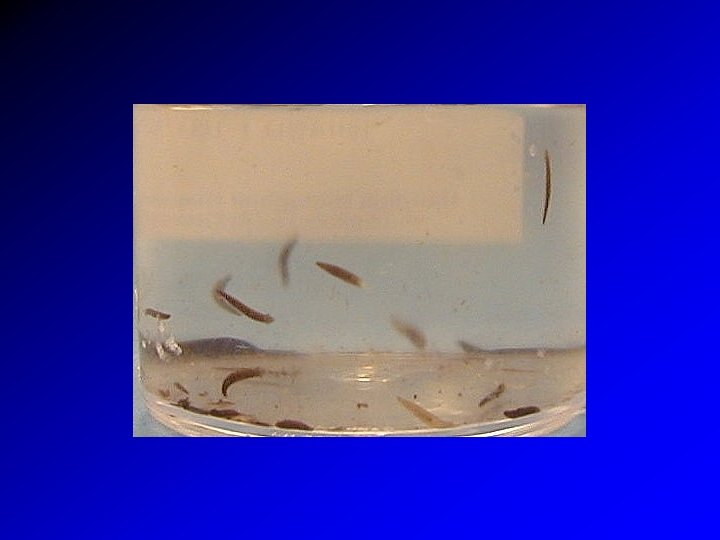
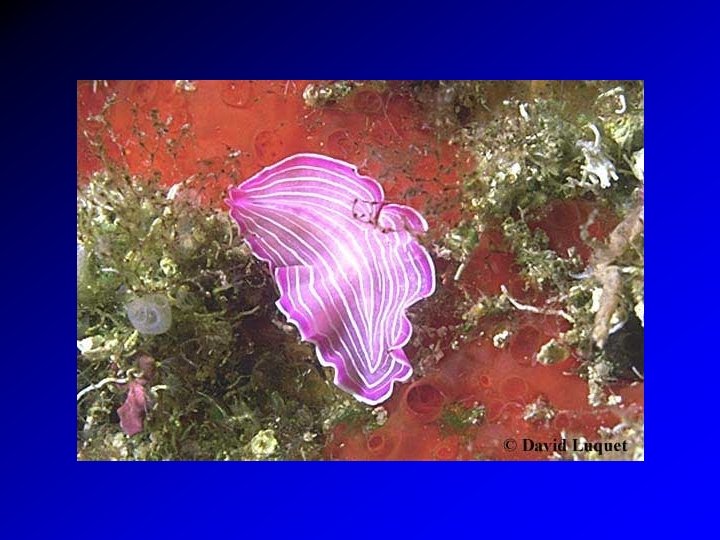
Class Turbellaria~5000 species, mostly free-living ~Dugesia- free living planarian Branched gut
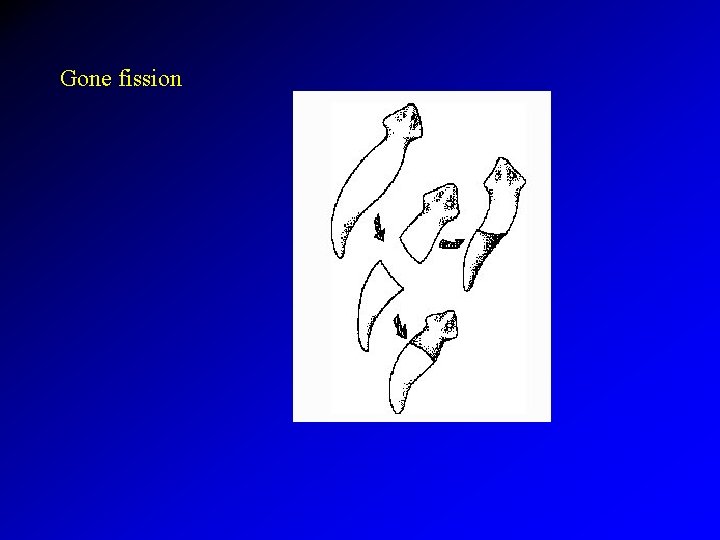
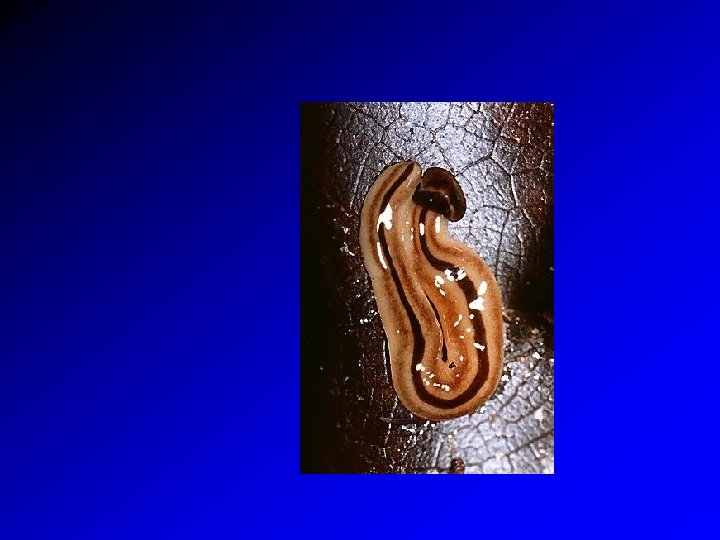
Reproductionasexual- fission sexual - monoecious Diversity-land planarian- Bipalium
Gone fission
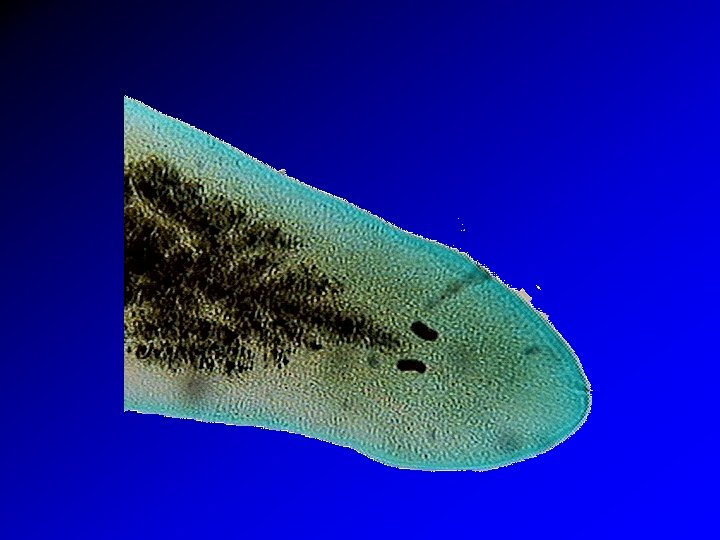
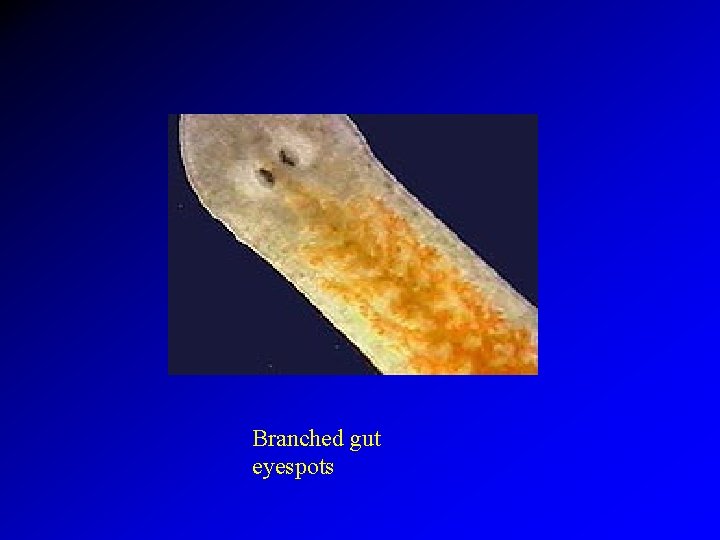
Branched gut eyespots
Class Trematoda--flukes ~parasitic endoparasitic ectoparasitic ~tegument=body wall ~suckers ~feed on host cells, tissue fluids, mucus (yuk!) and blood ~life cycle monogenic flukes digenic flukes
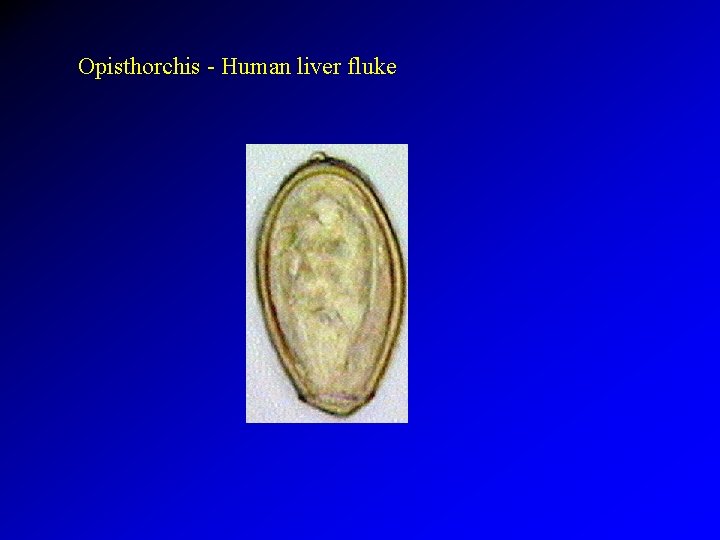
Opisthorchis - Human liver fluke
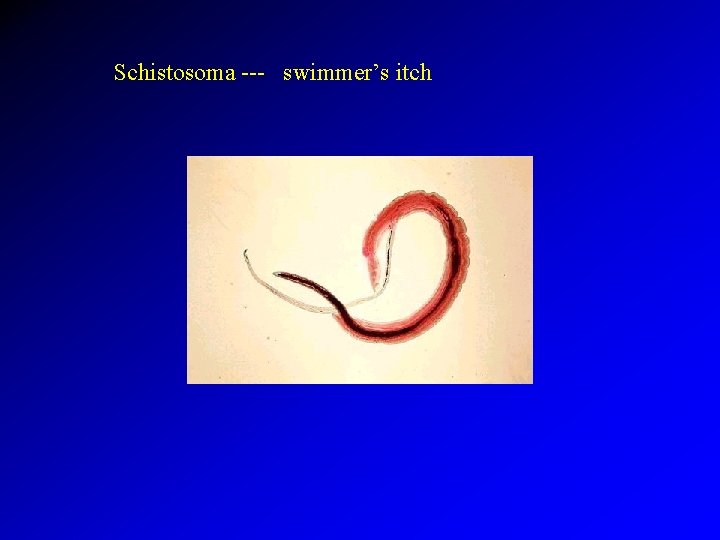
Schistosoma --- swimmer’s itch
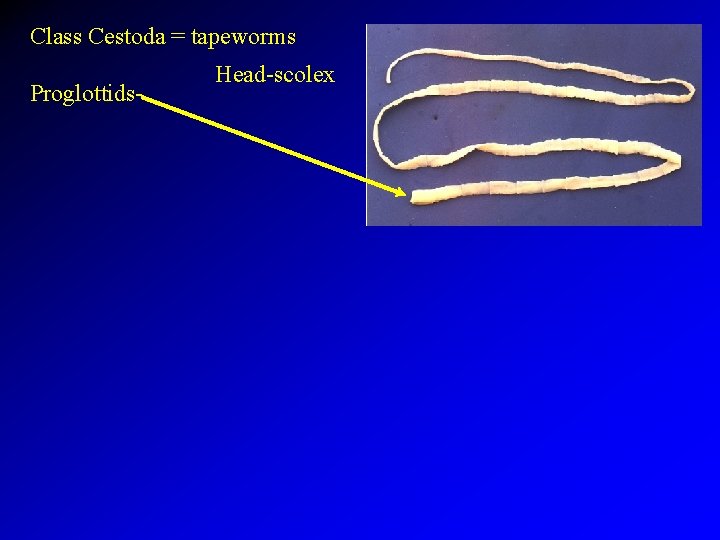
Class Cestoda = tapeworms Proglottids- Head-scolex
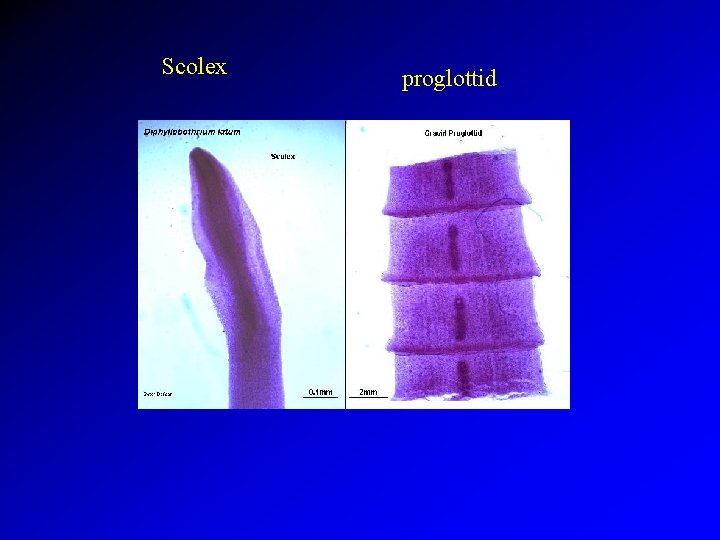
Scolex proglottid
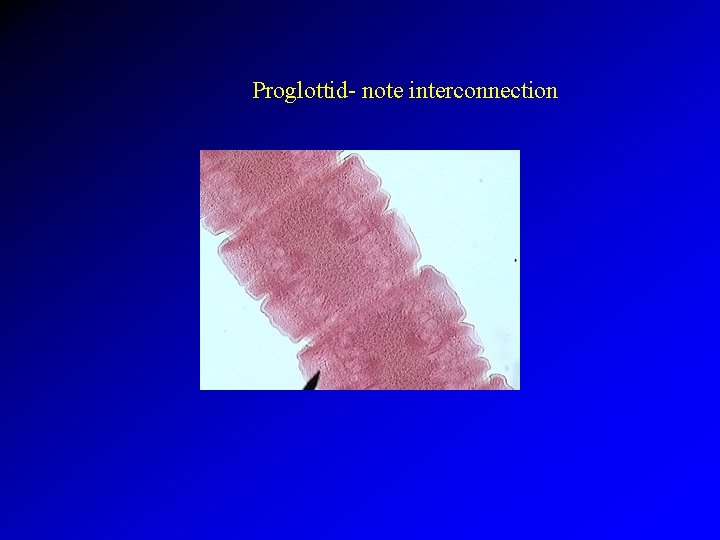
Proglottid- note interconnection
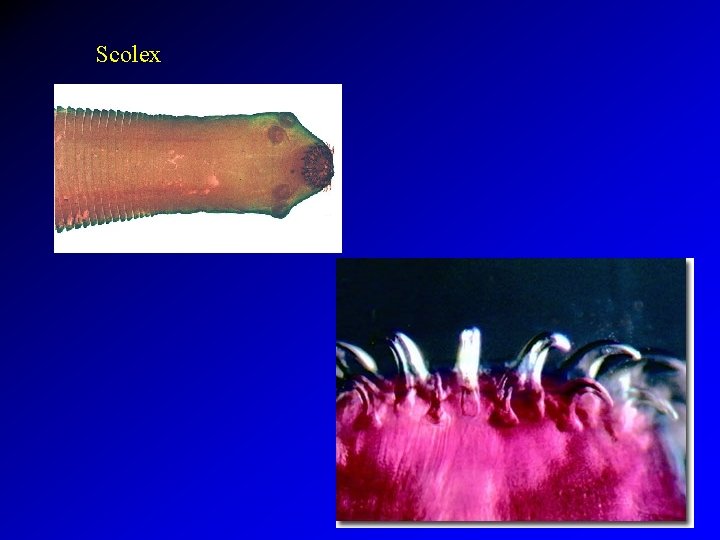
Scolex
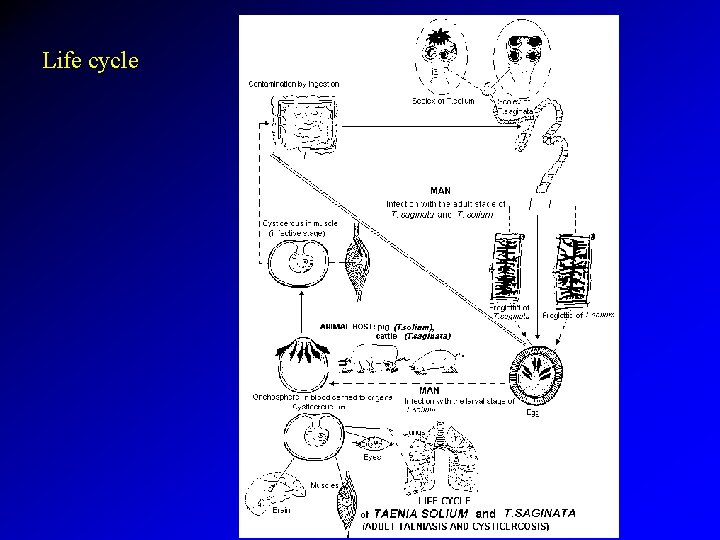
Life cycle
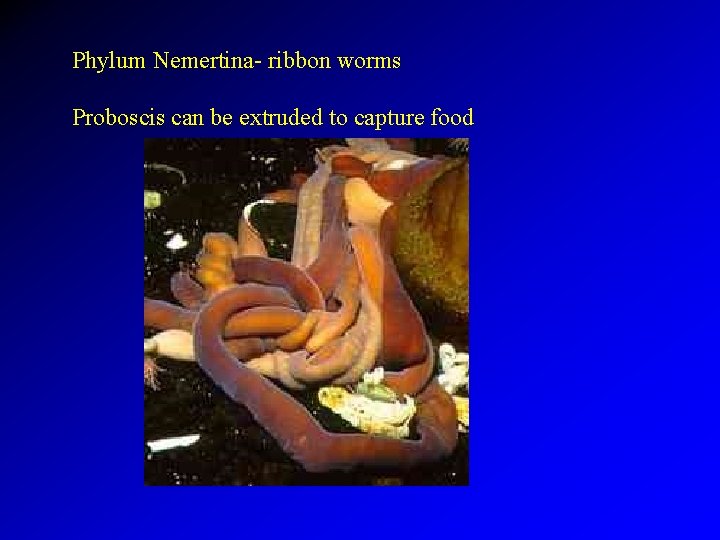
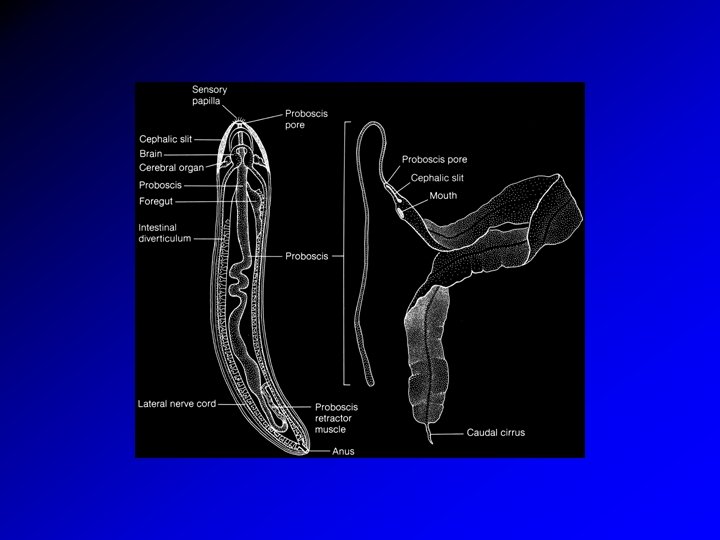
Phylum Nemertina- ribbon worms Proboscis can be extruded to capture food
General characteristics~tube within a tube body plan- a complete digestive tract ~Acoelomate ~eversible proboscis, within a rhinocoel above the gut ~feeding-stylets and toxins ~closed circulator system, a single dorsal vessel with two lateral vessels ~paired lateral longitudinal nerve cords
~asexual reproduction by fragmentation ~sexual reproductiondioecious free-swimming larva in some marine species Advanced Features~anus ~closed circulatory system ~dorsal nerve cord in some ~complex excretory system in close association with circulatory system ~mesodermally derived blood vessels & mesodermally lined rhinocoel may provide links to higher phyla