
Phylum Mollusca stuff to know Important morphologic features
- Slides: 32
Phylum Mollusca: stuff to know • Important morphologic features (hard parts only) • Classification: – Subphyla; classes; subclasses within Class Cephalopoda • Molluscan phylogeny • Ammonoid suture types • Pelecypod genera: – Pecten, Inoceramus, Gryphaea, Exogyra 1
Mollusca—Phylum overview • Representatives include: snails, slugs, mussels, oysters, clams, squids, octopuses • Size ranges from microscopic (snails) up to 18 m (giant squids) • Inhabit marine, freshwater and terrestrial environments • Aquatic types may be benthonic, planktonic, nektonic, even flying (squids) 2
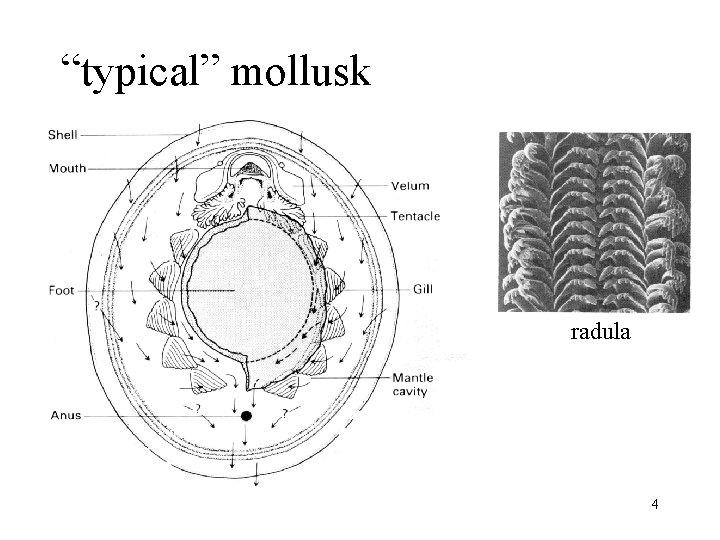
Phylum overview (cont. ) • Mollusks are extremely diverse, so there are few features common to all representatives – – – Free-living metazoans Dorsal calcareous exoskeleton Muscular foot for locomotion Visceral mass with major organ systems Mantle cavity with gills (digestive and reproductive systems open into mantle cavity) – Radula (rasping structure in mouth) – Head with mouth (maybe also tentacles and eyes) – Mantle (tissue layer) that surrounds soft parts and secretes shell 3
“typical” mollusk radula 4
Phylum overview (cont. ) • Phylum originated in Early Cambrian (earlier? ) from a flatworm ancestor – All major classes and subclasses originated by Middle Ordovician – Only one major class has become extinct (Rostroconchia) • Shells: – mostly univalved or bivalved, aragonitic, multilayered, with growth lines and muscle scars 5
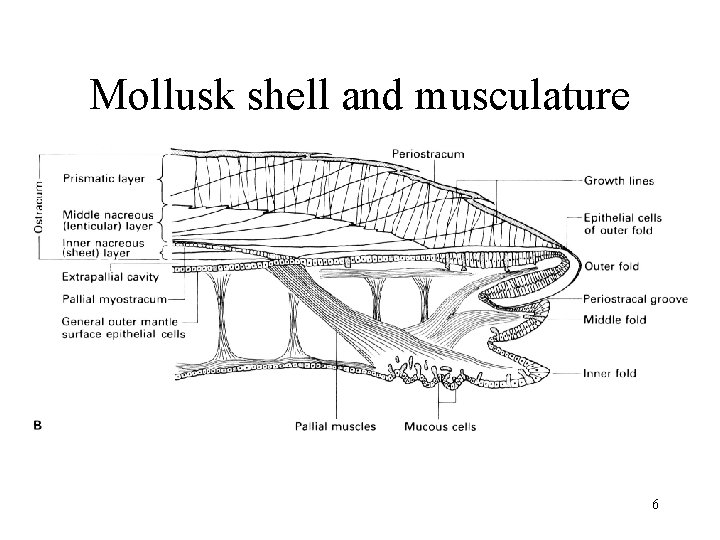
Mollusk shell and musculature 6
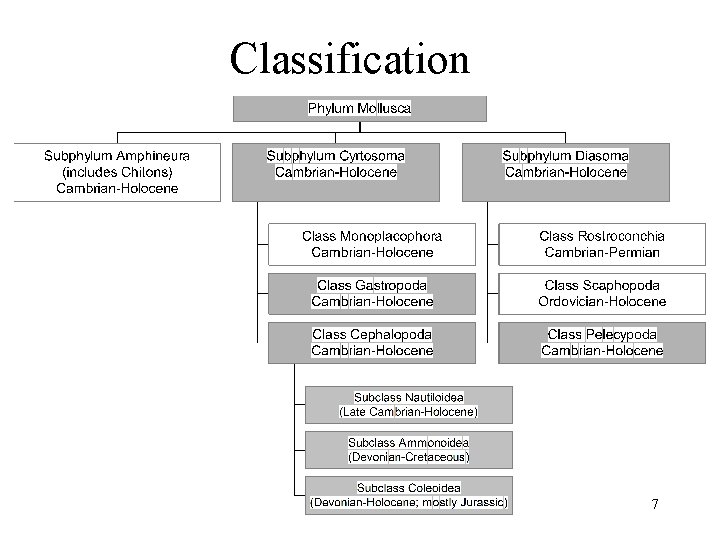
Classification 7
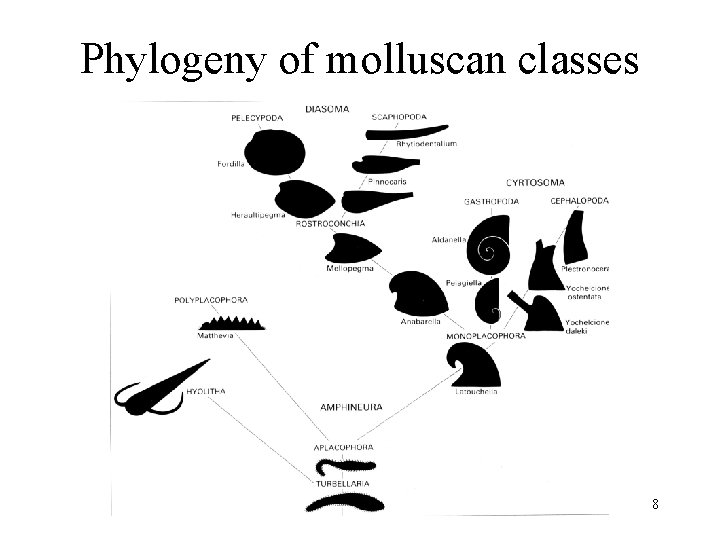
Phylogeny of molluscan classes 8
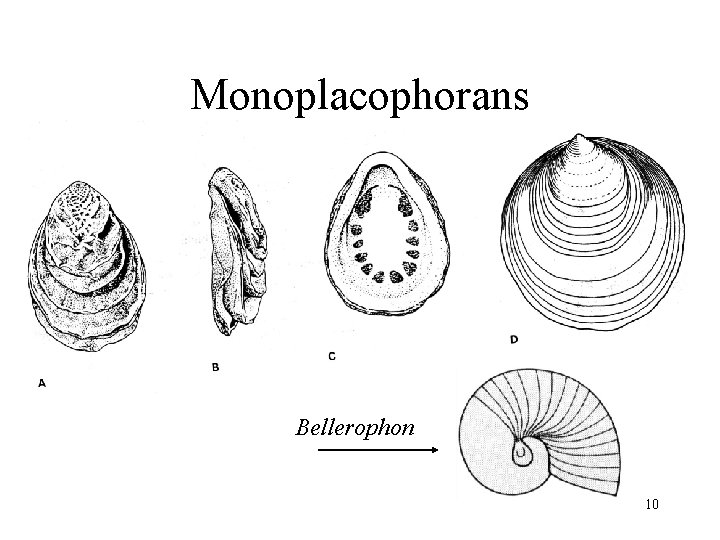
Monoplacophorans • Cap-shaped to helical shell; bilateral symmetry; soft parts not twisted; paired muscles; apex of shell points anteriorly and overhangs head • Important because ancestral to most other mollusks • Only group of organisms to be described hypothetically before being discovered, AND to be known as fossils before live specimens were found 9
Monoplacophorans Bellerophon 10
Monoplacophorans • Most important group is bellerophontids – Cambrian-Early Triassic – Resemble gastropods – Very common in Late Permian of Tethyan region (e. g. , “Bellerophon Limestone”) 11
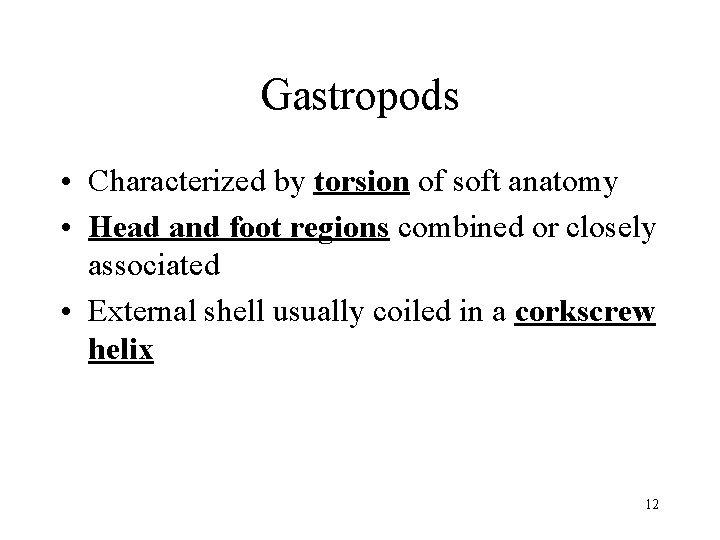
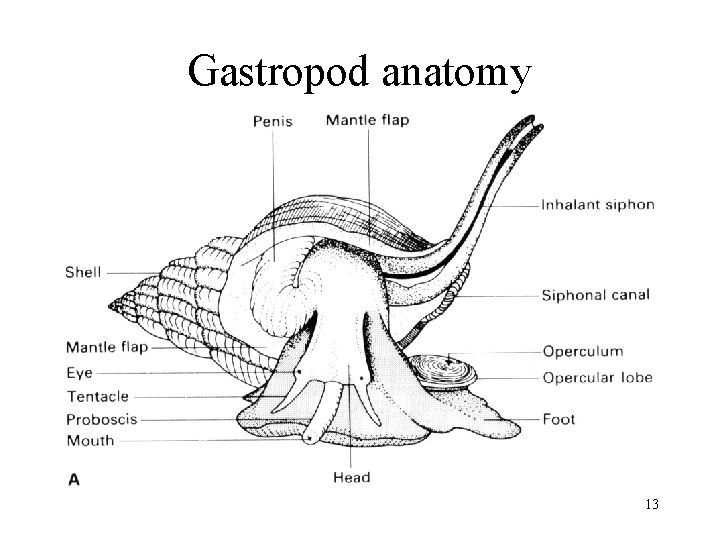
Gastropods • Characterized by torsion of soft anatomy • Head and foot regions combined or closely associated • External shell usually coiled in a corkscrew helix 12
Gastropod anatomy 13
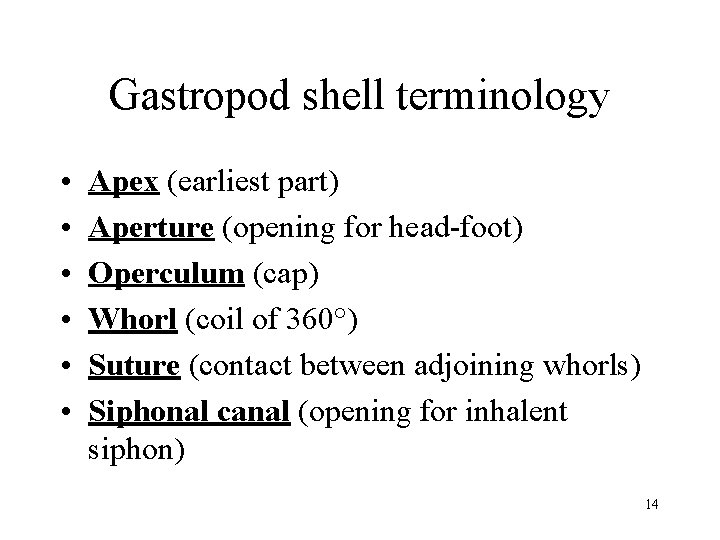
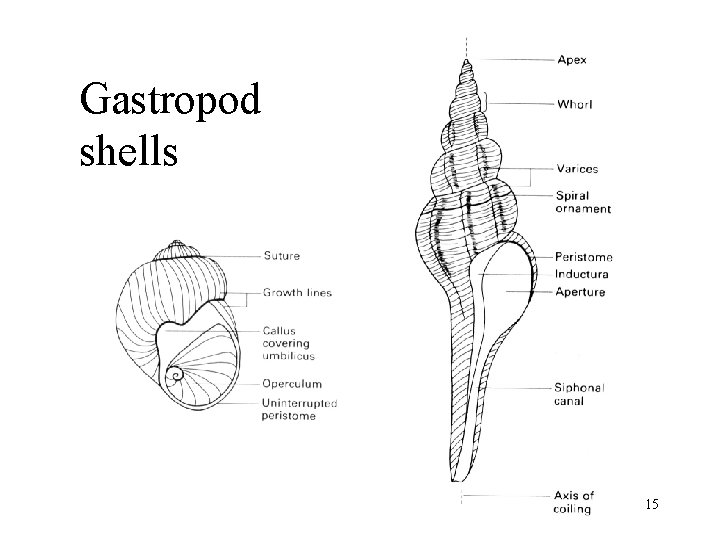
Gastropod shell terminology • • • Apex (earliest part) Aperture (opening for head-foot) Operculum (cap) Whorl (coil of 360°) Suture (contact between adjoining whorls) Siphonal canal (opening for inhalent siphon) 14
Gastropod shells 15
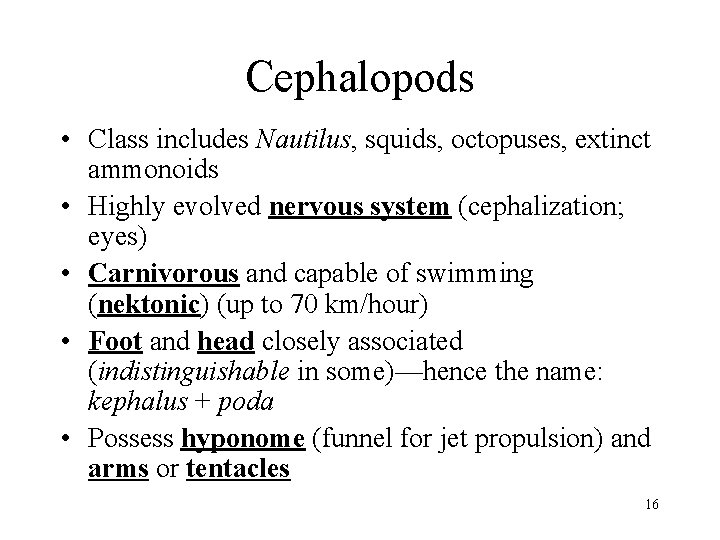
Cephalopods • Class includes Nautilus, squids, octopuses, extinct ammonoids • Highly evolved nervous system (cephalization; eyes) • Carnivorous and capable of swimming (nektonic) (up to 70 km/hour) • Foot and head closely associated (indistinguishable in some)—hence the name: kephalus + poda • Possess hyponome (funnel for jet propulsion) and arms or tentacles 16
Cephalopods • Shelled forms possess gas-filled chambers • Buoyancy is controlled by (1) poise adaptation of the shell (shell form) and (2) adding or subtracting fluid from chambers by the siphuncle • Most living forms possess an ink sac • Exclusively marine 17
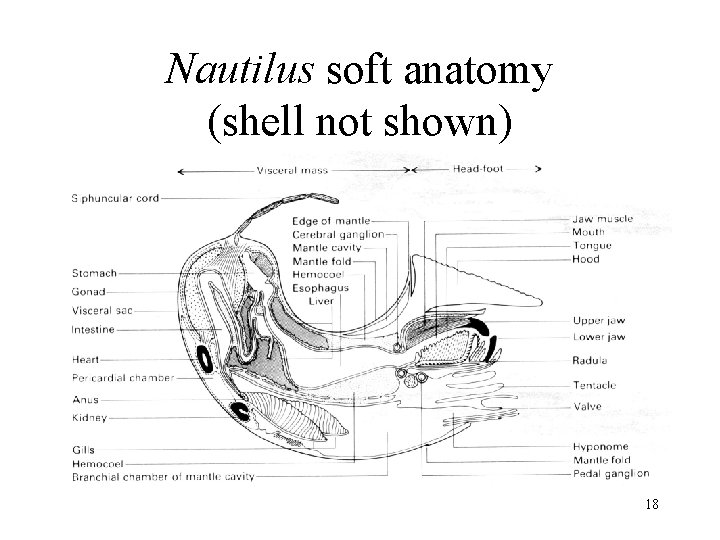
Nautilus soft anatomy (shell not shown) 18
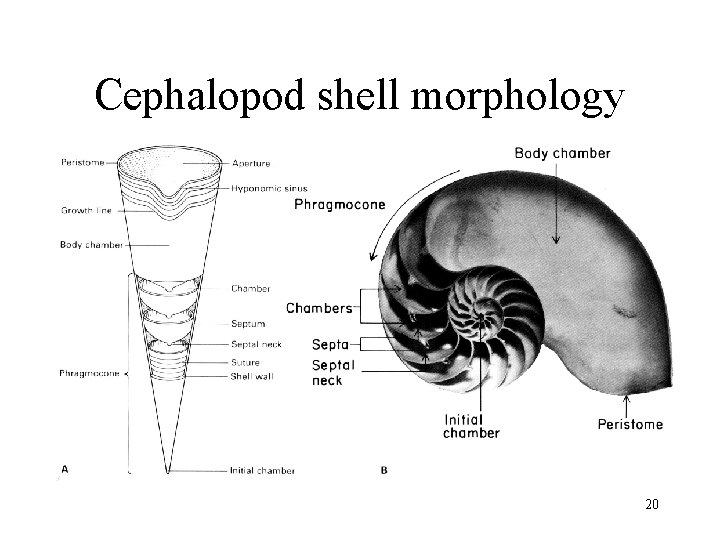
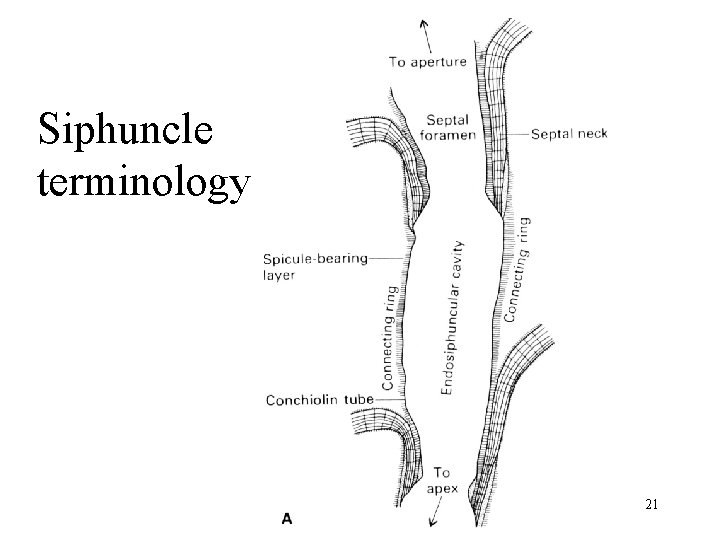
Cephalopod shell morphology • Chambered shell is divided into living chamber and phragmocone • Chambers separated by septa • Suture is junction of septum with the outer shell wall • Siphuncle = tube with blood vessels, nerves and mantle that extends from animal back through phragmocone (usually ventral) – Septal foramen = hole through which siphuncle passes – Septal neck = projection of septum surrounding siphuncle 19
Cephalopod shell morphology 20
Siphuncle terminology 21
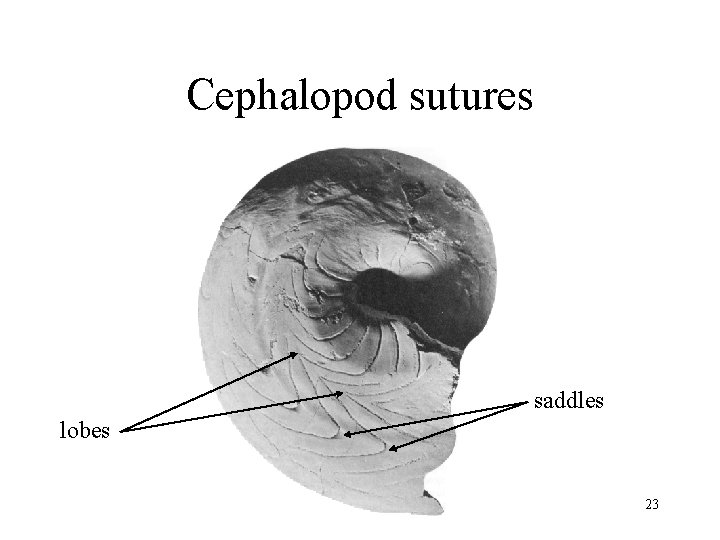
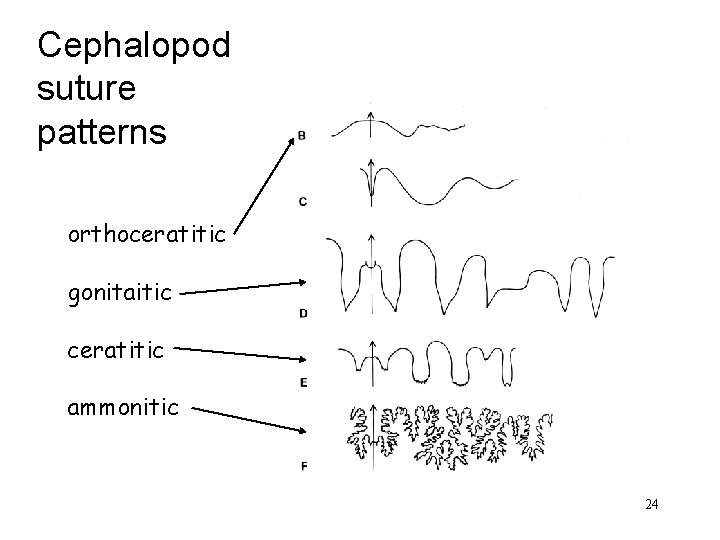
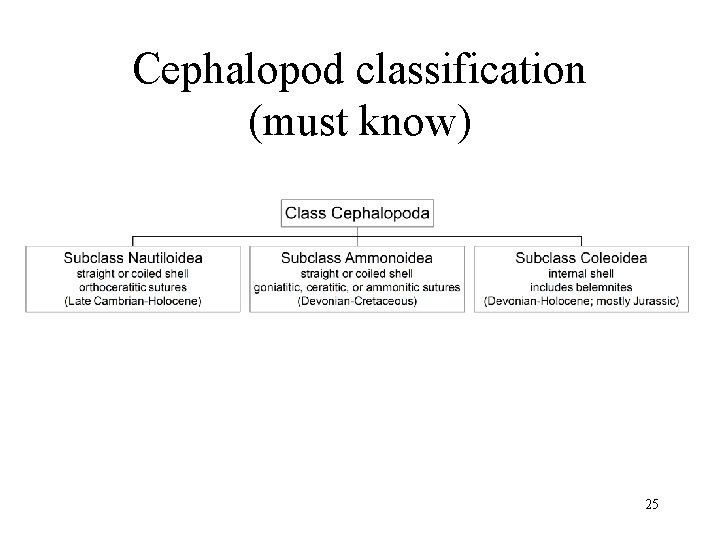
Cephalopod sutures • If suture is fluted, saddles point toward aperture and lobes point toward apex – Orthoceratitic = unfluted or with broadly undulating lobes and saddles (Cambrian-Holocene) – Goniatitic = distinct lobes and saddles that are undivided (mostly Devonian-Triassic) – Ceratitic = smooth saddles; serrated (“saw-tooth”) lobes (mostly Triassic) – Ammonitic = serrated saddles and lobes (mostly Jurassic-Cretaceous) 22
Cephalopod sutures saddles lobes 23
Cephalopod suture patterns orthoceratitic gonitaitic ceratitic ammonitic 24
Cephalopod classification (must know) 25
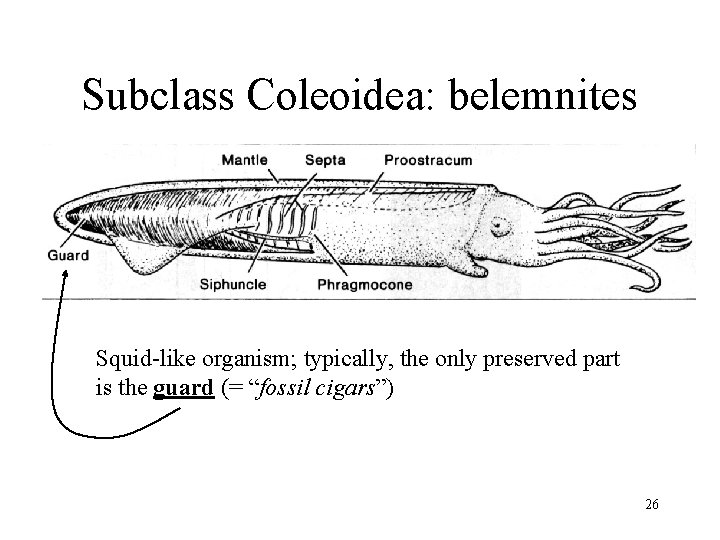
Subclass Coleoidea: belemnites Squid-like organism; typically, the only preserved part is the guard (= “fossil cigars”) 26
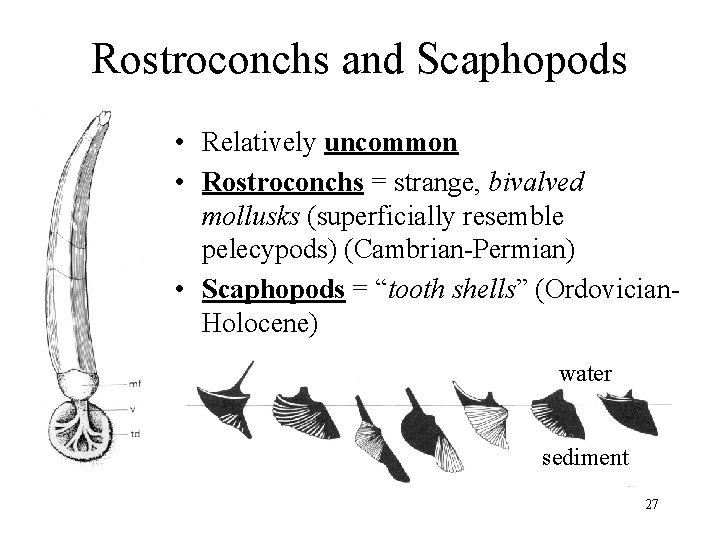
Rostroconchs and Scaphopods • Relatively uncommon • Rostroconchs = strange, bivalved mollusks (superficially resemble pelecypods) (Cambrian-Permian) • Scaphopods = “tooth shells” (Ordovician. Holocene) water sediment 27
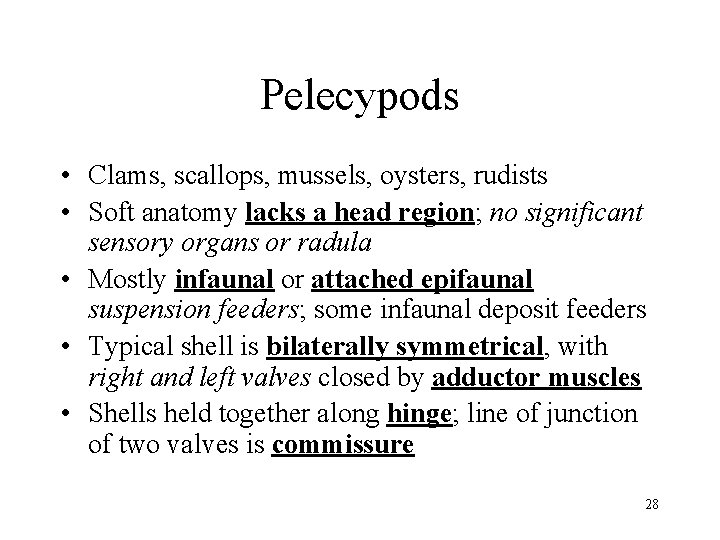
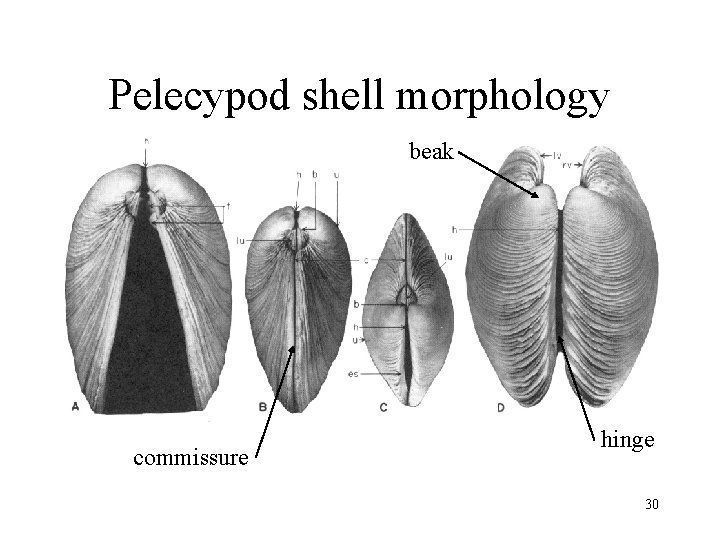
Pelecypods • Clams, scallops, mussels, oysters, rudists • Soft anatomy lacks a head region; no significant sensory organs or radula • Mostly infaunal or attached epifaunal suspension feeders; some infaunal deposit feeders • Typical shell is bilaterally symmetrical, with right and left valves closed by adductor muscles • Shells held together along hinge; line of junction of two valves is commissure 28
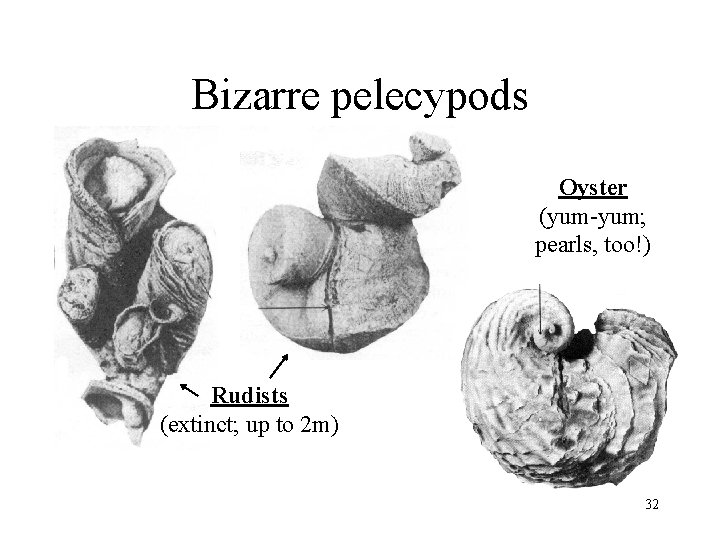
Pelecypods • Exclusively aquatic; both marine and nonmarine • Marine forms range from intertidal zone to abyssal depths • Mostly aragonitic; but oysters are calcitic • Bizarre variants lack bilateral symmetry (oysters, rudists) 29
Pelecypod shell morphology beak commissure hinge 30
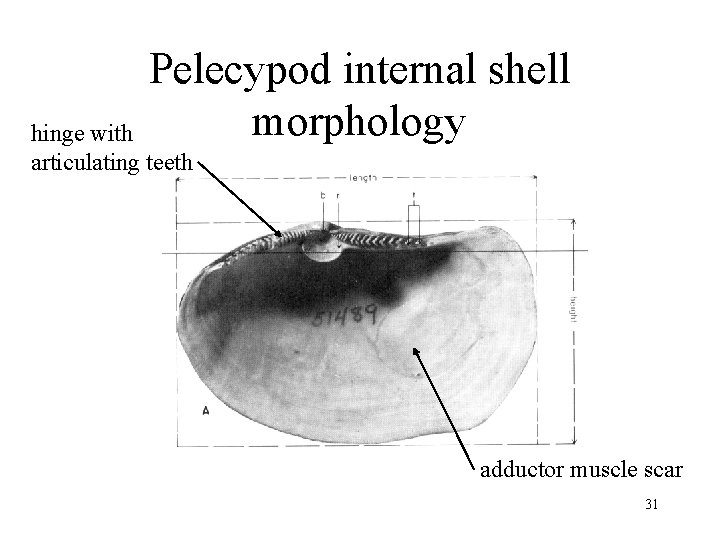
Pelecypod internal shell morphology hinge with articulating teeth adductor muscle scar 31
Bizarre pelecypods Oyster (yum-yum; pearls, too!) Rudists (extinct; up to 2 m) 32