
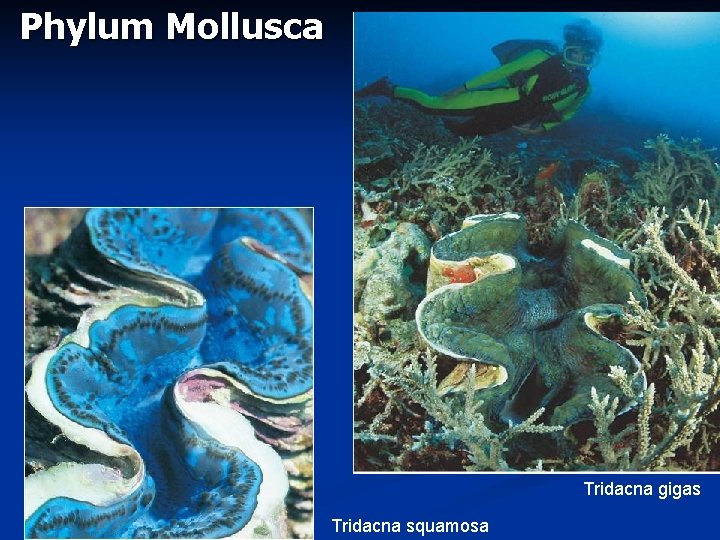
Phylum Mollusca Phylum Mollusca Tridacna gigas Tridacna squamosa
- Slides: 44
Phylum Mollusca
Phylum Mollusca Tridacna gigas Tridacna squamosa
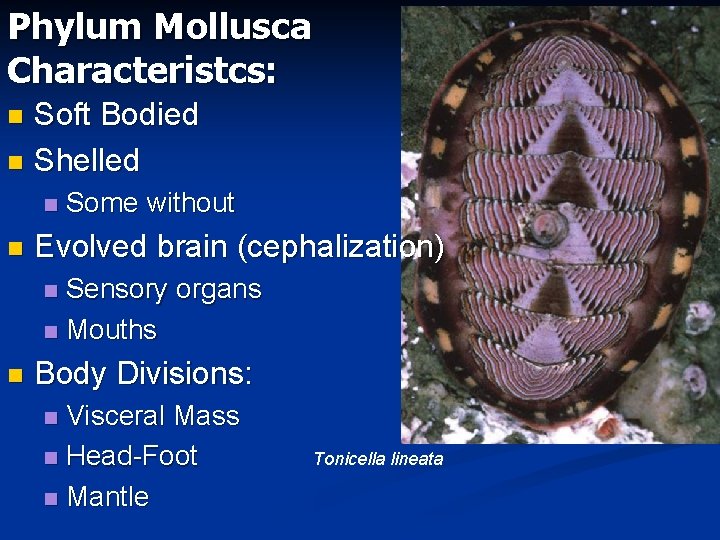
Phylum Mollusca Characteristcs: Soft Bodied n Shelled n n n Some without Evolved brain (cephalization) Sensory organs n Mouths n n Body Divisions: Visceral Mass n Head-Foot n Mantle n Tonicella lineata
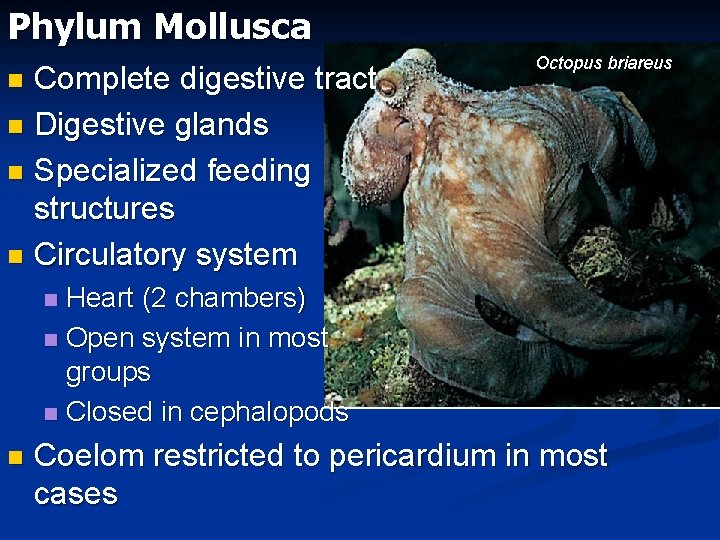
Phylum Mollusca Complete digestive tract n Digestive glands n Specialized feeding structures n Circulatory system n Octopus briareus Heart (2 chambers) n Open system in most groups n Closed in cephalopods n n Coelom restricted to pericardium in most cases
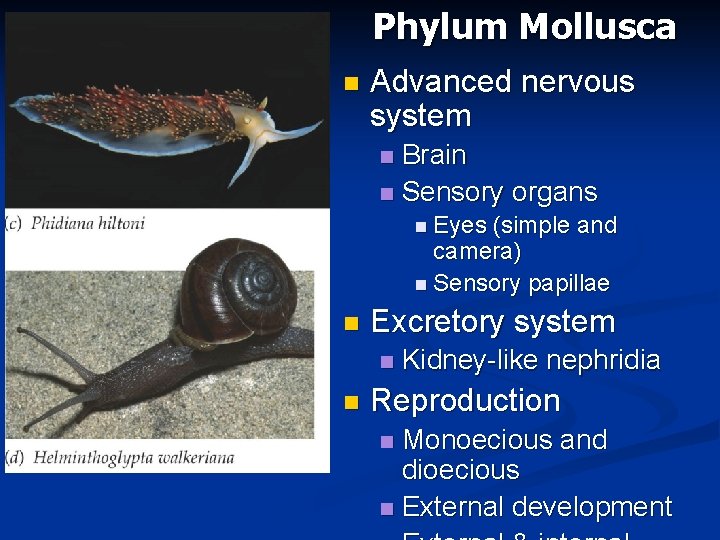
Phylum Mollusca n Advanced nervous system Brain n Sensory organs n n Eyes (simple and camera) n Sensory papillae n Excretory system n n Kidney-like nephridia Reproduction Monoecious and dioecious n External development n
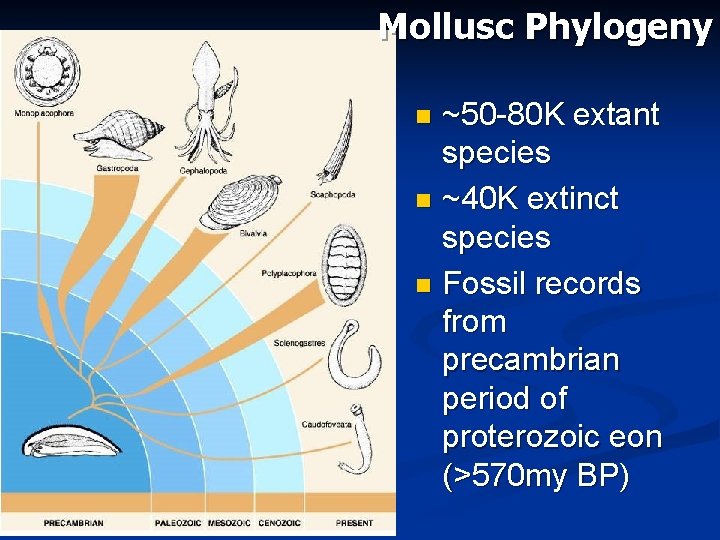
Mollusc Phylogeny ~50 -80 K extant species n ~40 K extinct species n Fossil records from precambrian period of proterozoic eon (>570 my BP) n
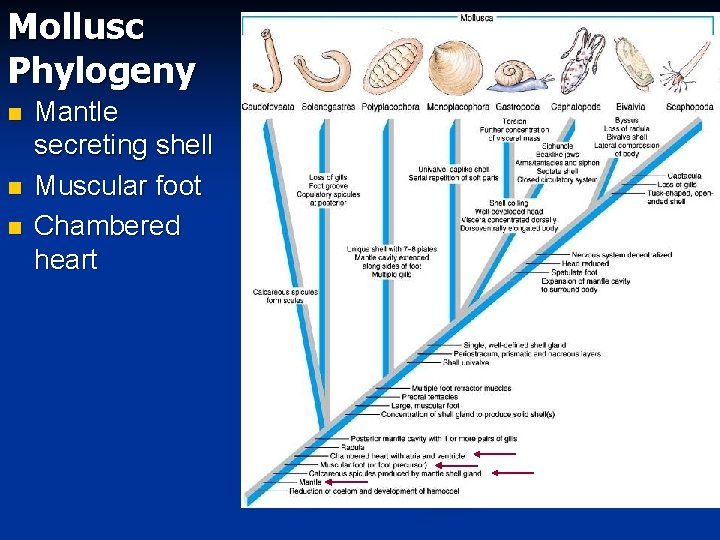
Mollusc Phylogeny n n n Mantle secreting shell Muscular foot Chambered heart
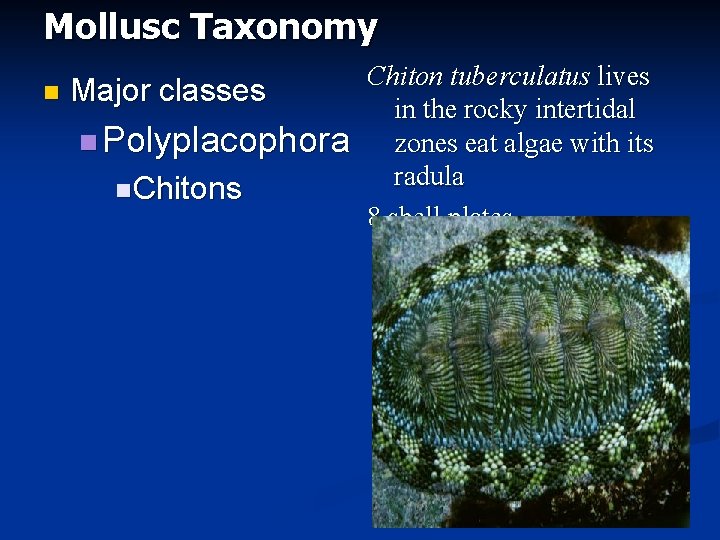
Mollusc Taxonomy n Major classes n Polyplacophora n Chitons Chiton tuberculatus lives in the rocky intertidal zones eat algae with its radula 8 shell plates
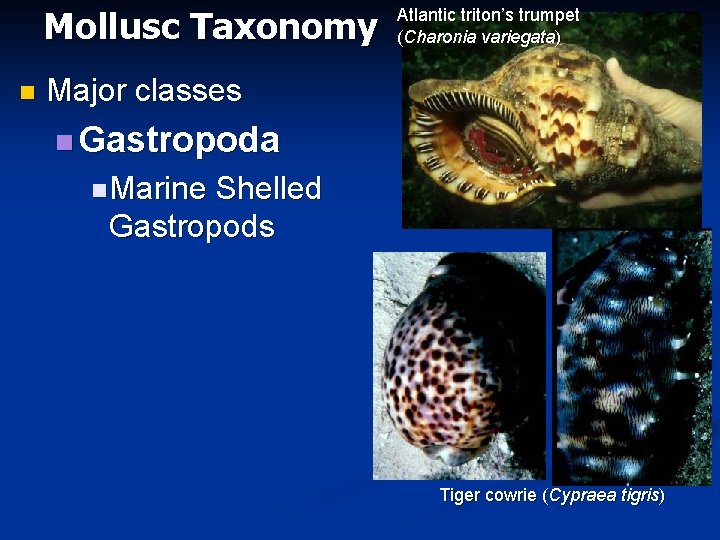
Mollusc Taxonomy n Atlantic triton’s trumpet (Charonia variegata) Major classes n Gastropoda n Marine Shelled Gastropods Tiger cowrie (Cypraea tigris)
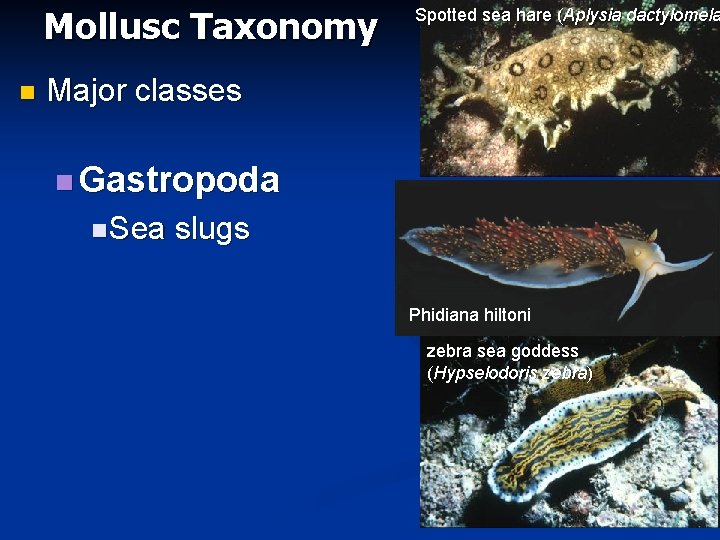
Mollusc Taxonomy n Spotted sea hare (Aplysia dactylomela Major classes n Gastropoda n Sea slugs Phidiana hiltoni zebra sea goddess (Hypselodoris zebra)
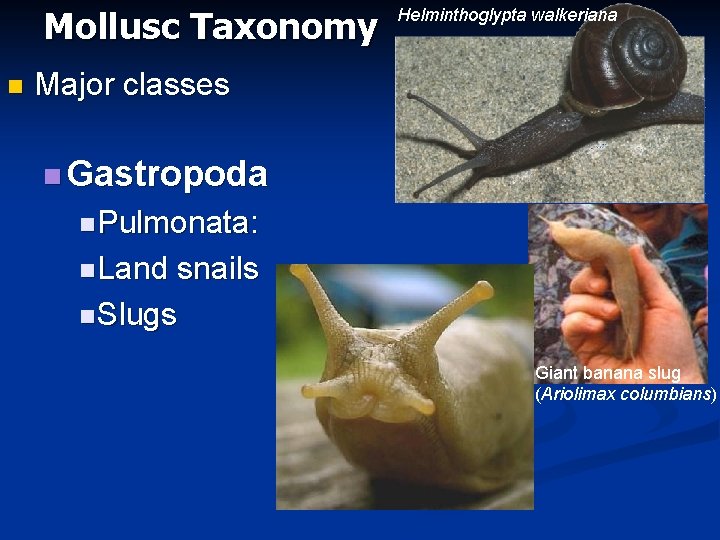
Mollusc Taxonomy n Helminthoglypta walkeriana Major classes n Gastropoda n Pulmonata: n Land snails n Slugs Giant banana slug (Ariolimax columbians)
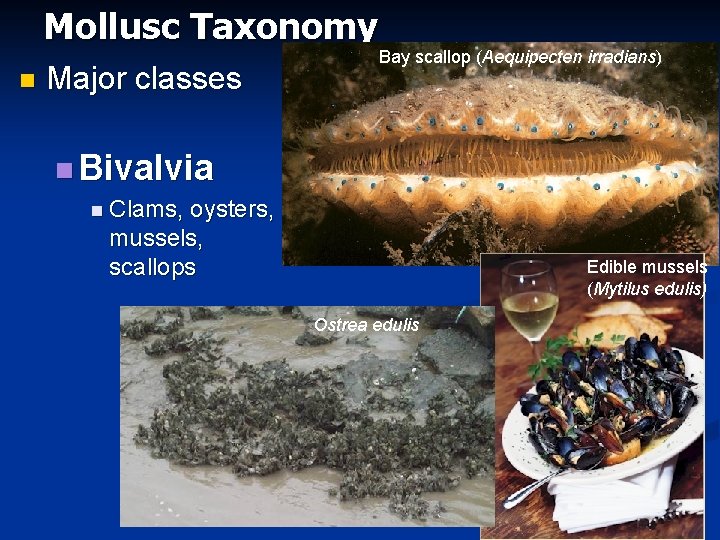
Mollusc Taxonomy n Major classes Bay scallop (Aequipecten irradians) n Bivalvia n Clams, oysters, mussels, scallops Edible mussels (Mytilus edulis) Ostrea edulis
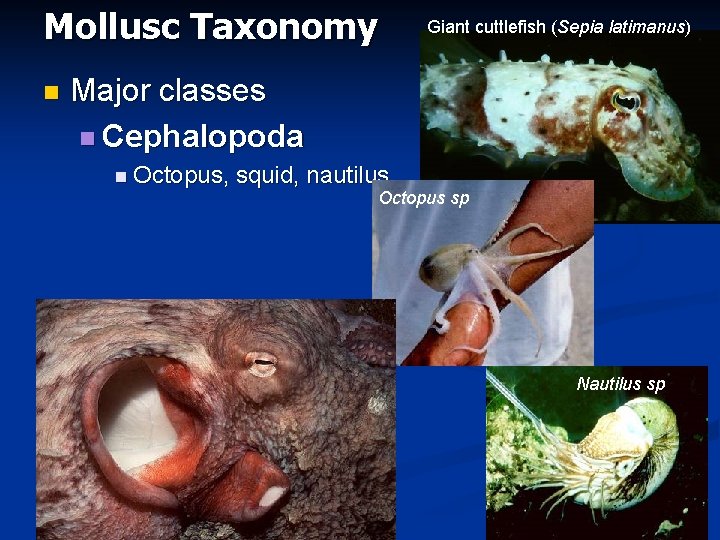
Mollusc Taxonomy n Giant cuttlefish (Sepia latimanus) Major classes n Cephalopoda n Octopus, squid, nautilus Octopus sp Nautilus sp
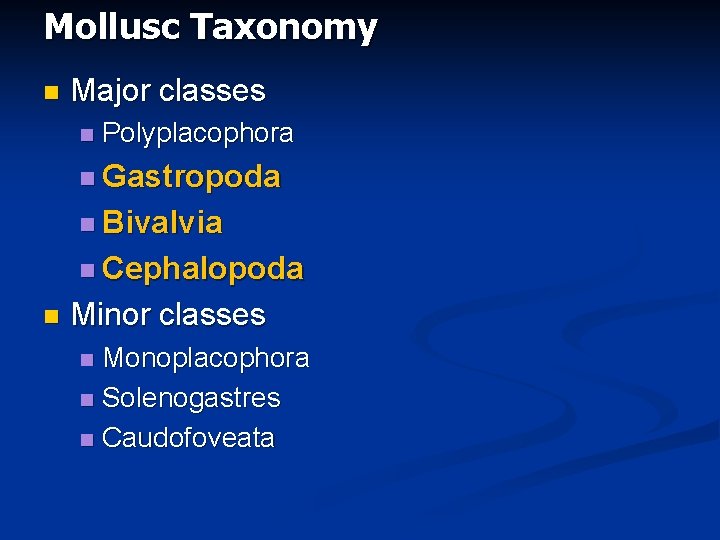
Mollusc Taxonomy n Major classes n Polyplacophora n Gastropoda n Bivalvia n Cephalopoda n Minor classes Monoplacophora n Solenogastres n Caudofoveata n
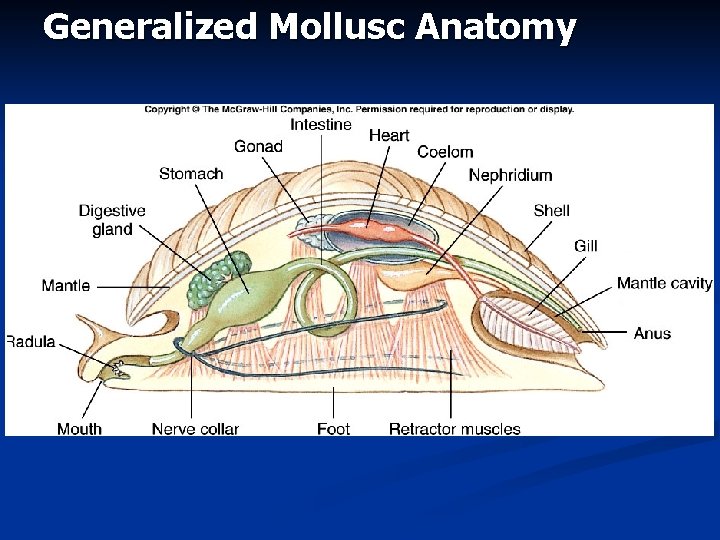
Generalized Mollusc Anatomy
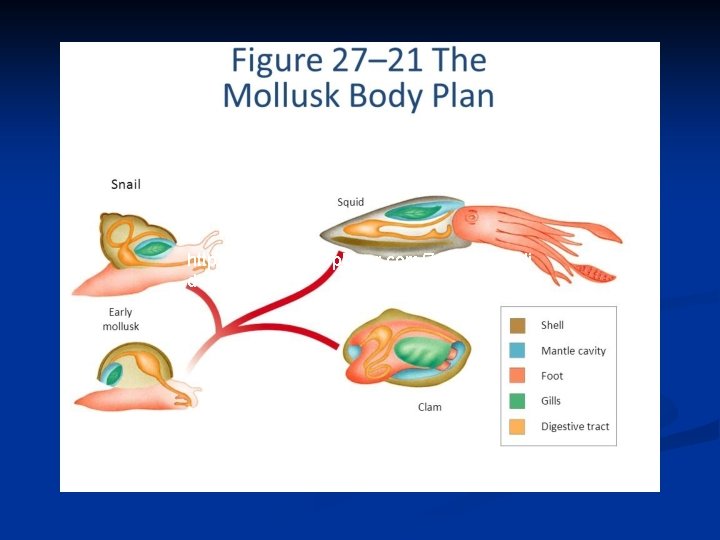
http: //images. slideplayer. com/7/1739863/sli des/slide_54. jp
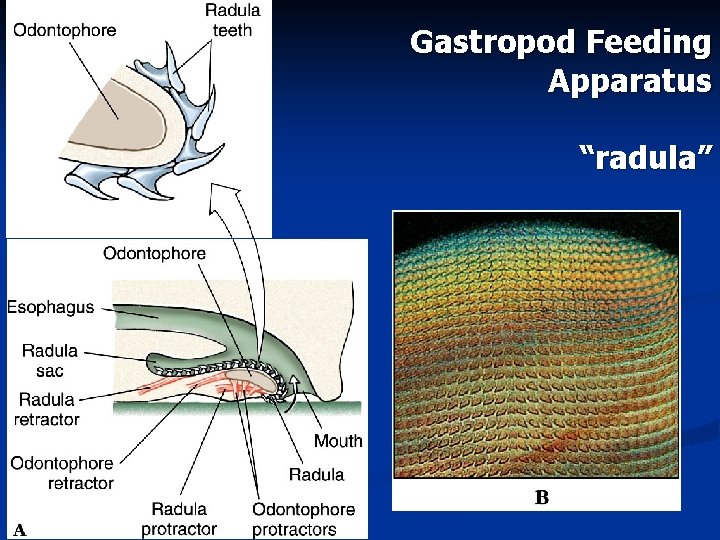
Gastropod Feeding Apparatus “radula”
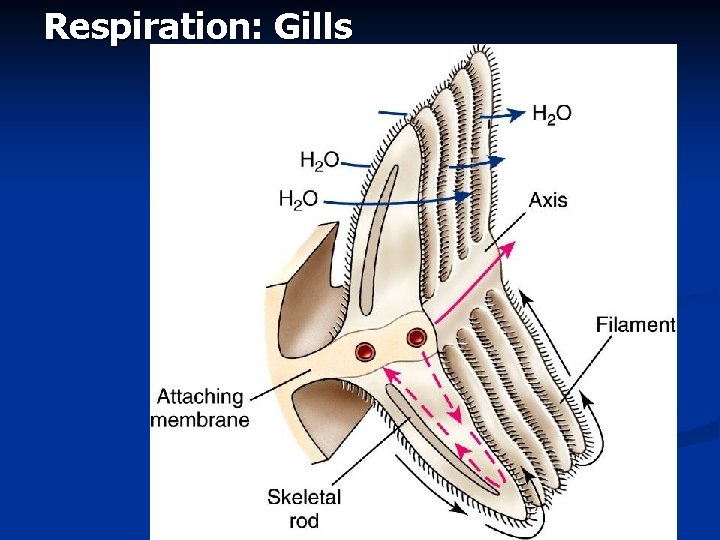
Respiration: Gills
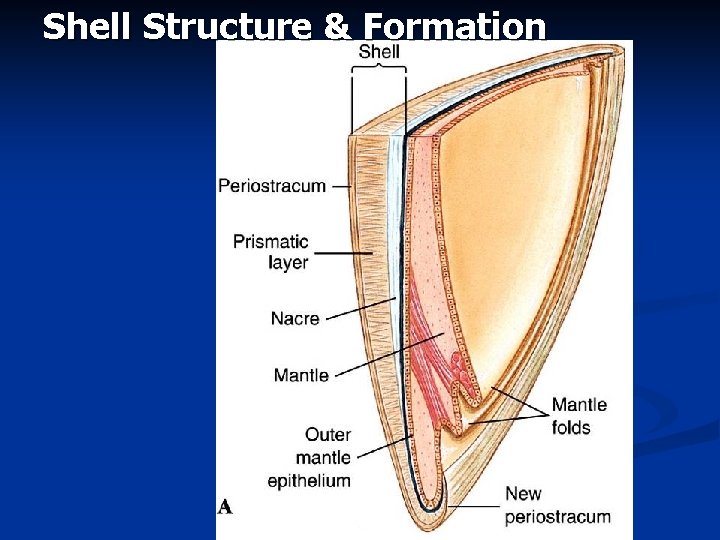
Shell Structure & Formation
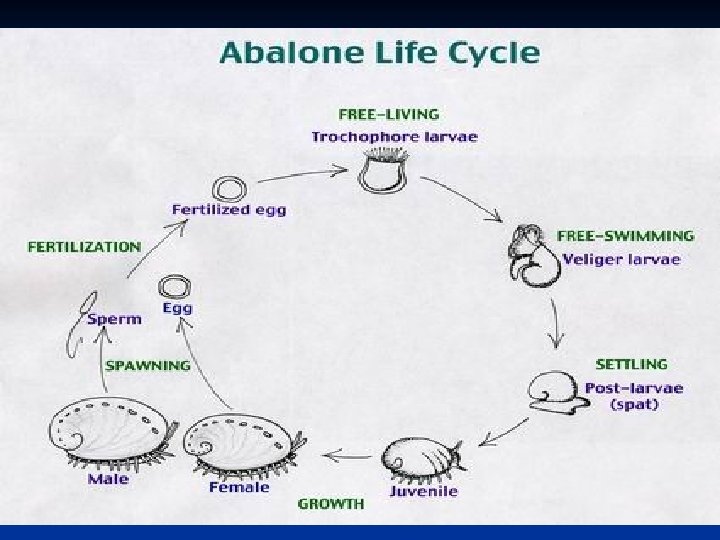
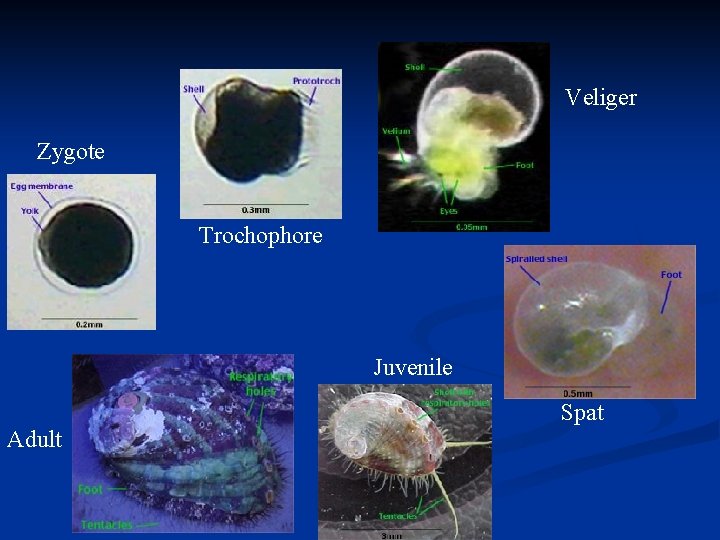
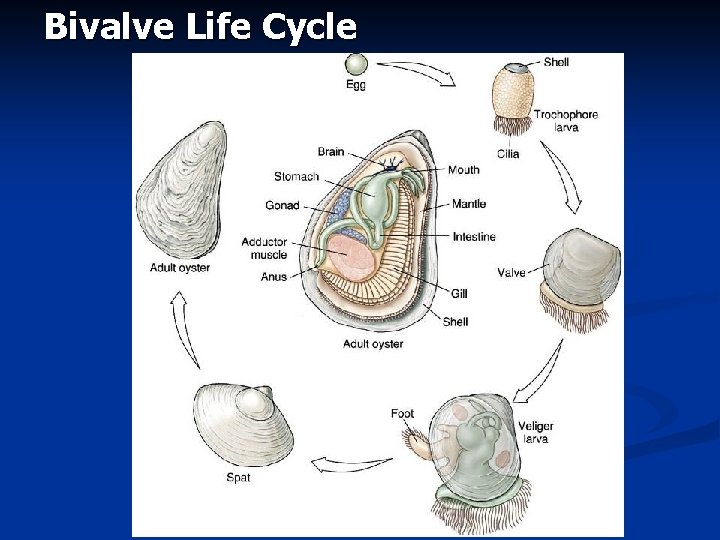
Veliger Zygote Trochophore Juvenile Spat Adult
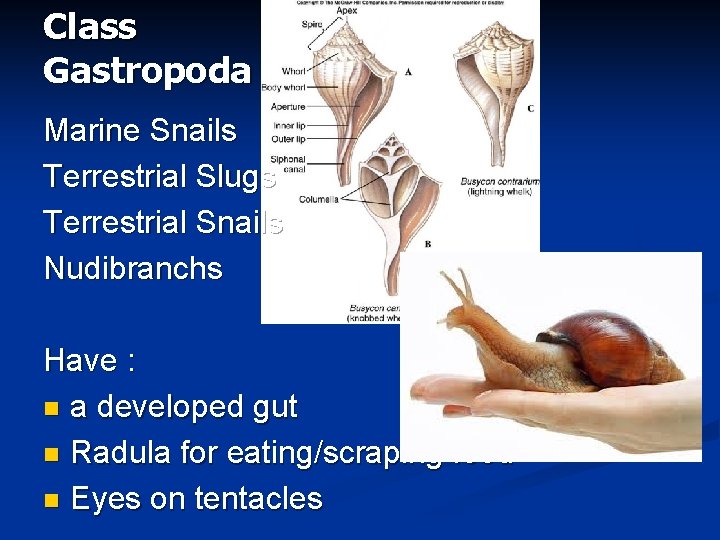
Class Gastropoda Marine Snails Terrestrial Slugs Terrestrial Snails Nudibranchs Have : n a developed gut n Radula for eating/scraping food n Eyes on tentacles
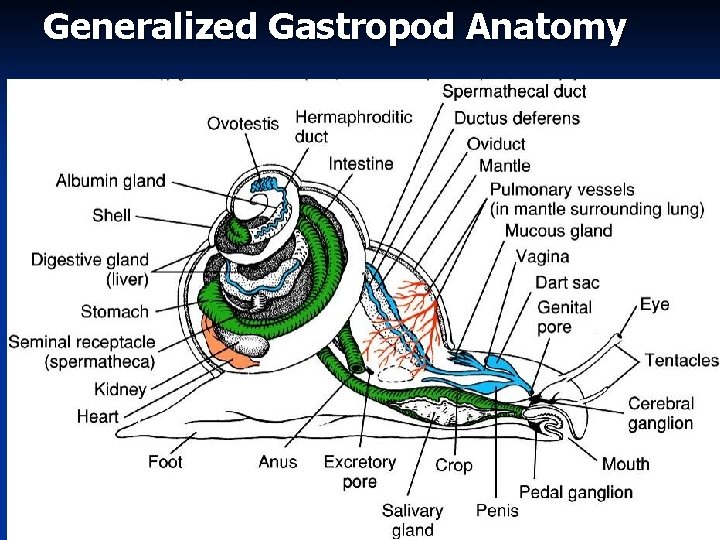
Generalized Gastropod Anatomy
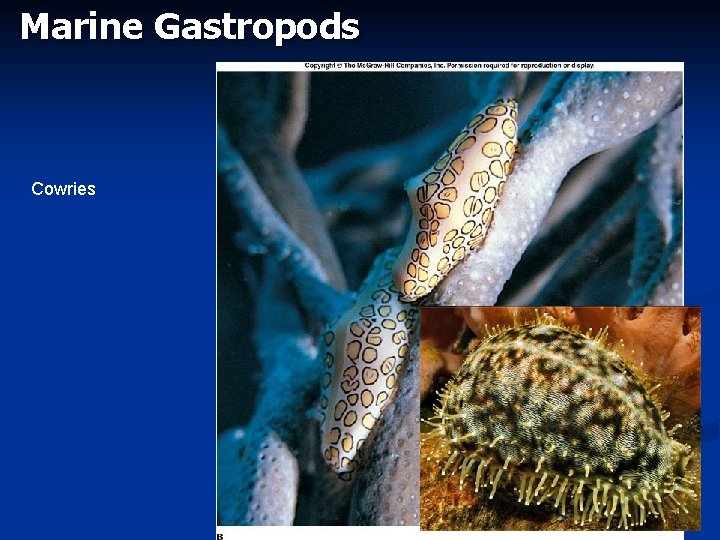
Marine Gastropods Cowries
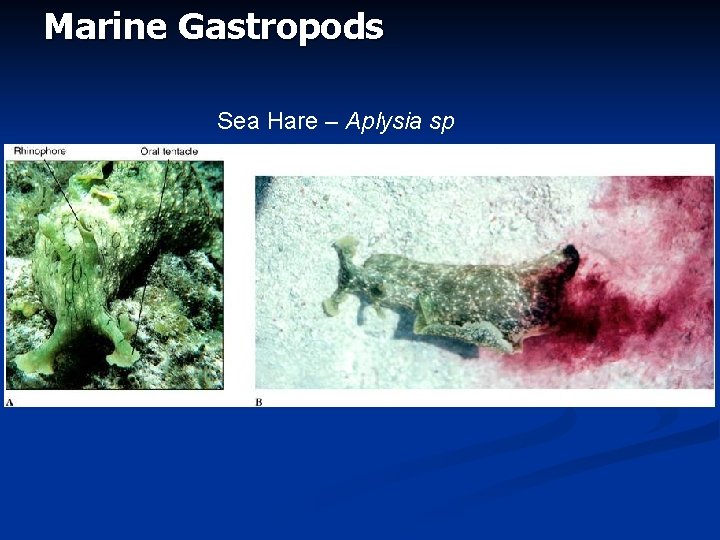
Marine Gastropods Sea Hare – Aplysia sp
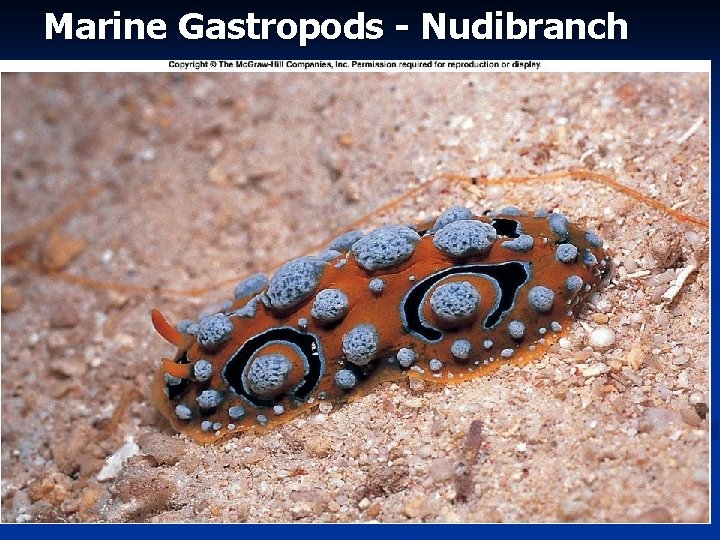
Marine Gastropods - Nudibranch
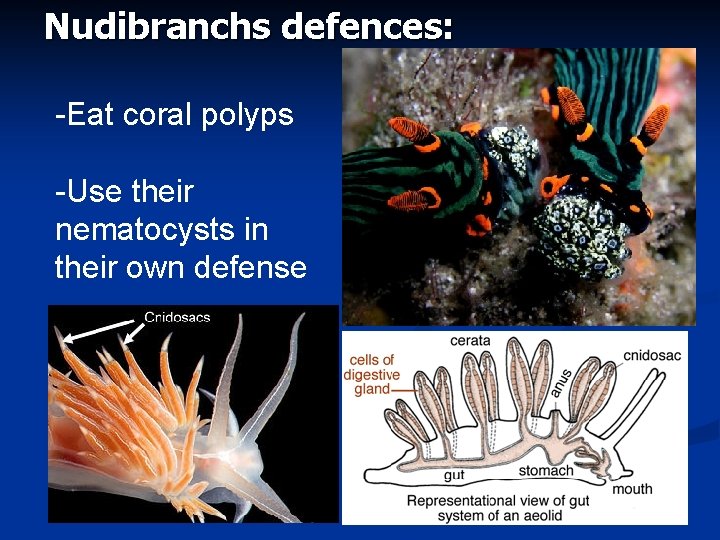
Nudibranchs defences: -Eat coral polyps -Use their nematocysts in their own defense
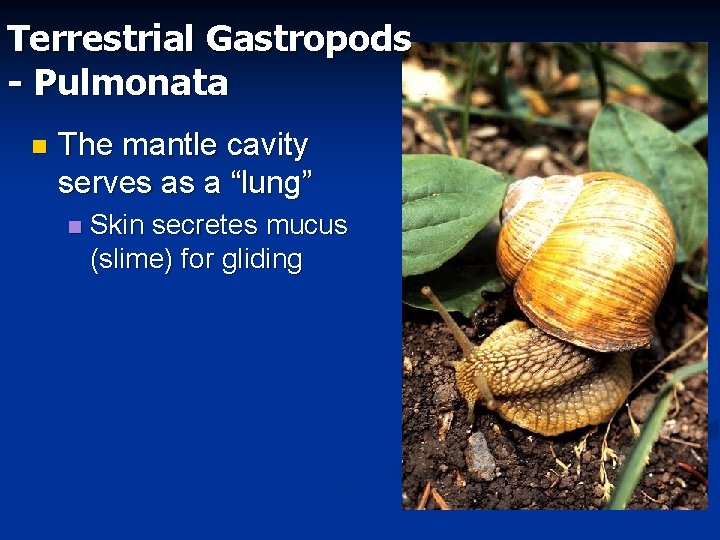
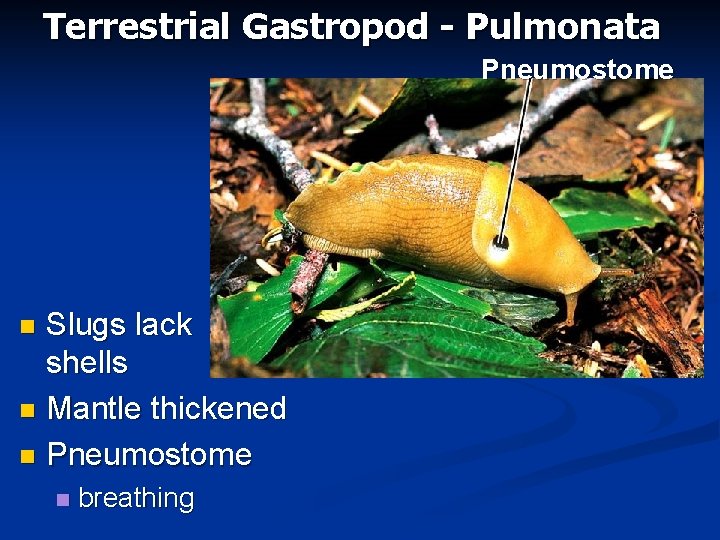
Terrestrial Gastropods - Pulmonata n The mantle cavity serves as a “lung” n Skin secretes mucus (slime) for gliding
Terrestrial Gastropod - Pulmonata Pneumostome Slugs lack shells n Mantle thickened n Pneumostome n n breathing
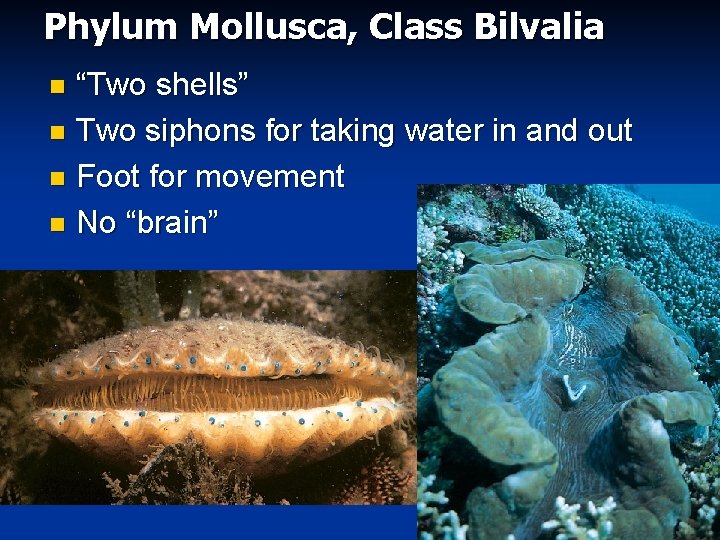
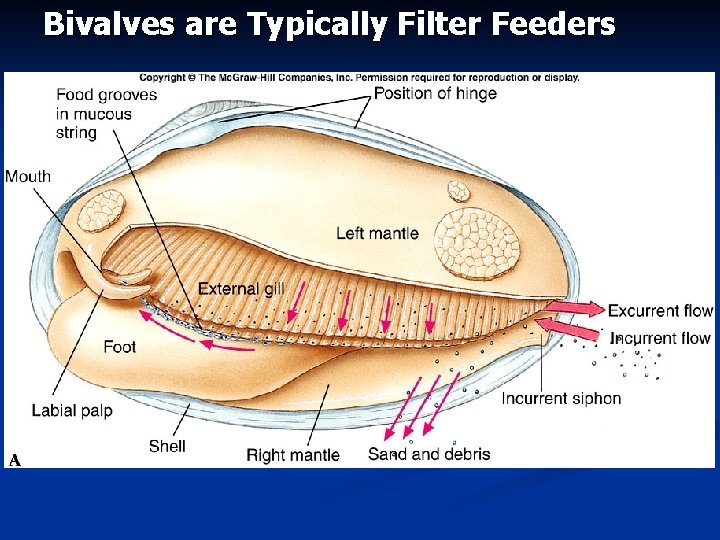
Phylum Mollusca, Class Bilvalia “Two shells” n Two siphons for taking water in and out n Foot for movement n No “brain” n
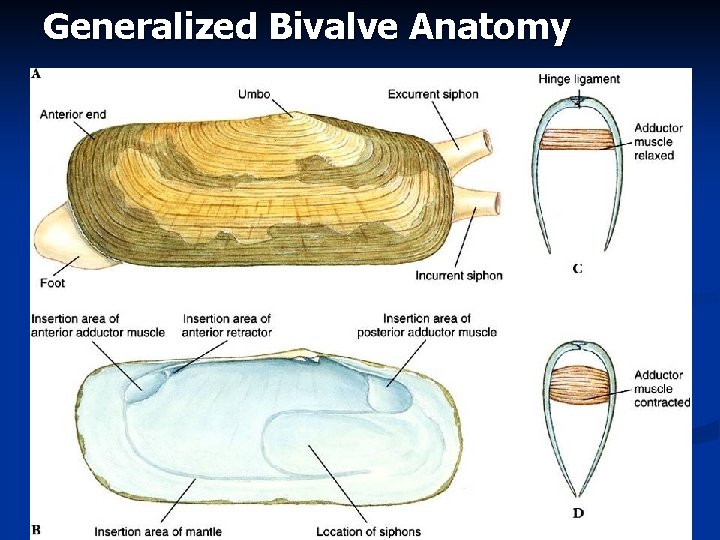
Generalized Bivalve Anatomy
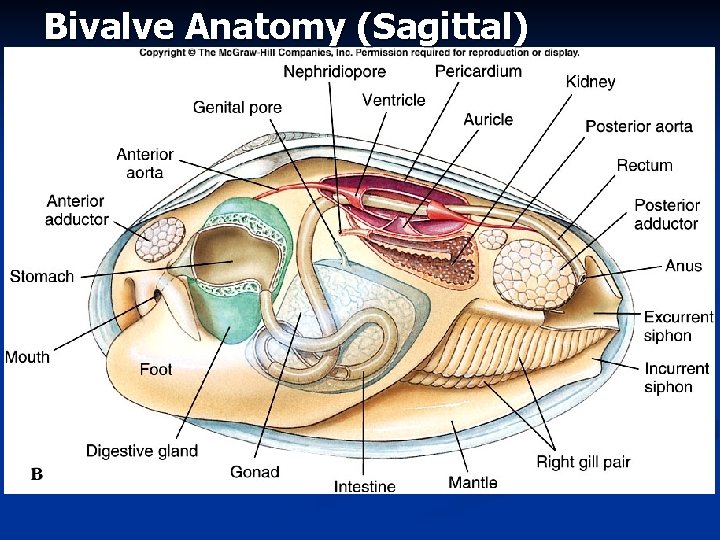
Bivalve Anatomy (Sagittal)
Bivalves are Typically Filter Feeders
Bivalve Life Cycle
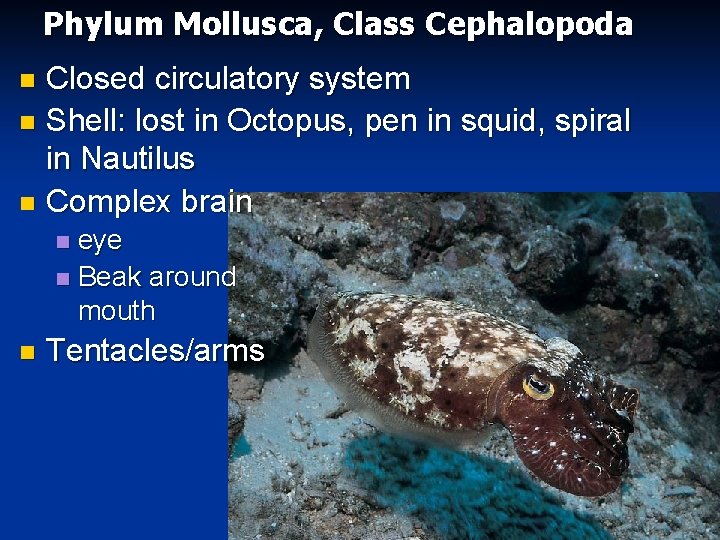
Phylum Mollusca, Class Cephalopoda Closed circulatory system n Shell: lost in Octopus, pen in squid, spiral in Nautilus n Complex brain n eye n Beak around mouth n n Tentacles/arms
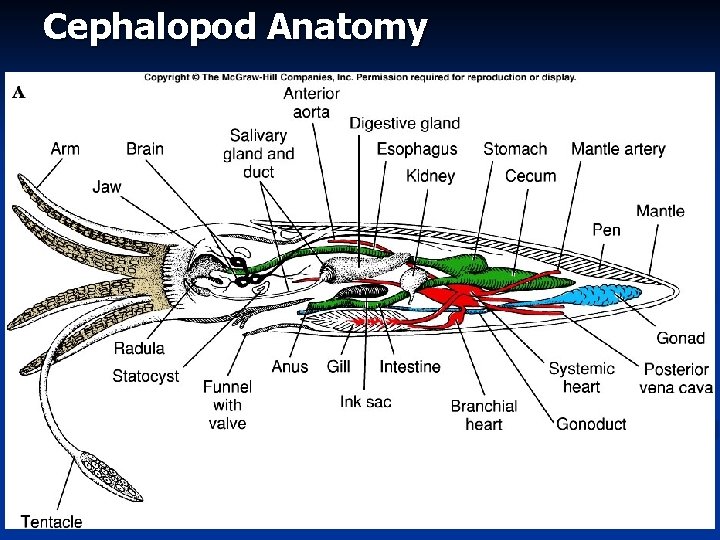
Cephalopod Anatomy
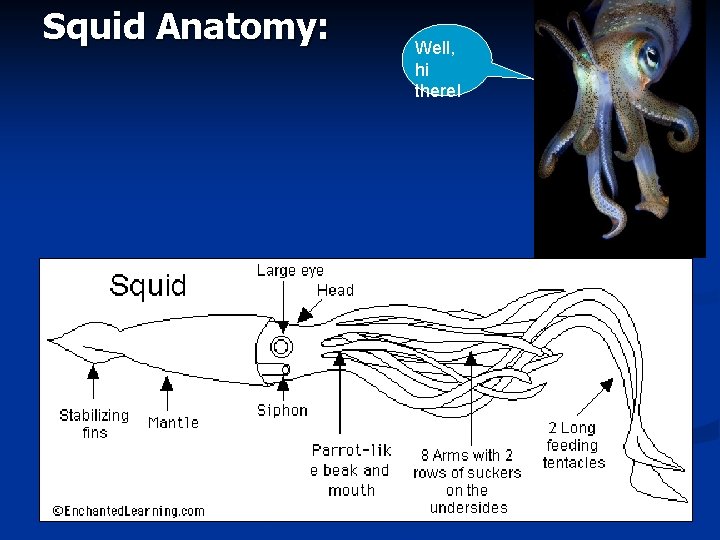
Squid Anatomy: Well, hi there!
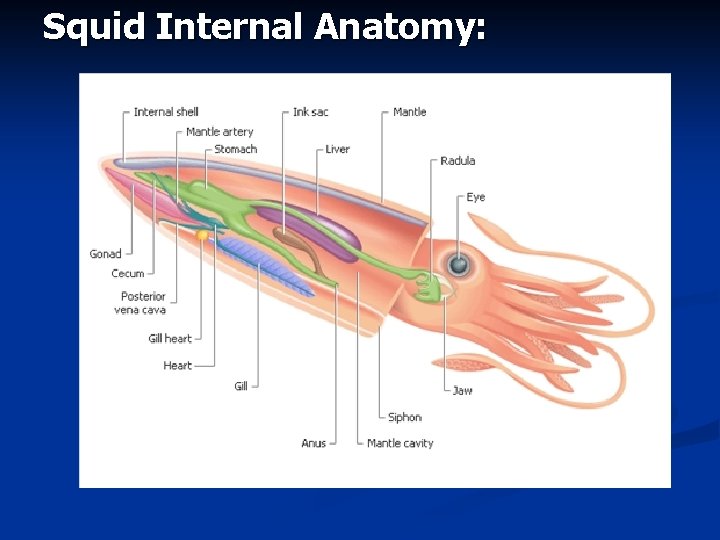
Squid Internal Anatomy:
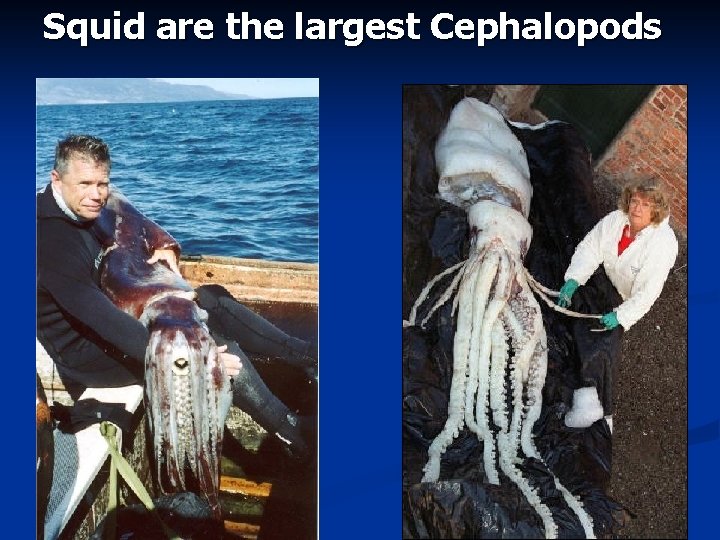
Squid are the largest Cephalopods
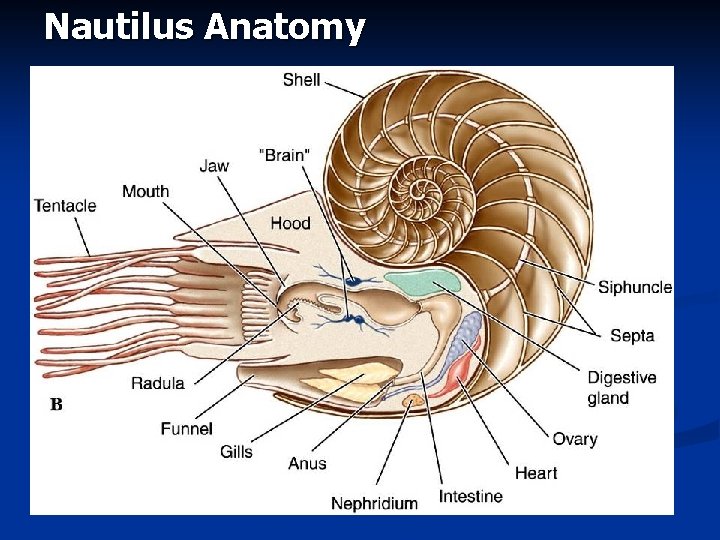
Nautilus Anatomy
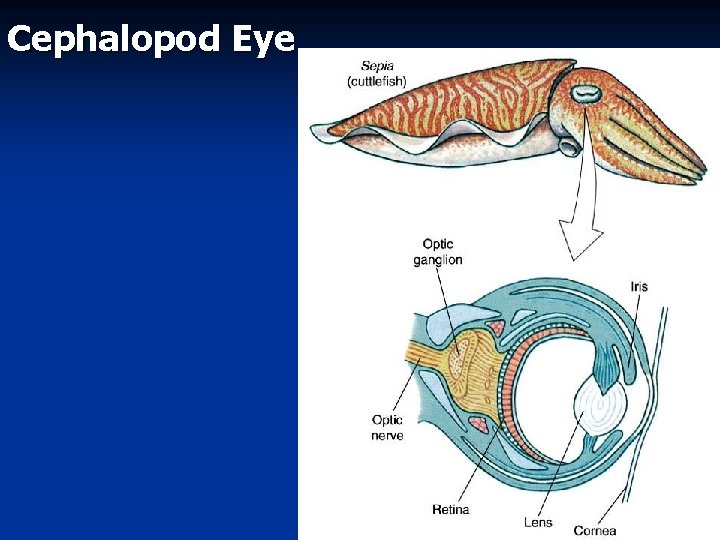
Cephalopod Eye
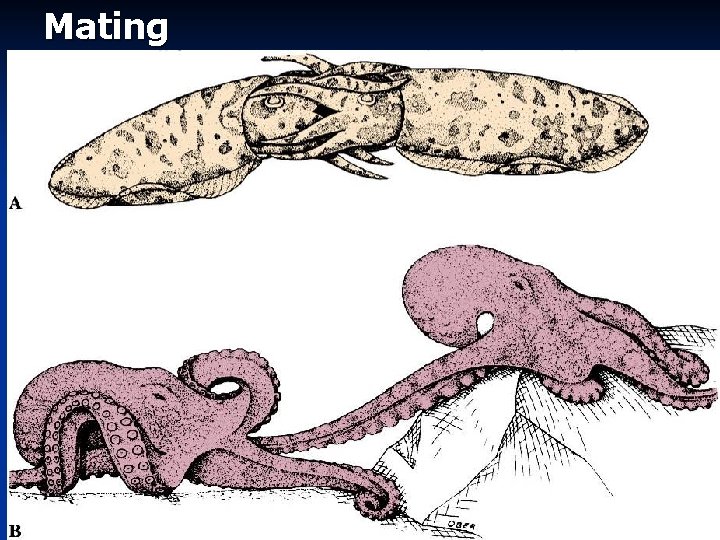
Mating
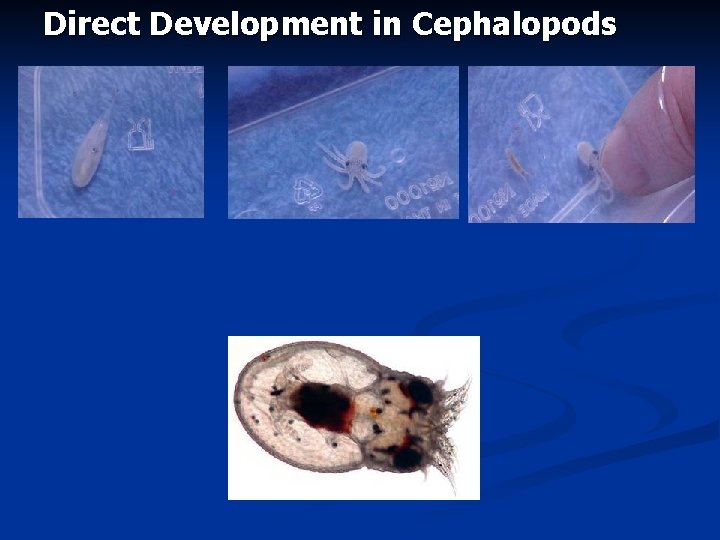
Direct Development in Cephalopods
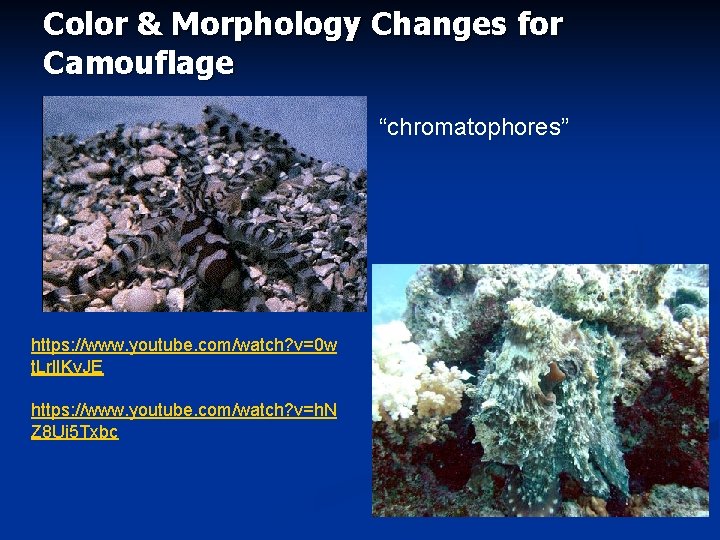
Color & Morphology Changes for Camouflage “chromatophores” https: //www. youtube. com/watch? v=0 w t. Lrl. IKv. JE https: //www. youtube. com/watch? v=h. N Z 8 Ui 5 Txbc