
Phylum Mollusca I Characteristics A Bilateral Symmetry B
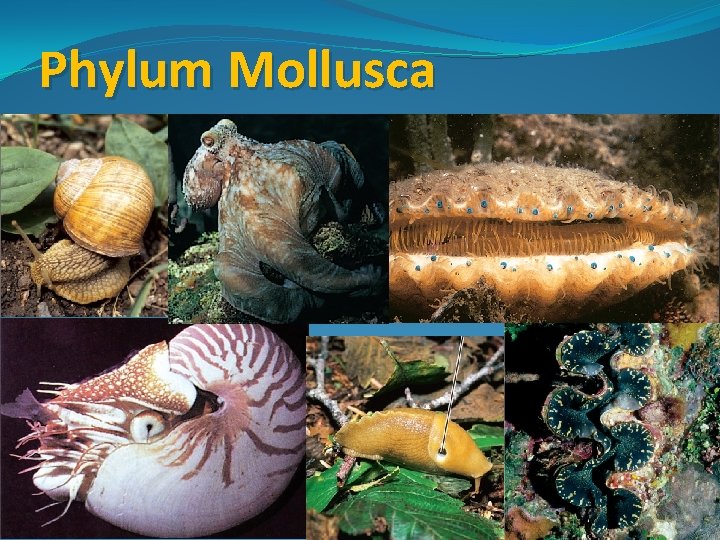
Phylum Mollusca
I. Characteristics A. Bilateral Symmetry B. Presence of a muscular foot C. Mantle formed by Dorsal Body wall D. True Coelom E. Complex Digestive System F. Gas exchange through gills, lungs, mantle, or body surface G. Simple Excretory system H. Simple nervous system, with true eyes in SOME species I. Simpler forms monoecious, more complex forms dioecious. J. Larval form in all molluscs known as a trochophore
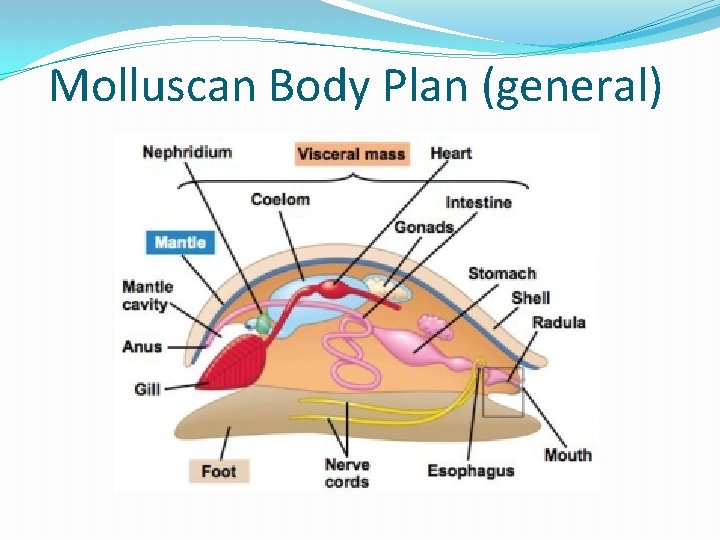
Molluscan Body Plan (general)
II. Class Gastropoda “Stomach footed” Molluscs examples: Snails, Slugs, Whelks, Conchs, Cowries A. This is the largest and most successful class of Molluscs B. Shell, if present, is singular, and whorled around a common axis known as a columella. C. Right handed shells are dextral; left handed are sinistral. D. Rasp like Radula used to scrape food. E. Eyes usually positioned on stalks on head. F. Most forms monoecious G. Torsion occurs as larvae become adults, causing the organs to lie above the head in the mantle cavity.
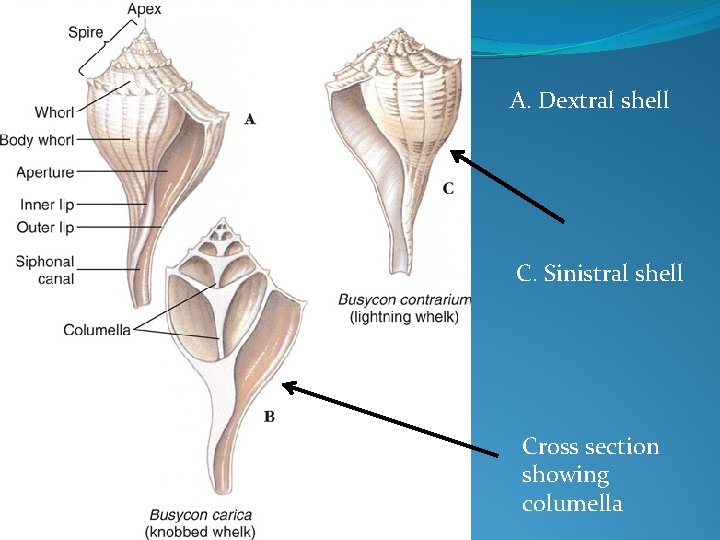
A. Dextral shell C. Sinistral shell Cross section showing columella
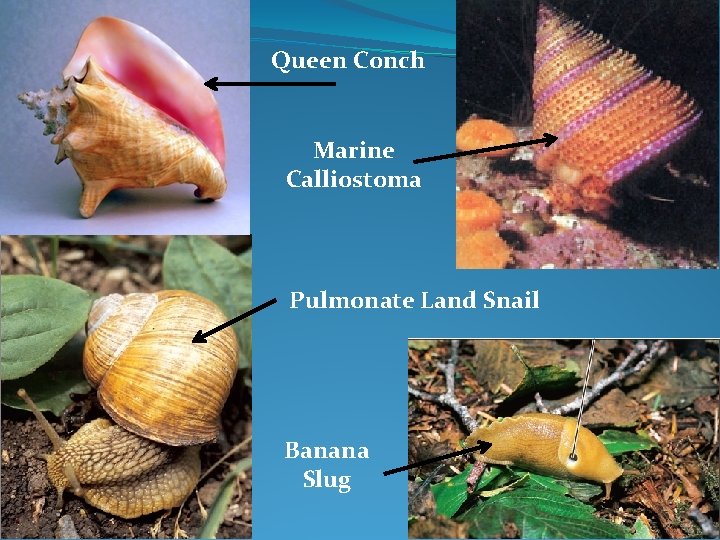
Queen Conch Marine Calliostoma Pulmonate Land Snail Banana Slug
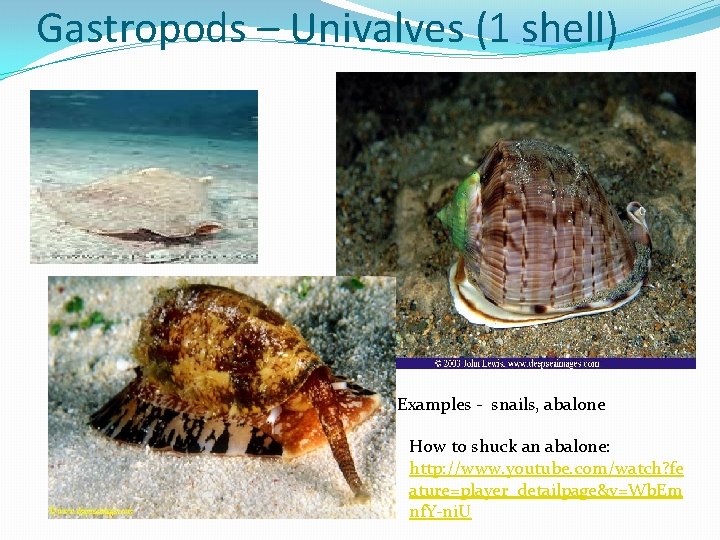
Gastropods – Univalves (1 shell) Examples - snails, abalone How to shuck an abalone: http: //www. youtube. com/watch? fe ature=player_detailpage&v=Wb. Em nf. Y-ni. U
Gastropod videos – questions �How is water directed into the mantle cavity? �What is the easiest way to tell a slug from a snail? �What is the primary organ of defense for snails? �Nudibranchs are marine gastropods that do not have a shell. Are these considered snails or slugs?

Gastropods – Secrets of the Sea (pt. 1) http: //www. youtube. com/watch? v=z 6 Z 2 XCdm. Ew. U
III. Class Bivalvia Formerly known as Class Pelecypoda The “hatchet-footed” molluscs Examples: Clams, Oysters, Scallops, Mussels, cockles, coquinas A. These organisms all have two shells. B. Bivalves are all sedentary filter feeders. C. Incurrent siphons bring water in, excurrent siphons take water out. D. Bivalves secrete their shells using nacre, derived from the compounds in the water.
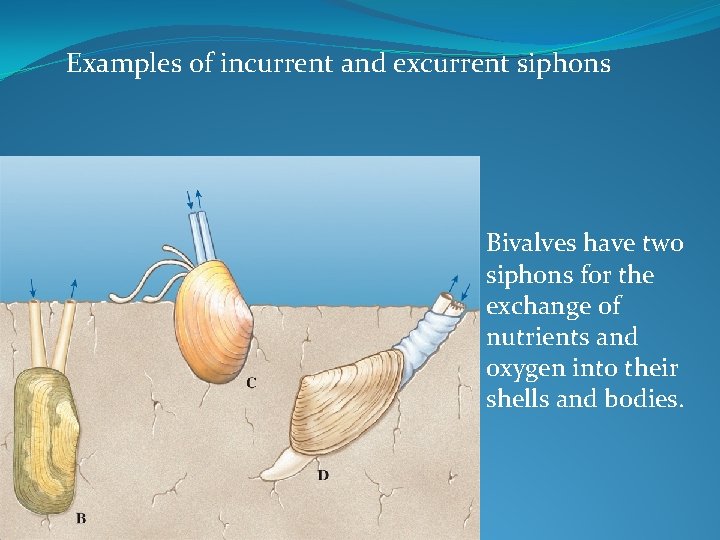
Examples of incurrent and excurrent siphons Bivalves have two siphons for the exchange of nutrients and oxygen into their shells and bodies.
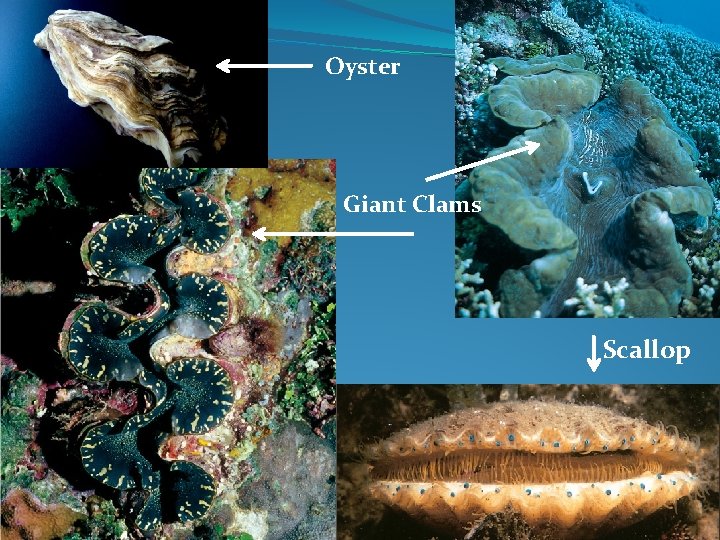
Oyster Giant Clams Scallop
The Process of Pearl formation: A. First, a grain of sand or other foreign material gets caught between the shell of the oyster, and the mantle, which is very tender and delicate. B. Second, the irritant is surrounded by nacre, or mother -of-pearl, to ease the discomfort created by the sharp edges. C. The oyster continues to secrete nacre until the pearl is formed in a large enough diameter to stop the irritation. D. Naturally formed pearls are very rare to find, hence their value. E. Kokichi Mikimoto, the son of a Japanese noodlemaker, was the first to force oysters to form rounded pearls, a process known as culturing. Today, Mikimoto pearls are the most widely sold cultured pearls in the world.

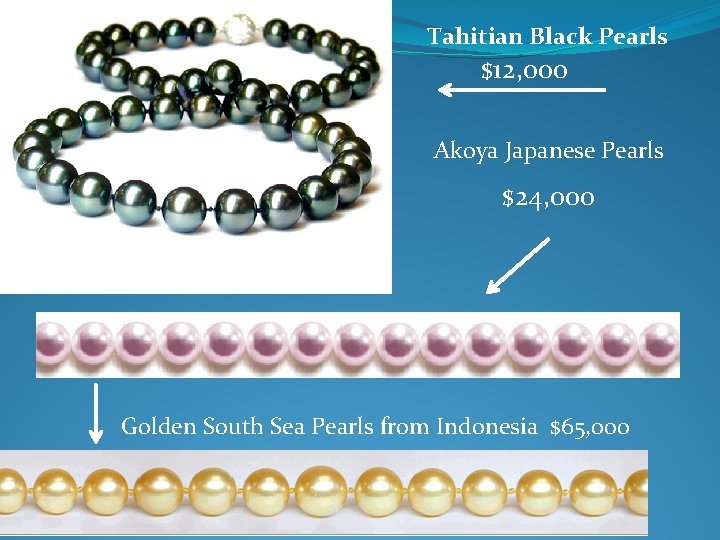
Tahitian Black Pearls $12, 000 Akoya Japanese Pearls $24, 000 Golden South Sea Pearls from Indonesia $65, 000

IV. Class Cephalopoda “Head-footed Molluscs” examples: octopus, squid, cuttlefish, nautilus A. The MOST ADVANCED of all mollusc classes B. They feed on fishes, other molluscs, crustaceans and worms C. They have a closed circulatory system – very advanced D. Use funnels for rapid locomotion backwards E. Octopi are loners and have 8 arms (total = 8) F. Squid are gregarious and have 8 arms and 2 tentacles (total = 10). G. Both secrete an ink-like substance known as sepia to confuse their attackers. H. The largest Octopi reach a length of about 3 meters, the largest squid (Architeuthis) reaches a length of about 60 feet. I. Water movement in the mantle cavity serves three functions: oxygenation, locomotion, and waste and gamete removal.
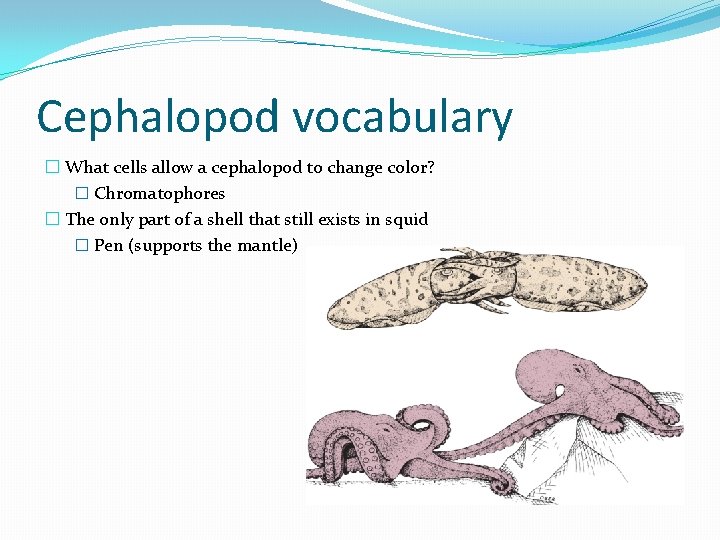
Cephalopod vocabulary � What cells allow a cephalopod to change color? � Chromatophores � The only part of a shell that still exists in squid � Pen (supports the mantle)
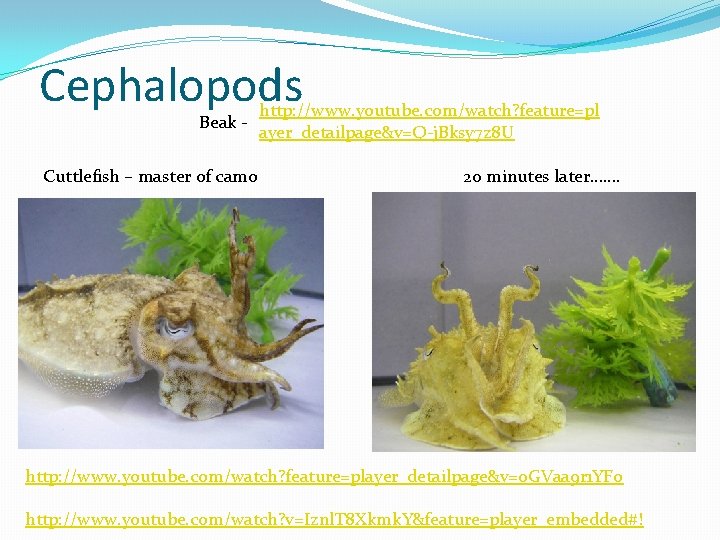
Cephalopods Beak - http: //www. youtube. com/watch? feature=pl ayer_detailpage&v=Q-j. Bksy 7 z 8 U Cuttlefish – master of camo 20 minutes later……. Camouflaged - http: //www. youtube. com/watch? feature=player_detailpage&v=0 GVaa 9 r 1 YFo http: //www. youtube. com/watch? v=Iznl. T 8 Xkmk. Y&feature=player_embedded#!
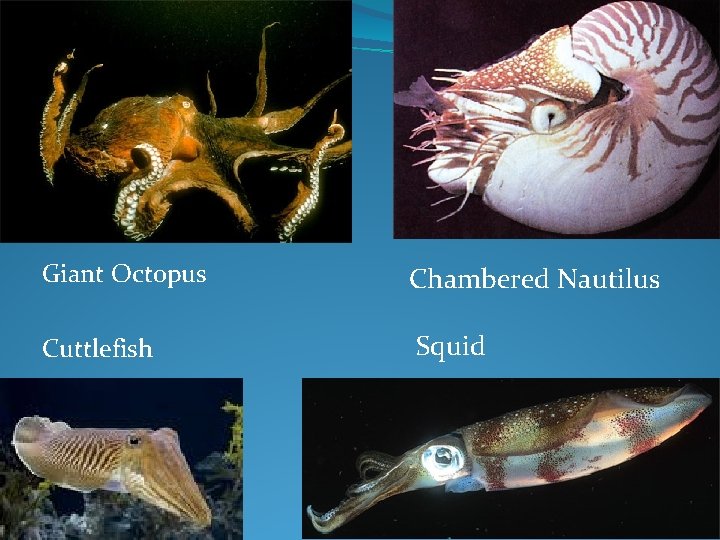
Giant Octopus Chambered Nautilus Cuttlefish Squid
Interesting Facts! Phylum Mollusca is the second largest phylum, behind only the Phylum Arthropoda Most molluscs are found in the ocean Molluscs are important economically for food and for pearls The biggest predator of scallops is sea stars!
- Slides: 20