
Phylum Mollusca 100 000 species Name means soft

- Slides: 30
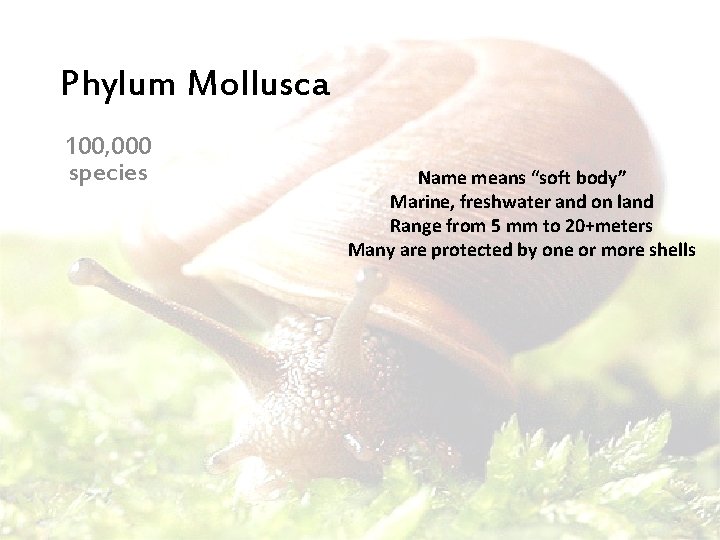
Phylum Mollusca 100, 000 species Name means “soft body” Marine, freshwater and on land Range from 5 mm to 20+meters Many are protected by one or more shells
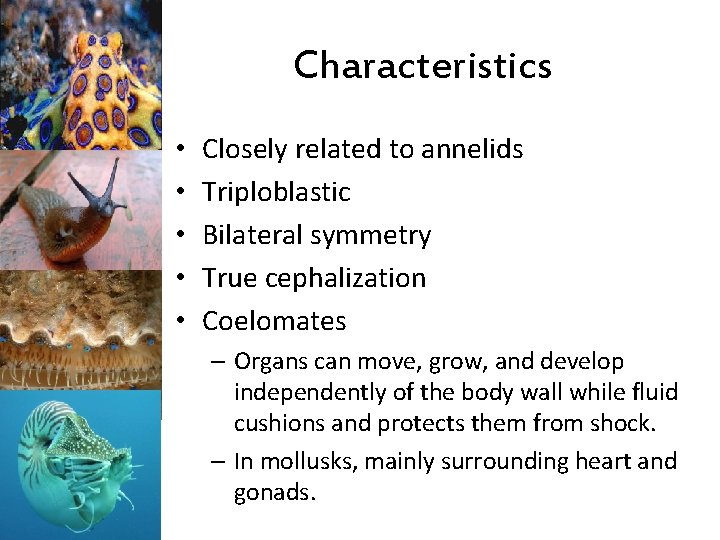
Characteristics • • • Closely related to annelids Triploblastic Bilateral symmetry True cephalization Coelomates – Organs can move, grow, and develop independently of the body wall while fluid cushions and protects them from shock. – In mollusks, mainly surrounding heart and gonads.
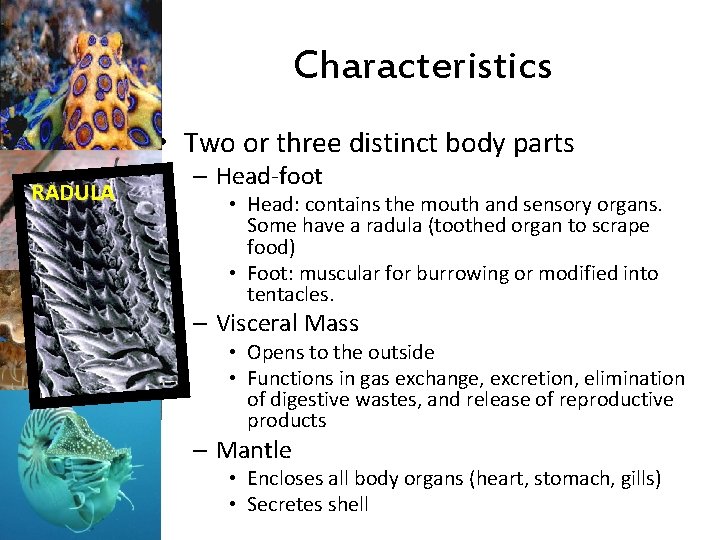
Characteristics • Two or three distinct body parts RADULA – Head-foot • Head: contains the mouth and sensory organs. Some have a radula (toothed organ to scrape food) • Foot: muscular for burrowing or modified into tentacles. – Visceral Mass • Opens to the outside • Functions in gas exchange, excretion, elimination of digestive wastes, and release of reproductive products – Mantle • Encloses all body organs (heart, stomach, gills) • Secretes shell
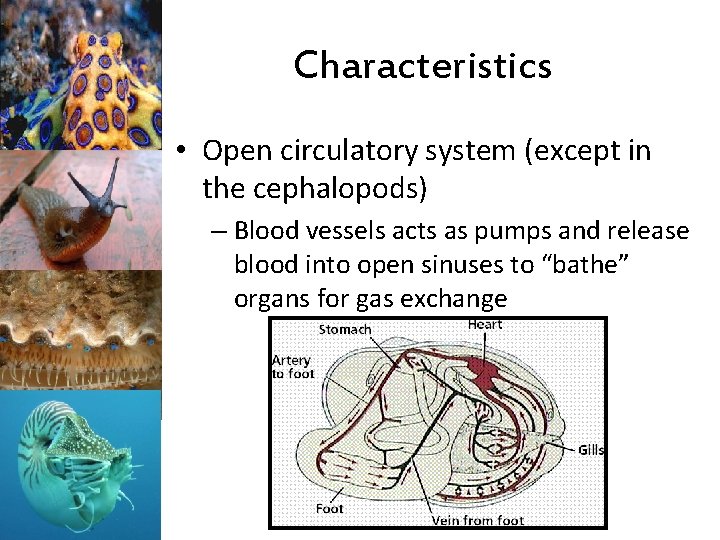
Characteristics • Open circulatory system (except in the cephalopods) – Blood vessels acts as pumps and release blood into open sinuses to “bathe” organs for gas exchange
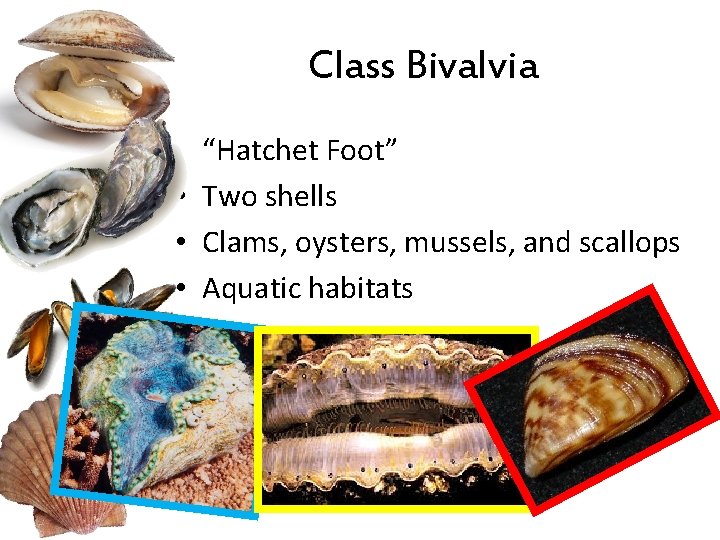
Class Bivalvia • • “Hatchet Foot” Two shells Clams, oysters, mussels, and scallops Aquatic habitats
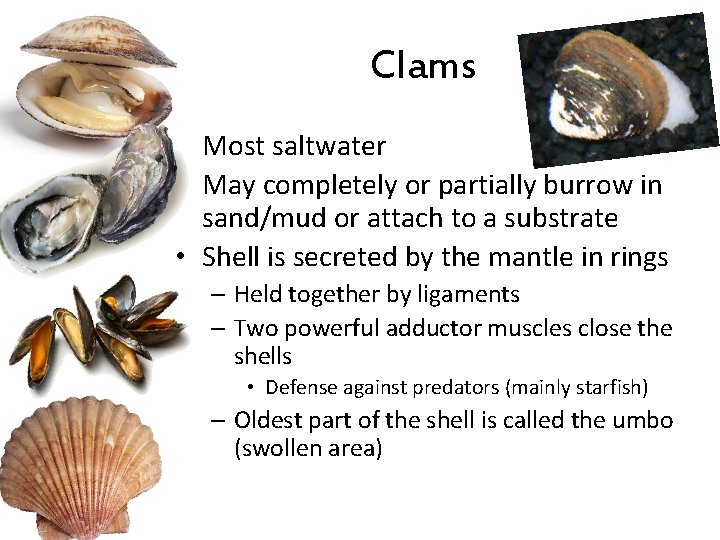
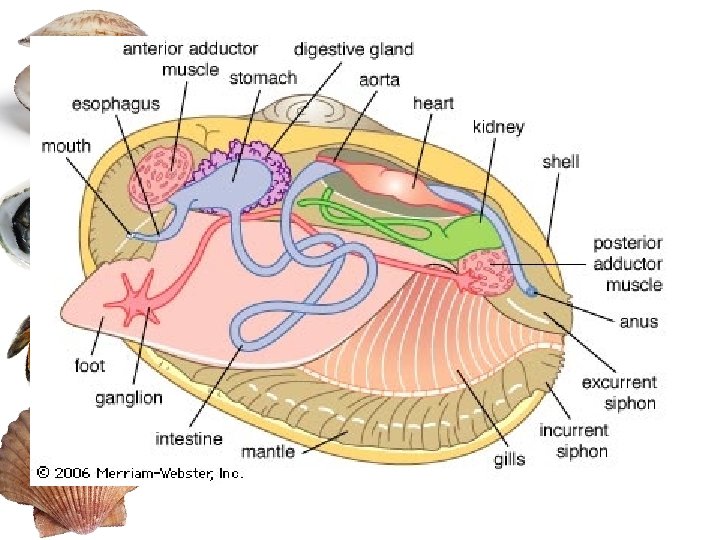
Clams • Most saltwater • May completely or partially burrow in sand/mud or attach to a substrate • Shell is secreted by the mantle in rings – Held together by ligaments – Two powerful adductor muscles close the shells • Defense against predators (mainly starfish) – Oldest part of the shell is called the umbo (swollen area)
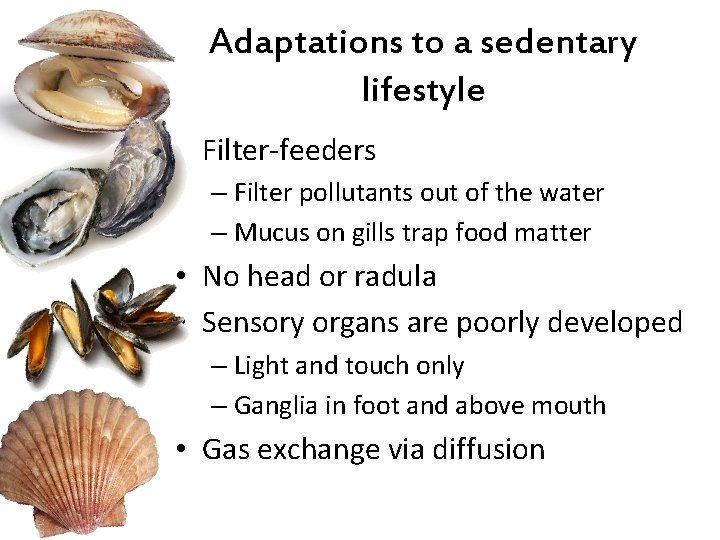
Adaptations to a sedentary lifestyle • Filter-feeders – Filter pollutants out of the water – Mucus on gills trap food matter • No head or radula • Sensory organs are poorly developed – Light and touch only – Ganglia in foot and above mouth • Gas exchange via diffusion
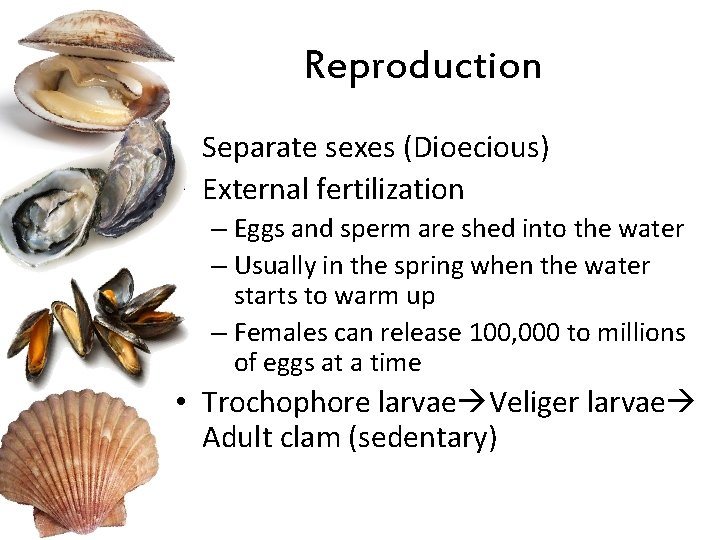
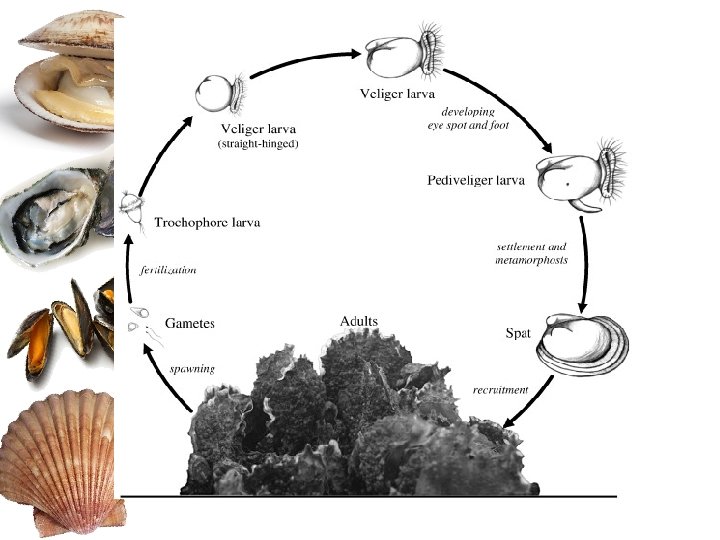
Reproduction • Separate sexes (Dioecious) • External fertilization – Eggs and sperm are shed into the water – Usually in the spring when the water starts to warm up – Females can release 100, 000 to millions of eggs at a time • Trochophore larvae Veliger larvae Adult clam (sedentary)
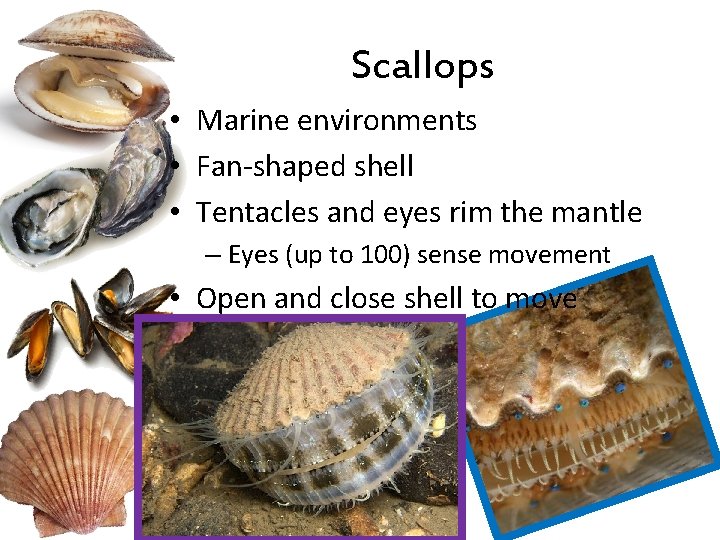
Scallops • Marine environments • Fan-shaped shell • Tentacles and eyes rim the mantle – Eyes (up to 100) sense movement • Open and close shell to move
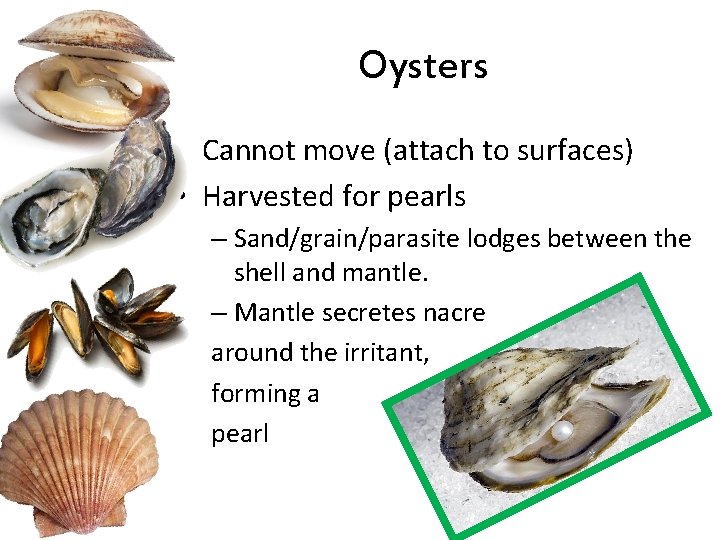
Oysters • Cannot move (attach to surfaces) • Harvested for pearls – Sand/grain/parasite lodges between the shell and mantle. – Mantle secretes nacre around the irritant, forming a pearl
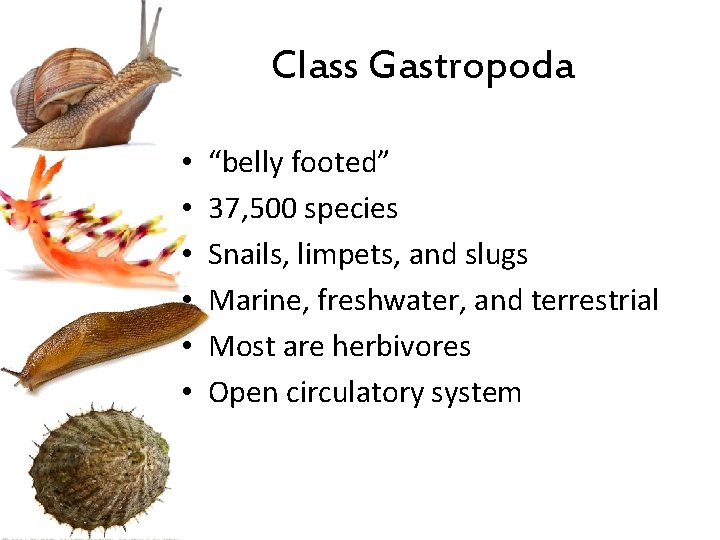
Class Gastropoda • • • “belly footed” 37, 500 species Snails, limpets, and slugs Marine, freshwater, and terrestrial Most are herbivores Open circulatory system
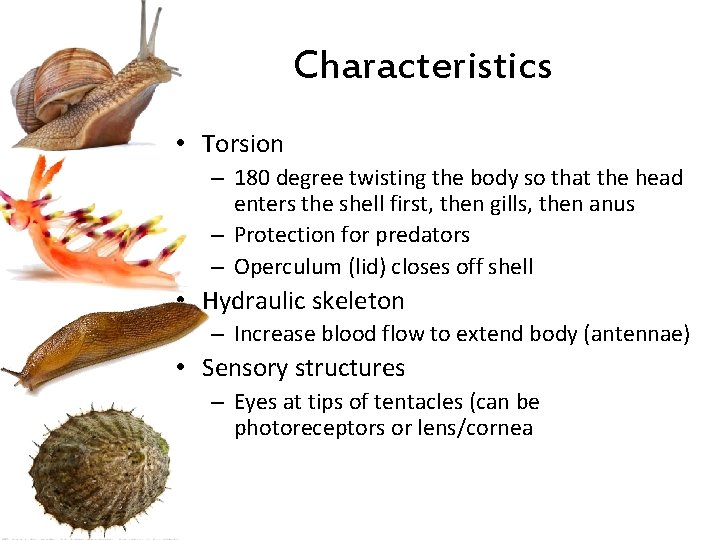
Characteristics • Torsion – 180 degree twisting the body so that the head enters the shell first, then gills, then anus – Protection for predators – Operculum (lid) closes off shell • Hydraulic skeleton – Increase blood flow to extend body (antennae) • Sensory structures – Eyes at tips of tentacles (can be photoreceptors or lens/cornea
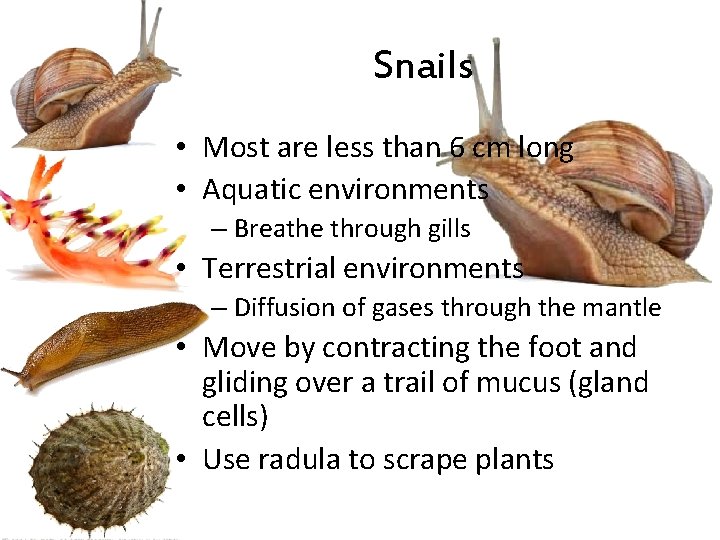
Snails • Most are less than 6 cm long • Aquatic environments – Breathe through gills • Terrestrial environments – Diffusion of gases through the mantle • Move by contracting the foot and gliding over a trail of mucus (gland cells) • Use radula to scrape plants
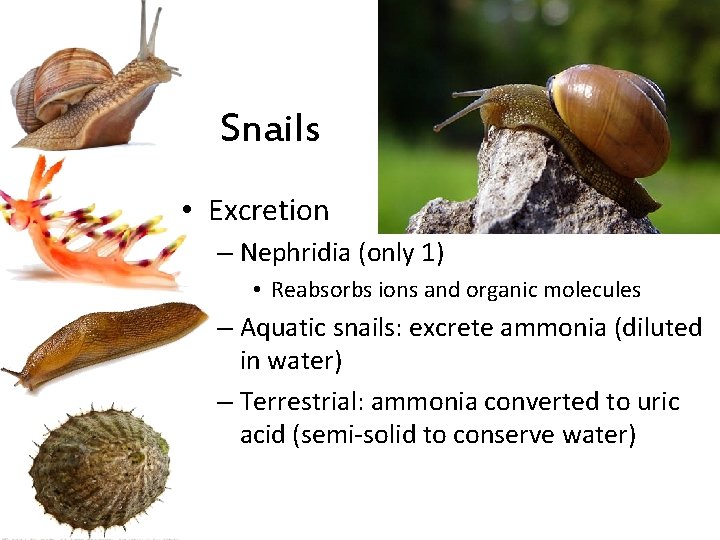
Snails • Excretion – Nephridia (only 1) • Reabsorbs ions and organic molecules – Aquatic snails: excrete ammonia (diluted in water) – Terrestrial: ammonia converted to uric acid (semi-solid to conserve water)
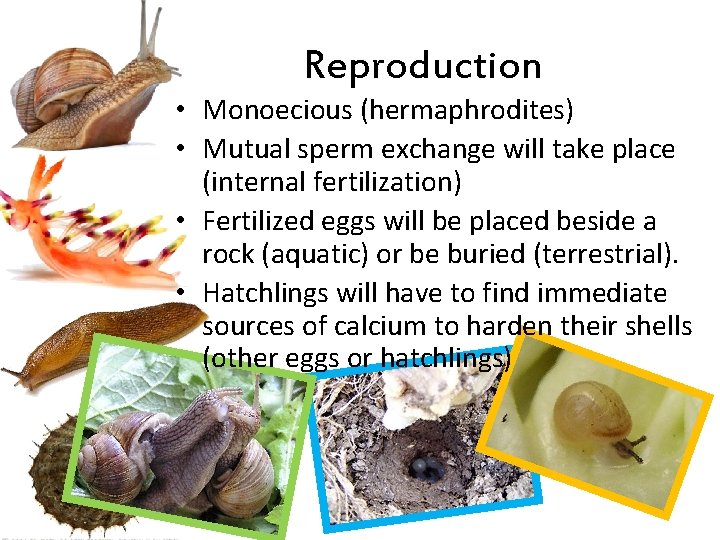
Reproduction • Monoecious (hermaphrodites) • Mutual sperm exchange will take place (internal fertilization) • Fertilized eggs will be placed beside a rock (aquatic) or be buried (terrestrial). • Hatchlings will have to find immediate sources of calcium to harden their shells (other eggs or hatchlings)
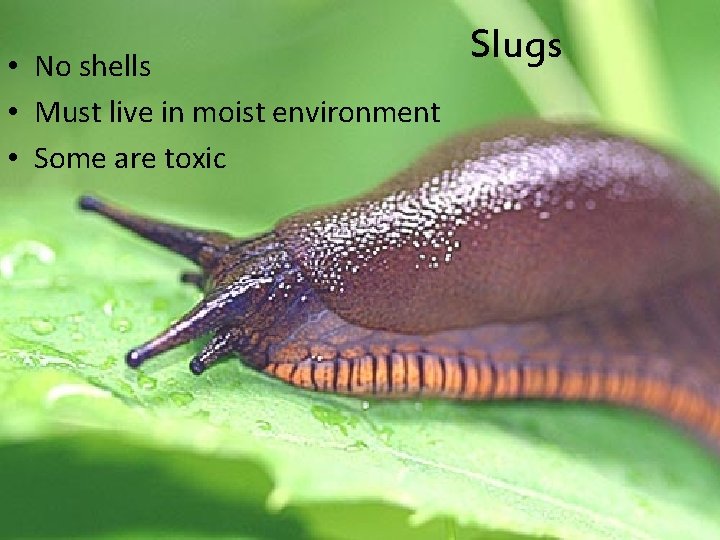
• No shells • Must live in moist environment • Some are toxic Slugs
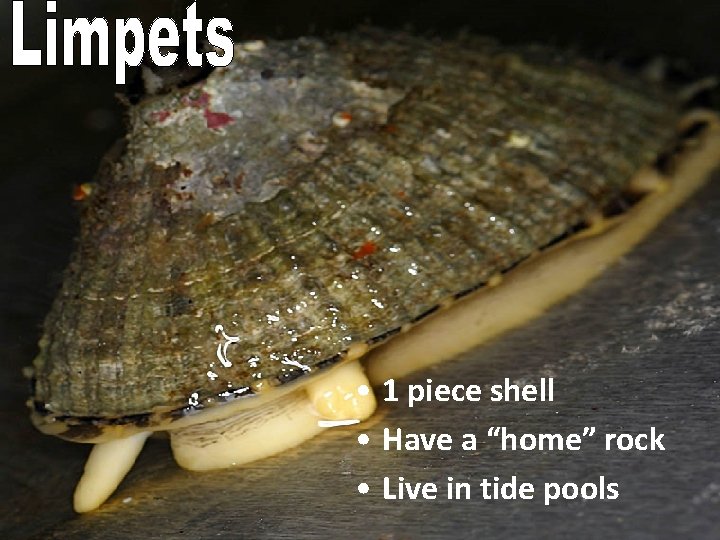
• 1 piece shell • Have a “home” rock • Live in tide pools
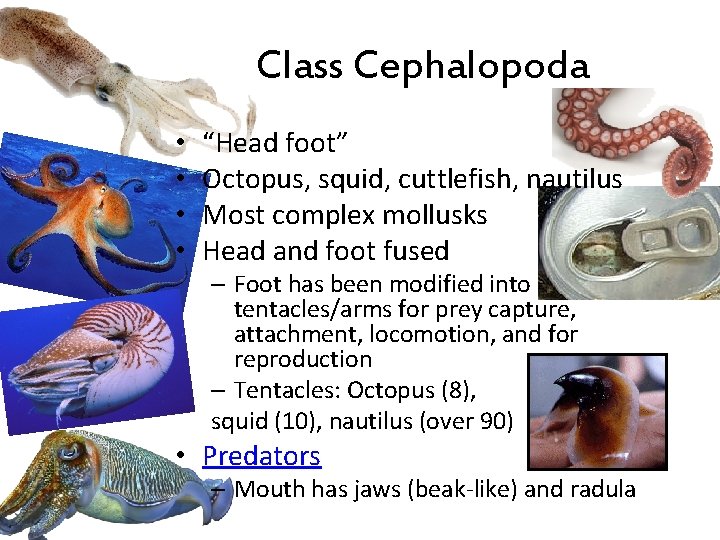
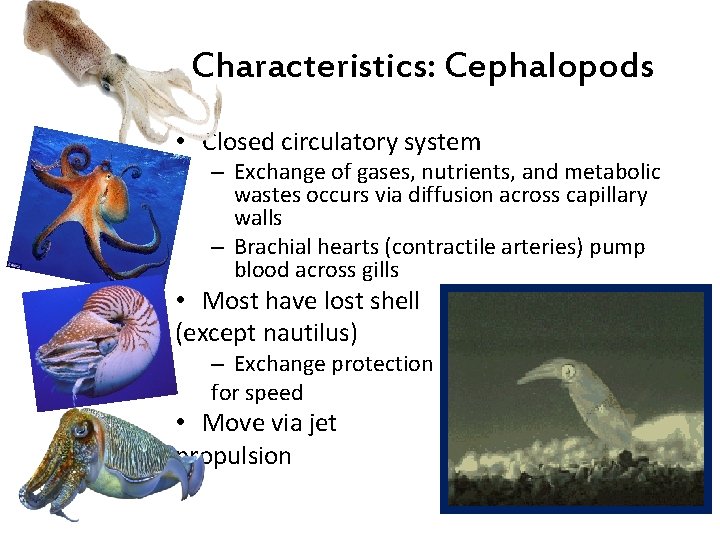
Class Cephalopoda • • “Head foot” Octopus, squid, cuttlefish, nautilus Most complex mollusks Head and foot fused – Foot has been modified into tentacles/arms for prey capture, attachment, locomotion, and for reproduction – Tentacles: Octopus (8), squid (10), nautilus (over 90) • Predators – Mouth has jaws (beak-like) and radula
Characteristics: Cephalopods • Closed circulatory system – Exchange of gases, nutrients, and metabolic wastes occurs via diffusion across capillary walls – Brachial hearts (contractile arteries) pump blood across gills • Most have lost shell (except nautilus) – Exchange protection for speed • Move via jet propulsion
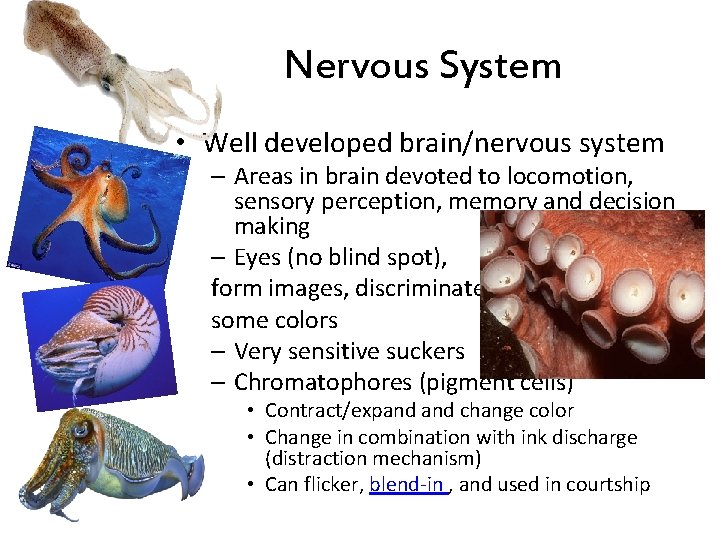
Nervous System • Well developed brain/nervous system – Areas in brain devoted to locomotion, sensory perception, memory and decision making – Eyes (no blind spot), form images, discriminate some colors – Very sensitive suckers – Chromatophores (pigment cells) • Contract/expand change color • Change in combination with ink discharge (distraction mechanism) • Can flicker, blend-in , and used in courtship
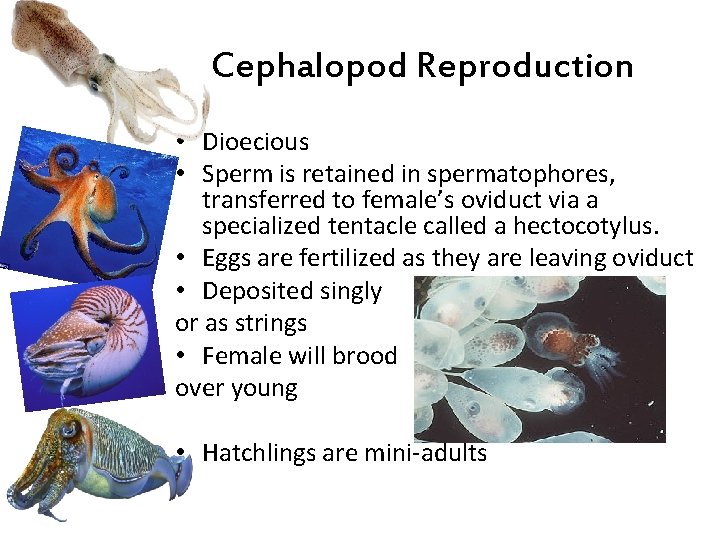
Cephalopod Reproduction • Dioecious • Sperm is retained in spermatophores, transferred to female’s oviduct via a specialized tentacle called a hectocotylus. • Eggs are fertilized as they are leaving oviduct • Deposited singly or as strings • Female will brood over young • Hatchlings are mini-adults
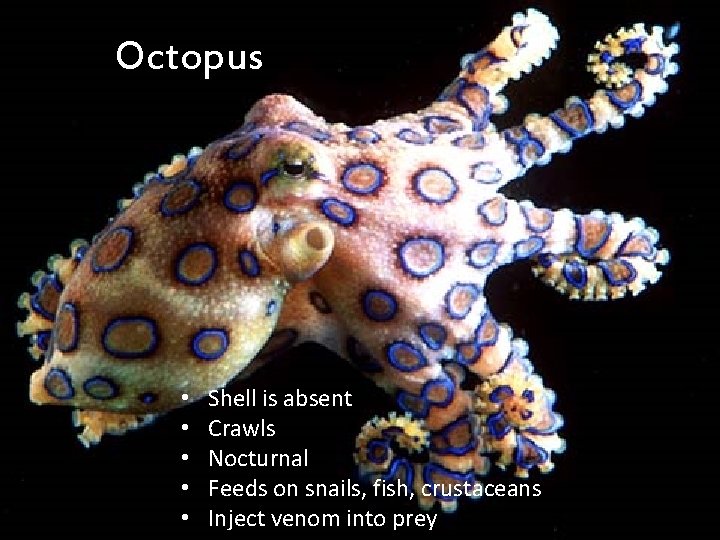
Octopus • • • Shell is absent Crawls Nocturnal Feeds on snails, fish, crustaceans Inject venom into prey
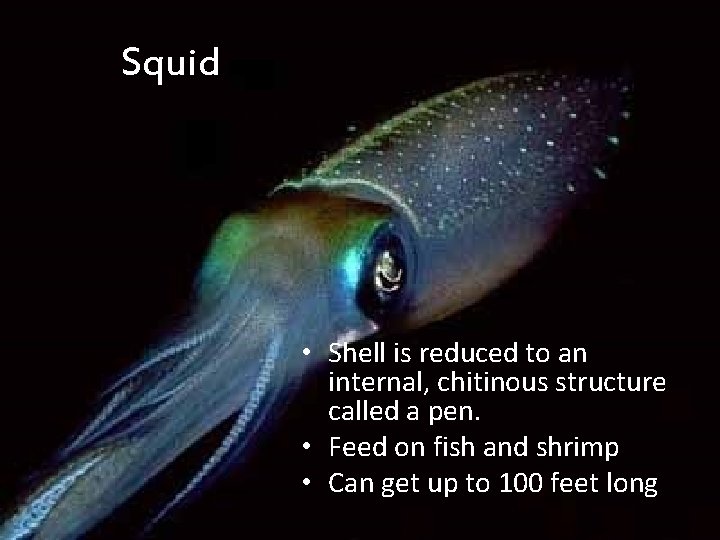
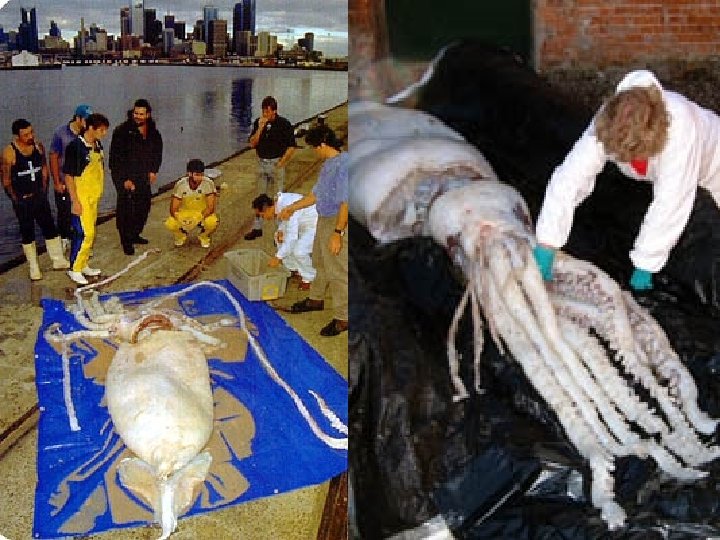
Squid • Shell is reduced to an internal, chitinous structure called a pen. • Feed on fish and shrimp • Can get up to 100 feet long
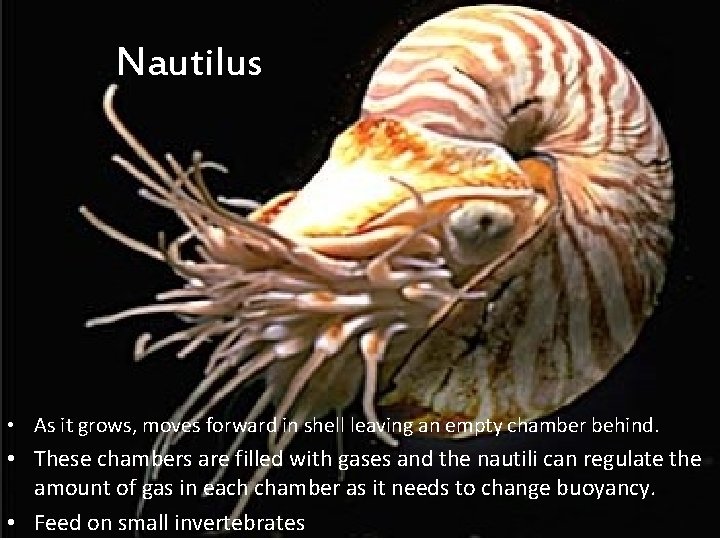
Nautilus • As it grows, moves forward in shell leaving an empty chamber behind. • These chambers are filled with gases and the nautili can regulate the amount of gas in each chamber as it needs to change buoyancy. • Feed on small invertebrates
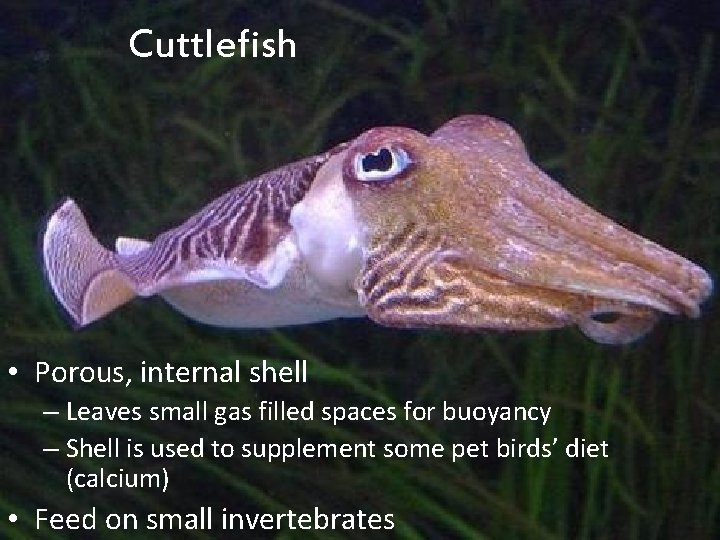
Cuttlefish • Porous, internal shell – Leaves small gas filled spaces for buoyancy – Shell is used to supplement some pet birds’ diet (calcium) • Feed on small invertebrates
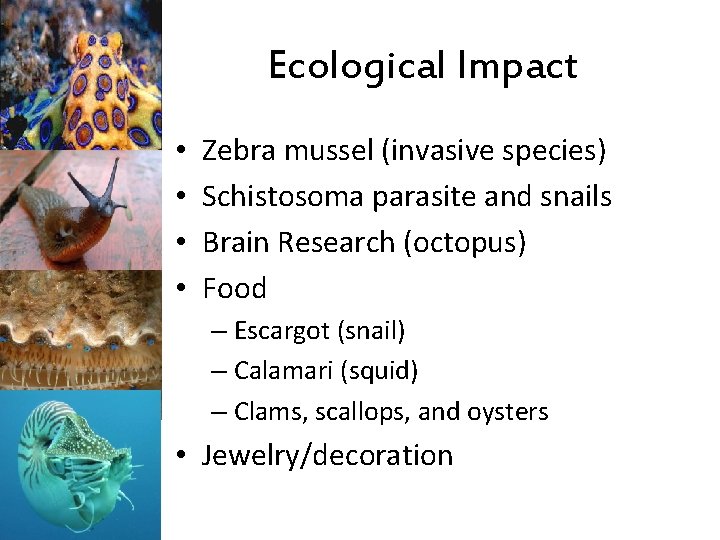
Ecological Impact • • Zebra mussel (invasive species) Schistosoma parasite and snails Brain Research (octopus) Food – Escargot (snail) – Calamari (squid) – Clams, scallops, and oysters • Jewelry/decoration